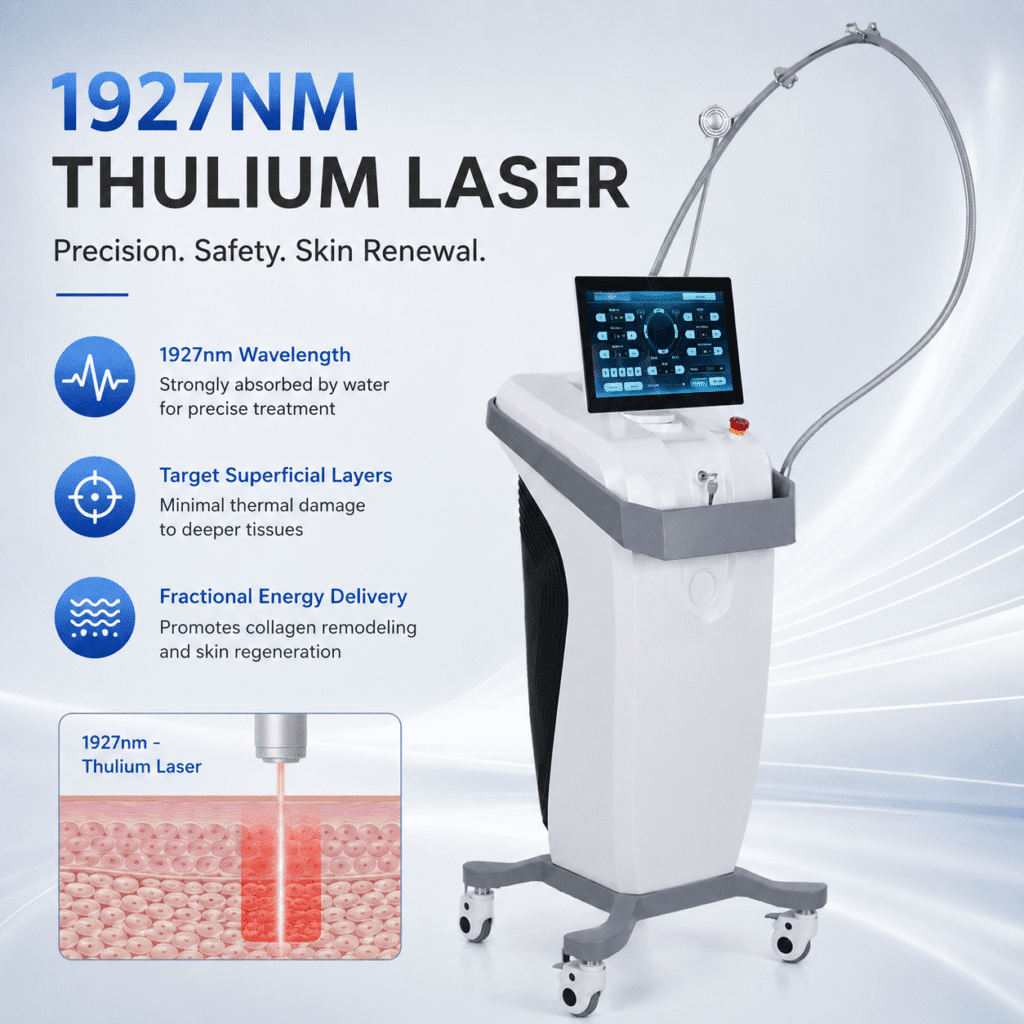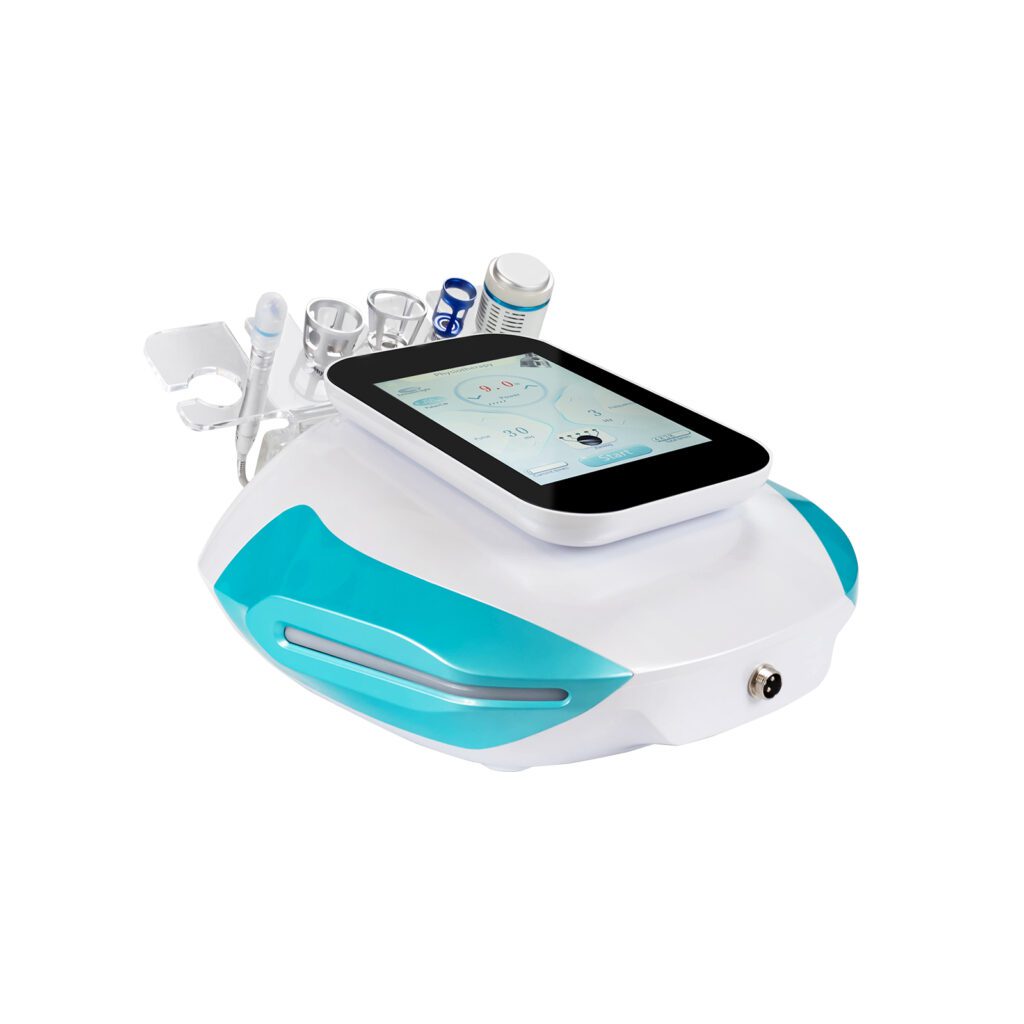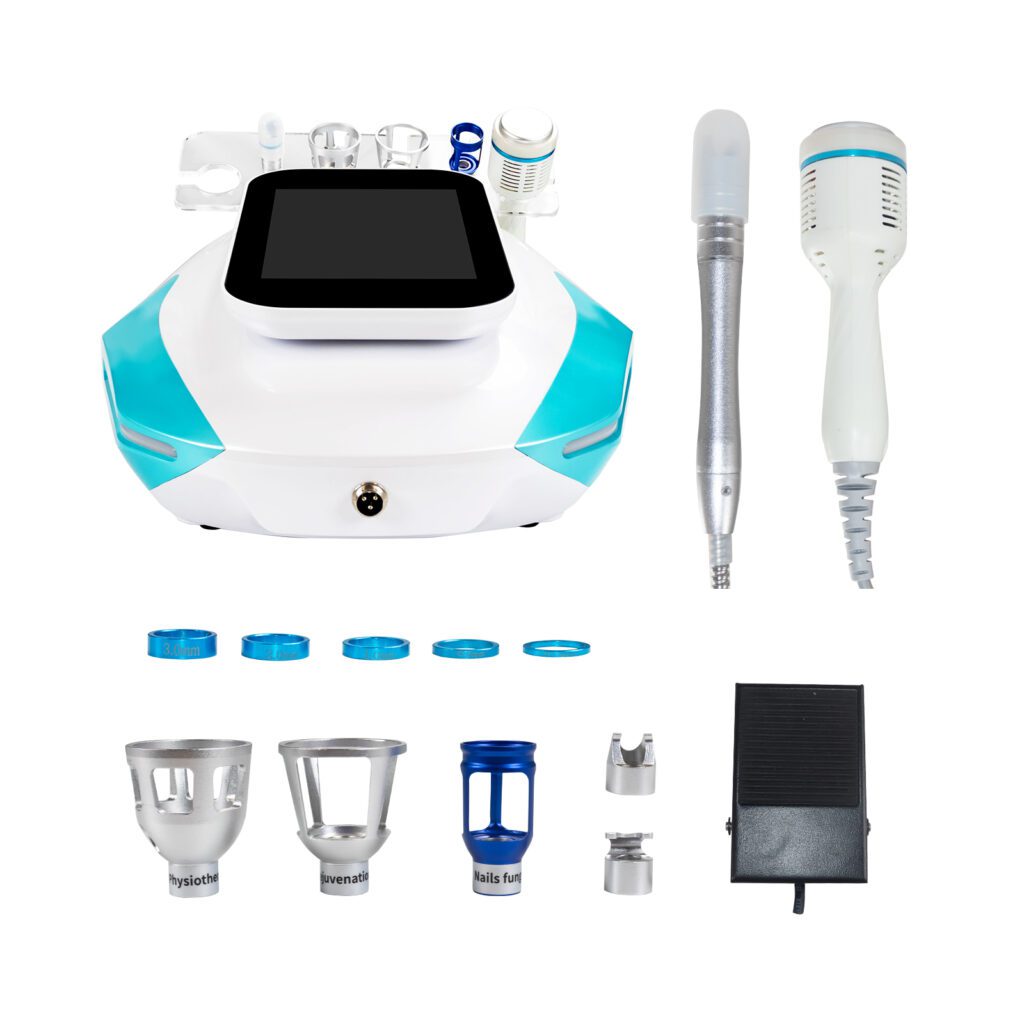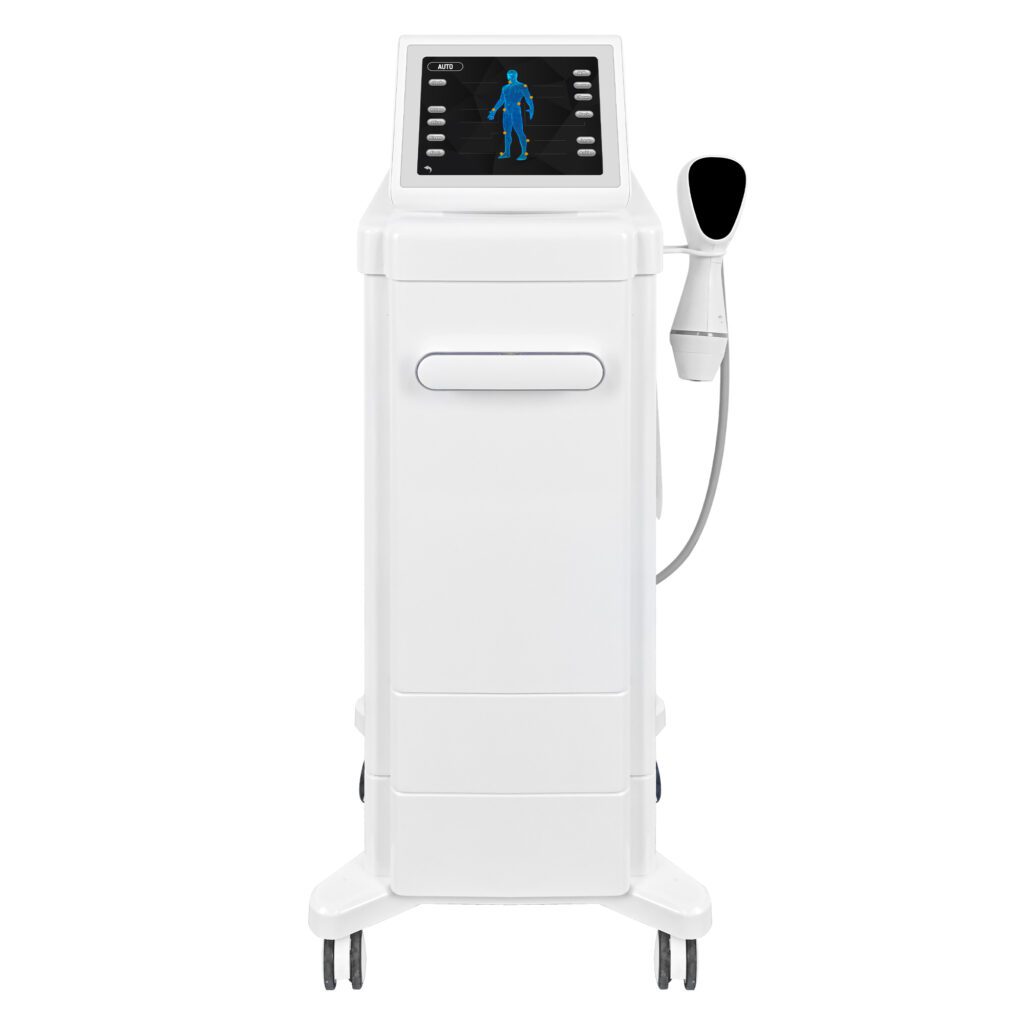










Quando os profissionais de beleza não conseguem vender equipamentos de estética, o problema geralmente não é preguiça ou incapacidade. Na maioria dos salões, o verdadeiro problema é que a loja não lhes forneceu um sistema de vendas completo. Os funcionários podem saber operar o equipamento, mas não sabem como explicar o valor para o cliente, identificar o cliente certo, lidar com objeções, criar pacotes, fazer o acompanhamento ou integrar o equipamento ao plano de cuidados já existente do cliente.
Os tratamentos com equipamentos de beleza são diferentes dos tratamentos faciais básicos. Frequentemente, envolvem preços mais altos, sessões repetidas, preocupações do cliente com conforto ou segurança e explicações mais técnicas. Se o salão apenas orientar a equipe a vender mais tratamentos com equipamentos, mas não fornecer roteiros, treinamento, lógica para os tratamentos, cartões de degustação, planos com diferentes níveis de preços e ferramentas de acompanhamento, a conversão permanecerá baixa.
A solução não é pressionar mais os esteticistas. A solução é tornar a venda de equipamentos mais fácil, profissional e centrada no cliente.
Por que as esteticistas têm dificuldade em vender projetos de equipamentos?
Antes de melhorar as vendas, o salão precisa entender por que os funcionários estão com dificuldades. Os motivos mais comuns incluem:
- **Eles entendem de operação, mas não de valor.** Os funcionários sabem qual botão apertar, mas não conseguem explicar por que o cliente precisa do projeto.
- **Elas temem ser vistas como insistentes.** Muitas esteticistas preferem o trabalho de prestação de serviços e se sentem desconfortáveis em vender pacotes caros.
- **Eles não sabem como diagnosticar as necessidades dos clientes.** Sem consultar ninguém, os funcionários apresentam a máquina aleatoriamente.
- **Eles explicam as funções em vez dos resultados.** Os clientes ouvem falar de RF, EMS, ultrassom, LED ou HIFU, mas não entendem o benefício pessoal.
- **Não existe um roteiro padrão.** Cada membro da equipe explica o projeto de uma maneira diferente, então a conversão depende do talento individual.
- **Eles não sabem como lidar com objeções.** Preocupações com preço, dor, segurança, efeito e tempo impedem a venda.
- **O pacote do projeto não está claro.** A equipe não sabe se deve vender uma sessão, três sessões, seis sessões ou um upgrade de assinatura.
- **O salão não possui processo de acompanhamento pós-venda.** Clientes que não compram imediatamente não são contatados novamente.
- **Não há avaliação de desempenho.** Os gerentes não sabem qual etapa está falhando: consulta, teste, pacote ou acompanhamento.
Se a loja não resolver esses problemas, comprar mais máquinas não aumentará automaticamente a receita.
O princípio fundamental: Não peça aos funcionários que vendam uma máquina.
Esteticistas não devem vender uma máquina. Devem vender um plano para o cliente.
Uma explicação fraca seria algo como:
Esta máquina possui RF, EMS e LED. Você gostaria de experimentá-la?
Uma explicação mais completa seria esta:
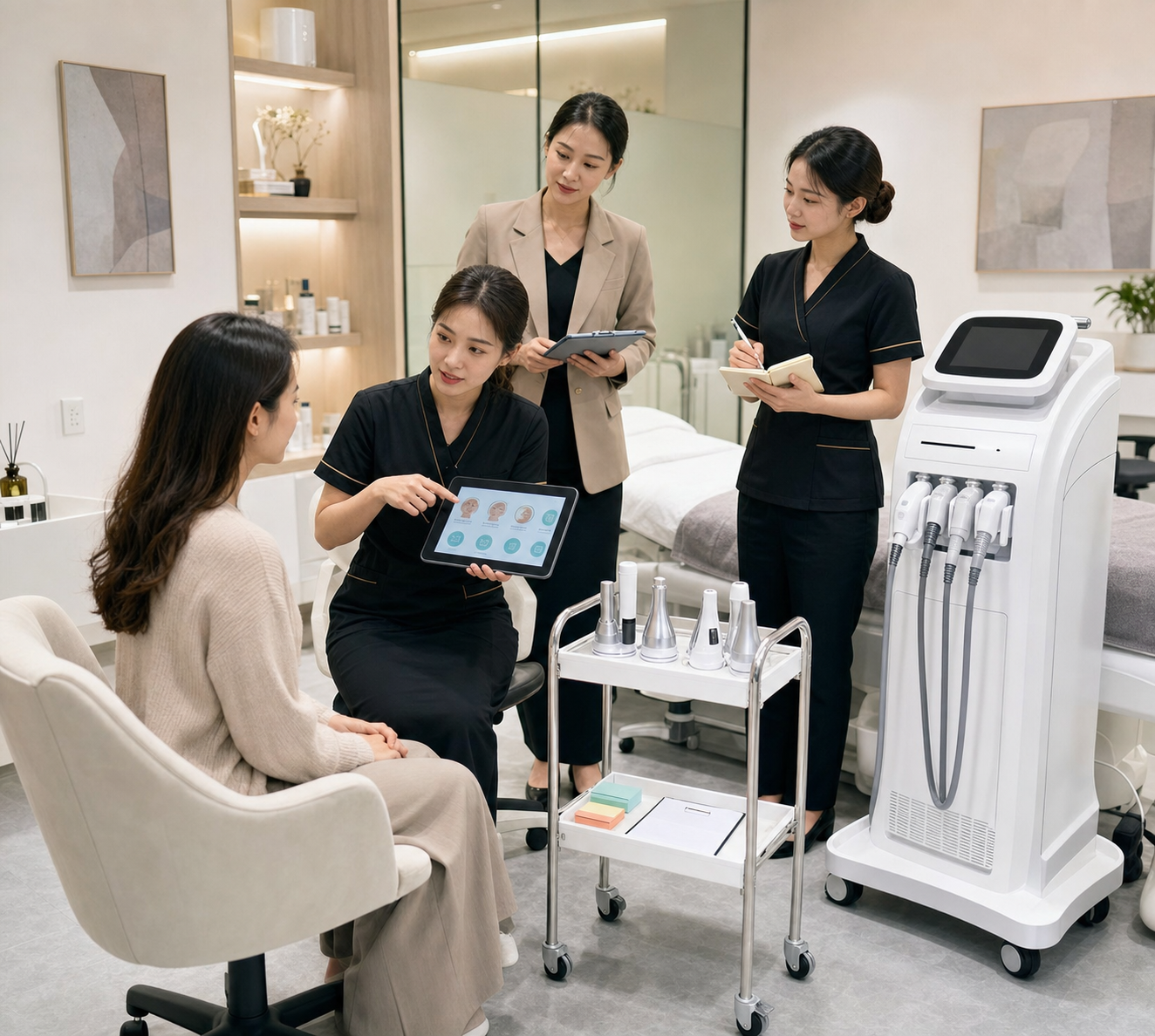
Com base na sua preocupação com a pele, o seu tratamento atual está ajudando na hidratação, mas a firmeza da parte inferior do rosto ainda precisa de mais suporte. Este projeto com equipamentos foi desenvolvido como um aprimoramento do seu plano de cuidados atual. Podemos começar com uma sessão experimental e, em seguida, decidir se um curso de 6 sessões é adequado.
A primeira versão vende as funções da máquina. A segunda versão conecta o projeto com as preocupações do cliente, o histórico de serviços atual e os próximos passos. Essa é a diferença entre apresentação técnica e consultoria profissional.
Etapa 1: Treine a equipe sobre os problemas dos clientes antes que a máquina entre em funcionamento.
Muitos salões treinam seus funcionários apenas na operação dos equipamentos. Isso é necessário, mas não suficiente. Os funcionários também precisam entender as preocupações dos clientes.
O treinamento deve começar com os problemas mais comuns enfrentados pelos clientes:
- Obstrução dos poros.
- Ressecamento e desidratação.
- Desconforto em peles sensíveis.
- Textura da pele.
- Firmeza facial.
- Problemas na linha da mandíbula e no pescoço.
- Sinais precoces de envelhecimento.
- Preocupações com o contorno corporal.
- Tratamento da pele com tendência acneica, quando apropriado.
- Cuidados pós-operatórios para acalmamento e manutenção.
Em seguida, associe cada preocupação às categorias de equipamentos adequadas:
- Pequenas bolhas ou hidromaternidade facial para limpeza e hidratação.
- LED para efeito calmante e auxílio na manutenção.
- RF para posicionamento de projetos de firmeza e antienvelhecimento.
- EMS ou microcorrente para suporte do contorno facial.
- Ultrassonografia para introdução e cuidados relacionados à hidratação.
- Detecção de pele por IA para consultoria e elaboração de planos.
- Dispositivos de modelagem corporal para gestão estruturada do corpo.
Quando os funcionários entendem primeiro o problema do cliente, fica mais fácil explicar o funcionamento da máquina.
Etapa 2: Crie um processo de consulta simples
Esteticistas não conseguem vender bem se pularem a consulta. O cliente precisa primeiro entender por que o serviço é relevante.
Um processo de consulta simples pode incluir:
- Pergunte qual é a principal preocupação do cliente.
- Analisar o histórico de cuidados atual.
- Pergunte se eles já tentaram realizar projetos com equipamentos antes.
- Pergunte o que os preocupa: preço, dor, segurança, efeito ou tempo.
- Utilize análise da pele, observação visual ou fotografias, se apropriado.
- Explique a situação atual em linguagem simples.
- Recomende um projeto adequado, não cinco projetos de uma só vez.
- Explique o que um único julgamento pode e não pode demonstrar.
- Ofereça um pacote inicial ou uma opção de upgrade.
Perguntas úteis:
- Que mudança você mais gostaria de ver nos próximos 1 a 3 meses?
- Que aspecto dos seus cuidados atuais lhe parece insuficiente?
- Você já tentou realizar projetos com equipamentos antes?
- Você ficou satisfeito com a experiência?
- Você se preocupa mais com conforto, preço, efeito ou segurança?
- Você prefere experimentar primeiro uma pequena atualização?
Isso ajuda a equipe a vender por meio da compreensão, e não da pressão.
Etapa 3: Forneça à equipe um roteiro padrão do projeto
Os funcionários precisam de um roteiro, mas o roteiro não deve soar robótico. Ele deve fornecer uma estrutura clara.
Um roteiro prático possui cinco partes:
1. Confirme a preocupação
Você mencionou que sua principal preocupação é a firmeza na parte inferior do rosto.
2. Conecte-se com o atendimento atual
Seu plano atual de hidratação é útil para a manutenção, mas tem limitações para essa questão.
3. Apresentar o Projeto de Equipamentos
Este projeto de RF foi concebido como uma atualização para clientes que desejam um suporte de fixação mais robusto.
4. Estabeleça expectativas realistas
Uma sessão ajuda você a entender o conforto e a adequação do tratamento. Uma melhora estável geralmente requer um curso de tratamento.
5. Ofereça um próximo passo
Podemos começar com uma sessão experimental hoje mesmo. Se você se sentir confortável, o valor da sessão experimental poderá ser descontado do curso de 6 sessões em até 72 horas.
Essa estrutura ajuda a equipe a evitar tanto a venda excessiva quanto a venda insuficiente.
Etapa 4: Crie cartões de projeto para cada máquina
Todo projeto de equipamento deve ter uma ficha de projeto interna simples para a equipe.
O cartão do projeto deve incluir:
- Nome do projeto.
- Cliente-alvo.
- Preocupação principal.
- Perfil de cliente adequado.
- Perfil de cliente inadequado ou cauteloso.
- Fluxo de tratamento.
- Sensação normal do cliente.
- O que uma única sessão pode mostrar.
- Duração recomendada do curso.
- Preço do pacote.
- Materiais de consumo utilizados.
- Conselhos sobre cuidados pós-operatórios.
- Objeções comuns.
- Roteiro da equipe.
- Mensagem de acompanhamento.
Por exemplo, um cartão de projeto de radiofrequência não deve apenas dizer "firmeza de radiofrequência". Deve explicar para quem o projeto se destina, como apresentá-lo, quantas sessões recomendar e como abordar questões de preço e conforto.
Isso torna as vendas menos dependentes do talento natural para vendas.
Passo 5: Use a análise de pele para facilitar a venda
A análise da pele ou a avaliação visual podem ajudar a equipe a passar da venda para a explicação. Os clientes são mais propensos a aceitar um projeto quando veem ou entendem sua própria condição.
As ferramentas de avaliação podem incluir:
- Analisador de pele com IA.
- Comparação de fotos de pele.
- Observação de umidade ou óleo.
- Análise de poros e textura.
- Foto do contorno facial.
- Questionário do cliente.
- Revisão do histórico de tratamento.
O objetivo não é assustar o cliente. O objetivo é conscientizá-lo.
Exemplo:
A análise mostra que seu principal problema não é apenas o ressecamento. Há também obstrução dos poros e textura irregular, então sugiro que não nos limitemos à hidratação básica. Podemos começar com uma limpeza facial com água e, em seguida, adicionar um tratamento calmante com LED.
Isso faz com que a recomendação pareça profissional.
Passo 6: Comece com acessórios de baixa pressão
Se os funcionários não estiverem confiantes, não peça que vendam pacotes grandes imediatamente. Comece com produtos adicionais que não pressionem o cliente a vender.
Exemplos:
- Adicione luzes de LED relaxantes após a limpeza.
- Adicione hidratação por ultrassom após a limpeza facial básica.
- Adicione uma análise de pele antes de uma limpeza facial regular.
- Adicione radiofrequência na linha da mandíbula durante um tratamento facial antienvelhecimento.
- Após a massagem, aplique EMS na parte inferior do rosto.
- Adicione um tratamento facial com hidratação profunda ao seu serviço de limpeza básico.
Isso é mais fácil para a equipe, pois eles não estão pedindo ao cliente para substituir todo o serviço. Eles estão introduzindo uma pequena atualização dentro de um projeto já conhecido.
Assim que os clientes experimentarem o valor do serviço, a equipe poderá recomendar um curso.
Etapa 7: Crie cartões de experiência que levem à compra de pacotes.
Os cartões de experiência podem ajudar a equipe a vender projetos de equipamentos, mas somente se estiverem vinculados a um pacote.
Um bom cartão de experiência deve incluir:
- Consulta.
- Verificação de adequação.
- Uma experiência focada em equipamentos.
- Avaliação de resultados ou impressões.
- Lembrete sobre os cuidados pós-operatórios.
- Recomendação de pacote.
- Regra de dedução da taxa de teste.
- Prazo de acompanhamento.
Não ofereça o cartão de experiência a um preço muito baixo. Preços muito baixos atraem clientes que só buscam descontos e fazem com que os funcionários sintam que estão vendendo serviços de baixo valor. Um período de teste pago funciona melhor para projetos com equipamentos profissionais.
Exemplo:
Primeira experiência de firmeza facial: consulta sobre o contorno facial + experiência de radiofrequência na linha da mandíbula + orientações sobre cuidados pós-tratamento + valor da sessão experimental dedutível do plano de 6 sessões em até 72 horas.
Isso proporciona aos funcionários um caminho claro para a conclusão do processo.
Etapa 8: Utilize três níveis de embalagem
Muitas vezes, as esteticistas falham porque não sabem o que vender após o teste. O salão deve preparar três níveis de pacotes.
Pacote Inicial
3 sessões. Indicado para clientes que desejam testar a confiança e o conforto.
Pacote padrão
6 sessões. Indicado para clientes com objetivos claros e orçamento moderado.
Pacote Premium
De 10 a 12 sessões. Indicado para clientes de alto valor, tratamento antienvelhecimento ou planos de cuidados com a pele e o corpo a longo prazo.
Essa estrutura oferece opções aos funcionários. Se o cliente rejeitar o pacote premium, os funcionários podem oferecer o plano padrão ou inicial em vez de perder a venda completamente.
Etapa 9: Ensine a equipe a lidar com objeções comuns.
A maioria dos esteticistas precisa de roteiros para lidar com objeções. Eles não devem discutir com os clientes. Devem ouvir, confirmar e responder com calma.
Se o cliente disser: É muito caro
Os funcionários podem dizer:
Entendo. Este projeto não pretende substituir todos os serviços que você oferece. Ele se concentra na questão que você mencionou. Podemos começar com o pacote inicial e, se achar adequado, você poderá fazer um upgrade posteriormente.
Se o cliente disser: "Tenho medo que doa"
Os funcionários podem dizer:
Podemos começar com uma configuração suave e explicar a sensação normal antes de iniciarmos. Se você se sentir desconfortável, podemos parar ou ajustar. Também verificaremos se o projeto é adequado antes do tratamento.
Se o cliente disser: Não vejo o efeito
Os funcionários podem dizer:
Uma sessão é dedicada principalmente ao conforto e à adequação do equipamento. Projetos com equipamentos geralmente funcionam melhor como um curso. Registraremos seu feedback e revisaremos o plano após algumas sessões.
Se o cliente disser: Preciso pensar a respeito
Os funcionários podem dizer:
Claro. Enviarei o resumo da análise de hoje e o plano recomendado. Se você decidir dentro de 72 horas, a taxa de experiência de hoje ainda poderá ser deduzida do pacote.
Se o cliente disser: "Já tentei algo parecido antes"
Os funcionários podem dizer:
É útil saber disso. Máquinas, configurações, operadores e planos de curso diferentes podem proporcionar sensações distintas. Podemos verificar primeiro se este projeto é realmente adequado à sua situação atual.
Os funcionários devem praticar esses roteiros em dramatizações até que soem naturais.
Etapa 10: Separe as funções de Operador Técnico e Consultor de Vendas, se necessário.
Algumas esteticistas são excelentes profissionais, mas têm dificuldade em fechar negócios. Outras são ótimas comunicadoras, mas não tão boas tecnicamente. Os salões podem estruturar as funções de forma mais flexível.
Modelos possíveis:
- O consultor sênior é responsável pela análise e fechamento do pacote.
- A esteticista realiza o tratamento e explica os benefícios.
- O gerente da loja é responsável pelos upgrades de planos de assinatura de alto valor.
- A nova equipe introduz apenas complementos.
- Funcionários experientes vendem cursos completos.
Isso impede que o salão espere que todos os funcionários façam tudo imediatamente. Com o tempo, os operadores podem ser treinados para se tornarem consultores.
Etapa 11: Forneça ferramentas aos funcionários, não apenas metas.
Os gerentes costumam definir metas de vendas sem fornecer as ferramentas necessárias. Isso gera estresse, mas não conversões.
Necessidade de pessoal:
- Cartões de projeto.
- Formulários de consulta.
- Modelos de análise de pele.
- Lista de preços.
- Folha comparativa de embalagens.
- Regras do cartão de experiência.
- Roteiros de objeção.
- Padrões para fotos de antes e depois.
- Cartões de acompanhamento pós-venda.
- Modelos de mensagens de acompanhamento.
- Planilha de acompanhamento de clientes.
- Vídeos de treinamento.
Se os funcionários tiverem que inventar explicações para cada consulta, a conversão será instável.
Etapa 12: Crie um sistema de acompanhamento
Muitos clientes não compram imediatamente após o primeiro contato. Isso não significa que estejam perdidos. O acompanhamento pode convertê-los posteriormente.
Uma mensagem de acompanhamento deve incluir:
- Obrigado pela sua visita.
- Resumo da reclamação do cliente.
- O que o julgamento demonstrou.
- Próximo passo recomendado.
- Opções de pacote.
- Data limite para dedução da taxa de teste, se aplicável.
- Lembrete sobre os cuidados pós-operatórios.
- Próximo horário de consulta.
Exemplo:
Hoje focamos na hidratação e na textura da pele. Sua pele ficou mais confortável após a sessão, mas para uma manutenção estável, é necessário acompanhamento contínuo. Sugiro o plano de hidratação e barreira cutânea com 6 sessões. Se você decidir continuar o tratamento em até 72 horas, o valor da sessão experimental de hoje será descontado do total.
O acompanhamento deve ser personalizado, não uma propaganda genérica.
Etapa 13: Utilize incentivos éticos
Os incentivos de vendas podem ajudar, mas não devem encorajar vendas agressivas ou promessas irrealistas.
Bom modelo de incentivos:
- Consulta de recompensa pela conclusão.
- Recompensar a conversão de testes em compras.
- Renovação do pacote de recompensas.
- Recompense a fidelização do cliente.
- Recompense uma baixa taxa de reclamações.
- Recompense o registro correto de dados.
- Recompense o desempenho da equipe, não apenas as vendas individuais.
Evite incentivos que pressionem os funcionários a vender projetos inadequados ou a exagerar resultados. A confiança do cliente a longo prazo é mais valiosa do que uma venda sob pressão.
Etapa 14: Analisar os dados de vendas semanalmente
Se as esteticistas não conseguem vender, os gerentes precisam de dados para identificar o ponto fraco.
Acompanhar:
- Número de clientes consultados.
- Número de clientes que receberam propostas de projetos de equipamentos.
- Número de testes agendados.
- Taxa de conclusão do ensaio clínico.
- Conversão de amostra para embalagem.
- Valor médio do pacote.
- Conversão de acompanhamento.
- Principais objeções.
- Taxa de fechamento da equipe.
- Reclamações de clientes.
- Recomprar após o primeiro uso.
Se poucos clientes recebem a proposta do projeto, a equipe pode ficar insegura. Se muitos clientes experimentam, mas não compram, o pacote ou o roteiro de fechamento podem ser fracos. Se os clientes compram, mas não retornam, o problema pode estar na gestão de expectativas ou na qualidade do serviço.
Passo 15: Pratique a dramatização todas as semanas
O treinamento de vendas deve ser repetido. Uma única sessão de treinamento não é suficiente.
As sessões semanais de dramatização podem incluir:
- Apresentando o projeto em 60 segundos.
- Explicando o resultado de uma análise de pele.
- Respondendo a objeções de preço.
- Explicando as expectativas para uma única sessão.
- Recomendamos um pacote inicial de 3 sessões.
- Atualização de um plano de atendimento básico.
- Dando seguimento ao contato com um cliente que disse precisar pensar.
A dramatização deve ser específica. Não se limite a dizer "venda melhor". Pratique as conversas exatas que os funcionários enfrentam todos os dias.
Passo 16: Mantenha as afirmações verdadeiras e realistas.
Quando os funcionários se sentem pressionados a vender, podem prometer mais do que podem cumprir. Isso gera riscos. O salão deve treinar a equipe para usar uma linguagem honesta e que explique os resultados.
Evitar:
- Resultados garantidos.
- Efeito permanente.
- Pedidos de reembolso de tratamento médico.
- Transformação em uma única sessão.
- Seguro para todos.
- O resultado é o mesmo para todos os clientes.
- Histórias falsas de antes e depois.
Melhorar:
- Este projeto foi desenvolvido para apoiar o cuidado contínuo da pele.
- A adequação do produto deve ser verificada primeiro.
- Os resultados variam de acordo com a condição individual.
- Um curso geralmente é mais apropriado do que uma única sessão.
- Analisaremos sua resposta e ajustaremos o plano, se necessário.
A linguagem honesta deixa os funcionários mais à vontade, pois eles não sentem que estão enganando os clientes.
Etapa 17: Ajude a equipe a acreditar no projeto
Os funcionários não podem vender aquilo em que não acreditam. Se as esteticistas não entendem o aparelho, nunca o experimentaram ou tiveram resultados ruins, evitarão vendê-lo.
Os salões devem:
- Permita que os funcionários vivenciem o projeto.
- Explique claramente o papel da máquina.
- Mostrar casos reais de clientes com autorização.
- Compartilhe os resultados do curso com honestidade.
- Treine os funcionários sobre os benefícios e seus limites.
- Explique o custo de materiais de consumo e manutenção.
- Convide os formadores dos fornecedores ou distribuidores para uma formação de reciclagem.
- Analisar casos de sucesso durante as reuniões.
A confiança aumenta quando os funcionários veem um projeto funcionando em condições reais de salão de beleza.
Etapa 18: Conecte os projetos de equipamentos aos cartões de membro
Muitos salões já possuem membros. Projetos de equipamentos podem ser apresentados como melhorias em vez de vendas diretas.
Exemplos:
- O tratamento facial básico recebe um upgrade de hidratação facial.
- Membro do programa antienvelhecimento recebe recomendação para curso de radiofrequência.
- Membro da família com pele sensível recebe pacote calmante de LED.
- Membros VIP recebem análise de pele trimestral por IA.
- Membro da equipe de cuidados corporais recebe pacote de gerenciamento de contorno corporal.
Isso é mais fácil para os funcionários porque eles podem dizer:
Esta é uma atualização do seu plano de assinatura atual.
O cliente sente continuidade em vez de pressão.
Etapa 19: Criar um processo de suporte ao gerente
Os gerentes devem apoiar a equipe durante períodos de vendas difíceis.
O apoio útil do gestor inclui:
- Consultas conjuntas para pacotes de alto valor.
- Revisar as análises dos clientes com a equipe.
- Ajudando a fechar planos premium.
- Ouvindo gravações de dramatização.
- Verificando mensagens de acompanhamento.
- Analisando os registros de objeções.
- Ajustar embalagens que são difíceis de vender.
- Elogiar o processo correto, e não apenas o pagamento final.
Quando os funcionários sabem que os gerentes vão ajudar, eles ficam mais dispostos a apresentar projetos de equipamentos.
Etapa 20: Solicite suporte de vendas aos distribuidores e fabricantes.
Distribuidores e fabricantes de equipamentos de beleza devem apoiar os salões com mais do que apenas treinamento operacional. Eles podem ajudar a equipe a vender, fornecendo:
- Scripts do projeto.
- Modelos de pacotes de tratamento.
- Modelos de cartões de experiência.
- Vídeos de treinamento.
- Formulários de consulta.
- Padrões para fotos de antes e depois.
- Roteiros para objeções de clientes.
- Texto para redes sociais.
- Mensagens de acompanhamento.
- Calculadora de custos de materiais de consumo.
- Estudos de caso por tipo de salão.
- Recapacitação de funcionários.
Se um fornecedor ensina apenas os botões e não o funcionamento do projeto, os salões podem precisar desenvolver seu próprio sistema de vendas.
Um plano de treinamento de 30 dias para salões de beleza
Semana 1: Treinamento sobre Produto e Problemas do Cliente
Treinar a equipe sobre o funcionamento da máquina, as preocupações dos clientes, os clientes adequados, as contraindicações e o valor do projeto.
Semana 2: Consulta e Prática de Roteiro
Pratique perguntas de clientes, explique a análise da pele, apresente o projeto em 60 segundos e faça recomendações simples de complementos.
Semana 3: Encerramento do Cartão de Experiência e do Pacote
Treinar a equipe sobre o processo de julgamento, níveis de pacotes, explicação de preços, objeções e dedução da taxa de julgamento.
Semana 4: Acompanhamento e revisão de dados
Analise as mensagens de acompanhamento, os dados de conversão, as objeções dos clientes, a confiança da equipe e o desempenho do pacote. Ajuste os roteiros e os cartões com base no feedback recebido.
Este plano dá aos funcionários tempo para desenvolverem confiança em vez de esperarem resultados imediatos.
Erros comuns a evitar
O primeiro erro é culpar os funcionários sem lhes fornecer um sistema.
O segundo erro é treinar apenas a operação da máquina e ignorar a consulta.
O terceiro erro é pedir aos funcionários que vendam pacotes caros sem opções básicas.
O quarto erro é usar alegações exageradas para forçar a conversão.
O quinto erro é não dar seguimento aos clientes que precisam de tempo.
O sexto erro é oferecer incentivos apenas com base no valor das vendas e ignorar reclamações ou pedidos de recompra.
O sétimo erro é não acompanhar o processo de vendas.
O oitavo erro é usar o mesmo roteiro para todos os clientes.
Perguntas frequentes
Por que as esteticistas podem operar a máquina, mas não podem vender o serviço?
Porque o treinamento operacional e o treinamento de vendas são diferentes. Os funcionários podem saber como usar a máquina, mas não como identificar as necessidades do cliente, explicar o valor dela, lidar com objeções, recomendar pacotes e fazer o acompanhamento.
Os salões de beleza devem obrigar os cabeleireiros a vender pacotes de equipamentos caros?
Não. Os salões devem primeiro fornecer roteiros, fichas de projeto, ferramentas de consulta, roteiros de experiência, níveis de pacotes, simulações e suporte do gerente. Pressão sem ferramentas adequadas geralmente diminui a confiança.
Qual é a maneira mais fácil para os funcionários começarem a vender projetos de equipamentos?
Comece com pequenos complementos dentro de serviços já conhecidos, como LED após a limpeza, tratamento facial com hidratação, radiofrequência para a linha da mandíbula ou análise da pele antes do tratamento facial. Em seguida, direcione os clientes para pacotes de tratamentos.
Com que frequência os salões de beleza devem treinar seus funcionários sobre a venda de equipamentos?
O treinamento deve ser repetido semanalmente ou mensalmente, especialmente quando novas máquinas, novos funcionários, novos pacotes ou novas promoções são introduzidos. Sessões curtas de dramatização costumam ser mais eficazes do que uma longa palestra.
Como os salões de beleza podem evitar alegações de vendas exageradas?
Utilize roteiros aprovados, explique que os resultados variam, evite promessas garantidas ou alegações médicas, use padrões realistas de antes e depois e treine a equipe para vender planos em vez de resultados milagrosos.
Conclusão
Quando os profissionais de beleza não conseguem vender projetos de equipamentos de estética, os salões não devem simplesmente culpar a equipe ou baixar os preços. Devem construir um sistema de vendas completo: treinamento sobre problemas do cliente, processo de consultoria, roteiros de projetos, fichas de projetos, fichas de experiência, diferentes níveis de pacotes, gestão de objeções, acompanhamento, incentivos éticos, simulações semanais e análise de dados.
As melhores vendas de equipamentos não parecem uma venda agressiva. Parecem recomendações profissionais baseadas na real necessidade do cliente. Quando a equipe sabe como diagnosticar, explicar, apresentar e acompanhar o cliente, os projetos de equipamentos se tornam mais fáceis de vender, mais fáceis de repetir e mais fáceis de transformar em receita de longo prazo para o salão.