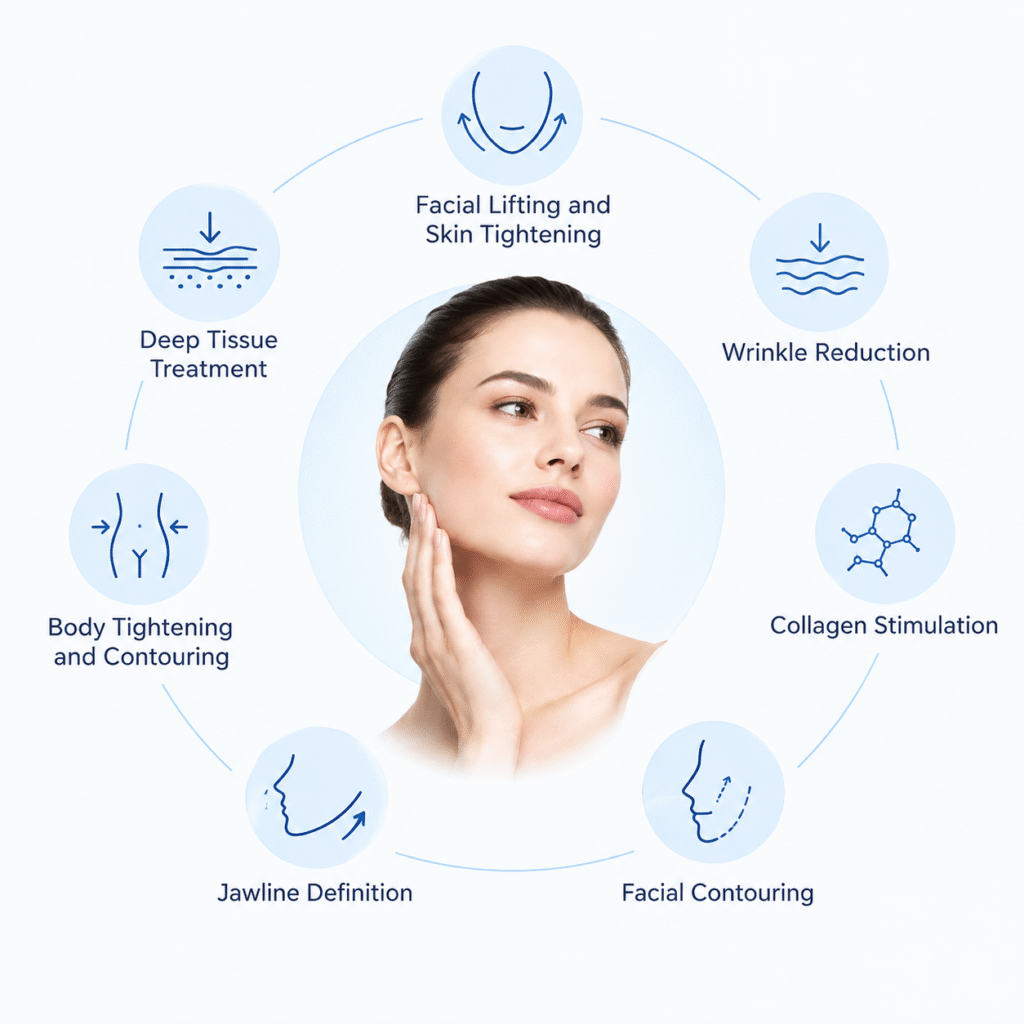
As tecnologias estéticas não invasivas estão evoluindo rapidamente, e dois tratamentos que são frequentemente comparados em clínicas modernas são: sistemas faciais de plasma frio e dispositivos de microagulhamento por radiofrequência. Embora ambos os métodos visem melhorar a qualidade da pele, a acne e os sinais de envelhecimento, eles atuam em mecanismos biológicos completamente diferentes. Compreender essas diferenças é essencial para clínicas, distribuidores e profissionais da área ao escolherem a tecnologia adequada para as diferentes necessidades de cada paciente.
1. Princípios da Tecnologia: Bioestimulação Superficial vs. Remodelação Dérmica Profunda
1.1 Plasma frio: regeneração de superfície não térmica
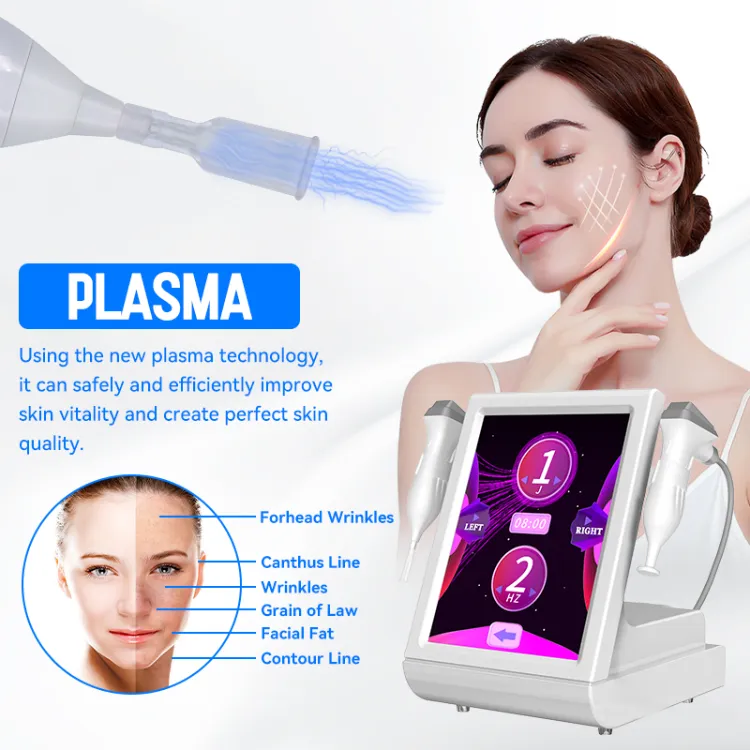
O plasma frio é um gás ionizado aplicado a uma temperatura próxima à ambiente que interage principalmente com o superfície da pele e camadas epidérmicas. Ele gera partículas reativas que ajudam a reduzir as bactérias, acalmar a inflamação e estimular uma leve regeneração celular.
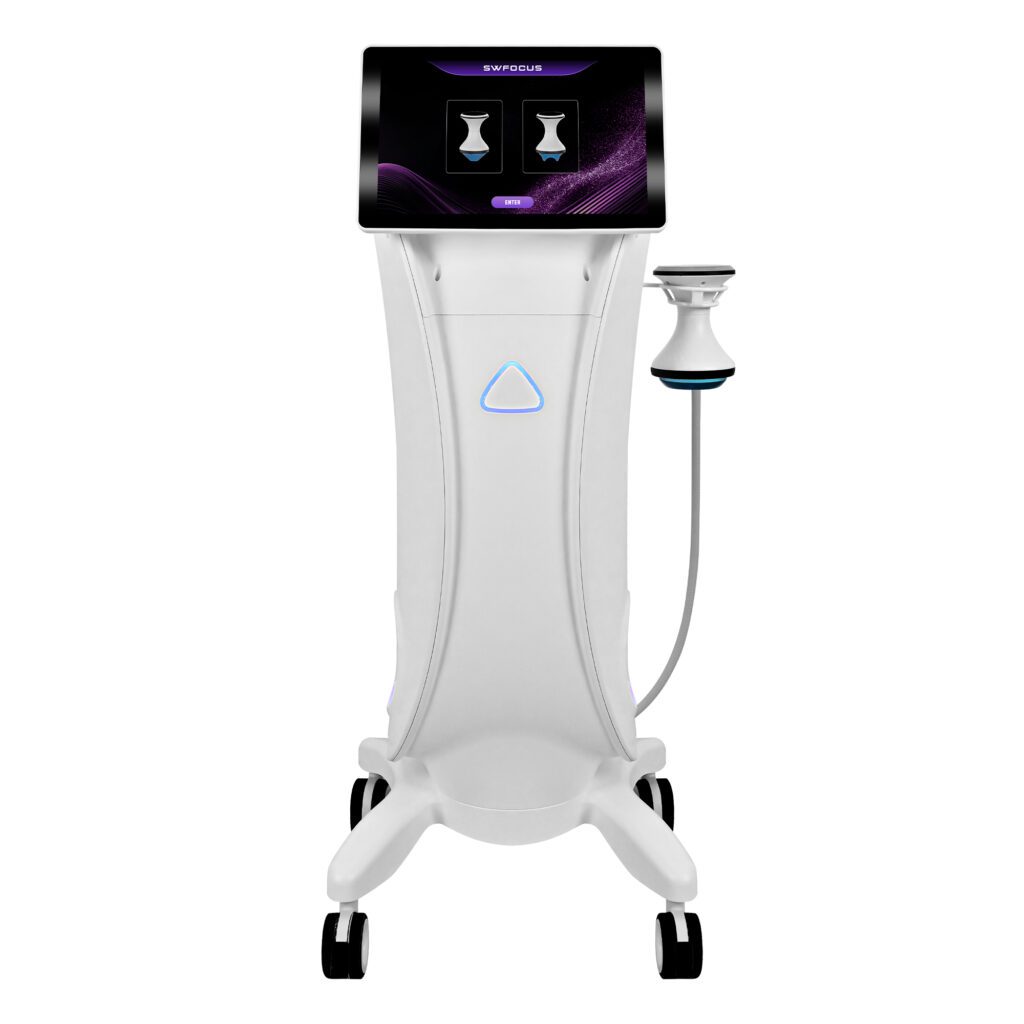
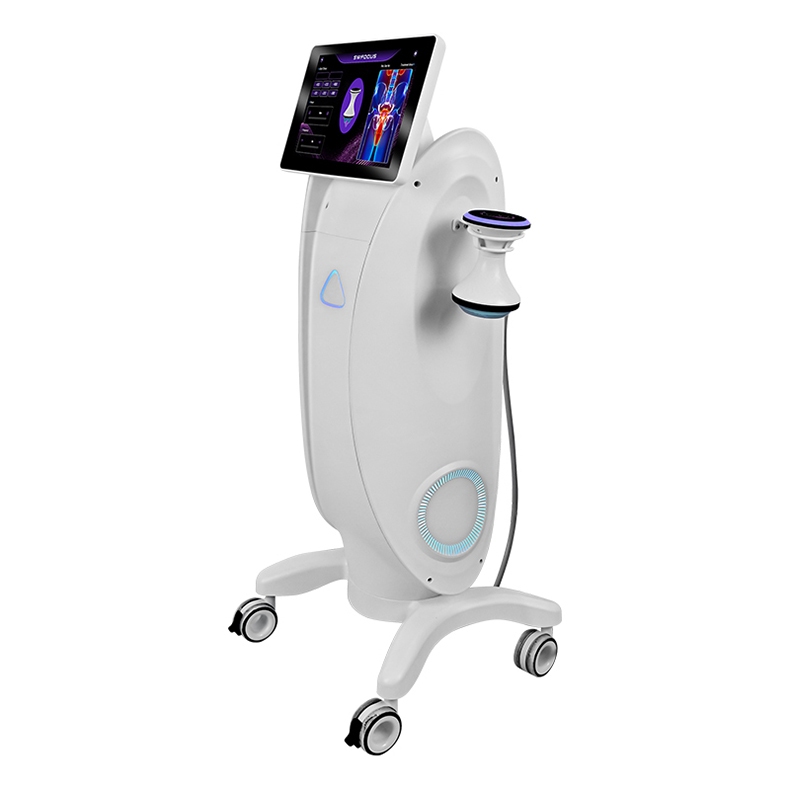
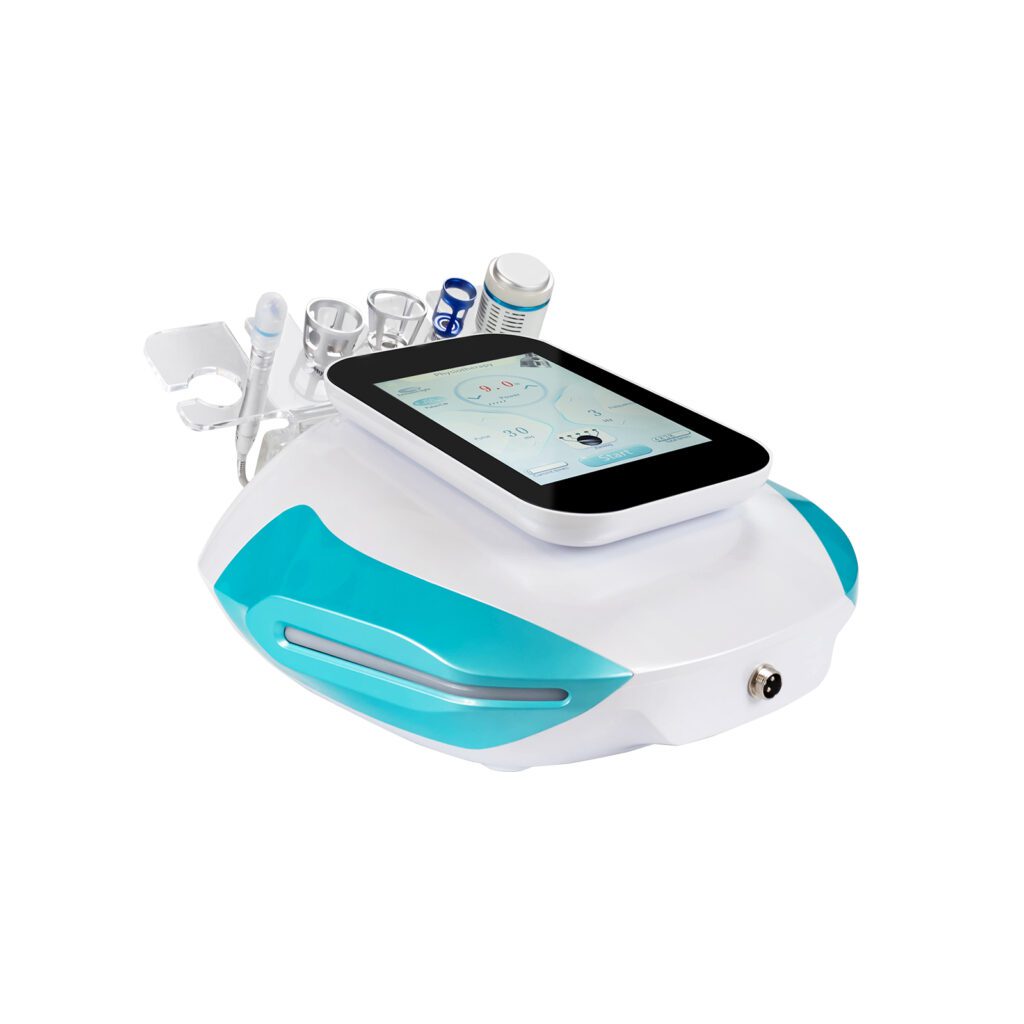
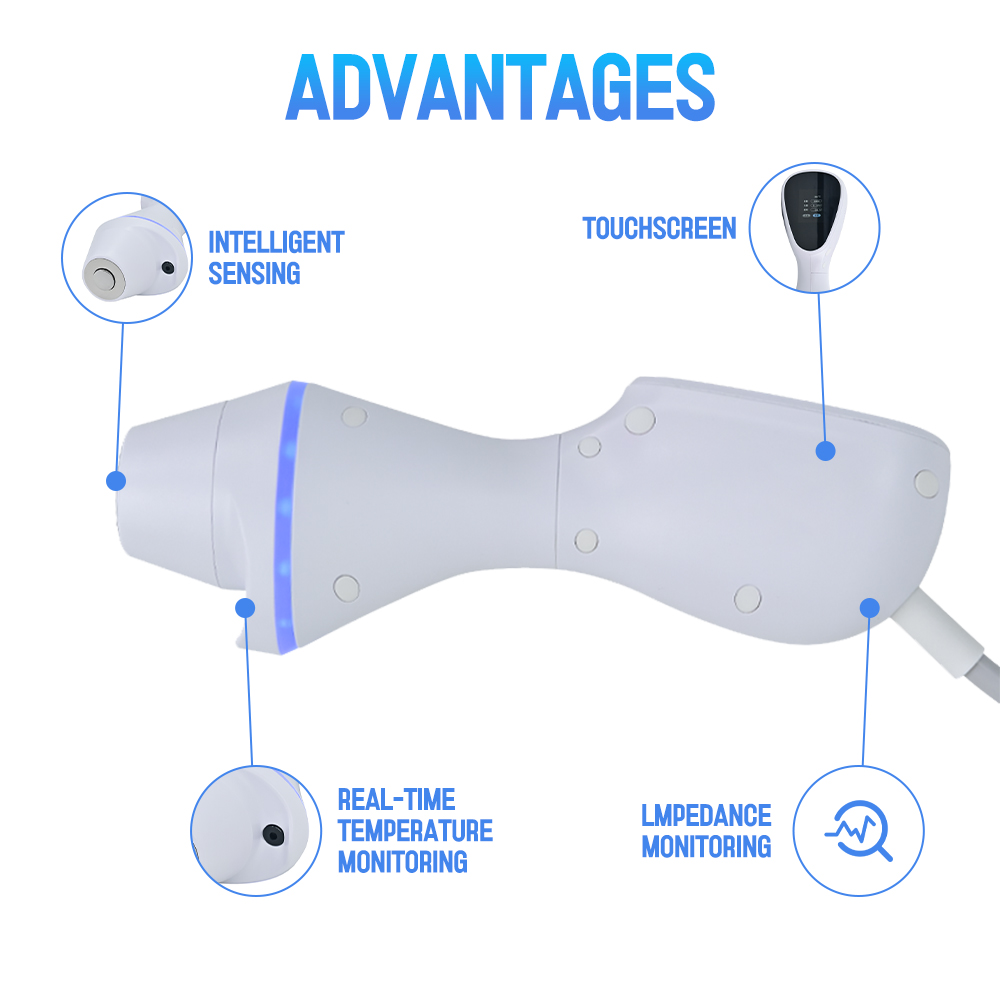
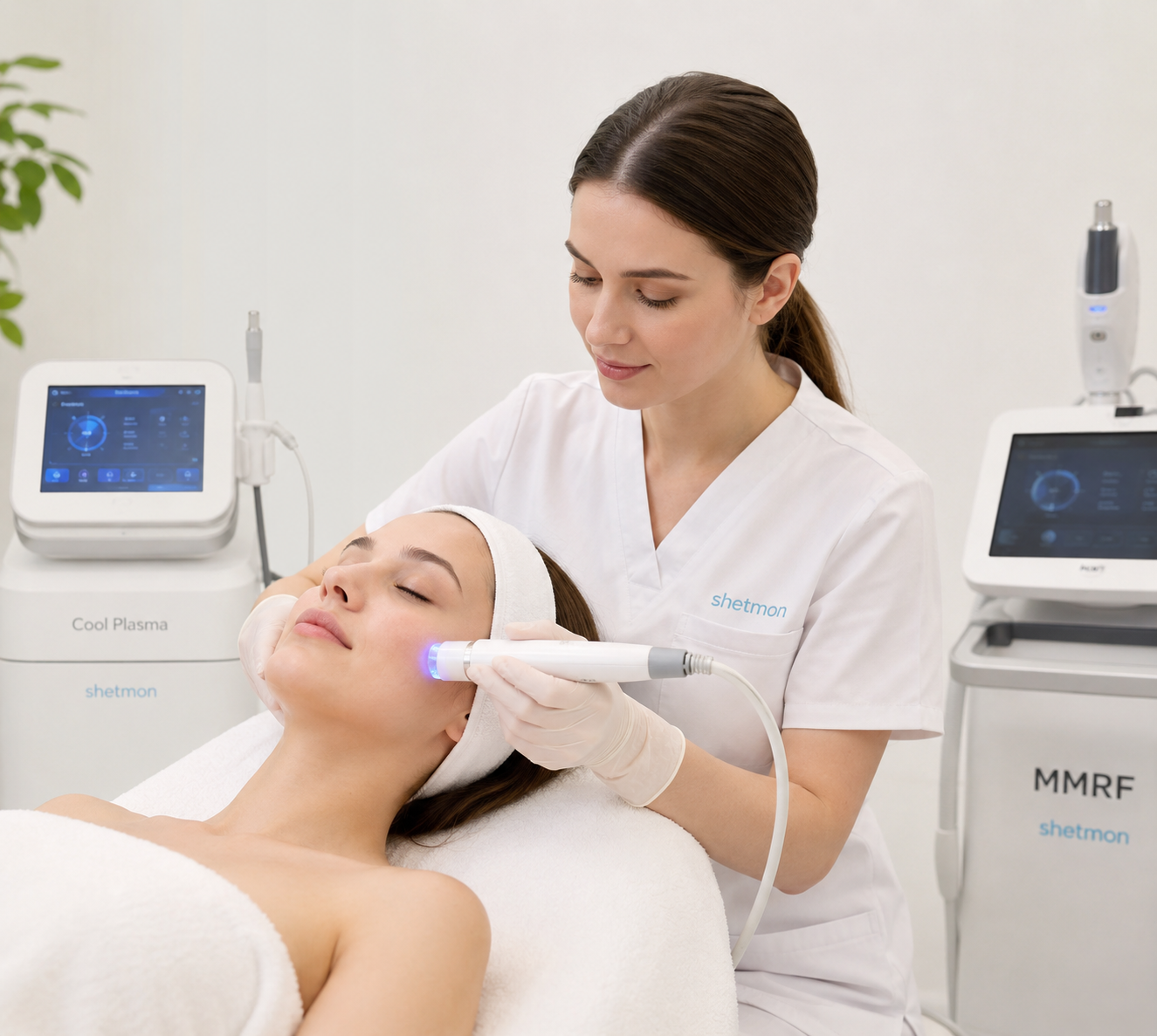
Em uso clínico, um sistema como o Dispositivo facial Shefmon Cool Plasma Cold Fusion A0145 Fornece energia de plasma controlada sem causar danos pelo calor. Isso a torna especialmente adequada para peles sensíveis ou com tendência à acne, onde a proteção da barreira cutânea é uma prioridade.
Os principais mecanismos incluem:
- Ação antibacteriana contra microrganismos causadores da acne.
- Redução da inflamação e vermelhidão
- Estimulação da renovação superficial da pele
- Melhor absorção dos ativos de cuidados com a pele.
O plasma frio é, portanto, melhor descrito como um tratamento de bio-reequilíbrio em nível superficial em vez de uma questão estrutural profunda.
1.2 Microagulhamento por Radiofrequência: Lesão Controlada + Energia Térmica Profunda
A microagulhamento por radiofrequência combina duas tecnologias:
- Microlesões mecânicas por meio de agulhas ultrafinas
- Energia térmica de radiofrequência (RF) aplicada na derme
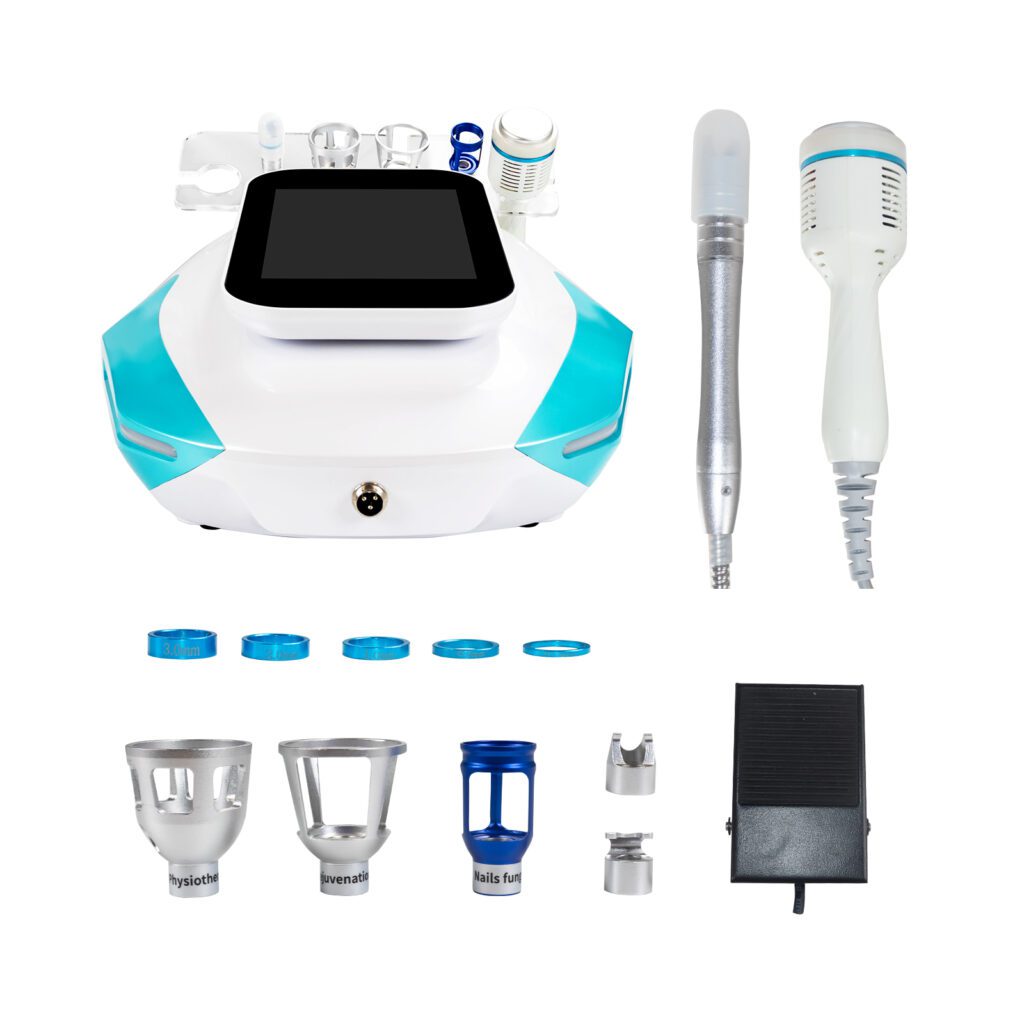
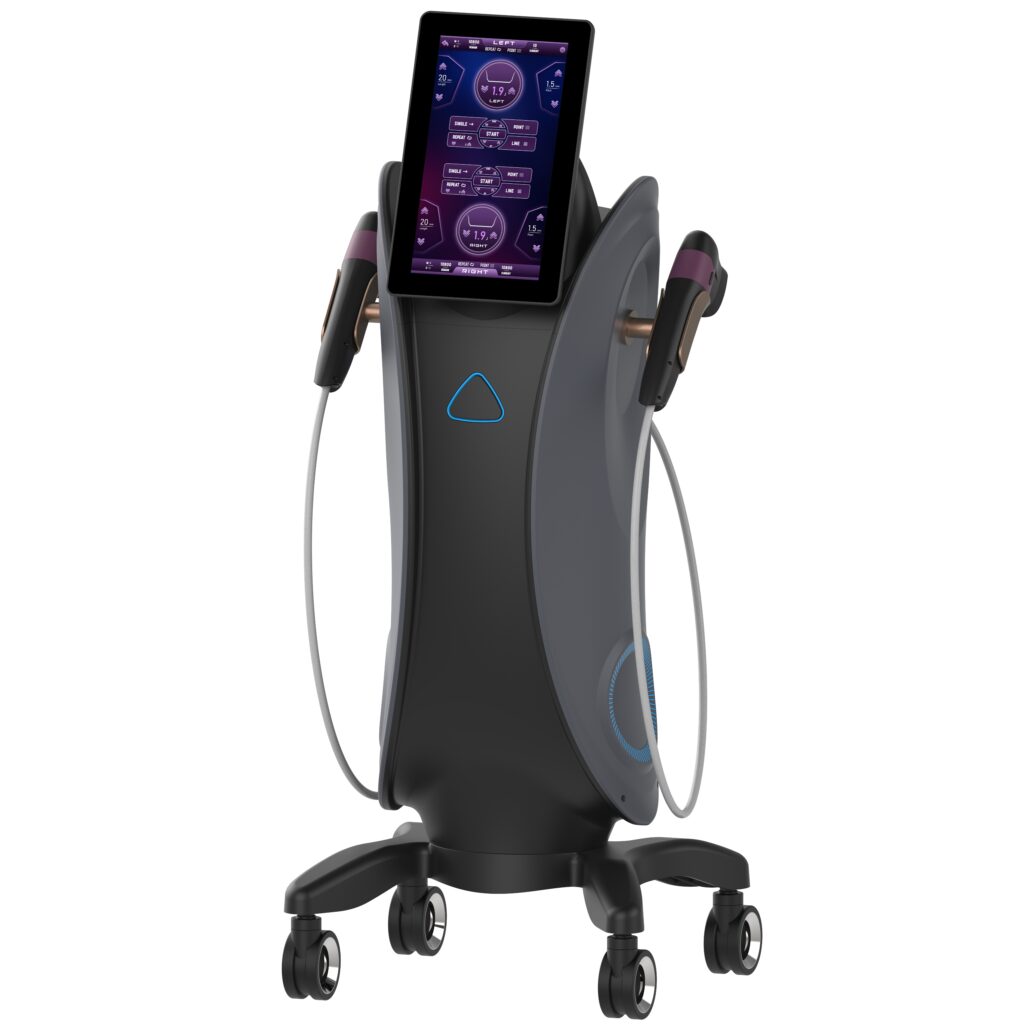
Um dispositivo como o Dispositivo de radiofrequência para microagulhamento Shefmon MMRF Deepth 8 A0152 Penetra na pele em profundidades controladas e libera calor diretamente nas camadas mais profundas do tecido. Isso desencadeia uma resposta de cicatrização mais forte e uma remodelação significativa do colágeno.
Principais características do mecanismo:
- Microcanais estimulam a resposta natural de reparo.
- A energia de radiofrequência aquece a derme (contração do colágeno).
- Produção de colágeno e elastina a longo prazo
- Aperto estrutural das camadas da pele
Ao contrário do plasma frio, o microagulhamento por radiofrequência é um tecnologia de remodelação dérmica profunda.

2. Profundidade do tratamento e efeitos biológicos
2.1 Plasma frio: ação focada na epiderme
O plasma frio afeta principalmente as camadas externas da pele. Seu impacto biológico é indireto, mas poderoso em termos de:
- equilíbrio do microbioma da pele
- Controle da inflamação superficial
- Reparo de barreira
- Apoio à recuperação pós-tratamento
Por não depender de calor ou penetração, o tempo de recuperação é mínimo e geralmente é adequado para uma ampla gama de tipos de pele, incluindo peles sensíveis.
2.2 Microagulhamento por radiofrequência: transformação ao nível da derme
A microagulhamento por radiofrequência atua em camadas mais profundas da derme, onde se encontram as fibras de colágeno e os fibroblastos. A energia térmica controlada pode atingir temperaturas que induzem a contração e a remodelação do colágeno.
Isso o torna especialmente eficaz para:
- Cicatrizes profundas de acne
- Flacidez da pele (contorno da mandíbula, bochechas, pescoço)
- Redução de rugas
- Poros dilatados
No entanto, como cria microlesões e calor controlados, o tempo de recuperação é mais longo do que os tratamentos com plasma frio.
3. Aplicações Clínicas e Objetivos do Tratamento
3.1 Quando o plasma frio é a melhor opção
O plasma frio é ideal para clínicas que visam:
- Pele com tendência acneica ou inflamada
- Clientes com pele sensível
- Protocolos de recuperação pós-tratamento
- programas de reparação da barreira cutânea
- Rejuvenescimento suave e realce da luminosidade
O Sistema de plasma frio Shefmon A0145 é frequentemente posicionado como um tratamento facial isolado ou terapia complementar após procedimentos mais intensivos, como lasers ou peelings.
Resultados típicos:
- Aparência de pele mais calma
- Redução da vermelhidão e das erupções cutâneas
- Ambiente de superfície da pele mais saudável
3.2 Quando o microagulhamento por radiofrequência é a melhor opção
A microagulhamento por radiofrequência é o tratamento preferido para problemas estruturais que exigem uma remodelação mais profunda, tais como:
- Cicatrizes de acne (moderadas a graves)
- Linhas finas e rugas
- Perda de elasticidade
- Poros dilatados com flacidez da pele
O Sistema de microagulhamento por radiofrequência Shefmon A0152 É projetado para protocolos antienvelhecimento mais avançados, onde a firmeza visível e a reconstrução do colágeno são prioridades.
Resultados esperados:
- Textura da pele mais firme
- Definição de contorno aprimorada
- Estimulação de colágeno a longo prazo
- Efeitos antienvelhecimento mais significativos
4. Perfil de tempo de inatividade, conforto e segurança
4.1 Plasma Frio: Tempo de Inatividade Mínimo
Os tratamentos com plasma frio normalmente envolvem:
- Sem dor ou sensação de leve aquecimento
- Nenhuma lesão visível na superfície da pele.
- Tempo de recuperação mínimo ou inexistente
- Adequado para sessões frequentes.
Isso torna o tratamento altamente atrativo para tratamentos de manutenção e clínicas de grande volume.
4.2 Microagulhamento por Radiofrequência: Fase de Recuperação Controlada
A microagulhamento por radiofrequência geralmente envolve:
- Vermelhidão e inchaço leve por 1 a 3 dias.
- Sensibilidade temporária
- Microlesões leves e pontuais
- Recuperação mais rápida em comparação com o plasma frio.
No entanto, esse período de inatividade corresponde a efeitos mais intensos de remodelação do colágeno.
5. Diferença fundamental: a profundidade determina o resultado.
A diferença fundamental entre essas duas tecnologias é simples:
- Plasma frio = Cicatrização de superfície + ação antimicrobiana + reparo da barreira cutânea
- Microagulhamento por radiofrequência = Remodelação dérmica profunda + firmeza + indução de colágeno
O plasma frio concentra-se em saúde da pele e meio ambiente, enquanto o microagulhamento por radiofrequência se concentra em transformação estrutural.
Conclusão
Plasma frio e Microagulhamento por radiofrequência Não são tecnologias concorrentes — elas atuam em diferentes camadas da biologia da pele e têm objetivos clínicos distintos. O plasma frio é mais indicado para rejuvenescimento suave, tratamento da acne e recuperação pós-tratamento. Já o microagulhamento com radiofrequência é uma solução mais intensiva para o envelhecimento, cicatrizes e flacidez da pele. Para clínicas de estética modernas, a combinação de ambos os sistemas — como o uso de plasma frio para acalmar e promover a recuperação, e o microagulhamento com radiofrequência para reparação estrutural — pode criar um ecossistema de tratamento mais completo.