最適化されたソリューション、専門的なバルブの知識、業界ニュースを共有する
ご希望の用語やキーワードを入力すると、検索結果に関連記事が表示されます。お探しの回答が見つからない場合は、お気軽にお問い合わせください。喜んでお手伝いいたします。または、beauty@shefmon.comまで直接メールでお問い合わせください。
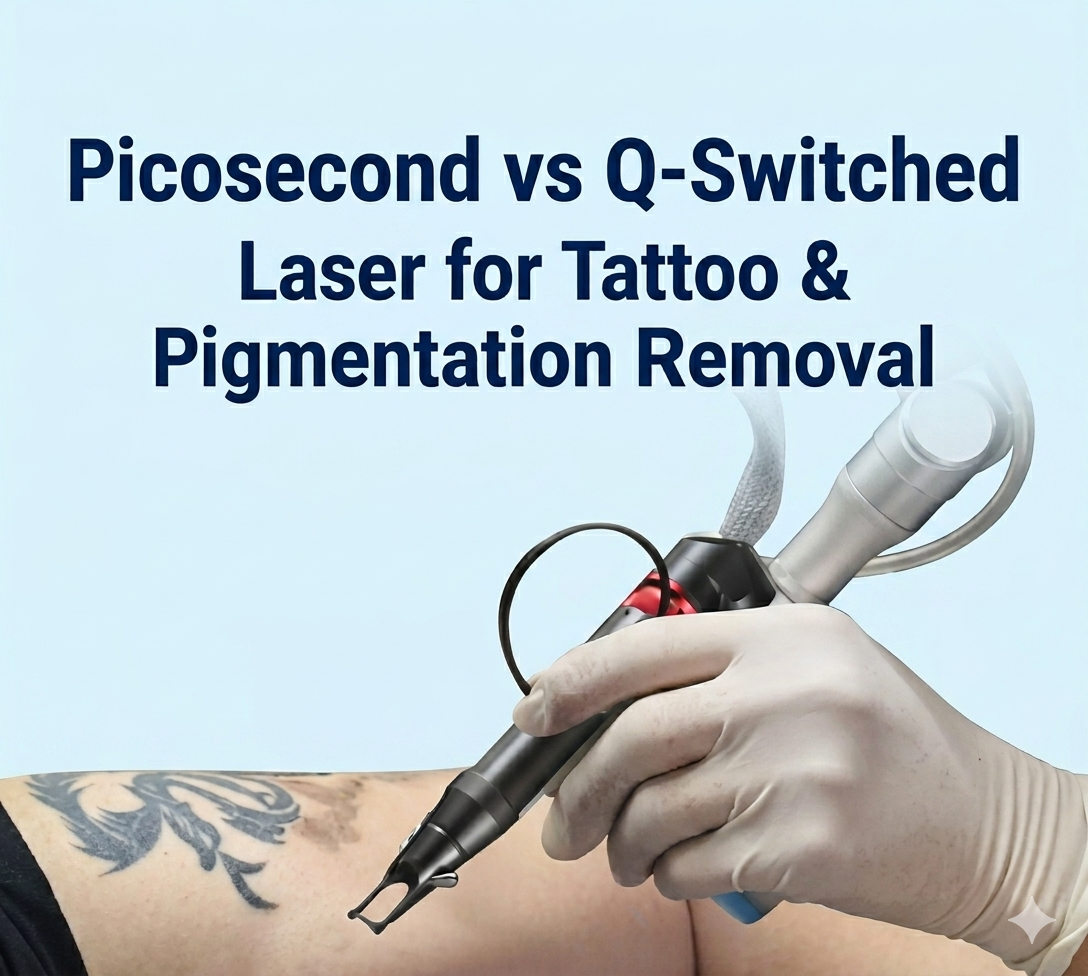
タトゥーと色素沈着除去におけるピコ秒レーザーとQスイッチレーザーの比較
- シェフモン
タトゥー除去や色素沈着治療は、世界中で最も人気のある非侵襲的な美容施術の一つとなっています。レーザー技術の進化に伴い、クリニックでは治療精度の向上、ダウンタイムの短縮、肌の回復促進を目的として、QスイッチNd:YAGレーザーやピコ秒レーザーといった先進的なシステムを導入するケースが増えています。しかし、特に頑固なタトゥー、肝斑、そばかす、炎症後色素沈着などの治療法を選ぶ際には、これらの技術の違いを理解するのが難しいと感じる方も多いでしょう。.
現代のシステムのような A0507 1064nm/532nm スーパーピコ秒レーザー装置 高度なレーザー技術と多用途な治療アプリケーションを組み合わせることで、クリニックは1つのプラットフォームで複数の肌の悩みに対応できるようになります。このガイドでは、ピコ秒レーザーとQスイッチレーザーの仕組み、それぞれの違い、そしてタトゥーや色素沈着の除去治療に広く用いられている理由について解説します。.
1. レーザーによるタトゥーと色素沈着除去が成長を続ける理由
近年、非侵襲的な皮膚治療への需要が著しく増加しています。多くのクライアントは、以下のような理由でレーザー治療を求めています。
- タトゥー除去
- そばかすとシミ
- 肝斑と色素沈着
- ニキビ跡と肌の色ムラ
- 肌の若返りとシワの改善
レーザー技術の進歩により、クリニックではより的を絞った治療を、より快適な治療とより短い回復時間で提供できるようになった。.
2. QスイッチNd:YAGレーザー技術の理解
QスイッチNd:YAGレーザーは、周囲の組織に過度の損傷を与えることなく色素を標的にできるため、長年にわたり美容医療で広く使用されてきました。.
2.1 Qスイッチレーザーの仕組み
Nd:YAGレーザー結晶は、以下のような特定の波長で高強度の光パルスを生成します。
- 1064nm
- 532nm
これらの波長は、タトゥーのインクや皮膚の下にある色素沈着病変に吸収されます。.
レーザーエネルギーは標的となる色素粒子を加熱して分解し、その後、体内の自然な代謝プロセスによって徐々に除去される。.
2.2ナノ秒パルス持続時間
Qスイッチレーザーは、ナノ秒単位で測定される極めて短いパルスを用いて動作する。.
これにより、システムは以下のことが可能になります。
- 高いピーク電力を供給する
- 不要な熱伝達を低減する
- 周囲の組織損傷を最小限に抑える
- 色素標的化時の精度を向上させる
2.3 一般的な用途
QスイッチNd:YAGレーザーは、一般的に以下の用途に使用されます。
- 黒いタトゥーの除去
- 濃い色素沈着
- そばかす
- シミ
- 太田母斑
- 肌の若返り
3. ピコ秒レーザーの特徴とは?
ピコ秒レーザー技術は、美容レーザーシステムの新たな世代を代表するものです。.
3.1 超短パルス技術
ナノ秒Qスイッチシステムとは異なり、ピコ秒レーザーはピコ秒単位、つまり1兆分の1秒の単位でエネルギーを供給します。.
この短いパルス持続時間は、熱損傷を低減しながら、より強い光音響圧力を生み出す。.
3.2 光音響効果
ピコ秒レーザーは、主に熱に頼るのではなく、機械的な圧力波を発生させて顔料粒子をはるかに小さな断片に粉砕する。.
粒子が小さいほど、体は自然に排出しやすくなります。.
3.3 熱損傷の軽減
ピコ秒技術の大きな利点の1つは、熱による副作用を軽減できることである。.
これは以下のリスクを軽減するのに役立つ可能性があります。
- 傷跡
- 過度の刺激
- 色素沈着
- 色素沈着低下
特に肌の色が濃いタイプの人に。.

4.ピコ秒レーザーとQスイッチレーザーの比較
どちらの技術もタトゥーや色素沈着の除去に用いられるが、重要な違いがある。.
4.1 パルス持続時間
主な違いは速度です。.
- Qスイッチレーザー:ナノ秒パルス
- ピコ秒レーザー:ピコ秒パルス
ピコ秒システムは、より短く、より強力なエネルギーパルスを提供する。.
4.2 治療効率
色素粒子がより小さな断片に分解されるため、ピコ秒レーザー治療は、特定のタトゥーの色や頑固な色素沈着に対して、より少ない回数の施術で済む場合があります。.
4.3 顔料の多様性
Qスイッチシステムは、多くの色素沈着の問題や濃い色のタトゥーインクに対して、依然として非常に効果的です。.
ピコ秒レーザーは、以下のような用途でよく用いられます。
- 耐性のあるタトゥー
- 多色のタトゥー
- 微細な色素粒子
- 敏感肌タイプ
5. さまざまなレーザー波長を理解する
A0507システムは、さまざまな色素ターゲットに対応するために複数の波長を備えています。.
5.1 1064nm波長
1064nmの波長は一般的に以下の用途に使用されます。
- 黒インク
- 濃い青色のインク
- 濃い色素沈着
この波長は皮膚のより深い層まで浸透する。.
5.2 532nm波長
532nmの波長は、以下の用途に有効です。
- 赤色顔料
- オレンジ色の顔料
- 表面の色素沈着
- そばかすとシミ
5.3 多波長対応の柔軟性
複数の波長を使用することで、クリニックはより幅広いタトゥーの色や色素沈着の問題に対応できるようになります。.
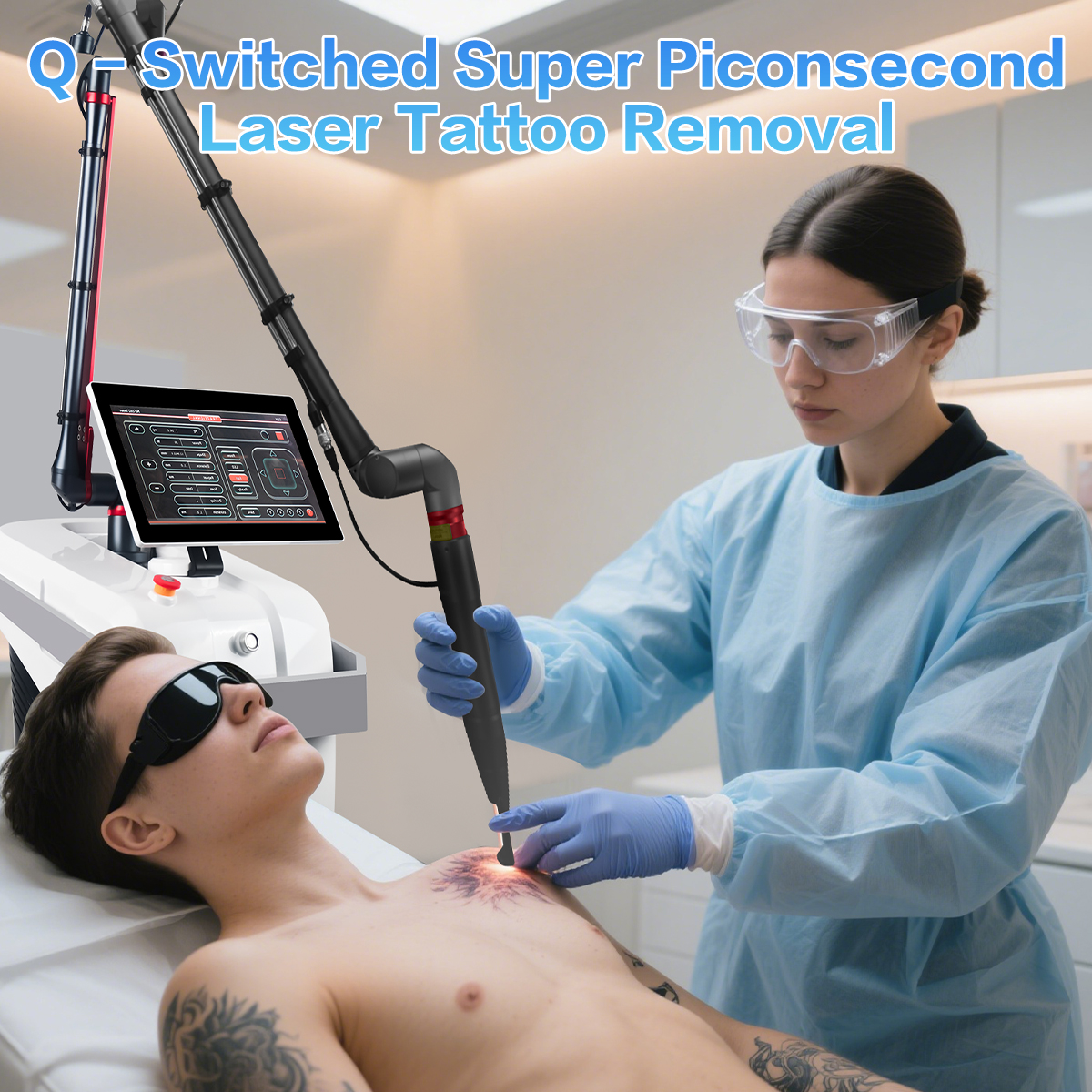
6. タトゥー除去アプリケーション
レーザーによるタトゥー除去は、周囲の組織を過度に損傷することなく、皮膚の下にあるインク粒子を標的にすることで効果を発揮します。.
6.1 プロのタトゥーとアマチュアのタトゥー
最新のピコ秒システムでは、以下の治療が可能です。
- プロのタトゥー
- アマチュアタトゥー
- 化粧用タトゥー顔料
- 眉毛と唇の色素
6.2 落ちにくいタトゥーの色
緑、青、赤などの特定の色は、使用する波長によって反応が異なる場合がある。.
ピコ秒システムは、耐性顔料の場合にはしばしば好まれる。.
7.色素沈着および肌の若返り治療
タトゥー除去以外にも、ピコ秒レーザーやQスイッチレーザーは、肌の若返り治療に広く用いられている。.
7.1 色素沈着除去
治療の対象となるもの:
- 肝斑
- そばかす
- シミ
- 色素沈着
- カフェオレスポット
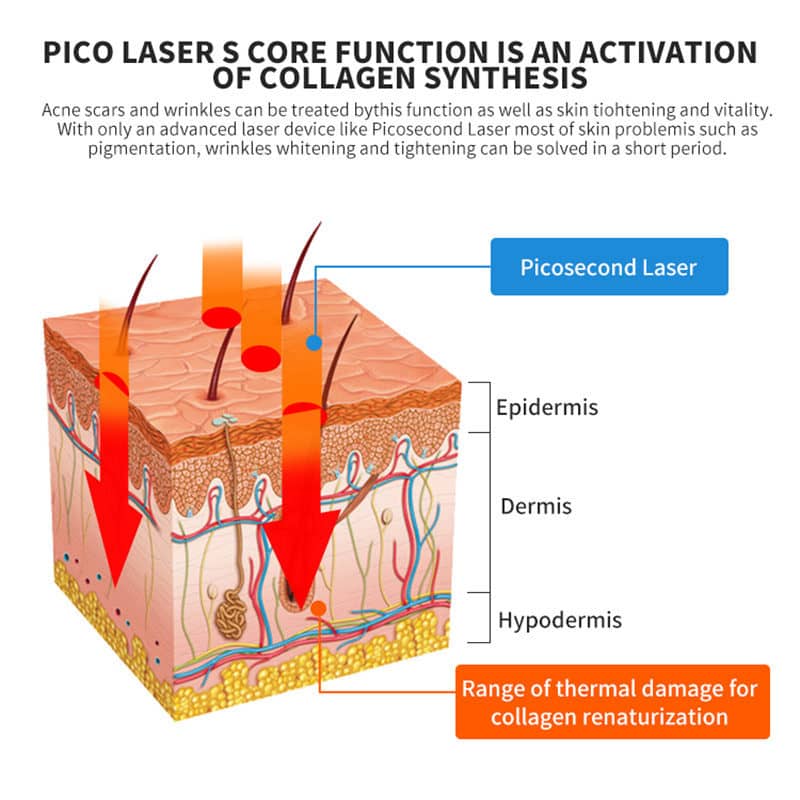
7.2 肌の質感の改善
レーザー刺激は、以下の効果も期待できます。
- より滑らかな肌の質感
- 小じわの改善
- 肌の見た目が明るくなる
- コラーゲンリモデリングのサポート
8.治療中にクライアントが期待すべきこと
8.1 治療時の感覚
ほとんどの患者は、その感覚を皮膚に軽いパチッという音や熱が走るような感覚だと表現しています。.
最新の冷却システムは、治療中の快適性を向上させるのに役立ちます。.
8.2 ダウンタイム
ダウンタイムは治療の強度や肌の状態によって異なりますが、多くの最新システムは回復期間を最小限に抑えるように設計されています。.
8.3 セッション数
治療セッションは、以下の要因によって異なります。
- タトゥーの深さ
- インクの色
- 色素の種類
- 皮膚の状態
- 治療目標
9.クリニックがピコ秒レーザーシステムに投資する理由
先進的なレーザーシステムにより、クリニックは治療の選択肢を拡大できるだけでなく、非侵襲的な皮膚治療に対する消費者の高まる需要にも対応できるようになる。.
9.1 多機能治療プラットフォーム
1つのシステムでサポートできる内容は以下のとおりです。
- タトゥー除去
- 色素沈着治療
- 肌の若返り
- 小じわの改善
9.2 治療需要の迅速化
顧客は、セッション回数と回復時間を削減できる可能性のあるテクノロジーをますます求めるようになっている。.
9.3 成長するグローバル市場
タトゥー除去と色素沈着修正は、美容医療において最も急速に成長している分野の一つであり続けている。.
結論
ピコ秒レーザーおよびQスイッチNd:YAGレーザー技術は、現代の タトゥーと色素沈着の除去 治療法。Qスイッチレーザーシステムは多くの色素沈着の問題に対して依然として高い効果を発揮しますが、ピコ秒レーザーは超短パルス技術により、治療精度の向上と熱損傷の軽減を実現します。A0507スーパーピコ秒レーザーなどのマルチ波長システムは、タトゥー除去、色素沈着矯正、肌の若返りなど、クリニックに柔軟なソリューションを提供し、高度な非侵襲性美容治療に対する世界的な需要の高まりに応えるのに役立ちます。.