
A beauty device cannot enter mass production with acceptance standards such as “function normal,” “appearance good,” “assembly secure,” or “performance stable.” These phrases sound positive, but two inspectors, suppliers, operators, or buyers can interpret them differently. A machine may pass one department and fail another because the product configuration, test conditions, limits, sample coverage, or decision authority were never defined.
Product acceptance criteria convert approved requirements into repeatable pass, fail, hold, rework, and escalation decisions. They tell the factory what characteristic matters, which product and configuration the rule covers, how the characteristic will be evaluated, under which conditions, what result is acceptable, what record is required, and who can authorize an exception.
This guide explains how beauty device factories can build a complete acceptance-criteria system before mass production. It covers components, assembly, software, functions, performance, inspection, testing, documentation, packaging, deviations, and release—and shows how criteria should change across facial, hair-removal, and multifunction body devices.
Sumário executivo
Before beauty device mass production, factories should define acceptance criteria using ten principles:
- Start from approved requirements and risks. Acceptance criteria should protect a defined product need, interface, performance limit, configuration rule, manufacturing control, or risk response.
- Write complete decision rules. Name the characteristic, unit, condition, method, limit, coverage, record, and action when the result is unacceptable.
- Separate criteria by lifecycle stage. Supplier, incoming, in-process, verification, final-test, packaging, and release criteria answer different questions.
- Control applicability. Model, revision, voltage, software, language, handle, accessory, market, and OEM/ODM variant must be visible.
- Use objective evidence where possible. Numeric limits, attribute standards, approved reference samples, defined functional states, and configuration matrices are stronger than personal judgment.
- Match the method to the characteristic. A visual check cannot establish cooling performance, and a power-on test cannot prove that the correct software or accessory package was supplied.
- Define measurement and sampling rules. Equipment capability, test uncertainty, sample selection, 100% checks, lot rules, and escalation need technical justification.
- Control exceptions. Nonconformance, deviation, use-as-is, rework, repair, and retest require different authority and records.
- Prove the criteria during pilot production. Operators and inspectors should be able to apply the rule consistently under intended production conditions.
- Freeze an acceptance matrix before release. The approved criteria must agree with drawings, BOMs, software, work instructions, control plans, tests, labels, manuals, packaging, and buyer-approved variants.
The goal is not to produce the longest possible inspection checklist. It is to create the smallest complete set of controls that can make reliable product decisions and preserve the evidence behind them.
1. What Are Product Acceptance Criteria?
Product acceptance criteria define the result required for a product, component, process output, configuration, document, or package to be accepted at a specific decision point.
A complete criterion answers:
- What item or configuration is being evaluated?
- Which characteristic matters?
- What requirement or risk is the criterion protecting?
- Which method and equipment will be used?
- Under which setup and environmental conditions?
- What value, range, attribute, state, or outcome is acceptable?
- What sample or coverage rule applies?
- What record proves the decision?
- Who reviews and releases the result?
- What happens when the criterion is not met?
If these questions are unanswered, the statement is usually an expectation rather than an executable acceptance criterion.
2. Separate Requirements, Criteria, Methods, and Results
| Element | Propósito | Example structure |
|---|---|---|
| Requirement | States what the product or process must achieve | The selected handle shall be recognized by the approved console configuration |
| Acceptance criterion | Defines what result constitutes compliance | Approved handle identity is displayed and only its authorized mode set is enabled |
| Test or inspection method | Explains how the decision will be made | Connect identified handle, start approved software, record displayed identity and enabled modes |
| Actual result | Records what happened | Handle ID, software version, displayed state, enabled modes and pass/fail |
| Disposition | Authorizes what happens next | Accept, hold, rework, investigate, reject or approve defined deviation |
One document can contain several elements, but each should remain distinguishable. A method without a limit cannot decide acceptance; a limit without a method may not be repeatable.
3. Build an Acceptance-Criteria Hierarchy
| Nível | Objetivo principal | Proprietário típico |
|---|---|---|
| Product requirement criteria | Confirm the released design meets approved inputs | Product, engineering and quality |
| Component and supplier criteria | Define acceptable purchased or manufactured parts | Engineering, sourcing and supplier quality |
| Incoming criteria | Decide whether received material can enter stock or production | Incoming quality and supplier quality |
| Process-output criteria | Confirm critical assembly or configuration steps before they become hidden | Manufacturing engineering and production quality |
| Final product criteria | Confirm the completed device meets released functional, identity and workmanship rules | Quality and production test |
| Packaging and documentation criteria | Confirm the complete commercial configuration | Product, documentation, quality and logistics |
| Production-release criteria | Confirm that product, process and evidence are ready for mass production | Cross-functional release authority |
The same characteristic may appear at more than one level, but the reason and method can differ. A supplier dimension check does not eliminate the need to confirm fit during process validation when assembly variation remains relevant.
4. Use a Standard Acceptance-Criterion Template
Each criterion can use fields such as:
- criterion ID;
- characteristic name;
- requirement or risk reference;
- applicable model and configuration;
- product or process stage;
- specification, limit, state, or reference standard;
- units and rounding rule;
- method or procedure;
- equipment, fixture, or software version;
- environmental and setup conditions;
- sample or coverage rule;
- data and record format;
- pass, fail, hold, or escalation logic;
- reviewer and release authority;
- effective revision; and
- change and revalidation triggers.
Structured fields make criteria searchable, comparable, and easier to update across drawings, control plans, test software, and inspection forms.
5. Choose the Correct Criterion Type
| Criterion type | Uso adequado | Example form |
|---|---|---|
| Numeric range | Dimensions, flow, temperature, pressure, timing, voltage or other measured output | Defined minimum and maximum under specified conditions |
| Attribute | Presence, orientation, damage, labeling, workmanship | Acceptable/unacceptable condition with visual or written standard |
| Functional state | Startup, recognition, interlock, alarm, mode, recovery | Required input, product response and prohibited response |
| Configuration rule | Hardware, software, handles, language, accessories, labels | Approved combination in a controlled matrix |
| Completeness rule | Package, accessory kit, manual, cables, consumables | Required items and quantities for a defined order code |
| Reference comparison | Color, texture, finish, sound or appearance when measurement is impractical | Approved reference sample with controlled identity and viewing conditions |
| Statistical or process rule | Process stability or lot decision | Defined metric, sample basis, threshold and escalation |
Avoid forcing every characteristic into a numeric limit when an attribute or functional rule is more reliable. Conversely, do not use a visual judgment when a measurable limit is necessary.
6. Trace Criteria to Their Source
Acceptance criteria may originate from:
- approved product requirements;
- design outputs and interface specifications;
- risk analysis and control measures;
- component and material specifications;
- software and configuration rules;
- design verification evidence;
- product-validation conclusions;
- pilot-build findings;
- supplier capability and material variation;
- production-process validation;
- Requisitos de embalagem e transporte;
- service and maintenance needs;
- applicable standards or market requirements reviewed by qualified specialists; and
- buyer-approved OEM/ODM requirements.
Do not invent precision merely to fill a form. An unresolved limit should remain an owned development question until evidence supports it.
7. Prioritize Criteria by Product and Process Risk
Give greater control to characteristics whose failure can:
- affect correct function or permitted operating state;
- create an incorrect configuration;
- damage the product or connected handle;
- remain hidden after enclosure closure;
- escape final testing;
- affect cleaning, maintenance, or service;
- cause a wrong label, manual, accessory, or regional item;
- create repeated rework or field support;
- depend on supplier or operator variation; or
- affect a market-specific technical requirement.
Not every cosmetic dimension needs the same inspection depth as a critical connection, cooling path, software mapping, or configuration identity.
8. Define Applicability before the Limit
A limit is unsafe when the team does not know where it applies. Record:
- model and family;
- hardware and PCB revision;
- software and parameter version;
- cabo, aplicador, ponta, cartucho ou acessório;
- voltagem e plugue;
- language and regional package;
- supplier or material revision;
- production site or line where relevant;
- standard, optional, and special-order status; and
- OEM/ODM customer variant.
One generic test sheet should not silently cover configurations that use different hardware, interfaces, functions, or packaging.
9. Assign Criterion Ownership and Approval
| Função | Acceptance-criteria responsibility |
|---|---|
| Gestão de produtos | Confirms buyer, model, service, configuration and claim boundaries |
| Engineering | Defines technical characteristics, limits, interfaces and design rationale |
| Qualidade | Challenges objectivity, traceability, method, coverage, records and exception control |
| Supplier quality | Converts component requirements into supplier and incoming controls |
| Manufacturing engineering | Defines process-output criteria, hold points, tools and fixtures |
| Software/configuration | Controls builds, parameters, languages, enabled functions and version evidence |
| Production and inspection | Confirms that criteria are executable at the intended station |
| Documentation/packaging | Controls labels, manuals, artwork, pack lists and regional content |
| Serviço | Reviews diagnostics, replaceable items, rework and support implications |
| Release authority | Approves the complete matrix and unresolved exceptions before mass production |
The author of a criterion should not be the only person determining that the method and result are sufficient.
10. Define Component and Material Acceptance
Purchased and internally produced parts may require criteria for:
- identity, part number and revision;
- approved supplier and source;
- dimensions and tolerances;
- material and finish;
- electrical or electronic characteristics;
- connector, pin, port and communication attributes;
- thermal, cooling, vacuum, fluid or pressure characteristics;
- cosmetic appearance;
- programmed or calibrated state;
- packaging and transport protection;
- lot, date, serial or shelf-life status where relevant; and
- required supplier evidence.
Criteria should focus on characteristics that influence the released product rather than copying every drawing field into incoming inspection.
11. Define Supplier Release and Incoming Criteria Separately
Supplier release can use source-process evidence, inspection reports, certificates, approved samples, or other agreed records. Incoming inspection determines whether the received lot or item can enter the factory’s controlled flow.
The incoming plan should state:
- part and specification;
- lot definition;
- receiving condition;
- Documentos necessários;
- inspection characteristics;
- sample or 100% rule;
- equipment and method;
- acceptance and rejection logic;
- segregation of pending or rejected material;
- escalation for repeated failures; and
- link to supplier corrective action.
“Supplier passed” should not replace the factory’s defined receiving decision when the characteristic remains important to production.
12. Define Assembly Acceptance at the Correct Moment
Some conditions can be inspected only before another part hides them. In-process criteria may cover:
- component orientation;
- cable and tube route;
- connector engagement and retention;
- fastener type and completion;
- clamp, seal, gasket or adhesive state;
- sensor and thermal-interface position;
- grounding, shielding or insulation arrangement;
- module and board revision;
- software-loading result;
- cleanliness and foreign-material control; and
- work-in-process configuration identity.
Place the acceptance point before enclosure closure, filling, programming, or packing makes the condition difficult to verify.
13. Replace Vague Workmanship Language
| Vague wording | Better criterion direction |
|---|---|
| Assembly secure | Name the fastener, connection, retention method and confirmation rule |
| Wiring neat | Define route, clips, bend, clearance, strain relief and prohibited contact |
| No leakage | Define medium, setup, pressure or operating condition, observation period and acceptable result |
| Good appearance | Define surface, viewing distance, lighting, defect types, size/location rules or reference sample |
| Software normal | Define approved version, required screens, enabled functions, language and prohibited states |
| Function okay | Define input, operating condition, expected response, measurement and limit |
| Package complete | Define order code, required items, quantities, document versions and reconciliation record |
The rule should guide both the person creating the output and the person accepting it.
14. Define Cable, Harness and Connector Criteria
Beauty devices often include power, signal, display, sensor, motor, pump, cooling and handpiece connections. Acceptance criteria may address:
- connector identity and mating pair;
- orientation and keying;
- full engagement and locking;
- pin, port or cable label;
- strain relief;
- bend radius or routing envelope;
- clearance from heat, movement, fan blades, sharp edges and fasteners;
- permitted crossing or separation;
- clip or tie location;
- service access; and
- confirmation before closure.
A continuity check alone may not detect a cable that is pinched, strained or routed against a damaging surface.
15. Define Fluid, Vacuum and Cooling-Path Criteria
For hydro facial, cooling, vacuum, spray or other fluid systems, criteria can cover:
- bottle, filter, tube, pump, valve and port identity;
- inlet/outlet and clean/waste direction;
- tube length, kink, bend and pull;
- clamp and connector engagement;
- seal or gasket orientation;
- fill level and approved medium;
- priming or air-removal state;
- leakage, pressure, vacuum, flow or temperature under defined conditions;
- drainage and cleaning state; and
- protection from electronics, heat, motion and contamination.
The method should distinguish an assembly defect, test-fixture leak and normal system behavior.
16. Define Fastening, Sealing and Adhesive Criteria
Depending on the design, acceptance may require:
- correct fastener type, length and quantity;
- sequence and tool;
- torque or other controlled process value where justified;
- thread or insert condition;
- witness mark or electronic record;
- clamp position;
- seal identity, orientation and compression;
- adhesive type, preparation, amount, location and cure condition; and
- prohibition against unauthorized reuse after disassembly.
Avoid adding exact torque, adhesive or cure values without design evidence and process capability. These limits must come from controlled engineering decisions.
17. Define Software and Configuration Acceptance
The completed machine should be the ordered configuration, not merely a unit that powers on. Criteria should identify:
- authoritative firmware and application build;
- hardware/software compatibility;
- approved parameter package;
- language, units and regional content;
- enabled and disabled functions;
- handle or module recognition;
- confirmação de versão ou checksum;
- interrupted-loading recovery;
- serial-number relationship;
- user-visible version state; and
- final match among device, label, manual, quotation and order code.
Configuration acceptance should use a controlled matrix rather than operator memory.
18. Define Interface and Functional Criteria
Functional acceptance should describe both the command and the expected product state. Consider:
- startup and readiness;
- handle or module detection;
- user control and physical response;
- mode and parameter availability;
- interlocks and prohibited combinations;
- sensor feedback;
- cooling, vacuum, flow, motion, RF, ultrasound, optical or other relevant function;
- pause, stop and shutdown;
- warnings and faults;
- recovery and reset; and
- data or result storage where applicable.
One “all functions tested” checkbox is insufficient for a multifunction device with several independent paths.
19. Define Performance Criteria with Test Conditions
A performance limit needs context. Record:
- operating mode and configuration;
- parameter setting;
- input power and utilities;
- environment;
- Aquecimento e estabilização;
- load, duty cycle and repetition;
- handle, applicator, consumable or test load;
- measurement location and timing;
- minimum, maximum or target band;
- rounding and data-treatment rules; and
- recovery after boundary conditions.
The same measured value can mean different things under different loads, temperatures or software settings.
20. Define Warning, Fault and Recovery Criteria
Acceptance should not cover only ideal operation. Criteria may require that the device:
- recognizes a defined missing or incorrect connection;
- prevents an unsupported function;
- displays the approved warning or status;
- enters the required safe or inactive state;
- preserves or clears parameters as specified;
- permits only authorized recovery;
- records the event where required; and
- returns to readiness only after the defined condition is resolved.
Fault simulation needs an approved, controlled method and should not create unsafe or damaging conditions.
21. Write the Test Method with the Criterion
A usable method should specify:
- purpose;
- unit and configuration;
- pré-requisitos;
- equipment, fixture, software and reference materials;
- setup diagram or connection state;
- environmental and operating conditions;
- sequence;
- data to record;
- acceptance calculation or comparison;
- stop and escalation rules;
- retest rules; and
- restoration or cleaning after the test.
The criterion and method should be reviewed together. Changing the method can change the meaning of the limit.
22. Confirm Measurement-System Suitability
Before relying on a numeric criterion, assess whether the measurement system can support the decision. Consider:
- measurement range;
- resolution relative to the tolerance;
- repeatability;
- reproducibility across users or stations where relevant;
- fixture and setup influence;
- calibration or verification status;
- software version and data integrity;
- environmental sensitivity;
- uncertainty or known limitations; and
- response to out-of-status equipment.
A narrow product tolerance paired with a weak measurement system can create false passes and false failures.
23. Define Visual and Cosmetic Acceptance Conditions
Visual criteria should identify:
- surface or component;
- defect classes such as scratch, dent, stain, gap, contamination, color difference, print error or coating issue;
- permitted size, quantity or location where justified;
- viewing distance and angle;
- lighting and background;
- whether magnification is allowed;
- protective-film state;
- approved reference sample or image; and
- decision authority for ambiguous findings.
A “golden sample” is useful only when its identity, revision, storage, condition, viewing method and replacement rules are controlled.
24. Decide between 100% Inspection and Sampling
No single sampling plan fits every beauty device characteristic. The decision should consider:
- consequence of an escape;
- ability to detect the defect;
- supplier and process stability;
- lot definition;
- destructive or nondestructive method;
- test time and product exposure;
- configuration complexity;
- historical performance;
- applicable quality or regulatory requirements; and
- whether the characteristic can be prevented upstream.
Some identity, configuration, final-function or pack-out checks may justify unit-level coverage. Other stable component characteristics may use supplier controls and justified sampling. Qualified quality specialists should approve the approach.
25. Define First-Article or First-Unit Acceptance
Before continuing a new run, change, setup or configuration, a first-unit review can confirm:
- correct material and revision;
- intended assembly sequence;
- tools, fixtures and process settings;
- hidden in-process conditions;
- software and parameter package;
- functional-test setup;
- labels and configuration identity;
- workmanship and cosmetics;
- accessories and documentation; and
- agreement between actual output and released records.
First-unit approval reduces repeated error but does not replace monitoring of later-unit variation.
26. Define In-Process Hold Points
A hold point prevents work from continuing until required evidence is accepted. Use it when later work could:
- hide a connection, route, seal or fastener;
- make correction destructive;
- mix configurations;
- load irreversible or restricted software;
- fill a system before inspection;
- close the enclosure;
- start aging or performance testing;
- apply final labels; or
- enter packaging.
The hold point should name the required record and the person authorized to release the unit.
27. Build Final Product Acceptance by Layer
| Final acceptance layer | Perguntas a responder |
|---|---|
| Identidade | Is the model, revision, serial number and order configuration correct? |
| Workmanship | Are assembly, surfaces, connections and visible parts acceptable? |
| Configuração | Do hardware, software, handles, language, labels and documentation agree? |
| Função | Do required functions, controls, sensors, warnings and recovery states perform as defined? |
| Desempenho | Are measured outputs within approved limits under specified conditions? |
| Completude | Are accessories, consumables, cables, manuals and service items correct? |
| Rastreabilidade | Are materials, software, tests, deviations, rework and final disposition linked? |
| Embalagem | Is the released product protected, labeled and packed in the correct arrangement? |
Layered acceptance prevents a strong functional test from hiding configuration, documentation or package errors.
28. Define Aging or Extended-Operation Acceptance Carefully
Where aging, burn-in or extended operation is part of the released process, define:
- product state and configuration;
- duration or cycle basis;
- operating modes and load;
- environment and utilities;
- monitoring points;
- permitted interruptions;
- alarms and failure logic;
- data retention;
- post-aging inspection or functional test; and
- handling of units repaired during or after the process.
Do not select duration or stress conditions only because they are customary. The criterion needs a documented purpose and technical rationale.
29. Define Packaging and Pack-Out Acceptance
The commercial product includes more than the console. Criteria should confirm:
- Máquina e configuração corretas;
- handles, applicators, tips, cartridges and accessories;
- cables, plugs, bottles, filters, holders and tools;
- manuals, quick guides and language;
- Relação entre etiquetas e números de série;
- protective caps, locks, films and restraints;
- inserts, cushioning and carton revision;
- item quantities;
- pack arrangement; and
- final package condition and release record.
Packaging acceptance should connect to the order code and market variant rather than one generic list.
30. Define Documentation and Label Acceptance
Análise:
- product name and model;
- hardware, software or configuration applicability;
- language and translation approval;
- rating and technical information as applicable;
- warnings and symbols requiring qualified review;
- handle, accessory and consumable identity;
- setup, operation, cleaning and maintenance instructions;
- contact and support information;
- artwork and document revision;
- print quality, placement and durability where relevant; and
- agreement among device, package, manual, website, quotation and order.
An accurate machine with the wrong manual or label is not an acceptable released product.
31. Define Traceability Acceptance
A unit or lot record may need to connect:
- product serial or batch identity;
- commercial configuration;
- critical material lots or component serials;
- suppliers and revisions;
- hardware and PCB versions;
- software and parameter versions;
- operators, dates and stations;
- inspection and test results;
- equipment or fixture identity;
- nonconformance, deviation, rework and retest; and
- final disposition and package identity.
Traceability is acceptable when authorized users can reconstruct the required history accurately, not merely when a serial-number label exists.
32. Define Nonconformance Decisions
When a criterion is not met, the record should include:
- item, unit, lot and configuration;
- failed criterion and actual result;
- ponto de descoberta;
- affected scope;
- containment;
- investigation owner;
- authorized disposition;
- rework, repair or replacement method;
- required reinspection and retest; and
- impact on similar products, suppliers, records and release status.
Do not change the criterion after failure simply to make the observed result acceptable.
33. Separate Deviation, Use-As-Is, Rework and Repair
| Decisão | Significado | Controle mínimo |
|---|---|---|
| Deviation | Authorized temporary departure for a defined future or current scope | Reason, units/lots, risk, authority, duration and replacement control |
| Use-as-is | Acceptance of a specific nonconforming item after review | Actual condition, technical impact, scope and approval |
| Rework | Action that returns the item to the approved requirement | Controlled instruction, result and reinspection/retest |
| Reparar | Action that makes the item usable without fully restoring the original requirement | Technical assessment, authorization, limits and final verification |
| Scrap/reject | Item cannot enter the approved product | Identification, segregation and disposition record |
Temporary acceptance should never become an undocumented mass-production standard.
34. Define Retest Rules before Failures Occur
Retest criteria should state:
- when retest is permitted;
- whether the original failure remains in the record;
- what correction or setup change occurred;
- whether the complete test or only one step repeats;
- which result controls disposition;
- how repeated failures are escalated;
- whether the unit needs engineering review; and
- whether similar units or lots require containment.
Repeated testing until a passing result appears destroys the meaning of acceptance.
35. Control Reference Samples and Visual Masters
Reference items may help control color, texture, finish, printing, assembly appearance or package arrangement. Each master should have:
- unique identity;
- applicable product and revision;
- approval date and authority;
- photographs or description of the controlled feature;
- storage and handling method;
- protection from fading, wear, damage or contamination;
- inspection conditions;
- copies or working references with relationship to the master; and
- retirement or replacement rules.
A customer-approved appearance sample cannot replace technical acceptance criteria for internal parts, software, functions or performance.
36. Prove Criteria during Pilot Production
Pilot production should evaluate whether intended operators and inspectors can apply the criteria consistently. Observe:
- unclear wording;
- missing limits or conditions;
- measurement variation;
- inaccessible inspection points;
- excessive judgment;
- false failures and escapes;
- fixture or software problems;
- record burden;
- conflict between documents; and
- cases requiring engineering interpretation.
Update the criteria, method, tool, fixture, design or process based on evidence, then verify the correction before mass-production release.
37. Create a Mass-Production Acceptance Matrix
| Matrix field | Conteúdo obrigatório |
|---|---|
| Criterion ID | Stable identifier and revision |
| Product applicability | Model, configuration, market and variant |
| Estágio | Supplier, incoming, process, final, package or release |
| Characteristic | Exact attribute, function or performance being accepted |
| Requirement/risk source | Link to approved basis |
| Method and equipment | Procedure, fixture, software and measurement resource |
| Conditions and limit | Setup, environment, units and acceptable result |
| Cobertura | Unit, lot, sample, first article or defined frequency |
| Registro | Form, database, test log, image or report |
| Failure response | Hold, segregation, investigation, rework, reject or escalation |
| Authority | Author, reviewer, approver and release role |
| Change trigger | Conditions requiring criterion review or revalidation |
The matrix becomes the index connecting design and production documents rather than replacing the detailed procedures.
38. Use Acceptance Criteria in the Release Gate
Before mass production, confirm that:
- all required criteria are approved;
- applicability matches the release configuration;
- methods and measurement resources are available;
- suppliers understand relevant component criteria;
- operators and inspectors are trained;
- software and test programs are controlled;
- pilot evidence shows criteria can be applied;
- failures and retest rules are active;
- unresolved exceptions have defined authority and closure evidence;
- labels, manuals and packaging use the same baseline; and
- records support traceability and later audits.
Release should be blocked when a critical characteristic has no usable decision rule or method.
39. Control Criteria after Mass Production Starts
Review acceptance criteria when:
- requirements or intended application change;
- a component, material, supplier or source changes;
- hardware, software, parameter or language changes;
- a handle, applicator, tip, cartridge or accessory changes;
- equipment, fixture, site or process changes;
- a test method or measurement system changes;
- repeated nonconformance or rework appears;
- complaints or service evidence reveal an escape;
- packaging or documentation changes; or
- an OEM/ODM buyer requests a new variant.
Change control should identify affected criteria, evidence, documents, inventory, training and installed products.
40. A0648 Example: Facial-System Acceptance Dimensions
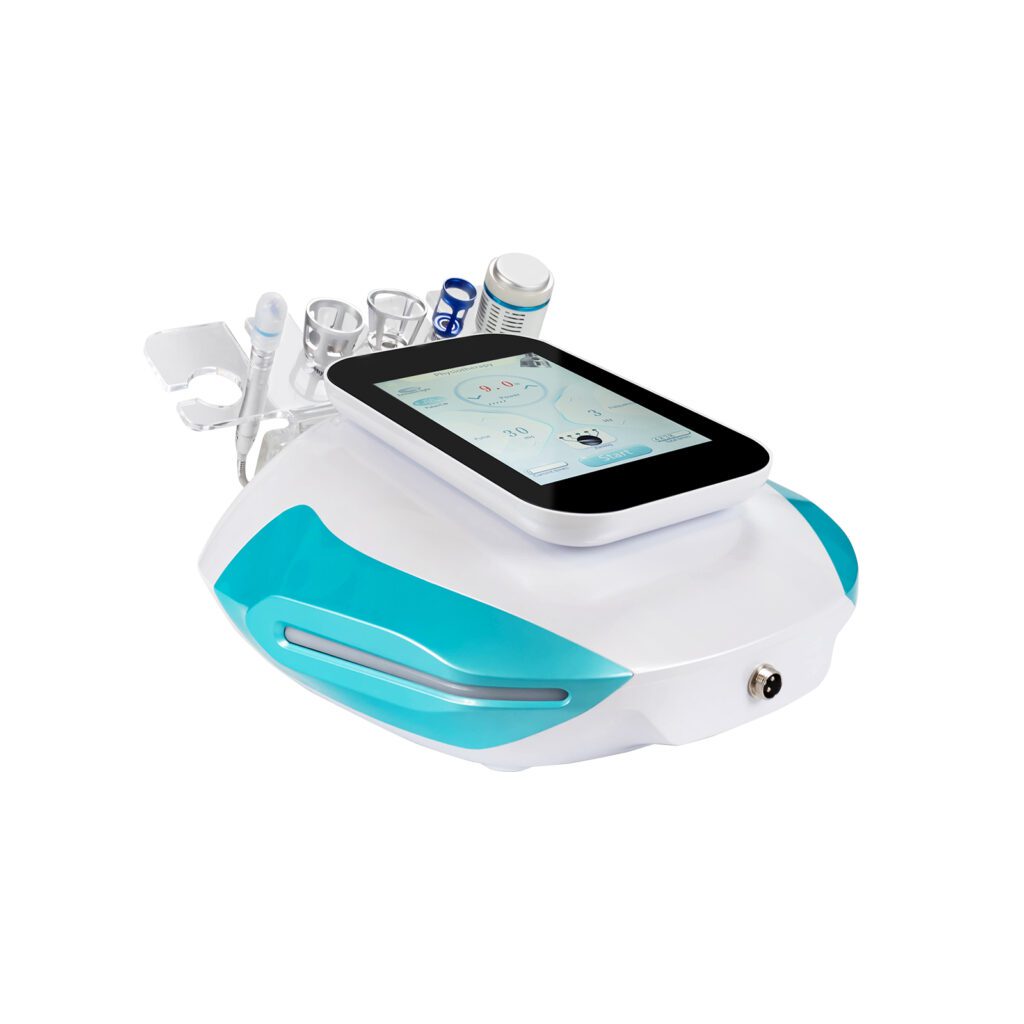
SHEFMON currently presents the Sistema de hidromicrodermoabrasão 9 em 1 A0648 as a vertical facial platform involving hydro dermabrasion, vacuum and multiple functions.
For a comparable multifunction facial system, acceptance criteria could address:
- bottle, tube, valve, filter and waste-path identity;
- vacuum and fluid-path connection;
- leakage and flow behavior under defined conditions;
- handle-to-port matching;
- software menu and physical-function agreement;
- tip and accessory completeness;
- cleaning and drainage state; and
- package protection for tubes, bottles and handles.
The exact limits and sampling rules must come from the released design and process evidence, not from the public product description.
41. A0426 Example: Configurable Hair-Removal Acceptance
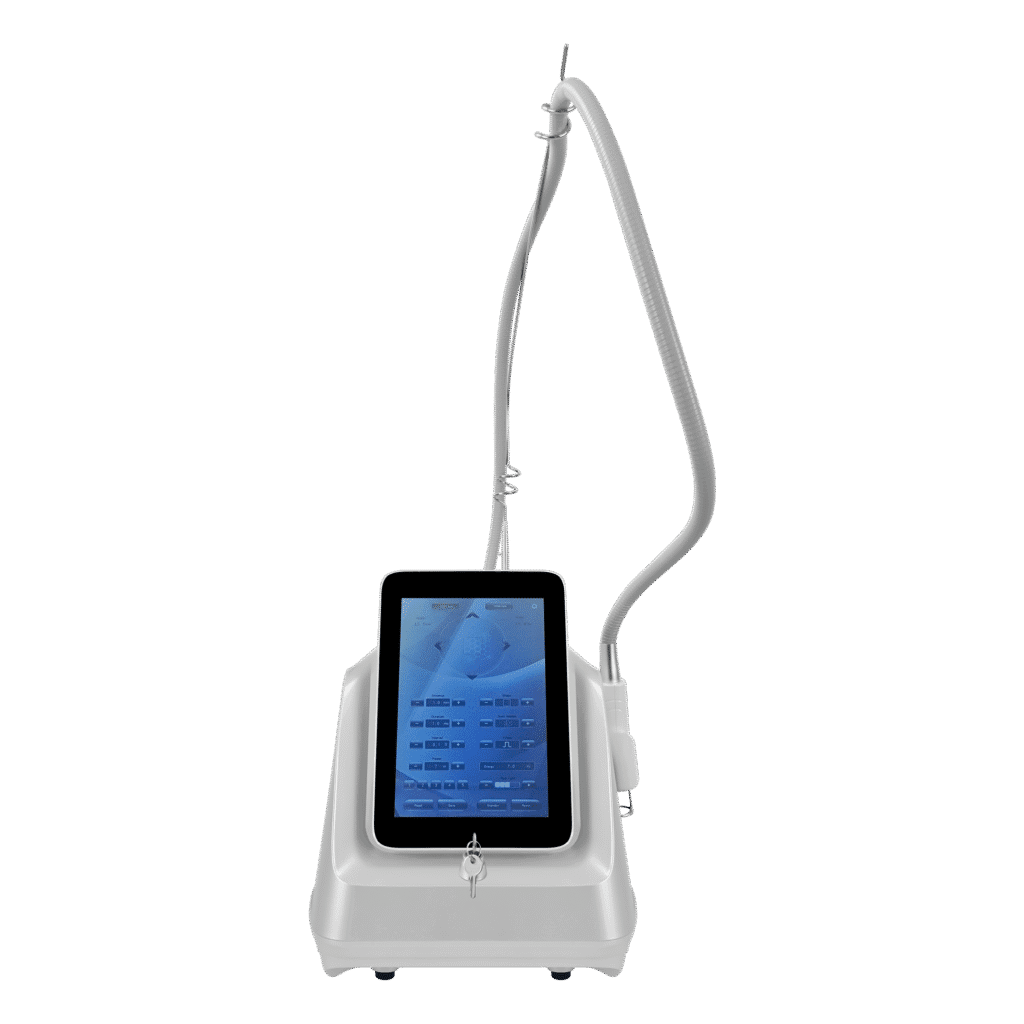
O oficial Sistema de depilação a laser de diodo A0426 page lists 755, 810, 940 and 1064 nm wavelength choices, several spot-size options, cooling information, a touchscreen and language options.
For a device category with these variables, criteria should keep aligned:
- console hardware;
- handpiece and spot-size identity;
- Configuração de comprimento de onda;
- cooling path and readiness;
- firmware, interface, parameters and language;
- labels and manual;
- production-test program;
- accessory package; and
- quotation, order, serial-number and final product identity.
A generic “laser function passed” decision cannot confirm that the ordered configuration was manufactured and documented correctly.
42. B0155 Example: Multi-Applicator Body-System Acceptance
No B0155 Desktop Endos Velapro page, SHEFMON describes a desktop five-in-one system that can combine different handles, including vacuum roller, RF-related, rotating and 80K cavitation functions.
For a comparable multifunction body system, acceptance criteria may need to cover:
- each applicator’s identity and connector;
- console-to-handle compatibility;
- software mode enablement;
- vacuum, RF, rotation and ultrasound function-specific checks;
- cable and hose arrangement;
- holder and storage completeness;
- cross-handle mistake prevention;
- individual and complete-system test results; and
- final pack-out of all approved handles and accessories.
Passing one applicator should not imply acceptance of every function or package configuration.
43. OEM/ODM Acceptance-Criteria Boundaries
De SHEFMON OEM/ODM page currently describes customization covering exterior and mechanical design, internal layout, handpiece connections, function, interface, language, logo, packaging, manuals and prototypes.
Before an OEM/ODM variant enters mass production, the factory and buyer should approve criteria for:
- customized part and product identity;
- color, finish, logo and external layout;
- interface text and language;
- function and handle configuration;
- buyer-supplied labels, manuals or artwork;
- package contents and arrangement;
- retained or approved reference samples;
- standard-model evidence that remains applicable;
- deviations and one-time exceptions; and
- change authority after sample approval.
Buyer approval of appearance should not override unresolved functional, assembly, software, quality or market-specific requirements.
44. Product Acceptance Criteria Checklist
- Requirements, acceptance criteria, methods, actual results and dispositions are defined as separate elements.
- Criteria are organized across product, component, incoming, in-process, final, packaging and release stages.
- Every criterion has an ID, source, characteristic, applicability, method, condition, limit, coverage, record and authority.
- Model, revision, hardware, software, handles, language, voltage, market and OEM/ODM variant applicability are visible.
- Criteria prioritize important functional, configuration, hidden-process, service and risk-related characteristics.
- Component criteria identify supplier, part, revision, material and characteristics relevant to the final device.
- Supplier release and factory incoming acceptance are not treated as the same decision.
- In-process criteria occur before critical assembly conditions become hidden.
- Vague terms such as normal, secure, neat, stable, good and complete have been replaced by executable rules.
- Cable, connector, harness, tube, fluid, vacuum and cooling-path acceptance is defined as applicable.
- Fastener, seal, clamp, adhesive and reuse rules have controlled technical bases.
- Software, parameters, language, enabled functions and configuration identity are controlled.
- Functional criteria define input, state, expected response and prohibited response.
- Performance criteria include setup, environment, load, measurement point, limit and data rule.
- Warning, fault, stop, recovery and reset criteria are included where relevant.
- Test methods and acceptance limits are reviewed together.
- Measurement systems have adequate range, resolution, repeatability and control.
- Cosmetic criteria define surfaces, defect classes, viewing conditions and references.
- Sampling and 100% inspection decisions have risk and technical justification.
- First-unit acceptance and in-process hold points are defined.
- Final acceptance covers identity, workmanship, configuration, function, performance, completeness, traceability and packaging.
- Aging or extended-operation criteria have an approved purpose and conditions where used.
- Manuals, labels, package contents and regional items match the released configuration.
- Traceability criteria allow reconstruction of the required unit or lot history.
- Nonconformance, deviation, use-as-is, rework, repair and scrap have separate authority and records.
- Retest rules preserve the original failure and prevent testing until pass.
- Reference samples have identity, revision, storage, inspection and retirement controls.
- Pilot production demonstrated that intended users can apply the criteria consistently.
- The mass-production acceptance matrix agrees with drawings, BOMs, software, procedures, control plans and records.
- Release is blocked when a critical characteristic lacks a usable rule or method.
- Product and process changes trigger acceptance-criteria impact review.
Perguntas frequentes
1. What is a product acceptance criterion for a beauty device?
It is a controlled decision rule stating what result a component, process output, complete machine, configuration, document or package must achieve to be accepted at a defined stage.
2. What is the difference between a requirement and an acceptance criterion?
A requirement states what the product or process must achieve. The acceptance criterion states the result that demonstrates compliance. The method then explains how the factory will evaluate that result.
3. Should every acceptance criterion be numeric?
No. Numeric ranges suit measurable characteristics, while attribute, functional-state, configuration, completeness and controlled reference-comparison criteria may be more appropriate for other decisions.
4. Who should approve beauty device acceptance criteria?
Approval should involve the functions responsible for the requirement, technical limit, method, quality decision and production execution. Critical or market-specific criteria may also require qualified safety, regulatory or other specialist review.
5. Does 100% final testing guarantee an acceptable beauty device?
No. Final testing may not detect hidden routing, marginal connections, wrong documents, missing accessories, cosmetic damage, incorrect configuration or problems that appear only under different conditions. Upstream prevention and in-process acceptance remain necessary.
6. Can an approved sample replace written criteria?
It can support color, finish, appearance or package-arrangement decisions, but it needs controlled identity and viewing conditions. It cannot replace technical limits, software rules, functional criteria, internal assembly requirements or performance evidence.
7. How should factories choose a sampling plan?
The plan should consider risk, escape consequence, process stability, lot definition, measurement capability, destructive testing, configuration complexity, historical results and applicable requirements. There is no universal sample size for every characteristic.
8. What happens when a unit fails an acceptance criterion?
The factory should identify and contain the affected scope, record the actual result, investigate the cause, authorize a defined disposition, perform any controlled rework or repair, and complete required reinspection and retest before release.
9. When should acceptance criteria be changed?
Review them after changes to requirements, parts, suppliers, hardware, software, handles, processes, equipment, methods, packaging or documents—and when production, complaint or service evidence shows that current controls are ineffective.
10. How can an OEM/ODM buyer agree on acceptance criteria with SHEFMON?
Define the exact model, customized parts, functions, handles, voltage, language, branding, manual, packaging, reference samples and approval responsibilities. Then contate SHEFMON to discuss the controlled configuration and evidence required before production.
Conclusão
Product acceptance criteria turn a beauty device specification into repeatable factory decisions. They align engineering, suppliers, production, quality, software, documentation, packaging and buyers around one question: what objective evidence is required before this item, unit, lot or configuration may proceed?
The strongest system does more than publish a final inspection checklist. It defines component and incoming controls, places in-process checks before conditions become hidden, controls software and configuration, specifies functional and performance methods, confirms the complete package, and governs every exception. Pilot production then proves that the intended team can apply the criteria consistently before mass production begins.
Explore o Portfólio de dispositivos de beleza SHEFMON, review the company’s visão geral do controle de qualidade e Capacidades OEM/ODM, ou contate SHEFMON to discuss the configuration and pre-production evidence relevant to your project.