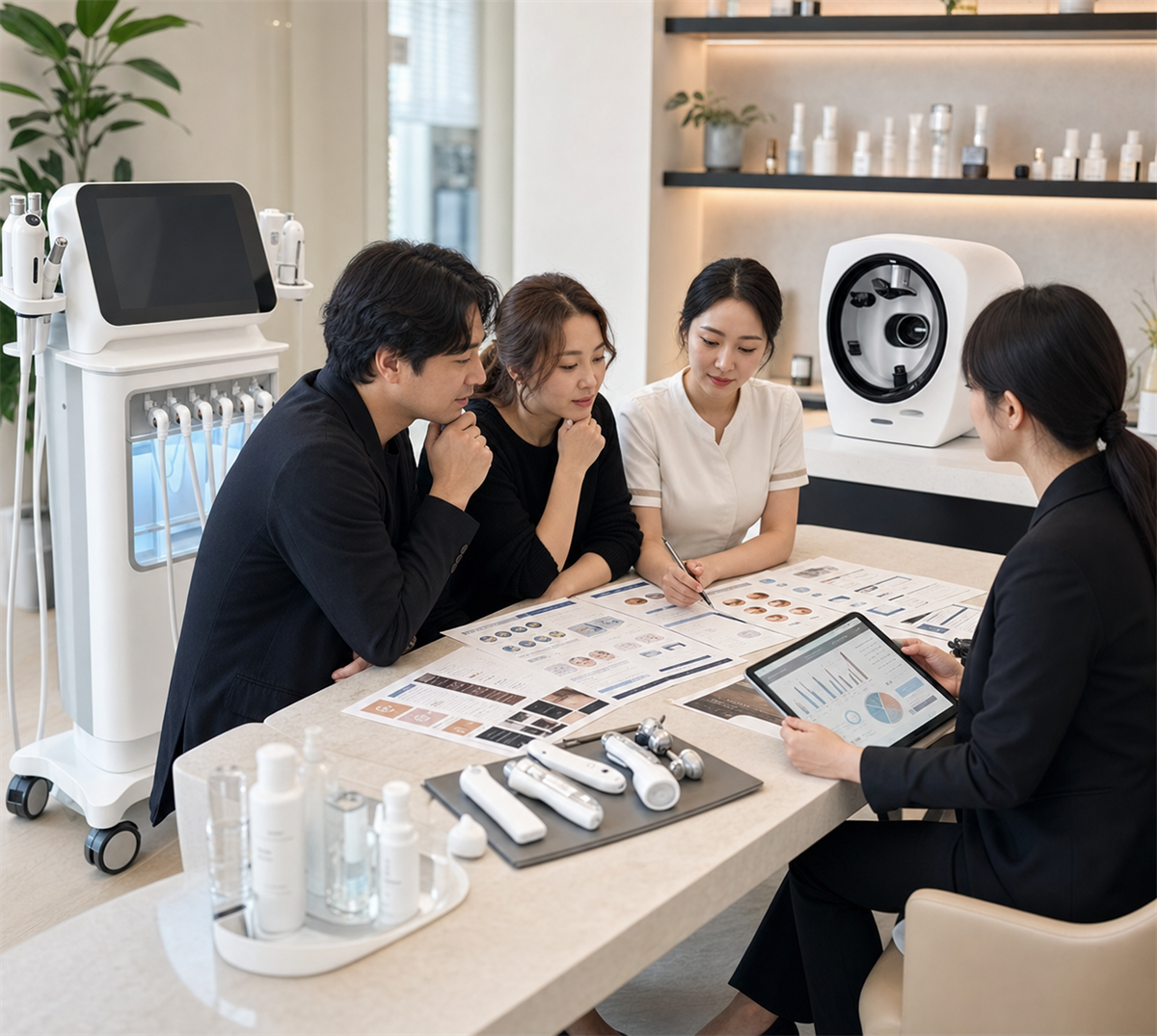
美容サロンの機器購入ニーズは、より専門的、より慎重、そしてよりプロジェクト指向的になっています。サロンは依然として新しい美容機器を求めていますが、もはや機器が先進的に見えるからとか、サプライヤーが割引を提供しているからという理由だけで購入することはありません。現在、多くのサロンオーナーは、機器が顧客を引き付け、平均取引額を増加させ、リピーターを生み出し、スタッフのスキルに合致し、投資を回収でき、信頼できるアフターサービスを受けられるかどうかを重視するようになっています。.
本レポートでは、美容サロンの主要な購買需要パターンを分析します。具体的には、サロンが機器を購入する理由、重視する機器カテゴリー、予算の変化、購入決定に影響を与える要因、そしてメーカーや販売代理店がサロンの顧客を獲得するためにすべきことなどを取り上げます。.
エグゼクティブサマリー
美容機器市場は引き続き成長の可能性を示しています。最近の公開市場レポートによると、2030年代初頭にかけて、エネルギーベースの美容機器、医療美容機器、ボディコンタリング機器、およびより広範な美容機器のカテゴリーが拡大すると予測されています。例えば、Grand View Researchは、世界のエネルギーベースの美容機器市場が2026年の81億米ドルから2033年には157億米ドルに成長すると予測しています。Fortune Business Insightsは、世界の医療美容市場が2025年の284億9000万米ドルから2034年には895億9000万米ドルに成長すると予測しています。.
しかし、サロンにおける購入需要は単に量的に増加しているわけではない。より選択的になっているのだ。.
主な調査結果:
- サロンは、単に機械の在庫を増やすためだけでなく、サービス事業を構築するために機器を購入している。.
- アンチエイジング、引き締め、肌質改善、保湿、肌分析、脱毛、ボディライン形成は、依然として主要な需要分野である。.
- 新規開業の小規模サロンは、使用頻度が高く、投資回収期間が短い実用的な機器を好む。.
- 高級スキンケアセンターでは、高度な診断、アンチエイジング、治療の組み合わせ、デジタル記録、そしてプレミアムなプロジェクトパッケージが重視されます。.
- 地域密着型のサロンでは、説明が簡単で、コンパクトで、繰り返し使用でき、リスクの低い機器が好まれる。.
- サロンでは、購入前に投資対効果(ROI)、消耗品、トレーニング、耐用年数、サプライヤーの信頼性、アフターサービスなどをますます重視するようになっている。.
- 価格は依然として重要ですが、もはや唯一の決定要因ではありません。多くのサロンは、より充実したトレーニング、保証、スペアパーツ、手順、マーケティングサポートを備えた機器であれば、より高い価格を支払うことを厭いません。.
- 法令遵守と広告表示に関する意識は高まっており、特にエネルギーベース、光ベース、脱毛、ボディコンタリング、および高い効果を謳う機器においてその傾向が顕著である。.
メーカーや販売業者にとって、チャンスは明らかだ。最も強い需要があるのは機械単体ではなく、設備一式を網羅したプロジェクトソリューションなのだ。.
1. 研究背景:サロン機器の需要が変化する理由
美容サロンは、顧客の期待の高まり、競争の激化、人件費の高騰、そして基本的な手作業によるサービスにおける差別化の難しさなど、複数の課題に同時に直面しています。設備投資プロジェクトは、こうした課題への対応を支援する上で役立ちます。.
サロンが機器を購入する理由は以下のとおりです。
- サービスメニューをアップグレードします。.
- 治療費の値上げ。.
- テクノロジーを活用して顧客の信頼を高める。.
- より価値の高いパッケージを作成する。.
- 目に見える、あるいは測定可能な進歩を支援する。.
- テクノロジーを活用した医療に関心のある若い顧客層を引き付ける。.
- アンチエイジングや引き締めを求める成熟した顧客層に対応する。.
- リピート購入と会員維持率を向上させる。.
- 近隣のサロン、スパ、メディカルスパ、クリニックと競合する。.
- よりプロフェッショナルなブランドイメージを構築する。.
同時に、購入に対する慎重さも増している。多くのサロンでは、遊休機器、難しいトレーニング、不十分なアフターサービス、低いパッケージコンバージョン率といった問題に直面している。そのため、購入者はより実務的なビジネス成果を重視するようになっている。.
2. 美容室機器購入における主な購入者タイプ
サロンの種類によって、購買需要は異なります。.
新しい美容サロン:
- 最初のロットの機器が必要です。.
- 管理しやすい投資を好む。.
- 操作の容易さと迅速なトレーニングを重視します。.
- パッケージ開封に対応したデバイスが必要です。.
- 最初は過度に専門的な機械は避けるべきだ。.
地域密着型の美容サロン:
- 近隣の常連客にサービスを提供する。.
- 高頻度で、かつ分かりやすいサービスが必要です。.
- コンパクトなデバイスで、繰り返し購入しやすいものを選ぶ。.
- キャッシュフローと迅速な返済を重視する。.
- 充実したアフターサービスと消耗品の供給。.
標準的な皮膚管理センター:
- 肌分析、クレンジング、保湿、LED、マイクロカレント、RF、およびプロジェクトシステムが必要です。.
- 顧客データ、コンサルティング、コース設計に配慮する。.
- 月額プランや複数回利用プランの販売促進に役立つデバイスが欲しい。.
高級スキンケアセンター:
- 高度な診断、アンチエイジング、回復支援、デジタル追跡、そしてプレミアムなプロジェクトパッケージングが必要です。.
- ブランドイメージ、デバイスの品質、スタッフのプロ意識、サプライヤーの信頼性を重視する。.
- 低価格帯の複合機よりも、プロ仕様のシステムを優先する。.
メディカルスパと美容クリニック:
- より高度な機器が必要になるかもしれない。.
- 法令遵守、研修、安全に関する要件をより厳格にする。.
- 機器を臨床結果や規制範囲と比較することが多い。.
チェーンサロン:
- 標準化、研修システム、拡張可能なプロトコル、予備部品、そして安定したサプライヤーが必要だ。.
- 複数の拠点間で一貫性を保つことを重視する。.
販売業者や製造業者は、すべての購入者に対して同じ製品説明を用いるべきではない。購買需要は購入者のタイプによって大きく異なる。.
3. 主な購買動機
美容サロンが機器を購入する理由は、通常、いくつかの経営上の理由がある。.
収益アップグレード
多くのサロンは、顧客一人当たりの平均取引額を上げたいと考えています。機器を使ったトリートメントは、アンチエイジング、引き締め、肌分析、ボディケア、またはカスタマイズされたスキンケアプログラムとしてパッケージ化することで、より高い価格設定が可能になります。.
サービス差別化
多くのサロンが似たようなフェイシャルを提供している市場では、機器を活用することで目に見える違いを生み出すことができます。肌分析装置、RF(高周波)、LED(LED)、ハイドロフェイシャル機器を備えたサロンは、よりプロフェッショナルなサービスメニューを提供できます。.
顧客維持
設備投資プロジェクトは、コースや会員制として設計することができます。これにより、サロンは単発の施術だけに頼るのではなく、リピーターを増やすことができます。.
信頼とプロフェッショナルなイメージ
診断ツールやプロ仕様の機器を備えたサロンは、より現代的だと感じる顧客が多い。これは特に、スキンケアセンターや高級サロンにおいて顕著である。.
競争圧力
競合他社が既に同様のサービスを提供しているという理由で、機器を購入するサロンもある。これは理にかなっている場合もあるが、価格設定、顧客の受け入れ状況、差別化について十分な調査を行わないとリスクが高い。.
労働効率
機器の導入は、治療プロセスの一部を標準化するのに役立つ。これにより、個々のスタッフの技術への依存度を軽減できる可能性があるが、研修と監督は依然として必要である。.
4. サロン向け購入需要において最も重要な機器カテゴリー
サロンにおける需要は、いくつかの機器カテゴリーに集中している。.
肌分析機器:
- 相談、顧客教育、進捗状況の追跡、パッケージの変更などに使用されます。.
- スキンケアセンターや高級サロンでの需要が高まっている。.
ハイドロフェイシャルと小型バブルデバイス:
- 基本的な洗顔、保湿、毛穴ケア、脂性肌、くすみ、そして入門レベルのスキンケアに適しています。.
- 新規開業サロンや地域密着型サロンからの需要が非常に高い。.
酸素注入と超音波注入:
- 保湿、美容液の補助、ツヤ出しケア、洗顔後のスキンケアステップに役立ちます。.
- 補助機器として購入されることが多い。.
LED光線療法:
- 肌の管理、鎮静、回復を目的としたケア、必要に応じてニキビ肌の管理、そしてアンチエイジングの維持によく使用されます。.
- 強力な組み合わせ価値。.
RF美容機器:
- 引き締め、ハリ、アンチエイジング、首のケア、顔の輪郭形成などのプロジェクトに重要です。.
- 顧客重視の成熟したサロンや高級サロンからの需要が高い。.
EMS微弱電流装置:
- 初期のアンチエイジング、顔の輪郭維持、および追加オプションのアップグレードに適しています。.
- 穏やかで繰り返し使えるというイメージがあるため、人気が高い。.
超音波美容機器:
- 特定の市場および事業範囲に適しています。.
- より厳格な法令遵守とオペレーターによるレビューが求められる。.
脱毛器具:
- 需要は幅広いものの、多くの市場で価格競争が激しい成熟したカテゴリー。.
- 現地の需要、プライバシー、研修、および規制条件が明確な場合に適しています。.
ボディラインを整える機器:
- 高額なボディマネジメントおよびダイエット関連プロジェクトをサポートします。.
- 測定データの追跡、プライバシーの保護、従業員研修、そして現実的な請求内容が求められる。.
多機能フェイシャルマシン:
- 新規開業の小規模サロンや地域密着型サロンにとって魅力的な選択肢です。.
- 現在、購入者は機能性、トレーニング、そして実用的なプロジェクトパッケージングをより重視するようになっている。.
5. サロン規模別の需要
小規模サロンは通常、以下の点を優先します。
- 肌分析。.
- ハイドロフェイシャル。.
- 小さな泡。.
- 酸素点滴。.
- 導かれた。.
- 超音波洗浄と浸透。.
- コンパクトな多機能フェイシャルデバイス。.
彼らの主なニーズは、手頃な価格、頻繁な利用、分かりやすい説明、そして迅速な投資回収である。.
中規模サロンは通常、以下の点を優先します。
- 肌分析。.
- ハイドロフェイシャル。.
- 導かれた。.
- 微弱電流。.
- 穏やかなRF。.
- 多機能システム。.
- 需要が証明された場合、選定された身体または体毛除去機器。.
彼らの主なニーズは、サービスの向上、パッケージ販売、そして顧客維持率の強化である。.
大手サロンやチェーン店は通常、以下の点を優先します。
- 標準化された皮膚分析システム。.
- プロフェッショナル向けRFシステム。.
- LEDプラットフォーム。.
- 脱毛システム。.
- ボディラインを整える機器。.
- デジタル記録。.
- 研修および手順の標準化。.
彼らの主なニーズは、拡張性、サービスの一貫性、サプライヤーの安定性、そしてアフターサービス対応です。.
6. サロンのポジショニングによる需要
コミュニティサロン:
- 高周波デバイスが必要です。.
- 低~中程度の投資額を希望します。.
- リピーターと口コミを大切にする。.
- 適切なカテゴリーとしては、ハイドロフェイシャル、スモールバブル、LED、酸素注入、超音波機器、肌分析装置、マイクロカレント、低刺激RFなどが挙げられます。.
高級スキンケアセンター:
- 専門家によるコンサルティングとプレミアムパッケージが必要です。.
- 高度な肌分析、RF(高周波)、マイクロカレント、LED(微弱電流)、ハイドロフェイシャル、点滴、冷却、デジタル記録、および厳選された高度な機器の使用を推奨します。.
- 低価格よりもサービスシステムの価値を重視する。.
ボディマネジメントサロン:
- ボディコンタリング、RFボディ、EMSボディ、バキュームボディ、および測定ツールが必要です。.
- プライバシーの確保、より長時間のセッション計画、およびコース販売能力が求められます。.
脱毛専門サロン:
- 信頼性の高い脱毛機器、冷却性能、スペアパーツ、ハンドピースのサポート、スタッフ研修、そしてパッケージ価格が必要です。.
産後ケアセンターおよびプライベートケアセンター:
- 高い信頼性、プライバシー保護、機密性の高いコミュニケーション、現地の法令遵守状況の確認、そしてスタッフのプロ意識が求められます。.
7.サロン機器購入における予算動向
サロンの設備予算は、より細分化されつつある。.
新規開業の小規模サロンは、次のようなことを好むことが多いです。
- 初回投資額を削減する。.
- コストを迅速に回収できる機器。.
- 多機能デバイス。.
- サプライヤーから提供されるスターターパッケージ。.
- 融資または段階的な購入。.
老舗サロンでは、以下のようなものが好まれることが多い。
- 中級および高級機器。.
- より良い研修と保証。.
- 客単価を向上させる機器。.
- 古い機器の性能が低下した場合、製品をアップグレードする。.
高級センターでは、以下のようなものが好まれることが多い。
- より高品質なシステム。.
- ブランドイメージの向上。.
- 高度な肌分析。.
- プロ仕様のアンチエイジング機器。.
- 高額な料金設定に見合うサービスパッケージ。.
予算に関する傾向は、単に「サロンの支出が増えた」とか「サロンの支出が減った」という単純なものではありません。本当の傾向は、サロンが購入ごとに明確な価値を求めているということです。.
8. サロンが購入前に最も重視すること
美容サロンは通常、購入前にいくつかの要素を評価する。.
主な要因は以下のとおりです。
- 機器の機能と治療効果。.
- 顧客の受け入れ。.
- 治療費の価格変動の可能性。.
- 投資収益率(ROI)と回収期間。.
- サプライヤーの信頼性。.
- 訓練の難易度。.
- 消耗品コスト。.
- スペアパーツの入手可能性。.
- 保証および修理手続き。.
- マーケティング支援。.
- コンプライアンス文書。.
- 治療手順。.
- 従業員の自信。.
- 競合他社からの圧力。.
- キャッシュフローへの影響。.
価格は重要ですが、決定要因の一つに過ぎません。価格が安い機器でも、トレーニング、スペアパーツ、保証、あるいは明確なプロジェクトポジショニングが欠けていれば、市場に受け入れられない可能性があります。.
9.投資対効果(ROI)の透明性に対する需要
最近では、多くのサロンが仕入先に対し、投資対効果(ROI)の説明を求めるようになっている。サロン側は、機器の費用を回収するために必要な施術回数や、想定される施術回数が現実的なものかどうかを知りたいと考えている。.
サロンではよく次のような質問をされます。
- 購入総額はいくらですか?
- 必要な消耗品は何ですか?
- 1回の治療にかかる費用はいくらですか?
- サロンはいくらの料金を請求できますか?
- 損益分岐点に達するには、何回の治療が必要ですか?
- 週に何回のセッションが現実的でしょうか?
- その治療法はコースとして販売されていますか?
- パッケージのコンバージョン率はどれくらいですか?
- 維持費はいくらですか?
販売代理店は、投資対効果(ROI)計算ツール、保守的なシナリオ、そして実際の事例を用意しておくべきです。過度に楽観的な収益予測は、信頼を損なう可能性があります。.
10. プロジェクトパッケージングの需要
大きな変化の一つは、サロン側がプロジェクト支援をますます求めるようになっていることです。単に機械を求めるのではなく、その機械をどのようにして販売可能なサービスに変えるかを尋ねるようになっています。.
プロジェクトに役立つサポート内容は以下のとおりです。
- 治療名。.
- サービスメニューの構成。.
- 単回セッション料金。.
- コース料金。.
- 会員価格。.
- トライアルキャンペーンの設計。.
- 顧客相談スクリプト。.
- 前後比較用トラッキングテンプレート。.
- 禁忌事項チェックリスト。.
- アフターケアに関する説明。.
- 社員向け販売研修。.
- プロモーション資料を公開する。.
メーカーや販売業者にとって、プロジェクトパッケージは今や重要な販売上の強みとなっている。サロン側は、購入後にその機器がどのように収益を生み出すかを理解しやすいからだ。.
11.訓練と標準化された運用に対する需要
多くのサロンでは従業員の離職率が高く、施術者のスキルレベルにもばらつきがあるため、研修は重要な購入要因となる。.
サロンが求めるもの:
- 簡単な操作手順。.
- トレーニングビデオ。.
- ライブトレーニング。.
- 文書化された手順。.
- パラメータガイダンス。.
- 安全性および禁忌事項に関する研修。.
- トラブルシューティングの手順。.
- 営業およびコンサルティング研修。.
- 購入後の新規スタッフ向け研修。.
機器が複雑になればなるほど、トレーニングの重要性は増します。エネルギーベース、光ベース、脱毛、ボディコンタリング、アンチエイジング機器の場合、トレーニングが不十分だと、効果の低下、安全上の懸念、顧客の不満につながる可能性があります。.
12.アフターサービスへの需要
アフターサービスは、現在のサロンにおける購入決定において最も重要な要素の一つです。機器の不具合は、施術の中断、予約のキャンセル、信頼の失墜、そして返金圧力の発生につながる可能性があります。.
サロンが重視すること:
- 保証期間。.
- どの部分が対象となりますか。.
- 修理所要時間。.
- リモート技術サポート。.
- 地元技術者の対応状況。.
- スペアパーツの供給。.
- 消耗品供給。.
- 交換用アクセサリー。.
- メンテナンススケジュール。.
- 修理時の送料はお客様のご負担となります。.
迅速に対応できる販売代理店は大きなアドバンテージを持つ。多くの場合、サロンはサービス体制がより信頼できるのであれば、多少価格が高くてもサプライヤーを選ぶだろう。.
13.消耗品の需要と再供給
多くの美容機器は、チップ、フィルター、カートリッジ、ジェル、美容液、マスク、パッド、プローブ、交換用ヘッドなどの消耗品を必要とします。サロンでは、購入前にこれらの費用について尋ねるケースが増えています。.
重要な質問には以下のようなものがあります。
- 必要な消耗品は何ですか?
- 消耗品1つで何回の治療が可能ですか?
- その消耗品は独自規格品ですか?
- サロンはそれを地元で購入できますか?
- 1回の治療にかかる費用はいくらですか?
- 交換部品は安定していますか?
- サプライヤーが消耗品の販売を停止した場合、どうなりますか?
販売業者にとって、消耗品は継続的な収益源となる。しかし、消耗品の価格が高すぎたり、供給が不安定だったりすると、サロン側が機器の購入を拒否する可能性がある。.
14.コンプライアンスと文書化への要求
法令遵守への意識は高まっており、特に高度な機器においてはその傾向が顕著である。.
サロンは以下を要求する場合があります。
- 製品仕様。.
- ユーザーマニュアル。.
- 保証書。.
- 証明書または宣言書。.
- 必要に応じて書類をインポートしてください。.
- 安全上の注意事項.
- 禁忌事項リスト。.
- トレーニング記録。.
- 表示および使用目的に関する情報。.
FDA(米国食品医薬品局)は、美容機器は使用目的や身体の構造または機能に影響を与えるかどうかによって規制される可能性があると述べている。FTC(連邦取引委員会)もまた、健康関連の広告表示は真実であり、誤解を招くものであってはならず、適切な根拠に基づいていなければならないと強調している。.
つまり、サロンや販売業者は、特にリフトアップ、痩身、脱毛、色素沈着、ニキビ、ボディラインの縮小、あるいは医学的な効果を謳うような、根拠のない主張を避けるべきである。.
15.明確な価格設定空間への需要
サロン側は、その機器が収益性の高い施術価格設定を可能にするかどうかを知りたいと考えています。そのため、コスト、競合他社の価格、顧客の支払い能力、そしてパッケージ価格を比較検討します。.
価格需要には以下が含まれます。
- お試し価格。.
- 標準セッション料金。.
- コースパッケージ料金。.
- 会員価格。.
- 追加アップグレード料金。.
- プレミアムプログラムの価格。.
価格帯が広いデバイスは通常、以下の特徴を備えています。
- 顧客の明確な課題点。.
- 目に見える、または追跡可能な進捗状況。.
- コース治療ロジック。.
- 顧客理解が良好。.
- 競合他社との差別化。.
- 消耗品コストが十分に低い。.
- 強力なコンサルティングサポート。.
もしその商品が大幅な値引きでしか売れない場合、購買需要は弱まる。.
16.顧客コンバージョン率を向上させるデバイスへの需要
一部の機器は、直接的に高額なサービス料金を生み出すためではなく、他のサービスの販売促進に役立つために購入される。.
最も良い例は肌分析機器です。必ずしも直接的な治療収益を大きく生み出すとは限りませんが、以下のような効果があります。
- 顧客の信頼を高める。.
- 顧客の懸念事項を特定する。.
- 適切な治療法を提案してください。.
- 進捗状況を追跡する。.
- パッケージ変換を改善する。.
- 会員更新を支援してください。.
これにより、診断ツールやデジタルツールへの需要が生まれます。メーカーや販売業者は、技術仕様だけでなく、その変換価値についても説明すべきです。.
17.高周波コアデバイスの需要
高周波機器は、サロンの安定した運営を支えるため、依然として重要な存在である。.
例:
- ハイドロフェイシャル。.
- 小さな泡。.
- 酸素点滴。.
- 超音波洗浄。.
- 導かれた。.
- 基本的な肌分析。.
- 冷却・鎮静装置。.
これらの機器は、日常的に使用でき、多くの顧客に対応し、エントリーレベルまたはミドルレベルのパッケージをサポートしているため、魅力的です。新規開業のサロンにとって、高周波機器は高価な高性能機器よりも重要な場合が多いのです。.
18.高級アンチエイジング機器への需要
アンチエイジングは、依然として最も需要の高いニーズの一つです。30歳以上の顧客層を持つサロンでは、RF、マイクロカレント、LED、超音波関連機器、肌分析、リカバリーサポートなどへの需要が高い傾向にあります。.
高級アンチエイジング製品の需要は、以下の要因によって牽引されています。
- 細い線。.
- たるんでいる。.
- 顔の輪郭に関する悩み。.
- 首のケア。.
- 退屈さ。.
- 弾力性の低下。.
- 成熟肌のお手入れ。.
- 高額商品パッケージとしての可能性を秘めている。.
このカテゴリーは、取引額が高くなるため、販売代理店にとって魅力的です。しかし、そのためには、研修、現実的なクレーム対応、そしてより充実したアフターサービスが求められます。.
19.体型・体格管理機器の需要
ボディラインを整えたり、痩身効果のある機器は、特定の市場で購買需要があります。サロンが以下の条件を満たしている場合、需要はさらに高まります。
- 成熟した女性客。.
- 産後患者。.
- 体型に関心のある顧客。.
- 個室の治療室。.
- コースを販売できるスタッフ。.
- パッケージ料金を受け付けている地元の市場。.
サロンが主に基本的なフェイシャルを提供している場合、スペースが限られている場合、または価格に非常に敏感な顧客を対象としている場合、ボディ機器の需要は弱くなります。.
20.脱毛機器の需要
脱毛は、成熟した需要分野ではあるものの、需要は限定的である。.
サロンが脱毛機器を必要とするのは、次のような場合です。
- 地元の顧客からよく聞かれる。.
- 競合他社の価格はそれほど安くはない。.
- そのサロンはプライバシーが確保されており、スタッフの研修も実施されています。.
- パッケージ販売も可能です。.
- この装置は信頼性の高い冷却システムとメンテナンスサポートを備えています。.
- 規制要件および運用要件は明確である。.
飽和状態の市場では、価格競争を理由にサロン側が導入をためらう可能性がある。販売代理店は、脱毛機を売り込む前に、競合他社の価格分析と投資対効果(ROI)の見積もりを提供するべきである。.
21. 購入意思決定プロセス
サロンの仕入れプロセスは、多くの場合、以下の段階を経て行われます。
1. 顧客ニーズの特定。.
2. 競合他社の動向を観察する。.
3.サプライヤーに製品の選択肢を問い合わせる。.
4.価格と機能を比較する。.
5. トレーニング、保証、消耗品について質問する。.
6. 投資収益率(ROI)の計算。.
7. アンケートやトライアルを通じて顧客の関心をテストする。.
8. パッケージサポートおよびアフターサービス条件の交渉。.
9. デバイス1台またはスターターパッケージを購入する。.
10. 利用状況、顧客からのフィードバック、および収益の追跡。.
販売代理店は、見積書を送るだけでなく、各段階をサポートすることでコンバージョン率を向上させることができます。.
22.購入における主な障壁
サロンが購入を遅らせたり拒否したりする理由は以下のとおりです。
- 機械の価格が高い。.
- 顧客ニーズが不明確。.
- 利用率が低いことへの懸念。.
- 従業員の自信が低い。.
- 高価な消耗品。.
- 保証内容が不明確です。.
- 過去に取引先との取引で悪い経験をしたことがある。.
- 競合他社からの価格圧力。.
- コンプライアンスの不確実性。.
- プロジェクトパッケージの不足。.
- 資金繰りの圧迫。.
- 治療結果に対する疑問。.
営業チームはこれらの障壁に直接対処すべきだ。美しいパンフレットだけでは不十分だ。.
23.サロンが購入前に需要を検証する方法
より多くのサロンが、購入前に需要を検証し始めている。.
一般的な方法としては以下のようなものがあります。
- 顧客アンケート。.
- VIP向けトライアルキャンペーン。.
- 予約金。.
- 競合他社の調査。.
- スタッフからのフィードバック。.
- 価格テスト。.
- ソーシャルメディアでの関心度調査。.
- 診察記録の分析。.
- 既存顧客の年齢と支出額の分析。.
最も強力なシグナルは「顧客が興味を持っている」ということではありません。最も強力なシグナルは、顧客が予約し、支払いを行い、パッケージを購入し、返品し、さらに他の人に紹介することです。.
24.購買需要に基づく販売代理店の機会
サロンからの購買需要は、販売代理店にとって多くのビジネスチャンスを生み出す。.
機会1:製品ポートフォリオのセグメンテーション。.
販売代理店は、新規サロン、地域密着型サロン、一般的なスキンケアセンター、高級サロン向けに製品ラインを開発できます。.
機会2:プロジェクトパッケージのサポート。.
販売代理店は、機械だけでなく、治療システム全体を販売することができます。.
機会3:アフターサービスにおける差別化。.
迅速な修理、スペアパーツの提供、そしてトレーニングは、顧客ロイヤルティを高める上で大きな効果を発揮する。.
機会4:消耗品供給プログラム。.
安定した消耗品はリピート収入を生み出し、サロンが施術を継続するのに役立ちます。.
機会5:研修と教育。.
販売代理店は、オペレーター研修、販売スクリプト、コンサルティング研修、および発売プログラムを提供できます。.
機会6:ROIツール。.
サロンは、現実的な投資回収額の算出を支援してくれるサプライヤーを信頼している。.
機会7:地域市場調査。.
地域代理店は、サロンが競合他社、価格設定、顧客の受け入れ状況を理解するのに役立ちます。.
25.製造業者および販売業者向けの戦略的提言
製造業者と販売業者は、サロンの購買需要に合わせて戦略を調整すべきである。.
推奨事項:
- サロンの種類別に製品ポートフォリオを作成する。.
- 明確な投資対効果(ROI)分析シートを提供してください。.
- 治療プロトコルとプロジェクトパッケージを提供します。.
- トレーニングビデオとマニュアルを作成する。.
- 予備部品や消耗品は常に在庫しておくこと。.
- 保証および修理に関する条件を明確に提示してください。.
- 誇張した主張は避けるべきだ。.
- サロンが大量購入を行う前に、顧客の需要をテストできるように支援します。.
- サロンの種類別にデモケースを作成します。.
- エントリーレベル、ミドルレベル、プレミアムレベルの製品ラインナップを作成する。.
- サロンの料金設定とパッケージデザインをサポートします。.
- 現地におけるアフターサービス体制を構築する。.
- 法令遵守および使用目的に関する文書を提供してください。.
販売メッセージは「この機械には多くの機能があります」から「この機器は、あなたのサロンが収益性の高い、再現性のあるプロジェクトを構築するのに役立ちます」へと変えるべきです。“
26.今後3~5年間の需要見通し
今後3~5年間で、美容サロン向け機器の購入需要は複数の方向に変化する可能性が高い。.
成長が見込まれる分野:
- AIによる肌分析とデジタルカウンセリング。.
- RF(高周波)およびアンチエイジングシステム。.
- マイクロカレントと顔の輪郭維持。.
- LEDおよび復旧サポート。.
- ハイドロフェイシャルおよびスキンケアシステム。.
- 承認された市場におけるボディコンタリング。.
- 一部地域で脱毛サービスのアップグレードを実施中。.
- 小規模サロン向けの多機能機器。.
- ハイエンドセンター向けのプレミアム機器ラインナップ。.
- アフターサービスおよび消耗品プログラム。.
購入を検討している顧客の行動パターン:
- 購入前にさらに投資対効果(ROI)の計算を行う。.
- 研修や手順に関する需要の高まり。.
- 法令遵守とクレーム対応へのより一層の注意。.
- サプライヤーのサービスに関するさらなる比較。.
- プロジェクトパッケージを優先的に検討します。.
- 高価な単機能機器の購入には、より慎重になるべきだ。.
市場は依然として魅力的だが、サロンはビジネスの現実を理解しているサプライヤーを高く評価するだろう。.
結論
美容サロンの機器購入需要は、より合理的で、細分化され、サービス重視の傾向を強めている。サロンは依然として機器を必要としているが、顧客ニーズ、プロジェクト価値、投資対効果(ROI)、トレーニング、アフターサービス、消耗品、法令遵守、サプライヤーの信頼性といった要素に基づいて購入を決定するケースが増えている。.
需要が最も高いカテゴリーには、肌分析、ハイドロフェイシャルおよび小型バブルデバイス、酸素および超音波注入、LED、RF、EMSマイクロカレント、多機能フェイシャルマシン、一部の脱毛システム、およびボディコンタリング機器が、実績のある市場で含まれます。.
販売代理店やメーカーにとって、最大のチャンスは製品販売の枠を超えていくことです。将来を担うのは、サロンが適切な機器を選定し、プロジェクトの価格設定を行い、スタッフのトレーニングを実施し、購入後の顧客サポートを提供し、機器を持続的な収益源に変えることができるサプライヤーです。.
よくある質問
美容サロンが機器を購入する際に重視する点は何でしょうか?
美容サロンは、顧客のニーズ、施術の価値、投資対効果、操作の容易さ、トレーニング、アフターサービス、消耗品コスト、サプライヤーの信頼性、コンプライアンス文書、そして機器がリピート購入に対応できるかどうかなどを重視します。.
どの美容機器カテゴリーがサロンで最も需要が高いですか?
需要の高い分野としては、肌分析システム、ハイドロフェイシャルおよび小型バブルデバイス、酸素注入、超音波注入、LED、RF、EMSマイクロカレント、多機能フェイシャルマシン、一部市場における脱毛、およびボディコンタリング機器などが挙げられる。.
美容室は価格とアフターサービス、どちらをより重視するのだろうか?
価格は特に小規模サロンにとって重要ですが、アフターサービスもますます重要になってきています。保証、研修、スペアパーツ、技術サポートが充実していれば、多くのサロンは価格が高くてもサプライヤーを選ぶでしょう。.
美容サロンが美容機器を購入する前に投資対効果(ROI)を求めるのはなぜですか?
サロン側は、施術件数、パッケージ販売、リピート客数といった現実的な指標に基づいて、機器の投資額を回収できるかどうかを知りたいと考えています。投資対効果(ROI)を把握することで、機器の遊休や資金繰りの悪化を防ぐことができます。.
販売代理店はどのようにしてサロンの購買需要に応えることができるのか?
販売代理店は、セグメント化された製品ポートフォリオ、トレーニング、治療プロトコル、投資対効果(ROI)計算ツール、価格設定に関するガイダンス、スペアパーツ、消耗品、保証サポート、および地域市場調査を提供することで、需要に応えることができます。.