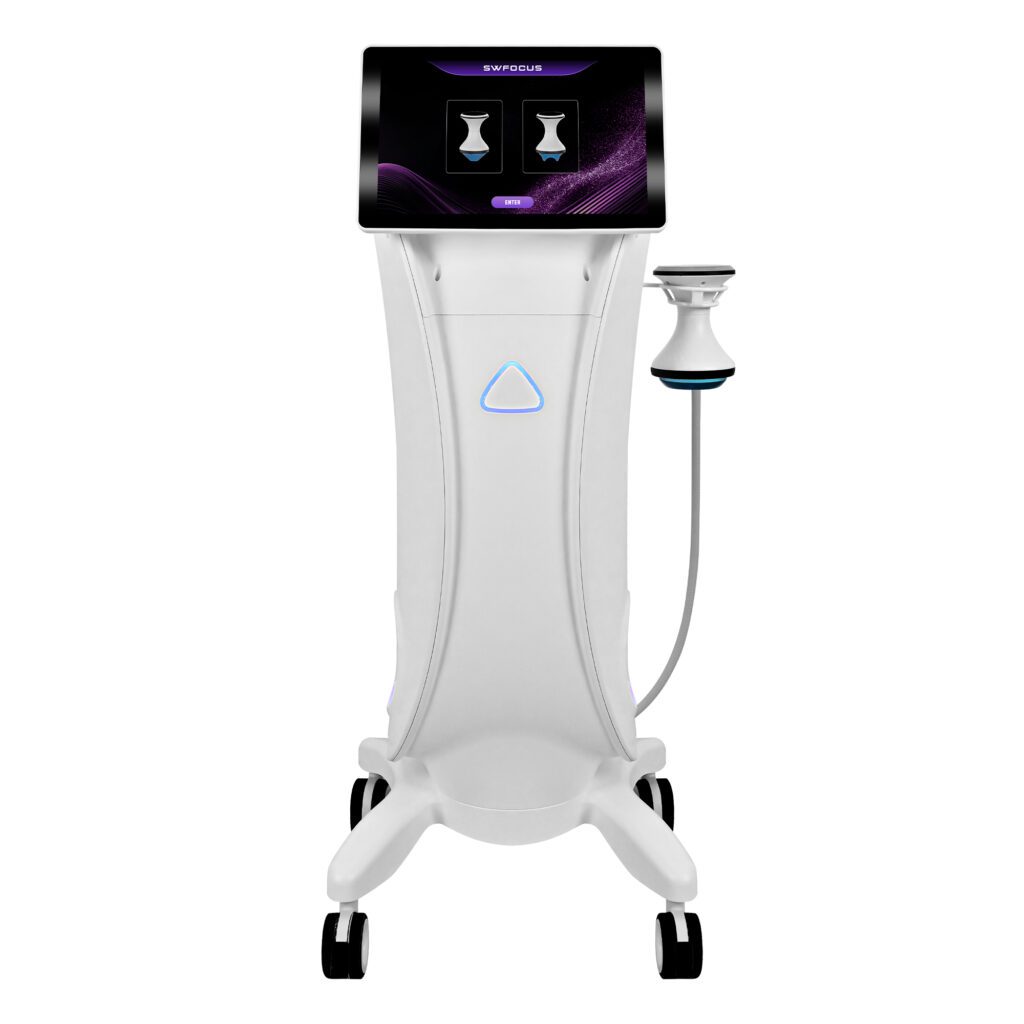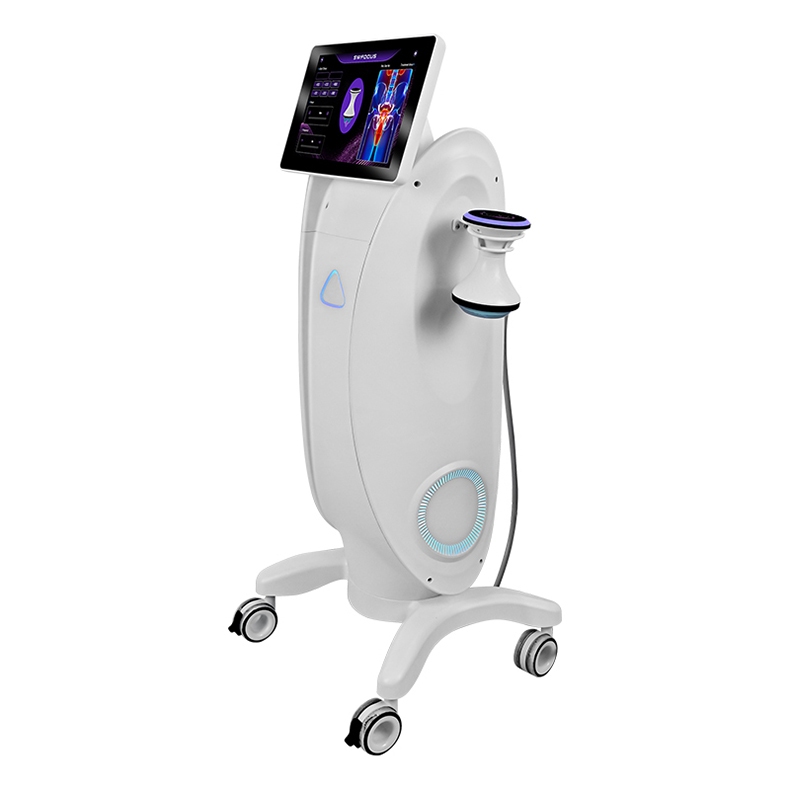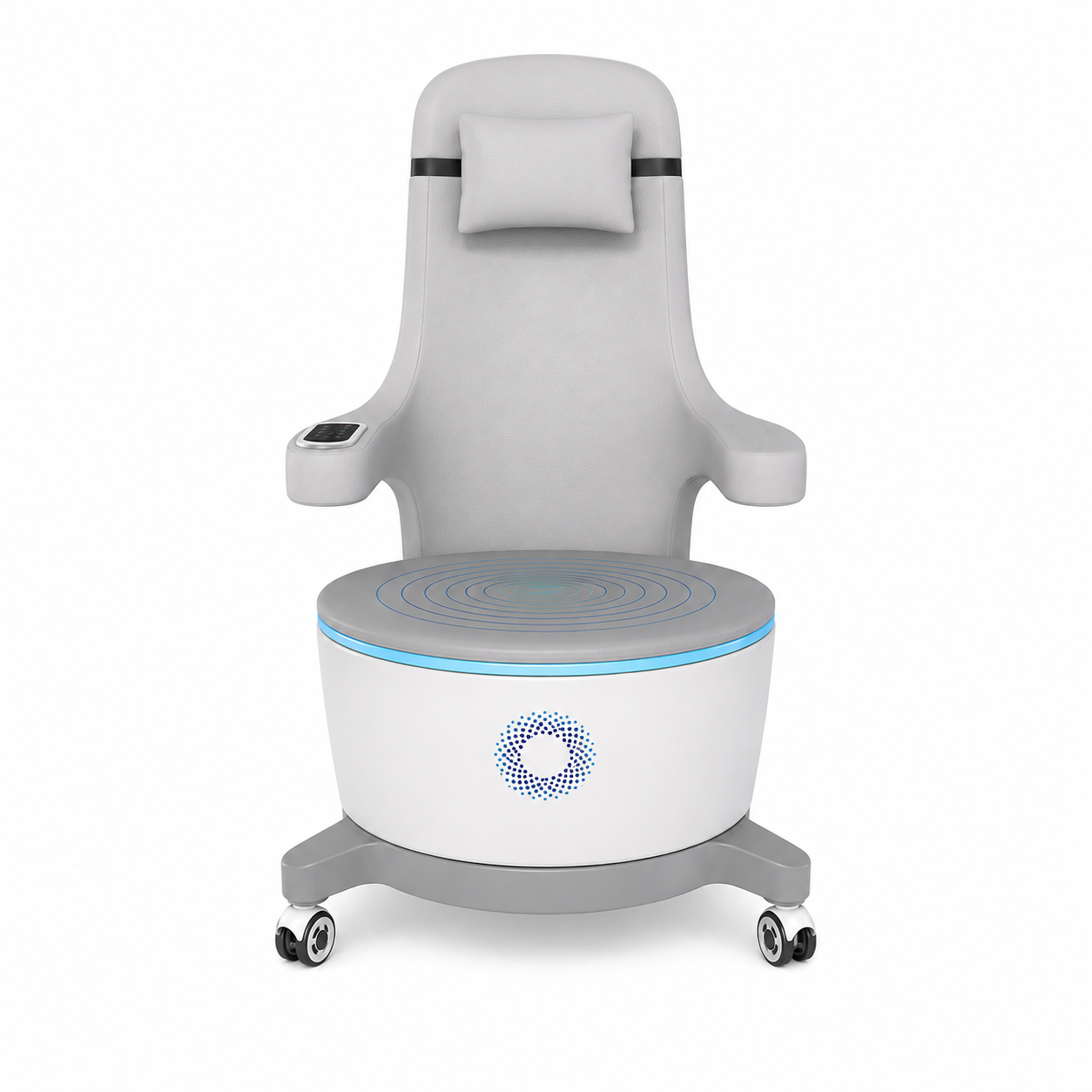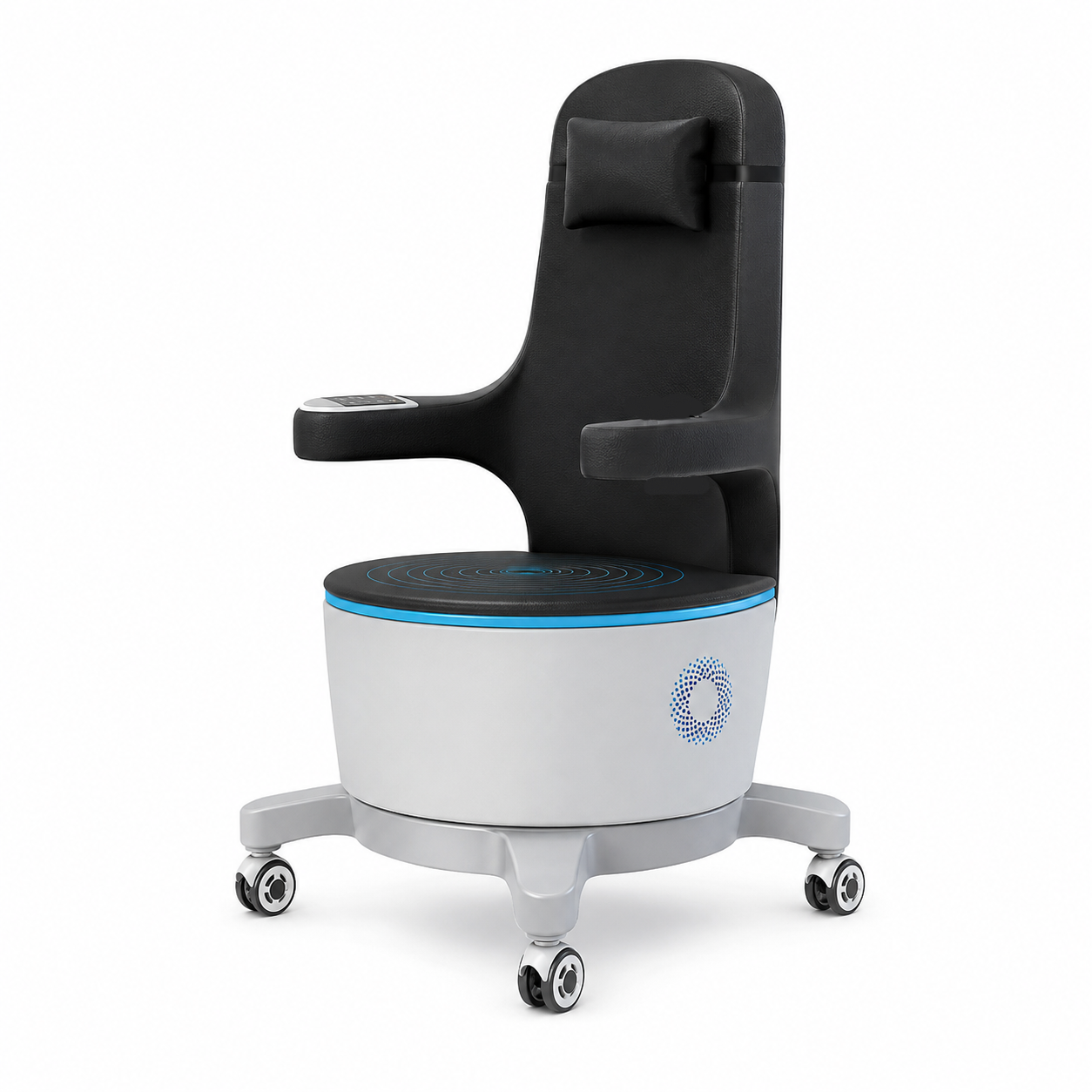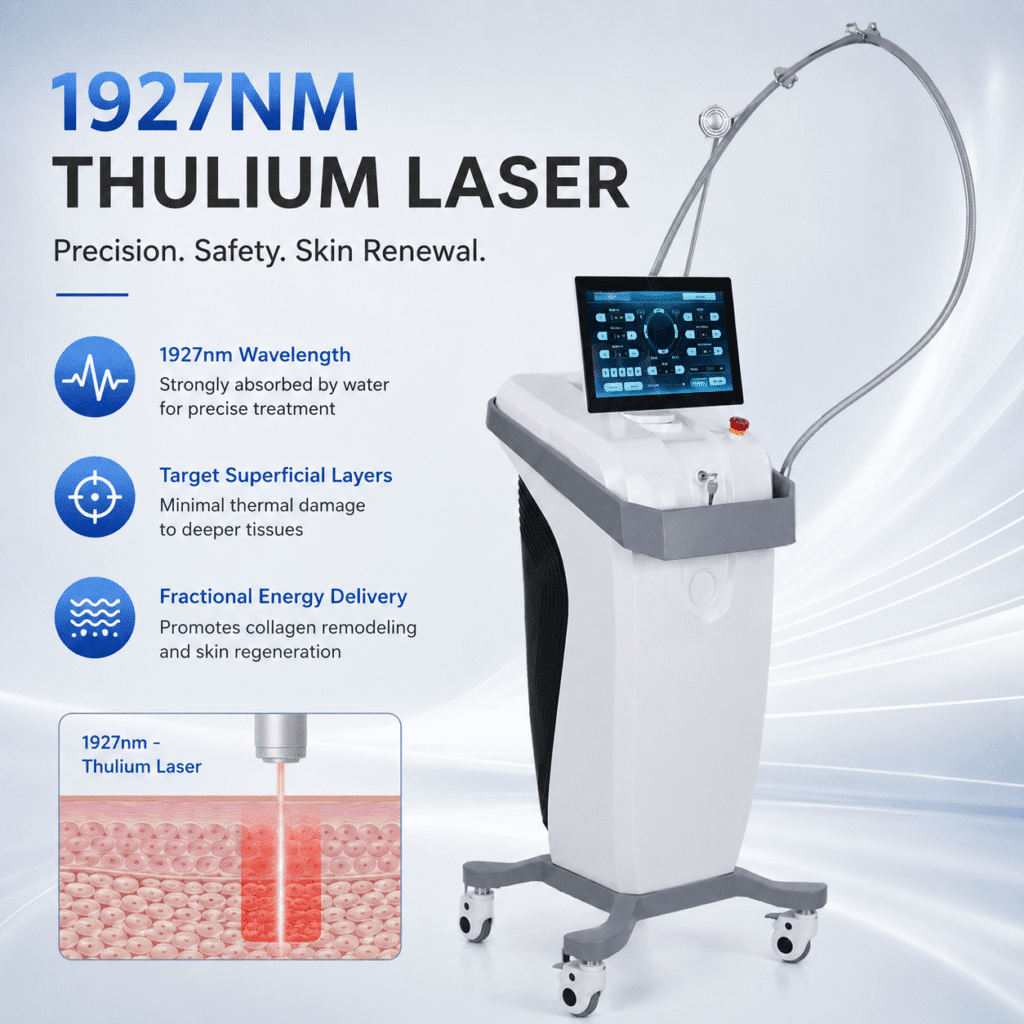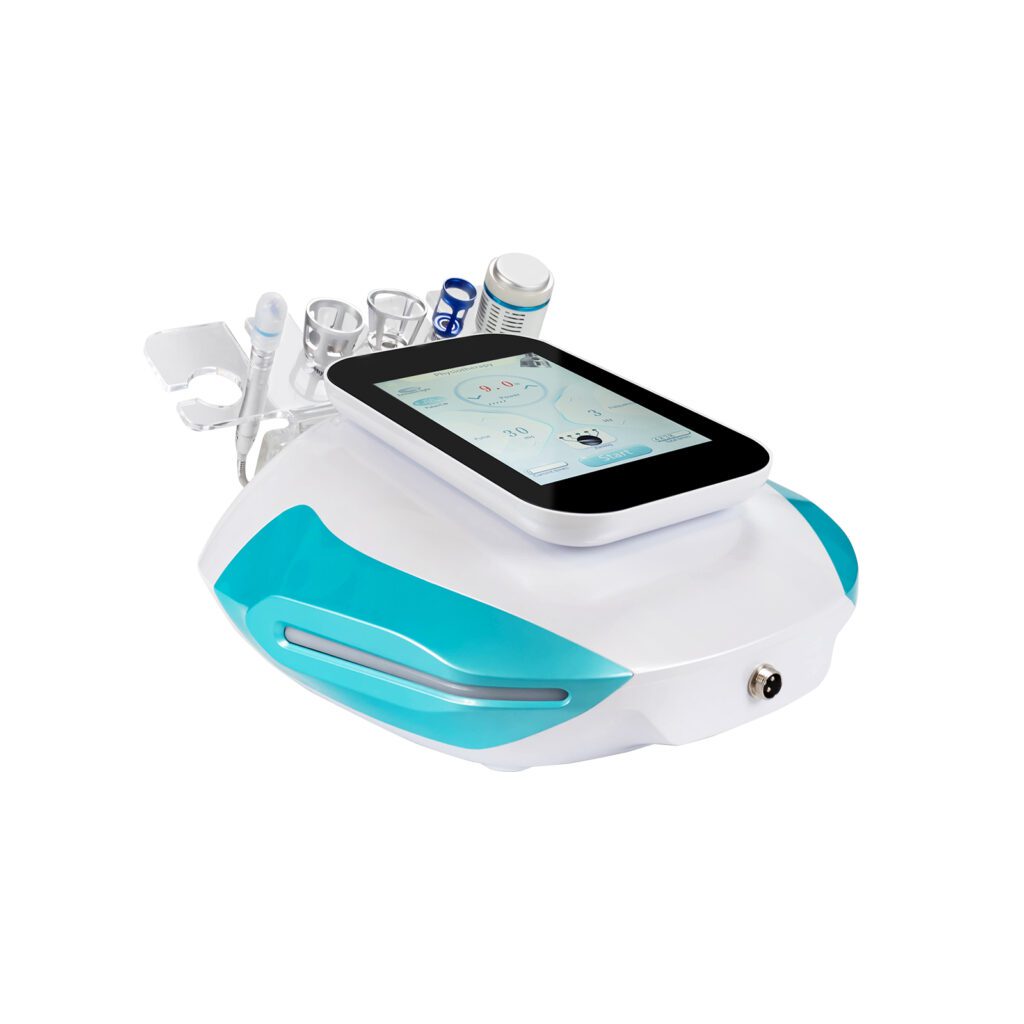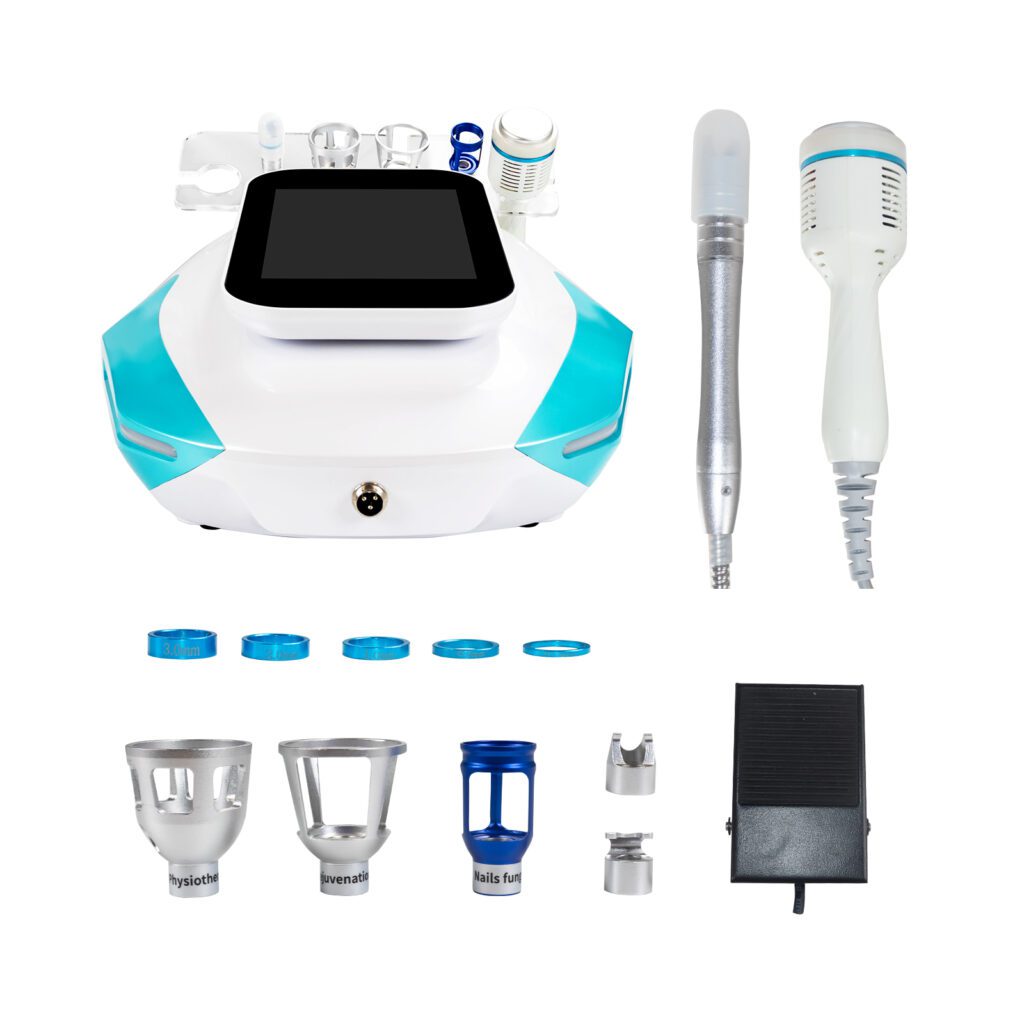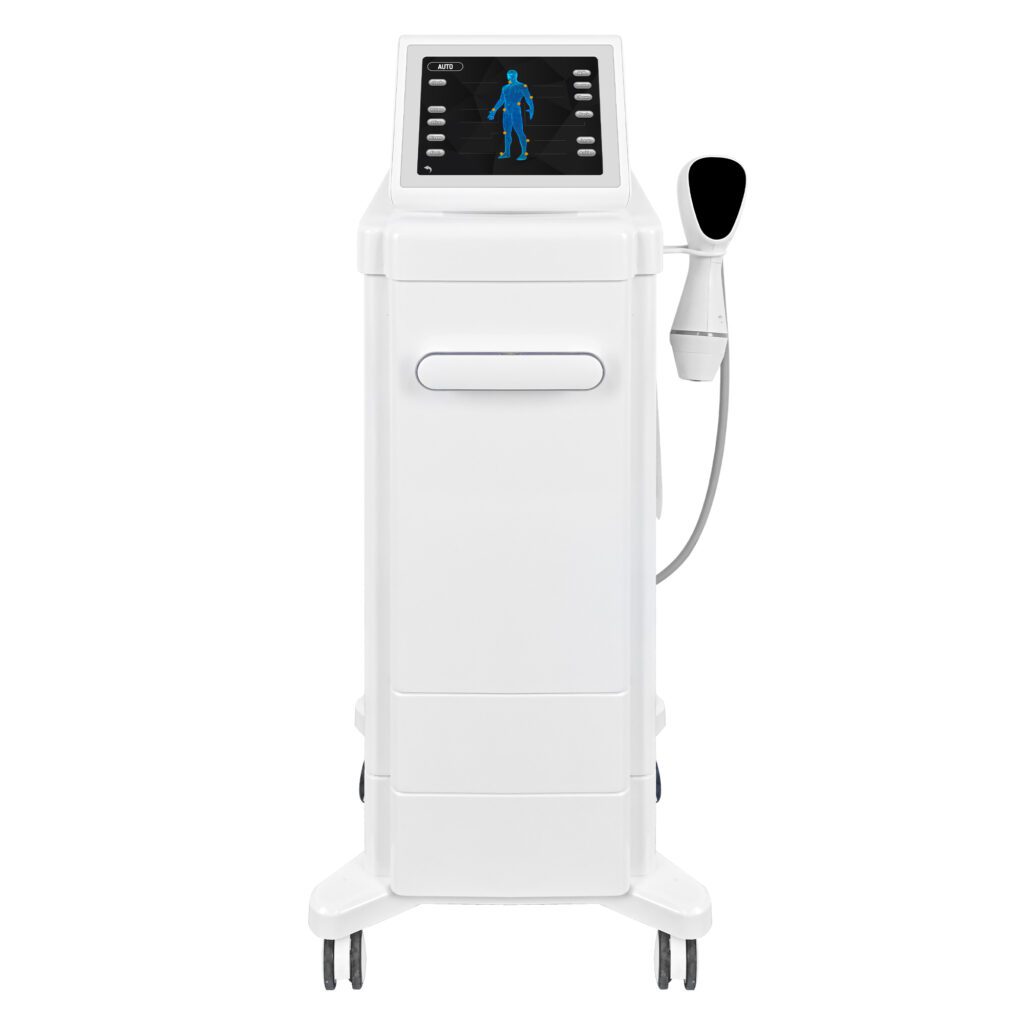










Long-term non-use can affect beauty equipment performance, especially if the machine is stored without cleaning, drying, inspection, and periodic checks. The machine may still power on after months of inactivity, but hidden problems can appear in water paths, tubes, filters, seals, pumps, batteries, cooling systems, handpieces, software accounts, and consumables.
For beauty salons, this matters because unused equipment often becomes active again during seasonal campaigns, new project launches, staff changes, or promotion periods. If the salon restarts a machine without inspection, it may face weak suction, leakage, error codes, unstable output, poor customer experience, or sudden downtime.
Long-term non-use does not automatically destroy a machine. A properly cleaned, stored, and checked device can remain stable for a long time. The real risk comes from leaving residue, water, gel, dust, humidity, expired consumables, discharged batteries, blocked filters, and unrecorded faults inside the equipment system.
Short Answer: Yes, But The Risk Depends On The Machine Type
Some beauty machines tolerate inactivity better than others. A simple LED panel stored in a dry room may be fine after months of non-use. A hydro facial machine with liquid residue in tubes may develop blockage, odor, weak suction, or contamination risk much faster. A high-energy IPL, laser, RF, HIFU, or cryotherapy system may need more careful restart checks because cooling, sensors, handpieces, and energy output stability matter.
The risk depends on:
- Machine category.
- Whether liquid, gel, or treatment solution remains inside.
- Storage temperature and humidity.
- Dust exposure.
- Battery condition.
- Cable and handle storage.
- Maintenance before shutdown.
- Whether the machine is powered on and checked periodically.
- Whether software, account, or subscription is still active.
- Whether consumables expired during storage.
- Whether the supplier has a restart checklist.
The best rule is to follow the manufacturer manual first. If the manual does not provide a storage plan, the salon should create a conservative internal SOP and ask the supplier for written guidance.
Why Beauty Equipment Can Change During Long-Term Non-Use
A machine can be affected by inactivity because many parts are designed to be used, cleaned, dried, and maintained regularly. When a machine sits idle, small problems can slowly build up.
Common reasons include:
- **Dry residue:** Gel, serum, oil, solution, or waste liquid can dry inside tips, bottles, tubes, or probe surfaces.
- **Blocked flow:** Filters, tubes, pumps, and nozzles may clog if not flushed before storage.
- **Seal aging:** Silicone rings, gaskets, and tubes can harden, crack, or lose elasticity.
- **Battery discharge:** Portable devices and tablets may lose battery capacity or fail to start after deep discharge.
- **Dust accumulation:** Dust can affect fans, vents, optical surfaces, cameras, screens, and connectors.
- **Humidity and corrosion:** Moisture can affect connectors, circuit boards, probes, cables, and metal contacts.
- **Cooling issues:** Water tanks, cooling channels, fans, and heat dissipation areas may need inspection before reuse.
- **Software problems:** Apps, accounts, cloud subscriptions, passwords, or firmware versions may become outdated.
- **Expired consumables:** Gels, serums, membranes, tips, filters, cartridges, and solutions may expire or become unsuitable.
- **Unnoticed old faults:** A machine may have been stored after a small problem that nobody recorded.
This is why long-term non-use should be managed like a maintenance condition, not only a schedule gap.
Which Parts Are Most Affected By Inactivity?
Water Paths, Tubes, Bottles, And Filters
Water-based and solution-based devices are the most sensitive to poor storage. Small bubble, hydro facial, oxygen spray, aqua peeling, and similar machines often include tubes, bottles, filters, pumps, tips, and waste containers.
If liquid residue is left inside, the machine may develop:
- Odor.
- Blockage.
- Weak suction.
- Uneven spray.
- Dirty bottles.
- Discolored tubes.
- Hardened seals.
- Pump strain.
- Difficult cleaning after restart.
Before long-term storage, these systems should be emptied, flushed, cleaned, dried, and stored according to the manual. When restarted, the salon should check flow, suction, leakage, odor, and filter condition before treating customers.
Pumps, Compressors, Vacuum Systems, And Cooling Systems
Pumps and compressors may be affected by dried residue, dust, seal problems, or long idle periods. Cooling systems may also need attention if water, cooling liquid, fans, filters, or sensors are involved.
Restart warning signs include:
- Abnormal noise.
- Weak suction.
- Slow pressure response.
- Cooling alarm.
- Water leakage.
- Overheating.
- Fan not spinning.
- Error code.
For IPL, laser, cryolipolysis, body contouring, and water circulation systems, cooling should be checked before customer use. A machine with unstable cooling should not be used just because it can power on.
Handpieces, Probes, Cables, And Connectors
Reusable handpieces and probes may be affected by dust, poor storage, cable bending, corrosion, cracked surfaces, and connector problems. If handpieces are thrown into drawers or left hanging with cable stress, long-term non-use can still cause damage.
Check for:
- Cracked shell.
- Damaged coating.
- Loose cable.
- Bent connector.
- Corrosion.
- Dust in connector port.
- Probe surface scratches.
- Handle recognition failure.
- Uneven heat, current, vibration, or output.
Handpieces should be cleaned, dried, protected, and stored in a fixed position. Cables should not be tightly wrapped or pulled from the wire.
Batteries And Portable Devices
Portable beauty devices, tablets, skin analyzer accessories, wireless handles, and some control modules may use rechargeable batteries. Batteries can degrade when left unused for long periods, especially if stored fully drained, overheated, damaged, or poorly ventilated.
Possible issues include:
- Device cannot power on.
- Battery drains quickly.
- Battery swelling.
- Charging failure.
- Overheating during charge.
- Shorter working time.
Battery storage should follow the manufacturer manual. Do not ignore swollen batteries, damaged chargers, burning smell, overheating, or abnormal charging behavior. If a battery problem appears, stop using the device and contact the supplier.
Optical Windows, Lamps, And Light Systems
IPL, laser, LED, and skin analysis devices may include optical windows, lamps, filters, lenses, cameras, and lighting modules. Inactivity itself may not consume shot count, but dust, humidity, scratches, and poor storage can affect light transmission and image quality.
Check for:
- Dust on optical window.
- Scratches or burn marks.
- Cracked lens or cover.
- Uneven LED brightness.
- Flickering.
- Camera blur.
- Light calibration problems.
- Cooling issue around light modules.
Optical surfaces should be cleaned only with approved methods. Rough cloth, harsh chemicals, and touching with fingers can damage performance.
Software, Accounts, And Cloud Systems
AI skin analyzers, smart devices, app-controlled machines, and software-based systems may have account, subscription, update, and compatibility issues after months of non-use.
Restart checks should include:
- Account login.
- Password recovery.
- Software version.
- Firmware update.
- Language setting.
- Customer report export.
- Cloud synchronization.
- Camera and lighting setup.
- Subscription status.
- Data backup.
A machine may be physically fine but operationally blocked if the software account expired or staff forgot login information.
Consumables And Treatment Products
Consumables may expire even if the machine is unused. Gels, serums, solutions, masks, filters, tips, membranes, cartridges, pads, and covers should be checked before restarting a project.
Do not use:
- Expired solutions.
- Opened products with unknown opening date.
- Cloudy, separated, discolored, or odorous liquids.
- Old filters or tubes with discoloration.
- Damaged disposable covers.
- Cartridges with unclear storage history.
- Unlabeled bottles.
Expired or contaminated consumables can create customer complaints and reduce project quality.
How Long Is Long-Term Non-Use?
There is no universal definition because different machines have different structures. However, salons can use a practical management scale.
Less Than 2 Weeks
This is usually normal downtime for many machines. Basic cleaning, dust protection, and startup checks are usually enough, unless the machine uses liquid pathways or has known maintenance requirements.
2 To 4 Weeks
At this stage, the salon should perform a basic functional check before customer use. Water-based machines should be checked more carefully for tube residue, bottle cleanliness, filters, and suction.
1 To 3 Months
This should be treated as idle storage. Before reuse, inspect accessories, clean surfaces, check consumables, test startup, run each major function, and confirm no error codes appear.
More Than 3 To 6 Months
The salon should perform a full restart checklist. High-energy devices, cooling systems, pumps, batteries, and software systems may need supplier guidance before use.
More Than 6 Months
For long storage, ask the supplier whether preventive inspection, calibration, battery service, cooling system check, or professional restart is recommended. Do not directly promote customer treatments before completing test operation.
The exact timeline should be adjusted according to the manufacturer’s manual and machine condition.
Category-Specific Risks
Small Bubble And Hydro Facial Machines
These machines are sensitive to residue and blockage. Long-term non-use can affect tubes, filters, waste bottles, solution bottles, seals, tips, and suction systems.
Before storage:
- Empty liquids.
- Flush tubes if the manual requires it.
- Clean bottles and waste containers.
- Replace or remove old filters if recommended.
- Dry parts fully.
- Store tips and tubes cleanly.
Before reuse:
- Check odor.
- Check suction.
- Check tube discoloration.
- Check leakage.
- Replace filters if uncertain.
- Use fresh solutions.
RF, EMS, And Ultrasound Machines
These machines may be less affected by inactivity than water-based devices, but handpieces, cables, connectors, probe coatings, and contact quality still matter.
Before reuse:
- Inspect probe surface.
- Check cables and connectors.
- Test handle recognition.
- Confirm conductive gel is not expired.
- Run a low-intensity test under trained guidance.
- Watch for abnormal heat, weak vibration, unstable current, or error codes.
IPL And Laser Machines
IPL and laser systems need careful restart checks because cooling and optical parts are important.
Before reuse:
- Check cooling system.
- Check water level or cooling liquid if applicable.
- Inspect optical window.
- Check handpiece cable.
- Confirm goggles and warning materials.
- Review shot count.
- Test fan and alarms.
- Do not use if cooling failure, abnormal heat, cracked housing, burn smell, or unstable output appears.
HIFU Machines
HIFU devices may involve cartridges, handles, software recognition, line count, and energy delivery.
Before reuse:
- Check cartridge surface.
- Confirm line count or shot count.
- Check handle connection.
- Test cartridge recognition.
- Check software settings.
- Use only cartridges stored correctly and within supplier guidance.
Cryolipolysis And Body Contouring Machines
These machines may include vacuum, cooling, RF, cavitation, applicators, membranes, seals, tubes, pumps, and sensors.
Before reuse:
- Inspect applicators.
- Check vacuum sealing.
- Replace old membranes or pads.
- Check filters and tubes.
- Test cooling.
- Watch for sensor alarms.
- Confirm emergency stop if included.
LED Light Therapy Devices
LED devices usually have fewer liquid-related risks, but they still need inspection.
Before reuse:
- Check power adapter.
- Inspect panels or mask.
- Check for flicker.
- Confirm all light areas work.
- Clean surface according to manual.
- Check eye shields and protective covers.
Skin Analyzers And AI Detection Devices
Skin analyzers can be affected by dust, lighting changes, software login problems, camera issues, and calibration needs.
Before reuse:
- Clean camera and contact surfaces.
- Check lighting uniformity.
- Confirm software account.
- Test report generation.
- Check language settings.
- Test customer photo capture.
- Confirm cloud subscription if applicable.
What To Do Before Long-Term Storage
If a salon knows a machine will not be used for a while, it should prepare the equipment instead of simply unplugging it.
Storage checklist:
- Finish a full cleaning process.
- Disinfect reusable parts according to the manual.
- Empty liquid bottles and waste containers.
- Flush tubes if required.
- Remove or replace old filters if recommended.
- Dry tubes, tips, bottles, probes, and handles.
- Remove expired or opened consumables.
- Clean dust from vents and surfaces.
- Power down correctly.
- Unplug the machine if appropriate.
- Coil cables loosely.
- Store handpieces in holders or protected boxes.
- Cover the machine with a dust cover.
- Store in a cool, dry, ventilated place.
- Avoid direct sunlight, high humidity, and extreme temperature.
- Record storage date, machine condition, and accessories.
For battery-powered equipment, follow the battery storage instructions in the manual. Do not store devices with damaged or swollen batteries.
What To Do During The Idle Period
If the machine will be stored for more than a few weeks, the salon should schedule periodic checks.
Periodic checks may include:
- Visual inspection.
- Dust removal.
- Room temperature and humidity review.
- Cable and handpiece inspection.
- Battery status check if applicable.
- Software account check if applicable.
- Short power-on test if the manual allows it.
- Cooling or water path check if recommended by supplier.
- Consumable expiry review.
Some salons schedule a simple monthly equipment check for idle machines. The exact interval should follow supplier guidance. The goal is to find small problems before the machine is needed for booked appointments.
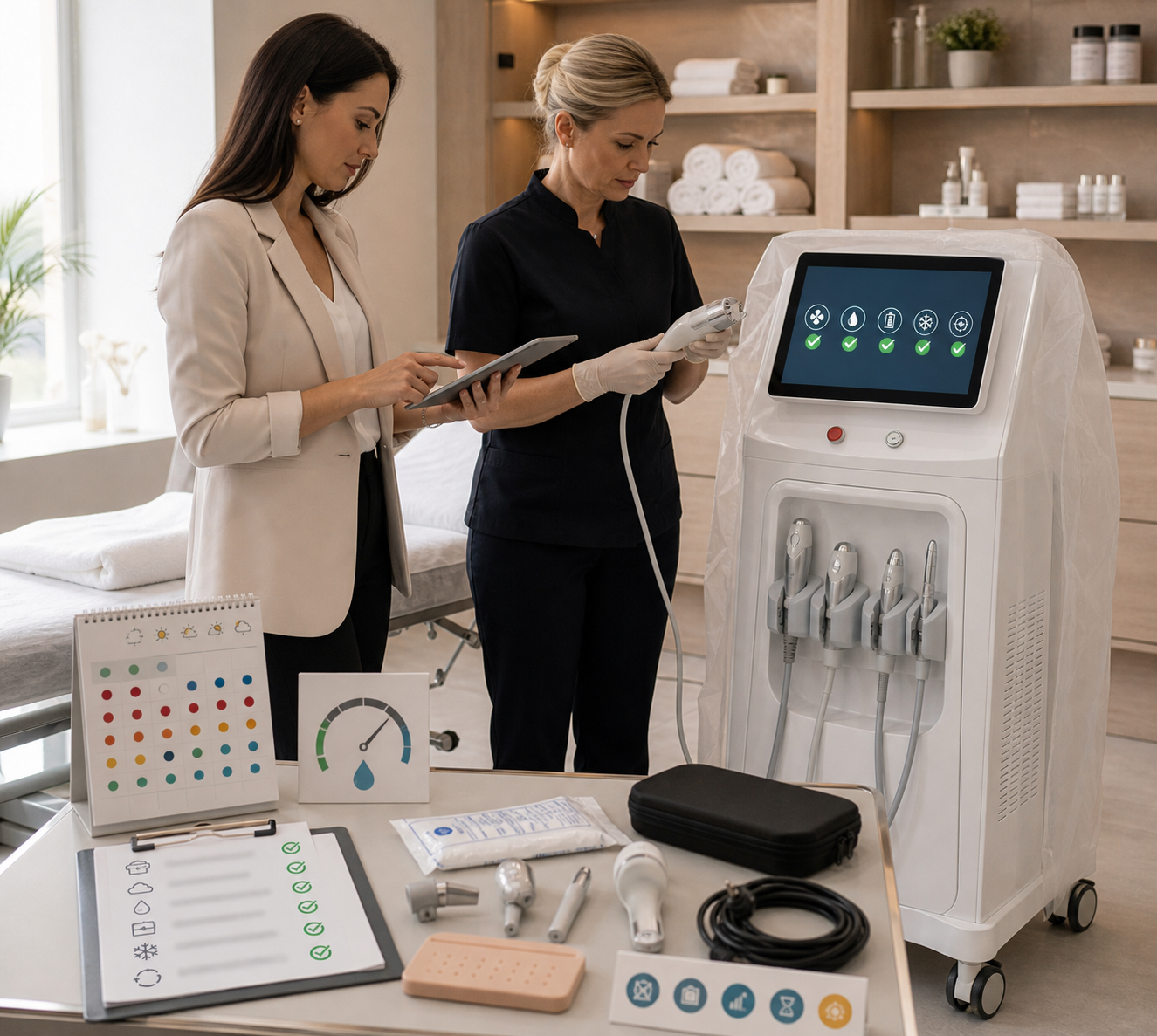
Restart Checklist After Long-Term Non-Use
Before using the machine on customers again, follow a restart checklist.
Step 1: Visual Inspection
Check shell, screen, handpieces, cables, probes, connectors, tubes, bottles, filters, optical windows, fans, vents, and power cord.
Step 2: Consumable Review
Remove expired or questionable consumables. Prepare fresh gels, solutions, filters, tips, covers, membranes, or cartridges.
Step 3: Cleaning And Disinfection
Clean and disinfect reusable parts according to the manual before customer contact.
Step 4: Power Check
Confirm voltage, plug, power cord condition, and outlet condition. Do not use damaged cables or unstable adapters.
Step 5: Startup Test
Power on the machine without a customer. Watch for error codes, abnormal sound, odor, heating, screen problems, fan failure, or warning alarms.
Step 6: Function Test
Test each main function under trained guidance. Check suction, spray, heat, cooling, light, vibration, current, software, camera, and handle recognition depending on the machine type.
Step 7: Supplier Confirmation If Needed
For high-energy devices or machines stored for many months, ask the supplier whether remote inspection, calibration, maintenance, or technician review is recommended.
Step 8: Staff Refresher Training
Before restarting customer services, review operation steps, contraindications, cleaning, aftercare, and stop-use conditions with staff.
Step 9: Trial Operation
Run a staff test or controlled trial before booking multiple customer appointments. Record the result.
Stop-Use Signals After Restart
Do not continue using the machine if any of these appear:
- Burning smell.
- Smoke or sparks.
- Abnormal heat.
- Exposed wire.
- Cracked handpiece.
- Repeated error code.
- Cooling alarm.
- Water leakage.
- Weak suction that does not improve after basic checks.
- Unstable energy output.
- Flickering light output.
- Unusual vibration or noise.
- Customer reports abnormal discomfort.
- Software failure prevents safe operation.
Stop the machine, record evidence, and contact the supplier. Restarting repeatedly without diagnosis can increase damage and warranty risk.
How Long-Term Non-Use Affects Warranty And After-Sales
Long-term non-use can create warranty questions. If a machine fails after storage, the supplier may ask whether it was cleaned, stored, and maintained according to the manual.
To protect warranty rights, salons should keep:
- Purchase date.
- Warranty terms.
- Storage date.
- Cleaning record before storage.
- Maintenance record during storage.
- Photos or videos of condition.
- Restart checklist.
- Error code records.
- Supplier communication.
If the machine was stored with liquid residue, exposed to humidity, repaired without authorization, or restarted despite alarms, free warranty support may become harder to claim.
How To Manage Seasonal Or Low-Frequency Machines
Some machines are naturally seasonal or low-frequency. For example, body contouring may be busier before summer, while certain repair or hydration projects may be seasonal in dry months. Low-frequency machines need a management plan.
Good practices include:
- Assign one responsible person.
- Keep a usage calendar.
- Create an idle storage checklist.
- Schedule monthly inspection.
- Keep fast-moving parts in stock.
- Check consumables before promotion.
- Run a test before launching campaigns.
- Refresher-train staff before seasonal use.
- Avoid scheduling many customers before a successful restart test.
This turns an idle machine from a risk into a controlled asset.
How Distributors Can Support Salons
Distributors can add value by helping salons manage idle equipment.
Useful support includes:
- Long-term storage checklist.
- Restart checklist.
- Video guidance for idle machines.
- Seasonal maintenance reminders.
- Consumable expiry reminders.
- Spare parts availability check.
- Remote startup inspection.
- Staff refresher training.
- Maintenance package before peak season.
- Warranty guidance for stored machines.
This kind of support helps distributors reduce urgent repair requests and improve salon trust.
How Manufacturers Can Reduce Long-Term Non-Use Problems
Manufacturers can reduce after-sales disputes by providing clear storage and restart instructions.
Useful manufacturer materials include:
- Storage conditions in the manual.
- Cleaning before storage.
- Battery storage guidance.
- Water path shutdown guidance.
- Cooling system maintenance.
- Periodic inspection interval.
- Restart checklist.
- Error code guide.
- User-replaceable parts list.
- Technician-only service list.
- Software account and update instructions.
If a machine is likely to be used seasonally, the manufacturer should design maintenance instructions for idle periods.
Common Mistakes To Avoid
The first mistake is storing the machine without cleaning liquid pathways. This is especially risky for hydro facial and small bubble systems.
The second mistake is leaving opened solutions, gels, filters, or tips with the machine and using them months later.
The third mistake is wrapping cables tightly around handles. This can damage wires and connectors.
The fourth mistake is storing machines in humid storage rooms, near windows, near water, or under direct sunlight.
The fifth mistake is restarting a high-energy device and immediately booking customers without test operation.
The sixth mistake is ignoring software accounts until the day of the appointment.
The seventh mistake is not recording storage and restart checks. Without records, warranty communication becomes harder.
FAQ
Will a beauty machine break if it is not used for a long time?
Not necessarily, but long-term non-use can cause performance issues if the machine is not cleaned, dried, stored, and checked properly. Water paths, tubes, seals, batteries, cooling systems, handpieces, and software are common risk points.
How often should idle beauty equipment be checked?
Follow the manufacturer manual first. If there is no clear guidance, many salons create a monthly inspection routine for idle machines, including visual checks, dust cleaning, consumable review, and basic startup testing if allowed.
Should water-based beauty machines be emptied before storage?
Yes, if the manual requires it. Water-based and solution-based machines should usually be emptied, flushed, cleaned, and dried before long-term storage to reduce blockage, odor, leakage, and contamination risk.
Can a salon use the machine immediately after months of storage?
It is not recommended. The salon should inspect the machine, replace expired consumables, check power, run startup and function tests, review staff training, and contact the supplier if the machine is high-energy or stored for a long time.
What should salons do if a stored machine shows an error code after restart?
Stop using it for customers, record the error code, take photos or videos, check the manual, and contact the supplier. Do not repeatedly reset and continue using the machine without diagnosis.
Conclusion
Long-term non-use can affect beauty equipment performance, especially when machines contain liquid pathways, pumps, filters, tubes, seals, batteries, cooling systems, handpieces, optical components, software, or consumables. The risk is not simply that the machine sits idle. The risk is that it sits idle without cleaning, storage control, periodic inspection, and a proper restart checklist.
For salons, the best solution is to clean and dry the machine before storage, protect accessories, check idle equipment regularly, replace expired consumables, test functions before customer use, and keep records. For distributors and manufacturers, providing storage and restart guidance can reduce after-sales disputes and help salons keep equipment profitable even when projects are seasonal or low-frequency.