









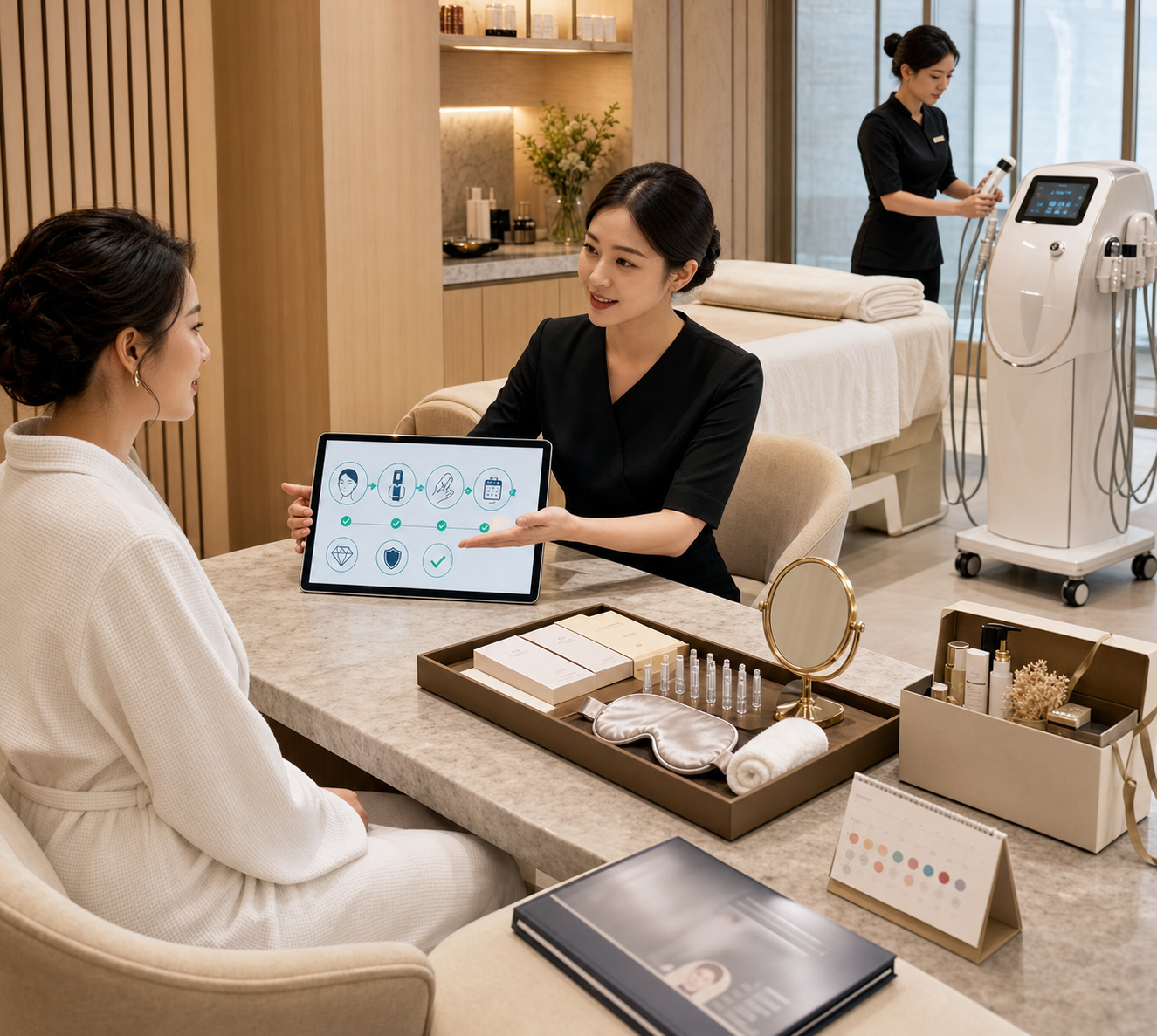
Beauty salons can package equipment-based projects as high-end services by building a complete value system around the machine. A high-end project is not created by raising the price, using luxury words, or placing the machine in a better room. It is created when the customer feels that the service is professional, personalized, structured, comfortable, credible, and worth repeating.
For beauty salons, high-end packaging helps equipment projects move beyond low-price trials and basic machine operation. It allows the salon to sell courses, memberships, customized plans, and long-term skin or body management. For distributors and manufacturers, helping salons package high-end projects can improve equipment usage, consumable repurchase, customer retention, and product competitiveness.
The core idea is simple: do not sell the machine only as a function. Sell a professional solution built around customer assessment, treatment logic, equipment value, staff expertise, service process, and follow-up management.
High-End Packaging Is A System, Not A Name
Many salons believe project packaging means creating a premium name and a poster. This is only the surface. A customer may be attracted by a good name once, but they will only pay a high price if the whole experience supports that price.
A high-end equipment project should include:
- Clear target customer.
- Clear skin, body, or aging concern.
- Professional consultation.
- Skin analysis or visual assessment.
- Suitable equipment selection.
- Standard treatment flow.
- Clean and comfortable environment.
- Trained staff.
- Realistic result explanation.
- Course package design.
- Aftercare and follow-up.
- Progress records.
- Transparent pricing logic.
The machine is only one part of the project. The real high-end value comes from how the salon uses the machine to create a controlled, repeatable, and trustworthy service experience.
Why Equipment Projects Are Suitable For High-End Packaging
Equipment-based projects are easier to package as high-end services than many basic manual care projects because they naturally contain professional signals.
They can show:
- Advanced technology.
- Visible equipment investment.
- Data or analysis support.
- More standardized treatment flow.
- Stronger project differentiation.
- Higher customer curiosity.
- Better package storytelling.
- More room for course design.
For example, a basic facial can be seen as cleansing and relaxation. But when the same service is combined with AI skin analysis, hydro facial cleansing, RF firming, LED soothing, and a 6-session skin management plan, it becomes a more complete professional project.
However, technology alone is not enough. If the staff cannot explain the project clearly, the room feels chaotic, the customer is rushed, and aftercare is weak, the machine will not feel high-end.
Step 1: Choose The Right Project For High-End Positioning
Not every equipment project needs to be high-end. Some machines are better for basic care, quick add-ons, or entry-level treatments. High-end packaging works best when the project has enough perceived value, customer demand, and package potential.
Suitable categories often include:
- RF firming and anti-aging care.
- HIFU lifting and contour management.
- IPL or laser-related aesthetic projects where allowed and properly operated.
- Cryolipolysis and body contouring.
- AI skin detection and personalized skin management.
- LED repair or soothing programs for sensitive customers.
- Hydro facial plus advanced skin management.
- EMS or microcurrent contour support.
- Scalp, eye area, neck, or private customized care projects where suitable.
The project should meet three conditions:
- Customers can understand the problem it targets.
- The machine has enough service value to justify a course.
- The salon can deliver a professional process consistently.
If the machine is only used as a simple 10-minute add-on, it may not support high-end pricing alone.
Step 2: Define The High-End Customer
High-end packaging must start with the customer, not the machine. Different customers define value differently.
For anti-aging customers, value may mean firmness, contour, skin texture, and long-term maintenance.
For sensitive skin customers, value may mean gentleness, safety, comfort, and trust.
For body management customers, value may mean privacy, measurements, course planning, and realistic progress.
For high-income professionals, value may mean time efficiency, privacy, clear consultation, and predictable service.
For existing members, value may mean a meaningful upgrade from their current care plan.
Before packaging the project, salons should answer:
- Who is the target customer?
- What concern do they care about most?
- What result do they expect?
- What are they afraid of?
- What price range can they accept?
- What service style makes them feel respected?
- What evidence do they need before buying?
- What follow-up will make them return?
A high-end project for a community salon and a high-end project for a premium skin management center may look very different. The target customer decides the design.
Step 3: Sell The Problem And Plan, Not Only The Machine
Customers rarely buy a machine name. They buy a solution to a concern. If staff introduce a project by listing machine functions, the value may feel technical but not personal.
Weak introduction:
This machine has RF, EMS, LED, and ultrasound.
Better introduction:
Based on your current concern, we are focusing on lower-face firmness, hydration, and skin comfort. This project uses equipment support plus aftercare planning, so we can manage the concern step by step instead of doing a random single treatment.
The machine should be introduced as a professional tool inside a larger plan. The plan is what makes the project feel high-end.
Step 4: Add A Professional Assessment Before Treatment
High-end projects need a reason. A customer is more likely to accept a higher price when the salon first shows what the project is designed to solve.
Assessment can include:
- AI skin analysis.
- Skin moisture and oil observation.
- Pore and texture review.
- Facial contour photos with consistent angle.
- Neck and jawline assessment.
- Body measurement if appropriate.
- Customer concern questionnaire.
- Previous treatment history.
- Contraindication and suitability check.
The assessment should not be used to scare the customer. It should help the customer understand why a plan is recommended.
For example:
Your main concern is not only dryness. The analysis shows texture, pore blockage, and barrier discomfort. So we will not position this as only a hydration treatment. We will design a 4-session skin management plan with cleansing, hydration, and soothing support.
This creates professional logic before price discussion.
Step 5: Create A Named Treatment Path
A high-end equipment project should have a clear treatment path. The customer should know what happens before, during, and after the session.
A premium treatment path may include:
- Welcome and consultation.
- Skin or body assessment.
- Suitability screening.
- Project explanation.
- Preparation and cleansing.
- Equipment treatment.
- Comfort check during treatment.
- Soothing or finishing step.
- Aftercare guidance.
- Progress record.
- Next-session plan.
This flow makes the project feel structured. Without a flow, the machine may feel like a random add-on.
Step 6: Design Project Names That Communicate Value
Project names should help customers understand the service direction. Avoid names that are too technical, too exaggerated, or too vague.
Weak names:
- RF project.
- Machine facial.
- Anti-aging instrument.
- Hydro facial experience.
- LED package.
Stronger names:
- Advanced Facial Firming Management.
- AI Skin Analysis And Customized Repair Plan.
- Pore Cleansing And Barrier Hydration Program.
- Neck And Jawline Contour Care.
- Sensitive Skin Soothing Light Therapy Program.
- Body Contour Management Course.
- Premium Skin Renewal Maintenance Plan.
The name should sound professional and specific, but not promise unrealistic results. Avoid words that imply guaranteed, permanent, medical, or instant transformation unless properly supported and legally allowed.
Step 7: Use Tiered Packages Instead Of One Single Price
High-end customers often need choices. A single high price can feel difficult to accept. Tiered packages help customers choose based on budget, concern, and commitment.
A practical structure:
- **Starter plan:** 3 sessions for customers who want to test suitability.
- **Standard plan:** 6 sessions for customers with clear goals.
- **Premium plan:** 10 to 12 sessions with combined care, progress review, and membership benefits.
Example:
Starter: AI analysis + 3 RF firming sessions + aftercare card.
Standard: AI analysis + 6 RF firming sessions + LED soothing support + progress review.
Premium: AI analysis + 10 RF firming sessions + neck add-on + home care guidance + monthly review.
Tiered packages allow the salon to keep high-end positioning while reducing the customer’s decision pressure.
Step 8: Build A Premium Service Experience
High-end packaging must be felt in the service process. Customers notice details.
Important experience details include:
- Private and clean treatment room.
- Organized machine cart.
- Clean cables and handpiece storage.
- Staff uniform and professional appearance.
- Soft but clear consultation tone.
- Fresh disposable covers.
- Comfortable bed setup.
- Clean towels and treatment tools.
- No rushed treatment.
- Clear explanation before each step.
- Quiet room and controlled appointment flow.
- Aftercare card or message after the session.
The machine should look well managed. A high-priced project loses credibility if the equipment is dusty, cables are tangled, probes are stored casually, or staff cannot answer basic questions.
Step 9: Use Before-And-After Communication Carefully
Before-and-after records can help high-end packaging, but they must be handled honestly.
Good practice:
- Use consistent lighting.
- Use the same angle.
- Use the same camera distance.
- Avoid heavy filters.
- Explain treatment course length.
- Record customer consent.
- Avoid implying every customer will get the same outcome.
- Do not exaggerate one-session results.
High-end customers may actually trust careful language more than dramatic claims. A professional salon can say:
One session is mainly to help you understand comfort and immediate skin feel. Stable improvement usually depends on repeated care, correct home routine, and individual condition.
This protects trust and reduces complaints.
Step 10: Make Staff Expertise Visible
A high-end equipment project depends on staff confidence. Customers pay more when they believe the operator understands the machine and the customer.
Staff should be able to explain:
- Why this project is suitable.
- What the customer may feel.
- What one session can and cannot show.
- How many sessions are recommended.
- How the machine should be maintained.
- What aftercare is needed.
- What situations are not suitable.
- When to stop treatment.
- How the project fits the customer’s current care plan.
The salon should train staff not only on operation, but also on consultation and objection handling.
Step 11: Add High-End Aftercare And Follow-Up
High-end service does not end when the machine stops. Aftercare and follow-up can make the customer feel managed, not sold.
Follow-up can include:
- Aftercare reminder message.
- Skin or body response check after 24 to 48 hours.
- Next appointment reminder.
- Progress summary after several sessions.
- Home care recommendation.
- Lifestyle reminder if relevant.
- Membership upgrade suggestion.
- Treatment record review.
For high-ticket packages, progress management is important. Customers should feel that each session belongs to a plan.
Step 12: Create A High-End Consultation Script
The consultation script should guide staff to identify customer needs and connect them with the project.
Useful questions:
- What change do you most want to see in the next 1 to 3 months?
- Which part of your current care feels insufficient?
- Have you tried equipment projects before?
- What made you satisfied or dissatisfied before?
- Are you more concerned about comfort, effect, price, or time?
- Do you prefer a gentle maintenance plan or a stronger course plan?
- Are you willing to follow aftercare and repeated sessions?
Then staff can recommend:
Based on your concern and current condition, I do not suggest a random one-time treatment. I suggest we start with analysis, then use this equipment project as a 6-session management plan. We will review your response after the first 2 sessions and adjust the combination if needed.
This sounds more high-end than pushing a discount.
Step 13: Price By Value, Not Only Time
Many salons price equipment projects by treatment time only. This can make high-end packaging difficult because the customer compares only minutes.
A high-end price should reflect:
- Equipment investment.
- Staff training.
- Consultation time.
- Skin or body analysis.
- Consumables.
- Treatment time.
- Room cost.
- Aftercare support.
- Follow-up.
- Progress review.
- Maintenance and replacement cost.
- Brand positioning.
The salon should calculate cost per treatment, then design a price that leaves room for profit, service quality, and future maintenance.
Do not make the trial price too low. A very low trial can attract price-sensitive customers and damage premium positioning. A paid value trial with a package deduction rule often works better.
Step 14: Use Membership And Private Benefits
High-end customers often respond better to exclusivity than public discount.
Premium benefits can include:
- Member-only project preview.
- Private skin analysis appointment.
- Priority booking.
- Seasonal skin review.
- Complimentary LED soothing add-on.
- Annual equipment maintenance plan for skin or body.
- Birthday month upgrade.
- Package progress report.
- Private consultant follow-up.
These benefits should support the project, not feel like random gifts. A high-end project should make the customer feel cared for over time.
Step 15: Combine Equipment With Manual Care Strategically
Many customers still value manual technique. A strong high-end project can combine equipment and manual care rather than positioning them as competitors.
Examples:
- AI skin analysis + hydro facial + manual calming mask.
- RF firming + facial massage finishing.
- LED soothing + barrier care mask.
- Body contouring equipment + lymphatic care.
- Ultrasound hydration + customized serum care.
This creates a richer experience. The machine provides professional technology, while manual care provides warmth and personalization.
Step 16: Avoid Unsupported Claims
High-end packaging must be credible. Avoid exaggerated claims that create short-term interest but long-term risk.
Avoid claims such as:
- Permanent lifting.
- Guaranteed slimming.
- Medical treatment effect.
- Cure acne or disease.
- One session removes wrinkles.
- Safe for everyone.
- No risk at all.
- Same result for every customer.
Better wording:
- Helps support the appearance of firmness.
- Designed for skin management and maintenance.
- Suitable customers need screening.
- Results vary by individual condition.
- A course plan is usually more appropriate than one session.
- We will explain benefits, limits, and aftercare before treatment.
Truthful and careful language makes a salon look more professional, not less premium.
Step 17: Use Customer Cases Responsibly
Customer cases can make a high-end project more believable, but they should be handled responsibly.
Good case presentation includes:
- Customer permission.
- Similar customer concern.
- Course length.
- Consistent photo conditions.
- Clear statement that results vary.
- No over-editing.
- No fake reviews.
- No misleading testimonial.
High-end customers can often sense when cases are exaggerated. Realistic cases build stronger trust.
Step 18: Build A Project Manual For Staff
Every high-end equipment project should have an internal project manual.
The manual can include:
- Project name.
- Target customers.
- Unsuitable customers.
- Consultation questions.
- Treatment flow.
- Machine settings range.
- Consumables.
- Cleaning steps.
- Aftercare.
- Package prices.
- Sales script.
- Objection handling.
- Follow-up message.
- Photo standards.
- Recordkeeping method.
This keeps the project consistent even when staff changes.
Step 19: Track Data And Improve The Package
High-end packaging should be reviewed with data.
Track:
- Number of consultations.
- Trial booking rate.
- Trial-to-package conversion.
- Average package value.
- Customer repurchase.
- Customer complaints.
- Consumable cost.
- Staff closing rate.
- Treatment room utilization.
- Before-and-after record completion.
- Follow-up response rate.
If conversion is low, the issue may be consultation, pricing, project name, customer targeting, or staff confidence. If repurchase is low, the issue may be expectation management, treatment comfort, follow-up, or results communication.
How Distributors Can Help Salons Package High-End Projects
Distributors can make equipment easier to sell by providing more than machine specifications.
Useful support includes:
- High-end project names.
- Treatment flow templates.
- Experience card designs.
- Package pricing examples.
- Consultation forms.
- Staff scripts.
- Before-and-after photo standards.
- Aftercare cards.
- Training videos.
- Marketing material with careful claims.
- Consumable cost calculator.
- Case studies by salon type.
When salons know how to package a machine as a high-end project, they use the machine more often and buy more consumables and accessories.
How Manufacturers Can Support Premium Positioning
Manufacturers can improve premium positioning by providing:
- Clean product design.
- Stable machine performance.
- Clear user manual.
- Training course.
- Project protocol.
- Maintenance guide.
- High-quality marketing images and videos.
- Spare parts support.
- Software or analysis reports if applicable.
- Language-localized materials.
- Distributor training.
A machine is easier to sell as high-end when the manufacturer supports the full service system.
Common Mistakes To Avoid
The first mistake is raising the price without improving the process. Customers will feel the difference immediately.
The second mistake is using luxury words without professional evidence. Names like royal, luxury, or premium are weak if the consultation and service are ordinary.
The third mistake is selling machine parameters instead of customer value.
The fourth mistake is making exaggerated claims. High-end customers need trust, not miracle promises.
The fifth mistake is discounting too heavily. A low trial price can damage premium positioning.
The sixth mistake is ignoring aftercare. A premium project should have follow-up and progress management.
The seventh mistake is failing to train staff. One poorly trained operator can ruin the project’s reputation.
FAQ
Can any beauty equipment project be packaged as high-end?
Not every project is suitable for high-end positioning. The best candidates have clear customer demand, enough perceived value, strong service flow, package potential, and staff who can explain the project professionally.
What makes an equipment project feel premium?
A premium project feels professional, personalized, clean, comfortable, structured, and credible. Assessment, treatment flow, staff expertise, aftercare, and follow-up matter as much as the machine itself.
Should high-end equipment projects use low-price trial cards?
Usually, very low trial prices are not ideal for premium positioning. A paid value trial with clear consultation and package deduction can attract more suitable customers while protecting project value.
How should salons name high-end equipment projects?
Names should describe the customer concern and service direction, such as Advanced Facial Firming Management or AI Skin Analysis And Customized Repair Plan. Avoid exaggerated or unsupported promises.
How can salons avoid overpromising results?
Use truthful language, explain that results vary, show realistic course plans, use consistent before-and-after records, and avoid permanent, guaranteed, medical, or one-session transformation claims unless properly supported and allowed.
Conclusion
Beauty salons can package equipment projects as high-end services by creating a complete value system around the machine. The salon should define the target customer, build a professional assessment process, create a structured treatment flow, design tiered packages, train staff, control the service environment, use responsible marketing language, and manage aftercare and follow-up.
High-end packaging is not decoration. It is operational discipline. When the project is clear, credible, comfortable, and consistently delivered, customers are more willing to pay for a higher-value equipment course and return for long-term management.