









Quando um salão de beleza adquire uma máquina profissional de depilação, o preço e a velocidade do tratamento são importantes, mas a segurança geralmente determina se o negócio pode operar com confiança a longo prazo.
Um sistema mal selecionado ou mal operado pode causar queimaduras, bolhas, alterações na pigmentação, lesões oculares, reclamações de clientes e custos elevados de inatividade. Mesmo uma máquina tecnicamente capaz pode se tornar insegura quando o operador utiliza parâmetros incorretos, ignora a exposição solar, fornece resfriamento insuficiente ou omite a triagem do cliente.
Para os distribuidores, a segurança não deve ser tratada como uma única frase no folheto do produto.
O salão precisa compreender todo o sistema de segurança:
- projeto do dispositivo
- avaliação da pele e do cabelo
- controle de parâmetros
- desempenho de resfriamento
- proteção ocular
- treinamento de operadores
- manutenção
- resposta de emergência
- alegações de tratamento realistas
Este artigo explica as questões de segurança que os salões devem considerar antes de adquirir equipamentos de depilação a laser de diodo ou IPL.
1. A máquina consegue identificar e adaptar o produto a diferentes tipos de pele com segurança?
O tipo de pele é uma das principais preocupações do salão.
Os sistemas de depilação a laser atuam na melanina. O tratamento deve aquecer a estrutura do pelo, limitando o calor desnecessário na pele ao redor. Peles mais escuras ou recentemente bronzeadas contêm mais melanina na epiderme, o que pode aumentar o risco de queimaduras e alterações na pigmentação quando configurações inadequadas são utilizadas.
Antes de comprar, os salões devem perguntar:
- Quais tipos de pele estão incluídos nas instruções de uso do fabricante?
- Quais comprimentos de onda ou filtros estão disponíveis?
- É possível ajustar a largura do pulso, a fluência e a taxa de repetição?
- São fornecidos protocolos iniciais conservadores?
- O fornecedor explica quando o tratamento deve ser adiado?
- O teste de patch está incluído no treinamento?
Múltiplos comprimentos de onda podem proporcionar maior flexibilidade, mas não tornam um equipamento automaticamente seguro para todos os clientes.
O profissional ainda precisa avaliar o tom de pele, o bronzeado, a cor do cabelo, a espessura do cabelo, a área a ser tratada e o histórico médico.
2. Quão eficaz e estável é o sistema de refrigeração?
O resfriamento é um importante recurso de segurança e conforto no tratamento com laser de diodo.
O resfriamento por contato pode ajudar a proteger a epiderme e melhorar a tolerância do cliente. No entanto, uma baixa temperatura exibida na tela não comprova que o aplicador mantenha um resfriamento estável durante um longo dia de tratamento.
Os salões devem avaliar:
- resfriamento de contato de safira
- temperatura de resfriamento na janela de tratamento
- estabilidade durante a operação contínua
- circulação de água
- monitoramento da temperatura da água
- alarmes de baixo nível de água ou alta temperatura
- gestão de condensação
- Requisitos para substituição do filtro e da água
- recuperação do resfriamento entre os tratamentos
O distribuidor deve demonstrar o dispositivo em condições reais de funcionamento, e não apenas durante um breve teste em showroom.
Uma máquina que sobreaquece ou perde o sistema de refrigeração após repetidas sessões pode criar problemas tanto de segurança quanto comerciais.
3. As configurações de energia são reais e controláveis?
Os salões de beleza frequentemente veem números de potência elevados em seus materiais de marketing, mas uma alta potência anunciada não significa automaticamente um tratamento seguro ou eficaz.
O que importa é a energia liberada na pele e a precisão com que ela pode ser controlada.
As especificações importantes incluem:
- faixa de fluência
- faixa de largura de pulso
- taxa de repetição
- tamanho do ponto
- estabilidade energética
- calibração
- modos predefinidos e manuais
- limites de parâmetros
- alarmes de erro
O salão deve ter a possibilidade de reduzir as configurações para uma avaliação cautelosa, em vez de ser forçado a usar configurações predefinidas agressivas.
Pergunte ao fornecedor se a energia exibida foi medida e como a consistência da produção é verificada durante o controle de qualidade.
4. O salão possui um processo adequado de triagem de clientes?
A máquina não consegue selecionar o cliente sozinha.
Antes do tratamento, o operador deve verificar fatores como:
- exposição solar recente ou bronzeamento
- tom de pele
- cor e espessura do cabelo
- irritação ou infecção ativa da pele
- medicamento fotossensibilizante
- reações anteriores ao tratamento à base de luz
- tatuagens ou lesões pigmentadas na área de tratamento
- Política de gravidez de acordo com as diretrizes locais
- condições médicas relevantes
- expectativas irrealistas
As contraindicações exatas devem ser consultadas no manual do dispositivo, nos requisitos locais e na orientação profissional.
O salão também deve documentar o consentimento, as configurações do tratamento, a reação da pele e os cuidados pós-tratamento.
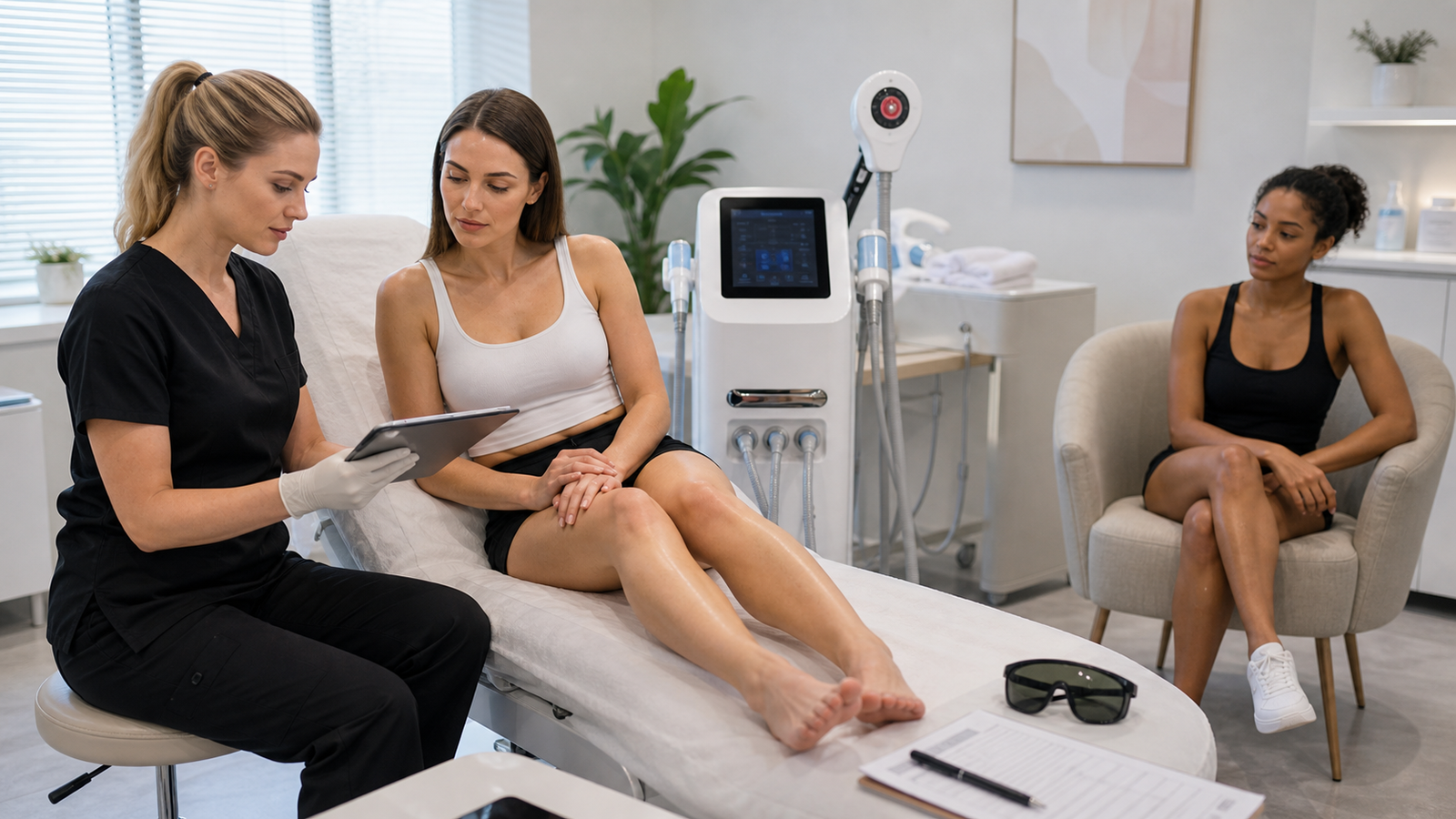
5. O teste de patches é suportado?
Um teste de contato pode ajudar o profissional a observar a reação da pele antes de tratar uma área maior, especialmente em novos clientes, com dispositivos desconhecidos ou em configurações alteradas.
O treinamento do fornecedor deve explicar:
- quando um teste de contato é recomendado
- onde deve ser realizado
- Quais configurações conservadoras usar?
- Por quanto tempo observar a área?
- Qual resposta é aceitável?
- quando o tratamento completo deve ser adiado
Um teste de contato não garante que nenhuma reação ocorrerá, mas pode auxiliar em um fluxo de trabalho mais cauteloso.
Os salões devem evitar fornecedores que incentivem tratamentos imediatos de alta intensidade sem avaliação prévia.
6. Quais são as medidas de proteção ocular necessárias?
O laser e a luz pulsada intensa podem representar um risco para os olhos.
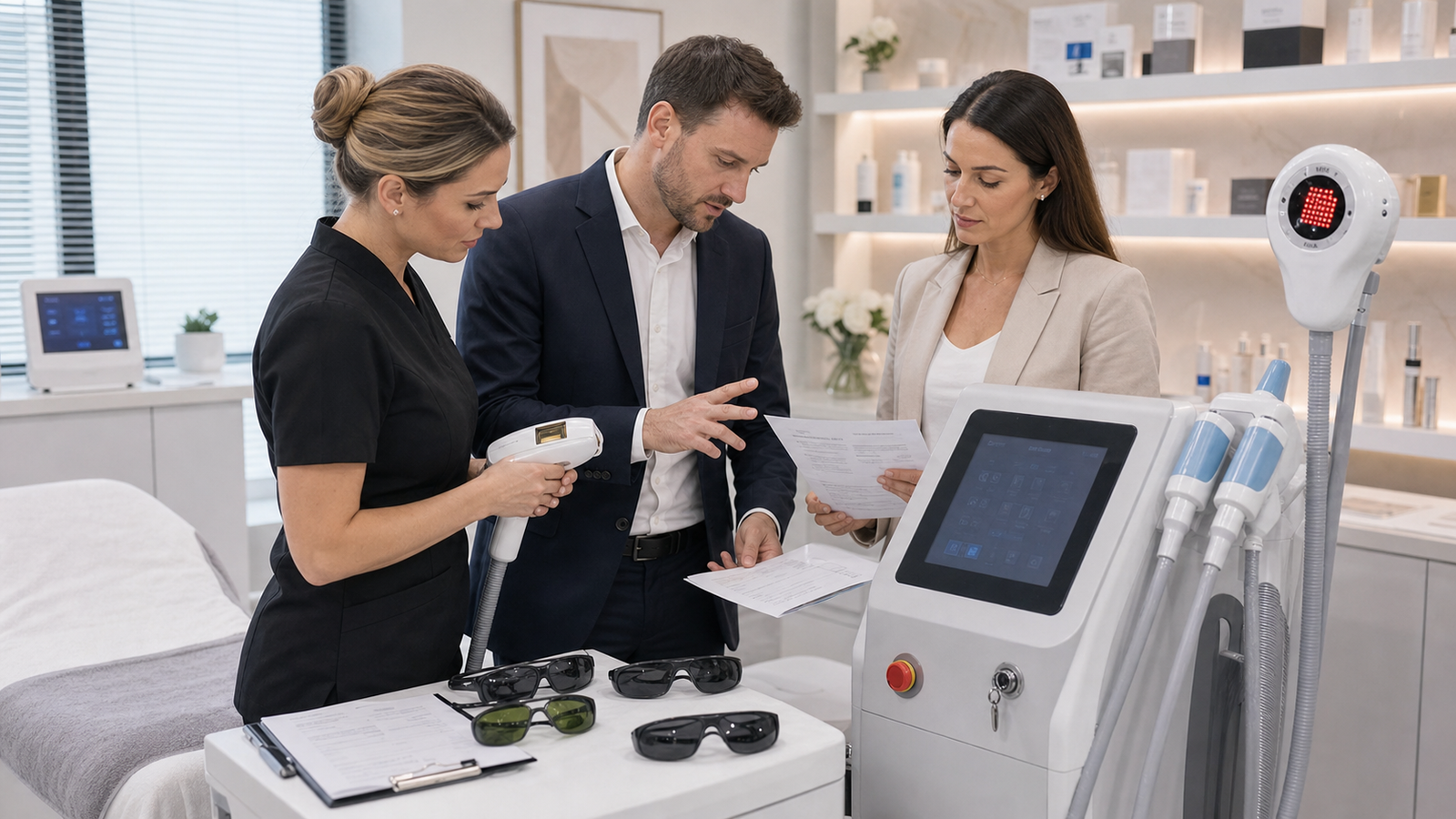
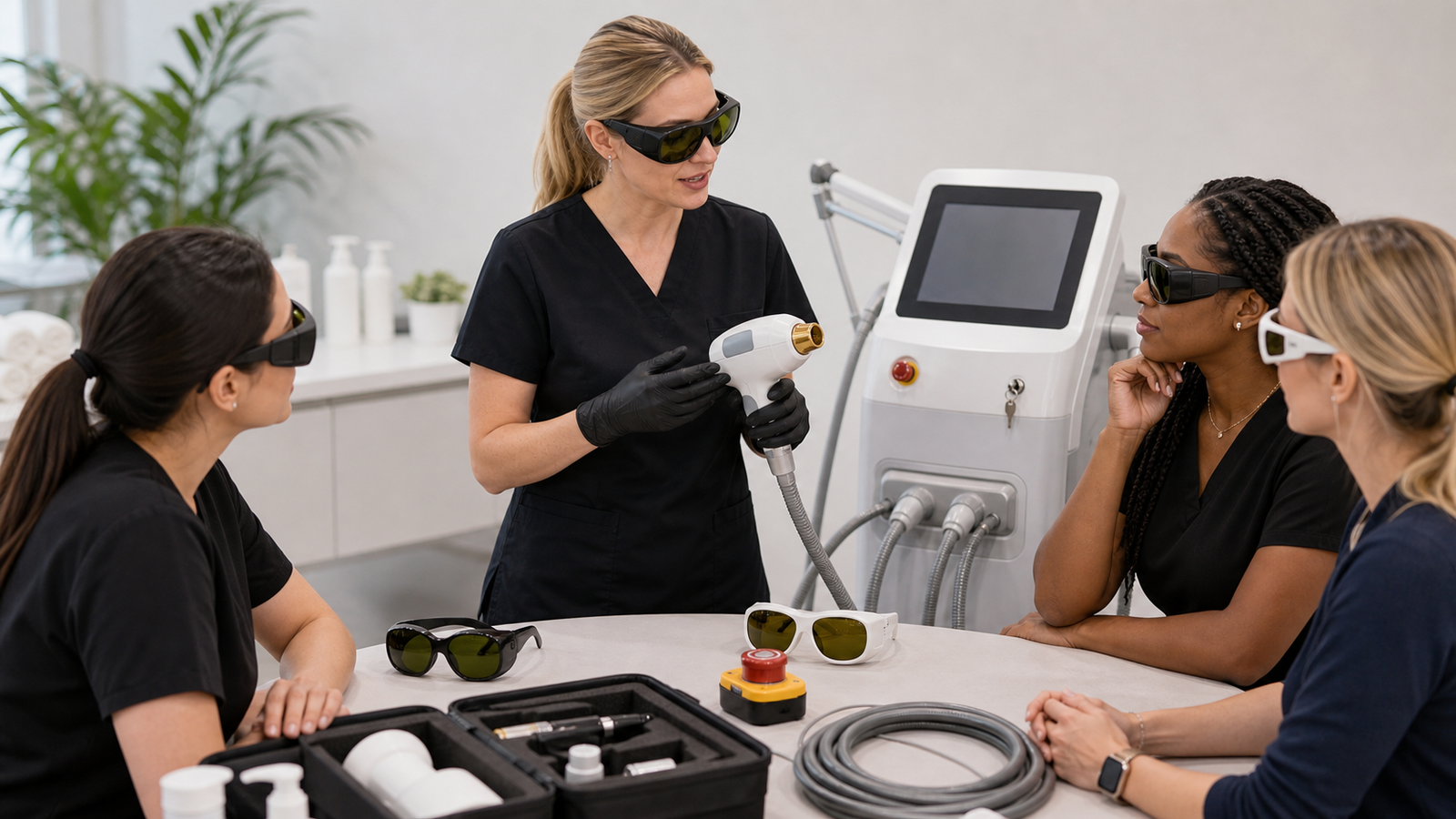
É obrigatório o uso de óculos de proteção adequados para o operador, o cliente e outras pessoas expostas na sala de tratamento. Os óculos devem ser compatíveis com os comprimentos de onda ou a faixa espectral do dispositivo.
Antes de comprar, os salões devem confirmar:
- que óculos de proteção são fornecidos
- se corresponde aos comprimentos de onda do dispositivo
- se a proteção ocular do cliente está incluída
- Como os óculos devem ser inspecionados e limpos
- se o acesso à sala de tratamento deve ser controlado
- se as superfícies refletoras devem ser minimizadas
- Que sinais de alerta são necessários localmente?
Óculos de sol comuns não substituem a proteção profissional adequada ao comprimento de onda da luz.
O operador nunca deve direcionar a peça de mão para os olhos nem ativar o sistema fora da área de tratamento pretendida.
7. A máquina inclui controles de segurança práticos?
Os salões de beleza devem inspecionar os controles de segurança em vez de presumir que eles estejam presentes.
Os controles úteis podem incluir:
- parada de emergência
- chave seletora ou acesso controlado ao usuário
- modo de espera
- proteção do pedal
- Controle de contato da peça de mão, quando aplicável.
- Alarmes de fluxo de água e temperatura
- proteção contra sobretemperatura
- códigos de erro
- balcão de tratamento
- limites de parâmetros de software
- conexões de cabos seguras
O distribuidor deve demonstrar o que acontece quando o sistema de refrigeração falha, o fluxo de água é interrompido ou um erro é detectado.
Uma função de segurança tem pouco valor se o operador não entender o alarme ou como reagir.
8. Qual a quantidade de treinamento para operadores incluída?
A habilidade do operador é um dos controles de segurança mais importantes.
Um vídeo curto mostrando qual botão pressionar não é suficiente.
O treinamento deve abranger:
- princípios do laser ou IPL
- avaliação da pele e do cabelo
- contraindicações
- teste de patch
- seleção de parâmetros
- técnica de tratamento
- contato de resfriamento
- óculos de proteção
- resposta cutânea esperada
- sinais de reação excessiva
- limpeza e manutenção
- registros de tratamento
- resposta de emergência
- comunicação responsável com o cliente
O distribuidor deve confirmar se o treinamento é ao vivo, gravado, remoto ou presencial e se os funcionários podem receber treinamento de reciclagem posteriormente.
9. Quais reações são normais e quais exigem ação?
Vermelhidão temporária ou inchaço perifolicular podem ocorrer após o tratamento profissional de depilação a laser. Reações mais graves podem incluir queimaduras, bolhas, dor prolongada, alterações na pigmentação, cicatrizes ou sintomas oculares inesperados.
Os salões precisam de um processo de resposta por escrito:
1. Interrompa o tratamento caso haja suspeita de reação anormal.
2. Registre a área, as configurações e a resposta do cliente.
3. Siga as orientações imediatas do fabricante do dispositivo.
4. Encaminhe o paciente para avaliação médica adequada quando necessário.
5. Notifique o distribuidor ou fabricante.
6. Preserve os registros da máquina e as evidências relevantes.
7. Analise se o incidente pode exigir notificação local.
Os distribuidores nunca devem orientar os salões a ocultar eventos adversos ou a continuar o tratamento mesmo diante de desconforto intenso.
10. O dispositivo pode ser mantido em segurança?
As medidas de segurança são acionadas quando o dispositivo fica sujo, superaquecido ou recebe manutenção inadequada.
Antes de comprar, confirme:
- Cronograma de substituição de água e filtro
- peça de mão para limpeza de janelas
- inspeção de cabos
- serviço de sistema de refrigeração
- requisitos de calibração
- folga de ventilação
- inspeção elétrica
- procedimento de atualização de software
- intervalos de serviço
- peças de reposição aprovadas
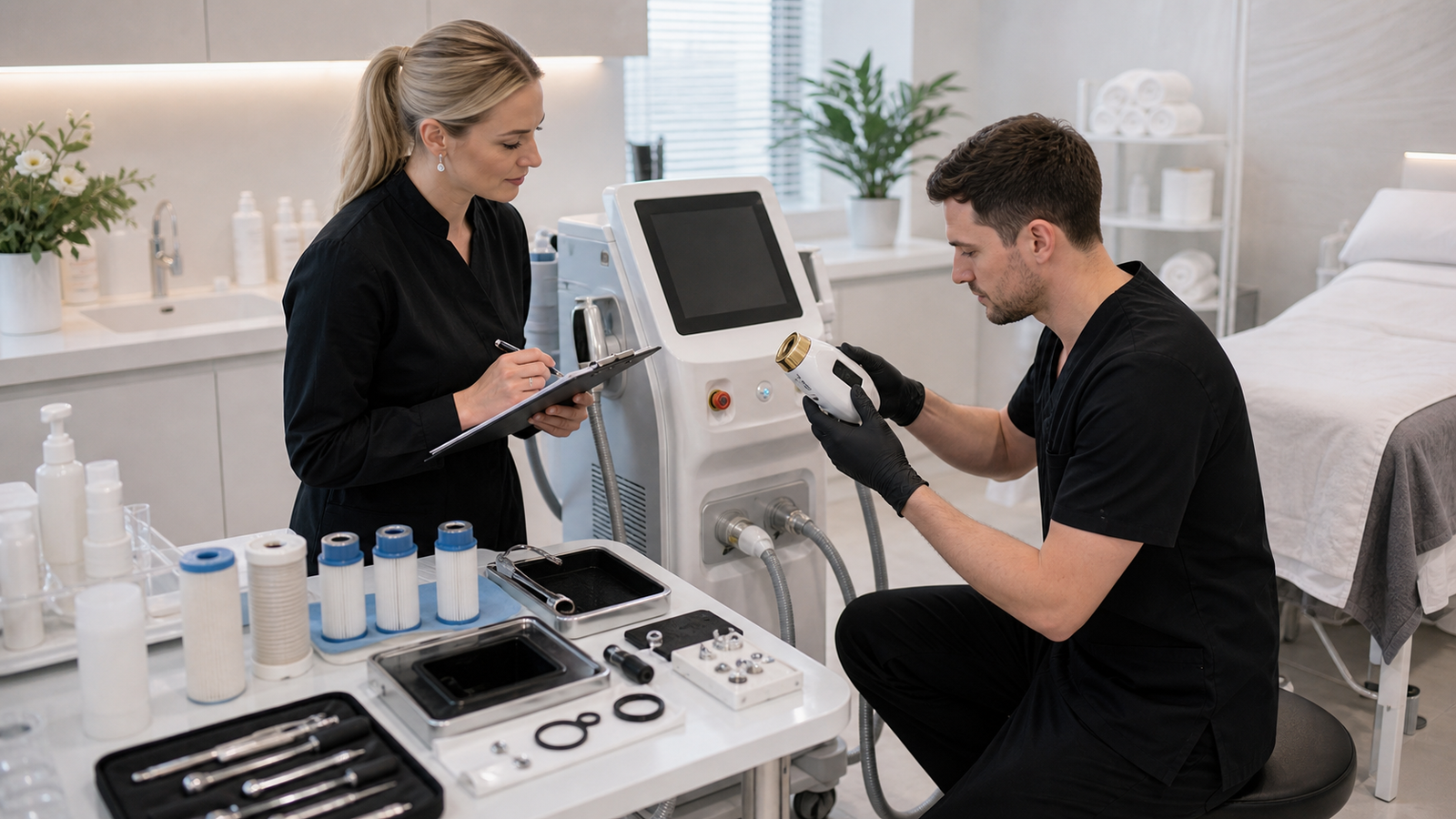
O salão deve receber uma lista de verificação de manutenção e saber quais trabalhos podem ser realizados pela equipe e quais exigem um técnico.
Reparos não autorizados ou peças incompatíveis podem afetar o desempenho e a segurança.
11. As responsabilidades relativas à garantia e à responsabilidade civil estão claras?
Os salões de beleza devem saber o que acontece quando uma falha na máquina afeta o tratamento.
O contrato de compra deve esclarecer:
- período de garantia
- componentes cobertos
- cobertura da peça de mão
- exclusões
- tempo de resposta do serviço
- disponibilidade de peças de reposição
- diagnóstico remoto
- opções de substituição temporária
- responsabilidade pelo envio
- documentação do incidente
O salão também deve verificar os requisitos de seguro locais e se a sua apólice cobre tratamentos à base de energia.
Um preço de compra baixo pode se tornar caro quando o distribuidor não possui um processo de assistência técnica local.
12. O dispositivo possui a documentação adequada?
A documentação deve corresponder ao modelo exato, e não apenas à categoria geral de produto do fornecedor.
Pedir:
- manual do usuário
- especificações técnicas
- orientações de manutenção
- avisos de segurança
- contraindicações
- materiais de treinamento
- relatórios ou certificados de teste disponíveis
- identificação de modelo e número de série
- informações de rotulagem
- Documentos no idioma local, quando necessário.
Os requisitos de certificação e regulamentação variam conforme o país e a classificação do produto.
Não presuma que um logotipo em um folheto comprove que o dispositivo pode ser legalmente importado ou usado em todos os mercados. Distribuidores e salões devem confirmar os requisitos locais para o modelo específico.
13. As alegações de marketing são seguras e realistas?
Uma linguagem de vendas inadequada pode criar expectativas irreais por parte do cliente e incentivar tratamentos agressivos.
Evite afirmações como:
- remoção permanente para todos os clientes
- Tratamento indolor para todos
- risco zero
- Adequado para todos os tipos de pele e cabelo.
- Uma sessão é suficiente.
- Não é necessário treinamento do operador.
Uma formulação melhor incluiria:
- redução de pelos a longo prazo
- gestão profissional de depilação
- O conforto do tratamento é favorecido pelo resfriamento por contato.
- avaliação e configurações individualizadas
- Os resultados variam de acordo com o tipo de cabelo, pele e o tratamento realizado.
A comunicação de segurança protege tanto o salão quanto o distribuidor.
Lista de verificação de segurança para compras em salões de beleza
Antes de efetuar o pedido, o salão deve confirmar:
1. Os comprimentos de onda exatos ou filtros IPL.
2. Controles ajustáveis de energia e pulso.
3. Resfriamento estável em uso contínuo.
4. Proteção ocular adequada ao comprimento de onda.
5. Parada de emergência e alarmes do sistema.
6. Avaliação da pele e orientações sobre contraindicações.
7. Treinamento com teste de aplicação de patches.
8. Treinamento completo do operador.
9. Instruções de manutenção.
10. Garantia e resposta do serviço.
11. Fornecimento de peças de reposição e componentes.
12. Documentação específica do modelo.
13. Requisitos de conformidade locais.
14. Procedimentos para reações adversas.
15. Alegações de marketing realistas.
Se o fornecedor não puder responder a essas perguntas de forma clara, o salão não deve tomar a decisão com base apenas no preço ou na potência anunciada.
Como os distribuidores devem explicar a segurança aos clientes do salão de beleza
Uma declaração de vendas útil é:
“A segurança de um sistema de depilação não depende de uma única característica. Ela provém de comprimentos de onda adequados, parâmetros controláveis, resfriamento estável, triagem do cliente, proteção ocular, treinamento do operador e suporte pós-venda. Devemos analisar todo o fluxo de trabalho antes de selecionar o equipamento.”
Isso posiciona o distribuidor como um parceiro responsável, e não apenas como um vendedor.
Como os distribuidores da SHEFMON podem apoiar a segurança do salão de beleza
Os distribuidores da SHEFMON podem auxiliar os compradores confirmando as especificações exatas do modelo e fornecendo:
- guia do produto
- treinamento operacional
- Informações sobre refrigeração e peça de mão
- instruções de manutenção
- comunicação de peças de reposição
- posicionamento de serviço realista
- Localização OEM/ODM, quando aplicável.
As funcionalidades e a documentação disponíveis devem ser verificadas para cada modelo específico antes de se fazer qualquer afirmação.
Páginas úteis incluem:
Conclusão
Ao adquirir equipamentos de depilação, os salões de beleza devem ter como principais preocupações em relação à segurança queimaduras, alterações de pigmentação, exposição ocular, configurações inadequadas, resfriamento insuficiente, proteção deficiente, treinamento inadequado e indisponibilidade de suporte técnico.
Uma compra segura não se resume simplesmente à máquina com a configuração de energia mais baixa ou com o maior número de capacidade de refrigeração.
É uma plataforma suportada por um fluxo de trabalho profissional completo.
Distribuidores que conseguirem explicar e dar suporte a esse fluxo de trabalho construirão uma relação de confiança mais sólida com os salões de beleza e reduzirão o risco de problemas pós-venda a longo prazo.
Perguntas frequentes
1. Qual é a preocupação de segurança mais comum relacionada à depilação a laser?
Lesões térmicas na pele são uma grande preocupação. Parâmetros incorretos, resfriamento inadequado, bronzeamento recente e técnica inadequada podem aumentar o risco de queimaduras e alterações na pigmentação.
2. O laser de diodo é seguro para peles escuras?
Pode ser utilizado com comprimentos de onda adequados, parâmetros conservadores, resfriamento eficaz e avaliação criteriosa, mas não é automaticamente seguro para todos os clientes de pele escura.
3. Por que a proteção ocular é necessária?
A energia do laser e da luz pulsada intensa (IPL) pode danificar os olhos. Operadores, clientes e pessoas expostas precisam de proteção adequada ao comprimento de onda ou faixa espectral do dispositivo.
4. O resfriamento a temperaturas muito baixas da safira garante a segurança?
Não. O resfriamento ajuda a proteger a pele e a melhorar o conforto, mas a energia correta, as configurações de pulso, a avaliação da pele e a técnica adequada continuam sendo necessárias.
5. Todos os clientes devem fazer um teste de contato?
Os requisitos variam, mas o teste de contato é geralmente considerado ao tratar um novo paciente, usar um dispositivo desconhecido ou alterar parâmetros. Siga as orientações do dispositivo e os requisitos profissionais locais.
6. Os salões de beleza podem tratar a pele recentemente bronzeada?
O bronzeamento recente pode aumentar a melanina na epiderme e, consequentemente, os riscos. O profissional deve seguir as orientações do fabricante e adiar o tratamento quando apropriado.
7. Que treinamento deve ser incluído com a máquina?
O treinamento deve abranger princípios da tecnologia, avaliação, contraindicações, configurações, resfriamento, óculos de proteção, técnica de tratamento, manutenção e resposta a eventos adversos.
8. Quais alarmes de dispositivos são importantes?
Os controles úteis incluem alarmes de fluxo de água, temperatura e resfriamento, proteção contra sobretemperatura, parada de emergência e limpeza de códigos de erro.
9. Que documentação os salões devem solicitar?
Solicite o manual do modelo exato, as especificações, os avisos, as instruções de manutenção, os materiais de treinamento, a garantia e os documentos de conformidade disponíveis.
10. A alegação de marketing "depilação permanente e indolor" é segura?
Não. Os resultados e o desconforto variam. Redução de pelos a longo prazo e conforto durante o tratamento, proporcionados pelo resfriamento, são descrições mais adequadas.