









Para distribuidores que vendem equipamentos de depilação a laser de diodo ou IPL, a escolha das palavras não é um mero detalhe de marketing. A forma como um salão explica os resultados pode influenciar a confiança do cliente, o risco de reclamações, a pressão por reembolsos e a conformidade com as normas locais de publicidade.
A mensagem comercial mais segura não é "esta máquina remove permanentemente todos os pelos".“
A melhor mensagem é:
Os equipamentos profissionais de depilação são projetados para promover a redução de pelos a longo prazo após um tratamento adequado. O crescimento dos pelos pode ser visivelmente reduzido com o tempo, mas os resultados variam de acordo com o cliente, a área do corpo, o tipo de pelo, o tipo de pele, os hormônios, as configurações do aparelho, o intervalo entre as sessões e a frequência das manutenções.
Essa formulação é mais realista, mais fácil de ser defendida pelos salões e mais condizente com a forma como os clientes normalmente vivenciam os serviços profissionais de depilação.
Categoria de produtos SHEFMON recomendada:
Equipamentos a laser e IPL da Shefmon
Opção de produto recomendada:
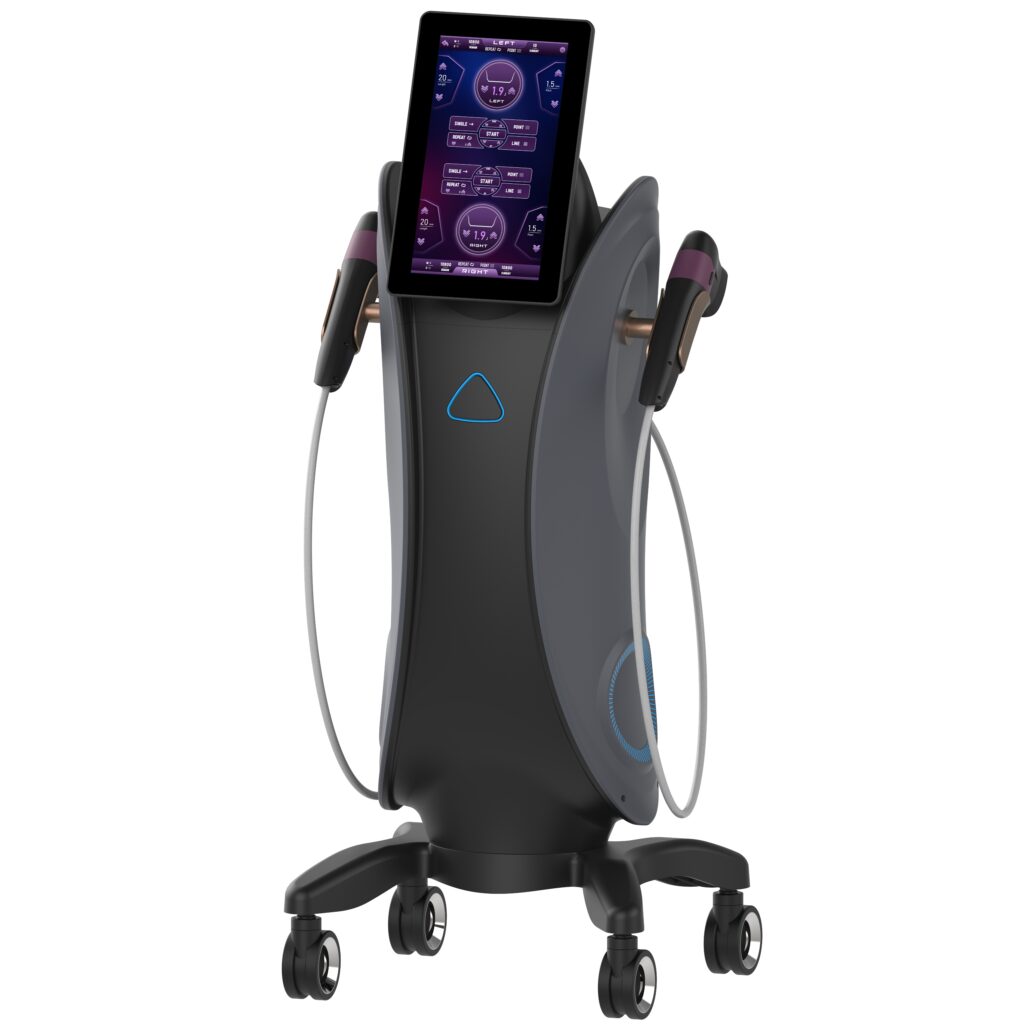
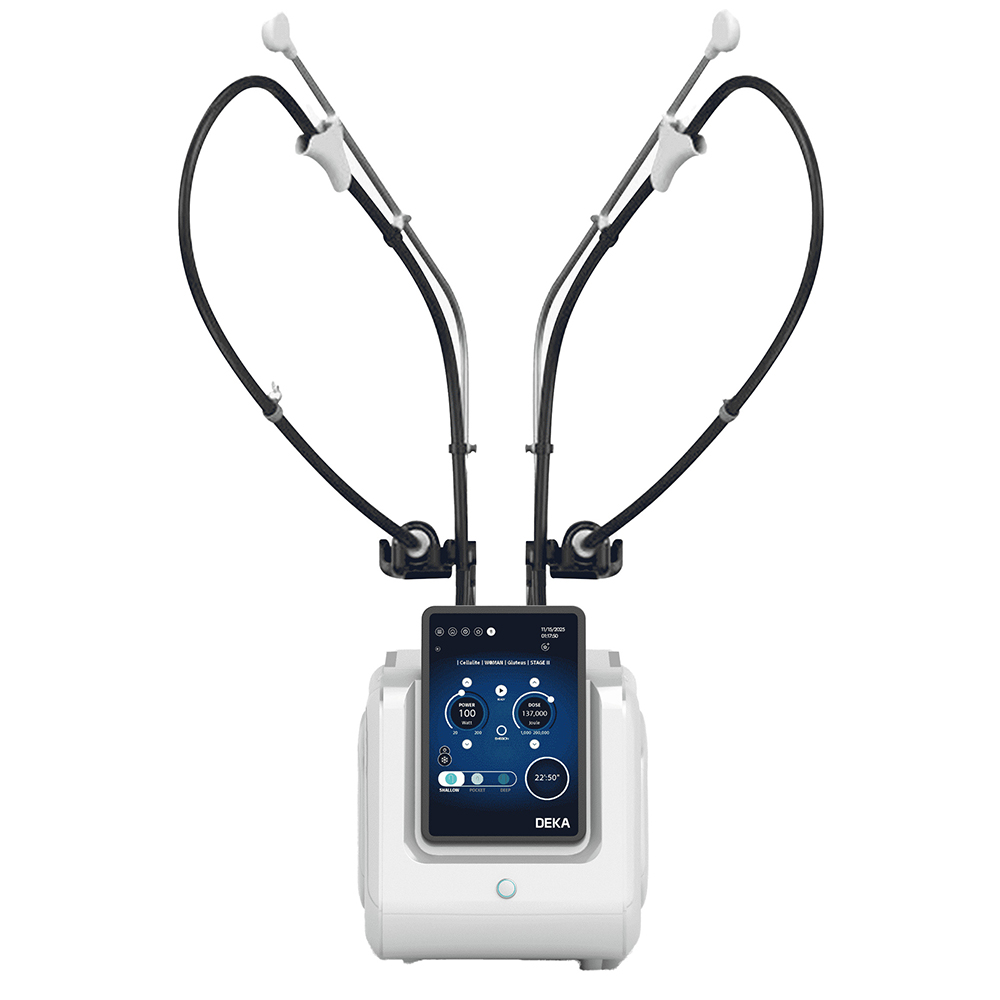
A0426 Máquina de Depilação a Laser de Diodo 755/1064/810/940 nm
Por que a expressão “depilação definitiva” é arriscada?
“A expressão "depilação definitiva" soa atraente na publicidade, mas pode criar um problema tanto para o salão quanto para o distribuidor.
Os clientes podem entender isso da seguinte forma:
- Todos os pelos tratados desaparecerão para sempre.
- Um único curso garante resultados para a vida toda.
- Não será necessária nenhuma manutenção futura.
- Todos os tipos de cabelo e pele reagem da mesma forma.
- As alterações hormonais nunca influenciarão o crescimento do cabelo.
Não é assim que os tratamentos profissionais de depilação devem ser explicados.
Os serviços de depilação a laser e IPL funcionam emitindo energia luminosa que atinge as estruturas do pelo, especialmente quando este se encontra na fase de crescimento adequada. Nem todos os folículos estão ativos simultaneamente. É por isso que são necessárias várias sessões e que os resultados são normalmente descritos como redução, e não remoção completa.
Pode haver longos períodos com muito menos pelos visíveis, e muitos clientes podem notar um crescimento mais fino, claro ou lento. No entanto, algum crescimento ainda pode ocorrer, especialmente se o cliente apresentar alterações hormonais, intervalos de tratamento incompletos, pelos claros ou finos, pele mais escura que exige parâmetros mais conservadores ou uma área do corpo mais difícil de clarear.
Para os distribuidores, a chave é ajudar os salões a vender o serviço com confiança, sem criar promessas irreais.
A expressão mais profissional: Redução de pelos a longo prazo
“Redução de pelos a longo prazo” é uma expressão mais precisa, pois descreve o que o cliente pode razoavelmente esperar de um tratamento profissional:
- densidade capilar reduzida
- crescimento visível mais lento
- cabelos restantes mais finos ou mais claros
- intervalos mais longos entre as depilações ou depilações com cera
- uma aparência mais uniforme ao longo do tempo
- Possíveis tratamentos de manutenção após o tratamento inicial.
Essa frase ainda tem valor comercial. Não soa como fraqueza. Soa profissional, responsável e inspira mais confiança.
Um salão de beleza pode dizer:
“Nosso objetivo é a redução de pelos a longo prazo, não uma promessa irrealista de remoção permanente em uma única sessão. Após um tratamento completo, muitos clientes notam uma redução visível nos pelos e um crescimento mais lento. Algumas sessões de manutenção podem ser recomendadas dependendo da área do corpo, do tipo de pelo e do estado hormonal.”
Essa frase traz um benefício ao cliente, explica o processo e evita cobranças indevidas.
Como funcionam realmente os tratamentos de depilação
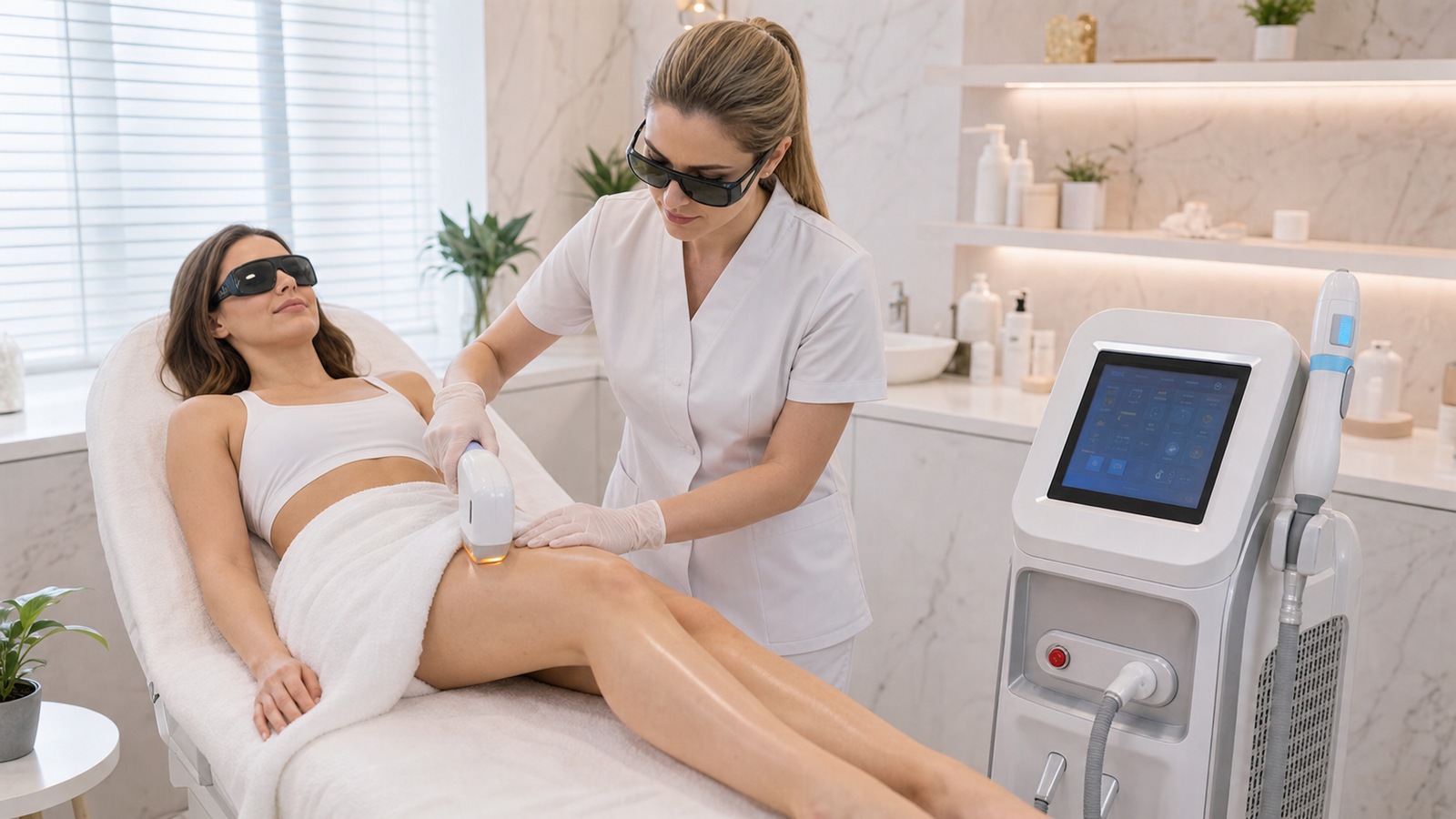
A depilação a laser de diodo e a depilação com luz intensa pulsada (IPL) baseiam-se na absorção seletiva da luz. A energia é absorvida pela melanina associada à haste do pelo e às estruturas foliculares, sendo então convertida em calor. O objetivo do tratamento é afetar a estrutura de crescimento do pelo, protegendo ao máximo a pele ao redor.
O ponto importante para os clientes é que o cabelo cresce em ciclos.
Apenas uma parte do cabelo está na fase mais adequada em uma sessão. Outros folículos podem estar em repouso ou em transição. Quando esses folículos entrarem em uma fase mais ativa posteriormente, poderão precisar de tratamento em uma sessão seguinte.
Por isso, os salões geralmente recomendam um pacote de serviços em vez de uma única sessão. Uma descrição típica do serviço deve incluir:
- número de sessões previstas para a área
- intervalo entre sessões
- Por que faltar a sessões pode reduzir a consistência
- por que os resultados aparecem gradualmente
- Por que geralmente se recomenda fazer a barba antes do tratamento?
- Por que a depilação com cera ou pinça pode interferir no plano de tratamento
- por que a manutenção pode ser necessária mais tarde
Para os distribuidores, essa explicação ajuda os proprietários de salões a treinarem suas equipes adequadamente. Também ajuda os salões a venderem pacotes em vez de tratamentos individuais.
Por que os resultados variam entre os clientes?
Um cliente pode perguntar: "Isso removerá meus pelos permanentemente?"“
A melhor resposta não é um simples sim ou não. Uma resposta melhor é explicar por que os resultados variam.
Cor e espessura do cabelo
Cabelos escuros e grossos geralmente respondem melhor porque contêm mais pigmento para a energia da luz atingir. Cabelos muito claros, brancos, grisalhos ou ruivos podem responder de forma menos previsível porque têm menos melanina para atingir.
Tipo de pele e bronzeamento
O tom de pele e a exposição solar recente influenciam a seleção dos parâmetros. Em algumas situações, podem ser necessárias configurações mais conservadoras para garantir a proteção da epiderme.
Área do corpo
Axilas, pernas, virilha, rosto, costas e peito podem reagir de forma diferente. Áreas sensíveis a hormônios podem exigir um gerenciamento de expectativas mais cuidadoso.
Fatores Hormonais
Gravidez, menopausa, síndrome dos ovários policísticos (SOP), problemas de tireoide, alterações na medicação e outras influências hormonais podem afetar o crescimento capilar. Um salão de beleza deve evitar garantir a remoção definitiva do cabelo para clientes cujo crescimento capilar é influenciado por hormônios.
Adesão ao tratamento
Se um cliente faltar às sessões, alterar os intervalos com muita frequência ou interromper o tratamento após uma melhora inicial, o resultado final poderá ser menos consistente.
Técnica do operador e parâmetros do dispositivo
Cobertura, contato, seleção de energia, resfriamento, tamanho do ponto, taxa de repetição e velocidade de tratamento são fatores importantes. Mesmo assim, um bom equipamento requer operação treinada.
É por isso que os distribuidores devem ensinar os salões a dizer:
“O resultado depende das características do seu cabelo e da sua pele, da área a ser tratada e se você completar o tratamento recomendado.”
Como os salões devem explicar o cronograma
Os clientes geralmente esperam resultados imediatos. Um salão profissional deve explicar o cronograma do tratamento antes da primeira sessão.
Uma explicação simples e fácil de entender para o cliente é:
- Após o tratamento, a área pode parecer semelhante inicialmente.
- Alguns pelos tratados podem cair gradualmente ao longo dos dias ou semanas seguintes.
- O surgimento de novos pelos visíveis pode ocorrer porque nem todos os folículos estavam na mesma fase de crescimento.
- Sessões repetidas ajudam a tratar mais folículos ao longo do tempo.
- Após o tratamento, os pelos podem ficar mais reduzidos, mais finos e com crescimento mais lento.
- Sessões de manutenção podem ser recomendadas caso ocorra um novo crescimento posteriormente.
Isso não enfraquece a venda. Pelo contrário, protege a venda.
Quando o cliente entende o cronograma, é menos provável que reclame após a primeira sessão. Ele também fica mais propenso a concluir o pacote, retornar no prazo e avaliar o resultado de forma justa.
O que os distribuidores devem dizer aos compradores de salões de beleza
Muitos donos de salão não compram apenas uma máquina. Eles compram um modelo de serviço.
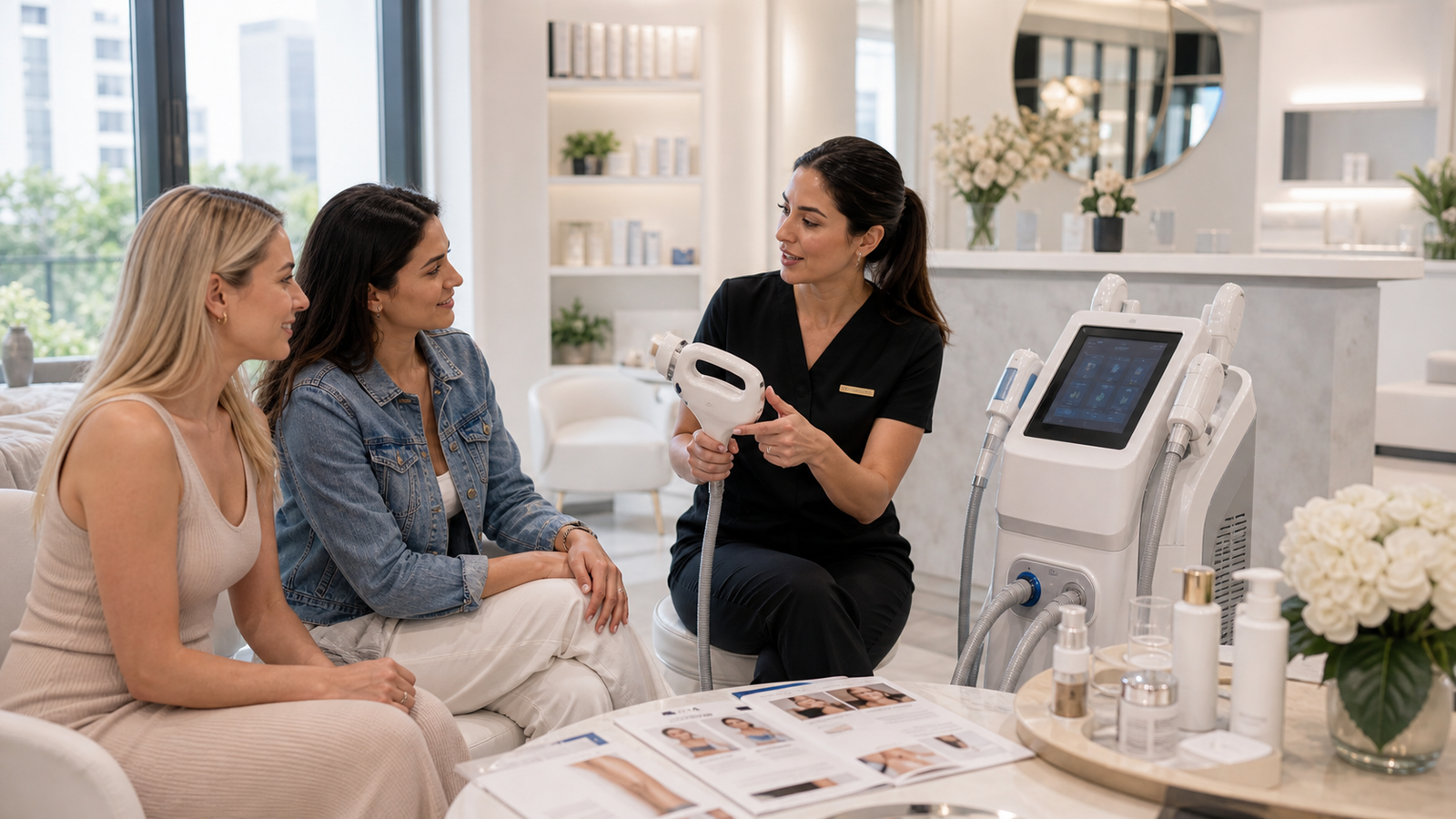
Portanto, o distribuidor não deve apenas explicar as especificações da máquina. Ele também deve fornecer uma linguagem que o salão possa usar com os clientes.
Pontos importantes de treinamento para salão de beleza incluem:
- Como explicar a redução de cabelo a longo prazo?
- como evitar promessas de remoção permanente
- Quantas sessões são necessárias para posicionar cada área do corpo?
- Como discutir tratamentos de manutenção
- Como selecionar clientes inadequados
- Como explicar cabelos escuros, claros, finos ou hormonais?
- Como registrar o histórico do cliente e as configurações do tratamento
- Como tirar fotos consistentes de antes e depois
- Como lidar com reclamações sem parecer defensivo
Isso transforma o distribuidor de um vendedor de produtos em um parceiro de suporte comercial.
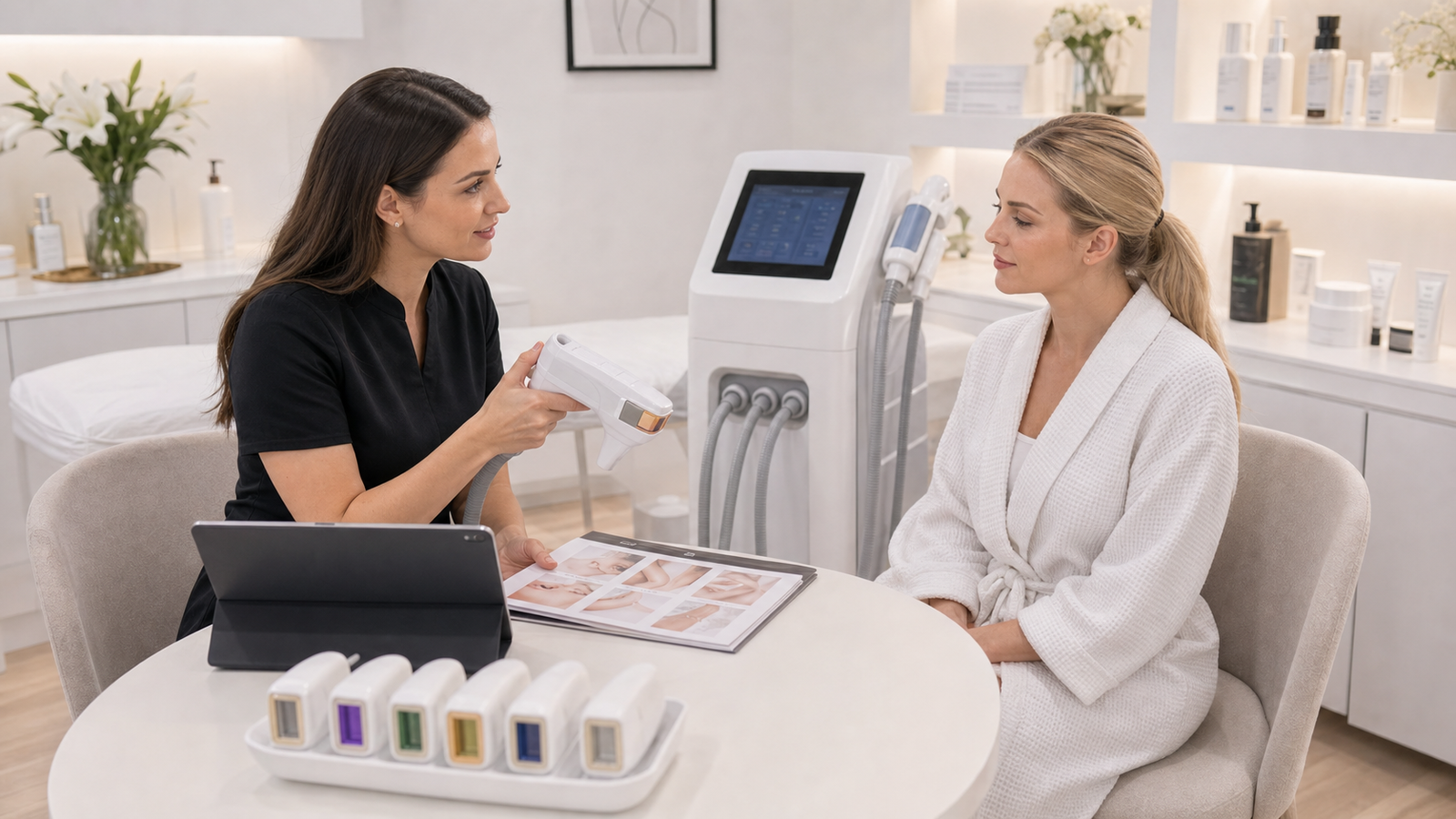
Boa linguagem de vendas para distribuidores e salões
As frases a seguir são úteis porque comunicam valor sem prometer um resultado irrealista.
Use estas frases
- redução de pelos a longo prazo
- Redução visível dos pelos após um ciclo de tratamento.
- densidade capilar reduzida
- crescimento mais lento
- cabelos restantes mais finos
- aparência mais uniforme com o tempo
- Os resultados variam de cliente para cliente.
- Tratamentos de manutenção podem ser recomendados.
- As configurações adequadas dependem das características da pele e do cabelo.
- É necessária consulta profissional antes do tratamento.
Evite estas frases
- Depilação definitiva para todos os clientes
- 100% livre de pelos para sempre
- nunca volta a crescer
- resultado permanente em uma única sessão
- remoção vitalícia garantida
- Funciona igualmente bem em todas as cores de cabelo.
- Completamente indolor para todos os clientes.
- tratamento sem riscos
- Não necessita de manutenção.
A palavra "garantido" é especialmente perigosa no marketing voltado para o cliente. Mesmo que um dispositivo tenha um bom desempenho, a resposta biológica varia.
Um roteiro simples que os salões podem usar com os clientes.
Os distribuidores podem fornecer aos salões um roteiro curto como este:
“Este tratamento foi desenvolvido para a redução de pelos a longo prazo. Isso não significa que todos os pelos serão removidos para sempre após uma única sessão. Como o crescimento do pelo ocorre em ciclos, você precisará de um ciclo de tratamentos. Muitos clientes observam menos pelos visíveis, crescimento mais lento e pelos restantes mais finos após a conclusão do tratamento. Seu resultado dependerá da cor e espessura do seu pelo, do seu tipo de pele, da área do corpo tratada, dos seus hormônios e da frequência das suas consultas. Acompanharemos seu progresso e poderemos recomendar sessões de manutenção, se necessário.”
Este roteiro é claro, honesto e ainda comercialmente forte.
Isso também faz com que o salão pareça mais profissional do que um concorrente que simplesmente diz: "Sim, permanente".“
Como transformar uma linguagem realista em melhores vendas
Alguns distribuidores temem que uma linguagem conservadora dificulte a venda do serviço. Na realidade, muitas vezes ocorre o contrário.
Os clientes estão acostumados com promessas exageradas de tratamentos de beleza. Um salão que explica os resultados com clareza transmite mais confiança.
Para transformar uma linguagem realista em valor de vendas, os distribuidores devem ajudar os salões a criar um pacote que abranja toda a jornada do tratamento:
- consulta e avaliação de pele e cabelo
- planejamento do curso do tratamento
- Fotos do cliente e registros de progresso
- instruções de cuidados posteriores
- Lembrete para a próxima consulta
- Plano de manutenção após o curso inicial
Isso gera visitas repetidas e reduz expectativas irreais de uma única sessão.
A mensagem de vendas passa a ser:
“Não estamos vendendo uma promessa milagrosa. Estamos vendendo um plano profissional de redução de pelos.”
Por que isso é importante para a conformidade com o mercado local?
As regras para publicidade de depilação a laser não são idênticas em todos os países. Alguns mercados podem exigir termos específicos para aparelhos a laser, alegações de tratamento, requisitos do operador, contraindicações ou materiais promocionais.
Os distribuidores devem incentivar seus clientes de salão a verificar:
- regras locais para dispositivos médicos ou de beleza
- normas de publicidade e proteção do consumidor
- formulários de consentimento do cliente necessários
- requisitos de treinamento do operador
- Alegações permitidas para tratamentos a laser ou IPL
- Se as fotos de antes e depois precisam de avisos legais
Este artigo não constitui aconselhamento jurídico. Trata-se de um guia prático de vendas e educação. Antes de utilizar alegações comerciais em um novo mercado, os distribuidores devem confirmar a documentação exata do produto e as normas locais.
Como os distribuidores da SHEFMON podem posicionar o serviço
Para os distribuidores da SHEFMON, a vantagem não é apenas vender uma máquina de laser de diodo. A vantagem é ajudar os salões de beleza locais a vender serviços de depilação a laser de forma profissional.
Uma boa proposta de distribuição poderia ser:
“Os sistemas de laser de diodo da SHEFMON ajudam os salões a desenvolver serviços de depilação a laser de longa duração, com opções de múltiplos comprimentos de onda, resfriamento por contato, suporte de treinamento e educação prática para o cliente. Recomendamos promover uma redução realista, resultados baseados em tratamentos e planejamento de manutenção, em vez de prometer a remoção permanente para todos os clientes.”
Esse posicionamento é mais forte do que simplesmente vender a preços baixos.
Isso informa ao comprador do salão:
- O dispositivo pode suportar um menu de serviço real.
- O distribuidor entende a importância da educação do cliente.
- O fornecedor não está incentivando publicidade arriscada.
- A máquina faz parte de um modelo de negócios de serviços recorrentes.
- Treinamento e suporte pós-venda são importantes.

Lista de verificação prática para distribuidores
Antes de um salão começar a anunciar serviços de depilação, o distribuidor pode fornecer esta lista de verificação:
- Substitua “depilação definitiva” por “redução de pelos a longo prazo”, a menos que as normas e a documentação locais comprovem claramente uma alegação específica aprovada.
- Adicione a frase “os resultados variam” aos materiais destinados aos clientes.
- Explique que são necessárias várias sessões.
- Mencione que pode ser necessária manutenção.
- Evite garantir resultados para todas as cores de cabelo ou tipos de pele.
- Treinar a equipe para explicar os ciclos de crescimento capilar.
- Utilize formulários de consulta para registrar informações sobre cabelo, pele e histórico médico.
- Mantenha registros de tratamento, configurações e feedback do cliente.
- Utilize condições fotográficas consistentes para a avaliação do progresso.
- Confirme se toda a linguagem publicitária está de acordo com as normas locais antes da publicação.
Esta lista de verificação ajuda os distribuidores a dar suporte aos salões além da venda da máquina.
Conclusão
“"Depilação definitiva" pode soar como um termo de vendas mais impactante, mas pode gerar expectativas irreais e aumentar os riscos para o negócio.
“"Redução de pelos a longo prazo" é a mensagem profissional mais adequada. Ela explica o objetivo real do tratamento, respeita as variações biológicas, impulsiona a venda de pacotes e ajuda os salões a parecerem mais confiáveis.
Para os distribuidores, isso não é apenas uma questão de redação. É uma estratégia de vendas.
O distribuidor que ensina os salões a explicar os resultados de forma responsável pode construir uma relação de confiança mais sólida com os clientes, reduzir as reclamações e criar um negócio de depilação mais sustentável.
Perguntas frequentes
1. A depilação a laser é permanente?
A depilação a laser pode ser melhor explicada como uma redução de pelos a longo prazo. Muitos clientes observam uma redução no crescimento dos pelos após um tratamento, mas algum crescimento ou necessidade de manutenção podem ocorrer.
2. Por que os distribuidores devem evitar usar a expressão “depilação permanente”?
Porque os clientes podem interpretar isso como uma garantia de que todos os fios de cabelo serão removidos para sempre. Isso pode levar a reclamações, pressão para reembolso e riscos à publicidade caso os resultados variem.
3. O que os salões deveriam dizer em vez disso?
Os salões podem anunciar "redução de pelos a longo prazo", "redução visível após um tratamento" e "a manutenção pode ser recomendada dependendo do cliente".“
4. Por que são necessárias várias sessões?
O cabelo cresce em ciclos. Nem todos os folículos estão na fase de tratamento mais adequada em uma única sessão, por isso, sessões repetidas ajudam a tratar mais folículos ao longo do tempo.
5. Quais clientes geralmente respondem melhor?
Clientes com cabelos mais escuros e grossos geralmente respondem de forma mais previsível, pois há mais pigmento para atingir. Cabelos muito claros, grisalhos, brancos ou ruivos podem responder de forma menos consistente.
6. O crescimento hormonal do cabelo pode afetar os resultados?
Sim. Alterações hormonais ou o crescimento capilar relacionado a hormônios podem influenciar o crescimento dos fios e podem exigir um gerenciamento de expectativas ou manutenção mais cuidadosos.
7. Um resfriamento melhor significa resultados permanentes?
Não. O resfriamento proporciona conforto e proteção à epiderme. O resultado da redução de pelos ainda depende do comprimento de onda, das configurações de energia, da área tratada, das características do cliente e da adesão ao tratamento.
8. Como os distribuidores devem lidar com fotos de antes e depois?
Utilize exemplos realistas com ressalvas como "os resultados individuais podem variar". As fotos devem ter iluminação, ângulo e horário consistentes e devem seguir as normas locais de publicidade.
9. Os tratamentos de manutenção devem ser comercializados como uma fraqueza?
Não. A manutenção pode ser considerada parte de um plano profissional de gestão do crescimento capilar, especialmente para clientes com alterações hormonais ou áreas do corpo problemáticas.
10. Qual é a melhor mensagem para o distribuidor?
A melhor mensagem é: venda um plano de serviço profissional de depilação a laser, não uma promessa irrealista de remoção permanente.
Referências e Leitura
- Academia Americana de Dermatologia: Visão geral da depilação a laser
- Academia Americana de Dermatologia: Perguntas frequentes sobre depilação a laser
- FDA: Produtos e instrumentos a laser
- Ministério da Saúde do Canadá: Diretrizes de segurança para depilação a laser para proprietários e operadores de estabelecimentos.
- Equipamentos a laser e IPL da Shefmon