








Os tratamentos a laser tornaram-se um pilar da prática estética moderna, especialmente para problemas como tatuagens, pigmentação e tom de pele irregular. O que diferencia os sistemas mais recentes não é apenas a velocidade, mas também a adaptabilidade. Sistema laser A0507 de 1064 nm/532 nm com comutação Q e picossegundos É projetado para tratar múltiplas condições de pele em uma única plataforma, combinando comprimentos de onda duplos com duas tecnologias de pulso para melhorar a precisão e a eficiência em todos os tratamentos.
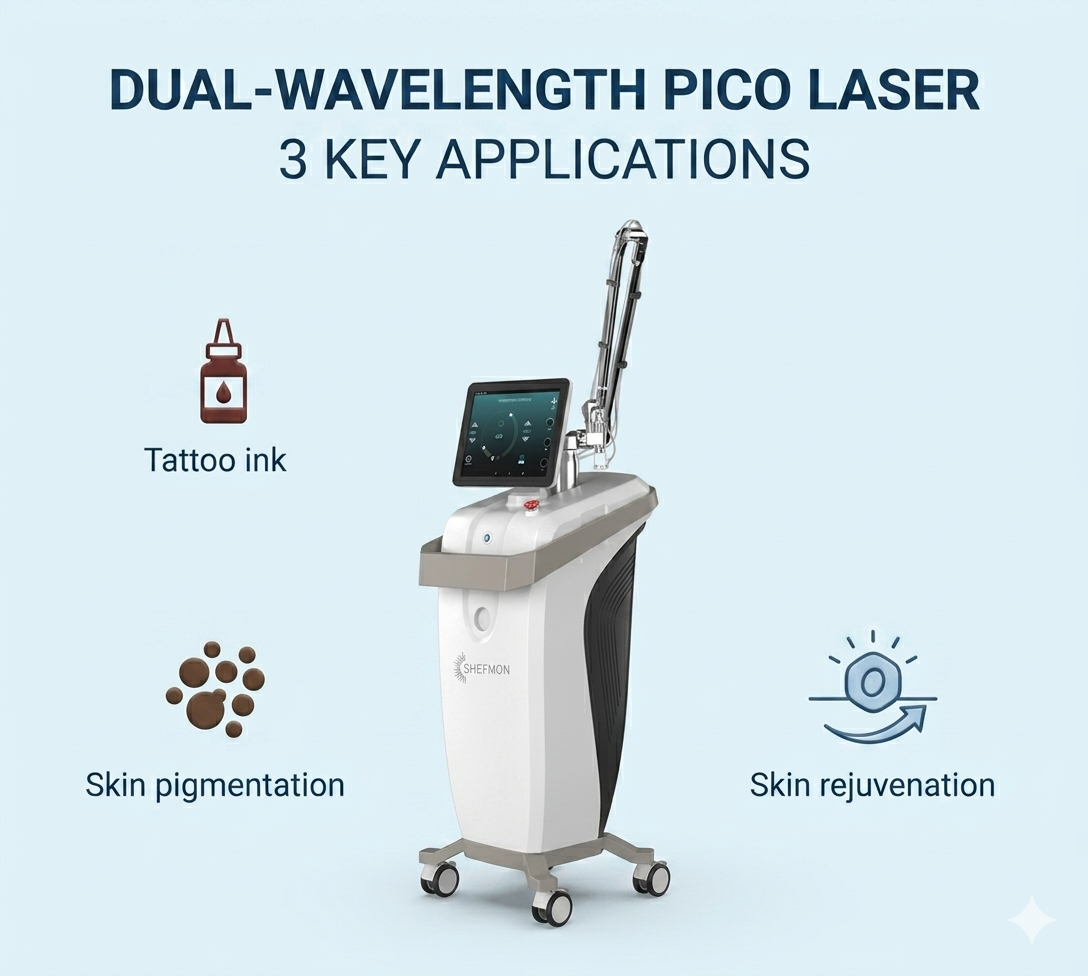
1. Por que o comprimento de onda é importante nos tratamentos a laser
A eficácia do laser depende muito da seleção do comprimento de onda. Diferentes pigmentos absorvem diferentes comprimentos de onda da luz, o que afeta diretamente os resultados do tratamento.
1.1 O papel do comprimento de onda de 1064 nm
O comprimento de onda de 1064 nm penetra mais profundamente na pele e é menos absorvido pela melanina. Isso o torna adequado para:
- Tintas escuras para tatuagem, como preto e azul.
- Pigmentação dérmica mais profunda
- Tratamentos para peles mais escuras
1.2 O papel do comprimento de onda de 532 nm
O comprimento de onda de 532 nm atua mais superficialmente e é altamente absorvido por certos pigmentos. É comumente usado para:
- Cores de tatuagem vermelhas, laranjas e mais claras
- Sardas e pigmentação superficial
- manchas solares e lentigos
Ao combinar ambos os comprimentos de onda, o A0507 consegue abranger uma gama mais ampla de cores e profundidades de pigmentos em um único sistema.
2. Como os modos de pulso duplo melhoram a precisão do tratamento
O A0507 integra ambos Laser Nd:YAG com comutação Q e laser de picossegundos, dando aos usuários mais controle sobre como a energia é fornecida.
2.1 Pulsos de nanossegundos para uma ampla gama de aplicações
O modo Q-switched fornece energia em nanossegundos, tornando-o eficaz para tratamentos gerais de pigmentação e protocolos estabelecidos de remoção de tatuagem.
2.2 Pulsos de picossegundos para casos avançados
O modo picossegundo fornece energia muito mais rapidamente, criando um efeito fotoacústico mais forte. Isso é particularmente útil para:
- tatuagens persistentes ou previamente tratadas
- partículas finas de pigmento
- Casos em que a redução do impacto térmico é importante
3. Tratando tatuagens com maior flexibilidade
A remoção de tatuagens raramente é um processo que funciona da mesma forma para todos. A cor da tinta, a profundidade e o tipo de pele influenciam os resultados.
3.1 Remoção de tatuagem multicolorida
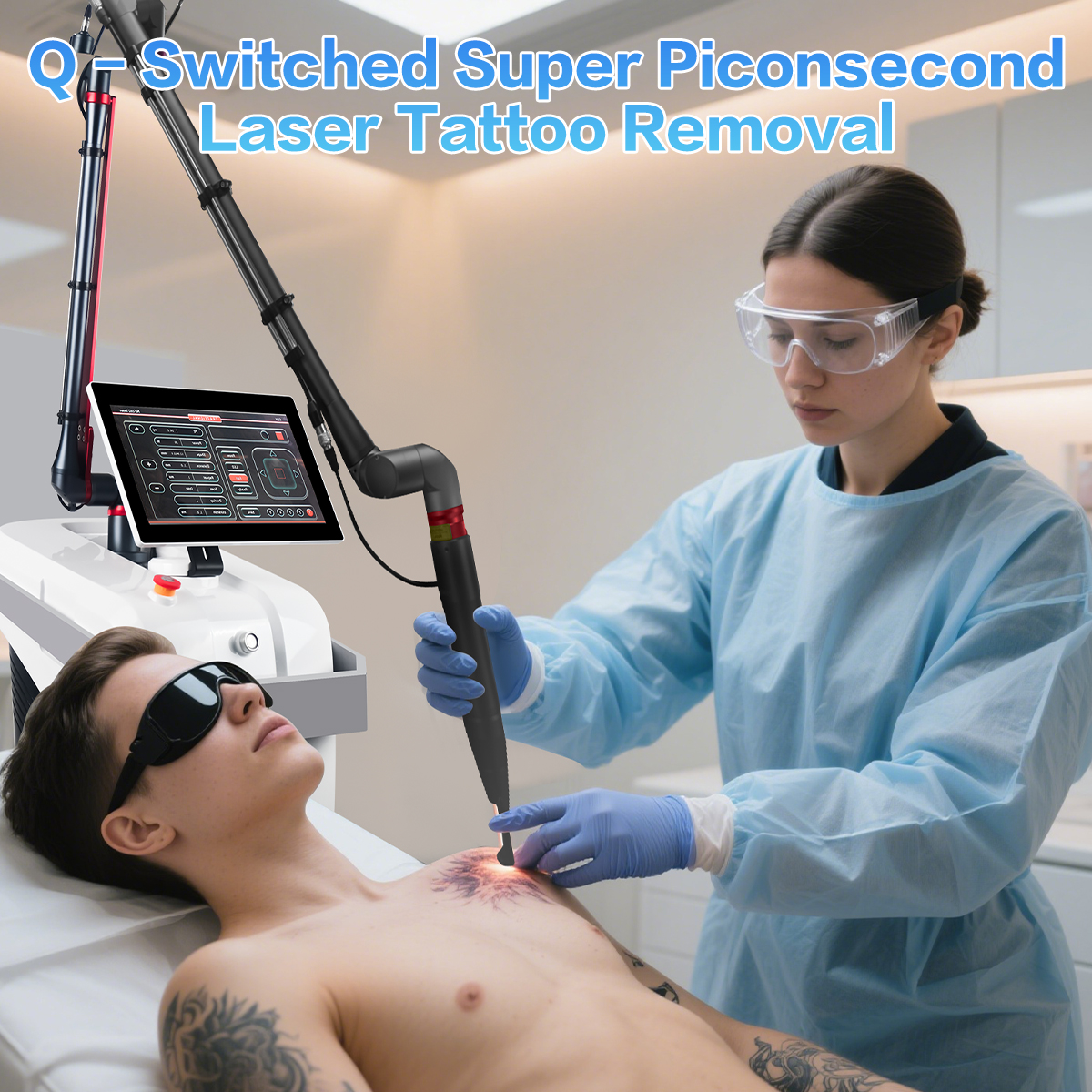
Com comprimentos de onda duplos, o sistema consegue atingir cores de tinta tanto escuras quanto claras, melhorando as taxas de remoção em geral.
3.2 Decompondo o pigmento de forma mais eficiente
Pulsos de picossegundos fragmentam a tinta em partículas menores, permitindo que o corpo elimine o pigmento de forma mais eficaz ao longo do tempo.
3.3 Desvanecimento gradual e controlado
O modo Q-switched pode ser usado para um desvanecimento estável e controlado, enquanto o modo picosegundo acelera o progresso em áreas resistentes.
4. Abordando Problemas de Pigmentação e Pele
Além de tratar tatuagens, o A0507 foi projetado para tratar uma ampla gama de condições relacionadas à pigmentação.
4.1 Hiperpigmentação e Melasma
Ao atingir o excesso de melanina, os tratamentos a laser podem ajudar a uniformizar o tom da pele. A seleção cuidadosa dos parâmetros é importante para evitar a superestimulação.
4.2 Sardas e Danos Solares
A pigmentação superficial responde bem a comprimentos de onda mais curtos e à aplicação controlada de energia.
4.3 Nevo de Ota e Lesões Dérmicas
Comprimentos de onda mais profundos, como 1064 nm, são eficazes em condições onde o pigmento está localizado abaixo da superfície.
5. Rejuvenescimento da pele com tecnologia a laser
Além da remoção de pigmentos, os sistemas a laser podem contribuir para a melhoria da qualidade geral da pele.
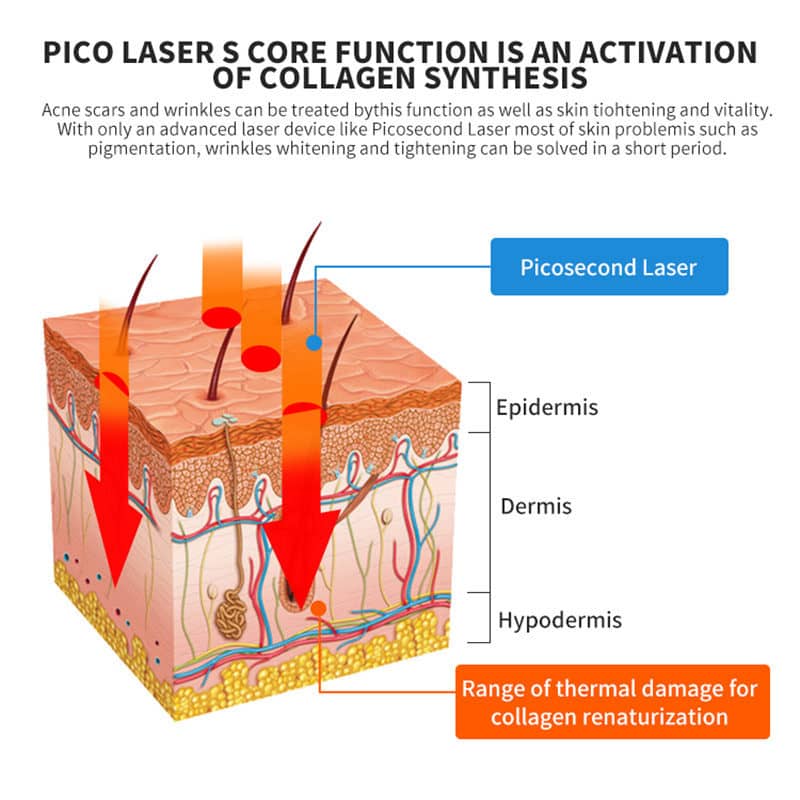
5.1 Estimulando a atividade do colágeno
A energia do laser pode desencadear a resposta natural de reparação da pele, estimulando a produção de colágeno e melhorando a firmeza.
5.2 Melhorando a textura da pele
À medida que a pele se renova, sua textura pode tornar-se mais suave e refinada.
5.3 Reduzindo Linhas Finas
Efeitos sutis de rejuvenescimento podem ajudar a suavizar a aparência das primeiras rugas.
6. Principais características do sistema A0507
Saída de comprimento de onda dupla 6.1
A combinação de 1064nm e 532nm garante uma cobertura de tratamento mais ampla para diferentes tipos de pigmentos.
6.2 Capacidade de tratamento multifuncional
O sistema permite a remoção de tatuagens, a correção de pigmentação e o rejuvenescimento da pele, tudo em um único aparelho.
6.3 Abordagem não invasiva
Os tratamentos são realizados sem cirurgia, tornando-os adequados para clientes que buscam um período mínimo de recuperação.
6.4 Adaptabilidade a diferentes tipos de pele
Com o ajuste adequado dos parâmetros, o dispositivo pode ser usado em uma ampla gama de tons de pele.
7. O que influencia os resultados do tratamento
Os resultados dependem de vários fatores, incluindo:
- Tipo e profundidade do pigmento
- Tipo de pele e sensibilidade
- Ambientes e técnica de tratamento
- Número de sessões realizadas
Consistência e planejamento adequado são essenciais para alcançar resultados equilibrados e previsíveis.
Conclusão
O A0507 é um dispositivo de picosegundos e comutação Q de comprimento de onda duplo. sistema laser Destaca como os dispositivos modernos estão caminhando para maior flexibilidade e precisão. Ao combinar dois comprimentos de onda com duas tecnologias de pulso, permite que os profissionais adaptem os tratamentos a diferentes pigmentos, tipos de pele e objetivos clínicos. Seja para tratar tatuagens multicoloridas, pigmentação persistente ou sinais precoces de envelhecimento da pele, esse tipo de sistema oferece uma abordagem mais abrangente e eficiente para tratamentos a laser.
Perguntas frequentes
Por que são necessários dois comprimentos de onda em um único dispositivo?
Diferentes pigmentos absorvem diferentes comprimentos de onda, portanto, ter ambos permite uma cobertura de tratamento mais completa.
A tecnologia picosegundo é sempre melhor que a tecnologia Q-switched?
Não necessariamente. Cada uma tem seus pontos fortes, e combiná-las proporciona mais flexibilidade.
Quantas sessões são normalmente necessárias?
Depende da condição, mas geralmente são necessárias várias sessões para obter resultados ótimos.
Pode ser usado em todas as cores de tatuagem?
Ele pode tratar uma ampla gama de cores, embora alguns pigmentos possam reagir de forma diferente.
Existe algum período de recuperação após o tratamento?
A maioria dos tratamentos envolve um período mínimo de recuperação, embora possa ocorrer vermelhidão ou sensibilidade leve temporariamente.