









Para muitos salões de beleza, o crescimento não vem apenas da abertura de uma loja maior ou da contratação de mais funcionários.
Às vezes, o crescimento começa com um novo item de serviço.
Um salão pode já ter clientes fiéis para tratamentos faciais, corporais ou depilação, mas o gasto médio por cliente pode ser limitado. O proprietário deseja aumentar o valor dos pacotes, atrair novos grupos de clientes e criar motivos para que os clientes retornem com mais frequência.
Por isso, muitos donos de salão de beleza fazem aos distribuidores uma pergunta muito prática:
Um único aparelho de beleza pode ajudar meu salão a adicionar um novo serviço?
Sim, mas apenas se o dispositivo for selecionado, posicionado e acionado corretamente.
Um equipamento por si só não constitui um projeto de serviço. Um verdadeiro projeto de serviço inclui o dispositivo, o conceito de tratamento, a precificação, o treinamento da equipe, a educação do cliente, o design da embalagem, o material de marketing e o suporte pós-venda.
Para os distribuidores, este é um importante argumento de venda. Você não está apenas vendendo equipamentos. Você está ajudando os proprietários de salões a criar uma nova oportunidade de negócio.
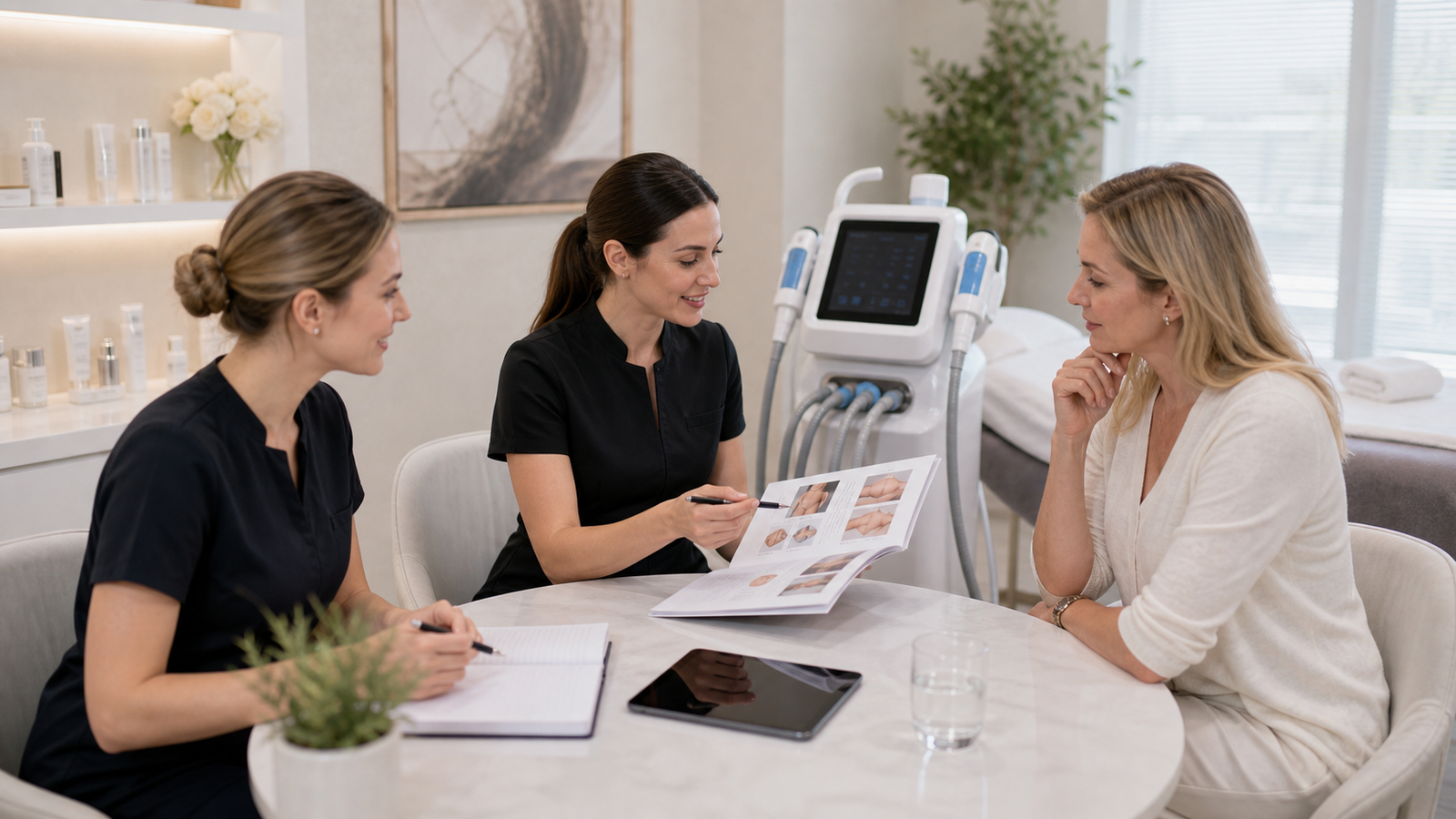
Um dispositivo torna-se valioso quando cria um serviço vendável.
Muitos donos de salão de beleza não querem realmente comprar uma máquina.
Eles querem o resultado que a máquina pode ajudá-los a criar:
- um novo serviço no menu
- um pacote de tratamento de maior valor
- um motivo melhor para os clientes retornarem
- uma forma de competir com os salões próximos
- uma oportunidade de migrar de serviços manuais para serviços baseados em equipamentos
- uma imagem profissional mais forte
- um novo grupo de clientes
Por isso, os distribuidores devem evitar apresentar um aparelho de beleza listando apenas suas funções técnicas.
Por exemplo, dizer que um aparelho possui funções de vácuo, radiofrequência, resfriamento, laser, HIFU ou hidratação pode parecer técnico, mas o dono do salão ainda precisa entender como essas funções se tornam serviços pagos.
Uma explicação mais convincente por parte do distribuidor seria:
“Este dispositivo pode ajudar o seu salão a adicionar um serviço específico, criar pacotes de tratamento e aumentar o valor da sua base de clientes atual.”
Essa mensagem conecta a máquina ao valor comercial.
Primeira pergunta: Qual é a lacuna de serviço que o salão apresenta?
Antes de recomendar um dispositivo, os distribuidores devem compreender o menu de serviços atual do salão.
Um salão que já atende muitos clientes de tratamentos faciais pode precisar de uma atualização em cuidados com a pele. Um salão que oferece principalmente massagens e tratamentos corporais pode precisar de um projeto de contorno corporal ou recuperação pós-parto. Um salão com uma clientela feminina expressiva pode se interessar por serviços de depilação, antienvelhecimento, modelagem corporal ou cuidados pós-parto. Um salão que atende um público mais jovem pode priorizar o tratamento da acne, limpeza de pele, depilação e contorno corporal.
O distribuidor deve perguntar:
- Que serviços o salão já oferece?
- Quais serviços geram o maior número de visitas recorrentes?
- Quais serviços têm baixa margem de lucro ou exigem muita mão de obra manual?
- Que tratamentos os concorrentes estão promovendo nas proximidades?
- Que pedidos de clientes o salão recebe, mas não consegue atender no momento?
- O salão deseja um projeto de tratamento facial, corporal, depilação, antienvelhecimento ou bem-estar?
- Os funcionários possuem a habilidade necessária para operar um equipamento mais avançado?
Essas perguntas ajudam o distribuidor a escolher uma máquina que preencha uma lacuna real de serviço.
Se o dispositivo não for adequado à base de clientes do salão, pode parecer atraente, mas não gerar receita real.
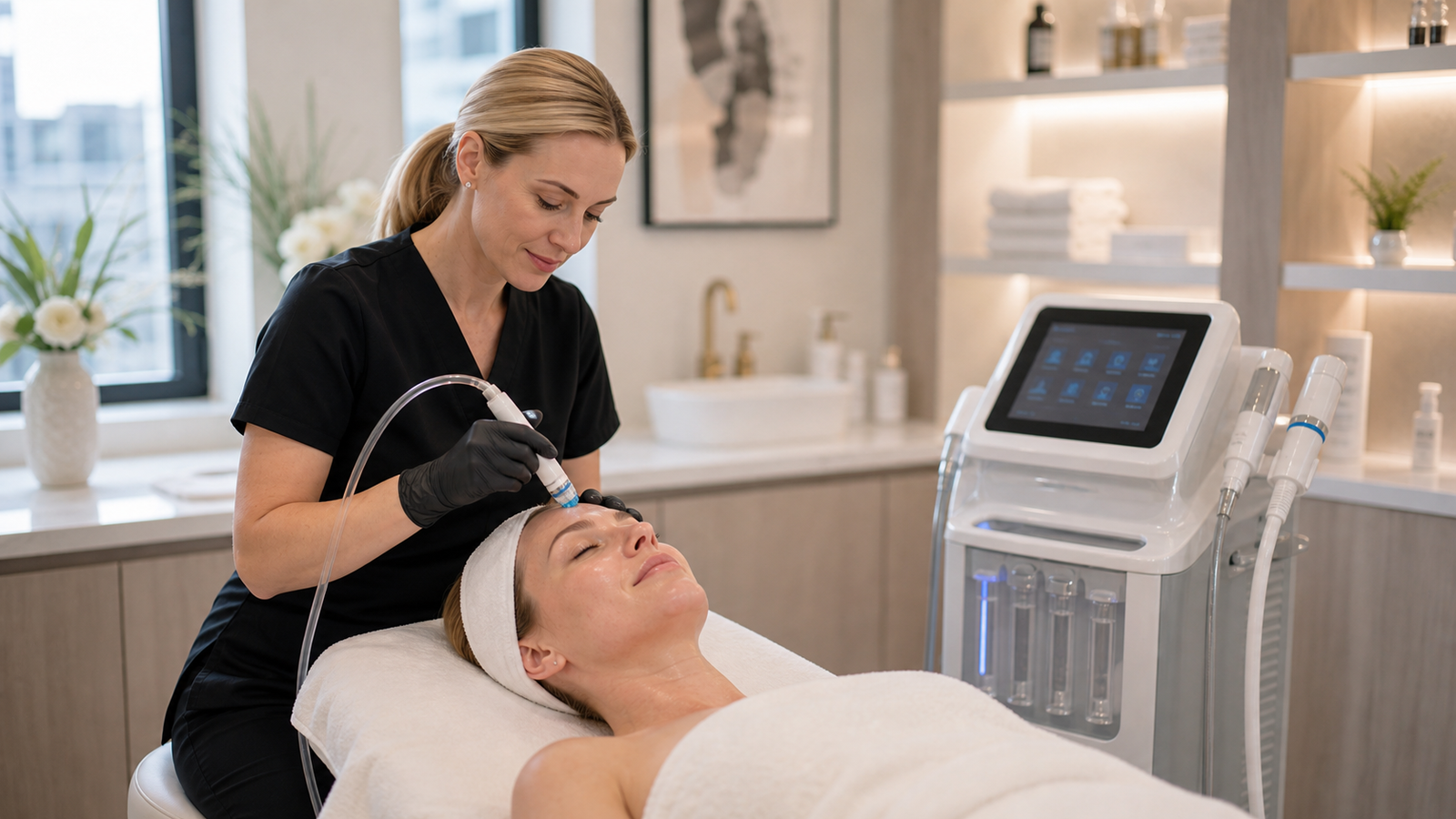
Dispositivos faciais: adicionando serviços de cuidados com a pele de alta frequência
Para muitos salões de beleza no exterior, os serviços faciais são um ponto de partida prático para a adição de novos projetos que utilizam equipamentos.
Os serviços faciais são fáceis de entender para os clientes. Muitos já aceitam a manutenção mensal ou sazonal da pele. Isso torna os aparelhos faciais úteis para salões que desejam aumentar a fidelização sem mudar completamente seu modelo de negócios.
Tratamentos faciais como Hydra Facial, Facial com Oxigênio, Limpeza de Pele, LED, Radiofrequência e dispositivos multifuncionais para o cuidado da pele podem ajudar os salões a desenvolver serviços como:
- limpeza facial profunda
- hidratação facial
- manutenção mensal da pele
- tratamento facial iluminador pré-evento
- pacote de cuidados para pele sensível
- limpeza facial com máscara aprimorada
- associação de manutenção facial
Para os distribuidores, o essencial é ajudar os salões a evitar vender a máquina como sendo apenas para "um tratamento".“
A melhor estratégia é ajudá-los a construir uma trajetória de carreira na empresa.
Por exemplo:
- Serviço de entrada: limpeza facial básica e hidratação.
- Serviço adicional: limpeza com tratamento por radiofrequência ou LED.
- Pacote de serviços: plano mensal de manutenção facial.
- Serviço de assinatura: cuidados faciais regulares mais venda de produtos.
Isso ajuda o salão a transformar um único aparelho em vários serviços diferentes.
Dispositivos para cuidados corporais: Criando pacotes de tratamento de maior valor agregado
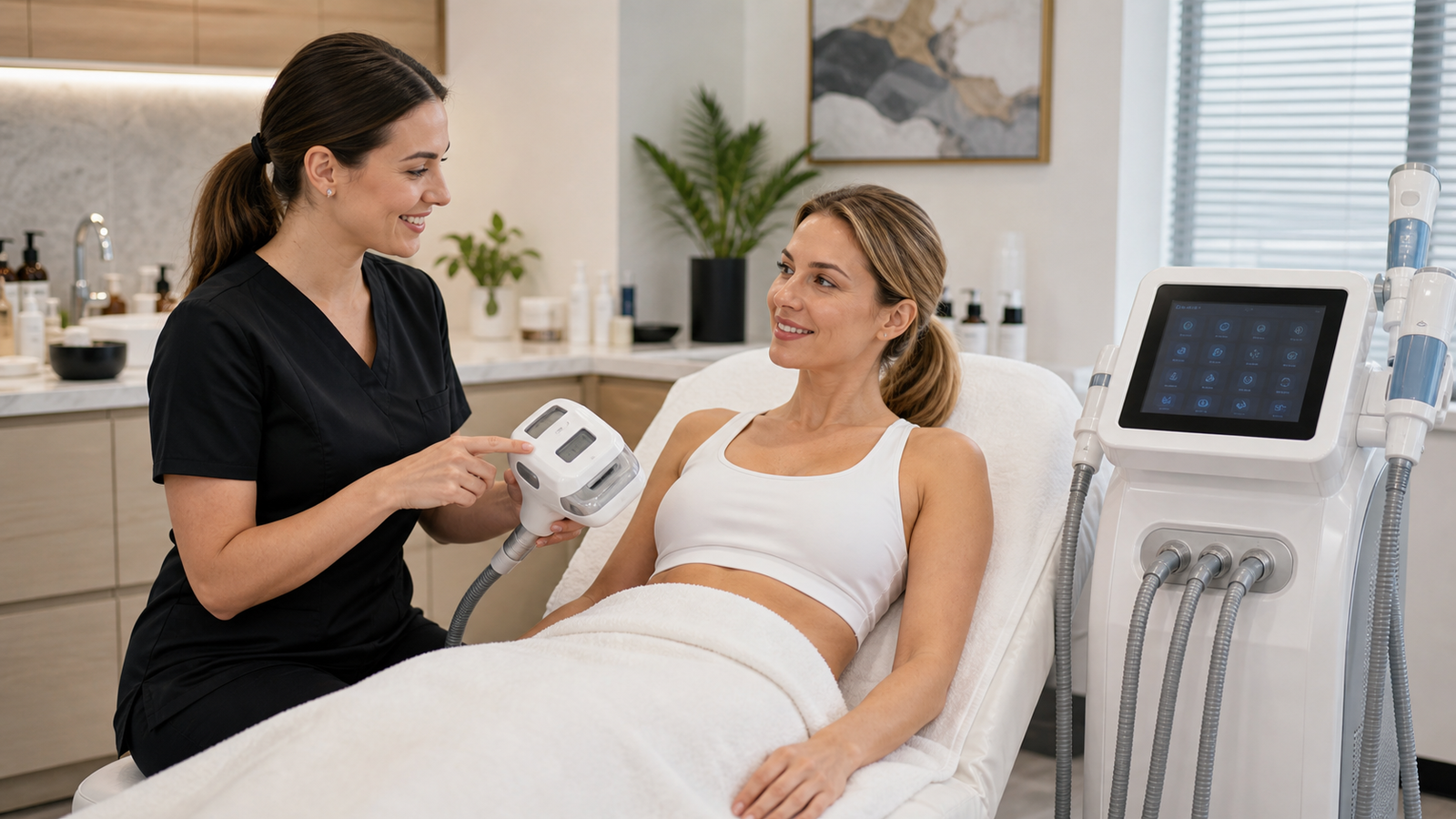
Os dispositivos para cuidados corporais podem ajudar os salões a adicionar um tipo diferente de serviço.
Muitos salões já oferecem massagem, relaxamento corporal, drenagem linfática, serviços de emagrecimento ou pacotes de bem-estar. Mas os serviços corporais manuais podem ser demorados e difíceis de escalar. Os serviços corporais que utilizam equipamentos podem ajudar os salões a criar pacotes mais estruturados.
Dependendo do mercado local e do posicionamento do salão, os equipamentos para cuidados corporais podem incluir:
- modelagem corporal por radiofrequência
- tratamento corporal a vácuo
- contorno corporal por cavitação
- criolipólise
- Escultura corporal por EMS
- massagem com rolos
- Suporte para cuidados corporais por ondas de choque
- plataformas de firmeza e modelagem corporal
O distribuidor deve posicionar esses serviços com cuidado.
Uma boa redação inclui:
- suporte para contorno corporal
- cuidados corporais localizados
- serviço de firmeza corporal
- pacote de modelagem corporal
- tratamento corporal de bem-estar
- programa de manutenção corporal
A linguagem arriscada inclui:
- perda de peso garantida
- Remoção permanente de gordura para todos os clientes
- Alegações de tratamento médico sem qualificação adequada
- resultados sem risco
Para salões de beleza, os aparelhos de cuidados corporais são atraentes porque podem ser vendidos em pacotes. Um cliente pode não comprar apenas uma sessão individual, mas pode considerar um plano de 4, 6 ou 8 sessões se o salão explicar o serviço de forma profissional.
É aqui que uma máquina se transforma em um novo projeto de negócios.
Aparelhos de Depilação: Construindo uma Categoria de Serviço Clara e Familiar
A depilação é uma das categorias de serviços mais fáceis de entender para muitos clientes.
Se um salão de beleza não oferece atualmente depilação com equipamentos, um dispositivo a laser de diodo ou IPL pode ajudar o salão a entrar em uma área de serviço familiar e com alta demanda.
Para os distribuidores, a lógica de vendas é simples:
- Os clientes já entendem o problema.
- Diversas áreas do corpo podem se tornar itens de serviço separados.
- Os tratamentos podem exigir visitas repetidas.
- O salão pode vender pacotes de corpo inteiro.
- As promoções sazonais são fáceis de criar.
Os possíveis itens de serviço incluem:
- depilação das axilas
- depilação das pernas
- depilação dos braços
- gestão de pelos faciais
- tratamento da área do biquíni
- pacote de depilação corporal completa
- plano de sessão de manutenção
O distribuidor ainda deve usar uma linguagem realista. Em vez de prometer remoção permanente dos pelos para todos os clientes, uma expressão mais segura e profissional seria redução de pelos a longo prazo ou controle da depilação.
Para os salões de beleza, a vantagem é a clareza do menu.
O serviço é fácil de nomear, fácil de precificar e fácil de empacotar.
Dispositivos antienvelhecimento: ajudando salões de beleza a modernizar sua imagem profissional.
Alguns salões querem ir além dos serviços faciais básicos.
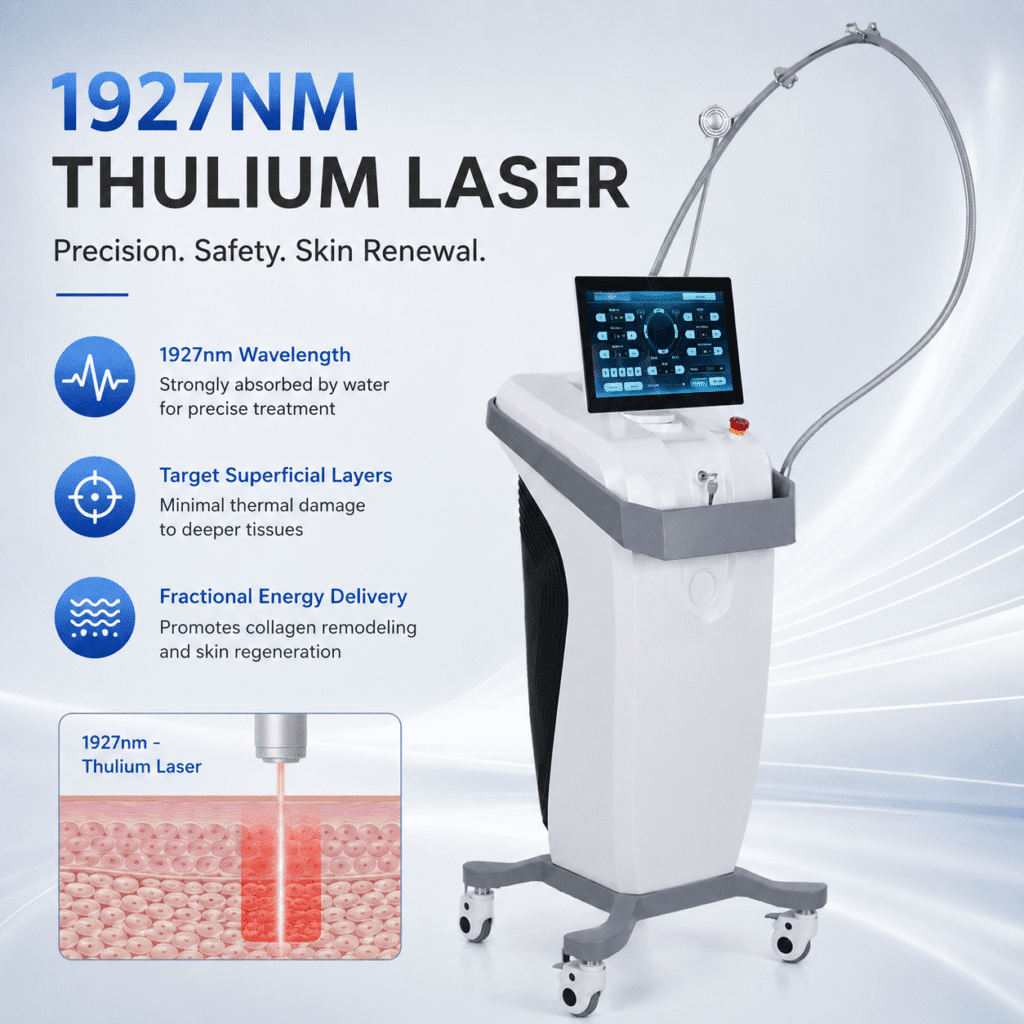
Eles desejam oferecer serviços de rejuvenescimento, lifting, firmeza ou tratamento da pele de maior valor agregado. Para esses salões, dispositivos como HIFU, radiofrequência, radiofrequência fracionada, microagulhamento com radiofrequência ou sistemas similares de firmeza da pele podem representar uma melhoria significativa nos serviços profissionais.
No entanto, os distribuidores devem ter mais cuidado com essa categoria.
Em comparação com dispositivos faciais básicos, os dispositivos antienvelhecimento baseados em energia podem exigir:
- treinamento de operador mais robusto
- triagem de clientes mais clara
- melhor conhecimento das contraindicações
- comunicação de resultados realistas
- controle de parâmetros mais cuidadoso
- entendimento de conformidade local
Essa categoria pode ajudar os salões a aumentar o valor dos tratamentos, mas somente se o salão tiver a clientela adequada e a equipe qualificada.
O distribuidor não deve vender dispositivos avançados apenas porque eles têm preços mais altos.
A pergunta mais pertinente seria:
Este salão pode prestar o serviço com segurança e confiança?
Em caso afirmativo, os equipamentos antienvelhecimento podem ajudar o salão a adicionar serviços premium, como firmeza da pele, lifting facial, cuidados com o pescoço, modelagem corporal ou pacotes profissionais de cuidados com a pele.
Dispositivos de recuperação e bem-estar: expandindo além da beleza tradicional.
Alguns salões de beleza, spas e centros de bem-estar querem expandir seus serviços para incluir aqueles voltados à recuperação.
Isso é especialmente relevante em mercados internacionais, onde os clientes podem estar interessados em bem-estar, recuperação esportiva, relaxamento, cuidados com o corpo e experiências de tratamento não invasivas.
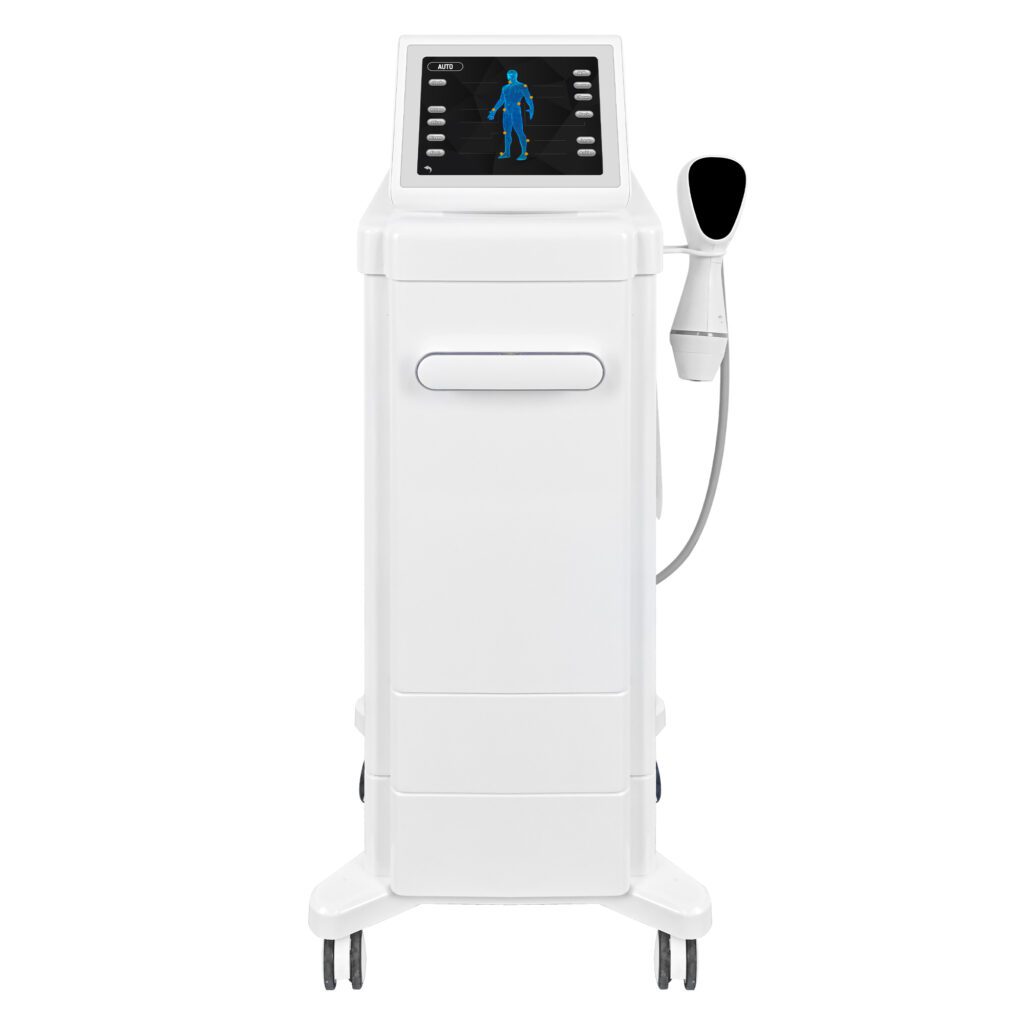
Aparelhos como Shockwave, Tecar, PMST, magnetoterapia, sistemas de recuperação corporal ou equipamentos relacionados à fisioterapia podem ajudar determinadas empresas a adicionar serviços além dos tradicionais de beleza.
As possíveis direções de serviço incluem:
- serviço de recuperação corporal
- complemento para recuperação esportiva
- pacote de bem-estar pós-treinamento
- suporte para conforto corporal
- pacote de cuidados corporais e recuperação
- upgrade de adesão ao programa de bem-estar
Esta categoria não é adequada para todos os salões de beleza. Ela funciona melhor quando o salão já possui clientes de cuidados corporais, posicionamento de bem-estar, serviços de massagem, parcerias com academias ou canais de compra relacionados à reabilitação.
Para os distribuidores, o valor reside na expansão dos canais de distribuição.
Uma única categoria de dispositivos pode abrir portas não apenas para salões de beleza, mas também para academias, estúdios de recuperação, centros de bem-estar e empresas relacionadas à reabilitação, onde a regulamentação local permitir.
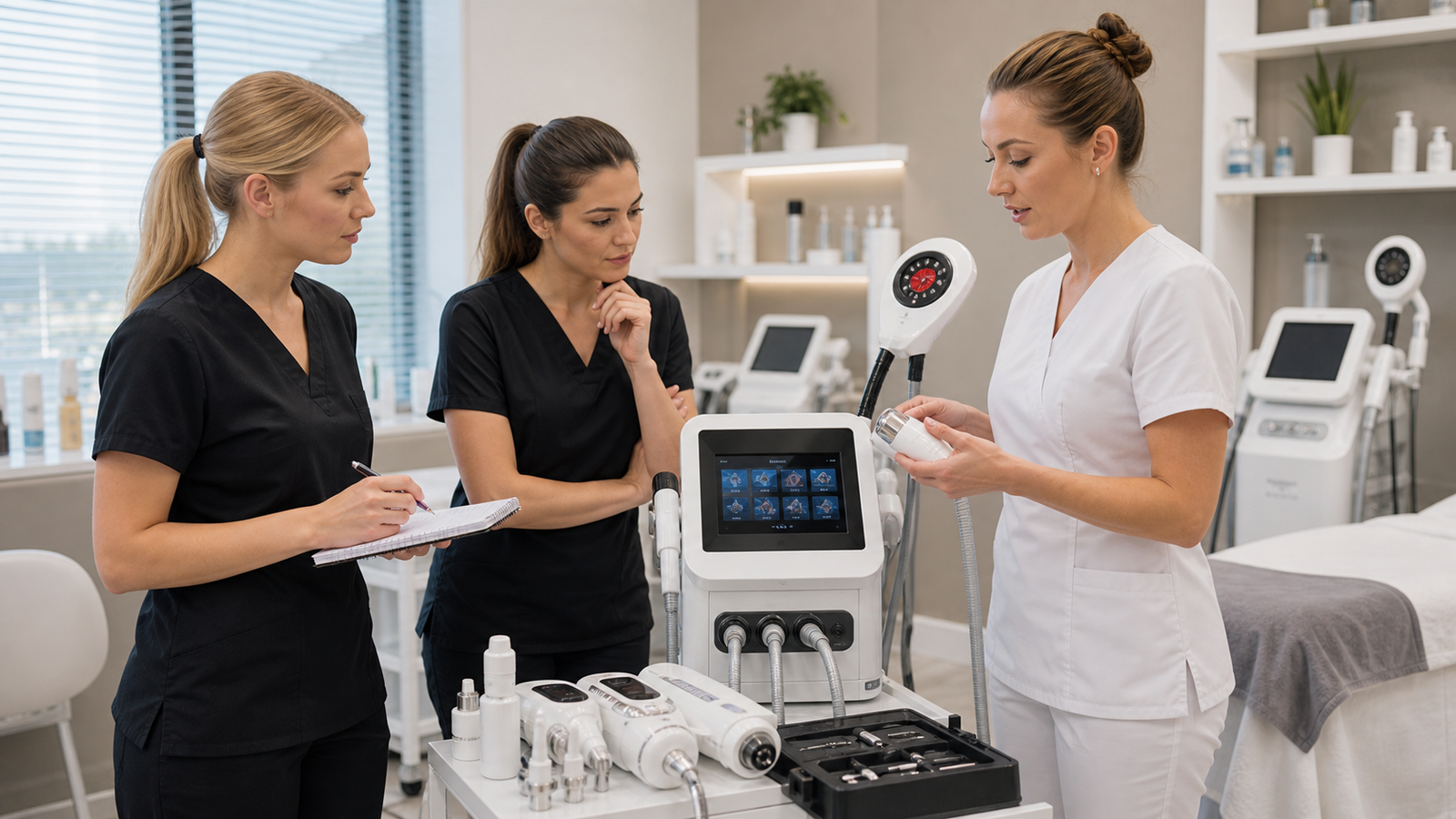
O treinamento da equipe transforma a máquina em um serviço de verdade.
Um salão de beleza não conseguirá adicionar um novo serviço com sucesso se a equipe não souber usar o dispositivo.
É por isso que o treinamento faz parte do projeto de serviço.
Os distribuidores devem ajudar os salões a responder às seguintes perguntas:
- Quem irá operar a máquina?
- Quanto tempo dura o treinamento?
- Quais etapas de tratamento devem ser seguidas?
- Que perguntas dos clientes a equipe precisará responder?
- Quais contraindicações devem ser verificadas?
- Como o serviço deve ser explicado antes do tratamento?
- O que deve ser dito após o tratamento?
- Como os funcionários devem recomendar pacotes?
Quanto mais fácil for para a equipe explicar o serviço, mais rápido o salão conseguirá vendê-lo.
O treinamento deve incluir tanto a comunicação operacional quanto a de vendas.
O treinamento operacional ajuda a equipe a usar o dispositivo corretamente.
A comunicação de vendas ajuda a equipe a explicar o valor do serviço sem exageros.
Por exemplo, um terapeuta não deve apenas saber qual botão apertar. Ele também deve saber como apresentar o serviço, quem é o público-alvo, quais resultados podem variar e por que um pacote pode ser recomendado.
Um novo dispositivo deve vir com um novo menu de serviços.
Quando um salão de beleza compra um equipamento estético, os distribuidores não devem permitir que o comprador simplesmente coloque a máquina em uma sala e espere que os clientes perguntem sobre ela.
O salão precisa de um menu de serviços.
Um menu de serviços prático deve incluir:
- nome do serviço
- posicionamento do tratamento
- grupo de clientes adequado
- preço por sessão única
- preço do pacote
- estrutura esperada do curso
- opções adicionais
- notas de consulta
- texto de cuidados pós-operatórios
- explicação realista do resultado
Por exemplo, um dispositivo facial pode se tornar:
- hidratação facial express
- limpeza facial profunda
- pacote mensal para uma pele radiante
- cuidados faciais pré-evento
- adesão ao programa de cuidados com a pele
Um dispositivo corporal pode se tornar:
- pacote de firmeza corporal
- suporte localizado para contorno corporal
- curso de manutenção de cuidados corporais
- kit de cuidados para cintura e abdômen
- Apoio aos cuidados corporais pós-parto, quando apropriado.
Um aparelho de depilação pode se transformar em:
- pacote de axilas
- pacote de meia perna
- pacote de corpo inteiro
- promoção sazonal de depilação
- plano de sessão de manutenção
É assim que uma única máquina pode gerar vários itens de serviço.
Como os distribuidores podem ajudar os salões a lançar o novo serviço
O processo de lançamento é importante.
Mesmo um bom aparelho pode falhar se o salão não o instalar corretamente.
Os distribuidores podem apoiar os salões com um plano de lançamento simples:
Passo 1: Defina o nome do serviço.
O nome do serviço deve ser fácil de entender para os clientes. Não deve soar como um código técnico.
Etapa 2: Escolha o primeiro grupo de clientes-alvo.
Um salão de beleza não deve promover o novo serviço para todos de uma vez. Comece com o grupo de clientes com maior probabilidade de compra.
Passo 3: Prepare um kit inicial.
Um pacote ajuda o salão a vender um curso em vez de uma única sessão experimental.
Etapa 4: Treine a equipe no roteiro de consulta.
Os funcionários devem saber como explicar o serviço, quem é o público-alvo e quais expectativas são realistas.
Etapa 5: Execute um lançamento suave.
O salão pode testar o serviço primeiro com clientes fiéis, coletar feedback e aprimorar o processo.
Etapa 6: Promova com fotos, vídeos e benefícios do serviço.
O marketing deve mostrar a experiência de serviço, não apenas a máquina.
Etapa 7: Faça o acompanhamento com os clientes.
O acompanhamento ajuda a gerar reservas recorrentes e upgrades de pacotes.
Este plano de lançamento ajuda os proprietários de salões a sentirem que estão comprando um projeto de negócio, e não apenas equipamentos.
Como escolher o dispositivo certo para o novo serviço de um salão de beleza
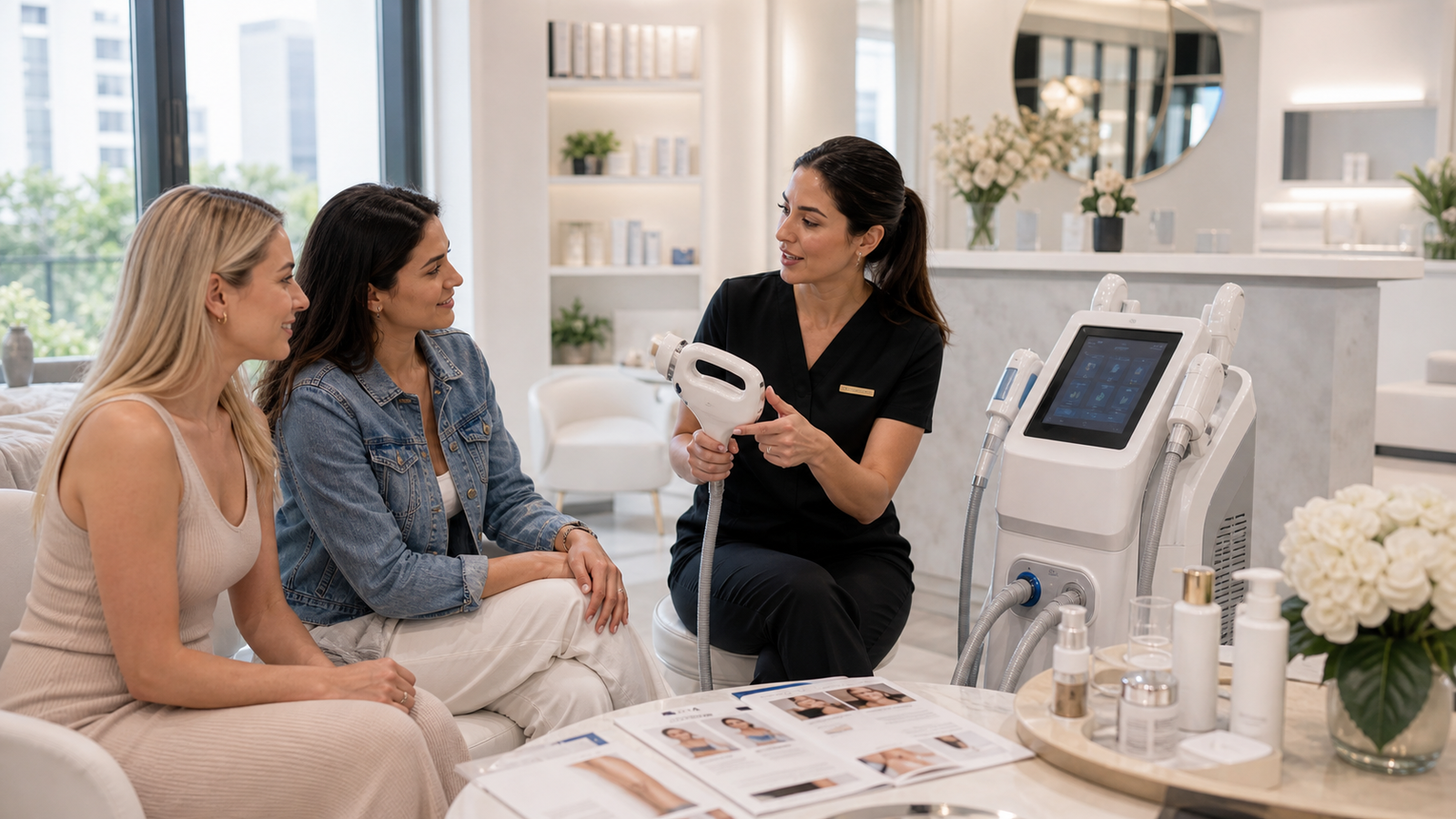
Os distribuidores devem adequar o dispositivo ao modelo de negócio do salão.
Se o salão desejar serviços de alta frequência, os aparelhos faciais podem ser adequados.
Se o salão desejar oferecer pacotes com maior valor agregado, aparelhos de modelagem corporal ou antienvelhecimento podem ser adequados.
Se o salão deseja uma categoria de serviços clara e familiar, o equipamento de depilação pode ser adequado.
Se o salão busca posicionamento voltado para o bem-estar ou recuperação, equipamentos de ondas de choque ou relacionados à fisioterapia podem ser adequados.
A seleção deve levar em consideração:
- base de clientes do salão
- nível de habilidade da equipe
- preços de tratamento local
- salas de tratamento disponíveis
- serviços concorrentes
- dificuldade de treinamento
- consumíveis e peças
- suporte pós-venda
- regras de publicidade local
- potencial do design de embalagens
O melhor dispositivo nem sempre é o mais caro.
O melhor equipamento é aquele que o salão consegue explicar, vender, operar e dar suporte de forma consistente.
Por que essa pergunta é importante para os distribuidores?
Quando um distribuidor consegue explicar como um dispositivo se transforma em um novo projeto de serviço, a conversa de vendas muda.
Em vez de perguntar apenas:
“Quanto custa a máquina?”
O comprador começa a perguntar:
- Como posso calcular o preço do serviço?
- Quantas sessões devo vender?
- Qual grupo de clientes devo visar?
- Como minha equipe pode aprender o tratamento?
- Qual pacote devo executar primeiro?
- Quando posso começar a promovê-lo?
- Que tipo de suporte vocês oferecem após a compra?
Essas são perguntas melhores porque demonstram uma intenção real de compra.
Para os distribuidores, essa abordagem também pode reduzir a pressão sobre os preços. Se o comprador vê apenas uma máquina, ele compara os preços das máquinas. Se o comprador vê um projeto de serviço, ele compara o valor para o negócio.
Essa é a posição de vendas mais forte.
Como as categorias de produtos da SHEFMON podem apoiar novos projetos de serviço
A SHEFMON fornece diversas categorias de equipamentos de beleza, o que permite aos distribuidores ajudar os salões a escolher projetos de serviço com base no mercado local.
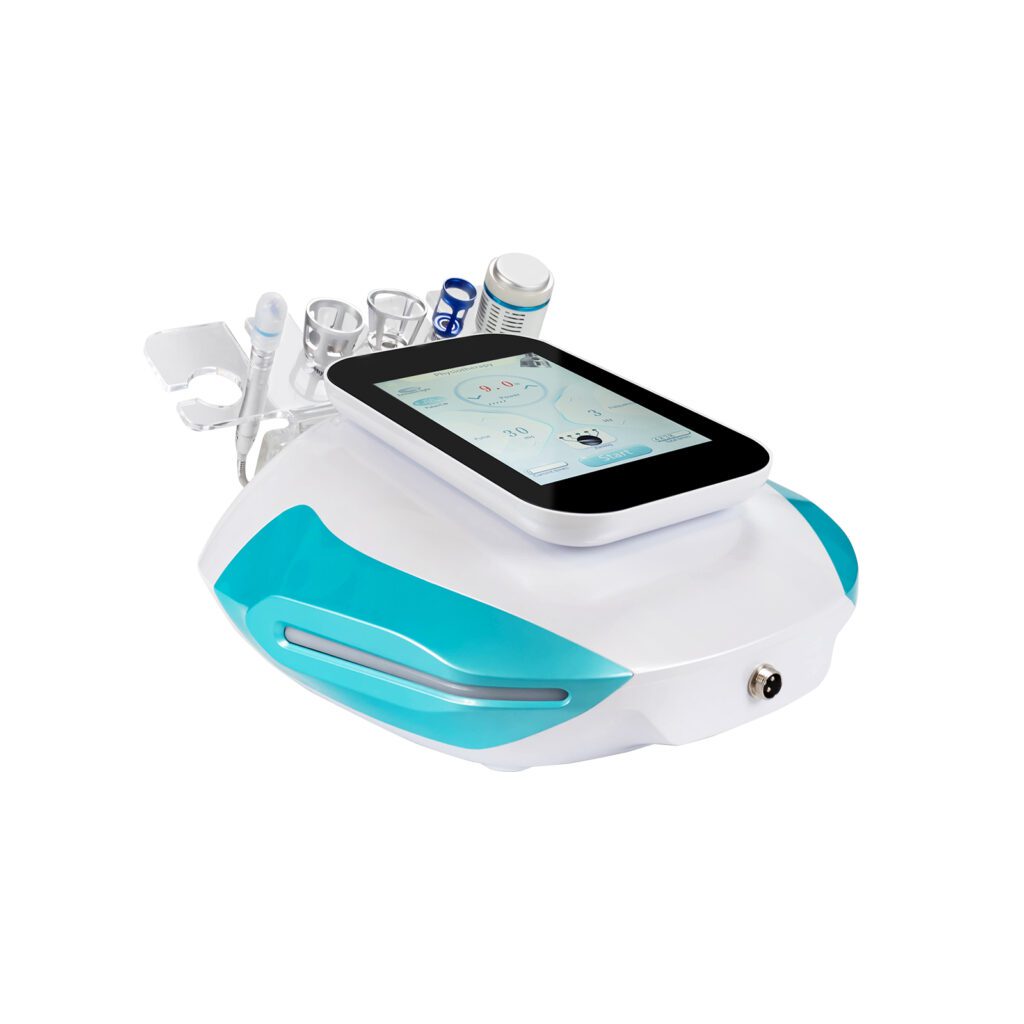
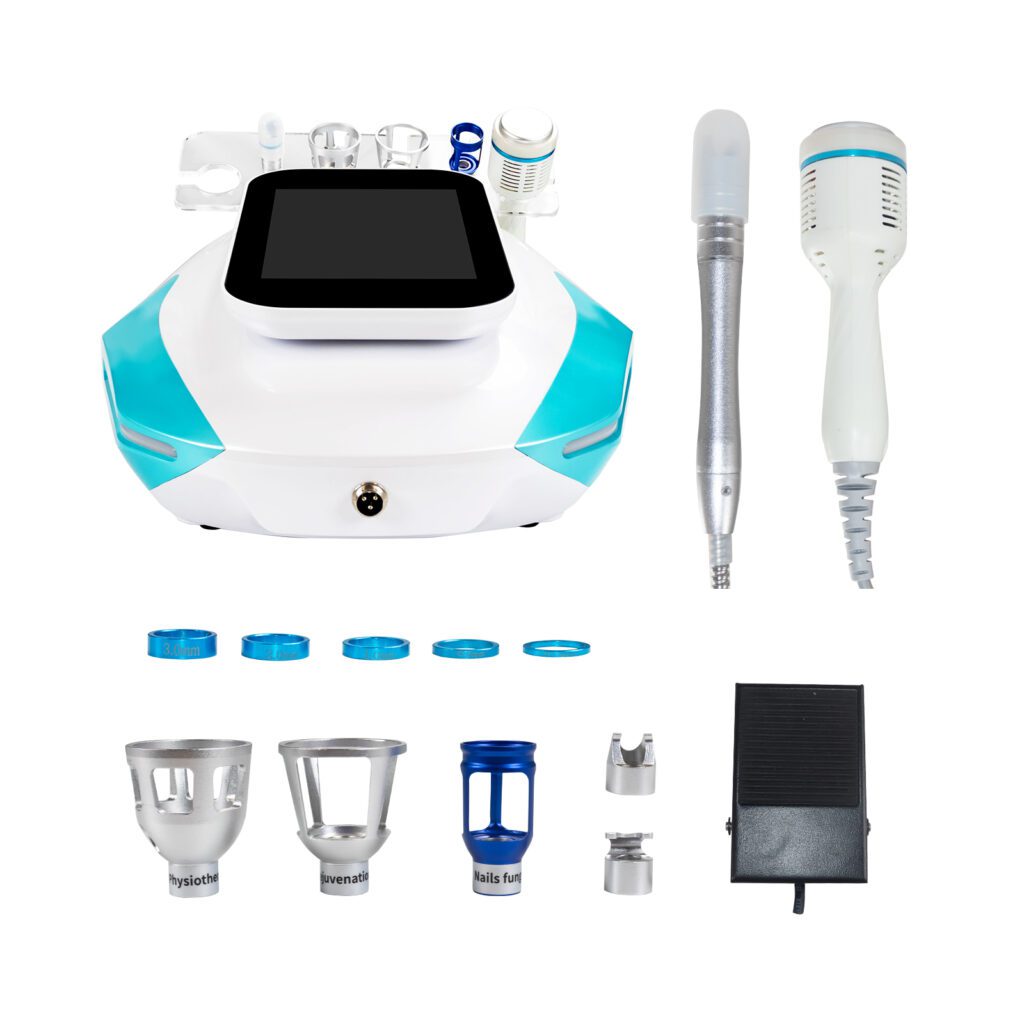
Para salões que desejam expandir seus serviços faciais, os dispositivos Hydra Facial e de gerenciamento da pele podem complementar os serviços de limpeza, hidratação e manutenção.
Para salões que desejam oferecer serviços de depilação, os equipamentos de laser IPL e laser de diodo podem complementar pacotes de depilação e tratamentos de redução de pelos a longo prazo.
Para salões que desejam aprimorar seus serviços de cuidados corporais, a criolipólise, a modelagem corporal e tecnologias relacionadas podem complementar pacotes de serviços de cuidados corporais localizados.
Para salões que desejam oferecer serviços de cuidados com a pele de alta qualidade, o HIFU e outras tecnologias antienvelhecimento podem ajudar a criar menus de serviços de maior valor agregado, desde que o treinamento e a adesão aos procedimentos sejam adequados.
Para empresas voltadas para o bem-estar ou recuperação, os equipamentos de ondas de choque e fisioterapia podem auxiliar na expansão dos serviços para além dos tradicionais serviços de beleza.
As páginas de categoria da SHEFMON úteis para pesquisa de distribuidores incluem:
- Máquinas de beleza SHEFMON
- Equipamento a laser IPL
- Equipamento facial Hydra
- Equipamento de criolipólise
- Equipamento HIFU
- Equipamentos de terapia por ondas de choque e fisioterapia
Conclusão
Um único aparelho de beleza pode ajudar um salão a adicionar novos serviços, mas somente quando estiver conectado a um modelo de serviço completo.
O salão precisa de mais do que equipamentos. Precisa de um nome claro para os serviços, um posicionamento realista, treinamento da equipe, educação do cliente, precificação, pacotes, marketing e suporte pós-venda.
Para os distribuidores, esta é uma forma eficaz de vender equipamentos de beleza.
Não venda apenas a máquina.
Ajude o salão a entender como o dispositivo pode se tornar um novo projeto de receita.
Quando o comprador enxerga a máquina como uma oportunidade de serviço, a decisão de compra se torna mais fácil e o distribuidor se transforma em um parceiro comercial de longo prazo.
Perguntas frequentes
1. Um único aparelho de beleza pode realmente criar mais de um serviço?
Sim. Muitos aparelhos podem oferecer diversos serviços se o salão elaborar o menu corretamente. Por exemplo, um aparelho facial pode oferecer limpeza, hidratação, manutenção e serviços de assinatura. Um aparelho corporal pode oferecer diversos pacotes de cuidados corporais.
2. Qual o tipo de dispositivo mais fácil para os salões utilizarem como um novo serviço?
Aparelhos faciais e de depilação costumam ser mais fáceis de usar, pois os clientes já estão familiarizados com esses serviços. Aparelhos para contorno corporal, antienvelhecimento e recuperação também podem funcionar bem, mas podem exigir treinamento mais aprofundado e uma orientação mais clara para o cliente.
3. Um salão de beleza deve optar por um aparelho multifuncional ou um aparelho especializado?
Depende do modelo de negócio do salão. Um equipamento multifuncional pode ajudar o salão a testar diversos serviços com um único investimento. Já um equipamento especializado pode ser mais adequado quando o salão já possui uma demanda expressiva por uma categoria específica de serviços.
4. Por que o treinamento da equipe é importante ao adicionar um novo serviço de dispositivo?
O treinamento da equipe ajuda o salão a operar o equipamento com segurança e a explicar o tratamento de forma profissional. Se a equipe não souber explicar o serviço, os clientes podem não comprar pacotes, mesmo que o equipamento seja bom.
5. Como os salões devem precificar um novo serviço baseado em dispositivos?
Os salões devem verificar os preços da concorrência local, o tempo de tratamento, o custo dos materiais, o tempo do profissional e o valor dos pacotes. Os distribuidores podem ajudar os salões a criar preços para sessões individuais e pacotes de tratamentos.
6. Qual é o maior erro ao lançar um novo serviço para dispositivos?
O maior erro é comprar a máquina sem criar um menu de serviços. Um salão precisa de um nome claro, público-alvo definido, estrutura de pacotes, roteiro de atendimento e plano de lançamento.
7. Um dispositivo pode ajudar os salões de beleza a aumentar o número de clientes recorrentes?
Sim, se o serviço puder ser vendido como um curso, plano de manutenção ou assinatura. Serviços como cuidados faciais, depilação, modelagem corporal e recuperação geralmente têm potencial para fidelização quando posicionados corretamente.
8. Como os distribuidores podem tornar a conversa de vendas mais eficaz?
Os distribuidores devem apresentar o dispositivo como um projeto comercial. Em vez de apenas listar as funções, devem mostrar como a máquina auxilia nos serviços oferecidos, na definição de preços, nos pacotes, no treinamento e na geração de receita a longo prazo para o salão.
9. Os salões devem promover os resultados de forma agressiva para vender o novo serviço?
Não. Os salões devem usar uma linguagem realista e em conformidade com a lei. Evite resultados garantidos, alegações médicas ou promessas exageradas. É melhor explicar os benefícios do serviço, o processo do tratamento e as variações esperadas.
10. Como a SHEFMON pode ajudar os distribuidores a vender projetos de serviços?
A SHEFMON oferece diversas categorias de equipamentos de beleza, permitindo que os distribuidores encontrem os dispositivos ideais para diferentes objetivos de serviços em salões de beleza, como cuidados faciais, depilação, modelagem corporal, antienvelhecimento, bem-estar e recuperação.