








エグゼクティブサマリー
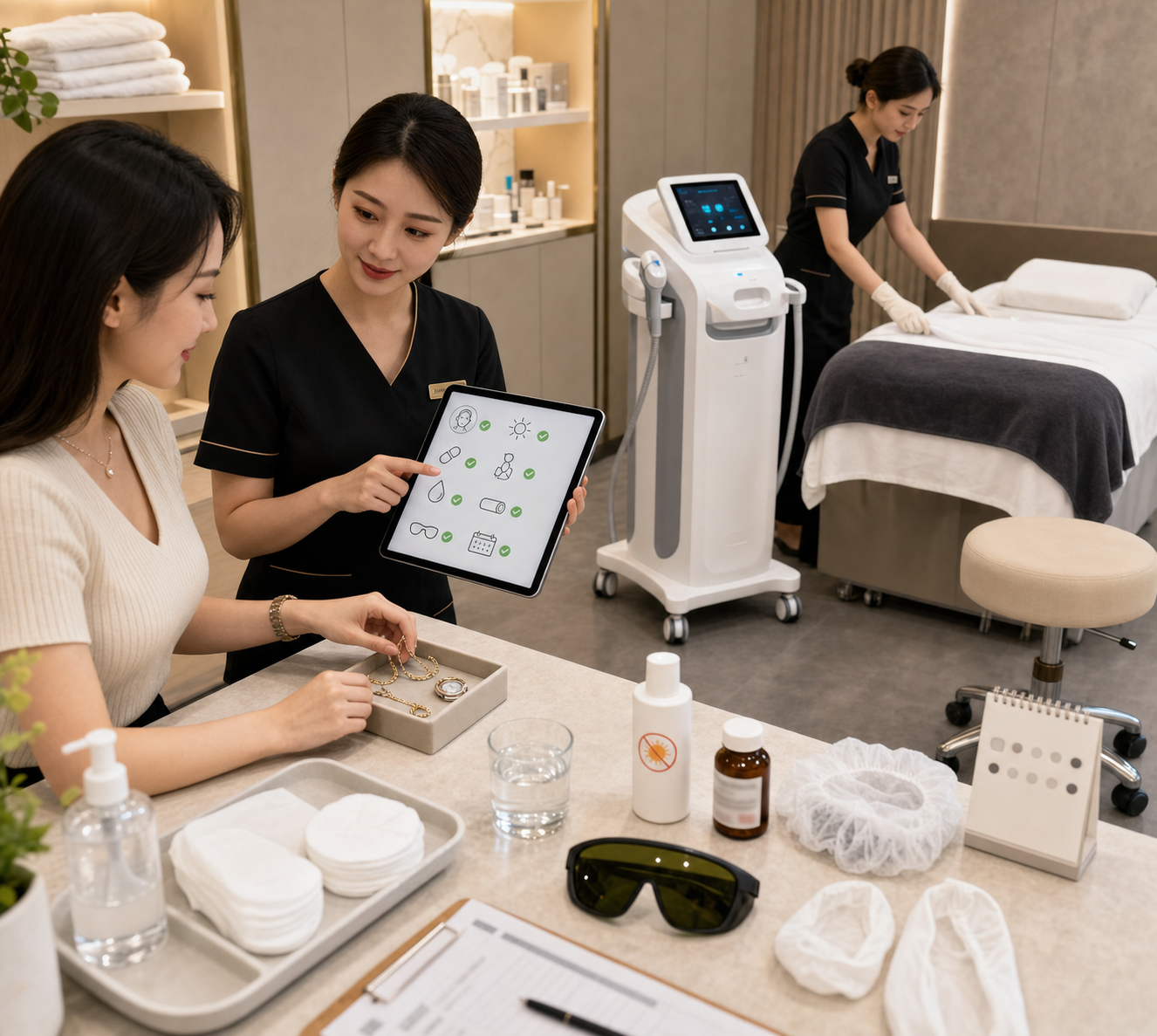
Before a beauty equipment treatment, the customer and salon should not rush directly into the machine step. A safe and professional treatment begins with consultation, suitability screening, skin or body condition review, recent treatment history, product and medication questions, hygiene checks, expectation management, and clear aftercare planning.
The most important pre-treatment checks are:
- Confirm what equipment project the customer is receiving.
- Ask about skin condition, body condition, sensitivity, allergies, and recent reactions.
- Check whether there are open wounds, active irritation, infection, severe redness, sunburn, swelling, or pain.
- Ask about recent laser, peeling, microneedling, injectables, surgery, sun exposure, tanning, or strong skincare use.
- Ask about medications or products that may increase photosensitivity where relevant.
- Confirm pregnancy, breastfeeding, implanted electronic devices, metal implants, medical conditions, or professional restrictions where relevant.
- Explain the treatment process, expected sensation, possible temporary reactions, and realistic results.
- Remove makeup, oils, lotions, jewelry, or metal accessories where the protocol requires it.
- Use clean equipment, suitable consumables, fresh disposables, and manufacturer-compatible cleaning procedures.
- Start conservatively for first-time customers or sensitive skin customers.
- Do a small-area trial where appropriate.
- Record treatment details and follow up after service.
The key rule is simple:
Do not treat every customer with the same machine protocol.
Beauty equipment can improve the salon service experience, but each customer should be assessed before treatment. A customer with healthy, stable skin may be suitable for a normal protocol. A customer with active irritation, sunburn, allergies, recent strong procedures, or unclear medical concerns may need a modified protocol, delayed service, or medical advice.
1. Why Pre-Treatment Preparation Matters
Beauty equipment treatments may involve heat, light, suction, pressure, current, ultrasound, cold, vibration, exfoliation, product infusion, or skin contact. These steps can be comfortable and useful when the project is suitable, but they can also create problems if the wrong customer, wrong timing, wrong product, or wrong setting is used.
Good preparation helps salons:
- Reduce customer discomfort
- Avoid unsuitable treatments
- 顧客の信頼を高める
- Protect sensitive skin customers
- Reduce complaints and refunds
- リピート予約を増やす
- Standardize staff workflow
- Explain realistic expectations
- Protect equipment and consumables
- Improve service quality
For customers, preparation helps them understand what to expect and what they should tell the salon before treatment.
2. 簡潔な回答
Before doing an equipment-based beauty treatment, customers should pay attention to five things:
1. Current skin or body condition
2. Recent treatments, sun exposure, and skincare products
3. Health, medication, allergy, and sensitivity information
4. Treatment process, sensation, risk, and expected results
5. Hygiene, aftercare, and follow-up
The salon should not only ask “Do you want to try this machine?” It should ask whether the customer is suitable for the project today.
3. Confirm The Exact Equipment Project
Customers should know which treatment they are receiving.
サロンは以下の点を説明する必要がある:
- Machine name or category
- Treatment purpose
- Body or facial area
- Main steps
- 治療時間
- Expected sensation
- Products used
- Whether it is a trial, single session, course session, or add-on
- What results are realistic after one session
- どのようなアフターケアが必要ですか?
例:
“Today you are receiving a low-suction hydro facial and hydration care package. The goal is cleansing and hydration support. You may feel mild suction and wet cleansing. If your skin feels comfortable afterward, we can discuss a monthly maintenance plan.”
Clear introduction prevents misunderstanding.
4. Complete A Consultation Form
A consultation form is important before equipment projects, especially for first-time customers, sensitive skin customers, hair removal, RF, EMS, body contouring, HIFU, IPL, laser, or other higher-stimulation devices.
The form should ask about:
- 主な懸念事項
- Treatment history
- Current skin condition
- Known allergies
- Sensitive skin history
- Recent sun exposure
- Recent tanning or sunless tanning
- Recent peeling, laser, microneedling, or injection where relevant
- Current skincare products
- Current medications where relevant
- 該当する場合、妊娠または授乳中
- 該当する場合、ペースメーカーまたは埋め込み型電子機器
- 該当する場合の金属インプラント
- Skin disease or medical conditions where relevant
- Previous adverse reactions
- Customer consent and understanding
The form should be reviewed before the treatment begins, not after.
5. Check Current Skin Or Body Condition
The customer’s current condition matters more than what was suitable last month.
Do not treat the area without review if the customer has:
- 開放創
- Active rash
- Severe redness
- 腫れ
- Burning or stinging
- Active infection
- Fresh sunburn
- Skin peeling
- Bruising where relevant
- Recent allergic reaction
- Active eczema or rosacea flare
- Unexplained pain
- New irritation from skincare products
If any of these appear, the salon should delay, modify, or refer the customer for medical advice.
6. Ask About Sensitive Skin And Allergies
Sensitive skin customers need extra care.
聞く:
- What usually causes your skin to react?
- What does the reaction look or feel like?
- Are you allergic to any skincare ingredients, fragrance, latex, metals, gels, or masks?
- Have you reacted to salon treatments before?
- Is your skin reacting today?
- Did you recently change products?
Sensitive skin is not automatically unsuitable for all equipment, but it may require:
- 優しい洗浄
- Fragrance-free products where possible
- Lower suction
- Lower heat
- Lower stimulation
- 治療時間の短縮
- Fewer passes
- Small-area trial where appropriate
- More follow-up
Do not promise that a sensitive skin customer will not react.
7. Ask About Recent Treatments
Recent treatments may change skin tolerance.
Customers should tell the salon if they recently had:
- Chemical peel
- Laser or IPL
- マイクロニードリング
- Injection or filler
- 手術
- Strong exfoliation
- Facial waxing
- Facial threading
- Strong acne treatment
- Home device use
- Professional body treatment
- Sunburn or tanning
The salon should follow device protocol and professional guidance for waiting periods. If the staff are unsure, do not proceed.
8. Ask About Skincare Products Used Recently
Some skincare products may make skin more reactive before equipment projects.
Customers should mention recent use of:
- レチノイド
- Acids such as AHA or BHA
- Strong exfoliants
- 皮
- Benzoyl peroxide
- Prescription acne products
- 香りの強い製品
- エッセンシャルオイル
- Whitening or brightening actives
- New products that caused stinging
The salon should not combine strong active products with equipment without clear protocol and suitability.
If the skin stings during cleansing or product application, stop and reassess.
9. Ask About Medication And Photosensitivity
For light-based or laser-related projects, medication and photosensitivity questions are especially important.
Customers should tell the salon if they:
- Take medication that may increase photosensitivity
- Have a history of unusual light reaction
- Recently used photosensitizing skincare or treatment
- Have recent sunburn or tanning
- Have a medical condition that affects light tolerance
For IPL, laser hair removal, and similar projects, the salon should follow device protocol and local professional requirements.
When uncertain, recommend medical advice before treatment.
10. Avoid Sun Exposure And Tanning Before Light-Based Treatments
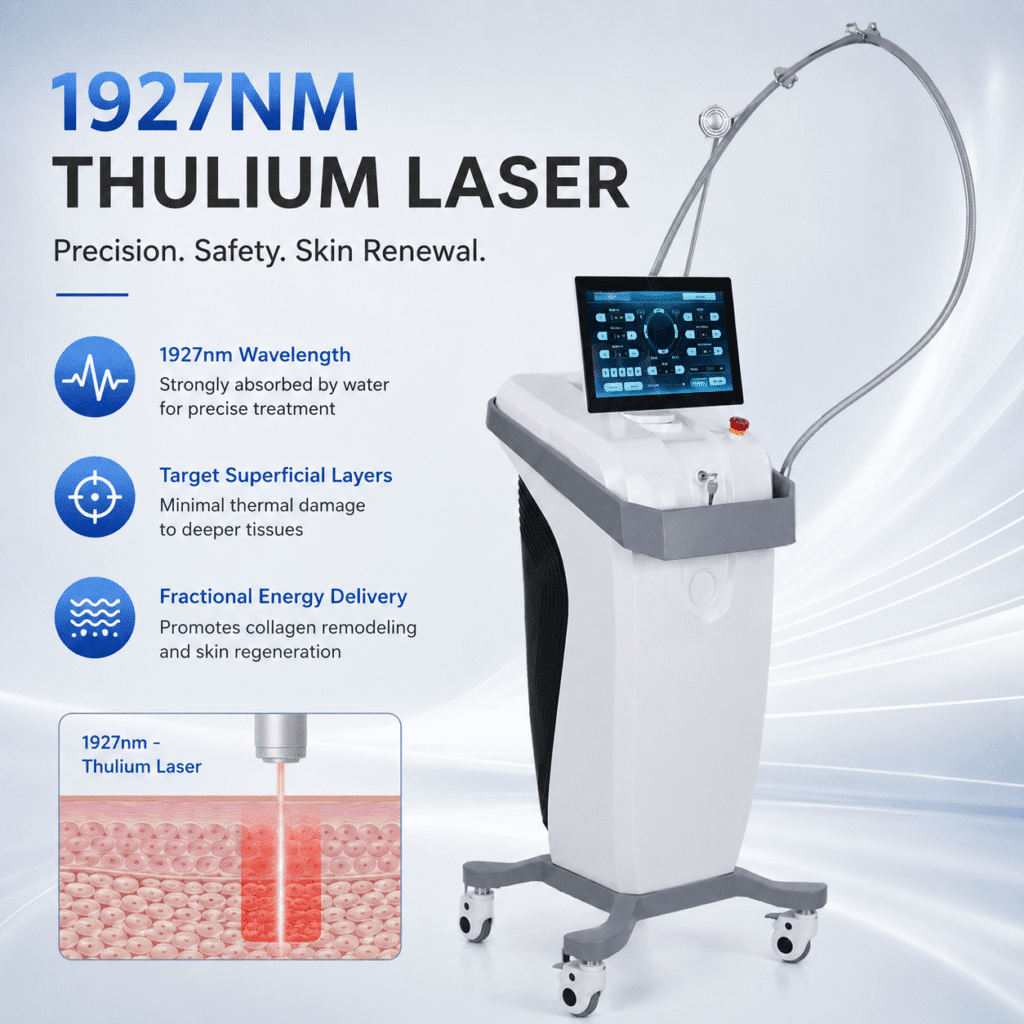
For laser hair removal, IPL, and some light-based treatments, sun exposure and tanning can increase risk.
Customers should follow the provider’s instructions about avoiding tanning, sunless tanning, and protecting skin from the sun before and after the service.
For hair removal, the customer may also need to follow instructions about shaving and avoiding waxing or plucking before treatment because the device may need the hair follicle target to remain suitable.
These details depend on device type and provider protocol, so the salon should provide written instructions before the appointment.
11. Remove Makeup, Oils, And Heavy Products
Before facial equipment treatment, customers may need clean skin.
Depending on the project, remove:
- 補う
- 日焼け止め
- Oil
- Heavy moisturizer
- Fragrance
- Perfume near treatment area
- Glitter or metallic products
- Active product residue
For body treatments, customers may need to avoid applying lotion, oil, or self-tanning product before the appointment if the device protocol requires clean skin.
Clean skin helps staff assess the area and helps reduce unwanted interactions with products.
12. Remove Jewelry And Metal Accessories Where Needed
Some equipment projects require customers to remove metal accessories.
例としては以下のようなものが挙げられます。
- Necklaces
- Earrings
- Rings
- Watches
- Body jewelry near the treatment area
- Hair pins
- Metal belt or accessories
This may be relevant for RF, EMS, microcurrent, body devices, or treatments around the face and neck.
Customers should also tell staff about implants, dental metal, pacemakers, implanted electronic devices, or medical devices where relevant. The exact rule depends on the equipment and local professional guidance.
13. Do Not Hide Medical Or Skin History
Customers may feel embarrassed to mention skin disease, medication, pregnancy, surgery, or previous reactions. But hiding information can increase risk.
Important information may include:
- 該当する場合、妊娠または授乳中
- Pacemaker or implanted electronic device
- 治療部位の金属インプラント
- Epilepsy where relevant for light-based devices
- Photosensitivity
- Diabetes or poor wound healing where relevant
- Skin infection
- Keloid tendency where relevant
- Autoimmune skin condition where relevant
- Active dermatology treatment
- Recent cosmetic procedure
The salon should explain that these questions are for suitability, not judgment.
14. Eat, Hydrate, And Arrive Calm
For many common salon treatments, customers do not need complicated preparation. But it is still practical to arrive in a stable condition.
一般的な提案:
- Arrive on time.
- Avoid arriving overheated or sunburned.
- Avoid heavy makeup for facial treatments if possible.
- Tell staff if you feel dizzy, unwell, or anxious.
- Drink water normally.
- Follow any specific instructions given by the salon.
For body or longer treatments, the salon may give additional instructions based on the device and local rules.
15. Understand What One Session Can Do
Before treatment, customers should understand whether the project is:
- A one-time experience
- A maintenance treatment
- A course-based project
- An add-on service
- A consultation tool
- A high-ticket targeted program
One session may provide immediate comfort, cleansing, hydration feeling, or service experience. But many goals require multiple sessions or ongoing maintenance.
例:
- Hydro facial may be used for monthly cleansing and hydration.
- LED may be used as a support step over a course.
- RF and EMS may be sold as firming care plans.
- Hair removal usually requires repeated sessions.
- Body contouring is usually planned as a course.
The salon should avoid promising dramatic one-session transformation.
16. Know What Sensation Is Normal
Before the machine starts, customers should know what they may feel.
例:
- Skin analyzer: little or no sensation
- LED: light exposure and eye protection where needed
- Hydro facial: mild suction and wet cleansing feeling
- Ultrasound: smooth probe movement with gel
- RF: warmth, but not painful heat
- EMS or microcurrent: tingling or muscle stimulation
- Hair removal: warmth, snapping, cooling, or brief discomfort depending on device
- Body contouring: suction, pressure, heat, cold, vibration, or stimulation depending on technology
Customers should tell staff immediately if they feel sharp pain, burning, strong stinging, dizziness, anxiety, or unusual discomfort.
17. Ask About Hygiene And Consumables
Customers have the right to expect clean equipment.
Before treatment, the salon should use:
- Clean treatment bed
- Fresh towels or sheets where needed
- Fresh disposable supplies
- Clean or disinfected handpieces
- Properly stored tips and probes
- Suitable gel, serum, mask, or solution
- Clean bottles and filters where applicable
- Proper eye protection where required
The staff should follow manufacturer-compatible cleaning and disinfection procedures.
18. Ask Whether The Operator Is Trained
Customers should feel comfortable asking whether the staff member is trained to operate the machine.
For basic devices, training may be simple. For RF, EMS, IPL, laser, body contouring, HIFU, or higher-risk devices, operator training matters more.
The salon should be able to explain:
- Who trained the operator
- What protocol is being followed
- What contraindications are checked
- What safety measures are used
- どのようなアフターケアが必要ですか?
- What to do if discomfort occurs
If the salon cannot explain these points, the customer should be cautious.
19. First-Time Customers Should Start Conservatively
For first-time customers, the goal should be suitability and comfort before intensity.
A good first-time approach:
- Explain the project clearly.
- Start with a conservative setting.
- Monitor customer feedback.
- Avoid combining too many new products or devices.
- Record settings and response.
- Follow up after treatment.
- Adjust next time only if the first response was good.
Stronger is not always better. A comfortable first experience can create more trust than an aggressive session.
20. Small-Area Trial Where Appropriate
For sensitive skin, new products, strong devices, or light-based treatments, a small-area trial may be useful when appropriate.
This is not the same as a medical patch test, but it can help the salon observe possible irritation.
サロンは以下のことを行うべきです。
- Choose a small suitable area.
- Use conservative settings.
- Record response.
- Wait and observe according to the protocol.
- Do not proceed if there is redness, swelling, itching, burning, or other concerning reaction.
Customers with repeated allergic reactions or medical skin conditions should seek dermatology advice.
21. Category-Specific Pre-Treatment Notes
Different equipment categories require different preparation.
22. Before Skin Analyzer Treatment
Pay attention to:
- Remove heavy makeup if accurate imaging is needed.
- Tell staff about recent products or treatments.
- Understand that analysis is a reference, not a medical diagnosis.
- Avoid fear-based interpretation.
- Ask how the report will be used for the care plan.
Skin analysis should support personalized care, not pressure selling.
23. Before Hydro Facial Or Small Bubble Treatment
Pay attention to:
- Tell staff about sensitive skin, recent peeling, acne irritation, or active redness.
- Avoid strong exfoliation before the appointment if the salon advises it.
- Ask what solution or serum will be used.
- Confirm suction will be adjusted for your skin.
- Do not do aggressive cleansing on broken or actively irritated skin.
This project should be modified for sensitive skin.
24. Before LED Treatment
Pay attention to:
- Tell staff about photosensitivity or light sensitivity.
- Mention medications that may affect light sensitivity.
- Use eye protection where required.
- Understand LED may feel gentle.
- Avoid expecting dramatic one-time visible change.
LED is often a support step, not a guarantee of visible transformation.
25. Before RF Treatment
Pay attention to:
- Tell staff if you are heat-sensitive.
- Mention implants, pacemakers, metal, pregnancy, recent procedures, or medical concerns where relevant.
- Do not treat active redness, sunburn, or irritated skin without proper assessment.
- Confirm the treatment should feel warm but not painfully hot.
- Ask what gel or medium is being used.
RF should follow protocol. Do not ask staff to make it extremely hot just to feel stronger.
26. Before EMS Or Microcurrent Treatment
Pay attention to:
- Tell staff about implanted electronic devices where relevant.
- Mention pregnancy, medical conditions, or recent procedures where relevant.
- Tell staff if you react to gels or conductive products.
- Understand that tingling or muscle stimulation may occur.
- Ask staff to start low if it is your first session.
EMS and microcurrent require comfort monitoring.
27. Before IPL Or Laser Hair Removal
Pay attention to:
- Follow the salon or provider’s sun and tanning instructions.
- Avoid tanning and sunless tanning when instructed.
- Protect skin from the sun.
- Follow shaving instructions if given.
- Avoid waxing, plucking, or hair removal methods that conflict with the device protocol.
- Tell staff about photosensitivity, medication, skin type, recent sun exposure, and previous reactions.
- Use eye protection as required.
- Confirm the operator is trained and allowed to perform the service under local rules.
Hair removal pricing and scheduling should be based on area, hair type, skin type, and treatment interval.
28. Before Body Contouring Treatment
Pay attention to:
- Tell staff about medical conditions, surgery history, implants, pregnancy, cold sensitivity, heat sensitivity, bruising tendency, or skin irritation.
- Confirm which body area will be treated.
- Understand what sensation to expect: suction, pressure, heat, cold, vibration, or stimulation.
- Avoid treating broken, infected, sunburned, or irritated skin.
- Understand that body projects are usually course-based and results vary.
Avoid guaranteed slimming claims.
29. Before HIFU Or Higher-Intensity Projects
HIFU and other higher-intensity projects require special caution.
Before treatment, confirm:
- Whether the device is suitable for the salon setting
- Who is allowed to operate it
- Whether local licensing or medical supervision is needed
- どのような禁忌事項が適用されますか?
- What risks and expected sensations should be explained
- どのようなアフターケアが必要ですか?
- Whether the customer is truly suitable
Do not rely on a simple “everyone can do it” explanation for higher-risk projects.
30. What Salons Should Tell Customers Before Appointment
Salons should give simple pre-treatment instructions before the appointment.
Example message:
“Before your equipment treatment, please tell us if you have sensitive skin, allergies, recent sunburn, recent laser or peeling, current skin irritation, pregnancy, implanted devices, medication that may affect light sensitivity, or any medical concerns. Please arrive with clean skin if possible and avoid applying heavy makeup, oils, or strong active products to the treatment area unless we advise otherwise.”
This message helps customers prepare and reduces last-minute cancellations.
31. What Staff Should Confirm Before Starting
Before starting, staff should confirm:
- Customer name and project
- 対象地域
- 主な懸念事項
- First-time or repeat customer
- Current skin or body condition
- 禁忌事項チェックリスト
- 最近行われた処置
- Product allergies
- Sensitivity history
- Expected sensation
- Price and package understanding
- アフターケア
- Customer consent
This takes time, but it protects the salon.
32. What Customers Should Not Do Before Treatment
Depending on the project, customers should avoid:
- Hiding medical or skin information
- Coming with active sunburn or irritation
- Using harsh exfoliation before treatment
- Applying heavy oils or self-tanner where not allowed
- Waxing or plucking before laser hair removal if the protocol forbids it
- Wearing metal jewelry during treatments where it must be removed
- Demanding very high intensity for first treatment
- Expecting guaranteed one-session results
- Ignoring aftercare instructions
Preparation is part of the service result.
33. Red Flags Before Treatment
Customers should be cautious if a salon:
- Does not ask any health or skin questions
- Says the machine is suitable for everyone
- Promises guaranteed results
- Does not explain the treatment process
- Does not explain possible sensations
- Does not clean equipment visibly or professionally
- Uses unknown products without explanation
- Refuses to answer training questions
- Pushes a package before suitability screening
- Encourages unsafe intensity
- Ignores active irritation or sunburn
Good salons ask questions before using the machine.
34. A Customer Pre-Treatment Checklist
Before appointment, customers can check:
- What treatment am I receiving?
- What area will be treated?
- Is my skin currently calm?
- Do I have sunburn, rash, wound, infection, or swelling?
- Have I recently had laser, peeling, microneedling, injections, or surgery?
- Did I recently use acids, retinoids, or strong exfoliants?
- Do I have allergies or sensitivity?
- Am I taking medication relevant to light sensitivity or skin reaction?
- Do I have implants or medical devices relevant to the treatment?
- Do I need to avoid sun, tanning, waxing, or plucking?
- Do I need to shave before hair removal?
- Do I understand the price and package?
- Do I know what I may feel during treatment?
- Do I understand aftercare?
If the answer is unclear, ask before starting.
35. A Salon Pre-Treatment Checklist
Before treatment, salons can check:
- Consultation form completed
- Contraindications reviewed
- Skin or body area examined
- Customer expectations discussed
- Treatment protocol selected
- Settings planned
- Products and consumables prepared
- Equipment cleaned
- Fresh disposables ready
- Eye protection ready where needed
- Emergency stop or discomfort process explained
- Customer consent confirmed
- Aftercare card prepared
- Follow-up plan created
This checklist helps staff standardize service.
36. Final Practical Answer
Before doing an equipment-based beauty treatment, customers should pay attention to skin condition, recent treatments, allergies, medication, sun exposure, active skincare products, medical history, expected sensation, hygiene, and aftercare.
The salon should pay attention to suitability screening, contraindications, treatment protocol, device condition, consumables, cleaning, staff training, and realistic claims.
If the customer’s skin is actively irritated, sunburned, broken, infected, swollen, or reacting, the safest choice is usually to delay treatment or recommend medical advice.
The best preparation is honest communication between customer and salon before the machine starts.
結論
Beauty equipment treatment preparation is not complicated, but it must be taken seriously.
Customers should tell the salon about skin condition, recent treatments, allergies, medications, sun exposure, and any health concerns relevant to the project. Salons should explain the device, check suitability, clean equipment, use appropriate products, start conservatively when needed, and manage expectations.
The goal is not to scare customers. The goal is to make equipment projects safer, more comfortable, more professional, and more repeatable.
Good pre-treatment preparation protects the customer, protects the salon, and improves the chance that the customer will trust the service and come back.
よくある質問
What should customers pay attention to before beauty equipment treatment?
Customers should pay attention to current skin condition, recent treatments, sun exposure, allergies, medications, sensitive skin, medical history, makeup or product residue, treatment expectations, and aftercare instructions.
Can customers do beauty equipment treatment with irritated skin?
If the skin is red, burning, swollen, broken, infected, sunburned, or actively reacting, the treatment should usually be delayed or reviewed by a qualified professional.
Should customers stop skincare products before treatment?
Customers should tell the salon about acids, retinoids, exfoliants, prescription products, and new products. Whether to pause them depends on the treatment and professional guidance.
What should customers do before laser hair removal?
They should follow provider instructions about sun protection, tanning, shaving, and avoiding waxing or plucking when required by the device protocol.
Should sensitive skin customers do a test before equipment treatment?
A small-area trial may be useful when appropriate, but it is not the same as medical patch testing. Customers with repeated reactions or skin disease should seek dermatology advice.
What should salons confirm before starting an equipment treatment?
Salons should confirm the customer concern, treatment area, contraindications, current skin condition, recent procedures, product allergies, expected sensation, price, consent, and aftercare.
What should customers avoid before treatment?
Depending on the project, customers may need to avoid tanning, strong exfoliation, heavy oils, active irritation, waxing or plucking before hair removal, metal accessories, and hiding important health or skin information.