









エグゼクティブサマリー
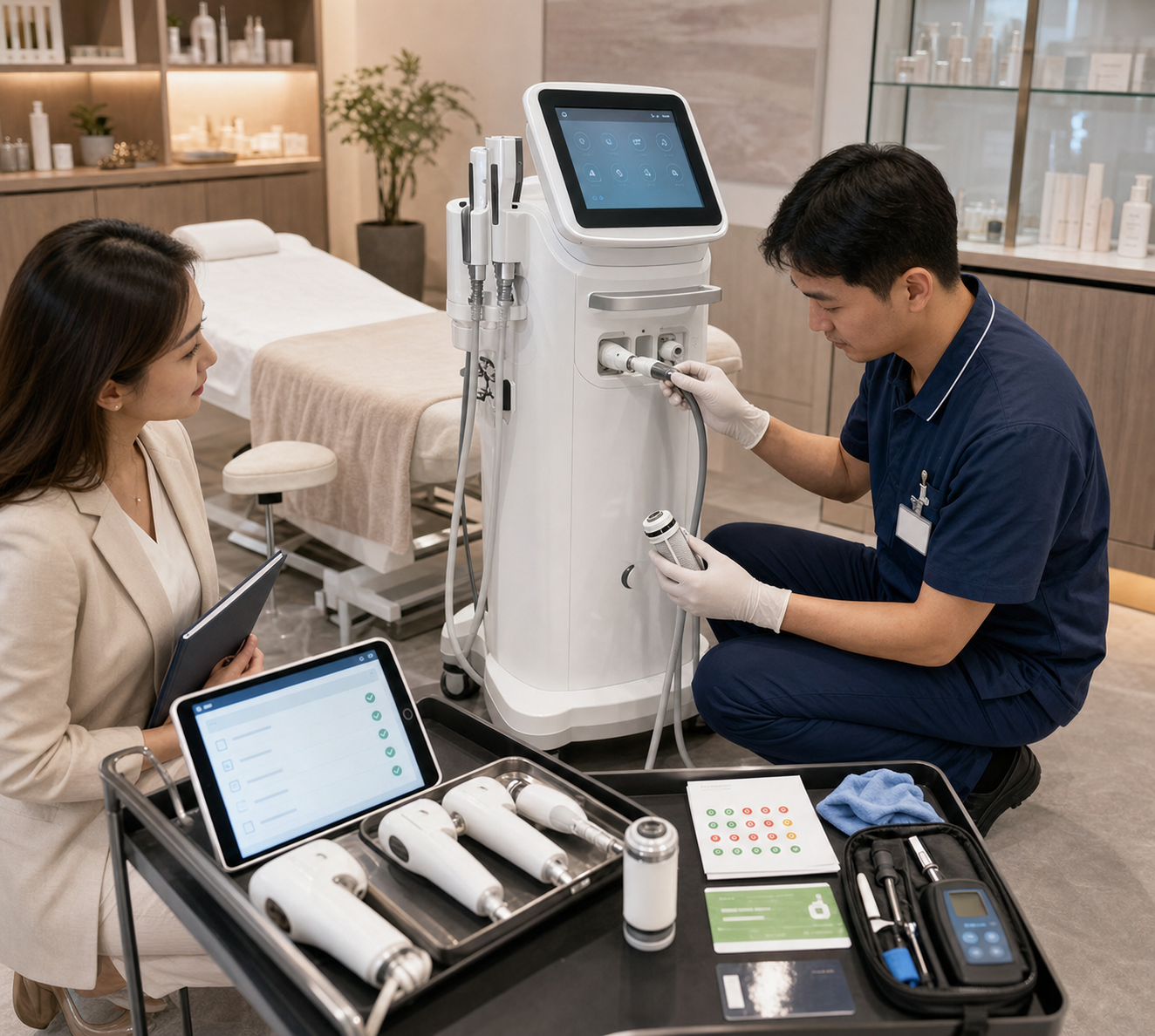
Most reliable beauty equipment manufacturers provide some form of after-sales maintenance after a salon buys a machine, but the scope is not the same for every supplier, every model, every country, or every order. Some manufacturers include warranty repair, remote troubleshooting, parts replacement, operation guidance, and maintenance instructions. Others provide only limited warranty support and charge separately for on-site visits, spare parts, handpieces, consumables, freight, or repeated training.
実際的な答えは次のとおりです。
- Yes, many manufacturers provide after-sales maintenance.
- But “after-sales service” does not always mean free lifetime repair.
- The salon must confirm warranty period, covered parts, excluded parts, response time, repair method, freight cost, on-site service cost, spare parts supply, software updates, maintenance schedule, and distributor responsibility before purchase.
Common after-sales maintenance may include:
- Warranty repair during the warranty period
- Remote video troubleshooting
- Technical guidance through chat, phone, or video call
- Replacement parts for covered failures
- Paid spare parts after warranty
- Handpiece repair or replacement
- Software or firmware support where applicable
- メンテナンス手順
- トレーニングの再確認
- 消耗品
- On-site repair for high-value or local orders
- Return-to-factory repair for complex issues
- Distributor or regional agent service support
Beauty salons should treat after-sales maintenance as a purchasing condition, not an afterthought. A cheaper machine with weak support may become more expensive than a higher-priced machine with stable parts, clear warranty, and fast service.
The key principle is simple:
Do not ask only “Do you provide after-sales service?” Ask exactly what is included, what is excluded, how fast support responds, who pays each cost, and how long parts will be available.
1. Why After-Sales Maintenance Matters
Beauty equipment is not a one-time decoration. It is a working business tool. If the machine stops working, the salon may lose appointments, refund customers, delay courses, reduce staff confidence, and damage customer trust.
After-sales maintenance affects:
- Equipment uptime
- Customer appointment stability
- 治療の質
- 従業員の信頼
- Project revenue
- 返済期間
- Warranty claim success
- Safety and comfort
- Long-term parts availability
- Distributor reputation
- Salon repeat purchase decisions
A machine can look attractive before purchase, but the real test begins after the salon starts using it every day.
For many salon owners, after-sales maintenance is as important as price, treatment effect, and product appearance.
2. 簡潔な回答
Do manufacturers provide after-sales maintenance after a beauty salon buys equipment?
Many do, but salons should never assume the scope.
Manufacturers may provide:
- Free warranty repair for covered defects
- Free remote troubleshooting
- Free replacement parts during warranty for covered failures
- Paid parts after warranty
- Paid on-site service
- Paid handpiece repair
- Paid shipping for returned machines
- Paid consumables and wear parts
- Distributor-based local service
- Factory repair for complex issues
The salon should confirm all of this in writing before paying the deposit.
3. After-Sales Maintenance Is Not The Same As Warranty
Many buyers confuse warranty and after-sales maintenance.
Warranty means the supplier promises to repair or replace covered failures during a defined period under defined conditions.
After-sales maintenance is broader. It may include:
- Daily operation guidance
- トラブルシューティング
- Preventive maintenance
- Cleaning guidance
- ソフトウェアサポート
- ハンドピースの交換
- 消耗品
- スタッフの再研修
- Project operation guidance
- Out-of-warranty repair
- Technical upgrades
- Local service coordination
A supplier may offer a one-year warranty but still charge for on-site service, freight, consumables, or wear parts. That can be normal if it is explained clearly.
The problem is not whether everything is free. The problem is whether the policy is transparent.
4. What Maintenance Support Usually Includes
A practical after-sales package may include:
- ユーザーマニュアル
- インストールガイド
- 操作訓練
- リモート技術サポート
- トラブルシューティングガイド
- Warranty repair
- Replacement of covered parts
- メンテナンススケジュール
- お手入れ方法
- 消耗品に関する説明
- Spare parts quotation
- ソフトウェアサポート
- Repair records
- Service contact
- ビデオサポート
- Return-to-factory repair process
For higher-value machines, it may also include:
- On-site installation
- On-site staff training
- On-site maintenance visit
- Preventive inspection
- Calibration or output check where applicable
- Local distributor engineer support
- Emergency service plan
The more complex the machine, the more important the service system becomes.
5. What Is Usually Excluded
After-sales maintenance often excludes some items.
Common exclusions may include:
- 消耗品
- 使い捨て用品
- フィルター
- ヒント
- ボトル
- カートリッジ
- Probes or handpieces damaged by misuse
- Damage from wrong voltage
- Water damage
- Damage from dropping or impact
- Unauthorized disassembly
- Unauthorized third-party repair
- Normal wear parts
- Cosmetic damage
- 輸送費
- Travel cost
- Damage caused by improper cleaning
- Damage caused by non-approved products
- Problems caused by unstable power supply
The exact exclusions depend on the supplier. Salons should ask for the warranty terms, not only a verbal promise.
6. Remote Troubleshooting
Remote troubleshooting is the most common after-sales method.
これには以下が含まれる可能性があります。
- Chat support
- Phone support
- Video call
- Photo or video diagnosis
- エラーコードの確認
- Software settings review
- 操作修正
- メンテナンス手順
- 簡単な部品交換ガイド
Remote support is useful for:
- Operation mistakes
- Loose cables
- Software settings
- Filter replacement
- Bottle connection
- ハンドピース認識
- Alarm messages
- Basic startup issues
- Staff training questions
Remote support can solve many common issues quickly. However, it is not enough for every failure.
7. On-Site Maintenance
On-site maintenance means a technician or trainer visits the salon to inspect, repair, install, or train.
On-site support is more likely when:
- The salon is near the supplier
- The order value is high
- The machine is complex
- The machine requires installation
- The supplier has local engineers
- The buyer is a distributor or chain salon
- The contract includes on-site service
On-site support may be free or paid.
Possible costs:
- Technician fee
- Travel cost
- Hotel cost
- Local transport
- 交換部品
- Extra training hours
- Emergency service fee
Before buying, salons should ask:
- Is on-site service available in my city?
- Is it free during warranty?
- Who pays travel cost?
- How fast can a technician arrive?
- What if the machine must be returned to the factory?
8. Return-To-Factory Repair
Some machines cannot be repaired at the salon. They may need to be sent back to the supplier or factory.
Return-to-factory repair may be needed for:
- マザーボードの故障
- Power supply failure
- Internal leakage
- 出力モジュールの問題
- Laser or IPL system fault
- Cooling system fault
- Software or control board issue
- Serious handpiece failure
- Calibration or factory-level testing
サロンは次のようなことを尋ねるべきです。
- Who pays shipping during warranty?
- Who pays shipping after warranty?
- How long does factory repair usually take?
- 貸出用の機械はありますか?
- How is the machine packed safely?
- What happens if shipping damage occurs?
- Will the repair record be provided?
Downtime cost should be considered. A machine that takes two months to repair can hurt customer trust and course delivery.
9. Spare Parts Supply
Spare parts are one of the most important after-sales issues.
Salons should ask whether the manufacturer can supply:
- ハンドピース
- プローブ
- ヒント
- フィルター
- ボトル
- チューブ
- スクリーン
- ケーブル
- ペダル
- 電源アダプター
- 冷却部品
- ランプ
- カートリッジ
- Motherboards
- センサー
- Software dongles or licenses where applicable
彼らはまた、次のように尋ねるべきだ。
- How long will parts be available?
- どの部品が在庫にありますか?
- What parts are commonly replaced?
- What is the price of each part?
- 部品はどれくらいの速さで発送できますか?
- 部品はモデル間で互換性がありますか?
- Can the salon replace simple parts by itself?
A machine without long-term spare parts support can become useless after a small failure.
10. Consumables And Wear Parts
Consumables are not always warranty items, but they are critical to operation.
一般的な消耗品には以下が含まれます。
- 美容液
- ゲル
- マスク
- ヒント
- フィルター
- ボトル
- チューブ
- カートリッジ
- 保護眼鏡
- Disposable sheets
- Aftercare products
- Handpiece covers
サロンは次のようなことを尋ねるべきです。
- Are consumables locked to the manufacturer?
- 1回の治療にかかる費用はいくらですか?
- How long is the supply guaranteed?
- 最低注文数量はありますか?
- Are starter consumables included?
- Are consumables shipped quickly?
- Are there local warehouses?
After-sales maintenance is not only repair. It also includes keeping the project supplied and running.
11. Preventive Maintenance
Preventive maintenance means checking and caring for the machine before it fails.
例:
- Cleaning filters
- Replacing water or solution bottles
- ハンドピースケーブルの点検
- Checking cooling system
- Checking suction lines
- Checking power supply
- Cleaning probes
- Updating software
- Checking output stability where applicable
- Recording errors
- Inspecting wear parts
Preventive maintenance can reduce downtime and extend machine life.
Manufacturers should provide a maintenance schedule. Salons should assign staff to follow it.
12. Software And Firmware Support
Some beauty equipment includes software, touchscreen systems, skin analyzer platforms, customer data systems, cloud tools, or AI analysis features.
After-sales support may include:
- ソフトウェアアップデート
- Firmware updates
- Bug fixes
- Login support
- Report template support
- Data backup guidance
- Cloud account support
- Camera calibration support
- Language package updates
- Subscription renewal
サロンは次のようなことを尋ねるべきです。
- Is software included forever or subscription-based?
- Are updates free?
- Is customer data stored locally or online?
- What happens if the software license expires?
- Can the machine still work offline?
- Who handles data backup?
For AI skin analyzers, software support can be as important as hardware repair.
13. Warranty Period
Beauty equipment warranty periods vary.
Common structures:
- Main machine: 1 year
- Handpieces: 3 to 12 months
- Consumables: no warranty after use
- Wear parts: limited warranty
- Battery or adapter: limited warranty
- Laser or IPL lamps: limited shots or separate warranty
- Extended warranty: paid option
Some suppliers offer longer warranties to attract buyers, but the important details are:
- 何が補償対象となりますか?
- 除外されるものは何ですか?
- 運賃は誰が支払うのか?
- 労働時間は補償対象ですか?
- ハンドピースは付属していますか?
- Is on-site repair included?
- Is warranty valid after third-party repair?
- What proof is required?
A long warranty with many exclusions may be less useful than a shorter but clearer warranty.
14. Response Time
After-sales maintenance should include a response time standard.
聞く:
- How fast do you reply to service requests?
- Is support available on weekends?
- Is there a hotline or only chat?
- How fast can remote diagnosis happen?
- How fast can spare parts ship?
- How long does factory repair take?
- What is the emergency process?
Suggested response categories:
- Initial reply within 24 hours
- Remote diagnosis within 1 to 3 business days
- Spare parts dispatch within 3 to 7 business days if in stock
- On-site visit time based on city and contract
- Factory repair time based on problem type
These are examples. The actual service level should be confirmed by the supplier.
15. Manufacturer Versus Distributor Responsibility
Many salons buy from distributors instead of factories.
The service responsibility may be split:
Manufacturer may handle:
- Core technical repair
- Original parts supply
- Factory warranty policy
- Software update
- Training the distributor
- Major fault diagnosis
Distributor may handle:
- ローカルインストール
- 現地での研修
- 迅速なコミュニケーション
- Basic troubleshooting
- On-site service
- Parts replacement
- Customer follow-up
- Local language support
サロンは次のような質問をするべきです。
- Who do I contact first?
- Who decides whether the warranty applies?
- Who pays for parts?
- Who pays for freight?
- Who provides on-site service?
- What if the distributor stops operating?
- Can the manufacturer support me directly if needed?
Clear responsibility prevents disputes.
16. Domestic Buyers Versus Overseas Buyers
After-sales maintenance is usually easier for domestic buyers than overseas buyers because shipping, language, time zone, and technician travel are simpler.
Overseas buyers should pay extra attention to:
- International warranty terms
- Freight responsibility
- Customs issues for return repair
- Local voltage compatibility
- Plug standard
- Language of manuals
- Remote training
- Local distributor support
- Spare parts shipping time
- 消耗品
- Video troubleshooting
- Whether on-site service is possible
For overseas salons, the best support model is often:
- Complete operation videos
- 遠隔診断
- Local distributor or technician training
- Spare parts shipped quickly
- Modular replacement parts
- Clear return repair policy
International buyers should not rely on vague promises of “global after-sales service” without details.
17. Maintenance For Basic Facial Machines
Basic facial machines usually need:
- Cleaning and disinfection guidance
- Filter replacement
- Bottle cleaning
- Tube flushing
- Tip replacement
- Suction line maintenance
- Power supply check
- Basic handpiece support
Common problems:
- Weak suction
- Blocked tube
- Leaking bottle
- Poor connection
- Nozzle blockage
- Power adapter problem
- Staff operation error
Remote troubleshooting can solve many of these problems, but spare parts and consumables must be available.
18. Maintenance For RF, EMS, And Microcurrent Devices
RF, EMS, and microcurrent devices may require:
- Probe inspection
- ケーブル検査
- Conductive gel guidance
- Output check where applicable
- ハンドピースの交換
- Software or mode support
- Cleaning and contact surface care
- Contraindication and operation refreshers
Common issues:
- No sensation
- Uneven heat
- Probe not recognized
- Cable loose
- Gel or contact problem
- Customer discomfort
- Operator setting error
The supplier should help the salon distinguish between machine failure, product use problem, and operator technique issue.
19. Maintenance For IPL, Laser, And Hair Removal Devices
Hair removal, IPL, and laser-related systems usually need stronger maintenance support.
Maintenance may include:
- Lamp or shot count tracking
- Handpiece cooling check
- Water cooling or air cooling maintenance
- Filter and lens cleaning
- Protective eyewear guidance
- Calibration or output inspection where applicable
- Error code support
- Skin type and protocol refresher training
- Replacement handpieces or lamps
These machines may also involve local regulatory or professional requirements. The salon should confirm who is allowed to operate and service the device in its market.
Downtime in hair removal can disrupt multi-session packages, so response time matters.
20. Maintenance For Body Contouring Devices
Body contouring devices may include RF body, vacuum, cavitation, cryolipolysis, EMS body, vibration, or other systems.
Maintenance may include:
- Handle inspection
- Vacuum line checks
- Cooling or heating system checks
- Pad or electrode replacement
- Strap and accessory replacement
- ソフトウェアサポート
- Error code diagnosis
- Cleaning and storage guidance
- Treatment protocol refreshers
Because body projects often use course packages, machine downtime can affect many prepaid customers. Salons should ask about repair time and backup solutions before buying.
21. Maintenance For Skin Analyzers
Skin analyzers need both hardware and software support.
Maintenance may include:
- Camera support
- Lighting system support
- Calibration guidance
- ソフトウェアアップデート
- Report template support
- Account support
- Cloud service support
- Data backup guidance
- Screen and computer support
- AI analysis update where applicable
質問事項:
- Is software subscription included?
- Are updates free?
- Can reports be exported?
- What happens if the server is unavailable?
- Is customer data protected?
- Can the machine work offline?
For analyzers, after-sales service is not only repair. It is also software continuity.
22. Cleaning And Maintenance Training
Manufacturers should provide cleaning and maintenance instructions.
研修内容は以下のとおりです。
- 毎日の起動チェック
- シャットダウンプロセス
- お客様ごとに清掃
- 消毒方法
- Compatible cleaning products
- Filter replacement
- Bottle cleaning
- Tube flushing
- ハンドピース収納
- Cable care
- Error code handling
- When to stop using the machine
- When to contact support
Many machine problems come from poor cleaning or wrong daily care. Good maintenance training reduces repair frequency.
23. Service Records
Salons should keep service records.
Records may include:
- 購入日
- シリアルナンバー
- 保証期間
- Supplier contact
- Training date
- メンテナンススケジュール
- Cleaning logs
- Error code history
- Repair requests
- Parts replaced
- Photos or videos sent to supplier
- Service response time
- 修理費用
- Customer appointments affected
Records help with warranty claims and management decisions.
If the salon later buys more machines, the service record also helps evaluate whether the supplier is reliable.
24. Contract Checklist
Before purchase, the contract or invoice should state:
- 保証期間
- Covered parts
- Excluded parts
- Handpiece warranty
- Consumable policy
- Spare parts supply period
- Remote support method
- 応答時間
- On-site service availability
- On-site service cost
- Freight responsibility
- Factory repair process
- ソフトウェアアップデートポリシー
- Training included
- メンテナンススケジュール
- Service contact
- Distributor responsibility
- Extended warranty option
- Refund or replacement rule for major failure
If a supplier refuses to write service terms clearly, the salon should be cautious.
25. Questions Salons Should Ask Before Buying
Ask the manufacturer or distributor:
- What after-sales maintenance do you provide?
- Is support from manufacturer, distributor, or both?
- 保証期間はどれくらいですか?
- どの部分が対象となりますか?
- ハンドピースは保証対象ですか?
- 消耗品は保証対象ですか?
- 消耗部品は保証対象ですか?
- 運賃は誰が支払うのか?
- Do you provide on-site service?
- Is on-site service free or paid?
- How fast do you respond?
- 修理には通常どれくらい時間がかかりますか?
- Do you keep spare parts in stock?
- How long will parts be available?
- Can I buy parts after warranty?
- Do you provide maintenance videos?
- Do you provide software updates?
- Do you provide refresher training?
- What happens if the machine fails during a customer’s course package?
These questions should be asked before paying.
26. Red Flags
Be cautious if a supplier:
- Says no maintenance is needed for a complex machine
- Cannot provide warranty terms
- Cannot explain what parts are covered
- Has no repair process
- Has no spare parts list
- Cannot provide manuals
- Cannot provide operation videos
- Cannot provide consumables long term
- Refuses to explain freight cost
- Promises lifetime free repair without details
- Has no local support for overseas buyers
- Does not reply quickly before purchase
- Encourages unauthorized repair
- Cannot explain what to do if the machine has an alarm or output issue
A supplier’s pre-sale communication often predicts after-sales behavior.
27. Free Maintenance Versus Paid Maintenance
Not all maintenance should be expected to be free.
Free support commonly includes:
- Basic remote support
- 操作ガイド
- Warranty repair for covered defects
- Simple troubleshooting
- トレーニング資料
Paid support may include:
- Out-of-warranty repair
- 消耗品
- Wear parts
- Misuse damage
- Travel cost
- On-site service
- Replacement handpieces after warranty
- Software subscription
- Extended warranty
The salon should not demand everything free forever. But the supplier should explain costs clearly.
Transparent paid maintenance is better than vague free promises.
28. Why Cheap Machines Can Have Expensive After-Sales Cost
A low purchase price may look attractive, but the total cost can be high if after-sales support is weak.
Hidden costs may include:
- Long downtime
- Expensive handpieces
- No local repair
- High freight cost
- スペアパーツはありません
- Consumables locked at high prices
- 研修なし
- No software updates
- Poor response time
- Lost customer appointments
- Refunds for unfinished courses
Before buying, salons should calculate total ownership cost, not only machine price.
29. How Distributors Can Improve After-Sales Maintenance
Distributors can create strong competitive advantage through after-sales service.
販売代理店向けの便利なサポート内容は以下のとおりです。
- 現地のスペアパーツ在庫
- Local technician training
- Video troubleshooting library
- Clear warranty claim process
- Regular maintenance reminders
- Consumable subscription system
- Staff refresher training
- Customer complaint handling scripts
- Emergency replacement plan
- Service record system
For distributors, after-sales maintenance can improve salon trust, repeat orders, and regional reputation.
30. What To Do When A Machine Fails
When a machine fails, salons should:
1. Stop using it if there is safety concern.
2. Record the problem.
3. Take photos or videos.
4. Note error codes.
5. Check user manual for basic troubleshooting.
6. Contact supplier support.
7. Do not disassemble without permission.
8. Ask for written repair guidance.
9. Inform affected customers honestly.
10. Record repair timeline and cost.
If the problem involves possible injury, burns, electric issue, smoke, abnormal heat, or serious malfunction, stop using the machine immediately and seek proper technical or regulatory guidance.
31. 最終的な実践的回答
Do beauty equipment manufacturers provide after-sales maintenance after salons buy machines?
Many reliable manufacturers do, but the scope varies. Salons should expect at least basic warranty, remote troubleshooting, operation guidance, maintenance instructions, and access to spare parts. For high-value or complex equipment, on-site installation, on-site training, handpiece support, software updates, and preventive maintenance may also be available.
However, salons should not assume everything is free. On-site visits, freight, consumables, wear parts, misuse damage, out-of-warranty repairs, and software subscriptions may be charged separately.
The best approach is to confirm after-sales maintenance in writing before purchase.
結論
After-sales maintenance is one of the most important factors in beauty equipment purchasing. A salon is not only buying a machine. It is buying the ability to keep that machine working, safe, clean, updated, repaired, and supplied over time.
Good manufacturers and distributors provide clear warranty terms, remote support, spare parts, consumables, maintenance guidance, training, and repair procedures. Strong suppliers explain what is free, what is paid, how fast they respond, and what happens if the machine fails.
Salons should compare after-sales service with the same seriousness as price and treatment effect. A machine with weak support can interrupt appointments, slow payback, damage customer trust, and create hidden costs.
Before buying, ask for written service terms. After buying, keep maintenance records. That is how a salon protects its equipment investment.
よくある質問
Do beauty equipment manufacturers provide after-sales maintenance?
Many manufacturers provide after-sales maintenance, including warranty support, remote troubleshooting, operation guidance, spare parts, repair service, and maintenance instructions. The exact scope depends on the supplier and contract.
Is beauty equipment maintenance free after purchase?
Not always. Warranty repair for covered defects may be free, but consumables, wear parts, freight, on-site visits, misuse damage, out-of-warranty repair, and software subscriptions may be charged separately.
What should after-sales maintenance include?
It should include warranty terms, remote support, troubleshooting, repair process, spare parts supply, consumable supply, maintenance schedule, cleaning guidance, software support, and service response time.
Do manufacturers provide on-site repair?
Some do, especially for high-value machines, local buyers, chain salons, or distributor orders. Others provide remote support or factory repair instead. On-site service may be free or paid.
Who is responsible for maintenance, manufacturer or distributor?
It depends on the purchase channel. Manufacturers often handle core technical support and parts. Distributors may handle local training, on-site service, and customer communication.
What should salons ask before buying?
Salons should ask about warranty period, covered parts, handpiece warranty, spare parts supply, response time, on-site service cost, freight responsibility, software updates, consumables, and repair process.
What is the biggest after-sales risk?
The biggest risks are unclear warranty terms, no spare parts, slow response, high freight cost, no local technician, expensive handpieces, unstable consumable supply, and vague service promises.