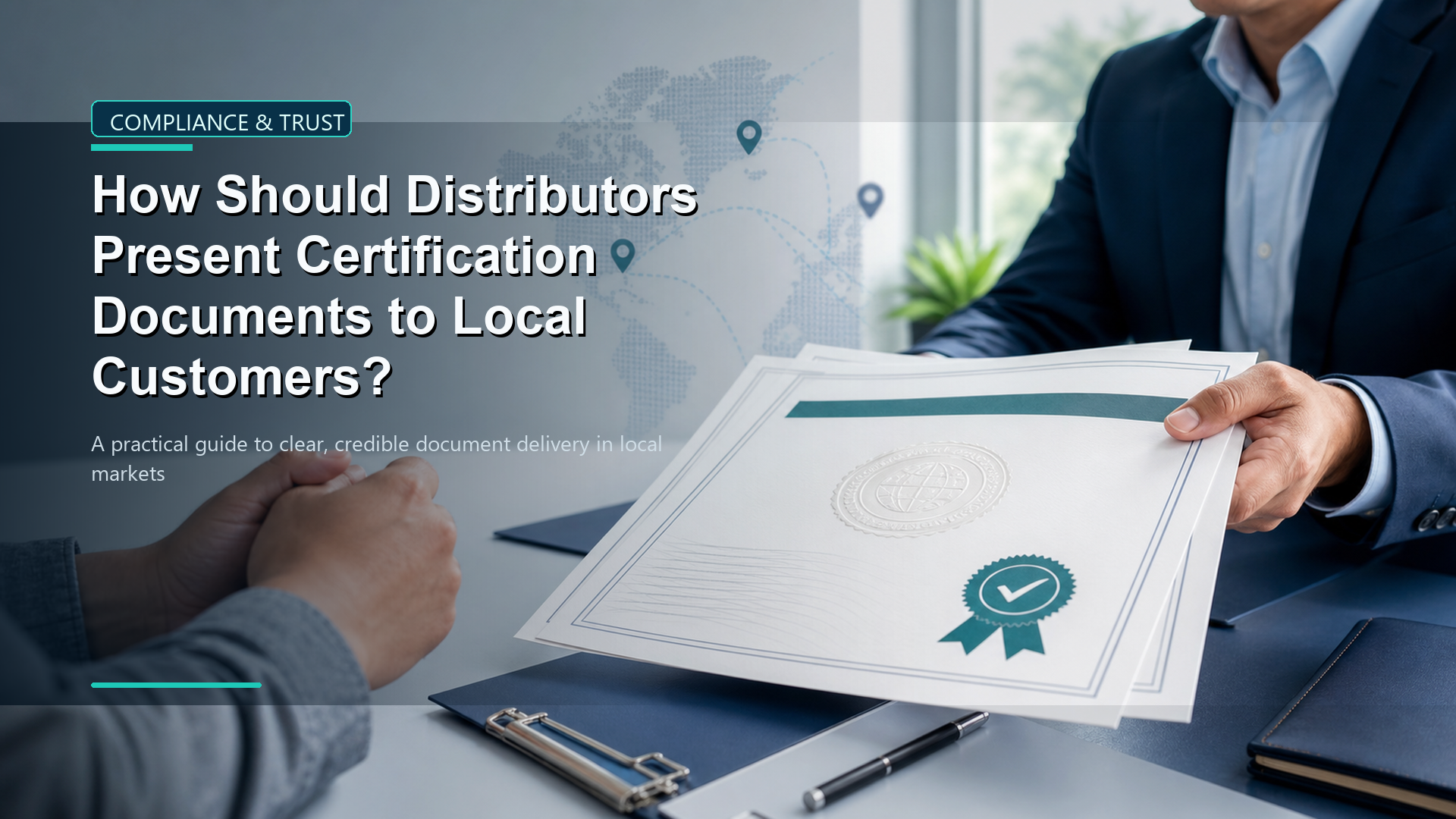
美容機器メーカーからCEマーク、FDA関連文書、RoHS報告書、ISO認証書、その他のコンプライアンス関連書類を受け取った後、多くの販売代理店は同じ疑問に直面します。
これらの証明書を地元の顧客にプロフェッショナルな方法で提示するにはどうすればよいでしょうか?
単にPDFファイルのフォルダを送るだけでは、通常は不十分です。.
地元の顧客は、各書類の意味を理解できないかもしれません。サロンのオーナーは、単に安心感を求めているだけかもしれません。クリニックの購入者は、モデル固有の記録を要求するかもしれません。輸入業者は、税関や現地での登録審査に必要な書類を必要とするかもしれません。販売代理店のパートナーは、自社の顧客に使用できる販売資料を必要とするかもしれません。.
販売業者にとって、認証書類は単なる装飾品として扱われるべきではありません。それらは、明確な信頼構築システムの一部となるべきです。.
目標は、地域のお客様に以下の点を理解していただくことです。
- この文書が適用される機械
- その文書がどの市場または規格に関連しているか
- 証明書が証明するもの
- 証明書が証明していないこと
- 購入者が必要に応じてサポートファイルをリクエストする方法
- 販売代理店がトレーニング、保証、アフターサービスをどのようにサポートするか
この記事では、美容機器販売業者が、誇張されたりリスクの高いコンプライアンス主張を避けつつ、認証情報を整理し、地元の顧客に提示し、説明する方法について解説します。.
証明書にプレゼンテーション戦略が必要な理由
証明書は販売代理店が販売を成立させるのに役立つが、それは顧客がその内容を理解できる場合に限る。.
販売業者が「CE、FDA、RoHS、ISO認証を取得しています」と言うだけの場合、購入者は次のような質問をするかもしれません。
- この証明書は、私が購入しようとしているモデルと全く同じものですか?
- それはまだ有効ですか?
- 私の国にも適用されますか?
- それは製品証明書ですか、試験報告書ですか、それとも品質システム証明書ですか?
- FDAとは、登録、リスト掲載、認可、承認のどれを意味しますか?
- ISOは製品そのものを認証するのか、それとも工場の製造工程を認証するのか?
- この書類は、私のサロン、クリニック、または輸入手続きに使用できますか?
これらの質問は、プロのB2B営業ではごく普通のことです。.
販売代理店の仕事は、技術的な書類で買い手を圧倒することではありません。その仕事は、書類を分かりやすく、買い手が明確な意思決定を下せるように翻訳することです。.
強力なプレゼンテーション戦略は、販売代理店に次のようなメリットをもたらします。
- 価格だけを売りつける業者よりもプロフェッショナルに見える
- 購入者の躊躇を減らす
- ディーラーおよびチャネルのオンボーディングをサポートします
- 輸入および調達に関する協議の準備
- 誤解を招くような認証主張を避ける
- ブランドの評判を守る
- トレーニングとアフターサービスに対する信頼を築く
つまり、証明書は単なるコンプライアンスファイルではない。適切に整理されていれば、販売促進のための資産にもなり得るのだ。.
ステップ1:製品ごとにクリーンな認証フォルダを作成する
販売代理店は、現地の顧客に証明書を提示する前に、製品モデルごとに書類を整理しておくべきです。.
よくある間違いは、すべての証明書を明確な構造なしに1つのフォルダにまとめてしまうことです。これは顧客を混乱させ、誤って別のデバイスに証明書が提示された場合にリスクを生じさせる可能性があります。.
より良い構造は次のとおりです。
| フォルダアイテム | 目的 |
|---|---|
| 製品モデルシート | モデル名、製品カテゴリ、電圧、ハンドピース、および想定される販売チャネルを表示します。 |
| 証明書の概要 | モデルで利用可能なドキュメントについて説明します |
| CE関連ファイル | 宣言書、試験報告書、またはその他の該当する欧州適合性文書 |
| FDA関連ファイル | 登録、リスト、510(k)、承認、または該当するその他の書類 |
| RoHSレポート | 電気・電子機器における有害物質規制への準拠をサポート |
| ISO認証 | 該当する場合は、工場または品質管理システムの認証を表示します。 |
| ユーザーマニュアル | 適切な運用とトレーニングをサポートします |
| 技術仕様 | 顧客が製品パラメータを確認するのに役立ちます |
| 保証条件 | アフターサービス責任について説明します |
| トレーニング記録またはトレーニング計画 | 販売業者が安全な使用をサポートしていることを示しています |
この構造により、販売業者は準備万端に見える。.
また、よくある販売上の問題、つまり顧客が資料を受け取っても、それを見積もり対象の機械と関連付けることができないという問題も防ぐことができます。.
ステップ2:1ページの認定概要を作成する
ほとんどの購入者は、最初の販売段階で全ての証明書を隅々まで読むことを望んでいません。.
販売代理店は、各機械または製品シリーズごとに、1ページの認証概要を作成する必要があります。.
この要約には以下が含まれる場合があります。
- 製品名
- 型番
- テクノロジーカテゴリ
- 利用可能な証明書またはレポート
- 発行機関または証明書保有者(該当する場合)
- 発行日および有効期限(該当する場合)
- 関連規格または試験範囲
- ドキュメントバージョン
- 輸入または臨床使用前に現地の要件を確認する必要があることに注意してください。
このページは分かりやすいはずです。.
例えば:
| 文書の種類 | 顧客にどう説明するか |
|---|---|
| CE関連の文書 | 該当する製品カテゴリーに関する欧州の適合要件をサポートします。 |
| FDA関連の文書 | 正確なモデル、使用目的、および規制経路に基づいて確認する必要があります。 |
| RoHSレポート | 電気・電子機器における規制物質の遵守をサポートします。 |
| ISO 9001 | 工場品質管理の信頼性を支える |
| ISO 13485 | 該当する場合、医療機器の品質管理をサポートします。 |
| EMCまたは電気試験報告書 | 電気的または電磁両立性試験の範囲を示すのに役立ちます |
この要約は、技術文書を営業担当者にとって分かりやすい文書に変換します。.
また、営業チームが顧客との会話中に即興で対応するのではなく、一貫した言葉遣いをするのにも役立ちます。.
ステップ3:適切な販売段階で証明書を提示する
すべての顧客が同時に同じレベルの文書アクセスを必要とするわけではありません。.
販売代理店は、証明書の授与を3つの段階に分けることができます。.
ステージ1:公共の信頼を示す
これは、販売代理店のウェブサイト、カタログ、ソーシャルメディア、展示会ブース、または製品パンフレットで使用されます。.
販売店は以下を表示できます。
- 認証アイコン
- 短いコンプライアンス声明
- 品質管理プロセスの概要
- 入手可能なドキュメントでカバーされている製品カテゴリ
- 工場の背景
- 保証およびトレーニングサポート
- 顧客に対し、モデル固有のファイルをリクエストするよう促すメモ
公に発信するメッセージは、簡潔かつ正確であるべきだ。.
例:
“「SHEFMONの美容機器の一部モデルは、製品カテゴリーおよび市場要件に応じて、CE、FDA関連、RoHS、ISO関連の認証文書に対応しています。モデルごとの認証ファイルについては、お問い合わせください。」”
この表現は、「すべての製品がすべての国で承認されている」と言うよりも安全だ。.
ステージ2:販売提案の表示
顧客が見積もりを依頼した際、販売代理店は販売提案書に認証に関する項目を追加することができる。.
このセクションには以下が含まれます。
- 機械モデル
- 利用可能な文書
- 保証条件
- トレーニングサポート
- 出荷書類
- アフターサービス連絡先
- 購入者の国におけるコンプライアンスに関する注意事項
これは、購入者が販売業者を低価格の競合他社と比較するのに役立ちます。.
低価格販売業者は、商品写真と価格のみを送付する場合があります。一方、プロの販売代理店は、包括的なビジネスパッケージを送付します。.
ステージ3:デューデリジェンスファイルの共有
真剣な購入者、輸入業者、クリニックグループ、または販売代理店パートナーが発注に近づいた場合、販売代理店はより詳細な資料を提供することができます。.
これには以下が含まれる可能性があります。
- 完全な証明書
- テストレポート
- ユーザーマニュアル
- 技術仕様
- 包装内容明細書
- 請求書サンプル
- 保証規定
- トレーニング資料
- 設置または操作チェックリスト
- 該当する場合、宣言書または適合性に関する文書
機密性の高い文書の場合、販売業者は透かし入りのコピーを提供したり、購入者が完全なファイルを共有する前にプロジェクトを確認するよう要求したりする場合があります。.
これにより、販売業者と製造業者は文書の不正使用から保護されると同時に、真剣な購入者もサポートされる。.
ステップ4:分かりやすいウェブサイト用語を使用する
販売代理店のウェブサイトには、認証ロゴを表示するだけでなく、代理店が提供できるサービス内容を説明するべきです。.
役立つウェブサイトのセクションには、以下のようなものが含まれる場合があります。
- “「認証およびコンプライアンスサポート」”
- “「モデル固有のドキュメントが利用可能です」”
- “「品質管理と工場検査」”
- “「トレーニングとアフターサービス」”
- “「輸入およびディーラー向け書類作成サポート」”
ウェブサイトに適した言語:
“「当社では、CE関連ファイル、RoHS報告書、FDA関連文書、ISO関連工場品質システム情報など、入手可能な場合はモデル固有の認証および適合性に関する文書を提供しています。文書の入手可能性は、製品モデル、技術カテゴリー、および対象市場によって異なります。」”
危険なウェブサイトの表現:
“「すべての機械はFDA(米国食品医薬品局)の承認を受けており、世界中でCEマークの認証も取得しています。」”
2番目の文は、CEマークやFDAマークの取得状況が製品カテゴリー、使用目的、市場、規制経路によって異なるため、リスクが高い。.
プロのバイヤーは、現実的で責任感のある印象を与えるため、最初のスタイルをより信頼する傾向がある。.
ステップ5:見積書と提案書に証明書を追加する
見積書には、価格、送料、支払い条件だけを記載するべきではない。.
B2B美容機器販売の場合、見積書には簡単なコンプライアンスに関する項目を含めることができます。
| 引用セクション | 含めるべきもの |
|---|---|
| 製品情報 | モデル、技術、電圧、付属品、構成 |
| ドキュメント | 入手可能な証明書、報告書、マニュアル、保証書 |
| トレーニング | オンライン研修、ビデオガイダンス、操作マニュアル、または販売代理店研修 |
| アフターサポート | スペアパーツ、修理プロセス、対応時間、保証ポリシー |
| 現地の法令遵守に関する注意事項 | 購入者は輸入、登録、ライセンス、広告に関する規則を確認する必要があります。 |
これは、販売代理店が単なる機械ではなく、包括的なソリューションを提供していることを顧客に理解させるのに役立ちます。.
また、高価格設定の正当性を主張しやすくなる。.
顧客は、提示された価格に書類、トレーニング、保証、サービスが含まれている場合、より高い価格を受け入れる可能性が高くなります。.
ステップ6:ディーラー認定キットを準備する
販売代理店が地域のサブディーラーを通じて販売する場合、証明書の提示方法はさらに体系的にする必要がある。.
サブディーラーは、誤った請求を作成することなく使用できる資料を必要としている。.
ディーラー認定キットには以下が含まれます。
- 承認済み証明書の概要
- 製品モデル一覧
- 承認されたウェブサイトの文言
- 承認されたカタログ文言
- CE、FDA、RoHS、ISOに関するよくある質問
- 使用すべきでない主張
- 文書請求プロセス
- トレーニングと保証の説明
- 製品写真と仕様書
これにより、各販売店が独自のコンプライアンス用語を作り出すことを防ぐことができる。.
また、主要販売代理店が地元ブランドを保護するのにも役立ちます。.
例えば、サブディーラーは次のようなことを言ってはならない。
“「この機器はFDA(米国食品医薬品局)の認証を受けており、医療効果を保証します。」”
代わりに、販売店は次のように言うことができます。
“「このモデルは、入手可能な規制および品質に関する文書によって裏付けられています。購入者による確認のために、モデル固有のファイルを提供できます。治療に関する請求は、現地の規制および訓練を受けた操作に従う必要があります。」”
これはよりプロフェッショナルな対応であり、法的リスクを軽減します。.
ステップ7:展示会やショールームで証明書を展示する
展示会やショールームは証明書を展示するのに適した場所ですが、展示方法は適切に管理する必要があります。.
推奨される表示方法は以下のとおりです。
- 額入り証明書概要ボード
- 書類請求ページへのリンクとなるQRコード
- 利用可能な書類が記載された製品カード
- 証明書フォルダー付きタブレットプレゼンテーション
- 印刷された購入者チェックリスト
- トレーニングと保証の表示
- 品質管理プロセスポスター
ブースに証明書の原本を置きっぱなしにしないでください。.
一部の書類には、証明書番号、会社名、試験機関の情報、技術的な詳細などが含まれている場合があり、これらは真剣に購入を検討している顧客にのみ開示されるべきものです。.
より良いアプローチは次のとおりです。
“「モデル固有の資料を請求するには、こちらをスキャンしてください。」”
これは、文書を保護しながら見込み客情報を収集するものです。.
また、これにより販売代理店は、適切な証明書を適切な製品モデルに照合できるようになります。.
ステップ8:意味を変えずに翻訳する
地元の顧客は、認証概要を自国語で受け取ることを好む場合が多い。.
翻訳は便利だが、正確でなければならない。.
販売代理店は翻訳できます:
- 証明書の概要
- よくある質問
- 販売説明
- 保証条件
- トレーニング手順
- 製品仕様
しかし、販売者は原本の法的意味を変更することは避けるべきである。.
例えば:
| オリジナルコンセプト | より安全な翻訳アプローチ |
|---|---|
| CEマーキング | これは欧州の適合性に関する表示であり、普遍的な承認ではないことを説明する。 |
| FDA登録またはリスト | FDAの承認状況を正確に説明してください。「FDA承認済み」という表現は、本当に該当する場合を除き、使用しないでください。 |
| RoHS | 治療の安全性ではなく、規制されている危険物質について説明する。 |
| ISO 9001 | 製品承認ではなく、品質管理システムについて説明する。 |
| ISO 13485 | 医療機器の品質管理システムについて説明する。自動的な販売許可ではない。 |
顧客が法律や規制に関する解釈を必要とする場合、販売代理店は地方自治体、輸入コンサルタント、または規制専門家に確認することを推奨すべきである。.
ステップ9:QRコードとダウンロード制限ページを活用する
現代の販売業者は、QRコードを利用することで証明書の提示をより簡単にすることができる。.
QRコードは以下のことにつながる可能性があります。
- 認証申請フォーム
- 製品ドキュメントページ
- PDF証明書の概要
- ディーラーポータル
- アクセス制御されたクラウドフォルダ
- WhatsAppまたはメールのリクエストリンク
これは、販売代理店が顧客情報を収集し、適切なファイルを送信するのに役立ちます。.
例えば、販売代理店はQRコードを以下の場所に設置できます。
- 製品パンフレット
- 見積書PDF
- 展示会用バナー
- 機械の銘板
- ディーラーマニュアル
- ウェブサイトのページ
- 研修修了証
ダウンロードページには、以下の内容を明確に記載する必要があります。
- ドキュメントはモデル固有です
- 入手可能性は製品カテゴリーとターゲット市場によって異なります
- 書類は購入者の確認用です
- 別途合意がない限り、現地の規制要件は購入者の責任となります。
これは、メッセージアプリで無作為にファイルを送信するよりも、はるかにプロフェッショナルな方法です。.
ステップ10:資格証明書と研修およびアフターサービスを連携させる
証明書だけでは、すべての取引が成立するわけではない。.
地元のお客様からよく寄せられる質問:
- 私のスタッフの研修は誰が行うのですか?
- 機械に不具合が生じた場合はどうなりますか?
- 交換部品は入手できますか?
- 保証サポートはありますか?
- 操作に関する指導を受けることはできますか?
- この機械は私のビジネスで安全に使用できますか?
そのため、資格認定のプレゼンテーションはサービスサポートと連携させるべきなのです。.
販売代理店は、証明書を以下のものと一緒に提示する必要があります。
- ユーザーマニュアル
- トレーニングビデオ
- オンライン研修セッション
- 操作チェックリスト
- 該当する場合の禁忌に関するガイダンス
- メンテナンススケジュール
- 保証条件
- スペアパーツポリシー
- 修理プロセス
これにより、より強いメッセージが生まれます。
“「当社は単に機械を提供するだけではありません。お客様のビジネスに必要なドキュメント、トレーニング、サービスサポートも提供いたします。」”
それは、販売代理店がサロン、スパ、クリニック、ディーラーといった有力顧客を獲得するのに役立つメッセージです。.
各証明書の種類を現地の顧客に説明する方法
文書の種類によって、用途は異なります。.
販売代理店は、それぞれの項目を明確に説明すべきである。.
| 証明書または書類 | 顧客にとって分かりやすい説明 | 言ってはいけないこと |
|---|---|---|
| CE関連の文書 | 関連製品に関する適用可能な欧州適合要件をサポートします。 | CEとはEUの承認または世界的な許可を意味するとは言わないでください。 |
| FDA関連の文書 | 製品および使用目的に応じて、該当するFDAのステータスまたは承認経路を表示します。 | 正確な規制上のステータスがその主張を裏付けていない限り、「FDA認証済み」とは言わないでください。 |
| 510(k)承認 | FDAが市販前届出を承認した特定の医療機器に適用されます。 | 関連性のないモデルや用途に1つの510(k)を適用しないでください。 |
| RoHSレポート | 電気・電子機器における有害物質規制への準拠をサポート | RoHS指令が治療効果や臨床安全性を証明すると言わないでください。 |
| ISO 9001 | 品質マネジメントシステムの認証を示しています | 製品自体を承認しているとは言わないでください |
| ISO 13485 | 該当する場合は、医療機器品質管理システムの認証を表示します。 | すべての国で製品が自動的に承認されるとは言わないでください |
| EMCまたは電気安全報告書 | 電気的または電磁気的要件の試験範囲を示すのに役立ちます | 現地の製品登録に取って代わるものではないと言わないでください。 |
この表は、販売代理店向け研修資料で再利用できます。.
販売業者が認証情報を表示すべき場所
認証情報は複数の販売チャネルに掲載できます。.
| チャネル | 推奨ディスプレイ |
|---|---|
| Webサイト | コンプライアンスサポートセクション、ドキュメントリクエストボタン、および製品固有の注意事項 |
| 製品ページ | 利用可能な証明書、モデル番号、および文書請求リンク |
| カタログ | 証明書アイコンと簡単なコンプライアンス説明 |
| 引用 | 認証概要、保証およびトレーニングに関するセクション |
| 展示会ブース | QRコード、証明書概要ボード、購入者チェックリスト |
| ショールーム | 額装された要約、タブレットファイルプレビュー、および研修修了証 |
| ディーラーポータル | ダウンロード可能な承認済み文書と安全な販売文言 |
| ソーシャルメディア | シンプルな信頼メッセージ、誇張された規制上の主張を避ける |
| メールによる提案 | モデル固有の証明書概要と文書要求プロセス |
最も良い方法は、一貫性を保つことです。.
すべてのチャネルは、同じ証明書名、モデル名、およびコンプライアンス用語を使用する必要があります。.
避けるべきよくある間違い
販売業者は、以下のよくある間違いを避けるべきです。
- 型番のない証明書を表示
- すべての製品が同じ認証ステータスを持っていると述べている
- 販売資料に有効期限切れの証明書を使用する
- 証明書の用語を誤って翻訳している
- 一般的なマーケティング上の主張として「FDA認証済み」と言うこと
- CEマークは世界的な承認であると述べています。
- ISOを製品性能の証明として使用する
- RoHS指令を処理の安全性の証明として使用する
- 購入者の真剣さを確認せずにファイル全体を共有する
- サブディーラーが独自の根拠のない主張を作成することを許可する
- 証明書アイコンの意味を説明せずに表示する
- 製品モデルが変更された際にドキュメントを更新しない
こうしたミスは信頼を損なう可能性がある。.
また、輸入業者、広告プラットフォーム、地方自治体、プロのバイヤーとの間で問題を引き起こす可能性もある。.
実践的な資格証明書授与の流れ
販売代理店はこのワークフローを使用できます。
- メーカーから機種固有の資料を受け取ってください。.
- 機種名、認証取得者、発行日、有効期限、および適用規格を確認してください。.
- 製品モデルごとに文書を整理する。.
- 証明書の概要を1ページにまとめてください。.
- 現地語で安全な販売表現を準備してください。.
- ウェブサイト、カタログ、見積書のテンプレートに概要を追加してください。.
- 販売スタッフとサブディーラーに対し、各文書の意味について研修を実施する。.
- 必要な場合に限り、真剣な購入者とのみ完全なファイルを共有します。.
- 文書のバージョン記録を残してください。.
- 製品、規格、または認証に変更があった場合は、資料を更新してください。.
このシンプルなプロセスにより、販売代理店の製品ラインが拡大しても、認証管理が容易になります。.
SHEFMONが販売代理店をどのようにサポートできるか
SHEFMONは、国際的な販売代理店、サロン、クリニック、OEM/ODMバイヤー、プライベートブランドの美容機器ブランドと提携しています。.
SHEFMONは、販売代理店向けに、証明書の提示を支援する以下の機能を提供します。
- 製品固有のドキュメント(入手可能な場合)
- モデルと市場要件に応じたCE関連ファイル
- 該当する場合はFDA関連の文書
- 関連する電気・電子製品に関するRoHS関連報告書
- ISO関連の工場情報または品質管理情報
- ユーザーマニュアル
- 製品仕様
- トレーニング資料
- 保証情報
- OEM/ODMブランディングサポート
- パッケージングと手動カスタマイズ
- グローバルな配送およびアフターサービス調整
これにより、販売代理店は地元の顧客に対して、より包括的なビジネスパッケージを提示できるようになる。.
販売代理店は、「この機械には証明書が付いています」と言うだけでなく、次のように言うことができます。
“「このモデルには、各種ドキュメント、技術サポート、トレーニングガイド、保証条件、アフターサービスサポートが付属しています。ご注文確定前に、モデル固有のファイルをご確認いただけます。」”
そのメッセージは、より力強く、より安全で、よりプロフェッショナルだ。.
最終回答
美容機器メーカーから証明書を受け取った後、販売代理店は単にファイルを地元の顧客に転送するだけではいけません。.
彼らは専門資格認定プレゼンテーションシステムを構築すべきだ。.
最適なアプローチは、モデルごとに文書を整理し、1ページにまとめた証明書概要を作成し、ウェブサイトや見積書では安全な表現を用い、販売店向けキットを用意し、展示会ではQRコードを表示し、説明文を正確に翻訳し、認証文書をトレーニング、保証、アフターサービスと連携させることです。.
これにより、地域のお客様は、CE、FDA関連、RoHS、ISOなどの認証書を、普遍的な承認や治療効果の保証と混同することなく、その価値を理解することができます。.
SHEFMONの販売代理店にとって、認証プレゼンテーションは、より大きな販売メッセージを支えるものでなければなりません。すなわち、プロ仕様の機器、信頼性の高いドキュメント、OEM/ODMの柔軟性、品質管理、トレーニング、そして地元の美容ビジネスへのサービスサポートといった点です。.
よくある質問
販売代理店はウェブサイトにすべての証明書を掲載すべきでしょうか?
通常は、証明書の概要を提示し、顧客に機種固有のファイルをリクエストするよう促すのが良いでしょう。詳細な書類は、必要に応じて真剣に購入を検討している顧客に提供できます。.
販売代理店はカタログに認証ロゴを使用できますか?
はい、ロゴが正確に使用され、販売代理店が該当製品モデルに関する裏付け資料を提供できる場合です。ただし、文言はすべての国で承認されていることを示唆するものであってはなりません。.
サロンオーナーに資格証明書を見せる最良の方法は何ですか?
サロンのオーナーは通常、分厚い技術資料よりも、簡潔な概要、製品仕様、保証条件、トレーニングサポートの説明を好む。.
輸入業者に証明書を提示する最良の方法は何ですか?
輸入業者は、モデル固有の証明書、試験報告書、取扱説明書、梱包の詳細、および現地での審査に必要なその他のファイルなど、より詳細な書類を必要とする場合が多い。.
販売代理店は証明書を翻訳すべきでしょうか?
販売業者は要約や説明文を翻訳することはできますが、原本の証明書を改変してはなりません。翻訳によって規制用語の意味が変わってはなりません。.
「FDA認証済み」と言っても差し支えないでしょうか?
通常はそうではありません。FDAのステータスは、製品、使用目的、および登録、リスト掲載、承認、認可などの経路に基づいて正確に説明する必要があります。.
CEマークは、製品が欧州連合によって承認されていることを意味しますか?
いいえ。CEマーキングとは、製造業者が関連規則の対象となる製品について、適用されるEUの要件に適合していることを宣言するものです。EUの承認と表現すべきではありません。.
ISOは機械自体を認証するのですか?
通常、ISO認証は品質管理システムに関するものであり、特定の製品に対する直接的な承認ではありません。.
販売代理店は、認証資料をどのくらいの頻度で更新すべきでしょうか?
製品モデル、認証、規格、ラベル、マニュアル、または市場のニーズが変更された場合は、常に資料を見直す必要がある。.
SHEFMONは認定資格取得のためのプレゼンテーションにどのように役立ちますか?
SHEFMONは、販売代理店に対し、モデル固有のドキュメント、マニュアル、技術仕様、トレーニング資料、保証情報、OEM/ODMサポート、アフターサービス調整などのサポートを提供できます。.
使用した資料
- SHEFMON品質管理: https://shefmon.com/shefmon-quality-control-how-we-ensure-every-beauty-machine-meets-global-standards/
- SHEFMONについて: https://shefmon.com/about/
- SHEFMONのOEM/ODMサービス: https://shefmon.com/oem-odm/
- 欧州委員会CEマーキング: https://single-market-economy.ec.europa.eu/single-market/goods/ce-marking_en
- 欧州におけるCEマーキングに関するガイダンス: https://europa.eu/youreurope/business/product-requirements/labels-markings/ce-marking/index_en.htm
- FDAによる医療機器規制の概要: https://www.fda.gov/medical-devices/device-advice-comprehensive-regulatory-assistance/overview-device-regulation
- FDA市販前届出510(k): https://www.fda.gov/medical-devices/premarket-submissions-selecting-and-preparing-correct-submission/premarket-notification-510k
- EUR-Lex RoHSの概要: https://eur-lex.europa.eu/EN/legal-content/summary/restriction-on-the-use-of-certain-hazardous-substances-in-electrical-and-electronic-equipment.html
- ISO 13485: https://www.iso.org/standard/59752.html
- ISO 9001: https://www.iso.org/standard/62085.html