





最適化されたソリューション、専門的なバルブの知識、業界ニュースを共有する

ご希望の用語やキーワードを入力すると、検索結果に関連記事が表示されます。お探しの回答が見つからない場合は、お気軽にお問い合わせください。喜んでお手伝いいたします。または、beauty@shefmon.comまで直接メールでお問い合わせください。

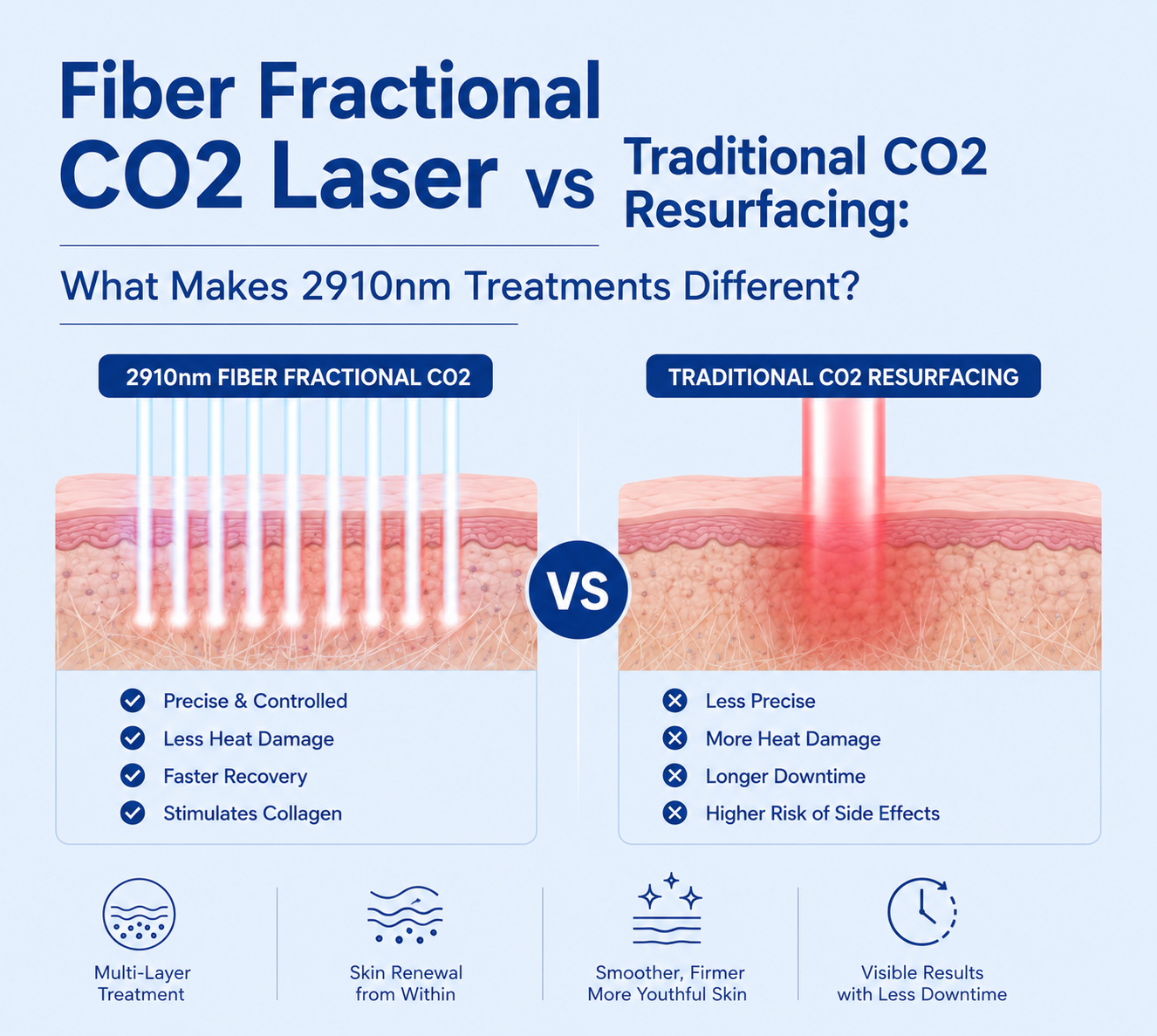
ファイバーフラクショナルCO2レーザーと従来のCO2レーザーによる肌再生治療:2910nm治療の違いとは?

Laser skin resurfacing has remained one of the most requested aesthetic procedures for improving wrinkles, acne scars, uneven texture, and visible signs of aging. However, many people hesitate to try traditional CO2 laser treatments because of concerns about pain, extended downtime, redness, or excessive heat damage. As laser technology continues to evolve, newer-generation fiber fractional systems using 2910nm wavelengths are attracting attention for offering more controlled resurfacing with reduced thermal side effects. Understanding how these systems differ from conventional CO2 lasers helps explain why many clinics are shifting toward advanced fractional fiber technologies for skin rejuvenation treatments.

ファイバーフラクショナルCO2レーザーと従来のCO2レーザーによる皮膚再生治療:2910nm治療の違いとは? - shefmon

1. The Problem With Traditional Aggressive Skin Resurfacing

Conventional ablative laser resurfacing became popular because it could dramatically improve damaged skin by removing surface layers and stimulating collagen production. While effective, older systems often created significant thermal injury during treatment.

This sometimes led to concerns such as:

  • Prolonged redness
  • Increased discomfort
  • Longer recovery periods
  • Higher risk of post-inflammatory pigmentation
  • Uneven heat distribution
  • Delayed skin barrier recovery

For some patients, especially those with sensitive skin or busy lifestyles, the downtime associated with aggressive resurfacing treatments became a major disadvantage.

As demand increased for treatments with faster recovery and more predictable results, manufacturers began developing technologies designed to reduce unnecessary heat damage while still supporting collagen remodeling.

2. How 2910nm Fiber Fractional Technology Works

Modern fiber fractional laser systems use concentrated laser energy to create microscopic treatment zones within the skin rather than removing the entire surface uniformly.

The 2910nm wavelength is designed to target water within skin tissue with high precision. Because skin contains large amounts of water, this wavelength allows controlled resurfacing while limiting excessive surrounding thermal injury.

These systems generally work through two simultaneous actions:

2.1 Surface Resurfacing

The laser gently removes damaged or irregular epidermal tissue, helping improve:

  • ざらざらした質感
  • Dull skin appearance
  • 細かいシワ
  • ニキビ跡
  • 毛穴の拡大
  • Uneven tone

This controlled exfoliation process encourages the growth of fresher and smoother skin cells.

2.2 Dermal Remodeling

At the same time, thermal energy is delivered into deeper dermal layers to stimulate the skin’s natural repair response.

This process may support:

  • コラーゲン生成
  • エラスチンリモデリング
  • 肌のハリ
  • Elasticity improvement
  • 肌全体の若返り

Instead of only treating the skin surface, fractional systems are designed to trigger regeneration from deeper structural layers as well.

ファイバーフラクショナルCO2レーザーと従来のCO2レーザーによる皮膚再生治療:2910nm治療の違いとは? - shefmon

3. What Makes Fiber Fractional Lasers Different From Traditional CO2 Systems

One of the biggest technological differences lies in how energy is delivered into the skin.

Older CO2 systems often generated broader thermal zones, which increased collateral heat damage around treated tissue. Fiber fractional technologies aim to produce narrower and more controlled microthermal zones.

This more precise delivery may help reduce:

  • Excessive inflammation
  • Treatment discomfort
  • Thermal side effects
  • Prolonged redness
  • Uneven healing

3.1 Improved Energy Distribution

Modern fiber systems are also designed to create more uniform beam quality. Even energy distribution is important because inconsistent heating may contribute to uneven resurfacing results.

More consistent energy delivery may improve:

  • Skin texture uniformity
  • Predictability of results
  • Healing consistency
  • 治療精度

This is especially important when treating delicate facial areas where excessive heat exposure can increase recovery time.

3.2 Reduced Downtime Concerns

While all ablative resurfacing treatments involve some recovery, newer fractional approaches are often preferred because they can support faster skin recovery compared with older aggressive resurfacing methods.

Many patients today are searching for treatments that fit more easily into daily schedules without weeks of visible healing.

4. Which Skin Concerns Can Fractional Fiber Lasers Address?

Fractional resurfacing technologies are commonly used for multiple skin concerns involving both texture and aging.

4.1 Fine Lines and Wrinkles

As collagen decreases with age, the skin gradually develops fine creases and reduced elasticity. Controlled thermal stimulation may help improve the appearance of aging skin over time.

一般的な治療領域は次のとおりです:

  • Forehead lines
  • カラスの足跡
  • 笑いじわ
  • Neck texture

4.2 Acne Scars and Uneven Texture

Fractional laser resurfacing is widely used for acne scar revision because the microscopic treatment zones encourage skin remodeling while preserving surrounding tissue.

This approach may help improve:

  • Shallow acne scars
  • Surface irregularities
  • 毛穴の拡大
  • 不均一な質感

4.3 Dull and Photoaged Skin

Environmental damage, sun exposure, and aging often contribute to rough, tired-looking skin. Controlled resurfacing removes damaged surface cells while encouraging healthier skin regeneration.

Patients often seek these treatments to achieve:

  • 肌の見た目が明るくなる
  • より滑らかな質感
  • Fresher complexion
  • より均一な肌の色

ファイバーフラクショナルCO2レーザーと従来のCO2レーザーによる皮膚再生治療:2910nm治療の違いとは? - shefmon

5. Why Controlled Thermal Injury Matters in Skin Rejuvenation

Not all laser heat is harmful. In fact, thermal stimulation is an important part of collagen remodeling treatments. The challenge is delivering enough energy to trigger regeneration without creating unnecessary surrounding tissue damage.

Modern fractional systems attempt to balance:

  • 効果的なコラーゲン生成促進
  • Controlled resurfacing
  • Faster healing response
  • Improved treatment comfort
  • Reduced thermal complications

This balance has become increasingly important as more patients seek treatments with visible results but manageable downtime.

6. What Patients Should Expect After Fractional Resurfacing

Recovery experiences vary depending on treatment intensity, skin sensitivity, and treatment depth. Most patients experience temporary redness, dryness, or mild swelling after treatment.

Over the following days, the skin typically begins a natural renewal process as damaged cells shed and fresh tissue develops.

Results often continue improving over time because collagen remodeling is gradual rather than immediate.

Many clinics recommend multiple sessions depending on:

  • Skin condition severity
  • Acne scar depth
  • Aging concerns
  • Desired treatment intensity

Professional post-treatment care is also important for supporting healthy healing and protecting newly treated skin.

結論

The evolution of fractional fiber レーザー技術 reflects the growing demand for skin resurfacing treatments that balance visible rejuvenation with improved safety and recovery experiences. Compared with older aggressive resurfacing methods, 2910nm fiber fractional systems are designed to deliver more controlled energy distribution while supporting collagen remodeling and skin renewal across multiple tissue layers. As aesthetic technology continues to advance, treatments focused on precision, controlled thermal stimulation, and reduced downtime are becoming increasingly important for patients seeking smoother, firmer, and healthier-looking skin without overly aggressive recovery periods.

よくある質問

How is a 2910nm fiber fractional laser different from traditional CO2 resurfacing?

Fiber fractional systems are designed to create more controlled microthermal treatment zones with reduced surrounding heat damage compared with older CO2 technologies.

Does fractional resurfacing help stimulate collagen?

Yes. Controlled thermal energy within the dermis may help stimulate collagen and elastin remodeling over time.

Can these treatments improve acne scars?

Fractional resurfacing is commonly used to improve acne scars, uneven texture, and enlarged pores through controlled skin regeneration.

Is downtime shorter than traditional ablative laser treatments?

Many newer fractional systems are designed to reduce recovery time and thermal side effects compared with older aggressive resurfacing approaches.

結果が現れるまでにどれくらい時間がかかりますか?

Some skin texture improvements may appear after healing, while collagen remodeling and firmness improvements often continue developing over several months.

人気商品