


لا يزال تجديد سطح البشرة بالليزر من أكثر الإجراءات التجميلية طلبًا لتحسين مظهر التجاعيد، وندبات حب الشباب، وعدم توحد لون البشرة، وعلامات الشيخوخة الظاهرة. مع ذلك، يتردد الكثيرون في تجربة علاجات ليزر ثاني أكسيد الكربون التقليدية بسبب مخاوفهم من الألم، وفترة النقاهة الطويلة، والاحمرار، أو أضرار الحرارة المفرطة. ومع استمرار تطور تقنية الليزر،, أنظمة الألياف الجزئية من الجيل الجديد التي تستخدم أطوال موجية تبلغ 2910 نانومتر تستقطب هذه التقنيات اهتمامًا متزايدًا لقدرتها على توفير تجديد سطحي أكثر تحكمًا مع تقليل الآثار الجانبية الحرارية. ويساعد فهم كيفية اختلاف هذه الأنظمة عن ليزر ثاني أكسيد الكربون التقليدي في تفسير سبب توجه العديد من العيادات نحو تقنيات الألياف الجزئية المتقدمة لعلاجات تجديد البشرة.
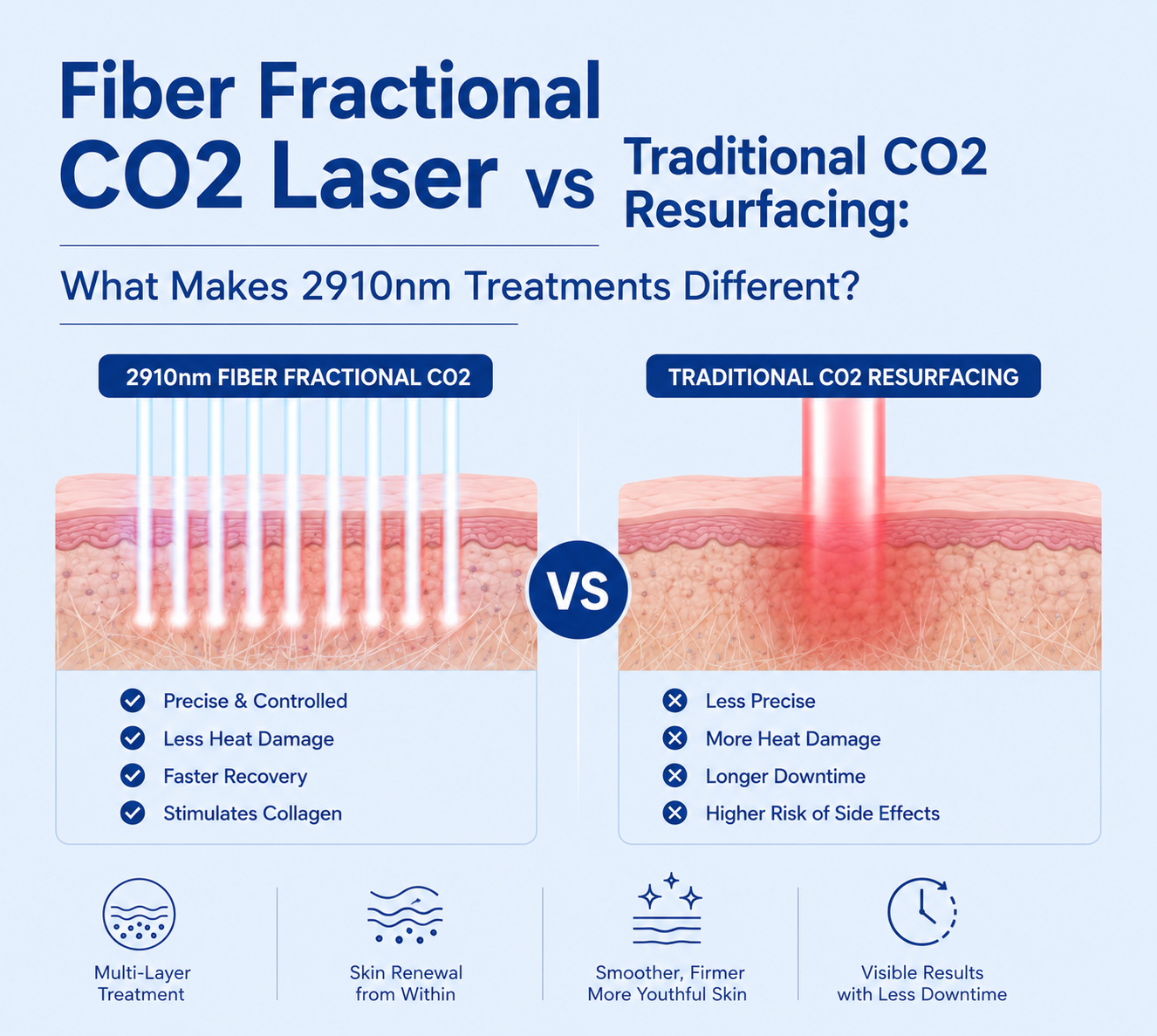
1. مشكلة عمليات تجديد سطح الجلد التقليدية القاسية
أصبح تجديد سطح الجلد بالليزر الاستئصالي التقليدي شائعًا لقدرته على تحسين البشرة المتضررة بشكل ملحوظ عن طريق إزالة الطبقات السطحية وتحفيز إنتاج الكولاجين. ورغم فعاليته، إلا أن الأنظمة القديمة كانت غالبًا ما تُسبب إصابات حرارية كبيرة أثناء العلاج.
وقد أدى ذلك أحياناً إلى مخاوف مثل:
- احمرار مطول
- زيادة الشعور بعدم الراحة
- فترات تعافي أطول
- زيادة خطر الإصابة بالتصبغ التالي للالتهاب
- توزيع غير متساوٍ للحرارة
- تأخر تعافي حاجز الجلد
بالنسبة لبعض المرضى، وخاصة أولئك الذين يعانون من بشرة حساسة أو أنماط حياة مزدحمة، أصبح وقت التعافي المرتبط بعلاجات إعادة التسطيح القوية عيبًا رئيسيًا.
مع ازدياد الطلب على العلاجات ذات التعافي الأسرع والنتائج الأكثر قابلية للتنبؤ، بدأ المصنعون في تطوير تقنيات مصممة للحد من أضرار الحرارة غير الضرورية مع الاستمرار في دعم إعادة تشكيل الكولاجين.
2. كيف تعمل تقنية الألياف الجزئية بطول موجة 2910 نانومتر
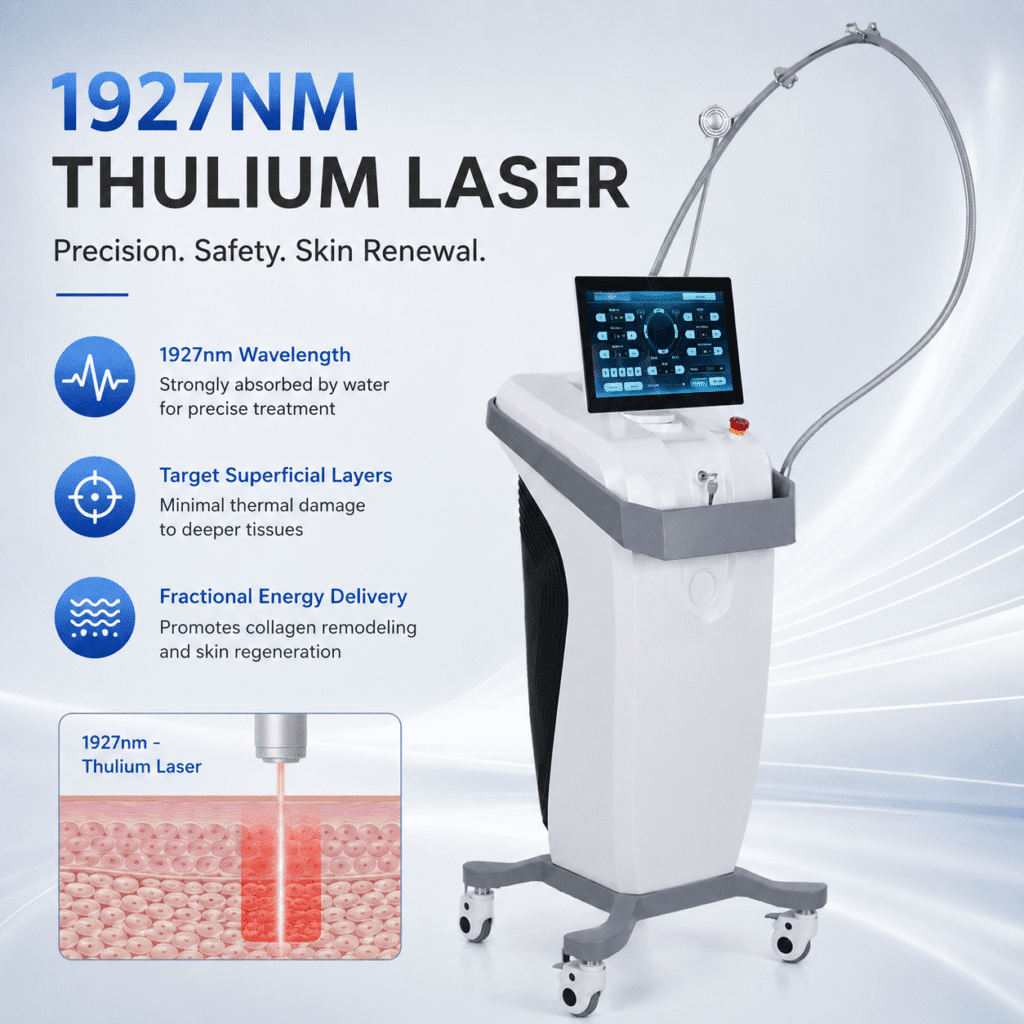
تستخدم أنظمة الليزر الجزئي الليفي الحديثة طاقة الليزر المركزة لإنشاء مناطق علاج مجهرية داخل الجلد بدلاً من إزالة السطح بأكمله بشكل موحد.
صُمم الطول الموجي 2910 نانومتر لاستهداف الماء داخل أنسجة الجلد بدقة عالية. ولأن الجلد يحتوي على كميات كبيرة من الماء، فإن هذا الطول الموجي يسمح بتجديد سطح الجلد بشكل مُتحكم فيه مع الحد من الضرر الحراري الزائد للمناطق المحيطة.
تعمل هذه الأنظمة عمومًا من خلال إجراءين متزامنين:
2.1 إعادة تسوية السطح
يزيل الليزر بلطف أنسجة البشرة التالفة أو غير المنتظمة، مما يساعد على تحسين:
- ملمس خشن
- مظهر البشرة الباهت
- الخطوط الدقيقة
- ندبات حب الشباب
- المسامات الواسعة
- نبرة غير متساوية
تشجع عملية التقشير المتحكم بها هذه نمو خلايا جلدية أكثر نضارة ونعومة.
2.2 إعادة تشكيل الأدمة
وفي الوقت نفسه، يتم توصيل الطاقة الحرارية إلى طبقات الجلد العميقة لتحفيز استجابة الجلد الطبيعية للإصلاح.
قد تدعم هذه العملية ما يلي:
- إنتاج الكولاجين
- تجديد الإيلاستين
- تماسك الجلد
- تحسين المرونة
- تجديد البشرة بشكل عام
بدلاً من معالجة سطح الجلد فقط، تم تصميم الأنظمة الجزئية لتحفيز التجديد من الطبقات الهيكلية الأعمق أيضاً.

3. ما الذي يميز ليزر الألياف الجزئي عن أنظمة ثاني أكسيد الكربون التقليدية؟
أحد أكبر الاختلافات التكنولوجية يكمن في كيفية توصيل الطاقة إلى الجلد.
غالباً ما كانت أنظمة ثاني أكسيد الكربون القديمة تُنتج مناطق حرارية أوسع، مما يزيد من الضرر الحراري الجانبي حول الأنسجة المعالجة. وتهدف تقنيات التجزئة الليفية إلى إنتاج مناطق حرارية دقيقة أضيق وأكثر تحكماً.
قد تساعد هذه العملية الأكثر دقة في تقليل ما يلي:
- الالتهاب المفرط
- ألم أثناء العلاج
- الآثار الجانبية الحرارية
- احمرار مطول
- شفاء غير متساوٍ
3.1 تحسين توزيع الطاقة
صُممت أنظمة الألياف الحديثة أيضاً لإنتاج جودة شعاع أكثر تجانساً. يُعد توزيع الطاقة المتساوي أمراً بالغ الأهمية لأن التسخين غير المتناسق قد يُسهم في نتائج غير متجانسة لإعادة التسطيح.
قد يؤدي توفير الطاقة بشكل أكثر انتظامًا إلى تحسين ما يلي:
- تجانس ملمس البشرة
- إمكانية التنبؤ بالنتائج
- اتساق الشفاء
- دقة العلاج
يُعد هذا الأمر بالغ الأهمية عند معالجة مناطق الوجه الحساسة حيث يمكن أن يؤدي التعرض المفرط للحرارة إلى زيادة وقت التعافي.
3.2 مخاوف تقليل وقت التوقف
على الرغم من أن جميع علاجات إعادة التسطيح الاستئصالية تتضمن بعض التعافي، إلا أن الأساليب الجزئية الأحدث غالباً ما تكون مفضلة لأنها تدعم تعافي الجلد بشكل أسرع مقارنة بطرق إعادة التسطيح العدوانية القديمة.
يبحث العديد من المرضى اليوم عن علاجات تتناسب بسهولة أكبر مع الجداول اليومية دون الحاجة إلى أسابيع من الشفاء الظاهر.
4. ما هي مشاكل البشرة التي يمكن أن تعالجها أشعة الليزر الليفية الجزئية؟
تُستخدم تقنيات إعادة تسطيح البشرة الجزئية بشكل شائع لعلاج العديد من مشاكل البشرة التي تشمل كلاً من ملمس البشرة والشيخوخة.
4.1 الخطوط الدقيقة والتجاعيد
مع انخفاض الكولاجين مع التقدم في السن، تظهر على الجلد تدريجياً تجاعيد دقيقة وتقل مرونته. وقد يساعد التحفيز الحراري المتحكم به على تحسين مظهر البشرة المتقدمة في السن مع مرور الوقت.
تشمل مجالات العلاج الشائعة ما يلي:
- خطوط الجبهة
- أقدام الغراب
- خطوط الابتسامة
- نسيج الرقبة
4.2 ندبات حب الشباب وعدم انتظام ملمس البشرة
يستخدم العلاج بالليزر الجزئي على نطاق واسع لتصحيح ندبات حب الشباب لأن مناطق العلاج المجهرية تشجع على إعادة تشكيل الجلد مع الحفاظ على الأنسجة المحيطة.
قد يساعد هذا النهج في تحسين ما يلي:
- ندبات حب الشباب السطحية
- عدم انتظام السطح
- المسامات الواسعة
- ملمس غير متساوي
4.3 البشرة الباهتة والمتضررة من الشمس
غالباً ما تُساهم الأضرار البيئية والتعرض لأشعة الشمس والتقدم في السن في ظهور البشرة بمظهر خشن ومتعب. تعمل عملية تجديد سطح البشرة المُتحكم بها على إزالة خلايا الجلد التالفة مع تحفيز تجديد خلايا الجلد الصحية.
غالباً ما يلجأ المرضى إلى هذه العلاجات لتحقيق ما يلي:
- مظهر بشرة أكثر إشراقاً
- ملمس أكثر نعومة
- بشرة أكثر نضارة
- لون بشرة أكثر توازناً

5. لماذا يُعدّ التحكم في الإصابة الحرارية أمرًا مهمًا في تجديد البشرة؟
ليست كل حرارة الليزر ضارة. في الواقع، يُعد التحفيز الحراري جزءًا مهمًا من علاجات إعادة بناء الكولاجين. ويكمن التحدي في توفير طاقة كافية لتحفيز التجديد دون إحداث ضرر غير ضروري للأنسجة المحيطة.
تسعى أنظمة الكسور الحديثة إلى تحقيق التوازن بين:
- تحفيز فعال للكولاجين
- إعادة التسطيح المتحكم بها
- استجابة شفاء أسرع
- تحسين راحة العلاج
- انخفاض المضاعفات الحرارية
أصبح هذا التوازن ذا أهمية متزايدة مع سعي المزيد من المرضى إلى الحصول على علاجات ذات نتائج واضحة ولكن بفترة نقاهة يمكن التحكم بها.
6. ما الذي يجب أن يتوقعه المرضى بعد عملية إعادة تسطيح الأسنان الجزئية
تختلف تجارب التعافي تبعاً لشدة العلاج، وحساسية الجلد، وعمق العلاج. يعاني معظم المرضى من احمرار مؤقت، أو جفاف، أو تورم طفيف بعد العلاج.
خلال الأيام التالية، تبدأ البشرة عادةً عملية تجديد طبيعية حيث تتساقط الخلايا التالفة وتنمو أنسجة جديدة.
غالباً ما تستمر النتائج في التحسن بمرور الوقت لأن إعادة تشكيل الكولاجين عملية تدريجية وليست فورية.
توصي العديد من العيادات بجلسات متعددة حسب:
- شدة الحالة الجلدية
- عمق ندبة حب الشباب
- مخاوف الشيخوخة
- شدة العلاج المطلوبة
تُعد الرعاية الاحترافية بعد العلاج مهمة أيضاً لدعم الشفاء الصحي وحماية الجلد الذي تم علاجه حديثاً.
خاتمة
تطور الألياف الجزئية تكنولوجيا الليزر يعكس هذا الطلب المتزايد على علاجات تجديد سطح البشرة التي توازن بين التجديد الملحوظ وتحسين السلامة وسرعة التعافي. بالمقارنة مع طرق التجديد القديمة القاسية، صُممت أنظمة الألياف الجزئية بطول موجة 2910 نانومتر لتوفير توزيع طاقة أكثر تحكمًا مع دعم إعادة بناء الكولاجين وتجديد البشرة عبر طبقات الأنسجة المتعددة. ومع استمرار تطور تقنيات التجميل، تزداد أهمية العلاجات التي تركز على الدقة والتحفيز الحراري المتحكم به وتقليل فترة النقاهة للمرضى الذين يسعون للحصول على بشرة أكثر نعومة وتماسكًا وصحة دون فترات نقاهة طويلة.
التعليمات
ما الفرق بين ليزر الألياف الجزئي بطول موجي 2910 نانومتر وإعادة تسطيح الجلد التقليدية باستخدام ثاني أكسيد الكربون؟
تم تصميم أنظمة الألياف الجزئية لإنشاء مناطق معالجة حرارية دقيقة أكثر تحكمًا مع تقليل الضرر الحراري المحيط مقارنة بتقنيات ثاني أكسيد الكربون القديمة.
هل يساعد تجديد سطح الجلد الجزئي على تحفيز إنتاج الكولاجين؟
نعم. قد تساعد الطاقة الحرارية المتحكم بها داخل الأدمة على تحفيز إعادة تشكيل الكولاجين والإيلاستين بمرور الوقت.
هل يمكن لهذه العلاجات أن تحسن ندبات حب الشباب؟
تُستخدم تقنية إعادة تسطيح البشرة الجزئية بشكل شائع لتحسين ندبات حب الشباب، وعدم انتظام ملمس البشرة، وتضخم المسام من خلال تجديد الجلد المتحكم فيه.
هل فترة التعافي أقصر من علاجات الليزر الاستئصالية التقليدية؟
تم تصميم العديد من أنظمة التجزئة الحديثة لتقليل وقت التعافي والآثار الجانبية الحرارية مقارنة بأساليب إعادة التسطيح القديمة العدوانية.
كم من الوقت يستغرق ظهور النتائج؟
قد تظهر بعض التحسينات في ملمس الجلد بعد الشفاء، بينما يستمر تطوير إعادة تشكيل الكولاجين وتحسينات التماسك على مدى عدة أشهر.