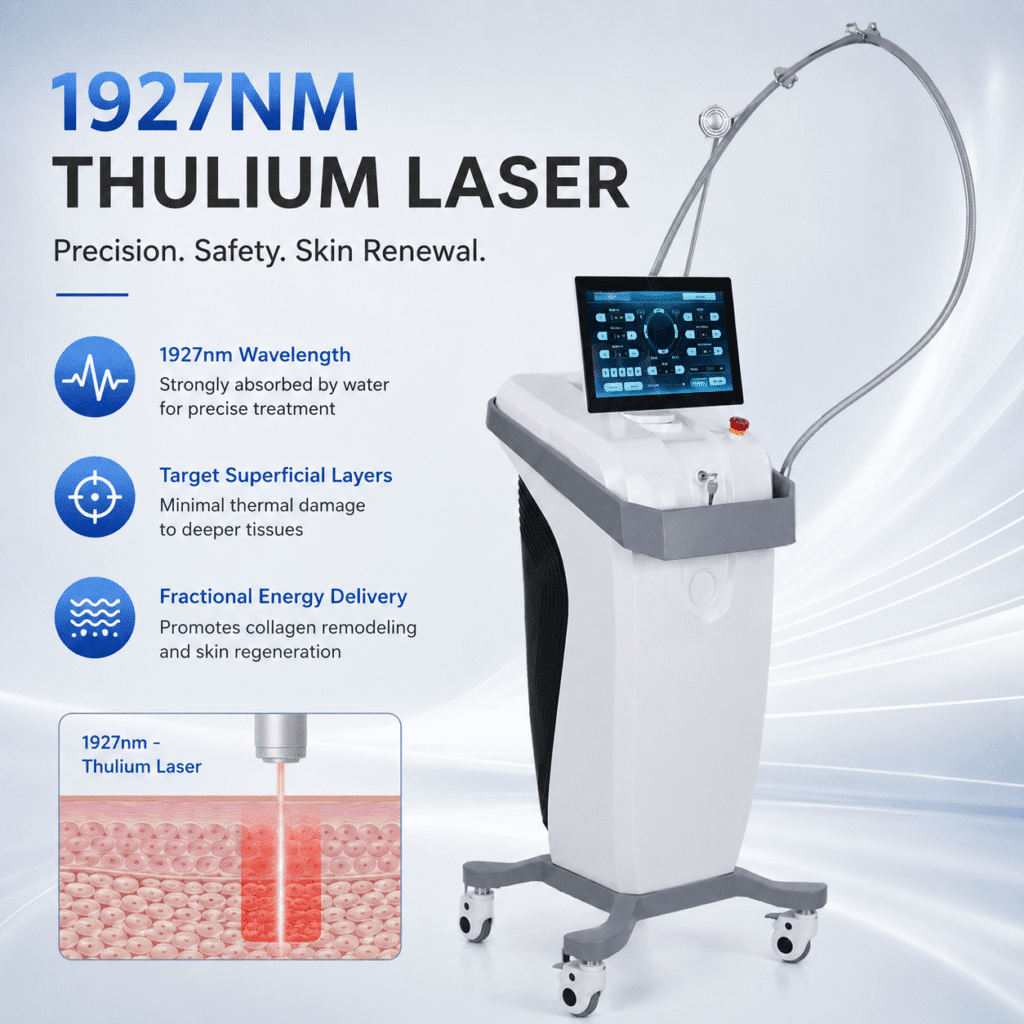




Лазерная шлифовка кожи остается одной из самых востребованных эстетических процедур для улучшения состояния кожи при морщинах, рубцах от акне, неровной текстуре и видимых признаках старения. Однако многие люди опасаются традиционных процедур с использованием CO2-лазера из-за болевых ощущений, длительного периода восстановления, покраснения или чрезмерного теплового повреждения. По мере развития лазерных технологий, Системы волоконно-оптической связи нового поколения, использующие длину волны 2910 нм. Эти системы привлекают внимание благодаря возможности более контролируемого омоложения кожи с уменьшенными термическими побочными эффектами. Понимание того, чем эти системы отличаются от традиционных CO2-лазеров, помогает объяснить, почему многие клиники переходят на передовые фракционные волоконные технологии для процедур омоложения кожи.
1. Проблема традиционных агрессивных методов шлифовки кожи.
Традиционная абляционная лазерная шлифовка кожи стала популярной, поскольку она могла значительно улучшить состояние поврежденной кожи за счет удаления поверхностных слоев и стимуляции выработки коллагена. Несмотря на свою эффективность, старые системы часто вызывали значительные термические повреждения во время процедуры.
Это иногда приводило к таким проблемам, как:
- Длительное покраснение
- Усиление дискомфорта
- Более длительные периоды восстановления
- Повышенный риск поствоспалительной пигментации
- Неравномерное распределение тепла
- Задержка восстановления кожного барьера
Для некоторых пациентов, особенно для тех, у кого чувствительная кожа или кто ведет активный образ жизни, период восстановления после агрессивных процедур по омоложению кожи стал серьезным недостатком.
По мере роста спроса на процедуры с более быстрым восстановлением и более предсказуемыми результатами производители начали разрабатывать технологии, предназначенные для уменьшения ненужного теплового повреждения, одновременно поддерживая ремоделирование коллагена.
2. Как работает технология волоконной передачи данных с длиной волны 2910 нм
Современные волоконные фракционные лазерные системы используют концентрированную лазерную энергию для создания микроскопических зон обработки внутри кожи, а не для равномерного удаления всего слоя.
Длина волны 2910 нм предназначена для высокоточной обработки воды в тканях кожи. Поскольку кожа содержит большое количество воды, эта длина волны позволяет проводить контролируемую шлифовку, ограничивая при этом чрезмерное термическое повреждение окружающих тканей.
Эти системы, как правило, работают за счёт двух одновременных действий:
2.1 Восстановление поверхности
Лазер бережно удаляет поврежденную или неровную эпидермальную ткань, способствуя улучшению:
- Шероховатая текстура
- Тусклый вид кожи
- Тонкие линии
- Шрамы от угревой сыпи
- Расширенные поры
- Неравномерный тон
Этот контролируемый процесс отшелушивания способствует росту более свежих и гладких клеток кожи.
2.2 Ремоделирование дермы
Одновременно с этим тепловая энергия передается в более глубокие слои дермы, стимулируя естественную реакцию восстановления кожи.
Этот процесс может поддерживать:
- производство коллагена
- Ремоделирование эластина
- упругость кожи
- Улучшение эластичности
- Общее омоложение кожи
Вместо обработки только поверхности кожи, фракционные системы предназначены для запуска регенерации также и в более глубоких структурных слоях.

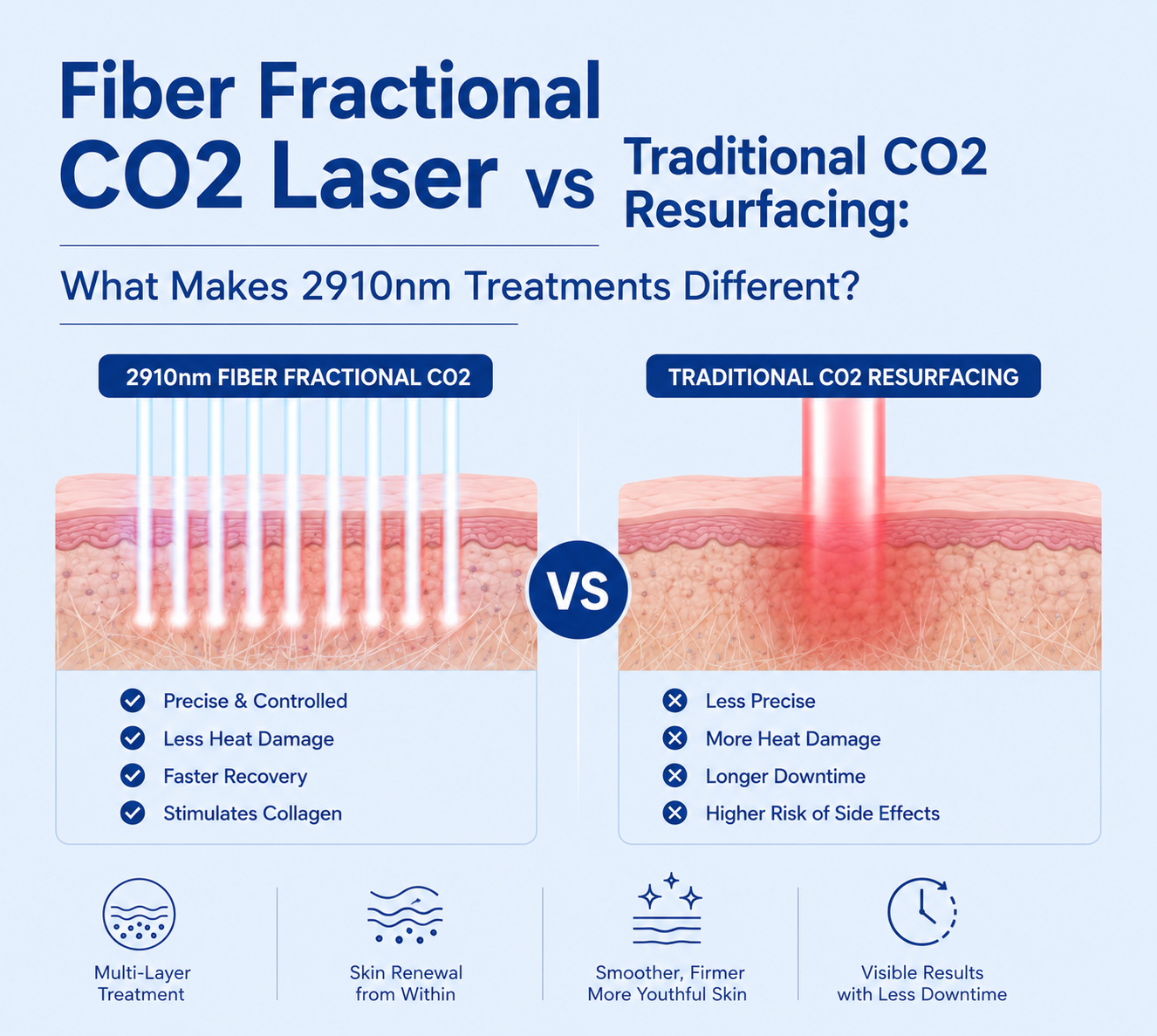
3. Чем волоконные фракционные лазеры отличаются от традиционных CO2-систем?
Одно из главных технологических отличий заключается в способе подачи энергии в кожу.
Более старые системы на основе CO2 часто создавали более широкие зоны теплового воздействия, что увеличивало сопутствующее тепловое повреждение вокруг обрабатываемой ткани. Технологии фракционной обработки волокон направлены на создание более узких и контролируемых микротермических зон.
Более точная доставка может помочь уменьшить:
- Чрезмерное воспаление
- дискомфорт во время лечения
- Побочные эффекты термического воздействия
- Длительное покраснение
- Неравномерное заживление
3.1 Улучшенное распределение энергии
Современные волоконно-оптические системы также разработаны для обеспечения более равномерного качества луча. Равномерное распределение энергии имеет важное значение, поскольку неравномерный нагрев может привести к неравномерным результатам восстановления поверхности.
Более стабильная подача энергии может улучшить:
- однородность текстуры кожи
- Предсказуемость результатов
- Последовательность заживления
- Точность лечения
Это особенно важно при обработке деликатных участков лица, где чрезмерное воздействие тепла может увеличить время восстановления.
3.2 Вопросы сокращения времени простоя
Хотя все абляционные процедуры по омоложению кожи требуют некоторого периода восстановления, более новые фракционные подходы часто предпочтительнее, поскольку они способствуют более быстрому восстановлению кожи по сравнению со старыми агрессивными методами омоложения.
Сегодня многие пациенты ищут методы лечения, которые легче вписываются в повседневный график и не требуют недель видимого заживления.
4. Какие проблемы с кожей могут быть решены с помощью фракционных волоконных лазеров?
Технологии фракционной шлифовки кожи широко используются для решения множества проблем, связанных как с текстурой, так и с признаками старения.
4.1 Мелкие морщины
С возрастом количество коллагена в коже уменьшается, постепенно появляются мелкие морщины и снижается её эластичность. Контролируемая термическая стимуляция может помочь улучшить внешний вид стареющей кожи с течением времени.
К числу распространенных областей лечения относятся:
- Линии лба
- Гусиные лапки
- Морщины улыбки
- текстура шеи
4.2 Рубцы от акне и неровная текстура кожи
Фракционная лазерная шлифовка кожи широко используется для коррекции рубцов от акне, поскольку микроскопические зоны обработки способствуют ремоделированию кожи, сохраняя при этом окружающие ткани.
Этот подход может помочь улучшить:
- Поверхностные рубцы от угревой сыпи
- Неровности поверхности
- Расширенные поры
- Неровная текстура
4.3 Тусклая и фотостареющая кожа
Воздействие окружающей среды, солнечных лучей и старение часто приводят к огрубению и усталому виду кожи. Контролируемая шлифовка удаляет поврежденные клетки поверхности кожи, одновременно стимулируя регенерацию здоровой кожи.
Пациенты часто обращаются за этими процедурами для достижения следующих целей:
- Более сияющий вид кожи
- Более гладкая текстура
- Более свежий цвет лица
- Более ровный тон кожи

5. Почему контролируемое термическое повреждение важно для омоложения кожи
Не вся лазерная теплота вредна. На самом деле, термическая стимуляция является важной частью процедур по ремоделированию коллагена. Задача состоит в том, чтобы доставить достаточно энергии для запуска регенерации, не вызывая при этом ненужного повреждения окружающих тканей.
Современные дробные системы стремятся к балансу:
- Эффективная стимуляция выработки коллагена
- Контролируемое восстановление поверхности
- Более быстрое заживление
- Повышенный комфорт лечения
- Снижение тепловых осложнений
Этот баланс становится все более важным, поскольку все больше пациентов стремятся к лечению с видимыми результатами и приемлемым периодом восстановления.
6. Чего следует ожидать пациентам после фракционной шлифовки кожи.
Процесс восстановления варьируется в зависимости от интенсивности лечения, чувствительности кожи и глубины воздействия. У большинства пациентов после лечения наблюдается временное покраснение, сухость или легкая отечность.
В течение последующих дней кожа, как правило, начинает естественный процесс обновления: поврежденные клетки отшелушиваются, а на их месте образуется новая ткань.
Результаты часто продолжают улучшаться с течением времени, поскольку ремоделирование коллагена происходит постепенно, а не мгновенно.
Многие клиники рекомендуют несколько сеансов в зависимости от:
- тяжесть кожного заболевания
- глубина рубцов от угревой сыпи
- Проблемы старения
- Желаемая интенсивность лечения
Профессиональный послеоперационный уход также важен для поддержания здорового заживления и защиты кожи после процедуры.
Заключение
Эволюция фракционного волокна лазерная технология Это отражает растущий спрос на процедуры по обновлению кожи, которые сочетают видимое омоложение с улучшенной безопасностью и более длительным периодом восстановления. По сравнению со старыми агрессивными методами обновления кожи, фракционные системы с использованием волокон 2910 нм разработаны для более контролируемого распределения энергии, одновременно поддерживая ремоделирование коллагена и обновление кожи в нескольких слоях тканей. По мере развития эстетических технологий, процедуры, ориентированные на точность, контролируемую термическую стимуляцию и сокращение времени восстановления, становятся все более важными для пациентов, стремящихся к более гладкой, упругой и здоровой коже без чрезмерно интенсивных периодов восстановления.
Часто задаваемые вопросы
Чем отличается волоконный фракционный лазер с длиной волны 2910 нм от традиционной шлифовки поверхности с использованием CO2-лазера?
Системы фракционной обработки волокнами предназначены для создания более контролируемых зон микротермической обработки с уменьшенным повреждением окружающей среды от тепла по сравнению со старыми технологиями на основе CO2.
Способствует ли фракционная шлифовка кожных покровов стимуляции выработки коллагена?
Да. Контролируемое воздействие тепловой энергии внутри дермы может способствовать стимуляции ремоделирования коллагена и эластина с течением времени.
Могут ли эти методы лечения улучшить состояние рубцов от угревой сыпи?
Фракционная шлифовка кожи широко используется для улучшения состояния рубцов от акне, выравнивания текстуры кожи и уменьшения расширенных пор за счет контролируемой регенерации кожи.
Период восстановления короче, чем при традиционных абляционных лазерных процедурах?
Многие новые фракционные системы разработаны для сокращения времени восстановления и уменьшения термических побочных эффектов по сравнению со старыми агрессивными методами восстановления поверхностей.
Сколько времени нужно, чтобы увидеть результаты?
Некоторые улучшения текстуры кожи могут появиться после заживления, в то время как ремоделирование коллагена и повышение упругости часто продолжаются в течение нескольких месяцев.