









Sintesi
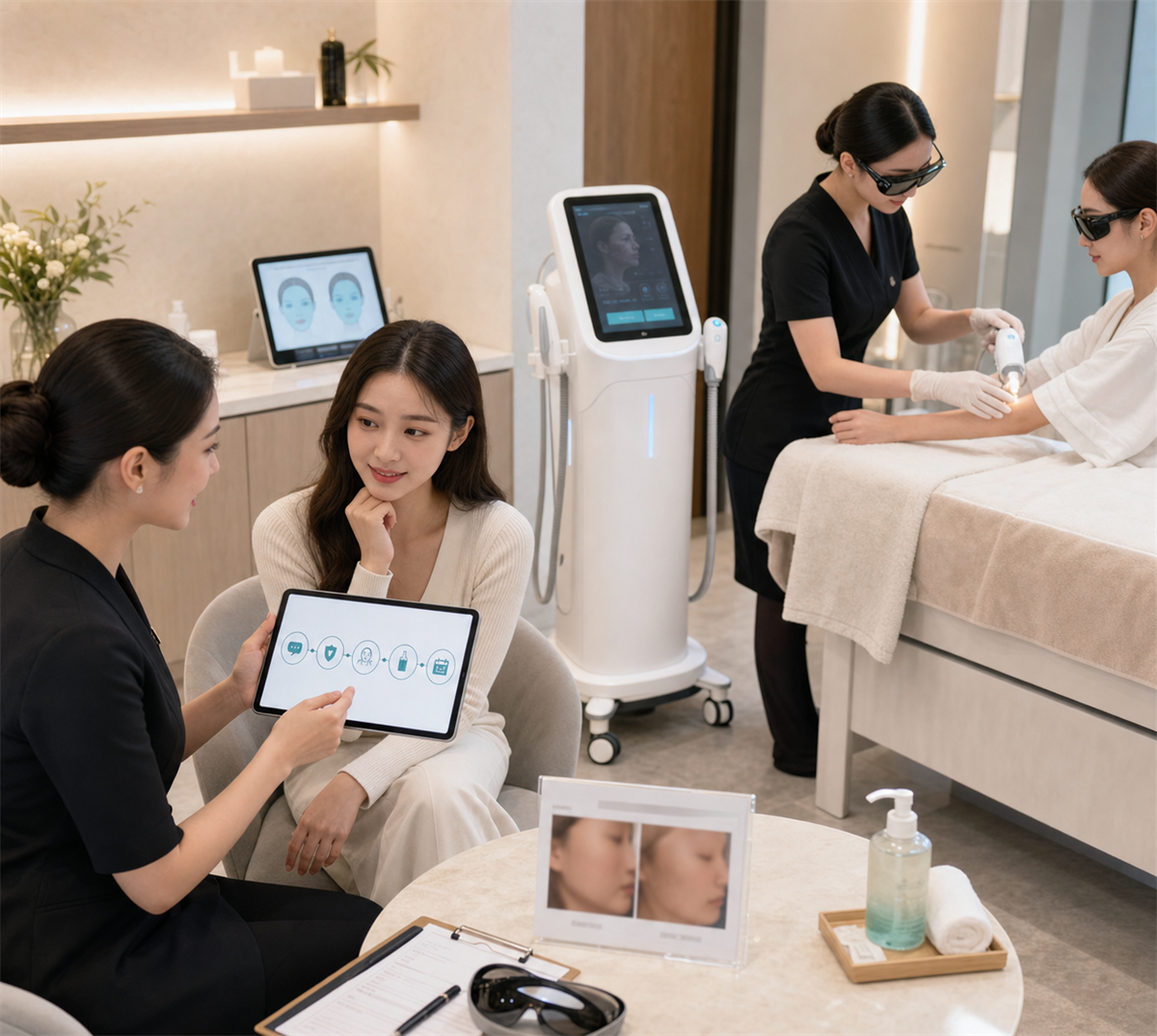
Quando una cliente utilizza per la prima volta un'apparecchiatura per trattamenti estetici, il salone non dovrebbe iniziare spiegandole termini tecnici. La prima introduzione dovrebbe far sentire la cliente a suo agio, compresa e ben informata su cosa accadrà.
La migliore presentazione iniziale segue questo ordine:
1. Chiedi al cliente qual è il suo problema.
2. Verificare se il cliente è idoneo al progetto.
3. Descrivi l'attrezzatura con parole semplici.
4. Descrivere il processo di trattamento e le sensazioni provate.
5. Stabilisci aspettative realistiche.
6. Spiegare le cure post-operatorie e i controlli successivi.
7. Consigliare un periodo di prova, un upgrade o un pacchetto di corsi solo dopo che il cliente ne abbia compreso il valore.
La chiave è introdurre l'apparecchio come parte di un piano di cura, non come una tecnologia misteriosa.
Ad esempio, invece di dire:
“"Si tratta di un dispositivo a radiofrequenza con potenza di uscita avanzata."”
Un'estetista può dire:
“Questo trattamento è pensato per le clienti che desiderano un effetto rassodante maggiore rispetto a un trattamento viso standard. Prima di iniziare, verificherò l'idoneità della tua pelle, poi ti spiegherò le fasi del trattamento e le sensazioni che potresti provare durante la seduta.”
Questo tipo di introduzione è più facile da comprendere e instaura fiducia.
La prima esperienza deve essere chiara, serena, professionale e onesta. Non promettete risultati garantiti. Non forzate i clienti ad acquistare pacchetti prima di una consulenza. Non ignorate le controindicazioni. Non utilizzate tecniche di vendita basate sulla paura. Una buona prima presentazione dovrebbe invogliare i clienti a provare, a fare domande e a tornare.
1. Perché la prima introduzione è importante
La prima esperienza con le attrezzature spesso determina se un cliente percepisce il salone come professionale o come un luogo orientato esclusivamente alla vendita.
Se l'estetista spiega male il funzionamento dell'apparecchio, la cliente potrebbe avere le seguenti sensazioni:
- Confuso
- Preoccupato
- Sotto pressione
- Non sono sicuro della sicurezza
- Non sono sicuro del prezzo
- Non sono sicuro dei risultati
- Ho paura di essere spinto in un pacchetto
Se l'estetista spiega bene il funzionamento dell'apparecchio, la cliente potrebbe sentirsi:
- Inteso
- Rilassato
- Curioso
- Chiarezza sul processo
- Più disposti a provare
- Più propenso a prenotare di nuovo
- Più aperto a un pacchetto di corsi
La prima comunicazione non è solo una fase di vendita. È parte integrante dell'esperienza del cliente e della gestione del rischio.
2. La risposta breve
Per una nuova cliente, presenta un'attrezzatura per trattamenti di bellezza dalla struttura semplice:
- “Permettimi innanzitutto di capire qual è la tua preoccupazione.”
- “"Verificherò se questo progetto è adatto a te."”
- “"Questa macchina viene utilizzata per supportare questo obiettivo di cura."”
- “Ecco come si svolge il processo di trattamento.”
- “"Ecco cosa potresti provare."”
- “"Ecco quali risultati sono realistici."”
- “Ecco cosa dovremmo evitare o a cosa dovremmo prestare attenzione.”
- “Dopo questo primo incontro, potremo decidere se un corso o un abbonamento siano adatti alle vostre esigenze.”
Questa struttura è migliore rispetto a partire dalla pressione tecnologica, di prezzo o di prodotto.
3. Parti dal cliente, non dalla macchina
Molti membri dello staff commettono l'errore di parlare troppo della macchina all'inizio.
In genere i clienti si preoccupano meno dei dettagli tecnici e più delle proprie esigenze.
Inizia ponendo la seguente domanda:
- Quale problema di pelle o corpo ti ha portato qui oggi?
- Hai già provato trattamenti simili in passato?
- Cerchi un intervento di manutenzione ordinaria o un progetto più mirato?
- C'è qualche aspetto che vi preoccupa particolarmente?
- Preferisci un trattamento delicato o una sensazione più intensa?
- Hai in programma qualche evento importante?
- Sei sensibile al calore, alla luce, all'aspirazione o agli stimoli?
Queste domande aiutano il cliente a sentirsi ascoltato. Inoltre, aiutano il personale a evitare di consigliare un progetto inadatto.
4. Utilizzare un linguaggio semplice
I clienti che si rivolgono a questi trattamenti per la prima volta potrebbero non comprendere concetti quali RF, EMS, IPL, LED, ultrasuoni, vuoto, cavitazione o idrodermoabrasione.
Utilizza spiegazioni semplici:
- Analizzatore cutaneo: "Ci aiuta a valutare più attentamente le condizioni della tua pelle prima di scegliere un piano di trattamento."“
- Trattamento viso idratante: "Deterge e idrata in un unico trattamento."“
- LED: "Viene spesso utilizzato come fase di conforto o supporto nei kit per la cura della pelle."“
- RF: "Viene utilizzato in progetti di rassodamento e di supporto anti-età."“
- EMS o microcorrente: "Crea una delicata sensazione di stimolazione ed è spesso utilizzata nei progetti di rimodellamento del contorno del viso."“
- Dispositivo per la depilazione: "È progettato per trattamenti ripetuti di riduzione dei peli in aree specifiche, con valutazione della pelle e rigorose misure di sicurezza."“
- Dispositivo per il rimodellamento del corpo: "Viene utilizzato nell'ambito di pacchetti di trattamento per la gestione del corpo, solitamente in più sedute."“
L'obiettivo non è quello di usare un linguaggio tecnico. L'obiettivo è aiutare il cliente a capire perché il progetto potrebbe essere rilevante.
5. Spiegare l'obiettivo dell'assistenza prima di spiegare la tecnologia
Una presentazione efficace collega l'attrezzatura all'obiettivo di cura.
Introduzione debole:
- “Questa macchina ha 6 funzioni ed è molto potente.”
Introduzione migliore:
- “"Per rispondere alla sua richiesta, oggi ci concentriamo su una pulizia profonda e un'idratazione intensa. La fase con il macchinario ci permette di rendere il processo di pulizia più completo rispetto a un trattamento viso standard."”
Introduzione debole:
- “"Questo dispositivo a radiofrequenza è molto avanzato."”
Introduzione migliore:
- “Questo è il nostro trattamento rassodante potenziato. È indicato per i clienti che desiderano un supporto maggiore rispetto a un trattamento viso rilassante, ma prima è comunque necessario valutare le condizioni della pelle.”
I clienti acquistano l'obiettivo di cura, non la funzione della macchina.
6. Verificare l'idoneità prima di raccomandare
Prima del primo trattamento, il personale deve verificare l'idoneità del cliente.
A seconda del dispositivo, le domande possono includere:
- Hai la pelle particolarmente sensibile oggi?
- La zona trattata presenta ferite aperte, infezioni in corso o irritazioni?
- Hai subito di recente interventi chirurgici o procedure estetiche?
- Sei incinta o stai allattando? (Qualora la questione sia rilevante)
- Hai dispositivi elettronici impiantati nelle sedi pertinenti?
- Sta assumendo farmaci che influiscono sulla fotosensibilità, laddove pertinente?
- Hai avuto recenti esposizioni al sole per trattamenti a base di luce?
- In passato ha avuto reazioni avverse a trattamenti simili?
- Ci sono condizioni mediche di cui dovremmo essere a conoscenza prima del trattamento?
Le domande precise dipendono dal macchinario e dalle normative locali. Un salone dovrebbe utilizzare moduli di controindicazione specifici per ogni dispositivo, non una domanda generica valida per ogni intervento.
La verifica dell'idoneità del servizio infonde fiducia perché dimostra che il salone non sta cercando di proporre ogni servizio a ogni cliente.
7. Spiega il processo di trattamento passo dopo passo
I clienti che si rivolgono a loro per la prima volta si sentono più a loro agio quando sanno cosa succederà.
Una semplice spiegazione del processo potrebbe includere:
- Consultazione
- Valutazione della pelle o del corpo
- Pulizia o preparazione
- Fase di attrezzatura
- Maschera, siero, gel o prodotto per la cura successiva
- Controllo del comfort durante il trattamento
- Pulizia finale
- Consigli per la cura post-operatoria
- Raccomandazione di follow-up
Esempio:
“"Oggi il trattamento dura circa 50 minuti. Per prima cosa, pulirò la pelle e ne verificherò la sensibilità. Poi utilizzeremo la fase di idroterapia per la pulizia e l'idratazione. Dopodiché, applicherò una maschera lenitiva e vi spiegherò come prendervi cura della vostra pelle. Se la vostra pelle reagisce bene, possiamo valutare un piano di mantenimento mensile."”
Ciò elimina l'incertezza.
8. Spiega cosa potrebbe provare il cliente
I clienti potrebbero preoccuparsi perché non sanno se il trattamento sarà doloroso, se si avvertirà una sensazione di calore o di freddo, se sarà intenso o se lascerà arrossamenti.
Prima di iniziare, descrivi le sensazioni:
- Trattamento viso idratante: leggera aspirazione e sensazione di pulizia umida.
- LED: esposizione a luce delicata con protezione per gli occhi, se necessario.
- RF: sensazione di calore che dovrebbe rimanere confortevole
- EMS o microcorrente: sensazione di leggero formicolio o stimolazione muscolare
- Ecografia: movimento fluido della sonda con gel
- Rimozione dei peli: sensazione di pizzicore, calore, freddo o lieve fastidio a seconda del dispositivo e della zona da trattare.
- Modellamento del corpo: aspirazione, calore, freddo, pressione, vibrazione o stimolazione a seconda della tecnologia
Spiega inoltre cosa il cliente dovrebbe comunicare al personale:
- Troppo caldo
- Troppo doloroso
- Pungente
- Vertigini
- Forte disagio
- Sensazione insolita
- Ansia
I clienti si sentono più sicuri quando sanno di poter esprimere la propria opinione.
9. Stabilisci aspettative realistiche
La prima presentazione dovrebbe includere la gestione delle aspettative.
Frasi utili:
- “"Una delle sedute è principalmente dedicata all'esperienza e alle prime cure."”
- “"A seconda dei tuoi obiettivi, potrebbe essere consigliato un corso specifico."”
- “"I risultati possono variare in base alle condizioni della pelle, all'età, allo stile di vita, alla frequenza del trattamento e alla cura domiciliare."”
- “Valuteremo la sua reazione dopo la prima sessione prima di proporle un piano a lungo termine.”
- “Questo è un progetto di cura estetica, non un trattamento medico.”
Evitare:
- “"Oggi vedrete sicuramente risultati straordinari."”
- “Questo può risolvere il problema in modo definitivo.”
- “Tutti ottengono lo stesso risultato.”
- “Non c’è alcun rischio.”
- “Devi acquistare il corso completo oggi stesso.”
Aspettative realistiche riducono i reclami e migliorano la fiducia a lungo termine.
10. Presenta i vantaggi senza fare promesse eccessive
I clienti devono comprendere il valore, ma il personale dovrebbe evitare affermazioni esagerate.
Una spiegazione sicura dei benefici utilizza un linguaggio equilibrato:
- “Questo progetto favorisce una pulizia profonda e un'idratazione ottimale.”
- “"Può essere parte di un piano di trattamento rassodante."”
- “"Potrebbe contribuire a migliorare l'esperienza del servizio."”
- “"È indicato per i clienti che desiderano una cura regolare della pelle."”
- “"Molti clienti lo scelgono come trattamento di livello superiore rispetto alla routine di cura del viso."”
- “"Modificheremo il piano in base alla reazione della tua pelle."”
È meglio dire:
- “Questo elimina tutte le rughe.”
- “Questo cura l’acne.”
- “Questo garantisce la perdita di grasso.”
- “"Questo garantisce un effetto lifting permanente."”
Una comunicazione professionale aiuta il salone a vendere senza creare aspettative irrealistiche.
11. Spiegare brevemente la sicurezza e l'igiene
I clienti che visitano la struttura per la prima volta potrebbero non chiedere informazioni sull'igiene, ma la notano comunque.
Lo staff può dire brevemente:
“Prima di iniziare, questa maniglia è stata pulita secondo la nostra procedura. Utilizzerò inoltre materiali di consumo nuovi per il tuo intervento.”
Consigli utili per l'igiene:
- Mani pulite
- Pulire la superficie della macchina
- Pulire o disinfettare le parti di contatto riutilizzabili
- Nuovi articoli riutilizzabili
- Corretta manipolazione di gel, siero, maschera o punta
- Protezione degli occhi per i trattamenti a base di luce, ove necessario.
- Lettino da trattamento e asciugamani puliti.
Non dilungarti troppo nella spiegazione igienica, a meno che il cliente non la chieda. Una breve dichiarazione professionale è sufficiente.
12. Utilizzare l'analisi della pelle con cautela
L'analisi della pelle è utile per i clienti che si rivolgono a noi per la prima volta, perché rende la consulenza più visiva.
Una buona spiegazione:
“L'analisi cutanea ci aiuta a comprendere le condizioni attuali della tua pelle e a scegliere un piano di trattamento più adatto. Non si tratta di una diagnosi medica. La utilizzeremo come riferimento per la gestione della pelle in salone.”
Evitate di usare l'analizzatore per spaventare il cliente.
Non dire:
- “"Hai una pelle terribile."”
- “Se non acquisti il corso, la situazione peggiorerà.”
- “Questo referto dimostra che hai bisogno di cure costose.”
Un approccio migliore:
- Mostra la preoccupazione principale
- Spiegare la priorità di cura
- Consiglia un primo passo pratico
- Ricontrollare dopo diverse sessioni, se necessario.
L'analisi della pelle dovrebbe instaurare fiducia, non esercitare pressione.
13. Prima introduzione all'idro-trattamento viso o alle piccole bolle
Esempio di script:
“Questo trattamento è ideale per chi desidera una pulizia profonda e un'idratazione intensa. Potreste avvertire una leggera aspirazione e una sensazione di umidità durante la pulizia. Regolerò l'intensità dell'aspirazione in base al vostro comfort. Oggi ci concentreremo su pulizia, idratazione e un trattamento lenitivo. Dopo il trattamento, la pelle potrebbe risultare più pulita e fresca, ma per una cura ottimale a lungo termine è generalmente necessario un trattamento di mantenimento regolare.”
Transizione del pacchetto:
“"Se dopo questa prima seduta la tua pelle risulterà più morbida, possiamo valutare un abbonamento mensile per la pulizia profonda o un pacchetto di 5 sedute per il mantenimento della pelle."”
14. Introduzione alla terapia con luce LED
Esempio di script:
“"La terapia LED viene solitamente utilizzata come fase di supporto nei pacchetti di cura della pelle. Oggi la useremo con una protezione per gli occhi e sceglieremo il protocollo in base alle condizioni della tua pelle. È un passaggio delicato e non dovresti avvertire dolore. Viene spesso abbinata a trattamenti per l'acne, lenitivi o idratanti."”
Transizione del pacchetto:
“"Se il tuo obiettivo è mantenere un equilibrio cutaneo costante, possiamo combinare la terapia LED con la pulizia e l'idratazione in un piano mensile."”
15. Introduzione per la prima volta alle apparecchiature RF
Esempio di script:
“La radiofrequenza viene utilizzata in progetti di rassodamento e anti-età. Durante il trattamento, si dovrebbe avvertire una sensazione di calore, ma che rimanga confortevole. Controllerò costantemente le vostre sensazioni e seguirò il protocollo approvato. Una singola seduta permette di sperimentare il trattamento, mentre un ciclo di sedute è solitamente consigliato a chi desidera un trattamento rassodante continuativo.”
Transizione del pacchetto:
“"Se la tua pelle è idonea e l'esperienza ti piace, possiamo valutare un ciclo di 6 sedute rassodanti o aggiungere la radiofrequenza come trattamento extra al tuo trattamento viso abituale."”
16. Introduzione per la prima volta all'EMS o alla microcorrente
Esempio di script:
“Questo dispositivo viene utilizzato per il rimodellamento e la definizione dei contorni del viso. Potreste avvertire un leggero formicolio o una stimolazione muscolare. Inizierò con un livello confortevole e lo regolerò in base al vostro feedback. Spesso viene abbinato a trattamenti idratanti, maschere o radiofrequenza per un pacchetto anti-età più completo.”
Transizione del pacchetto:
“"Se desiderate questo trattamento come preparazione a un evento, una singola seduta potrebbe essere sufficiente per farvene un'idea. Se invece il vostro obiettivo è una gestione continuativa, un percorso formativo completo potrebbe essere più indicato."”
17. Introduzione per la prima volta alle apparecchiature per la depilazione
Esempio di script:
“"La depilazione viene solitamente pianificata in base alla zona da trattare e prevede diverse sedute. Prima di iniziare, è necessario valutare il tipo di pelle, le condizioni dei peli, l'esposizione solare recente e l'eventuale presenza di sensibilità o controindicazioni. A seconda del dispositivo e della zona trattata, si potrebbe avvertire una sensazione di calore o un leggero pizzicore. È importante proteggere gli occhi e seguire le istruzioni per la cura post-trattamento."”
Transizione del pacchetto:
“"Oggi possiamo iniziare con una piccola area o una consulenza. Se tutto va bene, possiamo pianificare un ciclo di trattamento per area e con intervalli regolari."”
Evitate di dire:
- “Risultato permanente garantito.”
- “Nessun disagio per nessuno.”
- “Una sola seduta è sufficiente.”
18. Introduzione per la prima volta alle apparecchiature per il rimodellamento del corpo
Esempio di script:
“Questo trattamento per il corpo è concepito come parte di un percorso di gestione del benessere, solitamente articolato in più sedute. La sensazione durante il trattamento dipende dalla tecnologia utilizzata, come calore, aspirazione, freddo, pressione o stimolazione. Prima di iniziare, verificheremo se l'area da trattare e le sue condizioni sono idonee. I risultati possono variare e lo stile di vita e la frequenza delle sedute possono influenzare l'esito.”
Transizione del pacchetto:
“"Se dopo la prima prova ti sentirai a tuo agio e adatto, possiamo creare un programma di 8 sessioni per un'area specifica e monitorare i progressi durante il corso."”
Evitate di dire:
- “Perdita di grasso garantita.”
- “"Nessun fattore legato alla dieta o allo stile di vita è rilevante."”
- “Una sola seduta può cambiare tutto.”
19. Come introdurre il prezzo senza esercitare pressione
Il prezzo dovrebbe essere comunicato solo dopo che il cliente ha compreso il progetto.
Una sequenza pratica:
1. Preoccupazione del cliente
2. Raccomandazione sul progetto
3. Spiegazione del processo
4. Esperienza prevista
5. Prezzo
6. Opzione di prova o pacchetto
Esempio:
“"La singola seduta costa 88 dollari. Per i nuovi clienti, offriamo anche un prezzo di prova. Se dopo oggi il progetto vi sembra adatto alle vostre esigenze, il pacchetto da 5 sedute riduce il prezzo per seduta e include una valutazione della pelle."”
Questo è meglio che iniziare con:
“Oggi abbiamo un pacchetto scontato. Vuoi acquistarlo?”
I clienti cercano valore prima del prezzo.
20. Come consigliare i pacchetti dopo la prima esperienza
Non imporre un trattamento prima che il cliente ne abbia compreso appieno la natura.
Un buon consiglio sul pacchetto arriva dopo:
- Il cliente è stato valutato
- Il primo trattamento è completato o chiaramente spiegato
- Il cliente comprende l'obiettivo
- Il personale ha osservato la risposta e il comfort
- Il cliente ha chiesto informazioni sui passaggi successivi o ha mostrato interesse
Ottima frase:
“"In base all'esperienza odierna e al suo obiettivo, le suggerisco di iniziare con un ciclo di 5 sedute. Dopo la terza seduta potremo valutare le condizioni della sua pelle e, se necessario, apportare delle modifiche."”
Non dire:
“Se non acquisti il corso oggi, il trattamento non funzionerà.”
La vendita di pacchetti dovrebbe essere percepita come una fase di pianificazione, non come una pressione.
21. Crea uno script per il cliente che acquista per la prima volta
Un salone può formare il personale con un semplice schema predefinito.
Passo 1: Benvenuto
“"È la prima volta che utilizzi questa attrezzatura, quindi ti spiegherò il procedimento prima di iniziare."”
Passaggio 2: Chiedi informazioni
“"Quale risultato o obiettivo di cura le interessa maggiormente oggi?"”
Fase 3: Verifica dell'idoneità
“"Devo farti alcune domande per capire se questo progetto è adatto a te."”
Passaggio 4: Spiegare il ruolo
“"Queste apparecchiature vengono utilizzate per supportare questo obiettivo di cura."”
Passo 5: Spiega la sensazione
“Durante il trattamento, potresti avvertire questo tipo di sensazione.”
Passo 6: Definire le aspettative
“"Una singola seduta serve principalmente per acquisire esperienza e fornire le prime cure. Se desideri una gestione a lungo termine, possiamo valutare un ciclo di trattamento dopo aver osservato la tua risposta."”
Passaggio 7: Inizia con il permesso
“Se il piano vi va bene, possiamo iniziare.”
Questo copione è semplice, rispettoso e facile da standardizzare.
22. Cosa il personale non dovrebbe dire
Il personale dovrebbe evitare dichiarazioni che possano generare rischi o sfiducia.
Non dire:
- “Questa macchina è adatta a tutti.”
- “Non c’è bisogno di fare domande.”
- “"Oggi vedrai sicuramente risultati evidenti."”
- “È completamente privo di rischi.”
- “"Questo può curare l'acne."”
- “Questo metodo rimuove i peli in modo permanente.”
- “"Questo prodotto scioglie il grasso, garantito."”
- “Tutti acquistano il corso completo.”
- “Se non compri oggi, il prezzo non sarà più disponibile.”
- “La macchina è costosa, quindi il risultato deve essere buono.”
Queste affermazioni possono destare sospetti nei clienti e comportare rischi in termini di pubblicità ingannevole o reclami.
23. Come gestire le domande dei clienti
Domanda frequente: "Farà male?"“
Risposta:
“"Per questo progetto, la maggior parte dei clienti descrive la sensazione come lieve, calda, formicolante o di aspirazione, a seconda del dispositivo. Dovrebbe rimanere entro un intervallo confortevole. Vi prego di comunicarmi immediatamente se la sensazione è troppo intensa."”
Domanda frequente: "Vedrò dei risultati dopo una sola seduta?"“
Risposta:
“"Alcuni clienti avvertono un immediato senso di benessere o freschezza dopo una sola seduta, a seconda del trattamento. Per risultati a lungo termine, potrebbero essere necessari trattamenti ripetuti e la manutenzione a domicilio. I risultati variano."”
Domanda frequente: "È sicuro?"“
Risposta:
“Seguiamo il protocollo del dispositivo, verifichiamo l'idoneità prima del trattamento, utilizziamo le protezioni appropriate ove necessario e monitoriamo il vostro comfort durante la seduta. Se una qualsiasi delle condizioni non è idonea, non consiglieremo il trattamento.”
Domanda frequente: "Perché ho bisogno di un pacco?"“
Risposta:
“Una singola sessione ti permette di familiarizzare con il progetto. Un pacchetto è utile quando il tuo obiettivo richiede una gestione ripetuta. Possiamo iniziare oggi stesso e decidere in base al tuo riscontro.”
24. Utilizza le offerte di prova con saggezza
Le offerte di prova possono aiutare i clienti che acquistano per la prima volta ad accettare progetti di fornitura di attrezzature, ma non dovrebbero svalutare il prodotto o servizio.
Regole di buona procedura:
- Offerta valida solo per i nuovi clienti.
- Limite al periodo di lancio
- Mantenere chiaro il processo processuale
- Non includere ogni passaggio premium
- Spiegazione del prezzo standard
- Follow-up dopo la sperimentazione
- Consigliare il corso solo se adatto
Regole processuali inadeguate:
- Prova a prezzo ridotto permanente
- Nessun prezzo standard
- Nessun seguito
- La prova include troppi articoli gratuiti
- Il personale vende sconti prima ancora di spiegarne il valore.
Il periodo di prova dovrebbe creare fiducia e favorire le conversioni, non abituare i clienti ad aspettare offerte a basso costo.
25. Utilizzare un modulo di consenso e registrazione per la prima volta
I saloni dovrebbero tenere una documentazione accurata, soprattutto per i progetti ad alto rischio o che prevedono un consumo energetico elevato.
Un modulo per la prima compilazione può includere:
- preoccupazione del cliente
- Area di trattamento
- Domande pertinenti sulla salute e sulla pelle
- Lista di controllo delle controindicazioni
- Protocollo di trattamento
- Impostazioni utilizzate, ove applicabile
- Feedback dei clienti sul comfort
- Assistenza post-vendita fornita
- Nome del personale
- Data
- Piano di follow-up
La tenuta dei registri contribuisce alla coerenza, alla formazione del personale, al follow-up con i clienti e alla gestione dei reclami.
26. Dare seguito alla prima esperienza
La prima esperienza non dovrebbe concludersi quando il cliente se ne va.
È possibile effettuare un follow-up:
- In giornata per i servizi più delicati
- Da 24 a 72 ore dopo il trattamento
- Prima della prossima sessione consigliata
- A metà percorso se il cliente acquista un pacchetto
Esempio di messaggio di follow-up:
“"Ciao, questo è un breve controllo di follow-up dopo il tuo trattamento. Come si sente la tua pelle oggi? Se avverti qualche fastidio, faccelo sapere. Se non hai alcun problema, possiamo programmare la prossima seduta in base all'obiettivo di cura che abbiamo discusso."”
Il follow-up aumenta la fiducia e le prenotazioni ripetute.
27. Come i manager dovrebbero formare il personale
I manager non dovrebbero affidare le prime presentazioni ai clienti esclusivamente allo stile personale.
Un salone dovrebbe offrire:
- Script di progetto standard
- lista di controllo di idoneità
- Protocollo di trattamento
- Listino prezzi e confezione
- Risposte alle domande più frequenti
- Parole da evitare
- lista di controllo per le pulizie
- Scheda di assistenza post-operatoria
- Modello di follow-up
- Esercitazioni di simulazione per il personale
I manager dovrebbero osservare le presentazioni del personale e correggere eventuali espressioni ambigue, esagerate o che denotano pressione.
28. Introduzione per principianti a diverse tipologie di saloni
Saloni di bellezza di quartiere:
- Utilizzare un linguaggio semplice e cordiale.
- Concentrarsi sulla cura pratica e sulla manutenzione periodica
- Evitate spiegazioni eccessivamente tecniche.
- Consigliare piani mensili dopo aver instaurato un rapporto di fiducia.
Centri di alta gamma per la cura della pelle:
- Utilizzo dell'analisi della pelle e della consulenza personalizzata.
- Spiegare i protocolli e il monitoraggio dei progressi
- Offrire piani di corso con punti di verifica
- Mantieni un tono professionale e calmo
Nuovi saloni:
- Utilizzare i pacchetti di prova con cautela.
- Concentrati prima sui progetti semplici.
- Formare il personale sull'utilizzo di script coerenti.
- Raccogli feedback dopo ogni prima esperienza
Centri per la gestione del corpo:
- Spiega chiaramente le sessioni multiple
- Discutete attentamente lo stile di vita e le aspettative.
- Tracciare le misurazioni o le registrazioni solo laddove appropriato e consentito
- Evita le promesse di cambio di corpo garantito
29. Risposta pratica finale
Quando le clienti utilizzano per la prima volta delle apparecchiature per la cura della persona, il salone dovrebbe presentarle con fiducia, chiarezza e metodo.
L'ordine migliore è:
- Informarsi sulle preoccupazioni del cliente.
- Verificare l'idoneità
- Spiegare l'obiettivo dell'assistenza
- Spiega il ruolo della macchina in parole semplici.
- Descrivi il processo e le sensazioni
- Stabilisci aspettative realistiche
- Spiega le norme di sicurezza, igiene e cura successiva.
- Offri opzioni di prova o pacchetti senza pressioni
- Effettuare un follow-up dopo la prima sessione.
Questo approccio fa sentire i clienti rispettati e aiuta il salone a vendere progetti di attrezzature in modo più professionale.
Conclusione
La presentazione di un nuovo apparecchio per trattamenti di bellezza non dovrebbe sembrare una presentazione di vendita tecnica, bensì una consulenza professionale.
I clienti vogliono sapere se il progetto è adatto a loro, cosa succederà, quali sensazioni potrebbero provare, quali risultati sono realistici, quanto costa e se il salone si prenderà cura di loro dopo il trattamento.
Le migliori estetiste spiegano il funzionamento dell'apparecchio in base alle esigenze della cliente. Usano un linguaggio semplice, pongono domande preliminari, gestiscono le aspettative, evitano affermazioni esagerate e consigliano i pacchetti solo dopo che il rapporto qualità-prezzo è chiaro.
Se la prima impressione è positiva, i clienti sono più propensi a fidarsi del salone, a provare le attrezzature, a prenotare altri trattamenti e a valutare l'iscrizione a un corso.
Domande frequenti
Come dovrebbero le estetiste presentare le apparecchiature per trattamenti estetici alle clienti che si rivolgono a loro per la prima volta?
Le estetiste dovrebbero innanzitutto informarsi sulle preoccupazioni della cliente, verificare l'idoneità del trattamento, spiegare il funzionamento dell'attrezzatura in modo semplice, descrivere il procedimento e le sensazioni, stabilire aspettative realistiche, fornire istruzioni per la cura successiva e infine consigliare un periodo di prova o un pacchetto di trattamenti.
Il personale dovrebbe spiegare i termini tecnici ai clienti?
Il personale dovrebbe evitare di utilizzare troppi termini tecnici all'inizio. I clienti in genere comprendono meglio gli obiettivi di cura rispetto alle funzioni dell'apparecchiatura. I dettagli tecnici possono essere spiegati in seguito, se il cliente li richiede.
Cosa dovrebbe dire il personale prima di iniziare il trattamento?
Il personale deve spiegare a cosa serve l'apparecchio, cosa potrebbe sentire il cliente, quanto dura il trattamento, quali misure di sicurezza e igiene vengono adottate e cosa il cliente deve dire in caso di fastidio.
Come possono i saloni evitare di mettere sotto pressione i clienti?
I saloni dovrebbero evitare di proporre pacchetti troppo presto. Dovrebbero spiegare la prima esperienza, osservare la reazione del cliente e consigliare un ciclo di trattamenti solo se corrisponde agli obiettivi e alle esigenze del cliente stesso.
Quali reclami dovrebbe evitare il personale?
Il personale deve evitare di fornire risultati garantiti, affermazioni relative a trattamenti medici, affermazioni di guarigione permanente, affermazioni di cura di malattie e dichiarazioni secondo cui la macchina è adatta o priva di rischi per tutti.
I saloni dovrebbero effettuare un follow-up dopo la prima esperienza con le nuove attrezzature?
Sì. Un follow-up entro 24-72 ore può migliorare la fiducia, individuare eventuali disagi, rispondere a domande e favorire prenotazioni successive.
I nuovi clienti possono acquistare subito un pacchetto di corsi?
Sì, ma solo dopo un'adeguata consultazione, una verifica di idoneità, una spiegazione chiara e aspettative realistiche. Il personale non dovrebbe fare pressioni sui clienti affinché scelgano un pacchetto prima di aver compreso il progetto.