









Executive Summary
Beauty equipment agents can make attractive profits, but the actual profit range is very different by product category, channel model, inventory strategy, service burden, and local salon purchasing power. A simple answer is this: many beauty equipment agents may see gross margins from about 15 percent to 50 percent on equipment sales, while consumables, accessories, training, and service packages may support higher recurring margins. However, real net profit after marketing, shipping, training, warranty, repairs, inventory, staff time, and bad stock can be much lower.
For practical reference, beauty equipment agency profit can be understood in several layers:
- Low-end and highly transparent devices: about 10 percent to 25 percent gross margin may be common when competition is heavy.
- Basic salon equipment: about 15 percent to 35 percent gross margin may be realistic when the agent provides service.
- Mid-range professional devices: about 25 percent to 50 percent gross margin may be possible if the product is differentiated and training is included.
- High-end imported or energy-based devices: about 15 percent to 40 percent gross margin may be possible, with higher absolute profit but longer sales cycle and higher service cost.
- OEM, ODM, or private-label equipment: about 20 percent to 60 percent gross margin may be possible, but branding, warranty, compliance, and inventory risk are higher.
- Consumables and accessories: about 30 percent to 70 percent gross margin may be possible when the device has stable use.
- Real net profit for a disciplined distributor: often much lower than gross margin, commonly around 5 percent to 20 percent after full operating costs, and sometimes higher for strong operators with fast turnover and recurring revenue.
These are practical business reference ranges, not fixed industry standards. A beauty equipment agent can earn more when the product has clear demand, protected pricing, strong after-sales support, low failure rate, repeat consumables, and good salon ROI. The agent can lose money even with high markup if the product is slow-moving, returns are high, warranty cost is heavy, online sellers undercut the price, or claims create customer complaints.
The real question is not only “how much can one machine earn?” The better question is “how much risk-adjusted profit can the agent keep after the full sales and service cycle?”
1. The Short Answer
Beauty equipment agent profit is usually not a single fixed number. It depends on the product and business model.
If the agent only resells low-price machines with no service, margin may be thin because buyers compare prices online. If the agent sells professional devices with training, treatment packages, warranty, spare parts, and salon ROI support, the profit space can be much better.
A practical answer:
- Equipment sales can often produce 15 percent to 50 percent gross margin.
- Basic fast-moving models may stay closer to 15 percent to 35 percent.
- Differentiated mid-range devices may reach 25 percent to 50 percent.
- High-end devices may have lower percentage margin but higher profit per unit.
- Consumables, accessories, and service packages can improve recurring profit.
- Real net profit may be 5 percent to 20 percent after full costs if the business is managed carefully.
The agent should not judge profit only by markup. A device with 40 percent gross margin can still be unprofitable if it creates after-sales problems.
2. Gross Margin And Net Profit Are Different
Many new agents confuse gross margin with real profit.
Gross profit is the difference between purchase cost and selling price. If an agent buys a device for USD 1,000 and sells it for USD 1,500, gross profit is USD 500.
Gross margin is gross profit divided by selling price. In this example, gross margin is 33.3 percent.
Net profit is what remains after all costs, including:
- Freight.
- Import cost.
- Payment fees.
- Advertising.
- Sales commission.
- Demo cost.
- Training time.
- Warranty reserve.
- Repairs.
- Spare parts.
- Storage.
- Inventory loss.
- Refunds.
- Bad debt.
- Office and staff cost.
An agent may think the profit is USD 500, but after these costs, real profit may be USD 250 or less. This is why profit analysis must include the whole operating chain.
3. Why The Profit Opportunity Still Exists
The beauty equipment market continues to grow because beauty salons, skin management stores, med spas, body contouring centers, and home-use beauty device brands all need technology-supported beauty solutions.
P and S Intelligence estimates the global beauty device market at USD 115.0 billion in 2025 and projects it to reach USD 332.3 billion by 2032, with a CAGR of 16.4 percent. Grand View Research estimates the global energy-based aesthetic devices market at USD 7.5 billion in 2025 and projects growth from USD 8.1 billion in 2026 to USD 15.7 billion by 2033. Fortune Business Insights estimates the global beauty tools market at USD 73.53 billion in 2025 and projects growth from USD 76.33 billion in 2026 to USD 117.29 billion by 2034.
These market signals show demand potential. But demand does not guarantee profit. Profit belongs to agents who can choose the right products, protect pricing, provide training, solve after-sales problems, and help salons make money from the devices.
4. Main Sources Of Beauty Equipment Agent Profit
Beauty equipment agents can make profit from several sources:
- Device markup.
- Wholesale margin.
- Regional agency margin.
- Demo machine sales.
- Consumables.
- Accessories.
- Spare parts.
- Training fees.
- Installation fees.
- Maintenance contracts.
- Extended warranty.
- Software subscriptions.
- Upgrade and replacement sales.
- OEM or private-label brand premium.
The most stable profit model is not one-time machine markup only. A stronger model combines equipment sales with recurring consumables, after-sales service, project training, and customer repurchase.
5. Profit By Product Category
Different product categories have different profit characteristics.
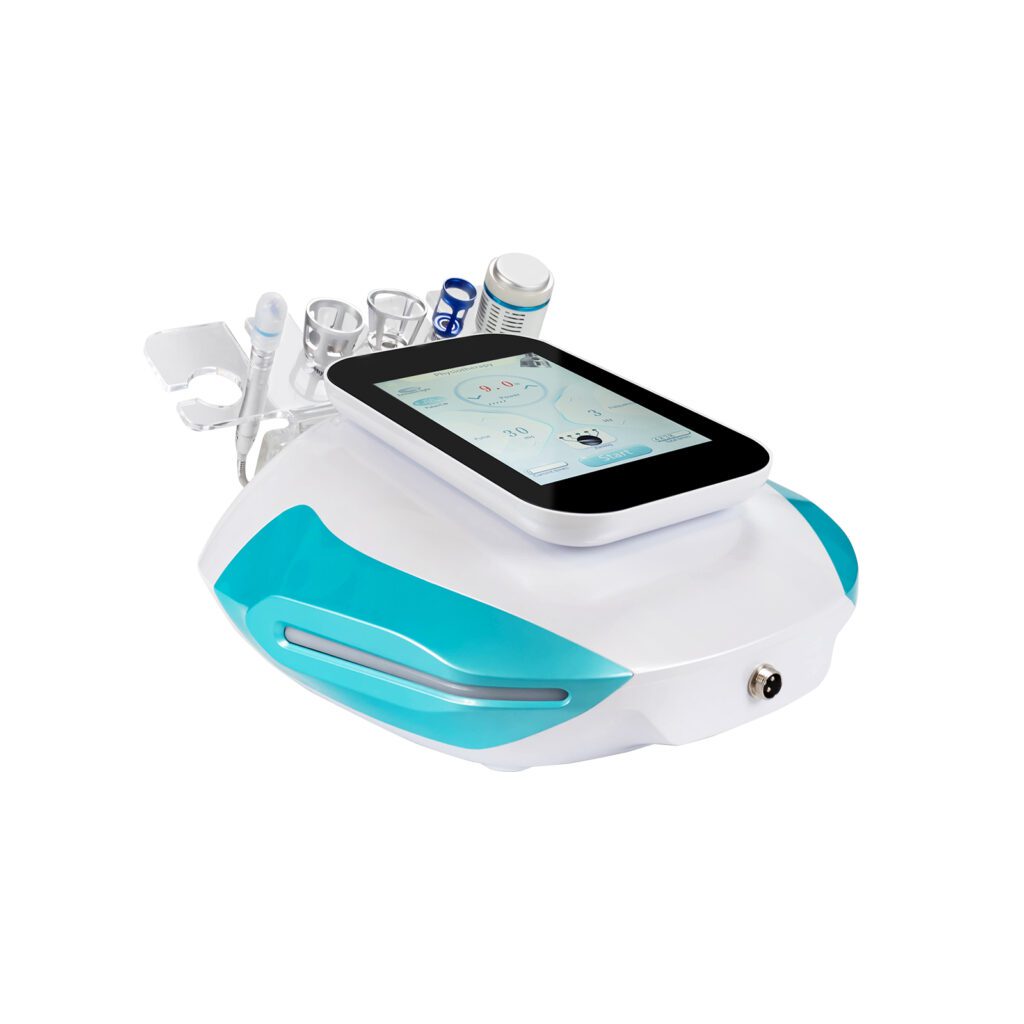
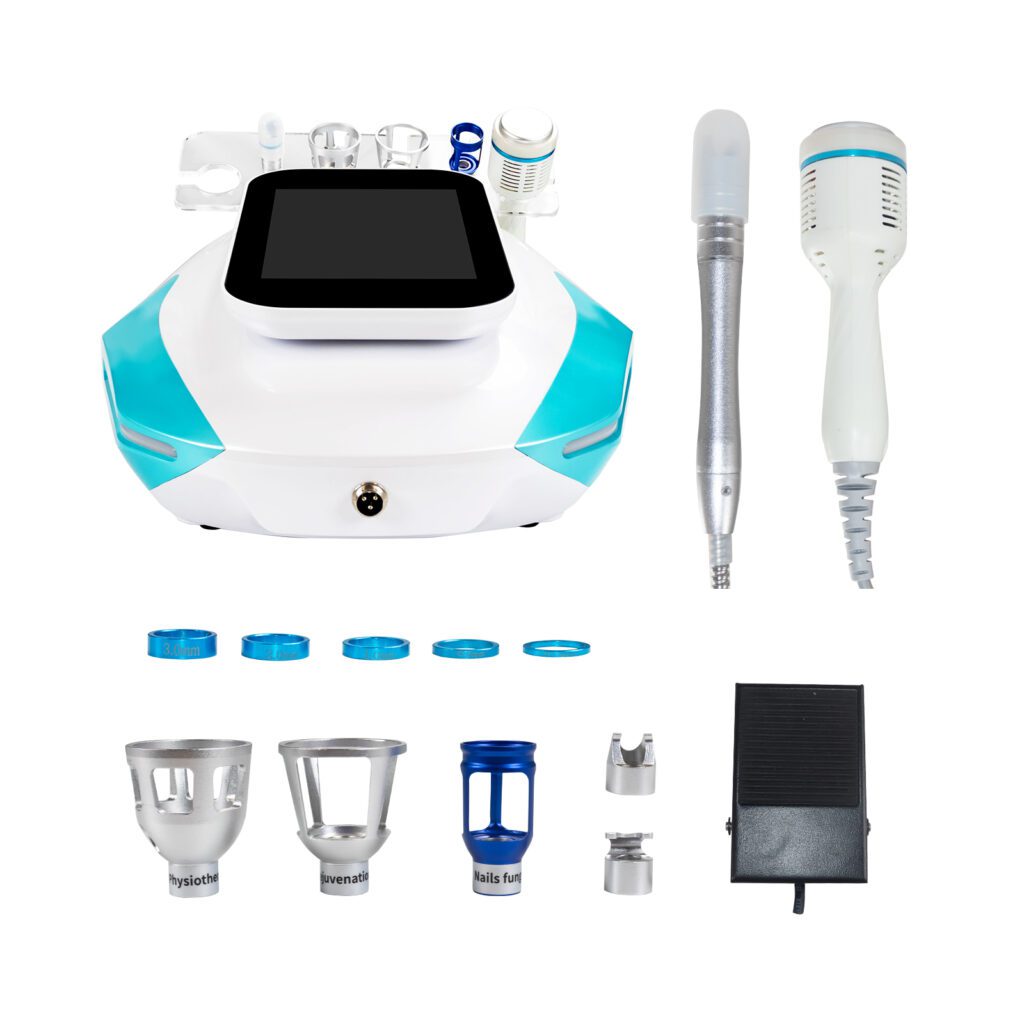
Basic facial equipment usually has lower unit profit but faster sales. This includes small bubble devices, hydro cleansing machines, oxygen spray devices, ultrasonic tools, cold and hot hammers, and basic multifunction facial platforms. These products are easy for salons to understand and easier for new agents to sell, but price competition is strong.
Mid-range professional devices can provide better margin. This includes RF facial devices, EMS microcurrent devices, LED therapy devices, skin analyzers, electroporation devices, and body slimming support devices. The agent can earn more if training and project packaging are strong.
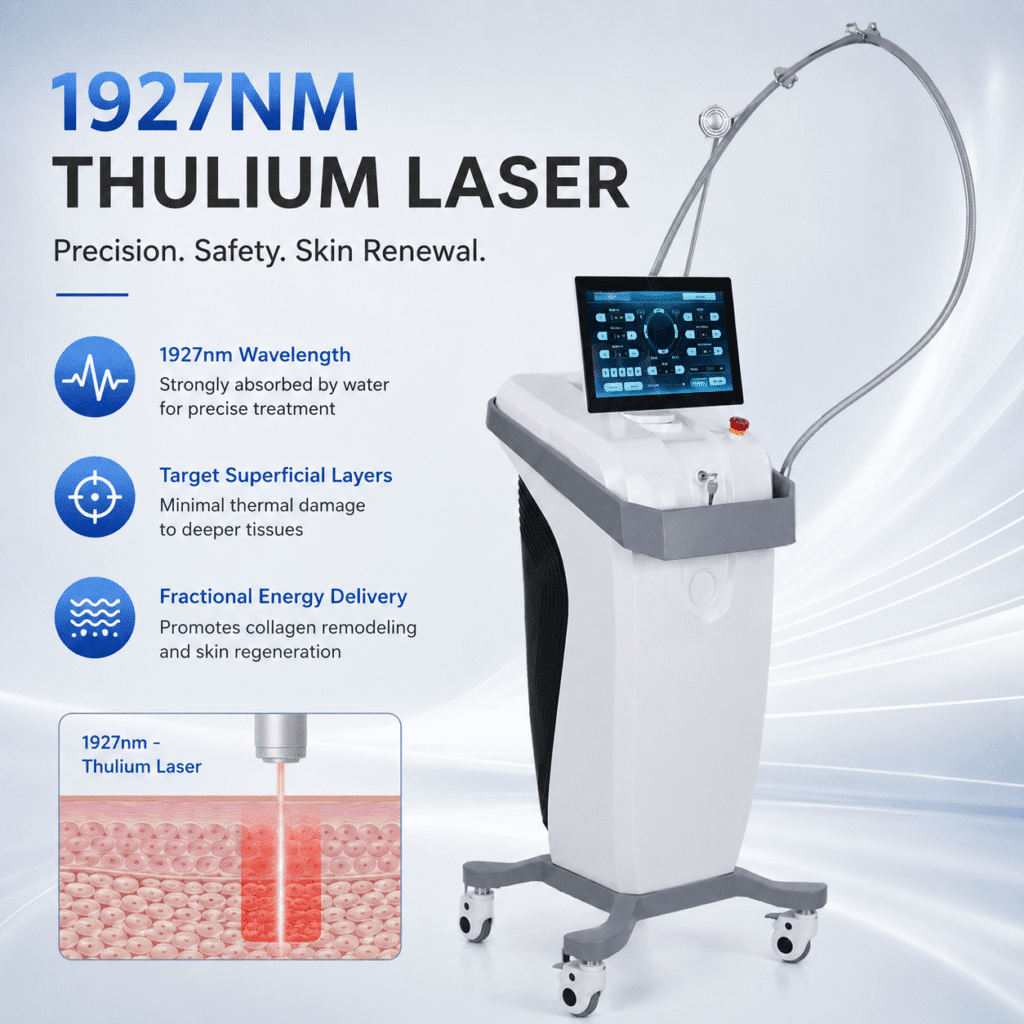
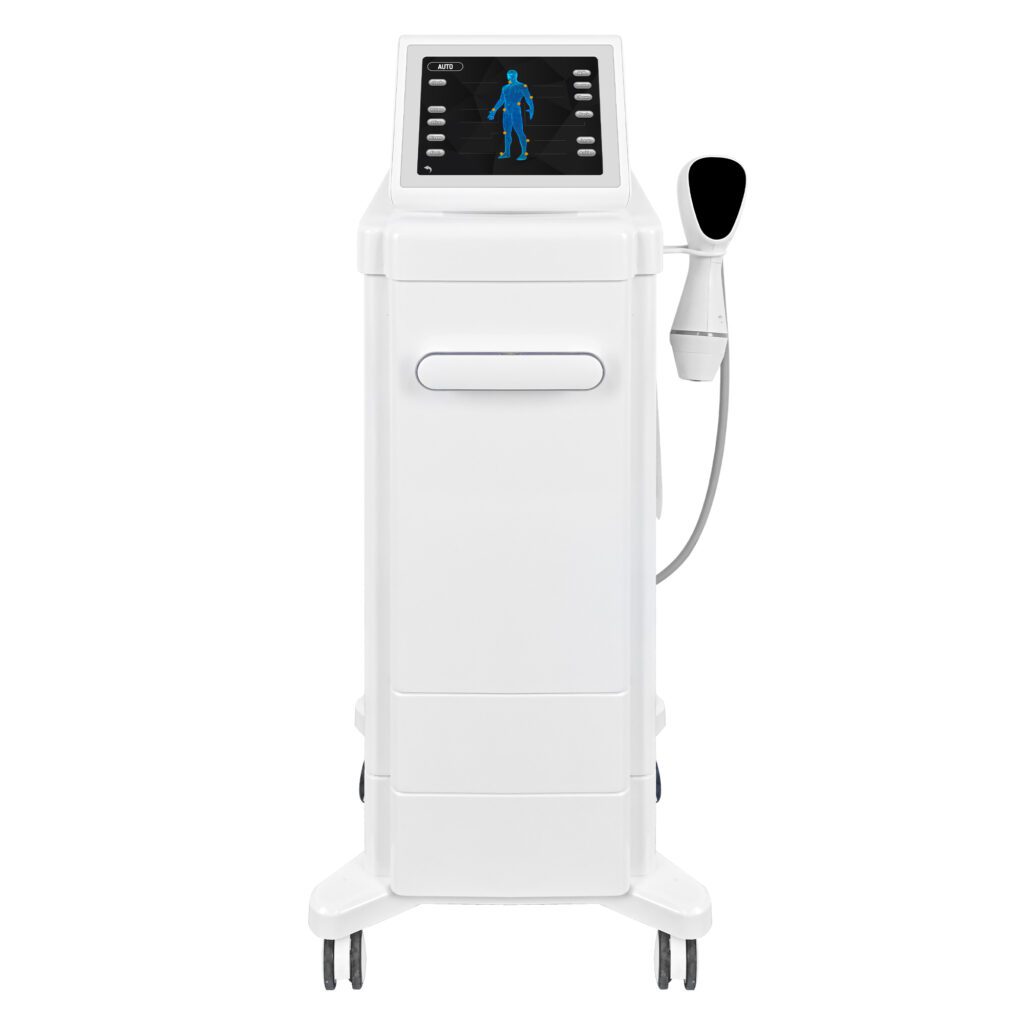
High-end energy-based devices can provide high absolute profit, but sales are slower and service requirements are heavier. This includes laser, IPL, advanced RF, premium body contouring, high-end skin analyzers, and imported platforms.
Consumables and accessories may have strong recurring margins. But they only work if salons continue using the device.
6. Low-End Device Profit
Low-end devices are easy to enter but hard to defend. Many suppliers sell similar products, and online prices are visible.
Typical characteristics:
- Lower selling price.
- Thin gross margin.
- Fast comparison by customers.
- Many competing sellers.
- Lower training requirement.
- Higher risk of price war.
Agents may earn about 10 percent to 25 percent gross margin in heavily competitive low-end categories. The advantage is quick turnover. The disadvantage is weak loyalty.
Low-end devices are suitable for traffic, starter packages, and customer acquisition. They should not be the only profit source.
7. Basic Salon Equipment Profit
Basic salon equipment is often the entry point for agents. It includes hydro cleansing, oxygen spray, LED support, ultrasonic import/export, simple RF, EMS, and multifunction facial devices.
Typical gross margin may be around 15 percent to 35 percent, depending on supplier price, local competition, and service level.
Profit improves when the agent provides:
- Training.
- Treatment menu templates.
- Consumables supply.
- Warranty.
- Quick repair.
- Bundle pricing.
- Salon ROI guidance.
If the agent only sells the machine with no service, buyers will compare the lowest price.
8. Mid-Range Professional Device Profit
Mid-range professional devices often offer the best balance between margin and sales difficulty. Examples include RF facial devices, EMS microcurrent systems, better LED devices, skin analyzers, body contouring support devices, hair removal systems, and anti-aging platforms.
Typical gross margin may be around 25 percent to 50 percent when the device is differentiated and the agent offers training and project packaging.
These devices are attractive because salons can build higher-value packages around them. A salon may pay more if the agent can explain how the device supports anti-aging, skin management, acne-prone care, hair removal, or body contouring projects.
The main risk is after-sales. Higher technology means more training and service responsibility.
9. High-End Device Profit
High-end devices can produce large absolute profit per sale, but they are not easy products. The sales cycle is longer, the buyer is more cautious, and the agent may need demonstrations, financing, installation, training, and technical support.
Typical gross margin may be around 15 percent to 40 percent depending on brand, exclusivity, import cost, and service burden. A lower percentage can still be attractive if the unit price is high.
For example, 20 percent gross margin on a USD 20,000 device produces USD 4,000 gross profit. But the agent must subtract demo cost, travel, installation, staff training, warranty reserve, and possible spare parts.
High-end devices are suitable for experienced agents, regional distributors, premium salon networks, and agents with technical service capability.
10. Imported Equipment Profit
Imported beauty equipment can support higher selling prices when the brand is recognized and the customer values premium positioning. However, imported equipment also has higher cost and higher risk.
Additional costs may include:
- International freight.
- Customs duties.
- Import taxes.
- Currency risk.
- Local registration or documentation.
- Spare parts delay.
- Brand authorization.
- Training localization.
- Higher repair cost.
Imported equipment may produce good profit when the agent has official authorization, territory protection, strong salon buyers, and premium service ability. Without these, imported equipment can become slow-moving inventory.
11. Domestic Equipment Profit
Domestic beauty equipment often gives agents more flexibility. Purchase cost is usually lower, delivery is faster, customization is easier, and spare parts are more accessible.
Domestic equipment can be profitable in:
- Basic salon devices.
- Skin management equipment.
- LED devices.
- RF and EMS devices.
- Multifunction platforms.
- Body contouring support devices.
- OEM and private-label sales.
The risk is price competition. If many agents sell the same model, margin can fall quickly. Domestic equipment profit depends on supplier quality, channel protection, after-sales support, and product differentiation.
12. OEM And Private-Label Profit
OEM and private-label beauty equipment can offer higher gross margin because the agent controls the brand, packaging, price, and channel. Gross margin may reach 20 percent to 60 percent in some cases.
But the agent also takes more responsibility:
- Brand marketing.
- Product documentation.
- Quality control.
- Warranty.
- Spare parts.
- Customer complaints.
- Compliance claims.
- Inventory.
- Packaging and manuals.
Private label is not just putting a logo on a machine. It is building a small brand system. It can be profitable for experienced agents but risky for beginners.
13. Consumables And Accessories Profit
Consumables and accessories can be more stable than device margin because they create repeat orders.
Examples include:
- Hydro facial solution.
- Disposable tips.
- Filters.
- Conductive gel.
- Cooling gel.
- Treatment pads.
- Protective eyewear.
- Replacement handles.
- Cables.
- Lamps or modules.
- Maintenance kits.
Gross margin may be around 30 percent to 70 percent depending on category and competition. But consumables only generate profit when salons actually use the device frequently.
Agents should not ignore consumables. They turn a one-time sale into an ongoing customer relationship.
14. Training And Service Profit
Some agents can charge for training, installation, maintenance, extended warranty, or project launch support. This is especially suitable for professional devices and high-ticket equipment.
Service profit can come from:
- On-site installation.
- Staff operation training.
- Treatment protocol training.
- Sales consultation scripts.
- Project menu design.
- Annual maintenance.
- Extended warranty.
- Repair services after warranty.
Many agents give these services away for free to close the first sale. That may be necessary in competitive markets, but the agent should still calculate the cost. Free service is not free if it consumes time and staff.
15. Real Net Profit After Costs
Real net profit is often much lower than gross margin. A disciplined agent may keep around 5 percent to 20 percent net profit after full operating costs. Strong agents with fast turnover, recurring consumables, low after-sales cost, and protected channels may do better. Weak agents with high inventory, poor supplier support, and price wars may lose money.
Important cost deductions include:
- Advertising.
- Sales commission.
- Delivery.
- Import cost.
- Demo unit depreciation.
- Training time.
- Warranty reserve.
- Repair parts.
- Customer support.
- Storage.
- Unsold stock.
- Discounting.
- Payment fees.
- Refunds.
The profit that matters is not the number on the quotation. It is the money left after the customer is served and the warranty risk is covered.
16. Example Profit Scenario: Basic Facial Device
Assume an agent buys a hydro facial device for USD 700 and sells it to a salon for USD 1,100.
Gross profit is USD 400. Gross margin is 36.4 percent.
Estimated costs:
- Freight: USD 50.
- Training time allocation: USD 60.
- Marketing cost: USD 40.
- Warranty reserve: USD 60.
- Payment and administration: USD 30.
Estimated real profit becomes USD 160.
This example shows why a 36.4 percent gross margin may become much lower after service cost.
17. Example Profit Scenario: Mid-Range RF Device
Assume an agent buys an RF and EMS device for USD 1,800 and sells it for USD 3,200.
Gross profit is USD 1,400. Gross margin is 43.8 percent.
Estimated costs:
- Freight: USD 120.
- Demo and sales cost allocation: USD 150.
- Training: USD 200.
- Warranty reserve: USD 150.
- Spare parts reserve: USD 100.
- Administration: USD 80.
Estimated real profit becomes USD 600.
The sale is still profitable, but less than the headline margin suggests.
18. Example Profit Scenario: High-End Device
Assume an agent buys a high-end body contouring or energy-based device for USD 10,000 and sells it for USD 14,000.
Gross profit is USD 4,000. Gross margin is 28.6 percent.
Estimated costs:
- Freight and installation: USD 500.
- Sales travel and demo: USD 600.
- Training: USD 500.
- Warranty reserve: USD 800.
- Spare parts allocation: USD 400.
- Financing or payment delay cost: USD 300.
Estimated real profit becomes USD 900.
This does not mean high-end devices are bad. It means the agent must manage costs carefully. A high-ticket sale can look profitable but still carry heavy service burden.
19. Example Profit Scenario: Consumables
Assume an agent buys consumables for USD 300 and sells them to salons for USD 600.
Gross profit is USD 300. Gross margin is 50 percent.
If shipping, storage, payment fees, and replacement loss cost USD 60, real profit is USD 240.
Consumables can be attractive because the service burden is often lower than equipment sales. But the agent must ensure compatibility, expiration control, packaging quality, and repeat demand.
20. Why High Gross Margin Does Not Always Mean Good Business
A product with high gross margin can still be a bad business if:
- It sells slowly.
- It has high return rate.
- It has frequent technical faults.
- Customers need repeated training.
- Warranty cost is high.
- Online price collapses.
- The supplier stops supporting parts.
- The device becomes outdated.
- Claims create complaints.
- The agent must discount heavily.
The best product is not always the highest-margin product. It is the product with healthy margin, steady demand, low complaint rate, and repeat sales potential.
21. Profit By Agent Type
Different agent types earn different margins.
A referral agent or sales introducer may earn a smaller commission because they do not handle inventory or after-sales. This model has low risk but limited profit.
An online reseller may earn moderate margin but faces high price comparison and trust barriers.
A local service agent can earn higher margin if they provide demonstration, training, and after-sales support.
A regional distributor can earn stronger profit through wholesale volume, dealer network, spare parts, consumables, and channel control.
A brand owner or private-label agent can earn higher margin but carries more risk.
The more value and risk the agent carries, the more margin the agent should require.
22. New Agent Profit Reality
New agents usually should not expect high net profit immediately. The first stage often requires investment in:
- Product testing.
- Demo units.
- Website or content.
- Salon visits.
- Training.
- Sample videos.
- Advertising.
- Supplier screening.
- Customer trust building.
Early gross margins may look good, but net profit can be thin. The goal of the first stage is to find sellable products and repeatable customers.
New agents should focus on low-risk products, clear demand, and fast turnover before chasing high-ticket machines.
23. Regional Distributor Profit Reality
Regional distributors can make stronger profit because they may control local dealer pricing, maintain inventory, provide training, and handle after-sales.
Their profit comes from:
- Bulk purchasing.
- Dealer wholesale margin.
- Salon direct sales.
- Consumables.
- Spare parts.
- Training.
- Service.
- Repeat upgrades.
But their costs are also higher. They need warehouse space, staff, technicians, demo rooms, inventory, marketing, and warranty reserves.
Regional distribution can be profitable only when sales volume and channel discipline are strong.
24. What Reduces Agent Profit
Common profit killers include:
- Buying too much stock.
- Selling too many similar models.
- Competing only on price.
- Choosing suppliers with weak quality.
- Ignoring after-sales cost.
- No spare parts.
- Weak training.
- High customer refund rate.
- Poor payment collection.
- Selling products with unclear claims.
- No channel protection.
- Slow inventory turnover.
Many agents do not lose money because the market is bad. They lose money because the business model has no margin protection.
25. What Increases Agent Profit
Profit improves when the agent builds a full solution around the device.
Useful strategies include:
- Choose products with proven demand.
- Avoid too many overlapping models.
- Negotiate better supplier terms.
- Keep demo units.
- Sell treatment packages, not only machines.
- Provide training and consultation scripts.
- Add consumables and accessories.
- Maintain spare parts.
- Offer extended warranty.
- Protect channel price.
- Track warranty cost by model.
- Use preorder for expensive devices.
- Help salons calculate ROI.
The agent should make profit from value creation, not only price difference.
26. How To Price Beauty Equipment As An Agent
A practical pricing formula is:
Selling price = landed cost + sales cost + service cost + warranty reserve + desired profit + risk buffer.
Landed cost includes purchase price, freight, import cost, and payment fees.
Sales cost includes advertising, demo, commission, and customer visits.
Service cost includes training, installation, remote support, and after-sales time.
Warranty reserve covers possible repair, parts, and replacement.
Risk buffer covers slow payment, exchange, discounting, and unsold stock.
If the agent ignores these costs, the quoted margin may be false.
27. How Much Margin Should An Agent Require?
The required margin depends on service burden.
For device-only sales with no inventory and supplier direct shipment, lower margin may be acceptable.
For products that need demonstration, training, and after-sales, the agent should require higher margin.
For high-ticket products with long sales cycles, the agent should calculate cash flow and risk before accepting a low percentage.
For products with frequent technical issues, even high margin may not be enough.
A useful rule is this: margin should rise as the agent’s service responsibility rises.
28. Inventory Directly Affects Profit
Inventory can increase profit if it improves delivery speed and sales conversion. But inventory can also reduce profit if products move slowly.
Inventory costs include:
- Cash tied in stock.
- Storage.
- Model updates.
- Damage.
- Discounting old stock.
- Warranty time loss.
- Financing cost.
- Unsold inventory.
Agents should track inventory turnover. A lower-margin product that sells quickly may be better than a high-margin product that sits for six months.
29. After-Sales Service Protects Profit
After-sales service can look like a cost, but it protects long-term profit. Salons buy again from agents who respond quickly.
Important after-sales elements include:
- Written warranty.
- Spare parts.
- Remote technical support.
- Operator training.
- Maintenance reminders.
- Clear repair process.
- Replacement policy.
- Fast communication.
Good after-sales increases repurchase. Poor after-sales turns one sale into a complaint and damages referrals.
30. Compliance And Claims Affect Profit
Beauty equipment agents should be careful with claims. FDA guidance states that aesthetic devices may be regulated depending on intended use and whether they affect the structure or function of the body. FTC guidance states that health-related claims should be truthful, not misleading, and supported by reliable evidence.
Risky claims can create refund pressure, complaints, advertising problems, and regulatory issues.
Agents should avoid unsupported claims such as:
- Guaranteed weight loss.
- Permanent lifting.
- Cure acne.
- Remove all wrinkles.
- Medical diagnosis.
- No side effects.
- One-session transformation.
Compliance risk can destroy profit faster than a low margin.
31. Product-Market Fit Determines Profit More Than Margin
The most profitable beauty equipment is the one that salons can actually sell to their customers.
A product has strong product-market fit when:
- Salons understand the project.
- Consumers accept the treatment.
- Price is realistic.
- Training is simple enough.
- Results are explainable.
- The device is reliable.
- The supplier supports after-sales.
- Consumables or upgrades are available.
- Competitors cannot easily copy the package.
Without product-market fit, even a 60 percent gross margin can become useless because the product does not sell.
32. How Agents Can Estimate Monthly Profit
Agents can estimate profit with a simple model.
Monthly net profit = total gross profit from device sales + consumables profit + service profit – marketing cost – staff cost – shipping cost – warranty cost – inventory cost – operating cost.
Important metrics:
- Number of units sold per month.
- Average gross profit per unit.
- Average after-sales cost per unit.
- Consumables reorder rate.
- Customer acquisition cost.
- Inventory turnover.
- Refund rate.
- Dealer payment cycle.
Agents should calculate monthly profit by category, not only total revenue.
33. Example Monthly Profit Model
Assume an agent sells:
- 6 basic facial devices with USD 180 real profit each.
- 3 mid-range RF devices with USD 600 real profit each.
- Consumables with USD 800 real profit.
- Training and service packages with USD 500 real profit.
Total real gross contribution is:
- Basic devices: USD 1,080.
- RF devices: USD 1,800.
- Consumables: USD 800.
- Service: USD 500.
- Total: USD 4,180.
If monthly fixed costs are USD 2,000, estimated net profit is USD 2,180.
This example shows why mixed profit sources are healthier than relying on one product type.
34. Profit Is Higher When The Agent Helps Salons Make Money
Beauty salons do not buy equipment only because the machine is cheap. They buy because they believe the device can create revenue.
Agents can increase profit by helping salons with:
- Project pricing.
- Treatment menu design.
- Staff consultation.
- Before-and-after tracking.
- Trial session planning.
- Membership packages.
- ROI calculation.
- Customer objection handling.
- Aftercare guidance.
When the agent helps salons make money, the salon is less likely to compare only the machine price.
35. Suggested Profit Strategy For New Agents
New agents should use a low-risk profit strategy.
Recommended actions:
- Start with 2 to 3 product categories.
- Avoid heavy inventory.
- Keep demo units.
- Sell fast-moving basic equipment.
- Add one mid-range professional device.
- Use preorder for high-ticket equipment.
- Keep consumables and spare parts.
- Track every cost.
- Build local salon relationships.
- Avoid price war products.
The goal is stable repeatable profit, not one lucky high-margin order.
36. Suggested Profit Strategy For Regional Distributors
Regional distributors should build a portfolio and channel system.
Recommended actions:
- Separate low-end, mid-range, and premium lines.
- Create dealer price rules.
- Protect territory.
- Maintain demo room.
- Train dealers.
- Stock fast-moving products.
- Use deposit orders for high-ticket devices.
- Build consumables and spare parts revenue.
- Track warranty cost.
- Build salon ROI materials.
Regional distributors can earn better profit when they control channel conflict and service quality.
37. Suggested Profit Strategy For Manufacturers
Manufacturers should understand agent profit because agents will not promote products that do not make money.
Useful support includes:
- Reasonable wholesale price.
- Territory protection.
- Stable model life cycle.
- Training materials.
- Marketing content.
- Spare parts.
- Warranty clarity.
- Demo unit policy.
- Fast replenishment.
- Compliance-friendly claim language.
Manufacturers that protect agent profit will build stronger channels.
Conclusion
Beauty equipment agents can make money, but the real profit is usually lower than the simple markup shown on a quotation. Equipment gross margins may often range from 15 percent to 50 percent depending on category, while consumables, accessories, and service packages can add stronger recurring profit. Real net profit after marketing, shipping, training, warranty, inventory, and operating cost may commonly fall around 5 percent to 20 percent for disciplined distributors, with higher results possible for strong operators and losses possible for weak operators.
The most profitable agents do not only buy low and sell high. They choose products with proven demand, protect cash flow, avoid excessive inventory, provide demo and training, build consumables revenue, manage after-sales cost, and help beauty salons calculate ROI.
In this industry, profit is not only in the machine. Profit is in product selection, channel control, service capability, customer trust, and repeat purchase.
FAQ
How much gross margin can a beauty equipment agent usually make?
Many agents may see about 15 percent to 50 percent gross margin on equipment sales depending on category, competition, service level, and supplier terms. Low-end products are usually lower, while differentiated mid-range devices can be higher.
What is the real net profit of a beauty equipment distributor?
Real net profit is often much lower than gross margin. After marketing, shipping, training, warranty, inventory, staff, and operating costs, disciplined distributors may keep around 5 percent to 20 percent net profit, depending on execution.
Which beauty equipment products have better profit potential?
Mid-range RF, EMS, LED, skin analyzers, body contouring devices, hair removal systems, consumables, accessories, spare parts, and service packages can have good profit potential when demand and after-sales support are clear.
Is high-end beauty equipment more profitable?
High-end equipment can produce higher absolute profit per sale, but it usually has a longer sales cycle, higher service cost, higher inventory risk, and stronger compliance requirements.
How can beauty equipment agents increase profit?
Agents can increase profit by selecting proven products, avoiding price wars, keeping demo units, adding consumables, providing training, managing after-sales cost, protecting channel pricing, and helping salons calculate ROI.