








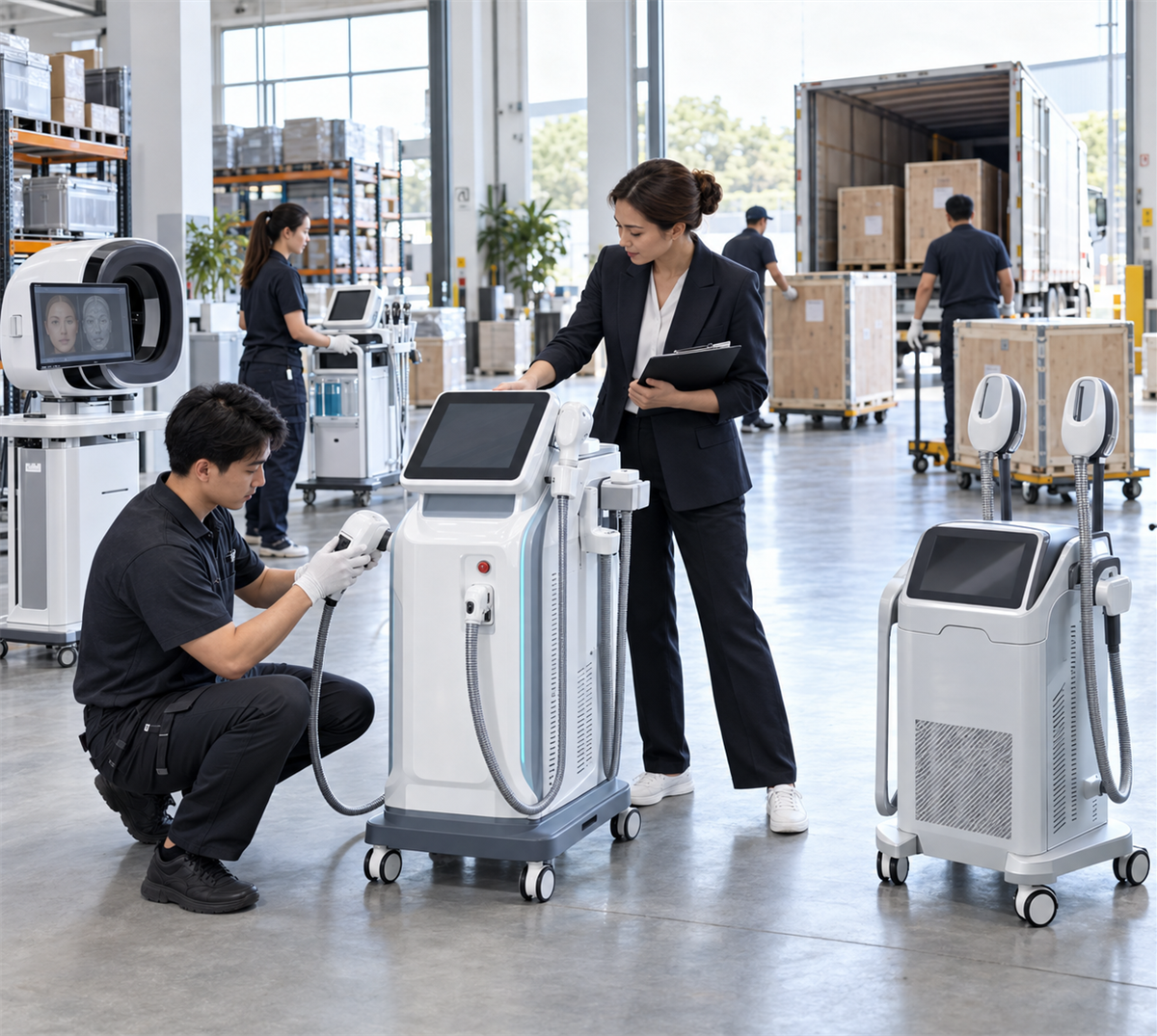
Professional beauty devices with strong market demand usually share three characteristics: consumers understand the service, beauty businesses can build a repeatable menu around it, and distributors can support the equipment after delivery. A technology may attract attention online, but sustainable demand depends on what salons, med spas, skin clinics and body contouring centers can actually sell and operate.
Current procedure data provides useful signals. The International Society of Aesthetic Plastic Surgery reported that hair removal and non-surgical skin tightening were among the five most common non-surgical procedures performed by plastic surgeons worldwide in 2024. The same report counted about 1.49 million hair removal procedures and 1.24 million non-surgical skin tightening procedures. These figures measure procedures, not device sales, but they confirm that recognizable device-based services remain an important part of the professional aesthetics market.
This guide examines the professional beauty device categories with the strongest practical demand, the businesses they suit, the relevant SHEFMON models and the factors distributors should assess before investing in stock.
Executive Summary
The strongest broad-market categories are facial cleansing and hydration, hair removal, non-surgical anti-aging and skin tightening, advanced skin treatments, and body contouring. Demand within each category is not equal in every country, and popularity does not remove the need for training, local compliance and responsible customer selection.
For broad salon demand, Hydra beauty machines are a practical foundation because they can support frequent cleansing, exfoliation and hydration services. The A0648 9-in-1 Diamond Hydro Microdermabrasion Peeling Machine is one relevant SHEFMON model.
For repeat-course demand, diode laser hair removal equipment remains commercially important. The A0426 multi-wavelength diode laser hair removal machine can be evaluated by qualified salons, laser studios, med spas and clinics.
For higher-value anti-aging menus, buyers can compare HIFU, RF and facial EMS systems. The A0203 25D Four-Handle Advanced HIFU Machine with RF EMS represents a multi-technology option for trained businesses with structured consultations.
For advanced clinics, MNRF microneedling and selected laser and IPL systems can address focused service demand. For body businesses, Cryolipolysis, EMSlim and Endos Velapro provide distinct service concepts rather than interchangeable slimming claims.
Distributors should prioritize verified local demand, customer readiness, service frequency, support burden and portfolio fit. Strong market demand is valuable only when the equipment can be sold responsibly and supported reliably.
1. What Strong Market Demand Really Means
Market demand should not be judged by social media visibility alone. A professional beauty device has commercially meaningful demand when several indicators align.
Consumer awareness
Clients already recognize the service or can understand it quickly. Hair removal, deep cleansing facials, skin tightening and body contouring are easier to explain than a device sold only through an unfamiliar technical acronym.
Buyer demand
Salons and clinics actively request quotations, demonstrations, training and service-menu guidance. Distributor inquiry data is often more useful than broad market reports because it reflects the actual territory.
Repeat-service potential
The category can support treatment courses, maintenance appointments, memberships or complementary services. Repeatability helps the equipment generate utilization after the launch period.
Operational fit
The device fits common treatment rooms, staffing levels and client flow. A popular technology may still have limited demand if most local buyers cannot meet its operating requirements.
Supportability
Consumables, handpieces, cartridges and spare parts can be supplied consistently. Training and technical support are available. A device category cannot sustain demand if customers fear downtime.
Responsible claims
The service can be marketed using accurate, supportable language. Exaggerated promises may create short-term sales but damage trust and increase complaints.
A distributor should therefore evaluate market strength through service demand, equipment inquiries and operational evidence, not through a single growth forecast.
2. Current Demand Signals from Professional Aesthetics
The latest completed ISAPS Global Survey 2024 reported approximately 20.5 million non-surgical procedures performed by plastic surgeons worldwide. Hair removal ranked third among the reported non-surgical procedures, while non-surgical skin tightening ranked fourth. Skin tightening showed substantial year-over-year growth in that dataset, while hair removal remained a high-volume category despite a decline from 2023.
The American Society of Plastic Surgeons 2024 statistics also track skin resurfacing, laser-based skin treatment, noninvasive fat reduction and non-surgical skin tightening. These figures support the continuing relevance of energy-based skin, laser and body services, although US procedure statistics should not be treated as a universal forecast for every market.
These reports have important limitations for equipment buyers:
- They count procedures rather than machine purchases.
- They cover defined provider groups and may not represent all salons or clinics.
- They group different technologies into broad procedure categories.
- They do not show local equipment prices, utilization or distributor margins.
- A large procedure category can still be highly competitive.
Use the data as a demand signal, then validate it with local salons, clinics, search behavior, competitor menus, quotation history and demonstration attendance.
3. Demand Overview by Device Category
| Device category | Main demand driver | Typical buyers | Revenue pattern | Distributor priority |
|---|---|---|---|---|
| Hydra and facial care | Broad facial demand and frequent maintenance | Salons, spas, facial studios and clinics | Single sessions, upgrades and memberships | Strong foundation category |
| Diode laser hair removal | Clear consumer goal and course-based visits | Laser studios, med spas, qualified salons and clinics | Area packages and treatment courses | Strong specialist anchor |
| HIFU, RF and facial EMS | Demand for non-surgical firming and contouring | Established salons, med spas and clinics | Premium sessions and programs | High-value growth category |
| MNRF microneedling | Demand for advanced texture and rejuvenation programs | Skin clinics and advanced med spas | Multi-session programs and consumables | Professional clinic category |
| Fractional and pigment-focused laser | Focused concerns and clinic differentiation | Laser and skin clinics | Premium treatment programs | Advanced specialist category |
| Cryolipolysis | Localized body contouring interest | Body centers and med spas | Focus-area programs | Selective premium body category |
| EMSlim | Muscle-stimulation-style body services | Body studios, wellness centers and med spas | Course packages | Growing body category |
| Endos and roller systems | Body smoothing and maintenance | Salons, spas and body centers | Repeat maintenance sessions | Complementary body category |
| RF cavitation | Accessible body firming and contour-support menus | Salons and body studios | Courses and add-ons | Entry body category |
| Specialty wellness | Niche service differentiation | Women wellness and specialist centers | Program-based | Market-dependent niche |
No distributor needs equal inventory across every category. The right priority depends on local customers and technical support capacity.
4. Hydra and Multi-Function Facial Devices
Hydra and multi-function facial systems have durable demand because facial cleansing and hydration are core services for many beauty businesses. They are relevant to new salons, established spas, skin-management studios and clinics that need accessible maintenance services.
The A0648 Hydro Microdermabrasion Machine is listed by SHEFMON as a nine-function vertical platform. It is designed to bring several facial-care functions into one system, making it relevant to buyers who want to create service tiers from a single device.
Why demand is strong
- Facial services address a wide customer base.
- Cleansing and hydration are easy to communicate.
- Salons can offer entry and premium versions.
- Services can fit monthly maintenance programs.
- The category is useful to both new and established businesses.
- Multi-function platforms can help space-conscious salons broaden a menu.
Best buyer profiles
- New facial salons selecting a first professional machine.
- Community salons needing frequent, accessible services.
- Skin-management centers developing memberships.
- Spas upgrading manual facials.
- Clinics adding maintenance services around advanced programs.
Distributor selection criteria
Compare the exact handles, vacuum controls, solution system, cleaning process, bottle and tubing design, interface language and consumable supply. Ask the customer how many included functions will become named services. Functions without a menu role add complexity but not demand.
Service-menu examples
- Express cleansing facial.
- Deep-cleansing and extraction service.
- Hydration and glow facial.
- Premium multi-step facial.
- Monthly skin-management membership.
For many distributors, Hydra devices are useful demonstration products because the workflow can be shown clearly and the target buyer group is broad.
5. Diode Laser Hair Removal Devices
Hair removal remains one of the most recognizable device-based aesthetic services. The latest completed ISAPS survey places hair removal among the leading non-surgical procedures performed by plastic surgeons worldwide, supporting its continuing relevance as a professional category.
The A0426 Diode Laser Hair Removal Machine is presented by SHEFMON with 755, 810, 940 and 1064 nm wavelength options. The exact ordered configuration, handpiece, cooling system and operating specifications should be confirmed before purchase.
Why demand is strong
- Consumers understand the treatment goal.
- Services are commonly sold by body area.
- Customers often purchase courses rather than one session.
- Men and women can represent meaningful client groups.
- The service can support maintenance appointments.
- Laser studios can build a focused business around the category.
Best buyer profiles
- Dedicated hair removal studios.
- Med spas expanding repeat-course services.
- Skin clinics with trained laser operators.
- Established salons where local rules and qualifications allow.
What protects long-term demand
Strong cooling, comfortable handpiece handling, realistic appointment times, dependable technical support and responsible consultation matter more than an impressive wavelength list alone. Distributors should understand eye protection, room workflow, operator training, client screening and local device rules.
Service-menu examples
- Small-area introductory package.
- Single-area course.
- Multi-area course.
- Full-body package where appropriate.
- Maintenance appointments based on individual needs.
Hair removal can be a strong distributor anchor, but it is also competitive. A distributor should differentiate through training, parts availability, response time and accurate model comparison rather than price alone.
6. HIFU and Non-Surgical Skin Tightening Devices
Demand for non-surgical skin tightening is supported by both global and US professional procedure reports. For equipment businesses, this demand can translate into interest in HIFU, RF and other tightening-focused platforms. These technologies are not interchangeable and should be sold as separate options.
The A0203 25D Four-Handle Advanced HIFU Machine with RF EMS combines focused-ultrasound, RF and EMS-related functions in a vertical platform. Other SHEFMON options include the A0204 9D 7D Focused HIFU Machine 5-in-1, A0205 9D 7D Focused HIFU Machine 5-in-1 and A0270 Vmax HIFU Machine with Radio Frequency.
Why demand is strong
- Anti-aging demand spans multiple adult age groups.
- Lifting-style and firming-style services can support premium pricing.
- Face, jawline and neck concerns are easy to discuss during consultation.
- The category can create a clear step above basic facials.
- Cartridge-based systems may support recurring supply relationships.
Best buyer profiles
- Established anti-aging salons.
- Med spas with consultation-led services.
- Skin clinics with trained operators.
- Multi-service businesses adding a premium department.
Distributor selection criteria
Compare operating modes, handle configuration, standard and optional cartridge depths, cartridge life, interface language, room footprint, training and service support. Confirm which applications the customer plans to offer and whether local requirements permit them.
Demand risk
HIFU demand can be weakened by unrealistic results claims, inconsistent operator skill or confusing model names. Distributors should teach sales teams to compare workflow and configuration rather than treating terms such as 7D, 9D, Vmax and 25D as self-explanatory performance rankings.
7. RF and Facial EMS Devices
RF and facial EMS can serve customers who want anti-aging and facial contouring menus without relying entirely on HIFU. These categories may be particularly useful for salons that already have a facial client base and need a premium add-on or structured program.
SHEFMON options include the BCHYQ045 448k TECAR Vertical Monopolar RF Lifting Machine, A0271-F MAGFACE and A0272-F Emface EMS Face Sculpting Device.
Why demand is attractive
- The category fits the broad anti-aging conversation.
- Services can be positioned as stand-alone programs or facial upgrades.
- Facial EMS provides a distinct muscle-stimulation-style proposition.
- RF platforms may support facial and body menu expansion, depending on configuration.
Best buyer profiles
- Facial salons moving beyond cleansing services.
- Med spas building non-surgical anti-aging programs.
- Facial contouring studios.
- Businesses seeking a middle tier between basic facials and advanced clinic equipment.
Distributor selection criteria
Confirm energy type, contact method, adjustable controls, required gels or accessories, session workflow and training. If a machine combines several modalities, document which handpieces are standard and which are optional.
8. RF Microneedling Devices
RF microneedling has strong professional interest because it can support advanced texture and rejuvenation-focused programs. It belongs in a clinic-oriented portfolio, not in the same sales tier as basic salon facial equipment.
SHEFMON’s MNRF category includes the A0152 Desktop MNRF Depth 8 and A0157 MNRF Depth 8.
Why demand is strong in qualified clinics
- Clinics seek differentiated services beyond maintenance facials.
- Texture, pore and acne-mark appearance concerns are common consultation topics.
- Treatment courses can support repeat visits.
- Single-use tips create ongoing supply demand.
- Compact desktop options can fit clinics with limited space.
Best buyer profiles
- Skin clinics with trained practitioners.
- Advanced med spas with established consultation procedures.
- Acne-scar and texture-focused centers where locally appropriate.
- Clinics prepared to manage sterile or single-use components and aftercare.
Distributor selection criteria
Review tip options, needle configuration, adjustable depth and energy, disposable-component controls, cleaning boundaries, training, treatment records and local regulatory requirements.
The FDA issued a safety communication in October 2025 concerning certain uses of RF microneedling. This reinforces the need for qualified operators, appropriate patient selection, device-specific training and careful regulatory review. Demand should never be used to justify selling advanced equipment to unprepared customers.
9. Fractional, Picosecond and Thulium Laser Devices
Laser-based skin services remain an important professional category, but demand is divided by application. A customer looking for hair removal does not need the same platform as a clinic focused on resurfacing, tattoo removal or pigmentation-related services.
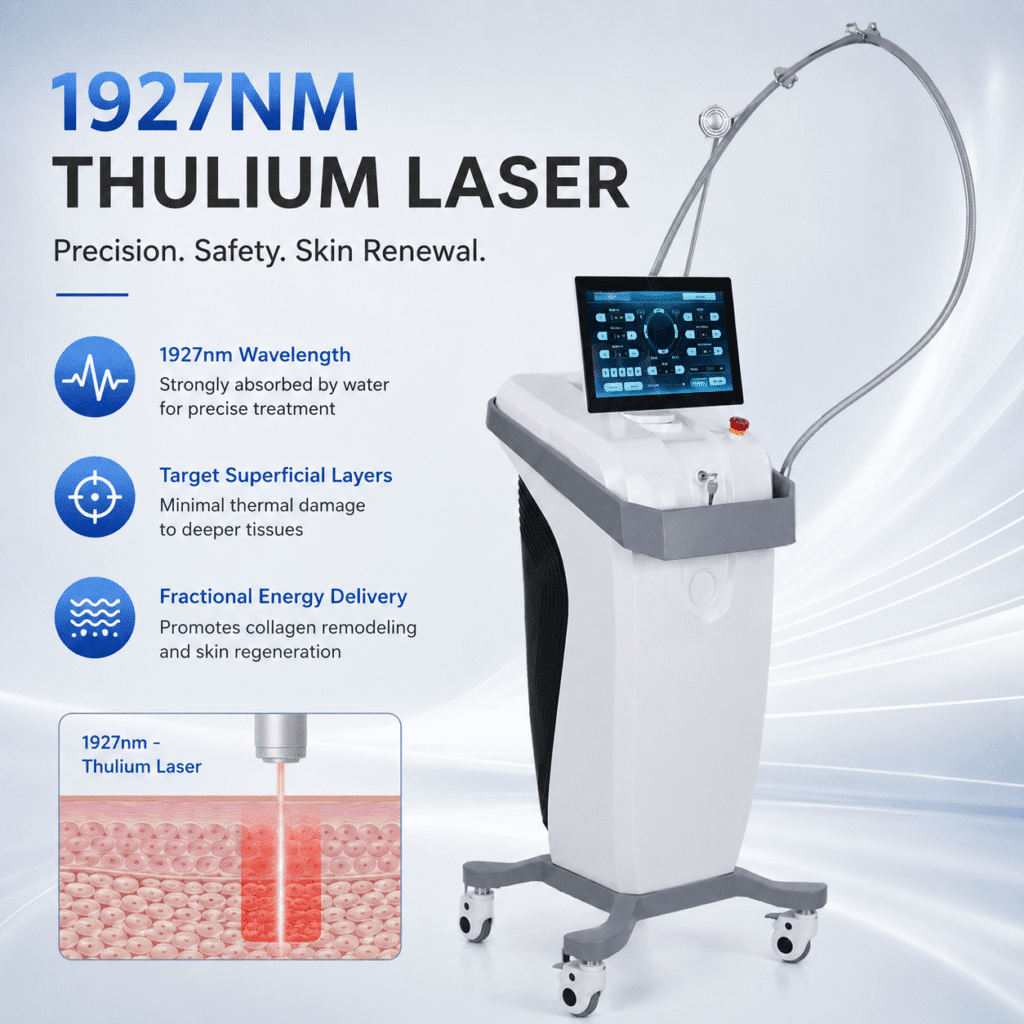
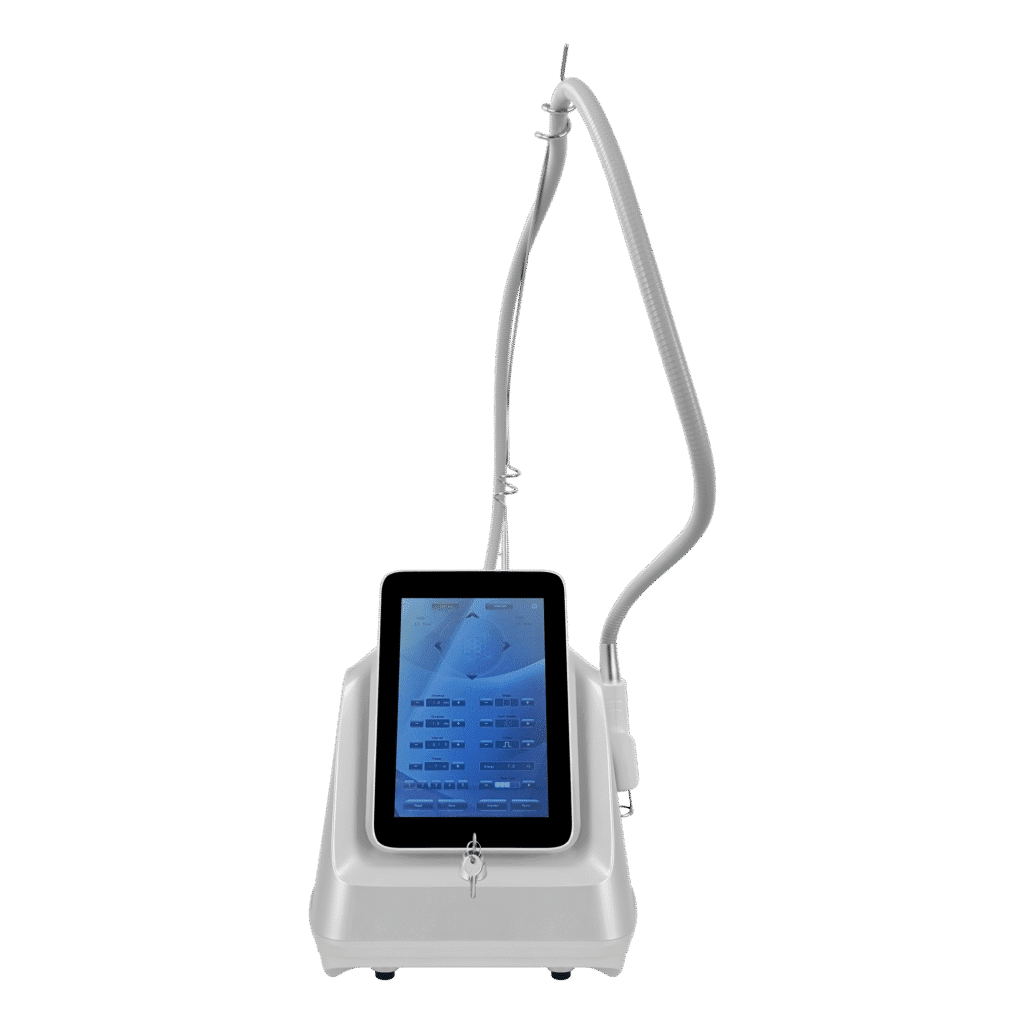
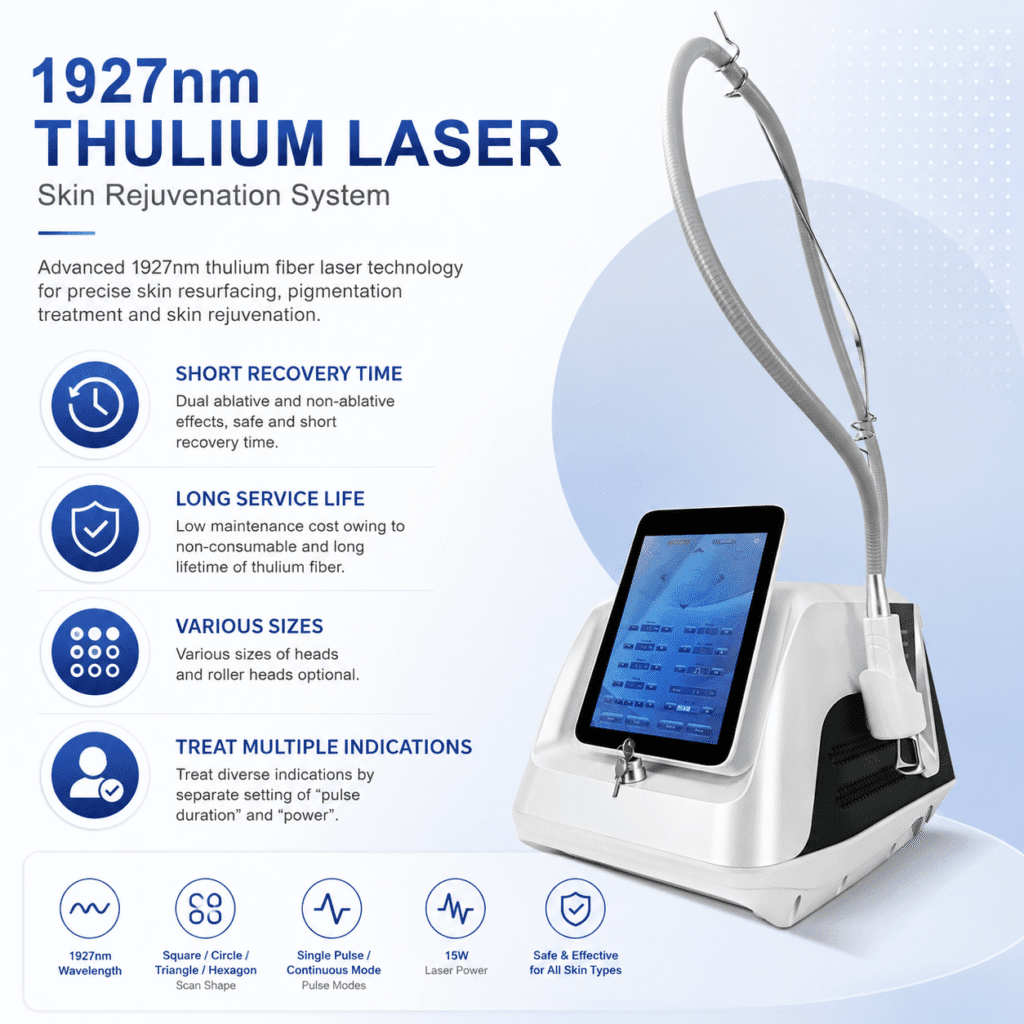
SHEFMON laser options include the A0507 1064nm 532nm Q-Switched Picosecond YAG Laser, A0529 10600nm CO2 Fractional Laser Equipment, A0509 2910nm Fiber Fractional CO2 Ultra Laser and A0531 1927nm 1550nm Thulium Fiber Laser Machine.
Demand drivers
- Clinics want focused solutions for defined skin concerns.
- Laser services can differentiate advanced practices.
- Consumers increasingly recognize resurfacing, pigmentation and tattoo-removal categories.
- Premium treatment programs can support clinic positioning.
Best buyer profiles
- Laser clinics.
- Dermatology and aesthetic clinics where applicable.
- Tattoo-removal businesses with qualified operators.
- Advanced skin centers with strong aftercare systems.
Distributor selection criteria
Start with the intended service, wavelength, delivery method, treatment area and local classification. Confirm protective eyewear, ventilation or plume-management needs where relevant, consumables, calibration, maintenance and practitioner qualifications.
Demand in this category is valuable but specialized. Stocking several advanced lasers without identified customers creates more financial and support risk than stocking one well-supported platform.
10. Cryolipolysis Devices
Cryolipolysis remains a recognizable body contouring category. It can attract body centers and med spas seeking localized fat-reduction-style programs, but demand varies by region and should be evaluated carefully.
The S9 360 Cryolipolysis Machine is one SHEFMON model. Combination options include the S25 Cryolipolysis and Endos Velapro Machine and S26-CryoEMS Body Shaping Machine.
Why demand exists
- Body contouring is an established consumer category.
- Focus-area programs are easy to package.
- Businesses can offer consultations and staged body plans.
- Combination platforms may broaden a body menu.
Best buyer profiles
- Body contouring centers.
- Med spas with body-service demand.
- Full-service beauty centers with dedicated body rooms.
- Established salons prepared for screening and equipment upkeep.
Distributor selection criteria
Compare applicator sizes, simultaneous operation, temperature controls, protective supplies, session duration, daily capacity, cleaning, parts and training. The FDA overview of non-invasive body contouring technologies emphasizes that these procedures have limitations and risks and are not treatments for obesity or general weight loss. Marketing language should reflect those boundaries.
Demand risk
Body categories can be more sensitive to changing consumer trends and economic conditions than core facial services. Validate local consultation volume and competitor utilization before holding large inventory.
11. EMSlim and Muscle Stimulation Devices
EMSlim systems address muscle-stimulation-style body sculpting, giving body businesses an alternative to cooling-based or massage-style services. The category can support treatment courses and is relevant to wellness-oriented buyers.
SHEFMON options include the A0240 EMSlim Machine, A0241 EMSlim RF EMS Machine and A0272 EMSlim Machine.
Why demand is attractive
- The service has a clear body-sculpting narrative.
- Programs are commonly course-based.
- Applicator systems can allow structured appointment workflows.
- The category appeals to body and wellness businesses.
- RF-integrated configurations provide an additional comparison tier.
Best buyer profiles
- Body sculpting studios.
- Med spas expanding non-invasive body menus.
- Fitness-adjacent wellness centers.
- Beauty centers with dedicated body-service demand.
Distributor selection criteria
Compare applicator number, channels, RF integration, securing system, cooling and ventilation, duty cycle, electrical requirements and contraindication screening. Make sure the customer understands that muscle stimulation, fat freezing and roller massage are different service concepts.
12. Endos Velapro and Body Maintenance Devices
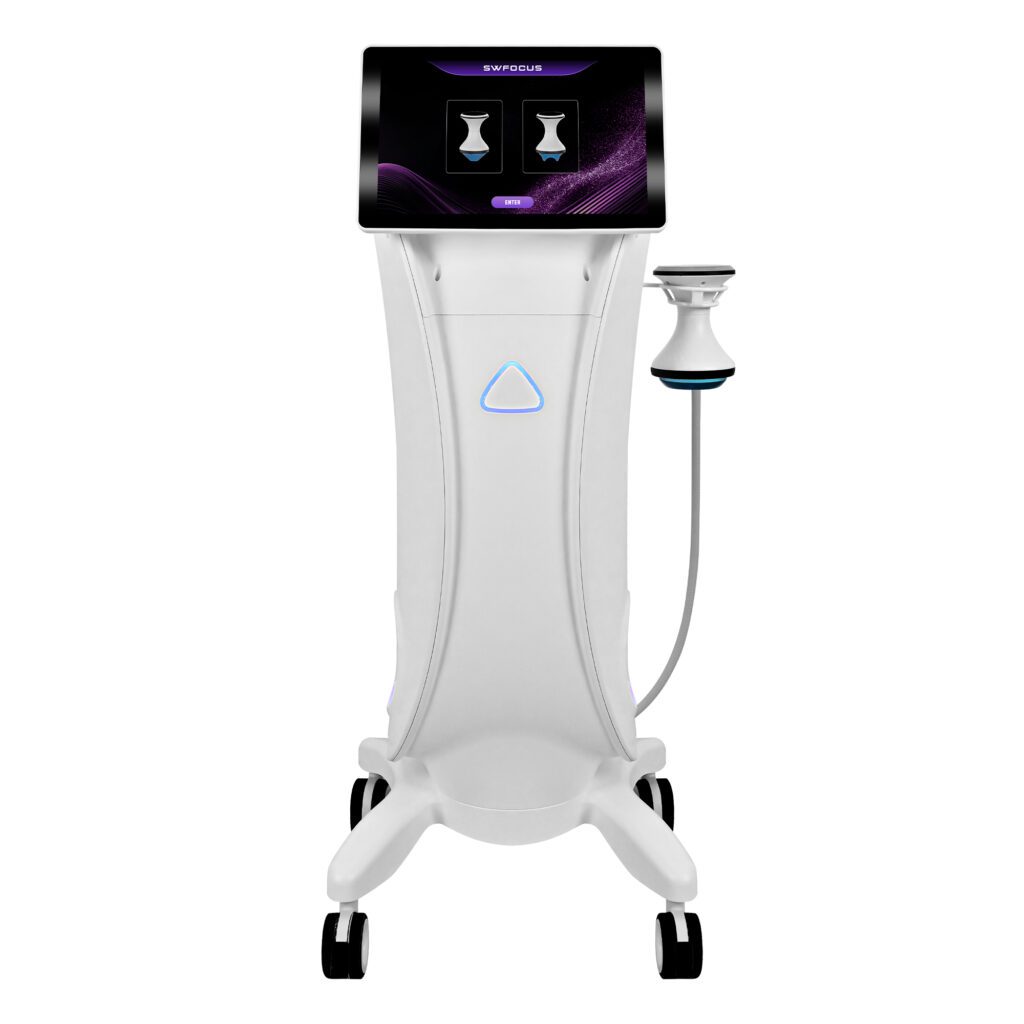
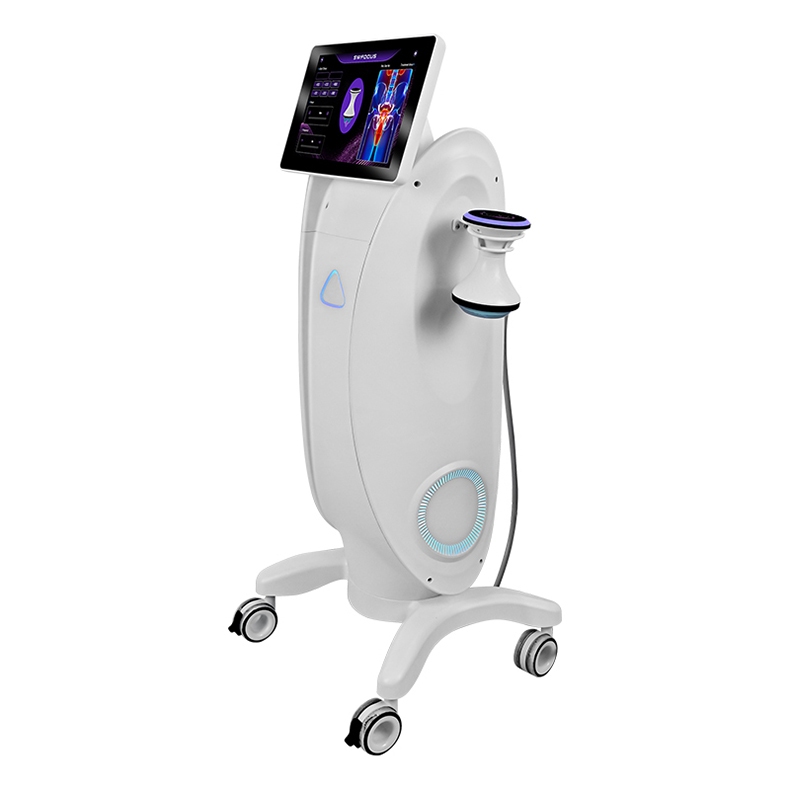
Endos Velapro and inner-ball roller devices can support body smoothing, massage-style and maintenance services. Their demand may be less visible in headline procedure reports, but they can be commercially useful because they support repeat visits and complement premium body programs.
SHEFMON options include the B0154 Endos Velapro, B0155 Desktop Endos Velapro, B0158 Endos Velapro and XC102 Inner Ball RollerZERO.
Why demand can be durable
- Services can be repeated more frequently than some premium body procedures.
- The category fits spa-style and body-maintenance menus.
- It can complement cryolipolysis or EMS without duplicating their main role.
- Demonstrations make the workflow easy for buyers to understand.
Best buyer profiles
- Body centers needing maintenance services.
- Spas emphasizing massage-style care.
- Salons entering body services.
- Med spas building a broader client journey.
Distributor selection criteria
Compare roller design, speed and intensity controls, handpieces, treatment areas, operator ergonomics, garments or accessories, cleaning and mechanical maintenance.
13. RF Cavitation and Multi-Function Body Devices
RF Cavitation devices remain relevant to salons and body studios because they can support accessible firming-style and contour-support menus. The category often appears in multi-function systems, which can be commercially attractive but difficult to compare.
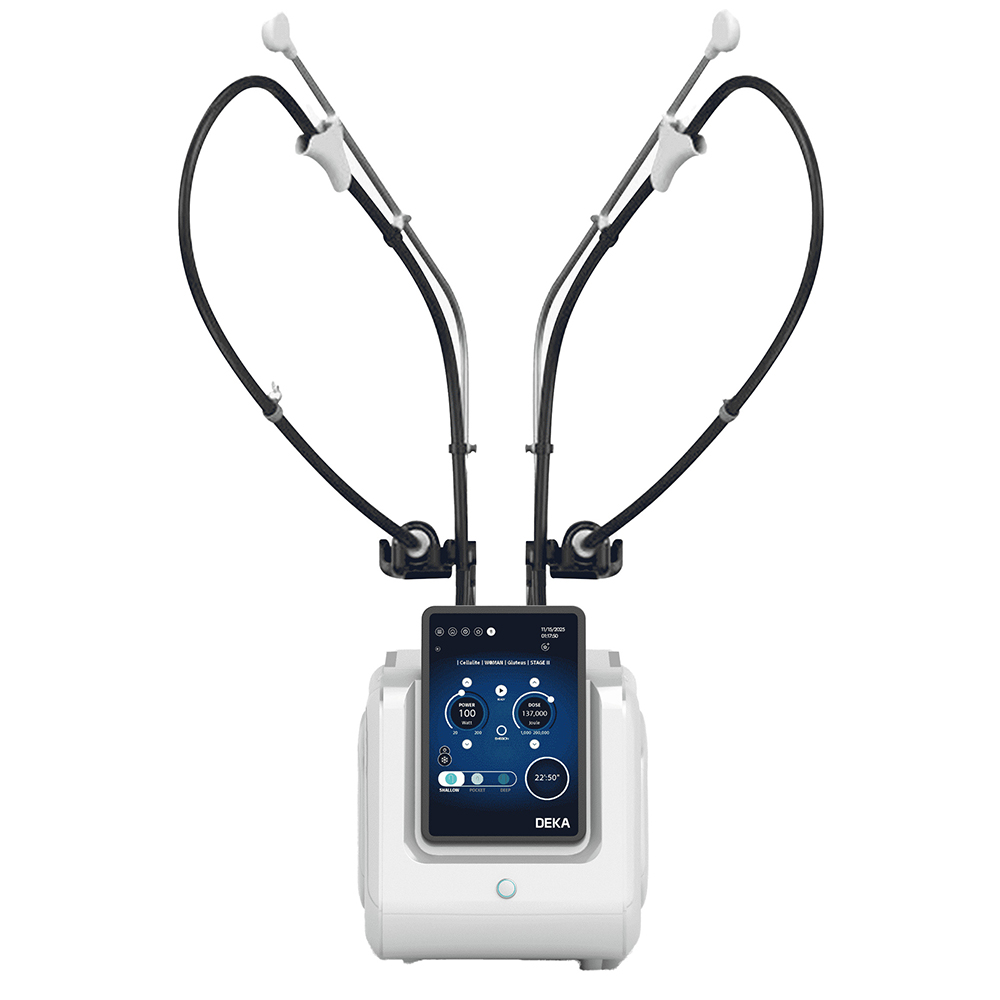
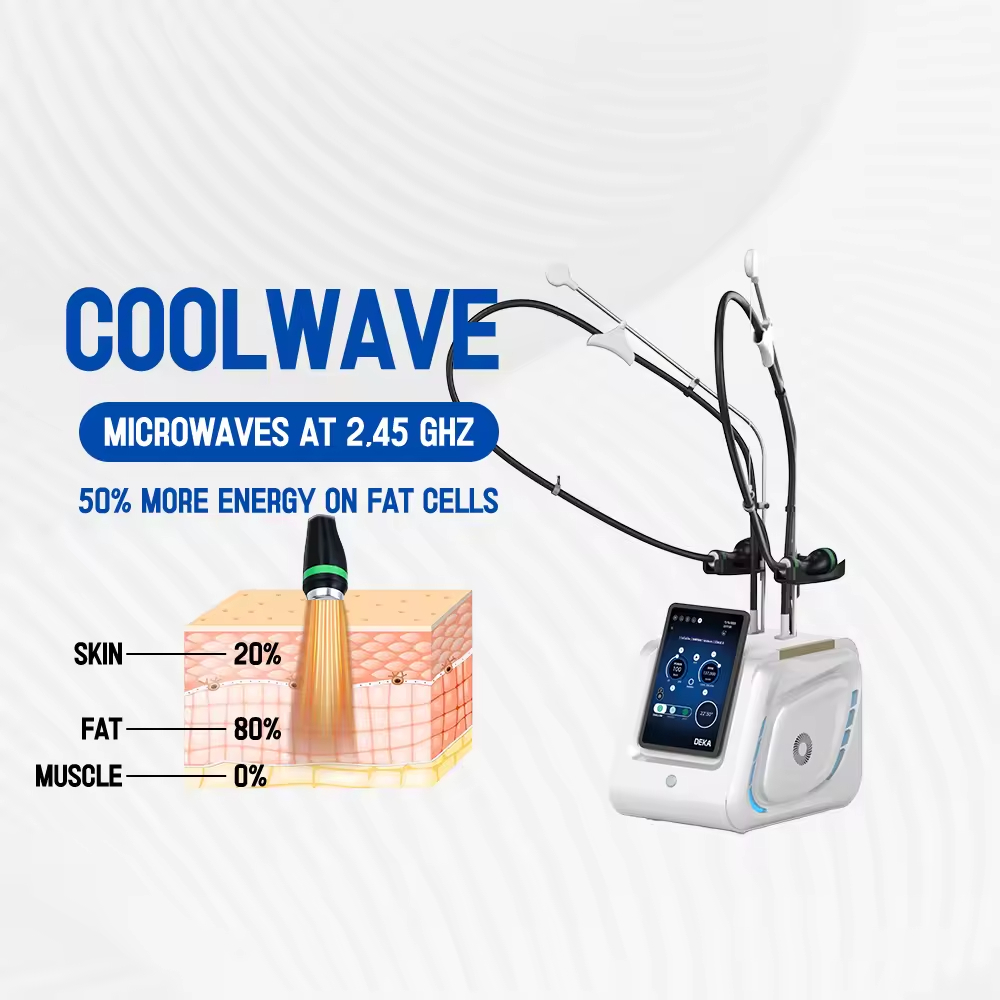
The A0928-Lipolaser 3-in-1 Super Lipolaser RF EMS Muscle Stimulator is one SHEFMON multi-technology example. Buyers can also review the separate Coolwaves category and the A0923 Cool Wave Machine when comparing body technologies.
Why demand exists
- Entry-level body businesses want versatile equipment.
- Multi-function systems can reduce the number of base units.
- RF-based services can connect facial and body menus.
- Course packages and add-ons support repeat sales.
Distributor selection criteria
Verify the exact technologies, handpieces, adjustable controls, contact media, room requirements, cleaning and training. Do not treat every multi-function body device as equivalent. The machine must have a coherent service menu, not simply many acronyms.
14. Which Categories Have the Strongest Commercial Roles?
Demand strength should be matched to portfolio role.
| Commercial role | Strong category options | Reason |
|---|---|---|
| Broad salon entry | Hydra and facial care | Large buyer base and frequent services |
| Repeat-course anchor | Diode laser hair removal | Clear client goal and package structure |
| Premium anti-aging | HIFU, RF and facial EMS | Supports higher-value consultations and programs |
| Advanced clinic | MNRF and focused laser systems | Differentiates qualified clinics |
| Premium body | Cryolipolysis and EMSlim | Recognizable body-program concepts |
| Body maintenance | Endos and RF cavitation | Repeat visits and complementary services |
| Market differentiation | Coolwaves and specialty wellness | Useful when a defined local niche exists |
For a new distributor, breadth across three well-chosen categories is often more valuable than shallow coverage across ten. A practical starting portfolio might include one facial foundation device, one repeat-course or anti-aging device, and one body option chosen from local demand.
15. How to Validate Demand Before Stocking a Device
Analyze customer inquiries
Record the categories requested by salons and clinics, the business type behind each request, quoted budget, decision time and reason for lost sales. Separate general curiosity from purchase-ready demand.
Audit local service menus
Review how nearby salons, med spas and clinics describe services, package courses and position prices. Do not assume that a frequently advertised service has strong utilization; speak with operators and clients where possible.
Run buyer interviews
Ask customers which services are growing, which equipment is underused, what staff find difficult and which after-sales problems influence purchasing.
Test with demonstrations
Use a sample or demo unit to measure appointment attendance, qualified leads, operator feedback and quotation conversion. Demonstration data is more useful than social-media views.
Estimate installed-base support
A category can become more profitable after the initial sale through cartridges, tips, solutions, accessories, training and upgrades. Calculate the support workload as well as the repeat revenue.
Review local rules
Demand is irrelevant if most target customers cannot legally or responsibly operate the device. Check the model’s intended use, local registration status, operator requirements and facility rules.
16. A Practical Market-Demand Scorecard
Score each candidate category from 1 to 5.
| Factor | Question | High score means |
|---|---|---|
| Buyer inquiries | Are qualified customers actively requesting this category? | Consistent purchase-ready interest |
| Consumer awareness | Do clients understand the service? | Shorter education path |
| Repeat potential | Can the service support courses or maintenance? | Recurring utilization |
| Buyer reach | How many local business types can use it? | Broader addressable customer base |
| Operator readiness | Can target customers train and operate responsibly? | Lower adoption friction |
| Competition | Can the distributor differentiate beyond price? | Defensible market position |
| Consumable continuity | Are recurring items dependable and profitable? | Sustainable installed-base support |
| Technical support | Can faults and parts be handled locally or remotely? | Lower downtime risk |
| Compliance fit | Is there a clear path for the target market? | Lower regulatory uncertainty |
| Portfolio fit | Does it complement existing products? | Better cross-selling and training efficiency |
Weight the score according to strategy. A distributor entering the salon market may prioritize buyer reach and simple training. A clinic-focused distributor may prioritize differentiation, compliance and advanced support.
17. Device Combinations for High-Demand Service Menus
Facial salon package
- A0648 Hydro for cleansing and hydration.
- A selected facial EMS or RF device for premium add-ons.
- Service ladder from express facial to monthly membership and premium anti-aging consultation.
Anti-aging med spa package
- A HIFU system selected for the customer’s training and menu.
- RF or facial EMS as a separate service category.
- Maintenance facial equipment for recurring visits.
Hair removal business package
- A0426 Diode Laser.
- Area-based consultation and package structure.
- Protective equipment, training and maintenance plan.
Advanced skin clinic package
- A0152 MNRF or one focused laser platform.
- Professional assessment, treatment records and aftercare.
- A separate maintenance facial category where appropriate.
Body contouring package
- One principal modality such as S9 cryolipolysis or A0241 EMSlim.
- One maintenance option such as B0154 Endos.
- Consultation, course package and progress-review structure.
These combinations describe service-menu architecture. They are not instructions to combine different device procedures in the same session. Treatment timing and suitability require qualified, device-specific protocols.
18. Market Demand Does Not Guarantee Easy Sales
High-demand categories can have strong competition. A distributor still needs a reason for customers to choose its equipment and support.
Useful differentiators include:
- Clear product tiers rather than dozens of overlapping models.
- Live demonstrations and structured operator training.
- Local-language interfaces, manuals and sales materials.
- Transparent standard and optional configurations.
- Reliable consumable and spare-parts supply.
- Remote fault diagnosis and documented repair workflow.
- Responsible marketing content and consultation tools.
- Service-menu guidance matched to buyer type.
- Follow-up after installation to improve utilization.
Price matters, but a low price cannot compensate for unclear training, unavailable parts or a machine that does not fit the customer’s service menu.
19. Inventory Strategy for High-Demand Devices
Distributors can reduce risk by assigning each model an inventory role.
Demonstration model
Use one representative unit for training, customer trials, video content and sales events. Select a model that clearly demonstrates the category.
Fast-moving stock model
Hold inventory only after repeated quotations and sales confirm the exact configuration. Standardize voltage, plug, language and accessories for the target market.
Order-based premium model
Advanced lasers, complex HIFU platforms and specialized body systems may be better supplied against confirmed orders. This allows configuration and documentation to be matched to the customer.
Consumable and parts stock
Stock high-failure or high-use items according to the installed base. A distributor with many devices in the market should treat parts availability as part of the product, not an afterthought.
20. Common Mistakes When Following Market Demand
Treating global reports as local sales forecasts
Procedure reports show broad activity, not the exact machines your territory will buy. Validate locally.
Buying too much inventory after a trend spike
Search interest and social content can rise faster than real buyer readiness. Use demonstrations and deposits before scaling stock.
Confusing device popularity with customer suitability
An advanced laser or MNRF system may have strong demand but still be wrong for a beginner salon.
Selling every body device with the same promise
Cryolipolysis, EMS, roller systems and RF cavitation have different mechanisms, workflows and service positioning.
Ignoring after-sales economics
A popular device can become unprofitable if handpieces fail, parts are unavailable or technical support consumes excessive time.
Making unsupported claims
Do not guarantee results, treatment numbers, revenue or payback. Use verified specifications and responsible, market-specific messaging.
FAQ
1. Which professional beauty device has the broadest salon demand?
Hydra and multi-function facial devices often have broad salon relevance because cleansing and hydration services fit many client groups and can be repeated. Local demand and service competition should still be assessed.
2. Is laser hair removal still a strong market category?
Yes. Hair removal remained one of the leading non-surgical procedure categories in the ISAPS 2024 survey. It supports area-based courses and maintenance, but distributors need strong training, cooling, technical support and local compliance knowledge.
3. Why are HIFU and RF devices in demand?
They connect with continuing interest in non-surgical skin tightening and anti-aging. They also help salons and med spas build premium services above basic facial care. HIFU and RF should be compared as distinct technologies.
4. Are RF microneedling devices suitable for ordinary salons?
They are generally better suited to qualified clinics and advanced med spas with appropriate operators, hygiene, single-use component control, records and aftercare. Local rules must be checked.
5. Which body contouring category has the strongest demand?
There is no universal winner. Cryolipolysis, EMSlim, Endos and RF cavitation serve different goals. The best category depends on local client interest, buyer type, session economics and competition.
6. Are multifunction beauty machines easier to sell?
They can be attractive to space-conscious salons, but only when the functions form a coherent menu. Too many unused functions can increase training and maintenance without increasing revenue.
7. How can a distributor identify real demand before ordering stock?
Track qualified inquiries, interview salons and clinics, audit local menus, run demonstrations, review quotation conversion and confirm local operating requirements. Purchase intent is more meaningful than online engagement.
8. Should a new distributor start with facial or body devices?
Facial devices often reach more buyer types and may be easier to demonstrate. Body equipment can create higher-value packages but may require more space, screening and customer education. The final decision should follow local demand.
9. What makes a high-demand device profitable for a distributor?
Profit depends on purchase price, sales conversion, training cost, warranty burden, spare parts, consumables, shipping and repeat business. Strong demand alone does not guarantee margin.
10. Which SHEFMON categories should distributors compare first?
Start with Hydra, HIFU, Hair Removal, MNRF, Cryolipolysis and EMSlim, then narrow the range according to customer type and support capacity.
Conclusion
Professional beauty devices with strong market demand are those that connect recognizable client needs with workable salon and clinic services. Hydra systems offer broad facial-care relevance. Diode laser supports repeat-course hair removal. HIFU, RF and facial EMS address premium anti-aging demand. MNRF and focused laser platforms serve advanced clinics. Cryolipolysis, EMSlim, Endos and RF cavitation give body businesses distinct program options.
The best opportunity is not necessarily the category with the loudest trend. It is the category that local buyers can operate, consumers can understand and the distributor can support over the full equipment life cycle.
Explore the SHEFMON professional beauty machine range and shortlist models according to target customers, service menus and local requirements. SHEFMON can help distributors compare relevant device categories and build a focused portfolio for salons, med spas, skin clinics and body contouring centers.