
Distributors hear product needs before many factory teams do. They speak with salon owners, clinic buyers, technicians, trainers, and regional sales partners. They see which models buyers compare, which configurations are repeatedly requested, which demonstrations create confusion, and which service issues reduce confidence. Their feedback can guide better beauty devices, but it rarely arrives in a form engineering can use directly.
A distributor may say, “Make the machine stronger,” “Add another handle,” “Use a bigger screen,” or “This model needs to be easier to sell.” Each statement contains a possible signal, not a complete specification. The factory must understand the buyer, workflow, market, frequency, evidence, current product, and desired outcome before deciding what should change.
This guide explains how factories can preserve distributor feedback, qualify it, identify the underlying need, combine evidence across markets, write product requirements, and develop measurable engineering specifications. SHEFMON products are used as public category examples, not as claims about actual distributor requests or undisclosed development decisions.
Sumário executivo
Factories can convert distributor feedback into useful beauty device specifications by following eight steps:
- Capture the original statement and context. Record who reported it, which buyer and market were involved, what happened, and what evidence exists.
- Separate the problem from the requested solution. “Add a larger screen” may represent visibility, workflow, language, training, or room-layout needs.
- Qualify the feedback source. Distributor experience, buyer type, order stage, installed base, service capability, and regional scope affect how the signal should be interpreted.
- Combine independent evidence. Similar inquiries, quotations, orders, demonstrations, service cases, and lost decisions create a stronger case than repeated opinions from one account.
- Translate feedback through three levels. Market need explains the problem, product requirement defines the outcome, and engineering specification sets measurable implementation limits.
- Assign acceptance criteria and verification. A specification must support an objective decision about whether the finished product meets the requirement.
- Control market-specific and global scope. Language, voltage, handles, documentation, and professional requirements may justify a regional variant rather than a change to every model.
- Close the feedback loop. Tell distributors what was accepted, clarified, deferred, solved through training, or declined, and explain what evidence is still needed.
The purpose is not to translate distributor wording literally. It is to preserve the market signal while converting it into a product decision that can be designed, tested, manufactured, documented, and supported.
1. Why Distributor Feedback Matters
Distributors can provide visibility into:
- buyer questions and objections;
- requested product categories;
- preferred configurations;
- regional language and electrical needs;
- demonstration reactions;
- quotation substitutions;
- reasons for won and lost orders;
- operator training problems;
- service and spare-parts demand;
- competitor comparisons; and
- changes in salon, med spa, clinic, or body-center business models.
This feedback is valuable because it connects the product to real purchasing and operating decisions. It still needs qualification because a distributor may represent a narrow segment, a particular sales strategy, or one unusually large buyer.
2. Feedback, Requirement, and Specification Are Different
| Nível | Pergunta principal | Example form |
|---|---|---|
| Distributor feedback | What did the market participant report? | “Salons say the handle is difficult to store.” |
| Validated market need | What buyer and workflow problem is supported by evidence? | Compact salons need secure handle storage that does not increase changeover time or cable damage. |
| Product requirement | What outcome must the product provide? | The product shall retain all standard handles in designated storage during normal room movement. |
| Engineering specification | What measurable implementation limits will satisfy the requirement? | Defined retention force, dimensions, materials, test setup, and acceptance limit. |
| Verification evidence | How will compliance be demonstrated? | Inspection and movement test using the released handle configuration. |
Moving directly from the first row to a chosen component or drawing can lock the project into the wrong solution.
3. Create Controlled Feedback Channels
Factories should define where distributor feedback enters the organization. Possible channels include:
- structured account reviews;
- demonstration reports;
- quotation and lost-deal records;
- technical-support cases;
- warranty and service systems;
- training evaluations;
- regional product meetings;
- trade-show follow-up;
- installed-base reviews; and
- formal product-request forms.
Messages and calls can still provide useful information, but important feedback should be transferred into a traceable record with an owner.
4. Use a Standard Feedback Intake Record
The record should capture:
- date and source;
- distributor and region;
- buyer type and professional setting;
- current model and configuration;
- original feedback in the distributor’s words;
- event that triggered the feedback;
- frequency and number of independent buyers;
- quotation, order, demo, service, or support reference;
- requested solution;
- business impact;
- urgency;
- known alternative; and
- questions that remain unanswered.
Structured fields make it easier to compare similar signals across accounts and markets.
5. Preserve the Original Voice
Keep the original statement before summarizing it. Paraphrasing too early can remove useful detail or add assumptions.
Por exemplo:
- Original: “The client does not want so many bottles on the cart.”
- Weak summary: “Use fewer bottles.”
- Better follow-up: Which client type? Which device? Is the issue footprint, cleaning, liquid switching, visual presentation, storage, leakage, or treatment workflow?
The factory should be able to trace the final requirement back to what distributors and buyers actually experienced.
6. Qualify the Distributor Context
Before generalizing the feedback, understand:
- distributor market and territory;
- typical buyer profile;
- product categories sold;
- demonstration experience;
- installed base;
- sales and technical staff capability;
- service responsibility;
- order and quotation history;
- competitor portfolio; and
- local professional and market conditions.
A technically experienced distributor supporting many installed devices may provide strong serviceability evidence. A new distributor can still identify an important issue, but the factory may need more independent confirmation.
7. Classify the Feedback Type
| Feedback class | Exemplos | Likely owner |
|---|---|---|
| Informações sobre o produto | Unclear specifications, option status, compatibility | Product data and product management |
| Posicionamento de vendas | Difficult comparison, unclear buyer fit, overlapping models | Equipes de produto e comerciais |
| Configuração | Handle, language, voltage, plug, accessory package | Product, engineering, operations |
| Usability | Interface, storage, setup, changeover, cleaning | Product, design, engineering |
| Desempenho | Output, cooling, vacuum, flow, speed, stability | Engineering and quality |
| Confiabilidade | Repeated faults, connector wear, leakage, software errors | Quality, engineering, service |
| Serviceability | Diagnosis, access, repair, spares, updates | Service and engineering |
| Documentation or training | Manual, translation, operator workflow, troubleshooting | Documentation and training |
| New category or platform | Unserved service, buyer, or technology need | Portfolio and product leadership |
Classification prevents every problem from becoming a product redesign.
8. Rate the Evidence Strength
Useful evidence levels can include:
- Observation: one person reports a preference or impression.
- Repeated signal: several similar comments appear from one distributor or buyer group.
- Qualified pattern: independent buyers or markets describe the same problem with context.
- Commercial evidence: quotations, substitutions, lost decisions, orders, or renewals show impact.
- Operational evidence: demonstrations, service cases, production data, or installed-base records support the issue.
- Confirmed requirement: qualified technical, professional, or market review establishes a necessary condition.
The factory should not convert the labels into a rigid formula. Their purpose is to show how much confidence supports a decision.
9. Remove Duplicate Reporting without Losing Frequency
The same buyer comment can appear in a sales message, demonstration report, quotation note, and regional meeting. Treating these as four independent signals overstates demand.
Link feedback to:
- distributor;
- buyer organization;
- opportunity or order;
- modelo e configuração;
- date; and
- underlying event.
Keep the number of reports and the number of independent sources as separate measures.
10. Cluster Feedback by Problem, Not Wording
Several comments may describe one problem:
- “The menu has too many steps.”
- “Training takes too long.”
- “Operators choose the wrong mode.”
- “The screen needs to be larger.”
These may form a workflow and interface cluster rather than four unrelated feature requests.
Clustering fields can include:
- buyer;
- service application;
- workflow stage;
- product system;
- affected model;
- resultado;
- region; and
- evidence type.
Product teams should review both cluster size and variation within the cluster.
11. Separate Global Patterns from Market-Specific Needs
Feedback may apply to:
- all buyers of the standard model;
- one buyer segment;
- one region;
- one language;
- one electrical configuration;
- one distributor’s package;
- one hardware or software version;
- one handle or consumable; or
- one custom project.
A regional requirement may justify a controlled variant or document package. It should not automatically change the global baseline.
12. Identify the Buyer and User behind the Feedback
Ask who experiences the issue:
- business owner;
- purchasing manager;
- consultant;
- operator;
- technician;
- distributor trainer;
- service engineer; or
- client receiving the service.
Their needs can conflict. An owner may want more functions in one machine, while an operator wants a simpler interface and a technician wants easier access. The requirement process should expose these tradeoffs.
13. Reconstruct the Actual Workflow
For feedback about usability or product fit, document:
- What happens before device use?
- Which user performs each step?
- Which room, utilities, accessories, and materials are involved?
- How is the function or handle selected?
- Where does the problem occur?
- What workaround is used?
- What happens after the service?
- How often does the issue occur?
Workflow evidence helps distinguish a machine problem from training, room layout, consumable supply, or service-menu design.
14. Convert a Feature Request into a Problem Statement
A structured problem statement can use this form:
A defined user in a defined environment cannot complete a defined task within an acceptable condition because of a documented product or process limitation, creating a stated consequence.
Exemplo:
- Feature request: “Add wireless handles.”
- Problem statement: Operators in multi-room body studios lose setup time and experience cable-management difficulty when moving the approved handle set between storage and the treatment position.
Engineering can now compare wireless design, better cable routing, different storage, or another solution.
15. Ask Why the Current Product Does Not Fit
The factory should investigate whether the issue comes from:
- missing function;
- incorrect configuration;
- unclear product information;
- weak training;
- poor workflow;
- incompatible accessory;
- reliability problem;
- regional requirement;
- service limitation;
- price or positioning; or
- buyer using the wrong model for the need.
The response may be documentation, a standard configuration, a new option, a product improvement, or no change.
16. State the Validated Market Need
The validated need should identify:
- buyer and user;
- service or business problem;
- current product and configuration;
- operating environment;
- frequency;
- consequence;
- supporting evidence;
- affected markets; and
- outcome that would indicate improvement.
It should avoid specifying a solution unless the solution is itself a verified constraint.
17. Translate the Need into a Product Requirement
Product requirements describe what the device must achieve. A useful form is:
The product shall provide a defined outcome under stated conditions for an identified configuration.
Exemplos:
- The product shall display the connected handpiece and approved operating mode before activation.
- The standard accessory storage shall retain the complete released handle package during normal room movement under the defined test condition.
- The system shall support the approved regional language package without changing the hardware configuration.
Exact requirements need owners, rationale, priority, acceptance criteria, and verification methods.
18. Translate the Requirement into an Engineering Specification
Engineering specifications define implementation limits needed to meet the product requirement. They may include:
- dimensions and tolerances;
- materials;
- voltage, current, power, frequency, or wavelength;
- cooling or thermal limits;
- vacuum, pressure, or flow;
- connector and communication protocol;
- software state and parameter limits;
- handle recognition;
- retention force;
- environmental conditions;
- component requirements; and
- test setup and acceptance limits.
Product teams should not invent technical values to make a document look complete. Unknowns should enter feasibility work with owners and resolution dates.
19. Separate Functional and Nonfunctional Requirements
- Functional requirements define what the machine does: modes, controls, detection, alarms, cooling, vacuum, fluid behavior, handle operation, or diagnostics.
- Performance requirements define measurable capability: output, speed, range, accuracy, stability, or operating condition.
- Usability requirements define user tasks, workflow, visibility, setup, cleaning, and recovery.
- Reliability requirements define behavior over intended conditions and time.
- Manufacturing requirements define testability, traceability, assembly access, and configuration control.
- Service requirements define diagnostics, access, replacement, spares, and post-repair verification.
A feedback item can create requirements in several groups.
20. Define Acceptance Criteria
Acceptance criteria should state what result demonstrates compliance. They need:
- test subject and configuration;
- conditions;
- measurable limit or observable task;
- allowed tolerance;
- sample or repetition where appropriately defined;
- pass/fail rule; and
- record required.
“The new interface should be easier” is not an acceptance criterion. A defined operator task, error condition, completion sequence, and approved evaluation method can support an objective decision.
21. Select a Verification Method
| Método | Appropriate use | Example evidence |
|---|---|---|
| Inspection | Physical presence, dimensions, labels, package contents | Drawing and measured record |
| Test | Performance, function, interface, thermal, electrical, vacuum, flow | Controlled test result |
| Analysis | Calculations, tolerance, load, capacity, risk | Approved analysis report |
| Demonstração | Observable user or service task | Recorded completion against criteria |
| Document review | Manual, language, training, compatibility, market file | Approved review checklist |
Formal validation may also be required to confirm that the product supports its intended users and use environment. The exact approach depends on the product and applicable requirements.
22. Evaluate Conflicting Distributor Requests
Different markets may ask for opposite changes:
- simpler interface versus more adjustable parameters;
- compact housing versus more handles;
- lower price versus stronger cooling;
- standard package versus broad customization;
- more automation versus manual control;
- one global version versus regional adaptation.
Resolve conflicts through buyer segmentation, product role, evidence strength, technical feasibility, risk, production impact, and portfolio strategy. One product does not need to satisfy every request.
23. Avoid Average Specifications That Fit Nobody
Combining conflicting feedback into a midpoint can produce a weak product. The factory may need:
- one standard model with options;
- entry and advanced models;
- market-specific variants;
- separate professional settings;
- a modular platform; or
- a controlled custom project.
Segmentation is often better than an overloaded universal specification.
24. Prioritize with a Balanced Scorecard
Avaliar:
- number and independence of sources;
- buyer and business impact;
- strategic fit;
- frequency and severity;
- quotation and order evidence;
- quality and service evidence;
- technical feasibility;
- platform leverage;
- verification and market complexity;
- production and supplier impact;
- support burden; and
- opportunity cost.
Priority should not depend only on the largest distributor or the loudest request.
25. Use a Decision Path for Each Feedback Cluster
| Decisão | When it fits |
|---|---|
| Clarify | Context, source, or evidence is incomplete |
| Correct product data | The product already fits but information is wrong or unclear |
| Improve training or support | Workflow or maintenance knowledge is the main gap |
| Create a configuration | Existing approved elements solve a repeatable need |
| Create a regional variant | A defined market needs a controlled difference |
| Open feasibility work | Technical solution and impact require investigation |
| Add to product requirements | Evidence supports a verifiable product outcome |
| Create custom project | Need is buyer-specific and commercially justified |
| Defer or decline | Evidence, fit, feasibility, safety, or support is insufficient |
The decision and rationale should be visible to the distributor-facing team.
26. Control Feedback across Product Versions
Feedback should identify:
- modelo;
- hardware revision;
- software version;
- linguagem;
- handle or consumable;
- regional variant;
- serial range; and
- installation or service history where relevant.
A problem limited to an older version should not automatically become a requirement for a new global model. The correct action may be a field update, service fix, document revision, or controlled transition.
27. Connect Feedback to the Product Requirement Document
Approved requirements should show:
- feedback or evidence source;
- validated problem;
- product requirement ID;
- rationale;
- affected product and configuration;
- priority;
- acceptance criteria;
- verification method;
- engineering output;
- result; and
- release version.
This traceability lets the factory explain why a feature or specification exists and whether it solved the original problem.
28. Use Distributor Feedback during Design Reviews
At each review, ask:
- Does the design address the validated problem?
- Has the team preserved the important workflow context?
- Are regional and configuration boundaries correct?
- Did the chosen solution create a new usability or service issue?
- Are distributor assumptions still valid?
- Does the prototype need controlled user or demonstration feedback?
- What evidence is required before the requirement can close?
Distributor feedback should inform reviews without replacing engineering and quality evidence.
29. Use Demonstrations as Structured Learning Events
A demonstration report should capture:
- participant and buyer profile;
- modelo e configuração;
- intended tasks;
- questions and hesitations;
- setup and workflow observations;
- comparisons raised;
- requested changes;
- purchase-stage outcome; and
- follow-up evidence.
Avoid asking only whether participants liked the machine. Positive reactions are less useful than observed tasks and decision behavior.
30. Use Lost Deals Carefully
Lost-deal feedback can reveal product gaps, but the reason needs validation. “Lost on price” may mean:
- buyer budget was lower;
- product role was wrong;
- competitor included a different package;
- sales team did not explain the value;
- configuration was incomplete;
- distributor lacked demonstration or service capability; or
- the product truly cost more for comparable value.
Record competing product, configuration, buyer, stage, stated reason, and sales-team interpretation separately.
31. Combine Feedback with Quality and Service Data
Product specifications should not rely on commercial comments alone. Cross-check:
- incoming inspection;
- production nonconformance;
- functional and aging tests;
- rework;
- returns;
- fault codes;
- repairs;
- component replacements;
- consumable usage;
- training questions; and
- installed-base configuration.
SHEFMON'S quality-control page describes raw-material testing, precision-parts assembly, circuit-board aging and power testing, functional aging, and prototype inspections. These kinds of records can confirm whether distributor feedback points to a product issue, a single unit, or a broader pattern.
32. A0648 Facial-System Feedback Example
O Sistema de hidromicrodermoabrasão 9 em 1 A0648 is publicly positioned around hydro-based cleansing, exfoliation, extraction, hydration, and related facial functions.
Possible distributor feedback could concern:
- bottle layout;
- tubing and liquid workflow;
- vacuum behavior;
- handle and tip storage;
- cleaning and changeover;
- accessory kit completeness;
- screen sequence; or
- salon training.
The factory should convert each report into an identified workflow problem, then determine whether the response is packaging, documentation, training, configuration, usability improvement, or technical specification. These are illustrative questions, not reports of actual A0648 issues.
33. A0426 Hair-Removal Feedback Example
O A0426 diode laser hair-removal system page lists wavelength choices of 755, 810, 940, and 1064 nm, multiple spot sizes, cooling, and language options.
Distributor feedback may involve:
- requested wavelength arrangement;
- preferred handpiece or spot size;
- expected utilization;
- cooling and maintenance;
- idioma da interface;
- parameter workflow;
- electrical environment;
- replacement-handpiece availability; or
- regional buyer positioning.
The specification must define the exact approved product rather than combine every reported option into one uncontrolled machine.
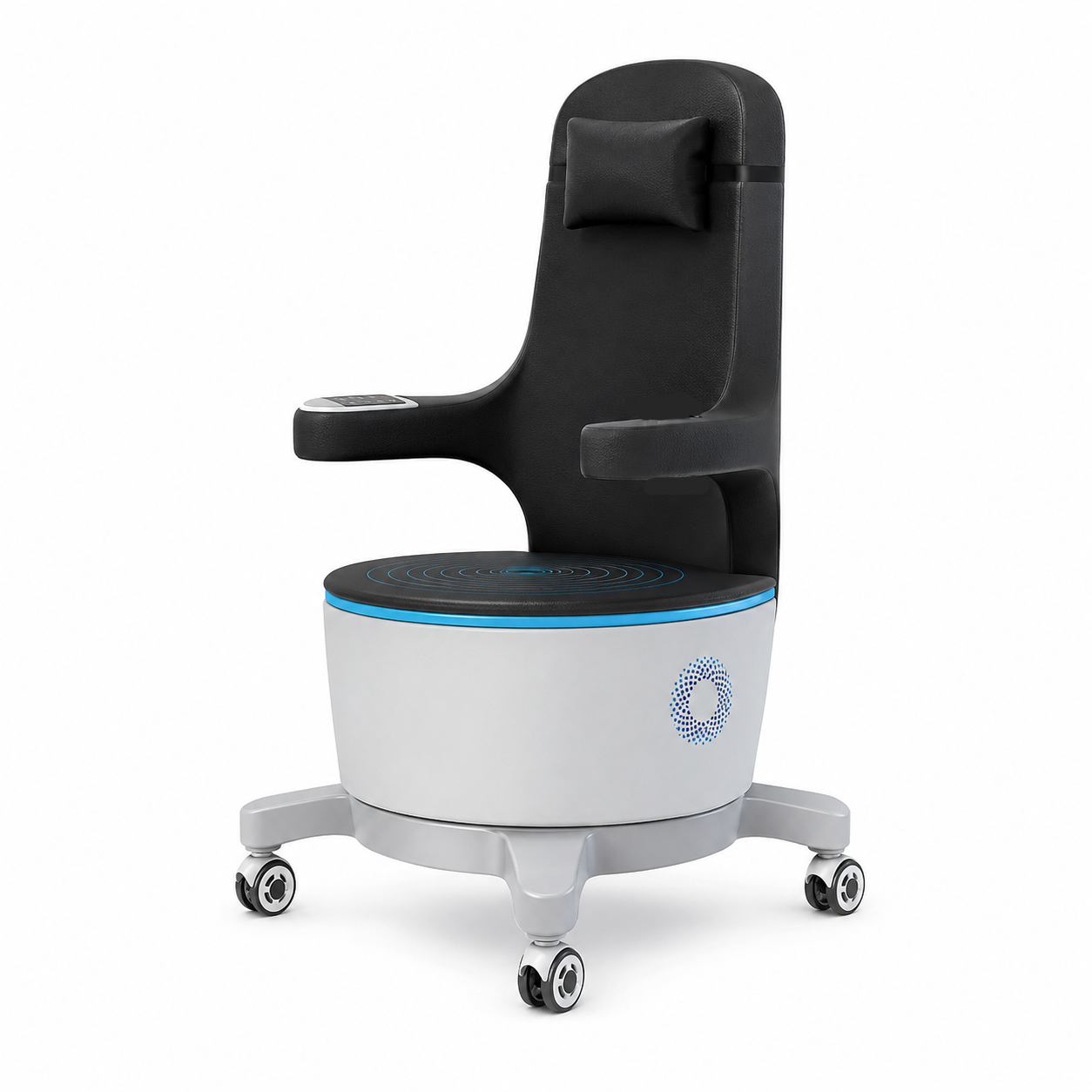
34. B0155 Body-System Feedback Example
O B0155 Desktop Endos Velapro page presents vacuum rolling, RF, rotating massage, and 80K cavitation among its listed functions.
Feedback on a multifunction body platform may concern:
- which functions buyers use most;
- handle ergonomics;
- cable and connector organization;
- accessory storage;
- software mode clarity;
- cleaning and changeover;
- training across several functions; or
- overlap with other body products.
The factory should protect the product’s primary role rather than add every requested body function.
35. A0204 and A0152 Advanced-System Feedback Examples
O Sistema HIFU focalizado A0204 9D/7D e Sistema de microagulhamento por radiofrequência A0152 illustrate advanced categories where distributors may report questions about cartridges, tips, handles, consumables, interface workflow, operator preparation, records, aftercare, replacement supply, and technical support.
Product teams should distinguish:
- sales preference;
- fluxo de trabalho do operador;
- professional-user requirement;
- consumable and compatibility need;
- service issue;
- market-specific requirement; and
- unsupported product claim.
Feedback affecting professional or market requirements should receive appropriately qualified local and technical review.
36. Separate Standard Product Feedback from OEM/ODM Scope
SHEFMON'S OEM/ODM page describes design, mechanical work, prototyping, logos, system languages, operating interfaces, functions, packaging, and manuals.
When distributor feedback supports one buyer-specific project, document:
- standard product baseline;
- custom requirements;
- target buyer and market;
- aprovações;
- technical and commercial responsibility;
- samples and verification;
- production identity;
- support obligations; and
- decision on whether the result remains custom.
Custom scope should not enter the global specification until wider evidence and portfolio review justify adoption.
37. Close the Loop with Distributors
For every material feedback cluster, communicate:
- what the factory understood;
- evidence reviewed;
- questions still open;
- decision;
- reason;
- next step;
- expected distributor input; and
- status update point.
Possible outcomes include information correction, training, configuration, feasibility study, requirement, custom project, deferment, or decline. Transparent responses encourage better future feedback.
38. Measure Feedback-to-Specification Quality
Medidas úteis incluem:
- percentage of feedback records with buyer, market, model, configuration, and evidence;
- independent sources per cluster;
- time to clarify and classify;
- percentage solved without engineering change;
- requirements with traceable source and acceptance criteria;
- late requirement changes caused by missing context;
- prototype findings linked to original feedback;
- post-release recurrence of the reported problem;
- distributor response to closure; and
- unsupported requests stopped before development.
High feedback volume is not the goal. The goal is better evidence and better product decisions.
39. Common Feedback-Conversion Errors
- Copying the distributor’s requested feature directly into the specification.
- Removing the original wording and context.
- Counting duplicate reports as independent demand.
- Treating one market preference as a global requirement.
- Ignoring buyer type, workflow, configuration, and software version.
- Confusing poor documentation with a missing product function.
- Averaging conflicting requests into a weak universal design.
- Writing vague requirements without acceptance criteria.
- Inventing technical values before feasibility work.
- Letting the largest account override quality, support, and portfolio evidence.
- Failing to communicate why feedback was deferred or declined.
- Releasing a change without checking whether the original problem improved.
40. Distributor Feedback-to-Specification Checklist
- The original feedback and source context are preserved.
- Distributor, buyer type, market, model, configuration, version, and event are identified.
- Independent sources are separated from duplicate reports.
- Feedback is classified as information, positioning, configuration, usability, performance, reliability, service, training, or new product work.
- The requested solution is separated from the underlying problem.
- The buyer workflow and consequence are understood.
- Global, regional, segment, version-specific, and custom scope are distinguished.
- Market need, product requirement, engineering specification, and verification evidence remain separate.
- Requirements have IDs, owners, rationale, priority, acceptance criteria, and verification methods.
- Conflicting feedback is resolved through segmentation and product strategy.
- Quality, production, service, installed-base, and commercial evidence are considered together.
- Approved requirements trace back to source evidence and forward to design and tests.
- Distributors receive a clear decision and next step.
- Post-release review checks whether the original market problem was solved.
Perguntas frequentes
1. Should a factory implement every repeated distributor request?
No. Repetition is useful evidence, but the factory should confirm independent buyers, problem context, strategic fit, technical feasibility, quality, production, support, and whether a non-product solution already exists.
2. What is the first step after receiving distributor feedback?
Preserve the original wording and record the distributor, buyer, market, model, configuration, event, frequency, evidence, and requested outcome. Do not rewrite it as a specification immediately.
3. How can a factory identify the need behind a feature request?
Reconstruct the buyer workflow, ask where the problem occurs, identify the consequence and workaround, and test whether documentation, training, configuration, service, or product design causes the issue.
4. What makes distributor feedback strong enough for a product requirement?
Strength comes from qualified context, independent sources, consistent buyer problems, commercial or operational evidence, strategic fit, and a clear outcome that the factory can verify.
5. What is the difference between a product requirement and an engineering specification?
The product requirement defines the outcome the machine must provide. The engineering specification defines measurable implementation limits, interfaces, values, and tolerances used to achieve and test that outcome.
6. How should factories handle conflicting feedback from different markets?
Segment by buyer, region, professional setting, configuration, and product role. The result may be one standard product with options, separate tiers, regional variants, or controlled custom projects.
7. Can lost sales be used to create specifications?
They can provide evidence, but the factory should confirm the actual cause, competing configuration, buyer fit, sales process, service capability, and whether the stated reason reflects the product or another factor.
8. How should distributor feedback about safety or local requirements be handled?
Record it promptly and involve qualified technical, quality, and local market specialists. Do not convert informal interpretations directly into global claims or specifications.
9. When should feedback become an OEM/ODM project instead of a standard change?
Use a custom project when the need is specific to one buyer or limited market, the responsibilities can be clearly defined, and broader evidence does not yet justify changing the standard product.
10. How can distributors submit useful product feedback to SHEFMON?
Provide the buyer type, country, current model and configuration, original comment, observed workflow, frequency, business impact, quotation or service evidence, requested outcome, and any local requirements. Then contate SHEFMON so the relevant product and technical teams can review it.
Conclusão
Distributor feedback becomes valuable product input when the factory preserves its context, verifies the underlying need, combines independent evidence, and separates market language from engineering language. The process moves from feedback to validated need, product requirement, measurable specification, and verification evidence.
This discipline protects both sides. Distributors receive clearer responses and products aligned with real buyer problems. Factories avoid building features from isolated opinions, while engineering, production, quality, documentation, and service teams receive requirements they can act on and verify.
Explore o Portfólio de dispositivos de beleza SHEFMON, review SHEFMON OEM/ODM and development capabilities, ou contate SHEFMON with structured buyer and market feedback.