








Introdução
Para um distribuidor, a questão mais importante não é apenas "O Shockwave é popular?". A verdadeira questão é se a demanda é forte o suficiente para sustentar vendas recorrentes, treinamento local, estoque de peças de reposição e serviço pós-venda a longo prazo.
Em resumo: a demanda global por equipamentos relacionados à terapia por ondas de choque e ESWT continua crescendo, mas não se trata de uma simples tendência passageira. É uma categoria de equipamentos consolidada, impulsionada por aplicações em reabilitação, recuperação esportiva, tratamento da dor crônica, expansão de clínicas de fisioterapia e diversificação de serviços de cuidados corporais.
As estimativas de mercado variam de acordo com a empresa de pesquisa e se o relatório inclui terapia por ondas de choque extracorpóreas (ESWT) médica, terapia por ondas de choque para fisioterapia, terapia por ondas de choque focalizadas, terapia por ondas de choque radiais ou dispositivos combinados. No entanto, a tendência é consistente: espera-se que a categoria continue a se expandir na próxima década.
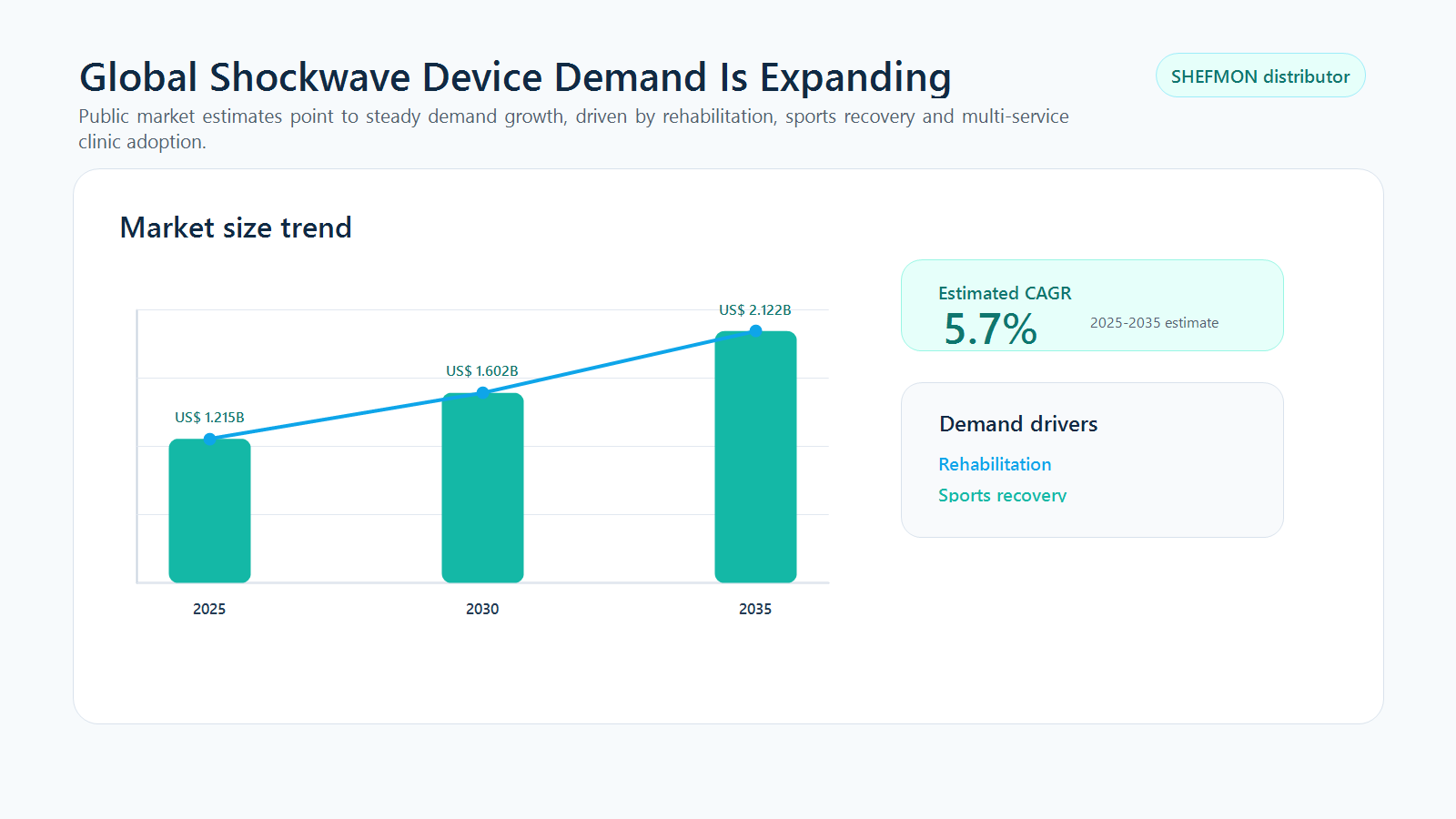
Segundo a Market.us, o mercado global de dispositivos de terapia por ondas de choque está estimado em cerca de US$ 1,215 bilhão em 2025 e projeta-se que alcance cerca de US$ 2,122 bilhões até 2035, com uma taxa de crescimento anual composta (CAGR) estimada em 5,71%. Para os distribuidores, isso indica uma oportunidade de longo prazo, baseada em serviços e equipamentos, em vez de um produto de uso único.
Categoria SHEFMON recomendada:
Produtos SHEFMON relevantes:
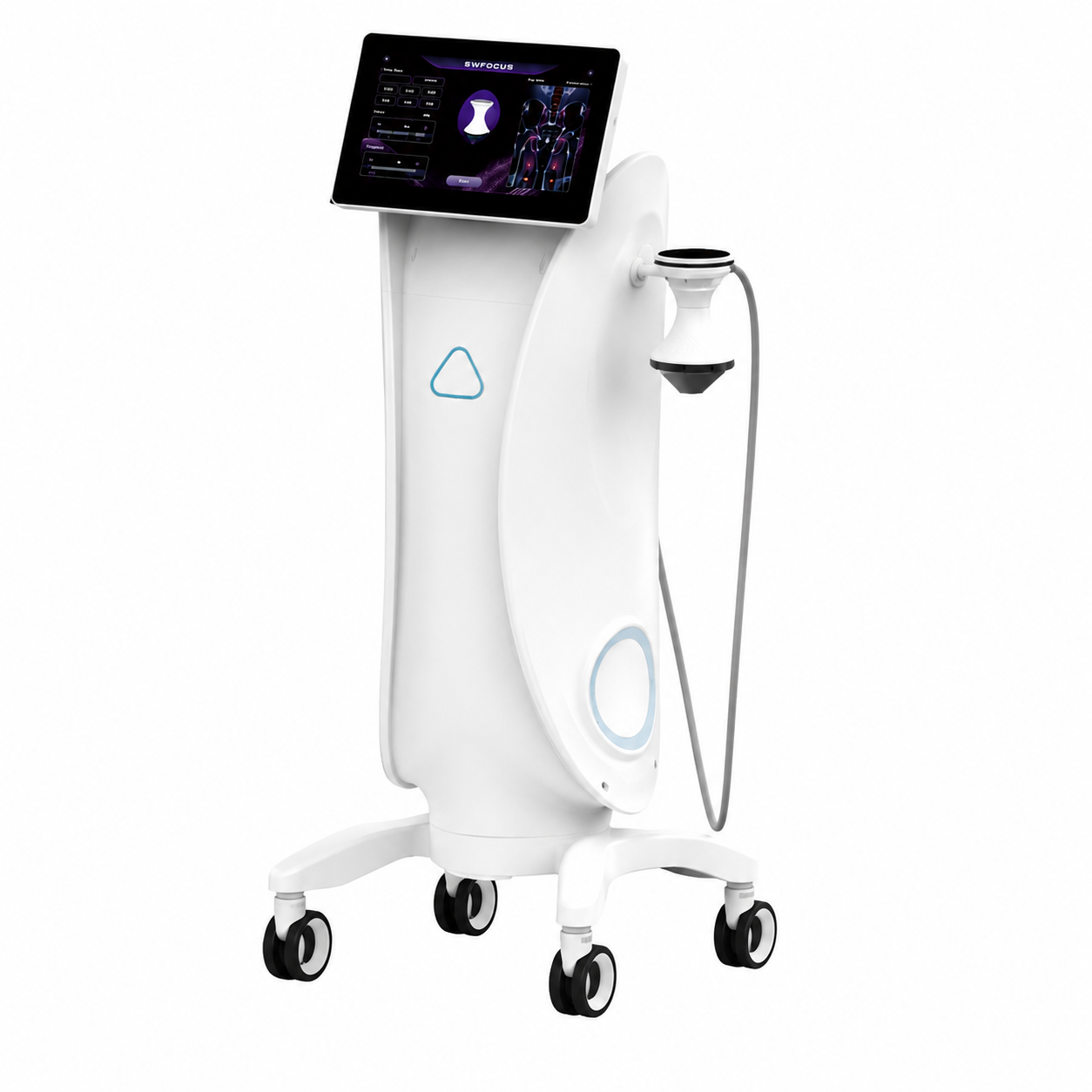
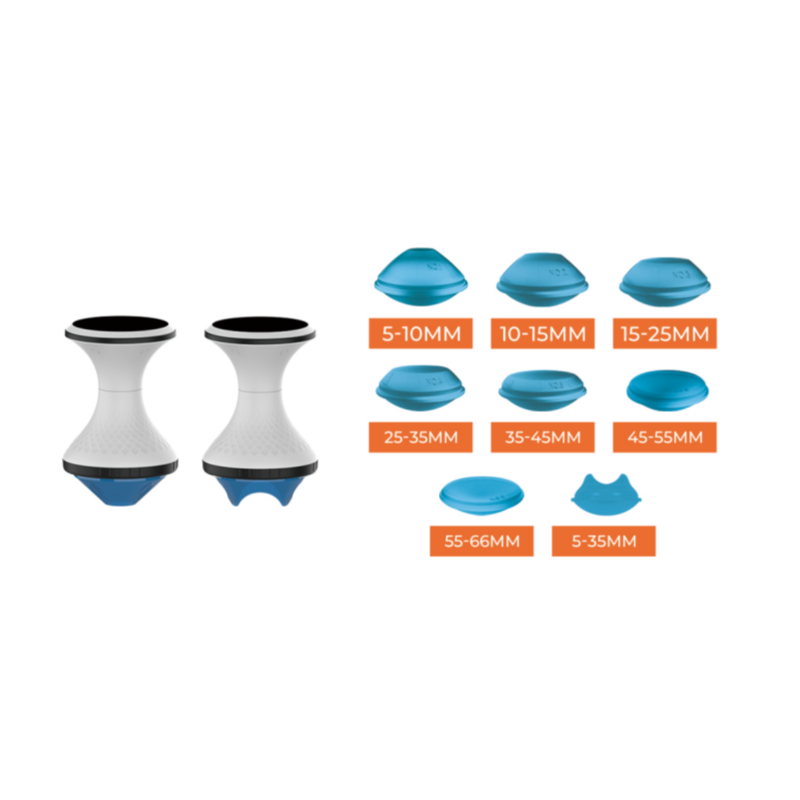
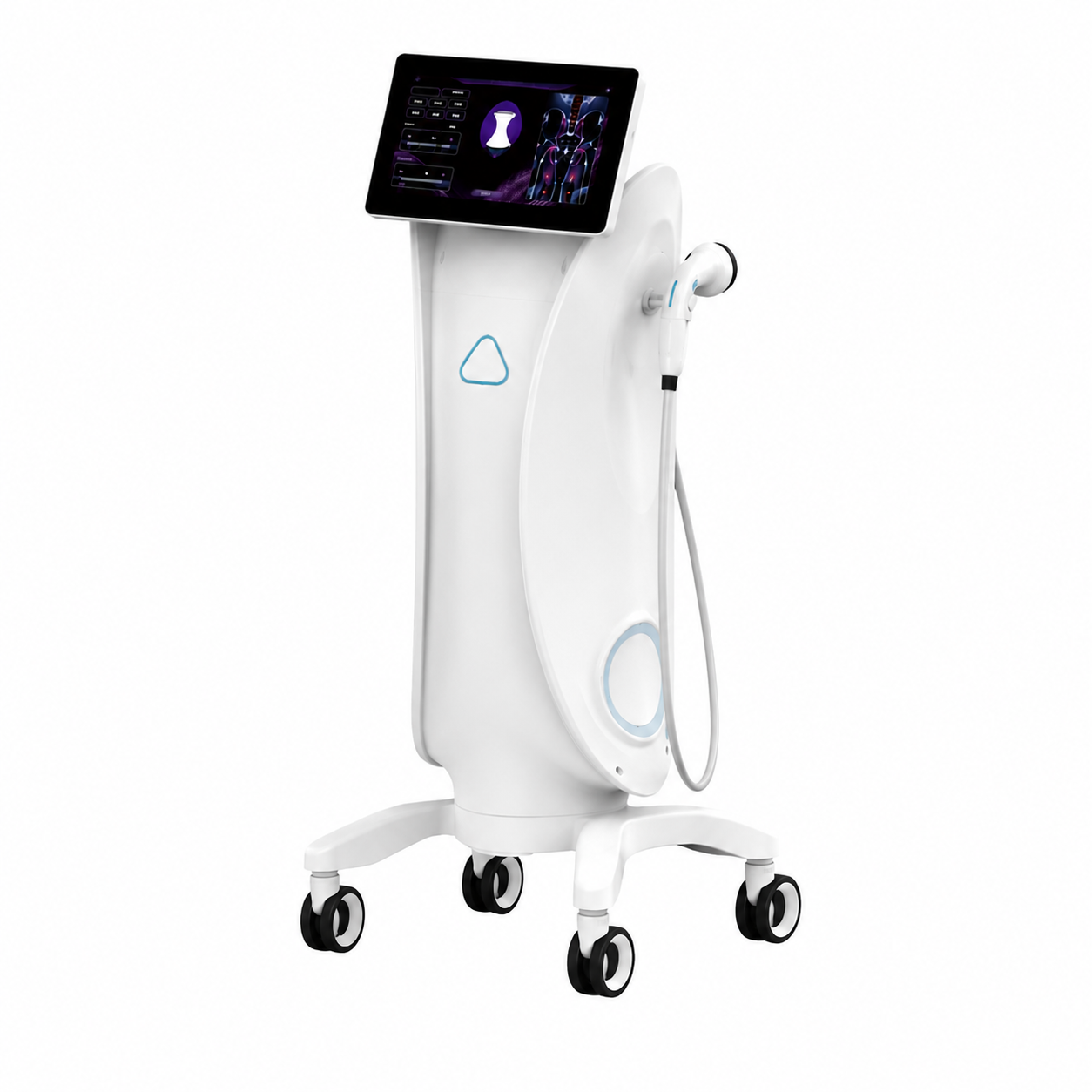
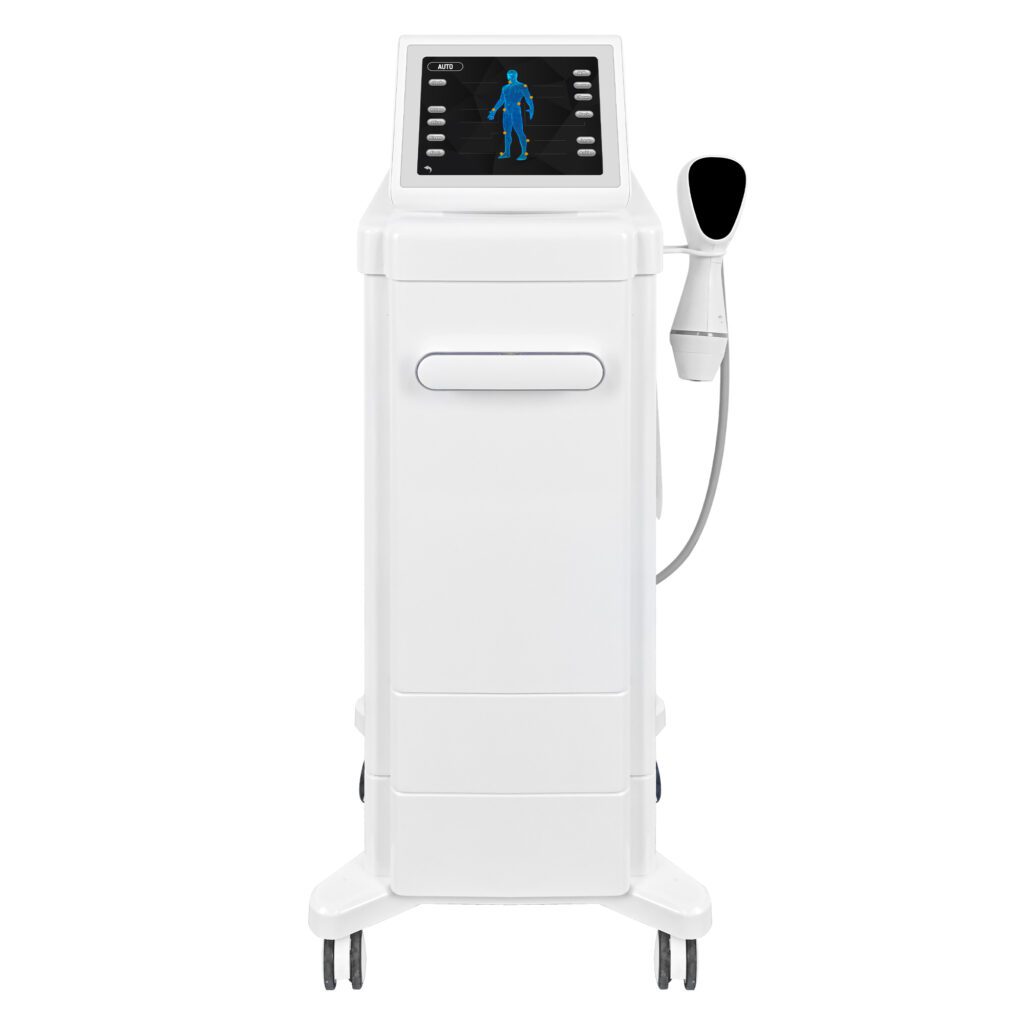
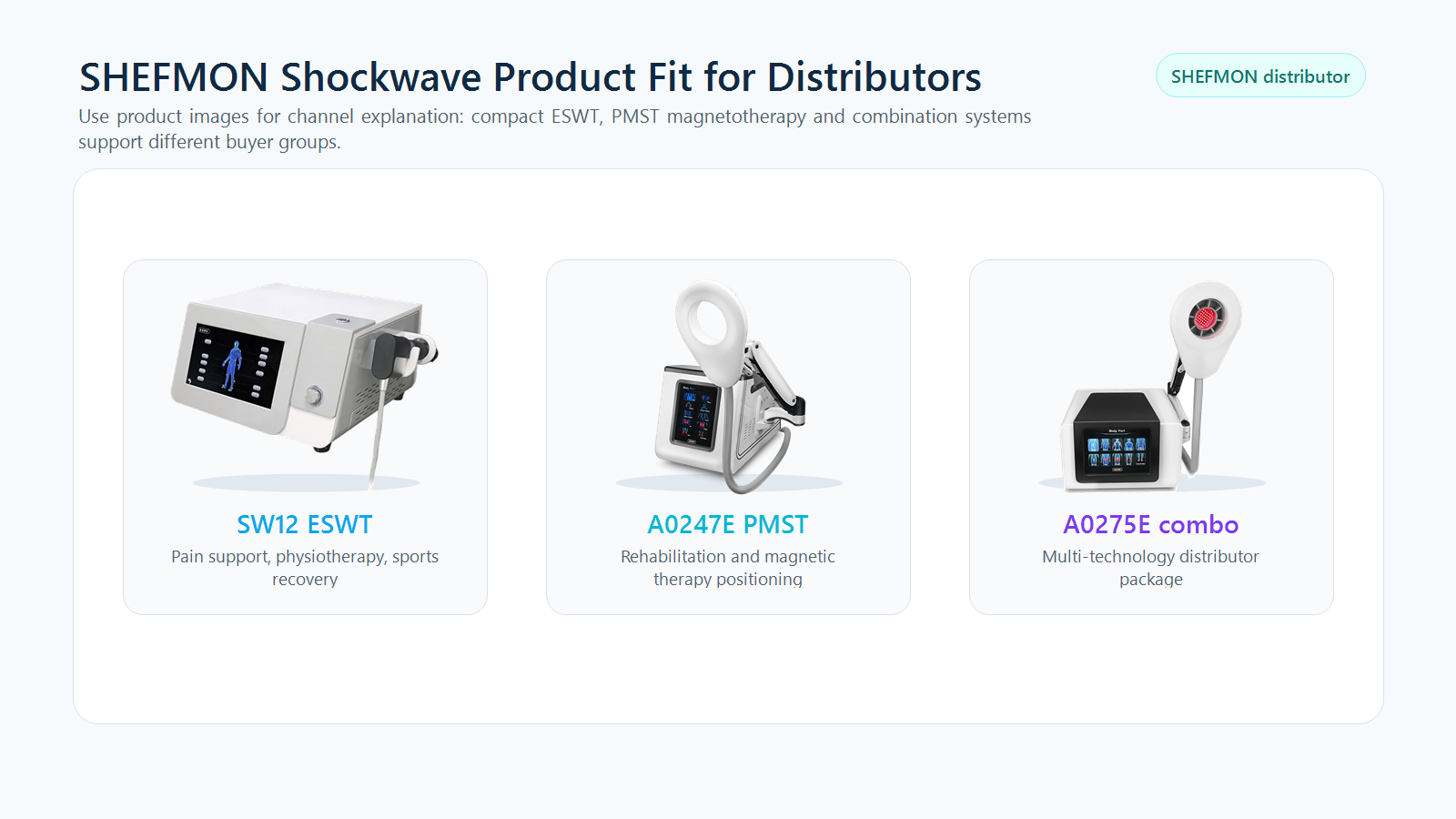
- SW12 ESWT Alívio da Dor Foco Tratamento por Ondas de Choque Terapia a Laser por Ondas de Choque Tecar
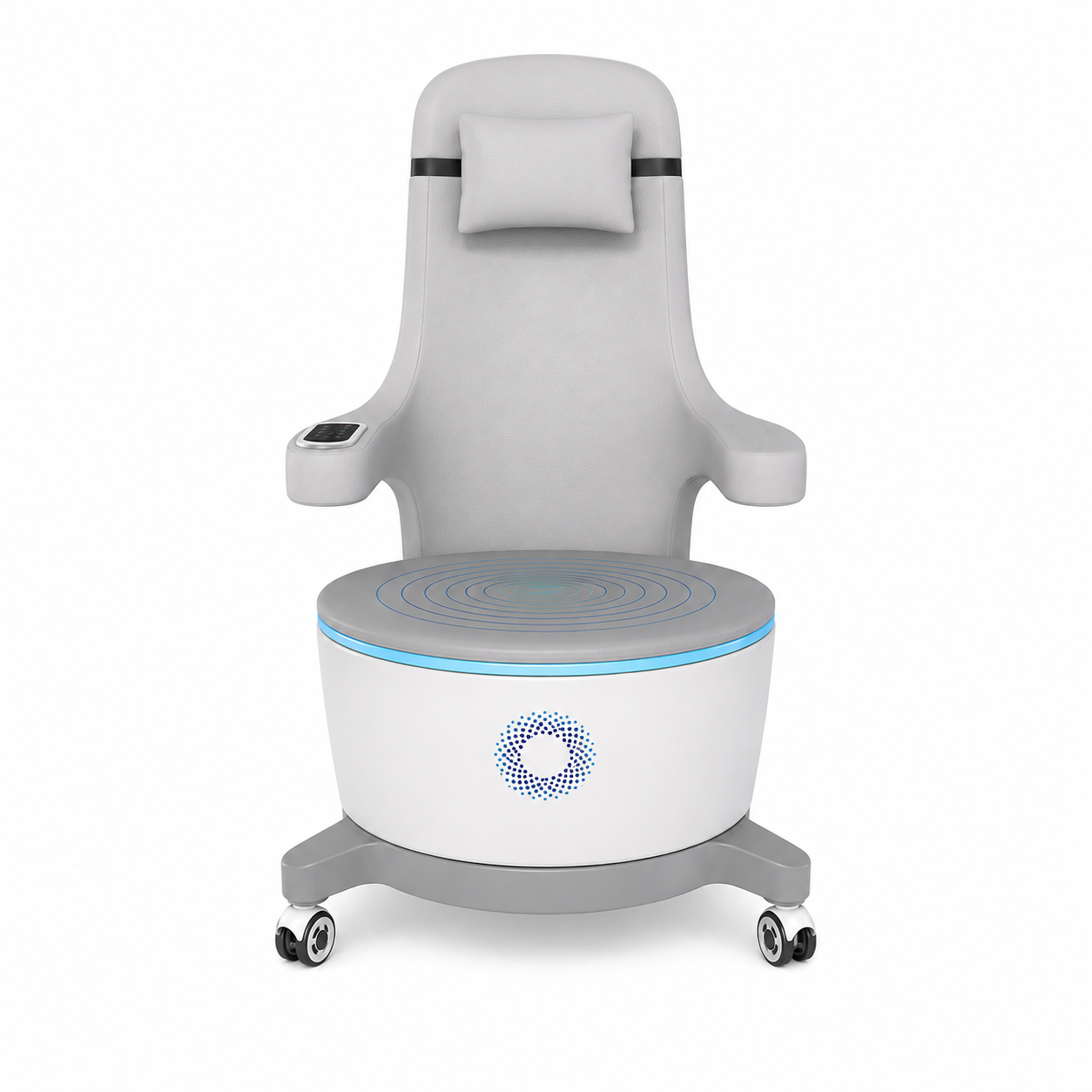
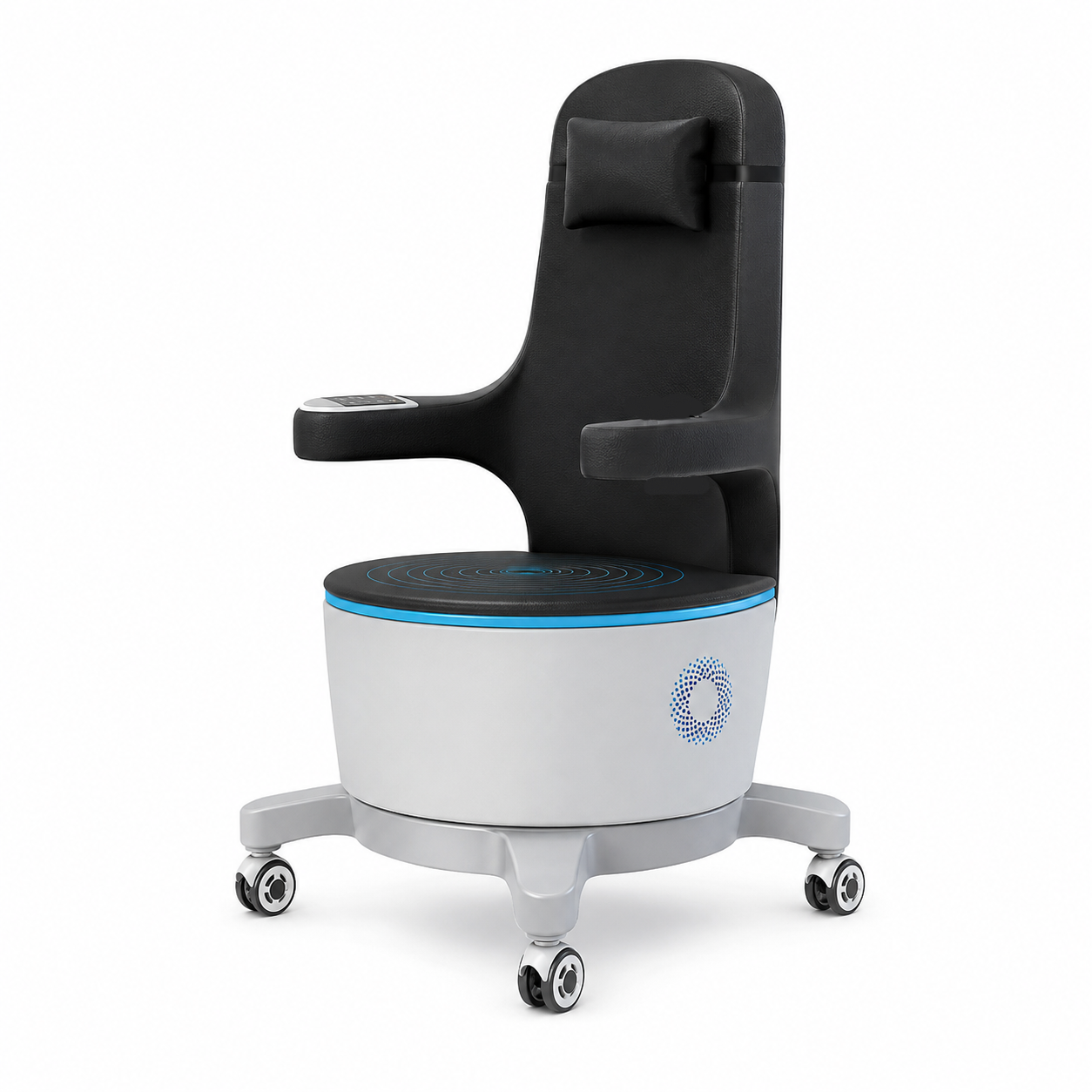
- Aparelho de magnetoterapia A0247E PMST NEO Physio para alívio da dor
- A0275E Máquina de combinação 3 em 1 PMST Wave Magnetoterapia
1. Por que a demanda global por ondas de choque está crescendo?
A procura por equipamentos de terapia por ondas de choque está ligada a uma necessidade global mais ampla de apoio ao tratamento da dor, reabilitação e serviços de recuperação não invasivos.
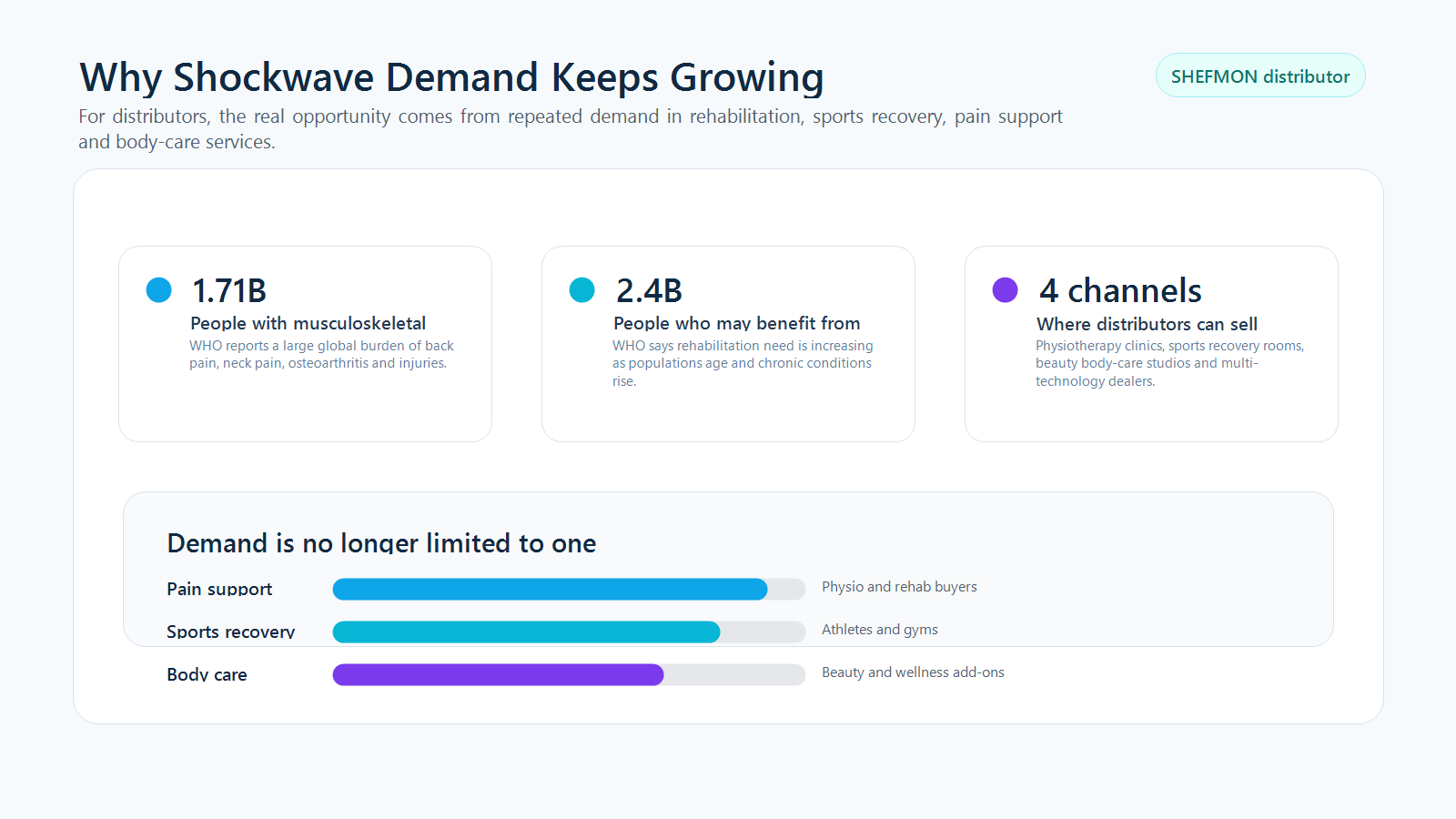
A Organização Mundial da Saúde relata que cerca de 1,71 bilhão de pessoas em todo o mundo vivem com problemas musculoesqueléticos. Estes incluem dor lombar, dor cervical, osteoartrite, lesões e outras condições que frequentemente geram demanda por reabilitação, fisioterapia e apoio para o controle da dor.
A OMS também relata que cerca de 2,4 bilhões de pessoas podem se beneficiar da reabilitação e que a necessidade de reabilitação deverá aumentar à medida que as populações envelhecem e as doenças crônicas aumentam.
Para os distribuidores, isso é importante porque os equipamentos Shockwave não se limitam a um único tipo de comprador. Eles podem ser direcionados para:
- Clínicas de fisioterapia.
- Centros de reabilitação.
- Estúdios de recuperação esportiva.
- Clínicas de tratamento da dor.
- Centros de bem-estar.
- Salões de beleza que oferecem serviços adicionais de cuidados corporais e recuperação.
- Distribuidores de equipamentos estéticos multitecnológicos.
Essa demanda multicanal torna o Shockwave diferente de dispositivos que se adequam apenas a um serviço de beleza específico.
2. Que tipo de crescimento os distribuidores podem esperar?
Os distribuidores não devem esperar que todos os países cresçam na mesma velocidade. A demanda de mercado depende da regulamentação local, da renda do consumidor, da cultura da fisioterapia, da prática de esportes, da densidade de clínicas e da legalidade da promoção do serviço pelos compradores.
Uma leitura realista seria:
- Os mercados maduros apresentam maior conhecimento da marca, mas também maior conformidade e concorrência entre marcas.
- Os mercados emergentes podem apresentar um crescimento unitário mais rápido, mas também maior sensibilidade aos preços.
- Canais de beleza podem adotar o Shockwave como um complemento para cuidados corporais, enquanto canais de reabilitação podem se concentrar mais no alívio da dor e no suporte à recuperação.
- As máquinas combinadas podem ser interessantes para distribuidores que desejam um leque mais amplo de serviços de um único fornecedor.
A estimativa global de CAGR (Taxa de Crescimento Anual Composta) de cerca de 5,71% sugere uma expansão estável, e não um crescimento explosivo repentino. Isso é positivo para distribuidores que desejam construir uma linha de produtos sustentável, pois oferece suporte a treinamento, peças de reposição, pacotes de serviços e compras recorrentes.
3. Quais regiões valem a pena acompanhar?
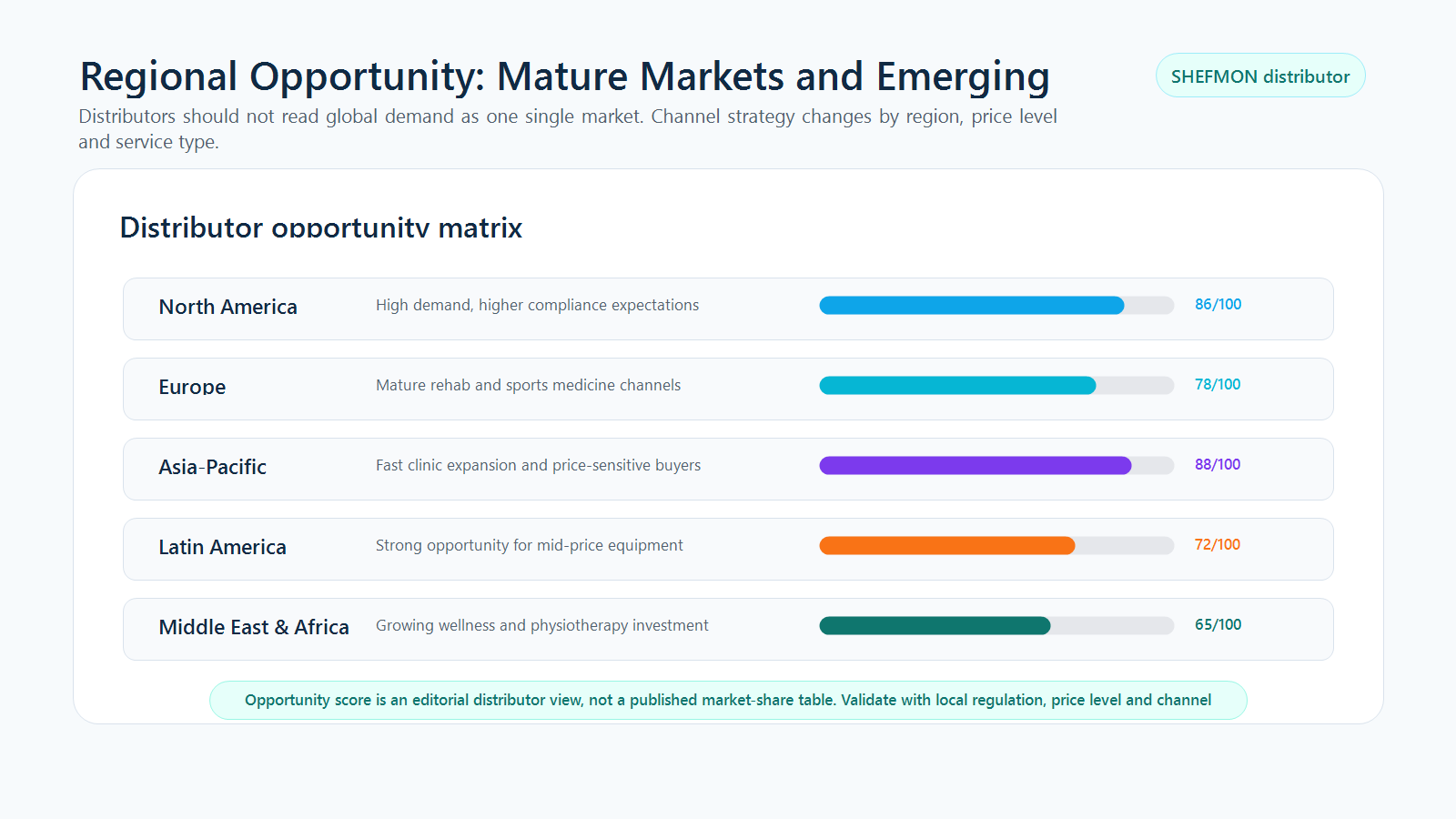
A América do Norte e a Europa costumam ter maior conhecimento em fisioterapia, medicina esportiva e reabilitação. Essas regiões podem suportar equipamentos de maior valor agregado, mas os distribuidores devem estar atentos à documentação, à conformidade e às reivindicações de serviço.
A região Ásia-Pacífico é atrativa porque muitas clínicas, centros de bem-estar e empresas de estética estão expandindo seus menus de serviços. Os compradores podem estar mais sensíveis ao preço, o que cria espaço para equipamentos diretamente da fábrica com bom suporte técnico.
A América Latina, o Oriente Médio e partes da África podem ser mercados promissores para distribuidores de preço médio. Nesses mercados, o fator crucial não é apenas o preço da máquina. Os compradores frequentemente precisam de treinamento sobre o produto, materiais de vendas, suporte no idioma local, peças de reposição e comunicação ágil com o fornecedor.
A melhor região para um distribuidor nem sempre é o maior mercado. É a região onde o distribuidor consegue construir confiança, educar os compradores e dar suporte à prestação de serviços.
4. Quais canais de clientes um distribuidor pode visar?
Os dispositivos de ondas de choque podem ser comercializados em diversos modelos de negócio:
| Tipo de cliente | Demanda principal | Posicionamento do distribuidor |
|---|---|---|
| Clínica de fisioterapia | Serviços de apoio à dor, recuperação e reabilitação | Equipamentos profissionais, protocolos, treinamento e peças de reposição. |
| Centro de recuperação esportiva | Recuperação muscular, serviços para atletas, programas de apoio a lesões | Fluxo de trabalho de tratamento rápido, serviços em pacote, clientes recorrentes. |
| Salão de beleza / estúdio de cuidados corporais | Celulite, suporte para contorno corporal, complementos de bem-estar | Receita adicional, menu de serviços corporais, pacote de entrada acessível |
| Clínica de estética médica/bem-estar | Portfólio de dispositivos multisserviços | Combinação com dispositivos de radiofrequência (RF), Tecar, PMST ou de modelagem corporal. |
| Revendedor de equipamentos | Catálogo mais amplo e revenda local | Preços de fábrica, suporte OEM/ODM, materiais de marketing |
É por isso que o Shockwave pode ser um bom produto para distribuidores: ele permite que uma única categoria de equipamentos atenda a diferentes necessidades de compra.
5. Como os distribuidores devem explicar a tendência aos clientes locais?
O proprietário de um salão de beleza ou o comprador de uma clínica geralmente não se preocupa com a taxa de crescimento anual composta global. O que importa para eles é se o equipamento consegue atrair clientes para o ambiente.
Um distribuidor pode explicar a tendência da seguinte forma:
“A procura por tecnologia de ondas de choque está a crescer porque o alívio da dor, a recuperação desportiva e os serviços de cuidados corporais não invasivos estão a tornar-se mais comuns. Esta não é uma tecnologia exclusiva de hospitais. Clínicas de fisioterapia, centros de recuperação e empresas de bem-estar estão a adicionar serviços baseados em equipamentos. Para o seu negócio, a Shockwave pode ajudar a criar uma nova categoria de serviços sem o custo de adquirir uma marca ocidental dispendiosa.”
Boa formulação:
- “Apoia o posicionamento do serviço de gestão da dor e recuperação.”
- “Pode ser usado como parte de um programa de fisioterapia, recuperação esportiva ou cuidados com o corpo.”
- “Ajuda as clínicas a criar pacotes de serviços recorrentes.”
- “Os resultados e a adequação variam; é necessário treinamento especializado e conformidade com as normas locais.”
Evitar:
- “Cura a dor crônica.”
- “Resultados garantidos.”
- “Tratamento médico sem restrições.”
- “Funciona para todos os clientes.”
- “Sem riscos e sem contraindicações.”
6. Onde a SHEFMON se encaixa neste mercado
Para os distribuidores, o papel da SHEFMON não é competir apenas com preços baixos. Seu posicionamento mais forte reside no valor direto da fábrica, com variedade de produtos, suporte de treinamento, comunicação sobre peças de reposição e cooperação comercial flexível.
A linha de produtos de terapia por ondas de choque e fisioterapia da SHEFMON pode dar suporte a diversas estratégias de distribuição:
- SW12 ESWT para posicionamento focado em terapia por ondas de choque / Tecar / laser.
- A0247E PMST NEO para fisioterapia, reabilitação e suporte a lesões esportivas.
- A0275E Sistema combinado 3 em 1 para distribuidores que desejam vender um pacote mais abrangente.
- Suporte OEM/ODM para distribuidores que estão construindo sua própria marca.
- Materiais do produto e suporte pós-venda para equipes de vendas locais.
O mercado está crescendo, mas o distribuidor que vencer não será aquele que apenas importar a máquina de menor custo. O vencedor será o distribuidor que souber explicar o modelo de serviço, treinar o comprador, fornecer peças e ajudar o cliente a vender os tratamentos de forma responsável.
7. Lista de verificação para distribuidores antes de entrar no mercado de ondas de choque
Antes de importar equipamentos Shockwave, o distribuidor deve confirmar:
- Qual grupo de clientes locais é mais fácil de conquistar primeiro: fisioterapia, recuperação esportiva, salões de beleza ou revendedores de equipamentos?
- Que tipos de reclamações são permitidas no mercado local?
- O fornecedor disponibiliza manuais, vídeos de operação e imagens de venda?
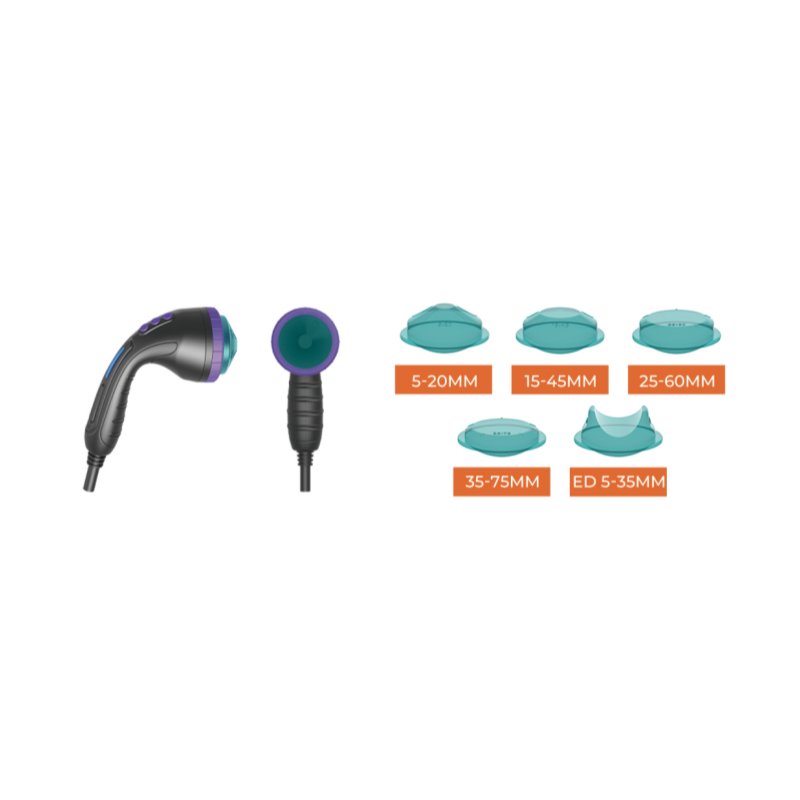
- Há peças de reposição disponíveis, como peças de mão, cabeçotes de tratamento, telas e placas de alimentação?
- O fornecedor oferece suporte para resolução de problemas remotos?
- Existe uma política clara de garantia e pós-venda?
- O preço do produto deixa margem suficiente para marketing e serviços locais?
- O distribuidor consegue explicar resultados realistas sem fazer promessas exageradas?
Se esses pontos estiverem claros, a Shockwave poderá ser uma linha de produtos sólida para distribuição a longo prazo.
Perguntas frequentes
A demanda global por ondas de choque ainda está crescendo?
Sim. As estimativas do mercado público indicam um crescimento constante na próxima década. A Market.us estima que o mercado de dispositivos de terapia por ondas de choque crescerá de cerca de US$ 1,215 bilhão em 2025 para cerca de US$ 2,122 bilhões em 2035, com uma taxa de crescimento anual composta (CAGR) estimada em 5,71%.
A terapia por ondas de choque é indicada apenas para clínicas de fisioterapia?
Não. Fisioterapia e reabilitação são canais importantes, mas os distribuidores também podem visar centros de recuperação esportiva, clínicas de bem-estar, salões de beleza e revendedores de equipamentos multitecnológicos, dependendo da regulamentação local.
Será esta uma tendência de curto prazo?
É melhor compreendida como uma categoria de equipamentos de serviço de longo prazo. A demanda é impulsionada por condições musculoesqueléticas, necessidades de reabilitação, envelhecimento da população, recuperação esportiva e preferências por serviços não invasivos.
Qual o melhor mercado para um novo distribuidor?
O melhor mercado nem sempre é o maior. Um novo distribuidor deve escolher o segmento onde tenha acesso a compradores, possa oferecer treinamento e suporte pós-venda.
Como devo promover os equipamentos da Shockwave de forma responsável?
Use uma linguagem conservadora, como "apoio aos serviços de recuperação", "posicionamento para alívio da dor", "serviço adicional de cuidados corporais" e "os resultados variam". Evite promessas de cura, resultados garantidos ou linguagem que diga que o tratamento é livre de riscos.