O que causa cicatrizes de acne?
As cicatrizes de acne não são apenas imperfeições superficiais — são alterações estruturais profundas na pele. Quando a inflamação da acne penetra na derme, danifica as fibras de colágeno, a própria estrutura que mantém a pele lisa e firme. À medida que o corpo tenta se curar, pode produzir colágeno em excesso (levando a depressões) ou em depressões (causando cicatrizes elevadas). É por isso que as cicatrizes de acne podem parecer persistentes — não são apenas descolorações; são alterações físicas na textura da pele.
Imagine sua pele como um colchão. Quando as molas estão quebradas ou irregulares, nenhum alisamento superficial conseguirá corrigir a estrutura subjacente. É exatamente por isso que cremes e séruns tópicos muitas vezes não apresentam resultados reais para cicatrizes de acne. De acordo com pesquisas clínicas, as cicatrizes de acne são um problema recorrente. problema complexo de cicatrização de feridas, exigindo tratamentos que estimulem uma regeneração mais profunda em vez de reparos superficiais.
É aqui que entram as tecnologias avançadas como lasers fracionários de CO2 intervir, pois essas estratégias visam a causa raiz, e não apenas os sintomas visíveis.
Tipos de cicatrizes de acne
Compreender os tipos de cicatrizes é crucial antes de escolher qualquer tratamento. As cicatrizes de acne geralmente se dividem em duas categorias principais: atrófico (deprimido) e hipertrófico (elevado) cicatrizes. As cicatrizes atróficas incluem cicatrizes em forma de picada de gelo, cicatrizes em forma de caixa e cicatrizes onduladas — cada uma com formas e profundidades únicas que exigem abordagens de tratamento personalizadas.
As cicatrizes hipertróficas, por outro lado, são causadas pela produção excessiva de colágeno, resultando em pele elevada e espessa. Embora menos comuns em casos de acne, ainda representam preocupações estéticas. A diversidade de tipos de cicatrizes explica por que um tratamento único não funciona. As clínicas geralmente utilizam tecnologias versáteis, como lasers fracionados de CO2, porque podem se adaptar a múltiplas condições de cicatrizes.
O fascinante é que cada cicatriz conta uma história de como a pele cicatrizou — ou não — após a inflamação. É por isso que os tratamentos estéticos modernos se concentram em reeducar o processo de cicatrização da pele, em vez de simplesmente remover o tecido danificado.
O que é um laser fracionário de CO2 de 10600nm?
Tecnologia Essencial Explicada
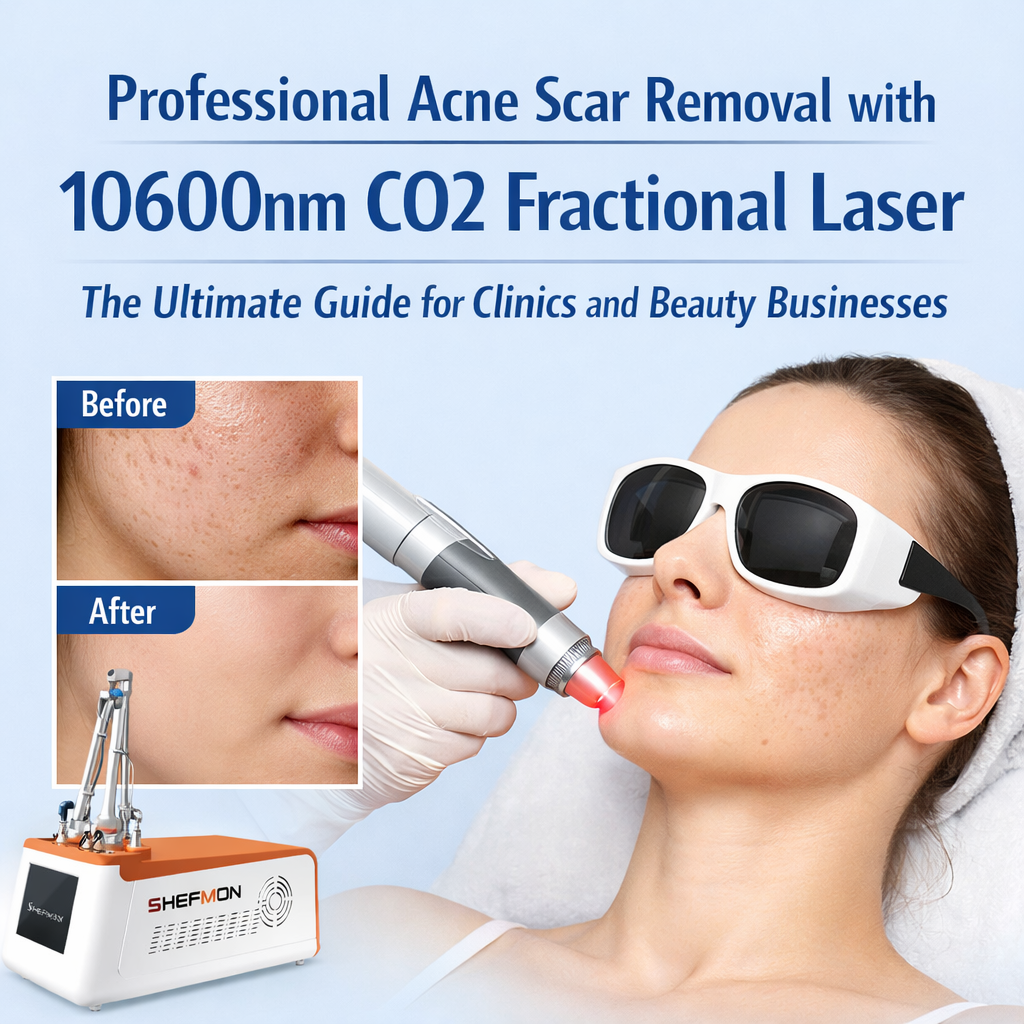
O Laser fracionário de CO2 de 10600 nm É uma das ferramentas mais avançadas em dermatologia estética. Utiliza gás carbônico para gerar um feixe de laser com comprimento de onda de 10.600 nanômetros, que é altamente absorvido pela água presente na pele. Isso a torna incrivelmente eficaz para o rejuvenescimento controlado da pele.
Diferentemente dos lasers tradicionais que tratam toda a superfície, a tecnologia fracionada divide o feixe de laser em milhares de colunas microscópicas. Essas colunas penetram na pele, deixando o tecido circundante intacto, acelerando a cicatrização e reduzindo o tempo de recuperação.
Imagine arejar um gramado em vez de arrancá-lo completamente — esse é o conceito por trás da tecnologia de laser fracionado. Ao criar minúsculas “microlesões”, a pele é estimulada a se regenerar naturalmente, resultando em uma pele mais lisa e saudável com o tempo.
Por que o comprimento de onda de 10600 nm é importante
O comprimento de onda de 10600 nm foi especificamente projetado para atingir as moléculas de água na pele. Como a pele humana é composta principalmente de água, esse comprimento de onda garante uma absorção precisa de energia com danos mínimos aos tecidos circundantes.
Essa precisão permite uma penetração mais profunda — até vários milímetros na derme — onde ocorre a remodelação do colágeno. É por isso que os lasers de CO2 são particularmente eficazes para cicatrizes de acne moderadas a graves, onde tratamentos superficiais simplesmente não atingem a profundidade necessária.
Em termos simples, o comprimento de onda age como um míssil inteligente — ele sabe exatamente para onde ir e o que atingir, tornando os tratamentos eficazes e controlados.
Como funciona o laser fracionado de CO2
Princípio da fototermólise fracionada
No cerne dessa tecnologia reside um conceito chamado fototermólise fracionáriaParece complicado, mas a ideia é surpreendentemente simples: usar energia térmica para criar pequenas lesões controladas na pele, desencadeando uma resposta natural de cura.
Essas microzonas térmicas atuam como sinais, dizendo ao seu corpo: "Ei, repare esta área!" A pele intacta ao redor ajuda a acelerar a recuperação, tornando o processo mais eficiente e seguro.
Processo de Remodelação do Colágeno
Uma vez estimulada, a pele começa a produzir novo colágeno e a reorganizar as fibras existentes. Esse processo não acontece da noite para o dia — ele se desenvolve ao longo de semanas e até meses.
Estudos científicos mostram que lasers fracionados de CO2 podem levar a 50–80% melhora nas cicatrizes de acne Ao promover a regeneração do colágeno e a remodelação dos tecidos.
Mais interessante ainda, pesquisas recentes destacam que essa tecnologia regula fatores biológicos como fatores de crescimento e proteínas envolvidos na cicatrização de feridas, aprimorando ambos. Estrutura e função da pele.
É como reconstruir uma parede danificada — não apenas pintar as rachaduras, mas reconstruir toda a fundação.
Eficácia clínica e resultados
Evidências científicas e estatísticas
O tratamento com laser fracionado de CO2 tem sido amplamente estudado, e os resultados são impressionantes. Dados clínicos demonstram melhorias consistentes na textura, profundidade e aparência geral da pele em cicatrizes.
Por exemplo:
| Métrica | Resultado |
|---|---|
| Melhora da cicatriz | Redução de 50–80% |
| Redução média (em alguns casos) | ~20% por sessão |
| Sessões de tratamento | 3–6 recomendado |
Pesquisas também indicam que sua eficácia é comparável à de outras terapias a laser avançadas, tornando-a uma opção confiável para clínicas.
Expectativas realistas
Embora os resultados sejam significativos, é importante ter expectativas realistas. As cicatrizes de acne não desaparecem da noite para o dia. A maioria dos pacientes precisa de várias sessões, com algumas semanas de intervalo entre elas, para obter os melhores resultados.
A melhora gradual é, na verdade, um bom sinal — significa que a pele está se regenerando naturalmente. Com o tempo, as cicatrizes ficam menos visíveis e a textura da pele torna-se mais lisa e uniforme.
Principais benefícios do laser fracionado de CO2
Tratamento de Precisão
Uma das maiores vantagens dessa tecnologia é a precisão. O laser atinge apenas as áreas danificadas, preservando o tecido saudável, reduzindo riscos e tempo de recuperação.
Renovação da pele a longo prazo
Ao contrário dos tratamentos temporários, o laser fracionado de CO2 estimula a produção de colágeno a longo prazo. Isso significa que os resultados continuam a melhorar mesmo meses após a última sessão.
Não é apenas um tratamento — é um processo de transformação.
Processo de tratamento passo a passo
Preparação pré-tratamento
Antes de iniciar o tratamento, os pacientes geralmente evitam a exposição solar, retinoides e certos medicamentos. Uma consulta adequada garante segurança e resultados ótimos.
Fluxo de trabalho do procedimento
Durante o procedimento, o aparelho a laser emite energia controlada na pele. A sessão geralmente dura de 15 a 60 minutos, dependendo da área a ser tratada.
Recuperação pós-tratamento
A recuperação envolve vermelhidão, inchaço leve e descamação por alguns dias. Os cuidados pós-tratamento adequados — como hidratação e proteção solar — são essenciais para a cicatrização.
Comparação com outros tratamentos para cicatrizes de acne
Laser de CO2 versus Microagulhamento
A microagulhamento é menos invasiva, mas também menos potente. Funciona bem para cicatrizes leves, mas tem dificuldades com cicatrizes mais profundas.
Laser de CO2 versus Peeling Químico
Os peelings químicos atuam na superfície da pele, sendo, portanto, mais adequados para problemas de pigmentação do que para cicatrizes estruturais.
| Tratamento | Profundidade | Eficácia |
|---|---|---|
| Laser de CO2 | derme profunda | Alto |
| Microagulhamento | Moderado | Médio |
| Peelings químicos | سطحية | Baixo para cicatrizes |
Segurança, riscos e efeitos colaterais
Efeitos colaterais comuns
Vermelhidão, inchaço e descamação temporários são normais. Em casos raros, pode ocorrer hiperpigmentação, especialmente em fototipos de pele mais escuros.
Quem deve evitar o tratamento?
Pacientes com infecções ativas, certas doenças de pele ou uso recente de isotretinoína devem evitar este tratamento.
Por que as clínicas escolhem o equipamento de laser fracionado de CO2?
Retorno sobre o investimento para clínicas
Os tratamentos com laser de CO2 são procedimentos muito procurados e com margens de lucro elevadas. As clínicas podem recuperar rapidamente o investimento devido às sessões repetidas.
Demanda crescente do mercado
A procura global por tratamentos estéticos não invasivos continua a aumentar, tornando esta tecnologia uma mais-valia para qualquer clínica.
Visão geral da máquina de laser fracionado de CO2 da SHEFMON
Principais características do modelo A0529
Se você busca uma solução de nível profissional, a Máquina de laser fracionado de CO2 SHEFMON A0529 ofertas:
- Tecnologia avançada de laser de 10600nm
- Níveis de energia e modos de tratamento ajustáveis
- Sistema de digitalização de alta precisão
- Indicado para cicatrizes de acne, rugas e rejuvenescimento da pele.
👉 Link do produto: https://shefmon.com/product/a0529-professional-acne-scar-removal-10600nm-co2-fractional-laser-equipment/
Por que escolher a SHEFMON para OEM/ODM?
A SHEFMON oferece serviços completos. Personalização OEM e ODM, incluindo desenvolvimento de marca, design de sistemas e atualizações funcionais. Com mais de uma década de experiência e distribuição global, é um parceiro confiável para clínicas e distribuidores em todo o mundo.
Conclusão
O Laser fracionário de CO2 de 10600 nm Destaca-se como uma das soluções mais eficazes para o tratamento de cicatrizes de acne atualmente. Ao atingir as camadas mais profundas da pele e estimular a produção natural de colágeno, proporciona melhorias visíveis e duradouras. Para clínicas, representa não apenas uma opção de tratamento, mas também uma poderosa oportunidade de negócio no crescente setor da estética.
Perguntas frequentes
1. Quantas sessões são necessárias para remoção de cicatrizes de acne?
A maioria dos pacientes precisa de 3 a 6 sessões para obter resultados ideais, dependendo da gravidade da cicatriz.
2. O laser fracionado de CO2 é doloroso?
Os pacientes podem sentir desconforto, mas a anestesia tópica reduz significativamente a dor.
3. Qual é o tempo de recuperação?
Normalmente, a recuperação inicial leva de 3 a 7 dias, com melhora contínua ao longo de semanas.
4. É adequado para todos os tipos de pele?
Funciona melhor em tons de pele mais claros, mas configurações avançadas podem se adaptar a diferentes tipos de pele com cautela.
5. Os resultados podem ser permanentes?
Os resultados são duradouros, especialmente com os cuidados e a manutenção adequados da pele.