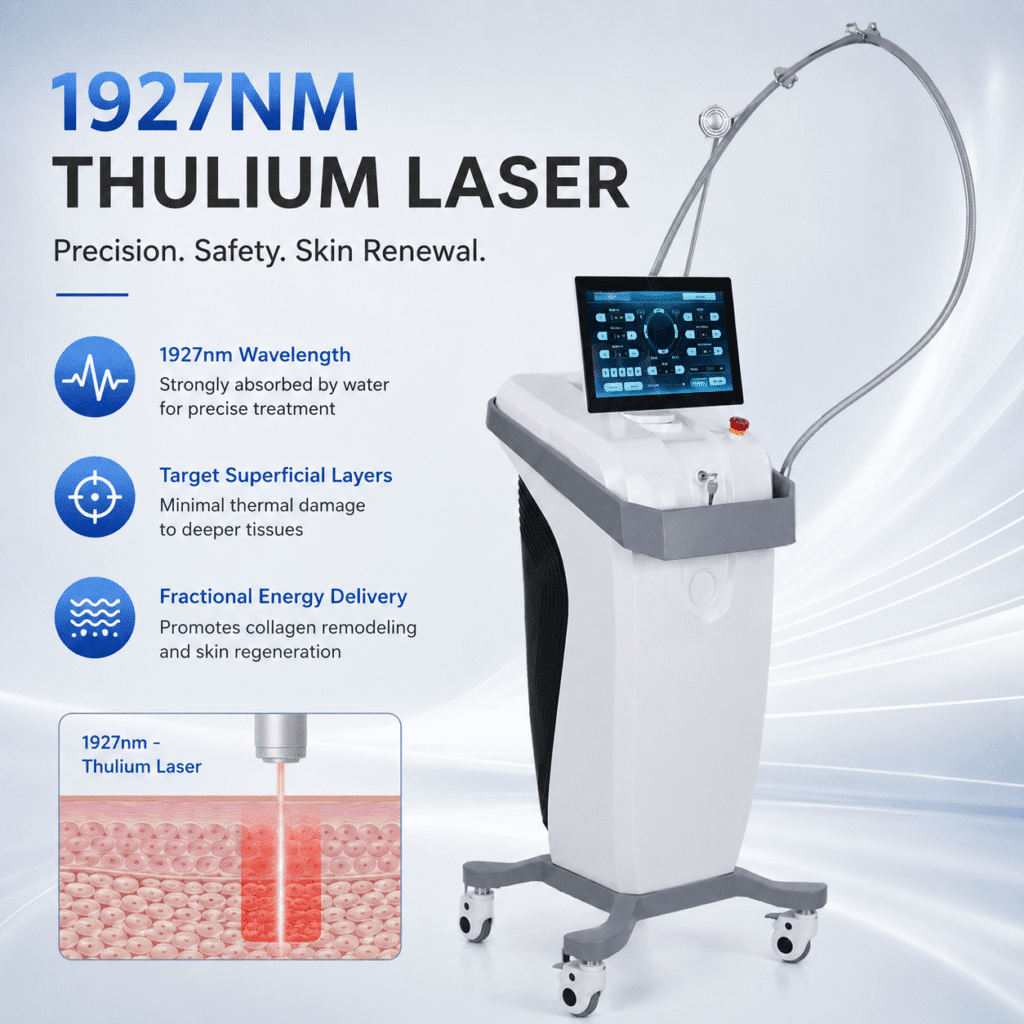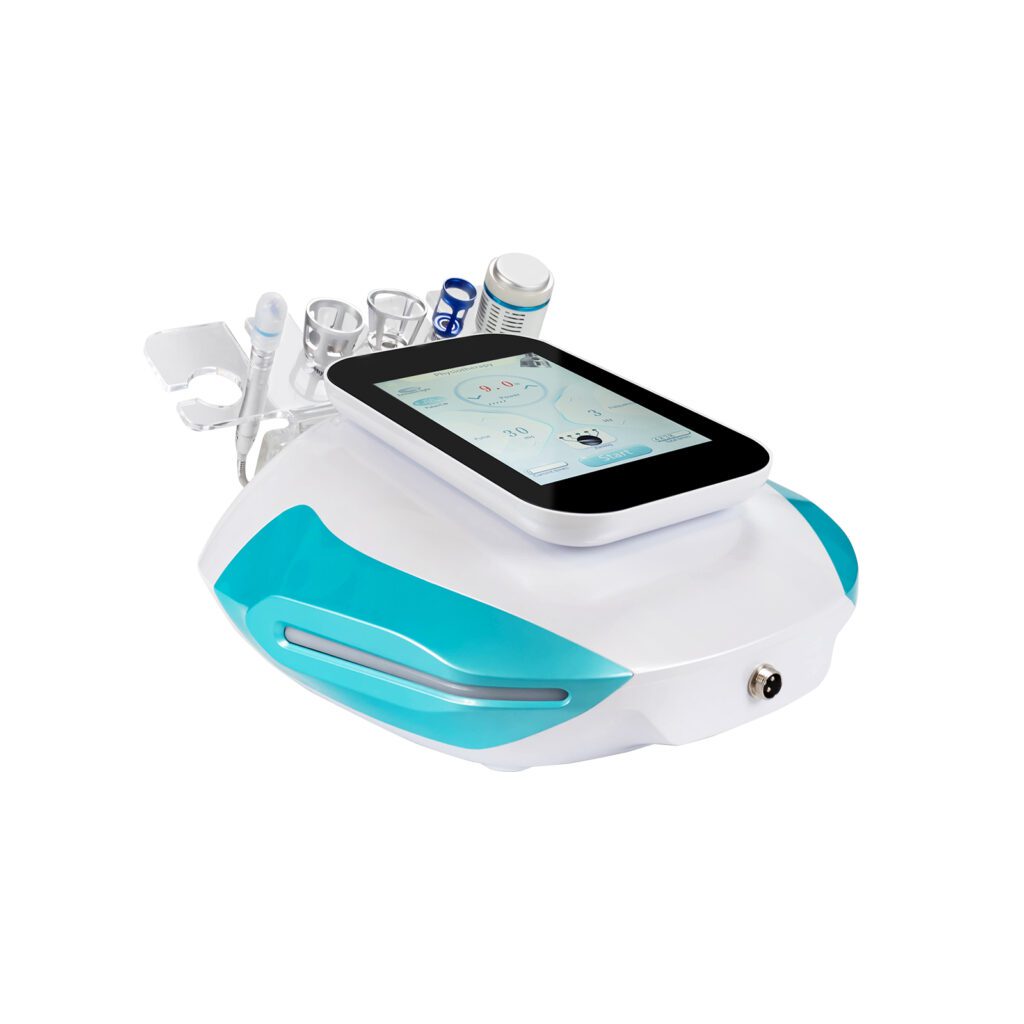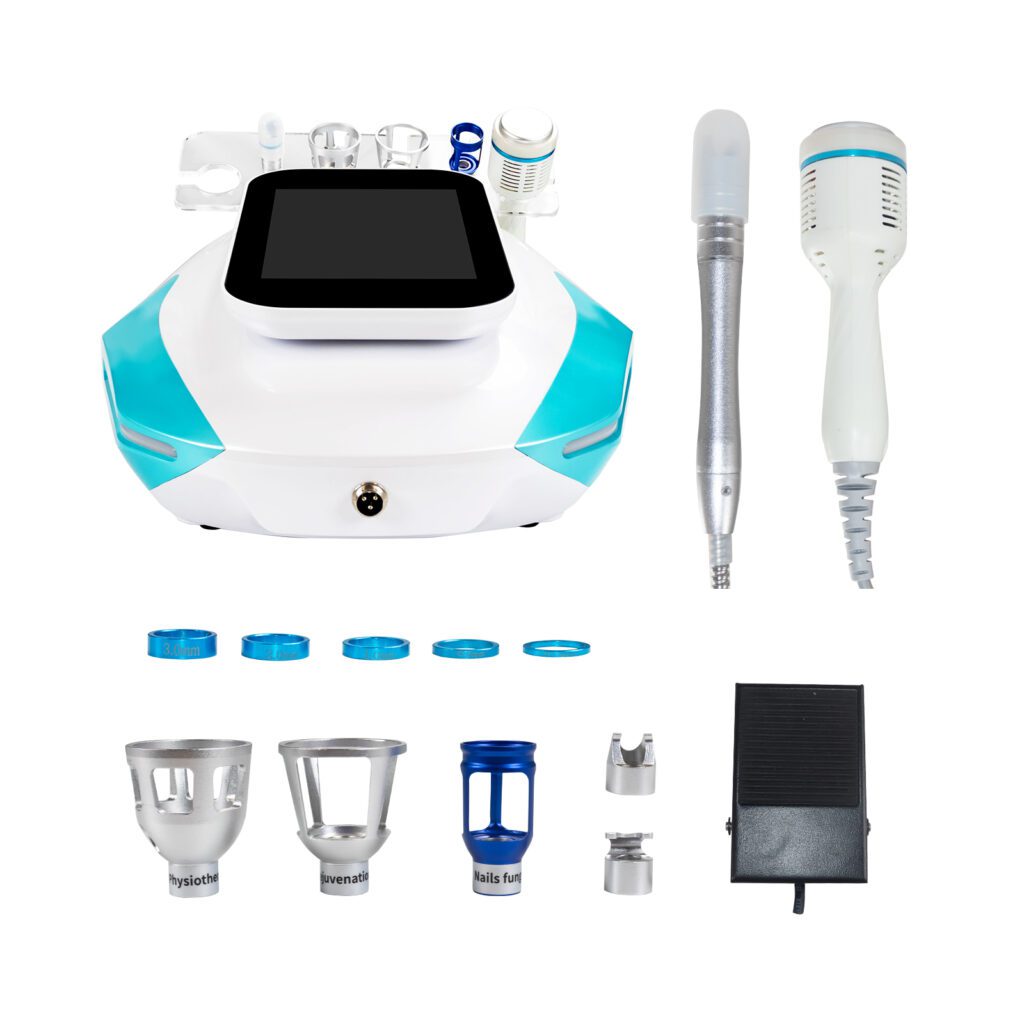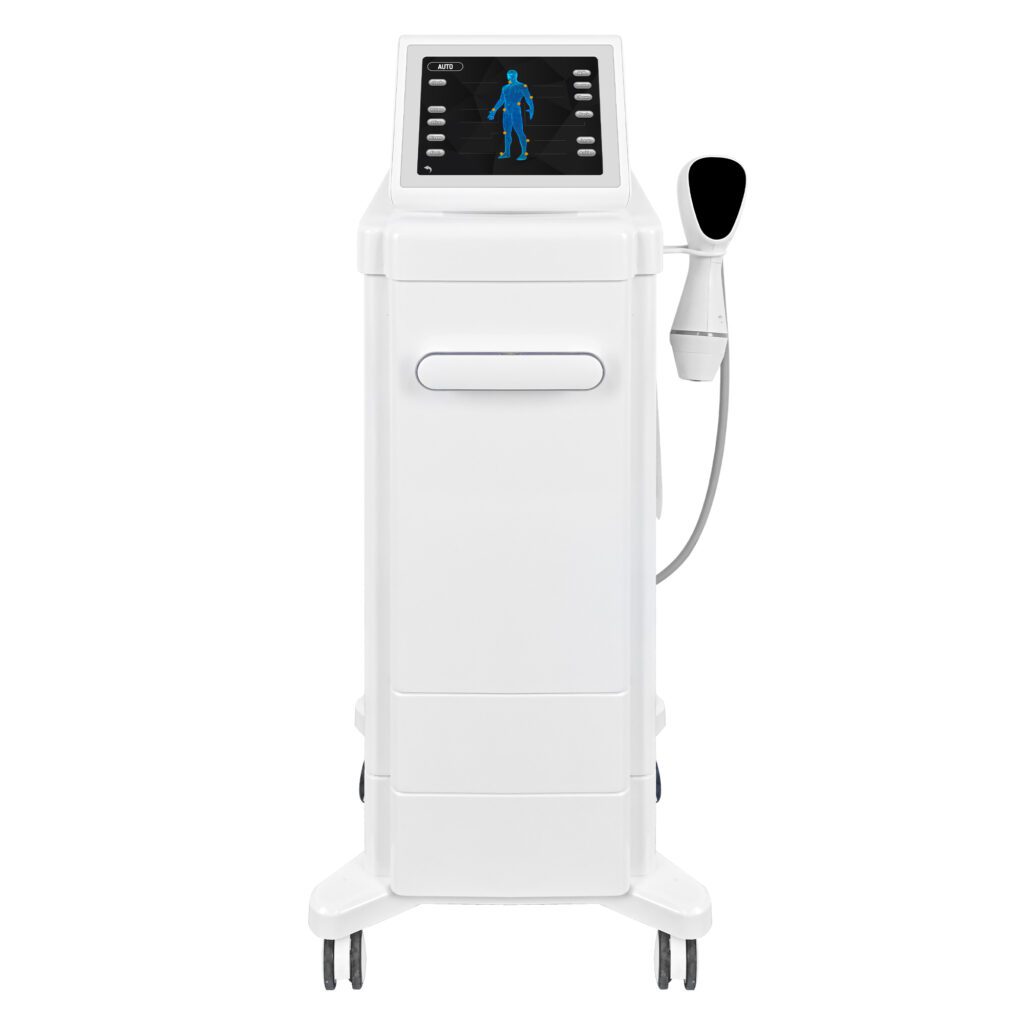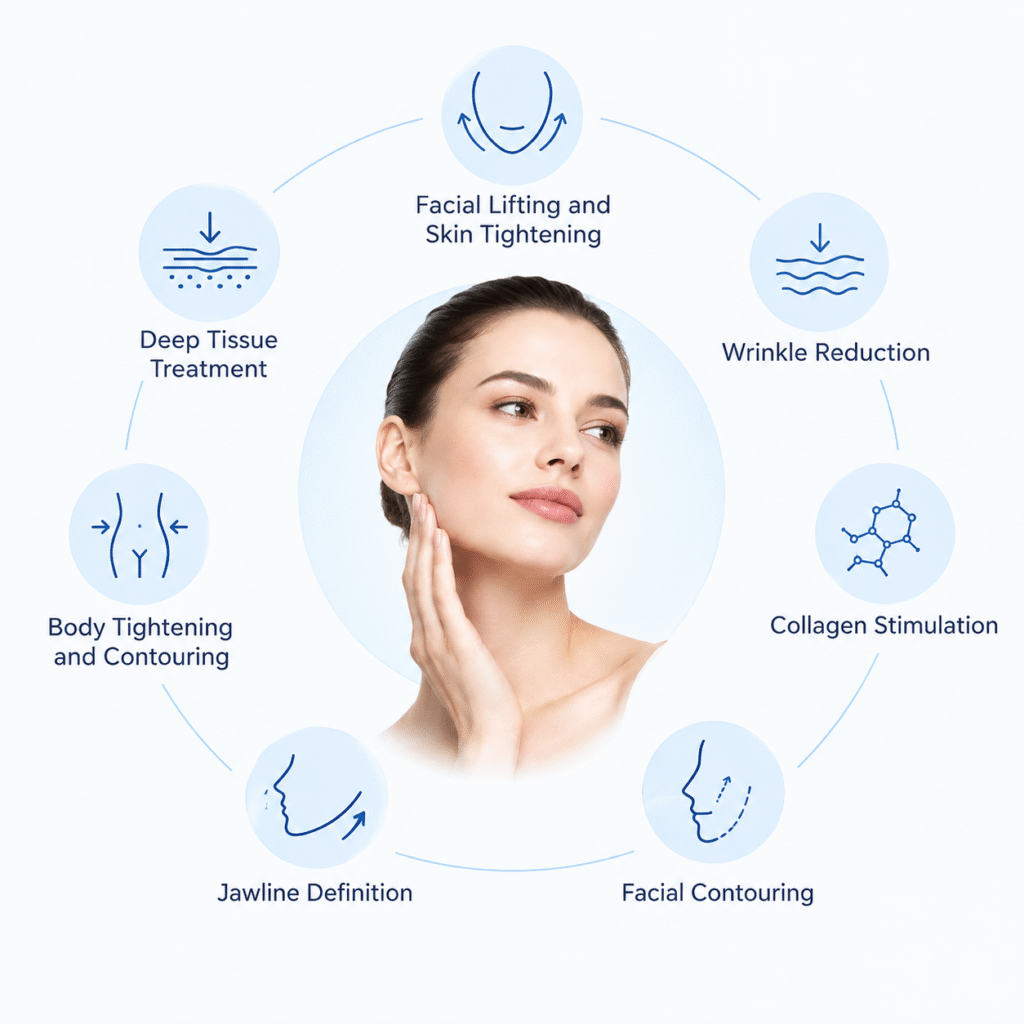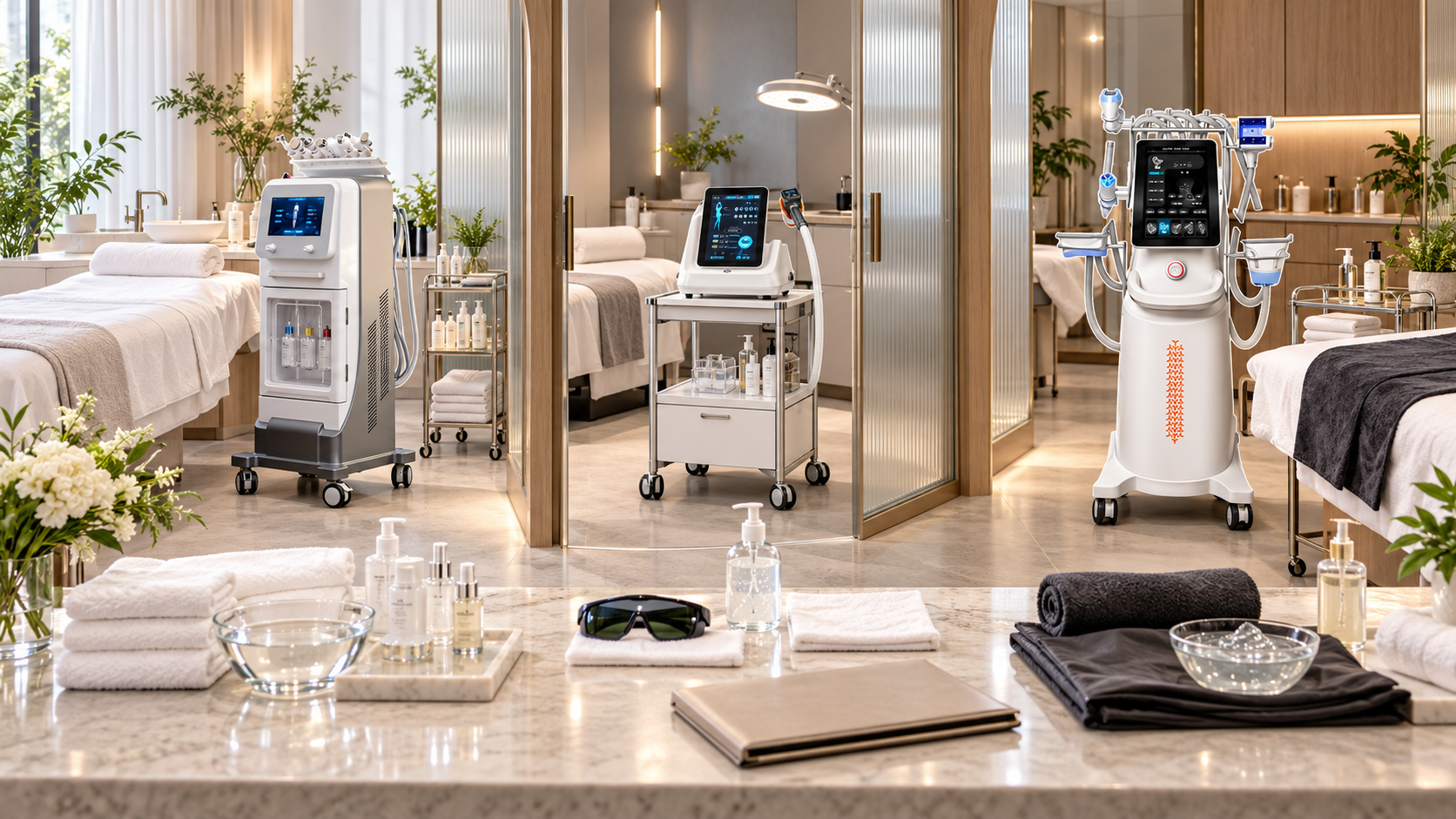
A clear service tier helps clients understand what they are booking and helps staff assign the correct consultation, device, room, operator, and appointment length. Problems begin when one set of labels—basic, premium, and advanced—is applied to every facial, hair, and body service. Those categories do not have the same logic. A premium facial is not the same kind of decision as a large-area hair-reduction booking or a clinical RF microneedling procedure.
This guide shows salons, med spas, skin clinics, hair-reduction practices, body studios, and multi-service centers how to create useful tiers for each department. It connects the tiers to selected SHEFMON devices, gives menu and booking examples, and explains how to keep a commercial hierarchy from overriding professional suitability.
エグゼクティブサマリー
- Define a tier by a real difference in goal, technology, service scope, appointment resources, or professional control.
- Use different tier logic for facial, hair, and body departments instead of forcing one universal ladder across the menu.
- Build facial tiers around core maintenance, targeted technology, and qualified advanced pathways.
- 使用 A0648 ハイドロマイクロダーマブレーション for the core facial tier and A0272-F フェイシャルEMS/RF for a separate targeted tier.
- 保つ A0204 集束型HIFU そして A0152 RFマイクロニードリング behind qualified advanced consultation gates.
- Organize hair-reduction tiers by consultation status and precisely defined service area rather than laser power, promised results, or client spending.
- 比較する A0423 そして A0426 as equipment formats for one controlled hair-reduction department.
- Separate body tiers by service principle: B0155 多機能ボディケア, A0241 muscle-focused services、 そして S9 localized cooling contouring.
- Give every public tier an internal service card containing the exact configuration, booking gate, staff, room, stock, records, aftercare, and review process.
- Do not use a higher tier to imply guaranteed results, universal suitability, or automatic progression to a more complex device.
1. Decide What a Tier Is Supposed to Communicate
A service tier should answer a practical client question. Depending on the department, it may explain:
- whether the appointment is consultation, routine service, targeted service, or advanced procedure;
- whether the booking covers a small, medium, or large defined area;
- whether the service uses a different technology principle;
- whether the appointment needs a different room, operator, component set, or time block;
- whether stronger professional oversight, consent, aftercare, or follow-up applies.
A tier should not merely signal that one client is spending more than another. It also should not imply that an expensive or complex service is better for everyone. The most appropriate tier is the one that matches the current goal, assessment, and operating scope.
2. Do Not Use One Tier System for All Three Departments
Facial, hair, and body services need different organizing rules.
| Department | Best primary tier logic | 効果を発揮する理由 |
|---|---|---|
| Facial | Service role and professional control | Distinguishes routine maintenance, targeted technology, and advanced procedures |
| 脱毛 | Consultation status plus defined service area and booking scope | Makes duration and pricing easier to understand without implying stronger laser treatment |
| 体 | Technology goal or modality | Prevents roller/vacuum care, muscle stimulation, and cooling contouring from being collapsed into “slimming” |
A multi-service center can use consistent visual design and terminology across its website, but the operational meaning of each tier should remain specific to the department.
3. Use a Four-Part Tier Architecture
Every department can use the same navigation framework even when its internal tier logic differs.
1. Discovery or consultation: clarifies the goal and routes the client. 2. Core service: the department’s understandable foundation. 3. Targeted service: a defined technology, area, or program with its own assessment. 4. Specialist or advanced service: a pathway requiring stronger authorization, controls, and follow-up.
Not every department needs to publish all four levels. A new facial salon may offer consultation, core, and targeted services. A hair-reduction practice may use consultation and area tiers without an “advanced” option. A body studio may publish three parallel modalities rather than a ladder.
4. Build the Facial Tier System Around Service Depth
A clear facial menu can use three service tiers and a separate consultation route.
| Facial tier | 顧客対応目的 | Representative SHEFMON device | Key boundary |
|---|---|---|---|
| Core facial care | クレンジング、角質除去、毛穴の汚れ除去、保湿を重視したケア | A0648 | A foundation service, not a universal prerequisite for every procedure |
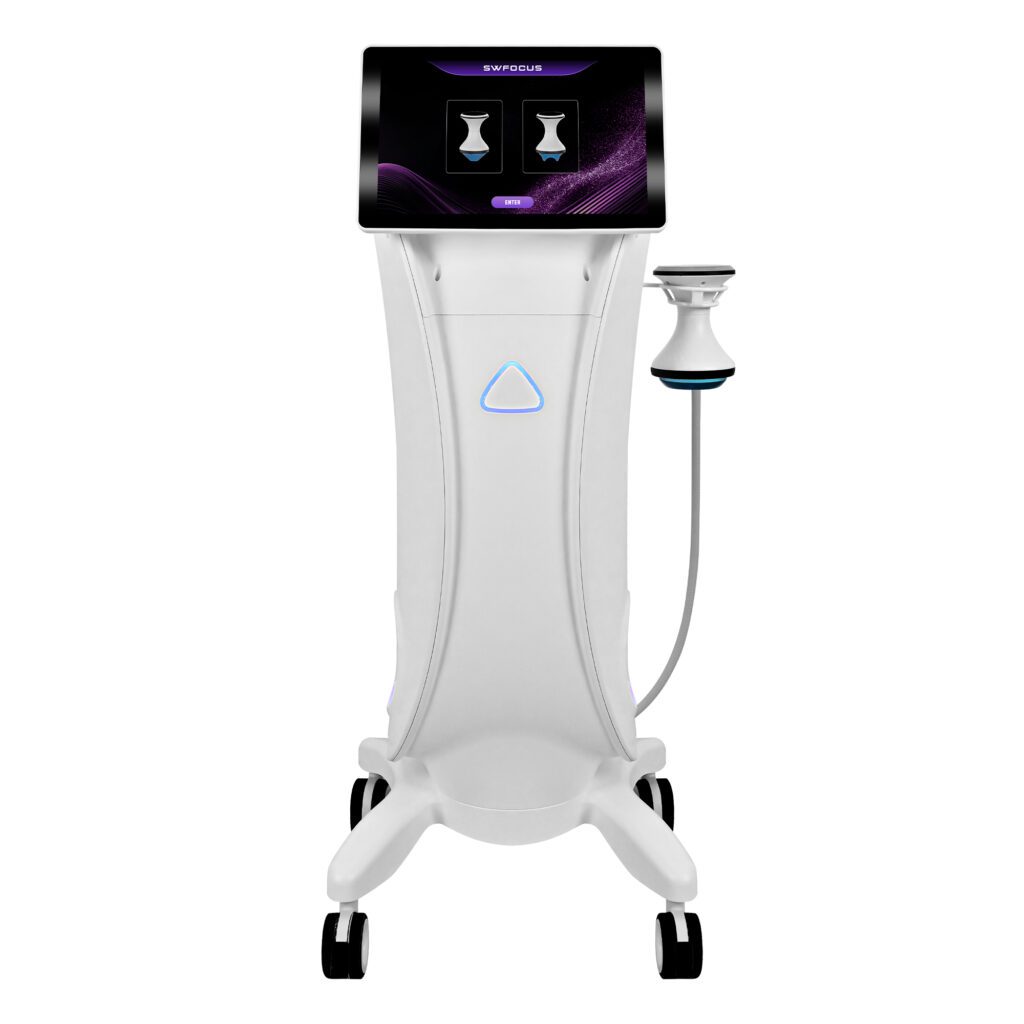
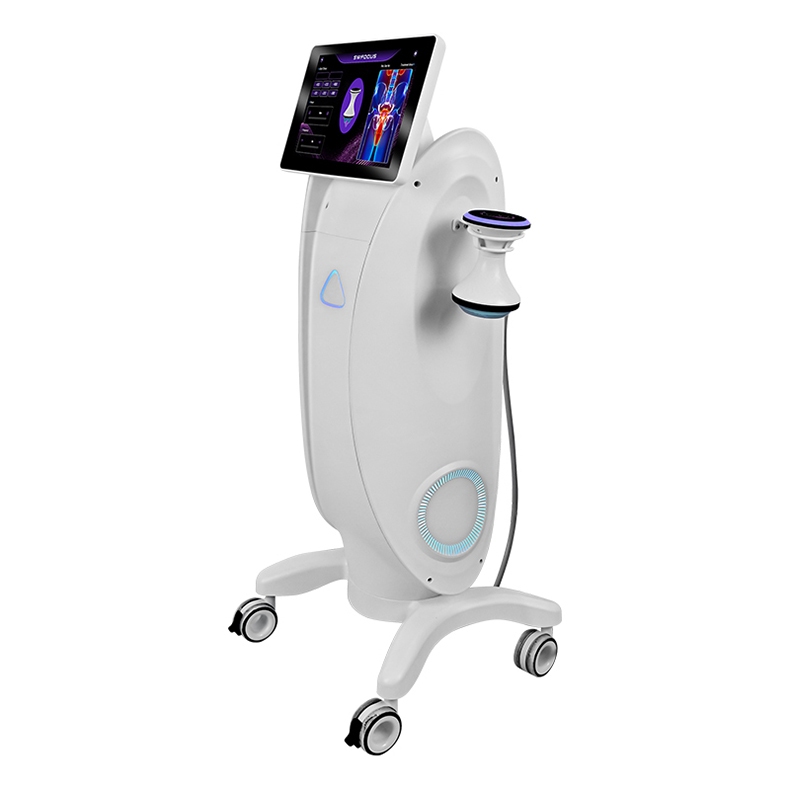
| Targeted facial technology | Facial tone and contour consultation | A0272-F | A separate technology category, not an automatic premium add-on |
| Advanced focused pathway | Focused-ultrasound consultation | A0204 | Requires qualified assessment and configuration control |
| Advanced clinical pathway | RF microneedling consultation and procedure | A0152 | A clinical procedure route, not a routine facial tier |
These tiers are choices, not steps every client must complete. A client may remain in core maintenance, enter a targeted consultation directly, or be referred to an appropriately qualified advanced pathway.
5. Create the Core Facial Tier with A0648
The vertical A0648 is a nine-function hydro microdermabrasion platform. Its current product page presents hydro and vacuum-based cleansing, exfoliation, extraction, hydration-oriented care, and supporting facial functions.
The core tier can contain a small number of meaningful services:
- Essential Cleanse and Hydrate Facial: a clear entry service using an approved A0648 function set;
- Targeted Hydro Facial: a service card organized around one suitable facial-care priority;
- Facial Maintenance Review: a return appointment that includes a change check and confirms the current plan.
Do not create nine public tiers from nine device functions. The tier should reflect a client-understandable difference in purpose or appointment design. Staff can select approved functions internally after the appropriate assessment.
6. Create a Targeted Facial Tier with A0272-F
The A0272-F product page describes high-intensity facial electrical stimulation combined with RF. This gives it a distinct technology role from A0648 hydro-based care.
Publish it as a 顔のトーンと輪郭に関するカウンセリング followed by a defined service for suitable clients. The internal service card should identify the device and accessories, authorized operator, placement process, contact materials, settings method, appointment block, response record, and review point.
Avoid calling it “Deluxe Hydro Facial” or “Level 2 Facial.” Those names hide the change in technology. A client who regularly books A0648 still needs the A0272-F-specific decision before changing categories.
7. Keep A0204 and A0152 Outside the Luxury Ladder
Advanced professional requirements should not be represented as luxury upgrades.
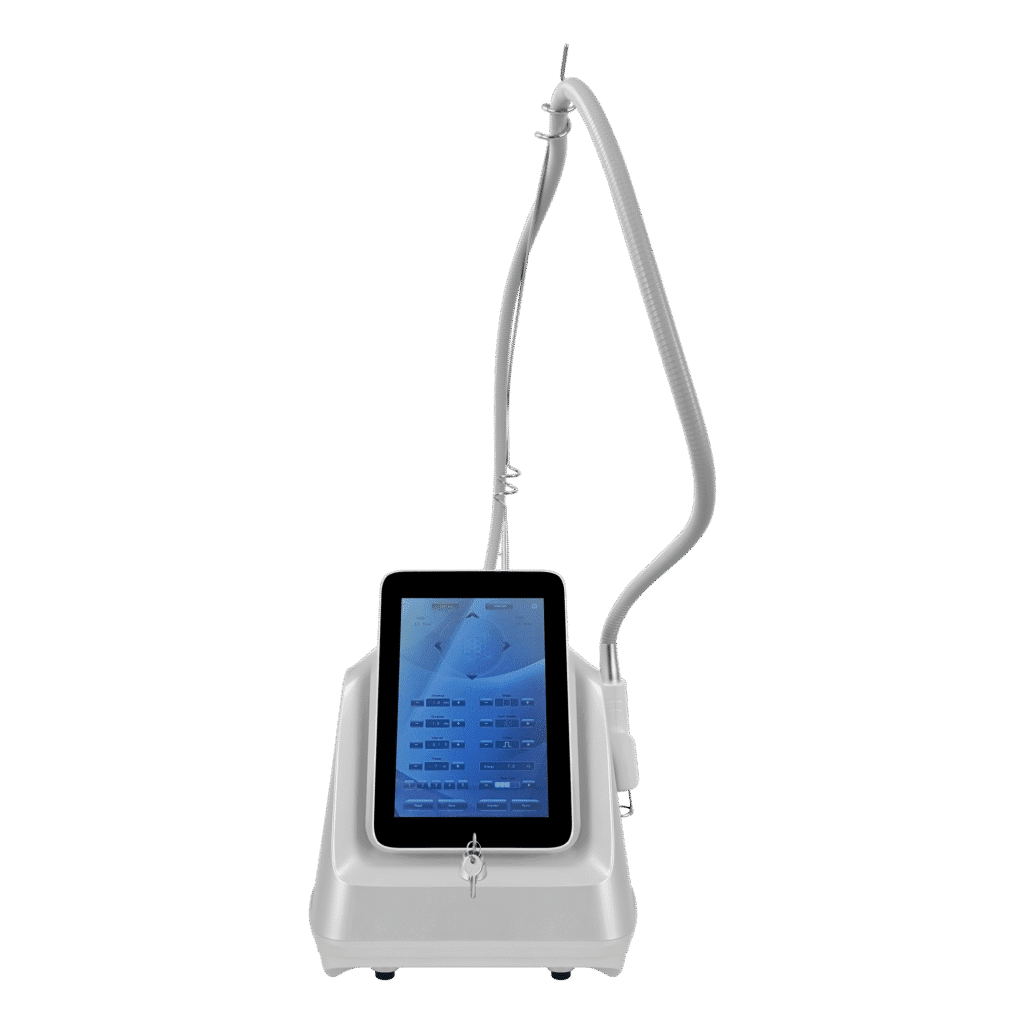
A0204 集束型HIFU
The A0204 page presents a modular focused-HIFU system with multiple standard and optional handles, cartridges, and treatment depths. Buyers need to confirm exactly what is included. Its menu position should be 集束超音波検査, with separate authorization, assessment, consent, cartridge control, records, aftercare, follow-up, and escalation.
A0152 RFマイクロニードリング
The A0152 page lists several needle configurations and adjustable depths from 0.5 to 7 mm. Its pathway requires appropriate professional oversight, procedure hygiene, single-use stock control, sharps handling, consent, detailed documentation, aftercare, and complication response.
The FDA’s 2025 RFマイクロニードリングの安全性に関する情報 reports serious complications with certain uses and describes RF microneedling as a medical procedure. It advises clients to seek a licensed healthcare provider with training and experience.
These services can appear under an “Advanced Consultations” navigation heading if locally appropriate. They should not be sold as premium rewards for regular facial clients.
8. Example Facial Tier Menu
| Public menu entry | Booking type | Decision owner | Internal equipment route |
|---|---|---|---|
| Facial Discovery Consultation | Consultation only | Trained facial consultant or appropriate professional | Routes to core, targeted, advanced, defer, or refer |
| Essential Cleanse and Hydrate Facial | コアフェイシャル | Authorized A0648 operator | A0648 service card |
| Targeted Hydro Facial | Core or targeted facial-care variant | Authorized A0648 operator | A0648 approved function set |
| 顔のトーンと輪郭に関するカウンセリング | Targeted technology consultation | Authorized A0272-F decision-maker | A0272-F assessment and service card |
| 集束超音波検査 | Advanced consultation | Qualified professional under clinic rules | A0204 pathway |
| RF Microneedling Consultation | Clinical consultation | Licensed or otherwise appropriately authorized provider | A0152 pathway |
This structure tells clients what to book without implying that the bottom row is the final destination for everyone.
9. Build Hair-Reduction Tiers Around Area and Booking Scope
Hair reduction should not be tiered as weak, medium, and strong treatment. Device settings and client suitability belong to the authorized professional process. Public tiers should describe the consultation and the physical scope of the appointment.
Begin with:
1. laser hair-reduction consultation; 2. small-area service; 3. medium-area service; 4. large-area service; 5. defined multi-area booking; 6. planned review or active-program visit.
The business must define every area internally. For example, a “small area” label needs an exact list, booking duration, service code, and price rule. Reception should not estimate the tier from memory.
10. Select A0423 or A0426 for the Hair Department
The current A0423 and A0426 product pages list 600 W and 1200 W handpiece options, 15 × 15, 15 × 20, and 15 × 30 mm spot options, multiple wavelength positioning, and semiconductor, water, and TEC cooling. Buyers should confirm the exact delivered handpiece, wavelength configuration, spot options, accessories, power needs, operating footprint, protective equipment, training information, warranty, and service process.
The choice between A0423 and A0426 is an equipment-format decision. It should not create two public tiers called standard laser and premium laser unless the business can explain a legitimate service difference supported by the exact configurations.
その American Academy of Dermatology laser hair removal FAQ discusses qualified consultation, preparation, multiple visits, variable response, and possible side effects. Avoid tier names that promise permanent removal, guaranteed clearance, or a fixed number of sessions.
11. Create a Hair Area Dictionary
An internal area dictionary makes the public tiers consistent.
| Hair tier | Public meaning | Internal definition needed |
|---|---|---|
| 相談 | Assessment before an initial service decision | Required information, responsible professional, test process where applicable, consent, and outcome |
| Small area | One named area from the approved small-area list | Exact boundaries, time block, room, operator, device, and stock |
| Medium area | One named area from the approved medium-area list | Exact boundaries and scheduled duration |
| Large area | One named area from the approved large-area list | Exact boundaries, longer time block, room turnover, and stock |
| 複数エリア | A permitted combination of defined areas | Eligibility, total time, maximum scope, break or turnover rules, and price method |
| レビュー | A decision or progress review rather than a guaranteed treatment | Previous record, current changes, response, next decision, and follow-up |
The dictionary belongs in staff systems, not as a dense technical table on the client page. The public menu can show examples and tell clients that the clinic confirms the exact tier during consultation.
12. Keep Hair Programs Separate from Area Tiers
An area tier explains the scope of one booking. A program explains a set of planned visits and reviews. They should not be merged.
When offering a program:
- identify the exact area tier covered;
- state that suitability and response are reviewed;
- avoid guaranteeing a universal visit count or result;
- explain expiry, scheduling, cancellation, pause, and refund terms as required;
- define how area changes affect the booking;
- keep device and settings decisions under the authorized operator;
- provide a contact route for questions or unexpected responses.
A larger package does not authorize a larger area or stronger settings. The service remains controlled by the assessment and current record.
13. Build Body Tiers Around Technology Goals
Body services create the most confusion when everything is sold as slimming. A clearer menu presents different modalities as parallel categories.
| Body tier or lane | Primary service direction | SHEFMONモデル | Why it remains separate |
|---|---|---|---|
| 多機能ボディケア | Selected roller, vacuum, RF-related, light, or cavitation-based body care | B0155 | Multiple handles and functions require a defined service card |
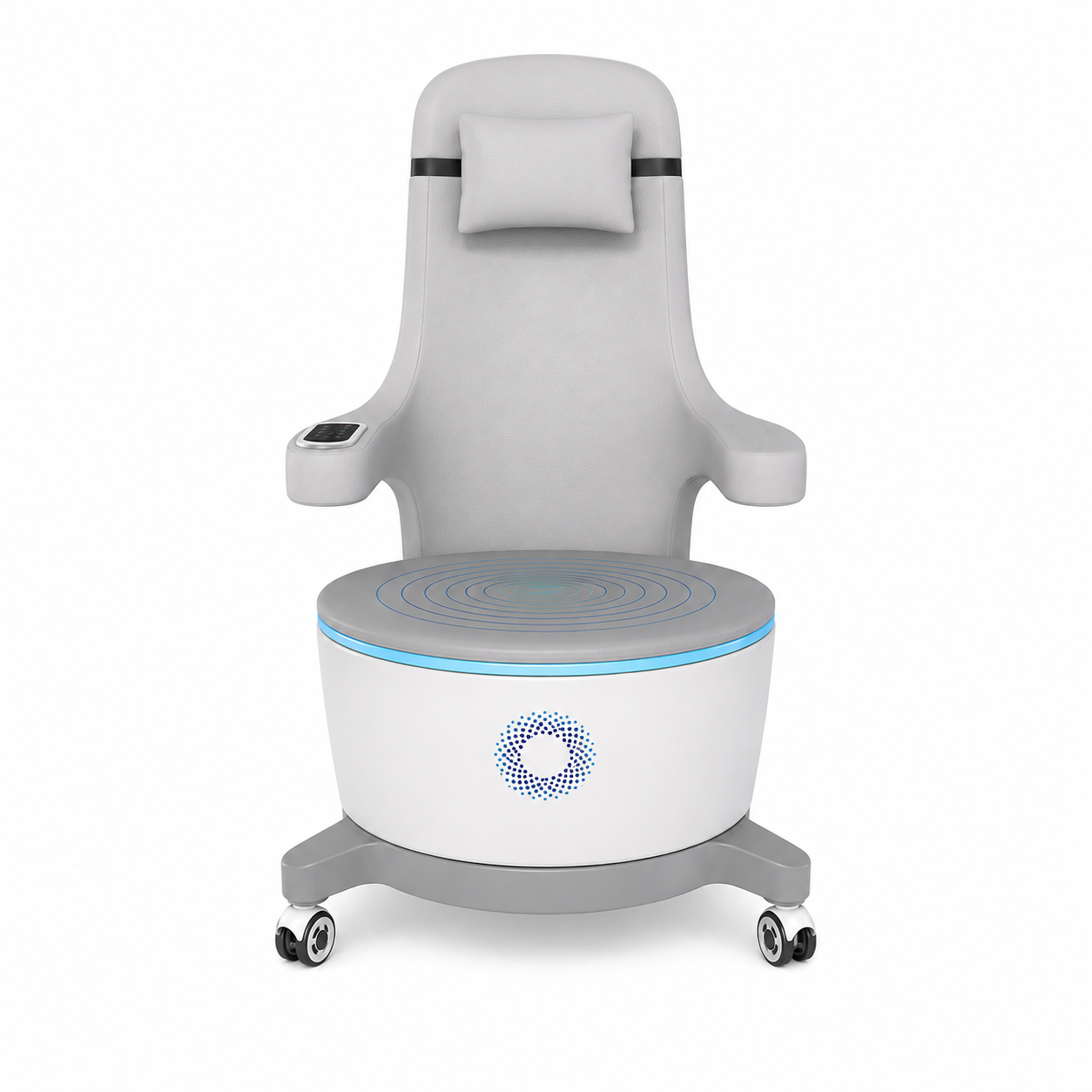
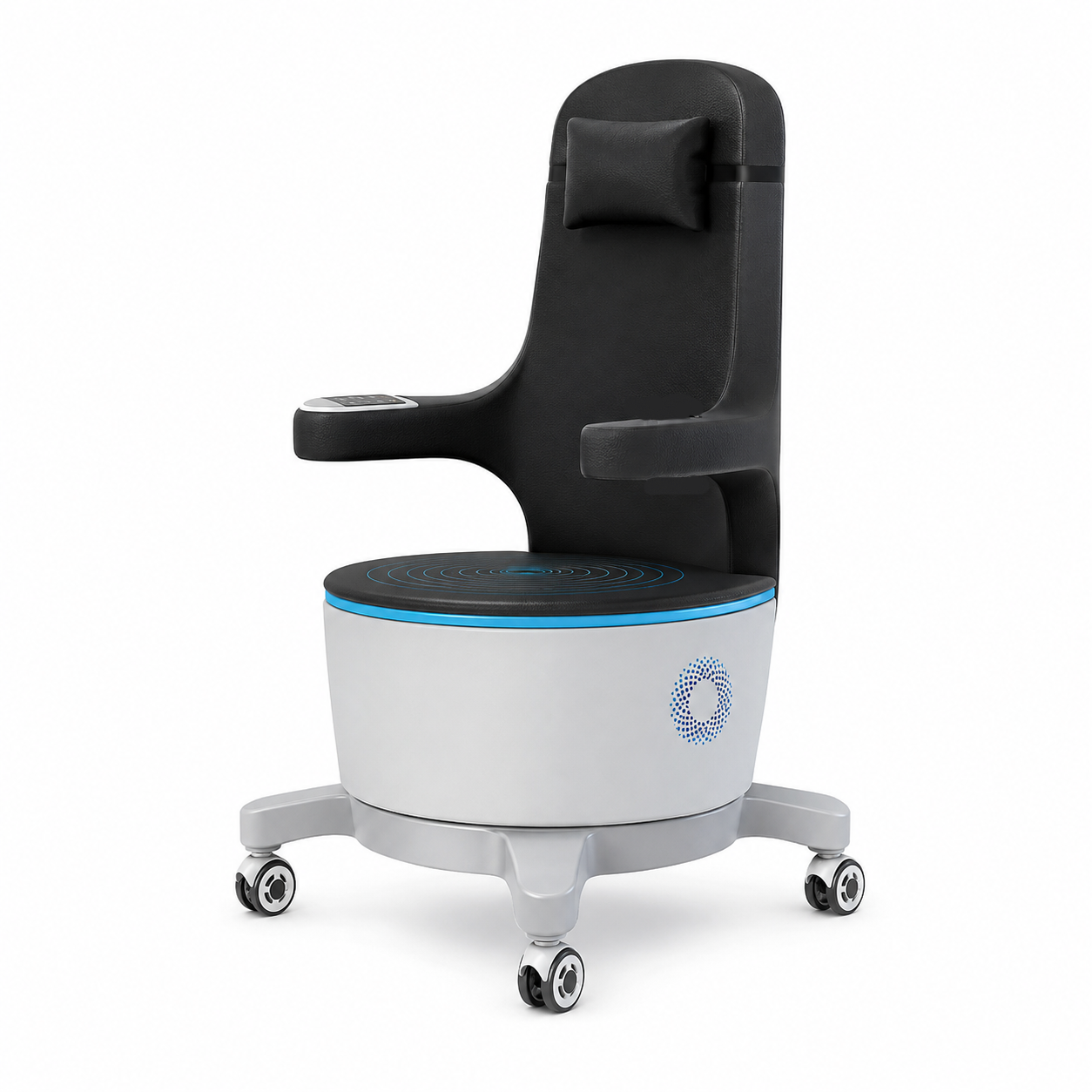
| 筋肉に特化したプログラム | Electromagnetic muscle stimulation with RF positioning | A0241 | A different principle, applicator workflow, and program review |
| 局所冷却に関する相談 | Vacuum-assisted cooling contouring for a defined area | シーズン9 | Requires separate applicator, area, monitoring, aftercare, and follow-up controls |
These are parallel service lanes. A client does not need to complete B0155 before becoming eligible for A0241 or S9.
14. Use B0155 for the Core Body-Care Lane
The B0155 product page lists larger and smaller vacuum rollers, rotating handles, RF-related functions, light, and 80K cavitation. The platform can anchor a broad body-care menu, but its functions should be converted into a small set of controlled services.
Possible entries include:
- multifunction body-care consultation;
- selected-area roller and vacuum service;
- a separately defined RF-related body service where appropriate;
- a separately defined cavitation service where appropriate;
- active body-program review.
Do not imply that every handle is used during every booking. The consultation and service card should specify the selected function, handle, area, contact materials, operator, settings process, cleaning, record, and review.
15. Keep A0241 as a Muscle-Focused Lane
The A0241 is positioned around electromagnetic muscle stimulation and RF. Its tier should be based on a muscle-focused service goal, not presented as the premium version of B0155.
Before adding it, confirm the supplied applicator and handle configuration, placement process, operator competency, room requirements, documentation, program structure, cleaning, maintenance, and review method. The public menu can offer a Muscle-Focused Body Consultation followed by defined area or program bookings for suitable clients.
Avoid exercise-equivalent claims, guaranteed measurement changes, or universal program schedules. The tier should explain the technology direction and assessment route accurately.
16. Keep S9 as a Localized Cooling Lane
The S9 is presented as a vacuum-assisted cooling contouring platform. Its menu needs a defined-area consultation, confirmation of the included applicator set, monitoring procedures, records, aftercare, follow-up, and escalation.
The FDA’s 非侵襲的なボディコンタリングの概要 explains that different technologies have distinct intended effects, limitations, and risks. Cooling contouring should not be described as obesity treatment or general weight-loss care.
使用 Localized Cooling Consultation as a distinct lane. Do not call it “Body Tier 3” if that wording implies it is inherently better than muscle-focused or roller-based care.
17. Create Tiers Within Each Body Lane Only When Useful
After separating the modalities, a body business can add practical service scopes within each lane.
| Body lane | Useful secondary tier | Avoid |
|---|---|---|
| B0155 | Defined area, selected function, appointment duration, or active-program review | Basic versus powerful settings sold by price |
| A0241 | Defined applicator area or program stage under one assessed pathway | Guaranteed sessions or exercise replacements |
| シーズン9 | Defined area and applicator plan under the approved consultation | Small, medium, and large claims without exact applicator and area definitions |
The secondary tier must correspond to a real scheduling or workflow difference. It should never give clients control over technical settings that belong to the operator.
18. Use a Standard Tier Card Across the Business
Create one internal card for every published tier.
| Tier-card field | Required information |
|---|---|
| Public name | Clear client-facing service or consultation name |
| Department | Facial, hair, or body |
| 主な目標 | The client request the tier is designed to assess or serve |
| テクノロジー | Accurate device category in plain language |
| デバイス | Exact model and delivered configuration |
| Entry requirement | Consultation, existing approval, change check, or procedure review |
| Authorized role | Who may assess, approve, operate, and follow up |
| Service scope | Defined functions, area, components, and boundaries |
| Booking block | Preparation, service, records, cleaning, and room reset |
| Stock | Tips, solutions, heads, cartridges, needles, applicators, contact materials, or protective items |
| 記録 | Required assessment, consent, settings, response, and review fields |
| Exit condition | Continue, reassess, defer, refer, close, or escalate |
The card turns a marketing tier into a controlled service. Version it whenever the device configuration, service scope, or operating process changes.
19. Name Tiers Without Creating False Expectations
Good labels explain purpose or scope:
- Essential Cleanse and Hydrate Facial;
- Facial Tone and Contour Consultation;
- Focused-Ultrasound Consultation;
- Small-Area Laser Hair Reduction;
- Multi-Area Laser Booking;
- Multifunction Body-Care Consultation;
- Muscle-Focused Body Program;
- Localized Cooling Consultation.
Avoid labels such as Ultimate Lift, Permanent Hair Removal, Maximum Fat Loss, or Guaranteed Rejuvenation. “Premium” may describe time, privacy, amenities, or added consultation support, but it should not conceal a change to a regulated or higher-control technology.
20. Design Packages Without Collapsing the Tiers
Commercial packages can include access to several service families while preserving separate decisions.
Facial foundation package
デバイス: A0648 + A0272-F
This package creates a core facial tier and a targeted facial technology tier. Each has its own assessment and service card.
Facial and hair package
デバイス: A0648 + A0423 or A0426
This supports a core facial department and a separately controlled laser hair-reduction department. Area tiers do not apply to facial pricing.
Facial and body package
デバイス: A0648 + B0155
This gives the business one facial foundation and one body-care lane. Do not turn ownership of both devices into an automatic same-day combination.
Multi-service growth package
デバイス: A0648 + A0272-F + either A0423/A0426 or B0155
Choose hair or body according to demand, room, staff, and governance. The third device adds a department, not merely a higher salon tier.
Clinic package with one advanced pathway
デバイス: A0648 + A0272-F + either A0204 or A0152
The advanced choice needs its own qualified route. It should remain separate from commercial core and targeted memberships.
21. Set Booking Permissions for Every Tier
The booking system should decide who can schedule what.
| サービスの種類 | Booking permission |
|---|---|
| Facial or body discovery consultation | Reception may book the correct department without selecting a device outcome |
| Approved A0648 core facial | Bookable when the required assessment and current checks are complete |
| A0272-F or B0155 targeted service | Bookable only under the technology-specific approved pathway |
| Hair-reduction area service | Requires a current laser decision and exact area tier |
| A0241 or S9 program visit | Requires the active modality-specific plan and defined area or applicator route |
| A0204またはA0152 | Blocked until the qualified advanced decision, documentation, room, operator, stock, and follow-up route are complete |
Reception should see a booking status rather than being asked to decide suitability.
22. Price Tiers Transparently
Specific prices depend on the market, device configuration, operating costs, appointment time, and professional requirements. The structure should still be clear.
- State what service, area, time, or consultation the price covers.
- Keep area definitions consistent across the website and booking system.
- Explain whether a consultation is separate, included, or credited under the business’s policy.
- Show the difference between a single booking and a program.
- Publish applicable cancellation, expiry, pause, transfer, and refund terms.
- Do not use a discount to bypass an assessment or push a client into another tier.
- Keep advanced-procedure pricing separate from luxury facial upgrades.
The price hierarchy should follow the actual resources and service scope. It should not imply that the highest price guarantees the best result.
23. Audit Tier Clarity After Launch
Review whether the system works in practice:
- clients booking the correct consultation on the first attempt;
- reception explanations that match the website;
- area-tier disputes or inconsistent hair bookings;
- facial services repeatedly confused with advanced procedures;
- body clients choosing the wrong modality because descriptions overlap;
- bookings changed because the wrong room, operator, duration, or device was selected;
- staff using the current tier card and service code;
- return visits with the required change check or review;
- services deferred or referred when a tier did not fit;
- demand that consistently supports adding another category.
If clients misunderstand a tier, revise the name and route before adding more equipment.
24. Common Tiering Mistakes
Using basic, premium, and advanced everywhere
These labels obscure area-based hair services and modality-based body services. Use the logic that fits each department.
Making higher tiers sound more effective
Complexity, price, and technology do not guarantee a better individual result. Describe the service difference without ranking suitability.
Mixing procedures with hospitality upgrades
Extra time, privacy, or amenities may create a premium experience. They do not turn HIFU or RF microneedling into luxury facial options.
Creating hair tiers from power settings
Clients should select a defined area and appointment type. The qualified operator controls settings under the approved process.
Calling all body services slimming
B0155, A0241, and S9 have different principles and workflows. Separate them before adding area or program tiers.
Treating the tier list as a treatment sequence
A menu order does not establish that a client should progress upward or combine devices. Every new category requires its own decision.
25. Final Tier-Building Checklist
Before publishing, confirm that:
1. each department uses a tier logic appropriate to its services; 2. every tier represents a real difference in goal, scope, technology, or control; 3. the menu does not rank suitability by price; 4. A0648 and A0272-F have different facial roles; 5. A0204 and A0152 remain qualified advanced pathways; 6. hair areas have exact internal definitions; 7. A0423 or A0426 configuration is confirmed before launch; 8. B0155, A0241, and S9 remain separate body modalities; 9. every public tier links to a current internal tier card; 10. booking permissions protect category-specific decisions; 11. packages preserve separate assessments and do not imply same-day use; 12. claims, professional scope, consent, and records follow local requirements.
よくある質問
1. What makes a beauty-device service tier clear?
A clear tier represents a real difference in goal, technology, area, appointment resources, or professional control. The name, description, booking route, and internal service card should all describe the same difference.
2. Should facial, hair, and body services use the same tier names?
They can share a consistent website style, but they should not share one rigid logic. Facial tiers work well by service depth, hair reduction by consultation and area, and body services by modality or treatment goal.
3. Which SHEFMON device fits a core facial tier?
A0648 is a practical core option because it supports hydro and vacuum-based cleansing, exfoliation, extraction, hydration-oriented care, and related facial functions. Keep the public menu compact and control function selection through internal service cards.
4. Where should A0272-F appear in the facial menu?
Place it in a targeted facial technology tier for tone and contour enquiries. It combines facial electrical stimulation and RF and should remain distinct from A0648 hydro-based care.
5. Are A0204 and A0152 premium facial tiers?
They are better presented as qualified advanced pathways. A0204 is a focused-HIFU platform with configuration-specific handles and cartridges. A0152 is an RF microneedling procedure requiring clinical controls. Neither should be sold as a loyalty upgrade from a routine facial.
6. How should laser hair-reduction services be tiered?
Use an initial laser consultation followed by precisely defined small, medium, large, or permitted multi-area bookings. Keep device selection and settings within the authorized professional process and review the plan when relevant information changes.
7. Should A0423 and A0426 be different client-facing tiers?
Not automatically. They are alternative equipment formats. Compare the exact configuration, workload, room, mobility, service access, and operating requirements. Create separate public services only when the delivered configurations support a meaningful client-facing difference.
8. How should B0155, A0241, and S9 be tiered?
Present them as parallel body lanes: multifunction roller and vacuum-oriented body care, muscle-focused electromagnetic stimulation and RF, and localized vacuum-assisted cooling contouring. Do not present them as basic, better, and best versions of one service.
9. Can a membership include several service tiers?
It can provide access to defined services or consultation credits, but each category must retain its assessment, booking gate, current checks, and professional decision process. Membership status does not establish suitability for a higher-control device.
10. What information should a buyer send SHEFMON for tier planning?
Share the business type, country or market, planned facial, hair, and body departments, client goals, rooms, staff roles, expected workload, intended tier names, and shortlisted models. Ask for exact configurations, included components, operating requirements, training information, consumables, cleaning and maintenance needs, warranty, technical documentation, service process, and shipping details.
結論
Clear tiers make three different decisions easier. Facial clients can distinguish core care, targeted technology, and qualified advanced pathways. Hair-reduction clients can choose the correct area and appointment type without selecting laser settings. Body clients can understand the difference between multifunction body care, muscle-focused services, and localized cooling.
Use A0648, A0272-F, A0423 or A0426, B0155, A0241, S9, A0204, and A0152 only where they solve a defined service-tier gap and the business can support the complete workflow. Explore シェフモンの美容機器 そして シェフモンに連絡してください with your proposed tier map to compare suitable models and exact configurations.