Beauty device projects rarely become difficult because the team has no ideas. They become difficult because every useful idea begins to look like part of the same release. A buyer requests another handpiece, sales asks for a new language, engineering identifies a better screen, a supplier proposes a replacement component, and an OEM customer wants different packaging. Without firm boundaries, one model can turn into several products hidden inside one project.
Product scope control keeps the development team focused on the approved buyer problem, product role, configuration, and release outcome. It does not mean rejecting improvement. It means deciding deliberately whether each request belongs in the current product, a controlled variant, a customer-specific project, or a later release.
This guide explains how beauty device factories can define, baseline, review, and change product scope from concept through production release. It also shows how distributors and OEM/ODM buyers can describe their needs without creating unclear combinations of functions, versions, accessories, and market requirements.
エグゼクティブサマリー
Effective beauty device scope control requires the factory to:
- Define the product problem before listing features. Scope should serve a specific buyer, user, environment, and business role.
- Separate several kinds of scope. Product, release, configuration, regional, and customer-project boundaries answer different questions.
- Create explicit exclusions. A team cannot control what it has never agreed to leave out.
- Classify every function and option. Core, optional, regional, future, and unsupported items need different development and sales rules.
- Treat handles and software as part of the product system. Adding a handpiece, wavelength, language, screen flow, or consumable can affect hardware, power, cooling, testing, documentation, and service.
- Require a change request after the baseline is approved. The requester should provide the reason, evidence, affected configuration, priority, and desired release.
- Assess total impact. A small visible change can create work in design, sourcing, verification, production, packaging, training, quotations, and installed-base support.
- Use clear decisions. Accept for the current release, create a variant, move to a future release, open an OEM/ODM project, or decline with a recorded reason.
- Protect each freeze point. Late changes need stronger evidence because the cost and regression risk increase as release approaches.
- Align commercial promises with the released baseline. Catalogs, quotations, demonstrations, orders, manuals, and factory records must identify the same product.
Scope is controlled when everyone can tell what the current project will deliver, what it will not deliver, and how a proposed change will be decided.
1. What Is Product Scope in Beauty Device Development?
Product scope defines the approved boundary of the machine and its supporting system. It covers more than the console and its main technology.
Depending on the category, scope may include:
- intended buyer, professional user, and operating environment;
- service application and product role;
- core functions and performance requirements;
- industrial format and mechanical limits;
- electrical, thermal, optical, vacuum, fluid, RF, ultrasound, or mechanical systems as applicable;
- screen, software, languages, parameters, and user access;
- handpieces, applicators, cartridges, tips, accessories, and consumables;
- regional electrical, label, documentation, and packaging versions;
- inspection, verification, production test, and release evidence;
- manuals, training, maintenance, service, and spare parts; and
- standard, optional, custom, and future configurations.
The scope statement tells every function what it must deliver for a named release. It also prevents a quotation or prototype from silently defining the product.
2. Why Beauty Device Scope Expands So Easily
Professional beauty devices combine several types of complexity. They often include electronic hardware, software, energy or fluid subsystems, operator interfaces, handpieces, consumables, documentation, training, and market-specific configurations. A request that affects one visible element can propagate through the complete system.
Common expansion sources include:
- combining requests from several buyer segments;
- copying competitor features without a validated need;
- adding functions to make a specification table look stronger;
- turning every optional handpiece into standard scope;
- accepting regional requests as global requirements;
- discovering production and service needs late;
- allowing sales material to get ahead of engineering release;
- treating an OEM request as a standard-product change; and
- continuing to improve the design after the approved release objective is met.
Scope growth is not always visible as a new feature. It can appear as another test condition, language, accessory, supplier, package, service obligation, or compatibility promise.
3. Separate the Five Scope Layers
Teams make better decisions when they identify which boundary is changing.
| Scope layer | 主な質問 | 例 |
|---|---|---|
| 製品範囲 | What problem and product role does this model address? | A compact multifunction facial system for a defined professional setting |
| Release scope | Which approved capabilities will be delivered in this version? | Selected functions, interface, documentation, and test evidence for the first release |
| Configuration scope | Which combinations can be ordered and built? | Standard handle package, optional applicator, supported software and accessories |
| Regional scope | What differs for a named destination market? | Voltage, plug, language, labels, manuals, or approved package |
| Customer-project scope | What is unique to one controlled OEM/ODM agreement? | Custom housing, interface theme, function package, branding, or packaging |
A request can be valid without belonging in the standard product. Identifying the correct layer prevents one customer project from changing every market version.
4. Start with a One-Sentence Product Boundary
Before detailed requirements, write a sentence that names:
- target buyer or business type;
- intended user;
- main service or workflow problem;
- product format;
- primary category or technology role; and
- important boundary.
For example, a team might define a project as a desktop facial platform for trained professional users that supports a specified group of daily facial functions within a compact treatment room. That statement does not complete the specification, but it provides a test for later requests.
If a proposed addition turns the project into a body platform, requires a different professional environment, or changes the product from desktop to high-throughput floor model, it may represent a new product rather than ordinary scope growth.
5. Define the Buyer, User, and Operating Environment
The same feature can be essential for one buyer and unnecessary for another. Scope decisions should reference the intended context.
記録:
- buyer type and business model;
- trained operator profile;
- expected treatment-room space and layout;
- anticipated operating frequency and changeover pattern;
- available power, ventilation, water, drainage, or storage where relevant;
- required mobility or desktop placement;
- staff training and service capability;
- destination markets; and
- expected support and consumable-supply model.
Without this context, the project collects features from salons, med spas, clinics, body centers, distributors, and private-label buyers that may not belong in one machine.
6. Anchor Scope to the Core Problem and Success Criteria
The product problem explains why the device should exist. Success criteria explain what must be true for the project to solve that problem.
A useful core problem includes:
- who experiences the problem;
- what task or business outcome they are pursuing;
- what limitation exists today;
- what evidence supports the need; and
- why the proposed product category is appropriate.
Success criteria can address workflow, functional coverage, footprint, configuration clarity, maintainability, or production repeatability. They should be measurable enough to support later acceptance.
When a new request appears, ask whether it improves a success criterion, creates a new criterion, or serves a different problem. The third case is a strong signal that the request belongs outside the current release.
7. Create a Scope Classification System
Every proposed capability should have one scope status.
| 状態 | 意味 | Development treatment |
|---|---|---|
| コア | Necessary for the approved product problem and release | Required, funded, designed, verified, documented, and released |
| Required configuration | Necessary for a named package or market | Controlled by applicability and configuration rules |
| オプション | Approved compatible choice that is not in every unit | Defined interface, ordering, testing, packaging, and support |
| Candidate | Valuable idea still awaiting evidence or feasibility | Investigate without promising release |
| Future | Accepted direction outside the current release | Place in a controlled roadmap or backlog |
| Customer-specific | Valid for an approved buyer project | Control through separate commercial and technical scope |
| Excluded | Deliberately outside the product boundary | Record reason and prevent accidental inclusion |
| Unsupported | Not approved or not compatible | Do not quote, demonstrate, ship, or claim |
Terms such as maybe included or available on request are too vague for engineering, production, and sales.
8. Write Explicit Exclusions
An exclusion list makes the boundary visible. It may identify:
- technologies or service applications not included;
- future handpieces or cartridges;
- unsupported combinations of functions;
- unapproved regional versions;
- home-use or professional-use boundaries;
- customer-specific features excluded from the standard model;
- performance levels assigned to another product tier;
- data, connectivity, or software functions not planned;
- accessories not supplied in the standard package; and
- claims or use cases outside the approved product position.
Exclusions should appear in the concept brief, requirements baseline, review record, and relevant sales configuration guide. Otherwise, an old rendering or conversation may revive an idea as an assumed commitment.
9. Define the Complete Product-System Boundary
Draw or list everything that crosses the boundary of the product. This may include mains power, the operator, the client, handpieces, external accessories, fluids, consumables, service tools, software updates, packaging, and distributor support.
For each item, state whether the factory provides it, the buyer provides it, or it is an environmental condition. Also identify the interface, ownership, and required evidence.
This exercise prevents gaps such as:
- a console requirement without a compatible handpiece definition;
- a fluid function without bottle and tubing scope;
- a cartridge function without reorder and compatibility rules;
- a software option without an approved loading method;
- a regional unit without the correct cord, label, and manual; or
- a service promise without tools, parts, and diagnostic information.
10. Establish a Requirements Baseline
Scope becomes controllable when approved requirements are placed under version control. The baseline should identify:
- requirement ID and statement;
- source and rationale;
- priority;
- applicable model, configuration, and market;
- 受入基準;
- verification method;
- 所有者;
- dependencies; and
- 現在の状況。.
The baseline does not prevent change. It creates a known reference so the team can see what a request would add, remove, or modify. A verbal agreement cannot provide that comparison.
11. Keep Assumptions and Open Questions Separate from Commitments
Early development includes unknowns. Examples may include expected utilization, cooling demand, preferred handpiece, supplier availability, screen size, language demand, package dimensions, or consumable behavior.
Each assumption should have:
- evidence currently available;
- consequence if it is wrong;
- validation action;
- 所有者;
- required decision date; and
- requirements or design work affected.
An assumption should not quietly become a promised specification. If the team cannot resolve it before a scope decision, the release needs a conservative boundary or an explicit conditional item.
12. Separate Product Features from Configurations
Adding a new combination is not always the same as adding a new core function. A platform may already support several elements, but each sellable package still needs clear compatibility and factory instructions.
Configuration control should answer:
- Which console hardware and software are required?
- Which handpieces or applicators are standard?
- Which options are compatible?
- Which options cannot be combined?
- Which language, voltage, plug, labels, and manuals apply?
- Which starter accessories or consumables are included?
- How is the configuration named in quotations and orders?
- How does production confirm the finished unit?
If these questions cannot be answered, the project has undefined scope even when the individual features already exist.
13. Control Handles, Applicators, Tips, and Consumables
An additional handle can change more than the accessory list. It may require:
- extra power or cooling capacity;
- a connector or recognition method;
- software modes and parameter boundaries;
- storage space and cable management;
- housing or cart changes;
- production test equipment;
- cleaning, replacement, or disposal information;
- packaging and shipment protection;
- training and troubleshooting material;
- spare-parts and consumable records; and
- regression testing of existing functions.
The project should therefore decide whether the item is core, optional, regional, customer-specific, future, or unsupported. “Compatible” should mean a defined model and version combination, not physical connection alone.
14. Control Software, Language, and Interface Scope
Software scope can expand through small requests: another language, a different parameter name, a customer logo, new presets, more user levels, data recording, remote support, or a new handpiece screen.
For every request, assess:
- affected hardware and software versions;
- new screens, states, calculations, or limits;
- translation source and approval;
- error messages and service diagnostics;
- user permissions;
- production loading and confirmation;
- regression test coverage;
- manual and training updates; and
- support for units already shipped.
A visual interface change may also alter workflow and verification. It should not be approved only as artwork.
15. Separate Global Requirements from Regional Variants
Language, voltage, plug, labeling, documentation, packaging, professional conditions, and market-access requirements can differ by destination. The factory should not automatically apply one market request to every unit.
For each regional need, determine:
- the market and evidence;
- whether it is mandatory, commercially preferred, or optional;
- affected product and documentation elements;
- review by appropriately qualified specialists;
- verification and release evidence;
- inventory and order identification; and
- whether the difference requires a variant, configuration, or separate model.
Regional control prevents a universal product from becoming a collection of conflicting requirements.
16. Protect the Product’s Portfolio Role
A development team can solve every objection by adding features until the model overlaps with other products. Scope review should compare the proposed product with entry, core, premium, compact, high-throughput, specialized, and multifunction models in the portfolio.
聞く:
- Which buyer should choose this model?
- Which buyer should choose another model?
- Which functions create the intended difference?
- Would the new request remove a useful distinction?
- Does the request justify a platform upgrade or a separate model?
- Can the sales team explain the difference without relying only on price?
Product-line clarity is a valid reason to defer a technically feasible function.
17. Define the Scope Baseline Approval
The approval record should identify:
- product and project code;
- baseline version;
- intended buyer and product role;
- core functions;
- included and excluded configurations;
- regional and customer-specific boundaries;
- assumptions and unresolved items;
- required verification and release evidence;
- owners and approval authority; and
- effective date.
After approval, new requests enter change control. They should not be added directly to drawings, source code, purchase orders, samples, or sales decks.
18. Use a Standard Scope-Change Request
A change request should contain enough information for a decision. Require:
- requester and date;
- problem or opportunity;
- supporting buyer, market, quality, service, or technical evidence;
- proposed change;
- affected model, version, package, and market;
- desired release or customer project;
- urgency and consequence of no change;
- known dependencies; and
- temporary commitments already made, if any.
The requester does not need to design the solution. The request should preserve the need while allowing product and engineering teams to compare alternatives.
19. Assess the Total Impact of a Proposed Change
Scope decisions should consider the complete product lifecycle.
| Impact area | 質問事項 |
|---|---|
| Buyer and portfolio | Does the change strengthen the target product role or serve a different segment? |
| 要件 | Which approved statements, exclusions, and acceptance criteria change? |
| Architecture | Does it affect power, space, cooling, software, interfaces, or system limits? |
| Industrial and mechanical design | Are housing, holders, connectors, routing, stability, or service access affected? |
| 供給 | Are new parts, suppliers, tooling, lead times, or lifecycle risks introduced? |
| 検証 | Which tests, samples, fixtures, and regression work must change? |
| Production | Do work instructions, assembly, inspection, software loading, or test methods change? |
| 商用データ | Must catalogs, quotations, configuration sheets, demos, or order codes change? |
| Documentation and support | Are manuals, labels, training, spare parts, consumables, or service tools affected? |
| Existing units | Does the change create compatibility, upgrade, or installed-base obligations? |
Impact analysis should use evidence and named owners. A fast estimate can support triage, but final acceptance needs the depth appropriate to the change.
20. Classify the Change before Deciding
| 種類を変更する | Typical handling |
|---|---|
| Clarification | Improve wording without changing product behavior; update controlled records |
| Correction | Fix an error against the approved baseline; assess affected units and records |
| Current-release addition | Add scope only after impact, resources, risks, and regression work are approved |
| 設定変更 | Update a controlled combination, order rule, package, or compatibility matrix |
| 地域変異型 | Define applicability, identification, evidence, inventory, and documentation |
| OEM/ODMカスタマイズ | Separate buyer-specific deliverables, approvals, verification, and ownership |
| Future-release candidate | Preserve evidence and rationale without disturbing the current baseline |
| New product or platform | Open separate concept and feasibility work when the product boundary changes |
This classification prevents a major product change from entering the project as a minor customer preference.
21. Make One of Five Clear Decisions
Every evaluated request should end with a visible disposition:
- Accept into the current release because it supports the approved problem and the complete impact is manageable.
- Create a controlled option or variant because the need is valid for a defined configuration or market.
- Move to a future release because it has value but does not justify disruption now.
- Open a separate OEM/ODM or new-product project because the request changes ownership, commercial scope, or the basic product boundary.
- Decline because evidence, fit, feasibility, safety, support, or business justification is insufficient.
Record the reason, approval, effective baseline, and any follow-up evidence needed. “Not now” should identify where the request will be stored and when it may be reconsidered.
22. Use Stage Gates to Reconfirm Scope
Scope should be reviewed at concept approval, requirements baseline, architecture selection, detailed design, verification readiness, production readiness, and release.
At each gate, ask:
- Has the intended buyer or product problem changed?
- Have any candidate items entered the design without approval?
- Do drawings, BOMs, software, handpieces, and documentation match the baseline?
- Are exclusions still visible?
- Have assumptions been resolved?
- Are open changes assigned to the correct release?
- Does the product remain distinct within the portfolio?
- Can the factory build and identify the approved configurations?
Reconfirming scope prevents accumulated small decisions from creating an unrecognized product.
23. Establish Freeze Points without Freezing Learning
Projects may define concept, architecture, design, verification, and production freezes. A freeze means that the named baseline requires formal change control; it does not mean the team ignores new evidence.
As the project advances, the acceptance threshold should rise. A late request may require:
- stronger buyer or risk evidence;
- leadership approval;
- schedule and resource reassessment;
- expanded regression testing;
- supplier and inventory review;
- updated samples or pilot build; and
- revised commercial commitments.
Urgency alone is not evidence that a late change belongs in the current release.
24. Maintain Traceability from Scope to Release Evidence
Traceability should connect:
- Buyer, market, quality, service, or technical source.
- Approved product need.
- Requirement and scope status.
- Design output.
- Risk control where applicable.
- Verification or review evidence.
- Production and inspection control.
- Released model and configuration.
When scope changes, this chain shows which drawings, tests, manuals, packages, and orders must be updated. It also exposes features that entered the design without an approved requirement.
25. Manage Capacity Budgets
Many products have limited engineering budgets that should be allocated before functions compete for them.
Depending on the device, track:
- enclosure volume and mounting space;
- power and peak load;
- thermal and cooling capacity;
- airflow, vacuum, pressure, or fluid capacity;
- connector and communication capacity;
- processor, memory, or software complexity;
- screen space and workflow steps;
- weight and center of gravity;
- cable, tubing, holder, and accessory storage;
- package volume and shipping weight;
- production-test time; and
- service and training burden.
A new feature may fit the product concept but exceed one of these budgets. The team can then remove another item, redesign the platform, create a higher tier, or defer the request.
26. Protect the Architecture from Unplanned Exceptions
Repeated exceptions can damage a shared platform. One customer-specific connector, private software branch, special board, unique handle, or alternate internal layout may appear manageable alone. Several exceptions create parallel products that are hard to test and support.
Architecture governance should define:
- interfaces that may be configured;
- elements that must remain common;
- approved extension points;
- limits on software branching;
- rules for unique components;
- compatibility across versions; and
- criteria for creating a new platform.
Customization is easier to control when it uses planned interfaces rather than hidden modifications.
27. Control Supplier-Driven Scope Changes
Suppliers may discontinue parts, change materials, offer improved versions, or propose substitutes. These are design changes even if external features remain the same.
レビュー:
- affected specifications and interfaces;
- form, fit, function, performance, and reliability;
- software or calibration impact;
- production and incoming-test changes;
- required verification or regression work;
- inventory transition and unit identification;
- service replacement compatibility; and
- buyer-facing documentation if relevant.
Purchasing should not redefine product scope through an uncontrolled substitution.
28. Control Verification Scope
Each accepted feature, configuration, and market difference needs appropriate acceptance evidence. When scope changes, update:
- requirement traceability;
- test methods and conditions;
- test-article configuration;
- fixtures and measurement equipment;
- sample selection;
- software and handpiece versions;
- regression coverage; and
- result and deviation records.
Testing the new function alone may be insufficient. The change can affect existing power, cooling, workflow, alarms, packaging, or production tests.
29. Protect Production Readiness
Late scope changes can reach production through a sample, urgent order, sales promise, or replacement component. Before release, compare the approved baseline with:
- drawings and bills of materials;
- supplier and incoming-inspection records;
- software-loading instructions;
- assembly methods and tools;
- in-process and final tests;
- configuration and serial identification;
- labels, manuals, and packing lists;
- quotation and order codes;
- training and service records; and
- pilot-build results.
If these records describe different products, the scope has not been fully controlled.
30. Separate Standard Development from OEM/ODM Scope
その SHEFMONのOEM/ODMページ describes customization areas including exterior and mechanical design, internal layout, handpiece connections, functions, interface and language, logo, packaging, and manuals. A custom project should state which areas change and which remain part of the standard platform.
The scope agreement can identify:
- buyer requirements and supplied materials;
- standard elements retained;
- customized design outputs;
- プロトタイプおよびサンプル段階。;
- review and approval responsibilities;
- verification affected by the changes;
- minimum commercial or operational conditions where contractually applicable;
- documentation and intellectual-property responsibilities as agreed;
- production configuration and order identification; and
- rules for later revisions or reuse.
The article does not imply that every possible customization is available for every model. Feasibility and scope must be confirmed for the actual project.
31. Keep Quotations and Demonstrations inside Approved Scope
Commercial activity can create de facto scope when a buyer sees or receives an option that engineering has not released.
Sales and distributor teams should use controlled:
- model and package names;
- specification sheets;
- option and compatibility lists;
- demonstration-unit configurations;
- quotation templates;
- regional availability rules;
- customization statements;
- exclusions and assumptions; and
- order-confirmation checklists.
If a demonstration uses prototype software, an unreleased handpiece, or a special package, its status should be disclosed and separated from the standard offer.
32. A0648 Example: Control a Multifunction Facial Scope
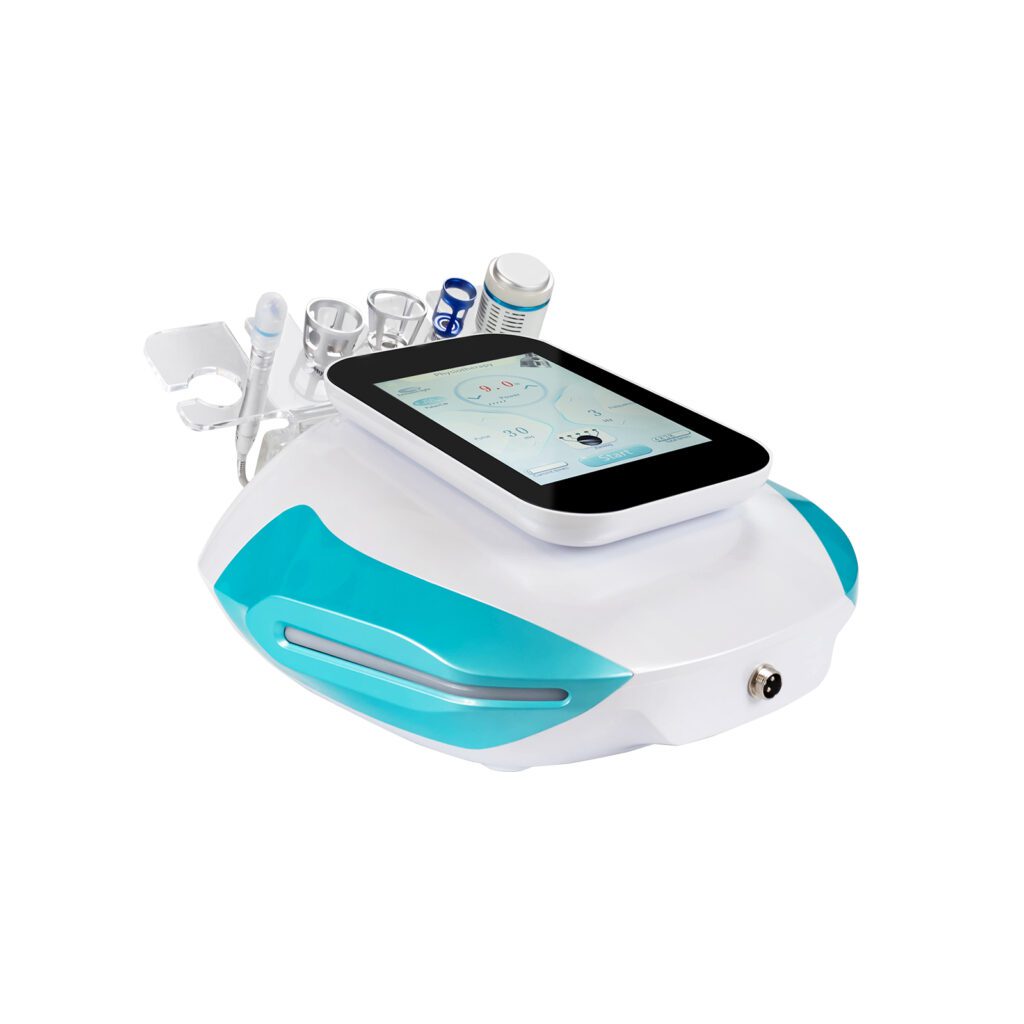
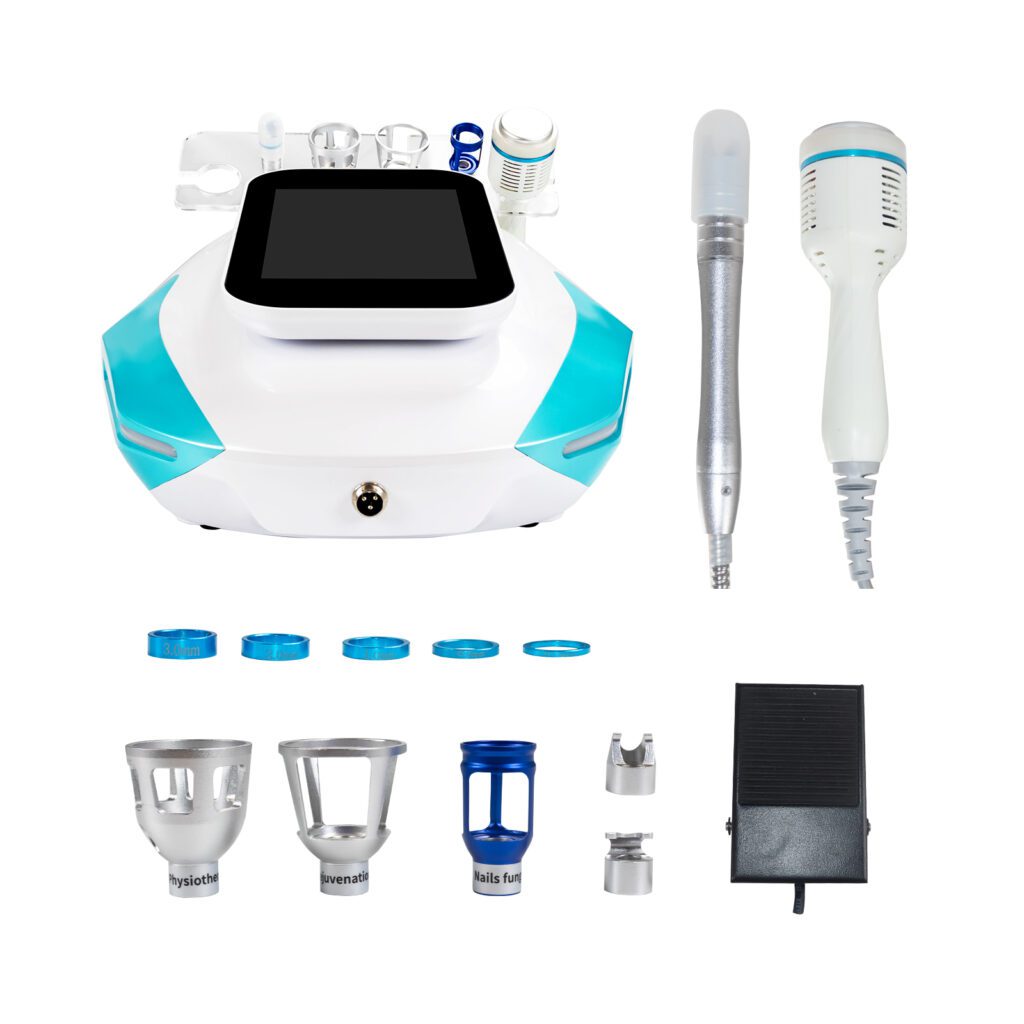
その SHEFMON A0648 hydro microdermabrasion system is publicly presented as a 9-in-1 platform associated with cleansing, exfoliation, extraction, hydration, and related facial functions.
For a new device in this category, scope control could define:
- the core facial service role;
- standard and optional handles;
- bottles, tips, tubing, filters, and accessories;
- vacuum and fluid-system boundaries;
- interface modes for each approved function;
- storage and cable arrangement;
- cleaning and changeover documentation;
- production tests by configuration; and
- package contents and starter consumables.
Adding another function may affect internal space, fluid routing, software, holders, packaging, and training. These illustrative questions are not claims about undisclosed A0648 development decisions.
33. A0426 Example: Control Options without Creating an Undefined Model
その SHEFMON A0426 diode laser hair-removal system page lists wavelength choices, several spot-size choices, cooling information, a touch screen, and language options.
For development of a new system in this category, the release baseline should identify:
- approved wavelength configuration;
- handpiece and spot-size package;
- compatible power and cooling architecture;
- software parameter mapping;
- language and regional version;
- electrical and accessory package;
- production and verification configuration; and
- quotation and order identifier.
Publicly listed choices should not be treated as one automatic combination. The factory and buyer need to confirm the exact released configuration.
34. B0155 Example: Protect the Role of a Multifunction Body Platform
その SHEFMON B0155 デスクトップエンドス ベラプロ page presents a multifunction format with vacuum roller, RF, rotating massage, and 80K cavitation functions.
Scope control for a new multifunction body project could examine:
- primary buyer and service role;
- core and supporting functions;
- allowed handle combinations;
- power and subsystem capacity;
- interface modes and prohibited states;
- connectors, cable management, and storage;
- separate functional tests;
- cleaning and changeover requirements;
- documentation and training complexity; and
- overlap with specialized body devices.
The team should add a function only when it strengthens the approved role and the complete product system can support it.
35. Give Distributors and Buyers a Defined Role
Distributors and OEM/ODM buyers can improve scope decisions by providing:
- target business and operator profile;
- requested service category and main buyer problem;
- must-have versus preferred functions;
- expected configuration and optional items;
- destination markets and documentation languages;
- treatment-room, electrical, workflow, and storage constraints;
- evidence from quotations, demonstrations, orders, or service;
- reason an existing model does not fit; and
- timing and commercial context without presenting urgency as technical evidence.
The factory should return a confirmed scope, assumptions, exclusions, configuration, open questions, and change process. This reduces later disagreement about what a sample or quotation represented.
36. Measure Scope-Control Quality
Useful project measures may include:
- number of changes after each freeze point;
- percentage of requests with impact analysis;
- open assumptions at verification start;
- unplanned configurations discovered during order review;
- drawings, BOMs, software, and manuals requiring correction after pilot build;
- verification repeated because of late change;
- supplier substitutions awaiting approval;
- quotation corrections caused by unclear scope;
- open OEM/ODM approval items; and
- release actions carried into production.
Metrics should reveal where the process loses control. A low change count is not automatically good if teams avoid recording real changes.
37. Common Scope-Control Failures
避ける:
- defining the product only as a list of features;
- failing to name exclusions;
- mixing product, release, configuration, regional, and customer scope;
- giving every request mandatory priority;
- accepting a handpiece without checking the entire system impact;
- using optional and customizable without precise rules;
- allowing assumptions to become promises;
- approving changes without regression assessment;
- maintaining private software or BOM branches outside configuration control;
- allowing supplier substitutions to bypass design review;
- demonstrating unreleased options as standard; and
- freezing engineering files while commercial and support records still describe another version.
These failures create products that are difficult to quote, build, test, deliver, and maintain consistently.
38. Beauty Device Product-Scope Checklist
- The target buyer, user, environment, and product problem are defined.
- The product has a clear role within the portfolio.
- Product, release, configuration, regional, and customer-project scope are separated.
- Core, required, optional, candidate, future, custom, excluded, and unsupported items are classified.
- Explicit exclusions are recorded.
- The complete console, software, handle, accessory, consumable, packaging, documentation, and service boundary is visible.
- Requirements have applicability, priority, acceptance criteria, and verification methods.
- Assumptions and open questions have owners and decision dates.
- Every sellable configuration has a name and compatibility rule.
- Regional versions identify language, electrical, label, manual, and package differences.
- Capacity budgets cover relevant power, cooling, space, interfaces, weight, test, and support limits.
- New requests use a controlled change form.
- Impact analysis covers product, architecture, supply, verification, production, commercial data, and support.
- Every request is accepted, configured, deferred, separated, or declined explicitly.
- Freeze points and approval authorities are defined.
- Drawings, BOMs, software, quotations, manuals, and packaging describe the same baseline.
- OEM/ODM differences and buyer approvals are separated from the standard model.
- Final release identifies exactly what production may build and sales may offer.
よくある質問
1. What is the first step in controlling beauty device product scope?
Define the target buyer, user, operating environment, core problem, product role, and success criteria. A feature list without this context cannot distinguish essential work from attractive additions.
2. What is scope creep in beauty device development?
Scope creep is uncontrolled expansion of functions, configurations, markets, documentation, testing, or support obligations after the project boundary has been agreed. It often arrives through several small requests rather than one obvious major change.
3. Should every distributor request become part of the standard model?
No. The factory should evaluate evidence, segment fit, frequency, architecture, cost, verification, production, and support impact. A valid request may belong in an option, regional variant, future release, or separate customer project.
4. How should a factory decide between an option and a new model?
An option is appropriate when the existing platform can support a controlled compatible choice without weakening product identity or creating excessive test and support complexity. A new model may be better when the buyer, workflow, architecture, performance tier, or service role changes substantially.
5. Why do additional handpieces create so much scope?
They can affect power, cooling, connectors, software, parameter limits, holders, packaging, cleaning, production tests, training, spares, and compatibility records. The handpiece must be evaluated as part of the complete device configuration.
6. Can product scope change after design freeze?
Yes, but the change needs formal impact analysis, approval, updated design records, and appropriate regression testing. The evidence threshold should increase as the product approaches verification and production release.
7. How should factories handle market-specific requirements?
Identify the market, source, applicability, qualified review, affected product elements, verification, inventory, and order code. Use a controlled regional configuration or variant when a difference should not apply globally.
8. What belongs in an OEM/ODM scope agreement?
It should identify standard platform elements, customized deliverables, buyer-supplied material, prototype and approval stages, verification responsibilities, production configuration, packaging and documentation, change rules, and later revision ownership.
9. How can sales teams avoid expanding product scope accidentally?
Use released configuration sheets, approved option lists, controlled quotation templates, identified demo units, clear customization language, and order-confirmation checks. Unreleased functions should never be presented as standard availability.
10. How can a buyer confirm scope with SHEFMON?
Prepare the buyer profile, service category, essential functions, desired options, destination markets, languages, room and workflow constraints, and customization needs. Then シェフモンに連絡してください to confirm an available model, configuration, or appropriate OEM/ODM path.
結論
Product scope control gives a beauty device project a stable purpose and an orderly way to learn. It connects the target buyer and product role to approved functions, configurations, variants, verification, production records, and commercial promises. It also gives teams a legitimate place for useful ideas that do not belong in the current release.
The essential discipline is visibility. Core items, exclusions, assumptions, options, custom differences, future work, and rejected requests should all have explicit status. When a proposed change appears, the factory can evaluate the full lifecycle impact and choose the correct release or project instead of silently enlarging the baseline.
探索する SHEFMONの美容機器製品ラインナップ, それをレビューする OEM/ODM機能、 または シェフモンに連絡してください to discuss the product scope and configuration appropriate for your business and market.