
A tattoo removal clinic needs a menu that clients can understand and staff can use consistently. A single price for “laser tattoo removal” is rarely enough: a small black symbol, a large red-and-black cover-up, and a cosmetic eyebrow tattoo differ in color complexity, area, consultation needs, room time, and uncertainty.
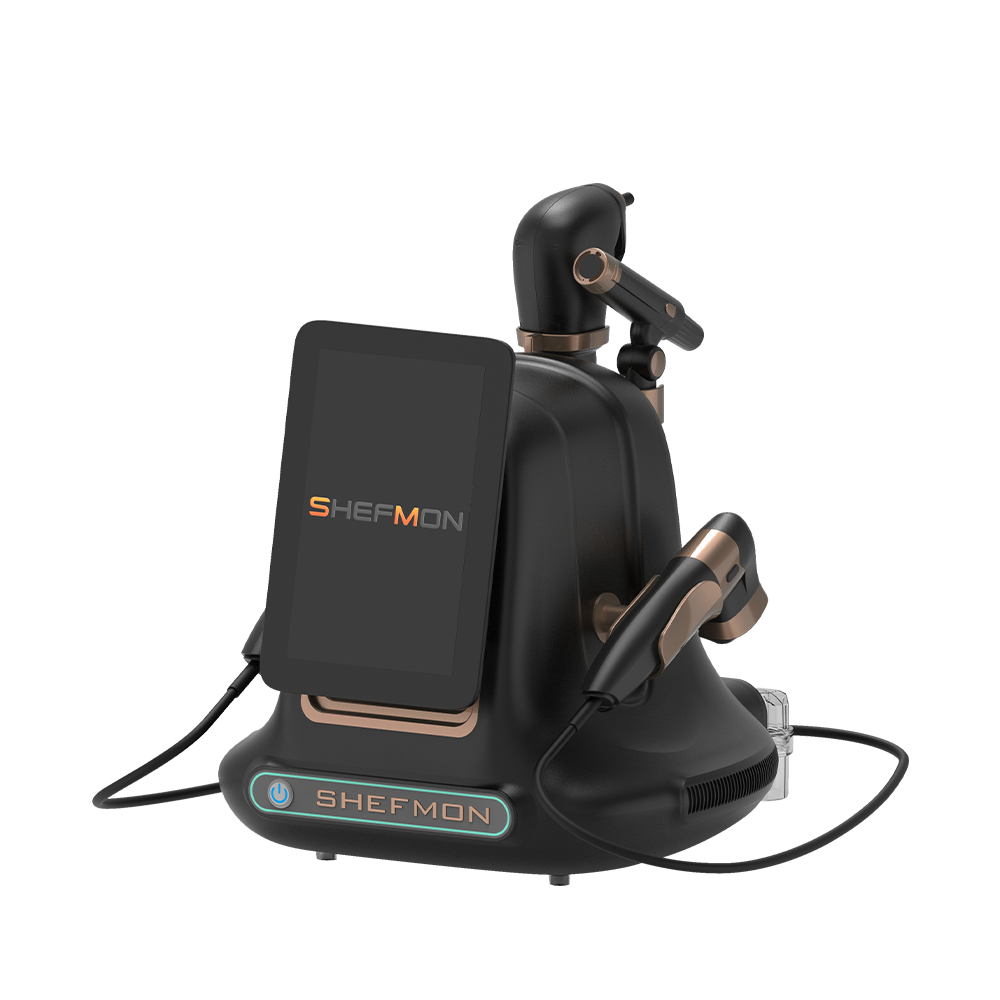
The most practical solution is a two-axis menu. First classify the tattoo by ink-color pathway; then assign an area band. The SHEFMON A0507 picosecond laser machine can anchor the service around its listed 1064nm and 532nm wavelengths, while professional assessment determines whether a tattoo fits the clinic’s equipment, training, and legal scope.
This guide shows tattoo removal clinics how to turn that structure into booking names, quotations, course plans, records, and responsible client communication. It is a business and menu-planning framework, not a treatment protocol.
エグゼクティブサマリー
- Use ink color to define the clinical pathway and area to define the booking band.
- Keep dark-ink, warm-color, resistant-color, multicolor, and cosmetic-pigment inquiries separate at consultation.
- Use 1064nm and 532nm as wavelength directions, not as a promise that A0507 can clear every pigment.
- Publish simple size bands, but add location, density, layering, previous treatment, and client goal during quotation.
- Make “assessment required” a normal menu outcome for green, teal, white, flesh-toned, permanent-makeup, cover-up, and very large tattoos.
- Sell staged care with review points rather than a guaranteed session count or clearance percentage.
- Keep energy, spot size, frequency, passes, and treatment intervals inside the supplied manual and trained-provider protocol.
1. Why a Color-by-Area Menu Works Better
Tattoo color and tattoo area answer different operational questions.
Ink color answers: Does the clinic have an appropriate wavelength direction? Is the ink likely to be straightforward, mixed, or unpredictable? Does the case require a specialist review or referral?
Area answers: How much time should reception reserve? Which quotation band should apply? Will the provider need to stage a large project? How should progress photographs and body maps be organized?
Using only size ignores wavelength fit. Using only color ignores room time and workload. A two-axis menu makes both visible without pretending that two tattoos in the same box will respond identically.
The structure also gives each team a clearer role:
- reception collects photographs and dimensions but does not promise suitability;
- a qualified provider assigns the color pathway and confirms the area band;
- the clinic quotes the defined service and any complexity modifiers;
- the provider reassesses before each later session;
- management can review demand and capacity by service code.
2. Where A0507 Fits in the Service Menu
SHEFMON lists A0507 as a 1064nm and 532nm Q-switched super picosecond YAG laser for tattoo and pigment-focused applications. The product page explains short-pulse pigment targeting and the photoacoustic fragmentation principle associated with picosecond technology.
For menu planning, the dual-wavelength configuration creates two useful core directions:
| A0507 wavelength direction | Common menu discussion | Important limit |
|---|---|---|
| 1064nm | Black, dark blue, and other selected dark-ink inquiries | Suitability and response still vary with skin characteristics, ink chemistry, depth, density, and prior treatment |
| 532nm | Selected red, orange, and other warm or more superficial pigment inquiries | Melanin interaction, pigment mixture, and client skin characteristics require careful professional assessment |
These are consultation categories, not universal color guarantees. The FDA notes that different ink colors absorb different wavelengths, multicolor tattoos may require multiple lasers, and complete removal may not always be possible. Green, red, and yellow can be difficult; white, flesh-toned, and permanent-makeup pigments may behave unpredictably or darken.
Clinics expecting frequent bright green, teal, turquoise, or other resistant-color work should compare their real inquiry mix with the exact supplied configuration. The wider SHEFMON Tattoo and Pigmentation Removal category is useful when a buyer is still deciding which equipment direction fits its market.
3. Create Five Ink-Color Pathways
Pathway D: black and dark ink
This is the core menu for selected black, gray, brown, and dark-blue tattoos after assessment. It is usually the simplest pathway to explain because clients can book by an area band once the provider has confirmed suitability.
Do not assume that every dark tattoo is simple. Dense professional work, heavily layered cover-ups, scarred skin, and previously treated tattoos should receive a complexity modifier or an individual quotation.
Pathway W: selected warm colors
Use this pathway for selected red, orange, and related warm-color inquiries that may fit the 532nm direction after professional assessment. Keep it distinct from the dark-ink menu so staff do not present all colors as interchangeable.
A warm-color tattoo can also contain yellow, white, or mixed pigments that change the plan. Reception should label the visible colors, while the provider decides whether the tattoo remains in the standard warm-color pathway.
Pathway R: resistant or uncertain colors
Green, teal, turquoise, bright blue, purple blends, and colors of unknown composition belong in an assessment-first pathway. Some dark blue may behave more like dark ink, while bright blue-green shades can be more wavelength-dependent. The clinic should not decide from a color name alone.
This pathway should lead to one of three outcomes:
- A0507 service is considered appropriate within the clinic’s protocol.
- A cautious test or staged plan is considered under professional guidance.
- The client is referred because the available wavelength configuration or clinic scope is not a good fit.
For more client education, link to why blue and green tattoo inks can be harder to remove.
Pathway M: multicolor, layered, or cover-up tattoos
A multicolor tattoo should not be forced into one color row. Map each visible color and note which parts are dense, layered, faded, scarred, or previously treated. The provider can then decide whether A0507 covers the practical color directions and whether another laser or referral relationship is needed.
Cover-up fading can be a separate goal within this pathway. The endpoint may be enough fading for new artwork rather than maximum feasible clearance. That goal should appear in the quotation and progress notes.
Pathway C: cosmetic, white, and flesh-toned pigments
Permanent makeup, white ink, and flesh-toned pigment require a distinct evaluation. Pigment composition may be uncertain, and some pigments can darken after laser exposure. A public menu should therefore offer a Cosmetic Pigment Evaluation, not automatic treatment by area.
Where treatment is outside the clinic’s scope, or where a suspicious or undiagnosed pigmented lesion is involved, refer to an appropriate healthcare professional. Tattoo removal services and diagnosis of skin lesions should never be combined under a vague “remove any pigment” promise.
4. Define Area Bands That Staff Can Measure
Area bands are commercial and scheduling categories, not clinical dose categories. Each clinic can adjust the thresholds to its room capacity and local pricing. A clear starter model is:
| Area code | Example measured area | Typical booking description | Quotation rule |
|---|---|---|---|
| A1 Micro | Up to 5 cm² | Tiny symbol, letter, dot cluster, or very small linework | Standard band after suitability confirmation |
| A2 Small | More than 5 to 25 cm² | Small wrist, ankle, finger-side, or compact motif | Standard band plus location review |
| A3 Medium | More than 25 to 75 cm² | Palm-scale or several connected small elements | Provider confirms density and expected room time |
| A4 Large | More than 75 to 150 cm² | Large forearm section, shoulder motif, or comparable mapped area | Individual quotation and staging review |
| A5 Extra Large | More than 150 cm² | Sleeve section, back piece, thigh panel, or extensive work | Consultation-only booking before a staged plan |
These thresholds are examples, so a clinic should publish its own measurement rule. Use square centimeters or square inches consistently rather than “coin-sized” or “hand-sized,” which vary from person to person.
For an initial booking estimate, staff can record the maximum length and width. Irregular tattoos should be photographed with a ruler or approved size reference. The provider should confirm the actual mapped treatment area in person; a bounding rectangle may overestimate open linework and underestimate disconnected elements.
Body location is a modifier, not an area band
Two tattoos with the same measured area may create different appointment needs. Hands, fingers, feet, ankles, face, neck, areas close to sensitive structures, and circumferential designs may need a separate review. Location can affect positioning, access, eye-protection planning, healing instructions, and whether the clinic should accept the case.
Do not publish a universal claim that one body area will clear in a fixed number of sessions. Location is one factor among ink depth, density, color, tattoo age, layering, skin characteristics, previous treatment, and individual response.
5. Build the A0507 Color-by-Area Service Matrix
The matrix below turns the two axes into usable booking names. “Standard” means the clinic can publish a defined booking band after consultation; it does not mean guaranteed treatment or outcome.
| Ink pathway | A1 Micro | A2 Small | A3 Medium | A4 Large | A5 Extra Large |
|---|---|---|---|---|---|
| D: selected black/dark ink | D-A1 Dark Ink Micro | D-A2 Dark Ink Small | D-A3 Dark Ink Medium | D-A4 Dark Ink Large, quote after assessment | D-A5 Dark Ink Staged Plan |
| W: selected warm colors | W-A1 Warm Color Micro | W-A2 Warm Color Small | W-A3 Warm Color Medium | W-A4 Warm Color Large, quote after assessment | W-A5 Warm Color Staged Plan |
| R: resistant/uncertain colors | Assessment required | Assessment required | Assessment required | Assessment and wavelength-fit review | Assessment and likely staged/referral plan |
| M: multicolor, layered, cover-up | Multicolor evaluation | Multicolor evaluation | Individual color map and quote | Staged multicolor plan | Staged plan or referral review |
| C: cosmetic, white, flesh-toned | Cosmetic Pigment Evaluation | Cosmetic Pigment Evaluation | Individual assessment only | Usually outside standard online menu | Individual assessment or referral |
The client-facing menu does not need to display every internal code. A simpler public version could show:
- Dark Ink Tattoo Removal — Micro, Small, Medium, Large, or Staged Plan
- Selected Warm-Color Tattoo Removal — Micro, Small, Medium, Large, or Staged Plan
- Multicolor or Resistant-Ink Evaluation
- Cover-Up Fading Plan
- Cosmetic Pigment Evaluation
- Post-Session Review
Internal codes help the booking team, while plain-language names help clients.
6. Add Complexity Modifiers Without Making the Menu Confusing
Area determines the base band; complexity modifiers determine whether the case stays within that band. Use a short checklist rather than dozens of public surcharges.
Consider an individual quotation when the tattoo has:
- several ink colors or uncertain color composition;
- dense professional fill or multiple layers;
- a cover-up history;
- previous laser, chemical, surgical, or abrasive removal attempts;
- visible scarring, texture change, irritation, or an unexplained reaction;
- white, flesh-toned, fluorescent, or permanent-makeup pigment;
- a difficult location or positioning requirement;
- disconnected elements spread across a larger body zone;
- a partial-fading goal that requires coordination with a tattoo artist;
- an area too large for the clinic’s standard appointment block.
The quotation should say which service is being sold: one session, a defined limited package, or a staged plan with review points. It should not imply that a more expensive band guarantees greater clearance.
7. Use a Consistent Front-Desk Quotation Workflow
Step 1: collect, but do not diagnose
Ask for clear photographs in neutral lighting, a ruler or size reference, the body location, visible colors, tattoo age, whether it is professional or amateur, whether it is a cover-up, previous removal attempts, and the client’s goal.
Reception can give a provisional area band. It should not choose laser settings, guarantee wavelength suitability, or promise the number of sessions from a photograph.
Step 2: assign a provisional service code
A black 4 cm² symbol might be provisionally labeled D-A1. A red-and-black 40 cm² tattoo should be labeled M-A3 rather than forced into the dark or warm row. A green-and-teal piece should enter Pathway R regardless of size.
Step 3: complete professional assessment
The provider verifies the tattoo map, skin and health history, previous response, client goal, suitability, and local scope requirements. Standardized baseline photographs and consent should be part of the record.
Step 4: confirm one of four outcomes
- standard A0507 area-band service;
- individualized A0507 staged plan;
- defer, test, or reassess according to professional protocol;
- decline or refer.
Step 5: issue a written quotation
The quotation should name the pathway, area band, body location, treatment objective, inclusions, review process, and conditions that may change the plan. It should also state that response and total course length vary.
8. Design Packages Around Review Points
Per-session pricing is simple, but a limited package can improve continuity when terms are clear. Avoid unlimited plans and fixed “complete removal” packages.
A responsible package may include:
- initial professional consultation;
- baseline photography and tattoo map;
- a defined number of booked sessions rather than an outcome guarantee;
- 書面によるアフターケア;
- progress photography;
- a formal review before any additional stage;
- clear expiry, cancellation, transfer, and unused-session terms;
- an option to stop once a cover-up fading goal is reached.
Large or multicolor tattoos are better divided into stages than sold as one oversized appointment. A stage can be organized by mapped zone, color pathway, or another clinically appropriate plan chosen by the qualified provider. Do not market unverified same-day combinations simply to make a package look faster.
9. Organize Scheduling and Room Capacity
The color-by-area codes can improve the appointment book even when treatment settings remain individualized.
Use them to:
- reserve different consultation and treatment blocks by area band;
- prevent A4 and A5 projects from being squeezed into a small-tattoo slot;
- keep assessment-only cases separate from confirmed treatment appointments;
- plan photography, consent, room preparation, cleanup, and records;
- identify when a provider with greater color or skin-type experience is required;
- monitor demand for dark, warm, multicolor, and referral-pathway inquiries.
Every laser appointment still needs wavelength-appropriate eye protection, controlled access, trained personnel, device checks, and records that follow the supplied manual and clinic SOP. Purchasing A0507 does not by itself establish legal authority to operate it; licensing, supervision, registration, and scope rules vary by market.
10. Record the Same Fields at Every Visit
A reusable A0507 record should connect the menu code to the clinical record without turning the menu into a treatment prescription.
記録:
- service code and confirmed area band;
- body location and tattoo map;
- visible colors and suspected mixed pigments;
- client goal: maximum feasible clearance, partial removal, or cover-up fading;
- tattoo type, age, density, layering, and previous treatment;
- relevant screening and consent information;
- standardized photographs;
- device identification and the actual wavelength, mode, and settings selected by the trained provider;
- observed response and aftercare supplied;
- healing review, progress, and next-step decision.
This structure allows management to compare operational data without claiming that one protocol fits every client.
11. Track Business Metrics by Pathway and Area
The menu codes can show whether the clinic’s equipment and staffing match actual demand. Useful operational metrics include:
- consultations by color pathway;
- bookings by area band;
- percentage of inquiries requiring an individual quotation;
- accepted, deferred, and referred cases;
- average room time by area band;
- package completion and unused-session rates;
- cover-up fading versus maximum-clearance goals;
- adverse-event or escalation reports;
- maintenance downtime and appointment rescheduling.
Do not turn these metrics into public efficacy claims unless the data and claim have been properly validated. Their main purpose is staffing, training, inventory, scheduling, and service-menu improvement.
12. Responsible Marketing Language
Good client-facing language includes:
- “A0507 tattoo removal services organized by ink-color pathway and measured area”;
- “1064nm and 532nm laser directions for selected tattoo pigments”;
- “multicolor and resistant-ink assessment available”;
- “large tattoos are planned in stages after consultation”;
- “results and total course length vary by pigment, tattoo, skin, and individual response.”
避ける:
- “one laser removes every color”;
- “all tattoos disappear completely”;
- “one-session removal”;
- “painless and risk-free”;
- “the same settings work for every skin type”;
- “any salon can operate the machine”;
- “green, white, or cosmetic pigments are automatically treatable.”
Clinics can also direct clients to SHEFMON’s guide to dual-wavelength picosecond laser systems when wavelength and pulse terminology causes confusion.
13. A Practical Menu Example
A concise website menu could read:
Laser Tattoo Consultation
Professional assessment, tattoo photography, color mapping, area measurement, history review, and a staged recommendation. Required for new clients and complex tattoos.
A0507 Dark-Ink Tattoo Removal
Available in Micro, Small, Medium, Large, and Staged Plan bands after assessment. Designed for selected black and dark-ink tattoos that fit the clinic’s A0507 protocol.
A0507 Selected Warm-Color Tattoo Removal
Available by measured area after professional wavelength-fit and skin assessment. Mixed-color tattoos move to the Multicolor Evaluation pathway.
Multicolor or Resistant-Ink Evaluation
For green, teal, turquoise, bright blue, purple blends, layered cover-ups, or tattoos with uncertain pigment composition. Assessment may lead to an A0507 plan, a cautious staged approach, or referral.
Cover-Up Fading Plan
A goal-based course designed to reach a practical fading endpoint for new artwork. Progress is reviewed with standardized photographs; complete removal is not assumed.
Cosmetic Pigment Evaluation
For permanent makeup, white ink, and flesh-toned pigment where permitted. Evaluation does not guarantee treatment because some pigments can respond unpredictably.
Post-Session Review
Healing review, progress photographs, record update, and confirmation of the next step before another session is booked.
よくある質問
1. Why should A0507 services be organized by both ink color and area?
Color helps determine wavelength fit and uncertainty, while area helps the clinic plan booking time and quotation bands. Using both is more useful than one universal tattoo-removal price.
2. Which wavelengths are listed for A0507?
The current SHEFMON product page lists 1064nm and 532nm. These support important dark-ink and selected warm-color directions, but the trained provider must confirm suitability and settings for each client.
3. What is the simplest A0507 service to publish online?
A consultation-led dark-ink menu with Micro, Small, Medium, Large, and Staged Plan bands is usually the clearest starting point. Other colors should be added with appropriate assessment rules.
4. Should a clinic publish exact area thresholds?
Yes, if it can measure them consistently. State whether the clinic uses square centimeters or square inches and clarify that the provider confirms irregular or disconnected tattoos in person.
5. Can green or teal tattoos be placed in a standard area band?
They can receive an area measurement, but they should stay in a resistant-color assessment pathway until wavelength fit and clinic capability are confirmed. Size alone does not establish suitability.
6. How should multicolor tattoos be priced?
Map the colors, assign an area band, and quote after professional assessment. Pricing can reflect consultation time, color complexity, staging, room time, documentation, and follow-up without promising a result.
7. Are white ink and permanent makeup standard A0507 services?
They should be evaluation services first. White, flesh-toned, and cosmetic pigments may have uncertain composition or can darken, so automatic online treatment booking is not appropriate.
8. Should large tattoos be treated as one service?
Large tattoos are often better managed as a staged plan. The qualified provider decides how to divide the project according to the manual, professional protocol, client assessment, and healing response.
9. Can reception promise a session count from a photograph?
No. Photographs help with a provisional color pathway and area band, but they cannot establish the total course. Ink depth, density, layering, skin characteristics, previous treatment, and individual response matter.
10. What should a clinic confirm before buying A0507?
Confirm the current wavelength and pulse-mode configuration, included accessories, eyewear requirements, manual, training, installation, maintenance, warranty, spare parts, technical support, destination-market documents, and local operating rules.
結論
The strongest A0507 service menu is not a long list of tattoo colors or a single size-based price chart. It is a controlled pathway: classify the ink, measure the area, add relevant complexity modifiers, complete professional assessment, and sell a staged service with documented reviews.
This structure gives clients clearer choices, helps reception avoid overpromising, and lets providers schedule dark, warm, multicolor, cosmetic-pigment, and large-area cases appropriately. It also presents A0507 for what it is: a focused 1064nm and 532nm tattoo and pigment platform that belongs inside a qualified laser workflow.
Review the current SHEFMON A0507 product page または シェフモンに連絡してください to confirm the supplied configuration, training and support for a clinic’s planned tattoo-removal menu.