









最適化されたソリューション、専門的なバルブの知識、業界ニュースを共有する

ご希望の用語やキーワードを入力すると、検索結果に関連記事が表示されます。お探しの回答が見つからない場合は、お気軽にお問い合わせください。喜んでお手伝いいたします。または、beauty@shefmon.comまで直接メールでお問い合わせください。

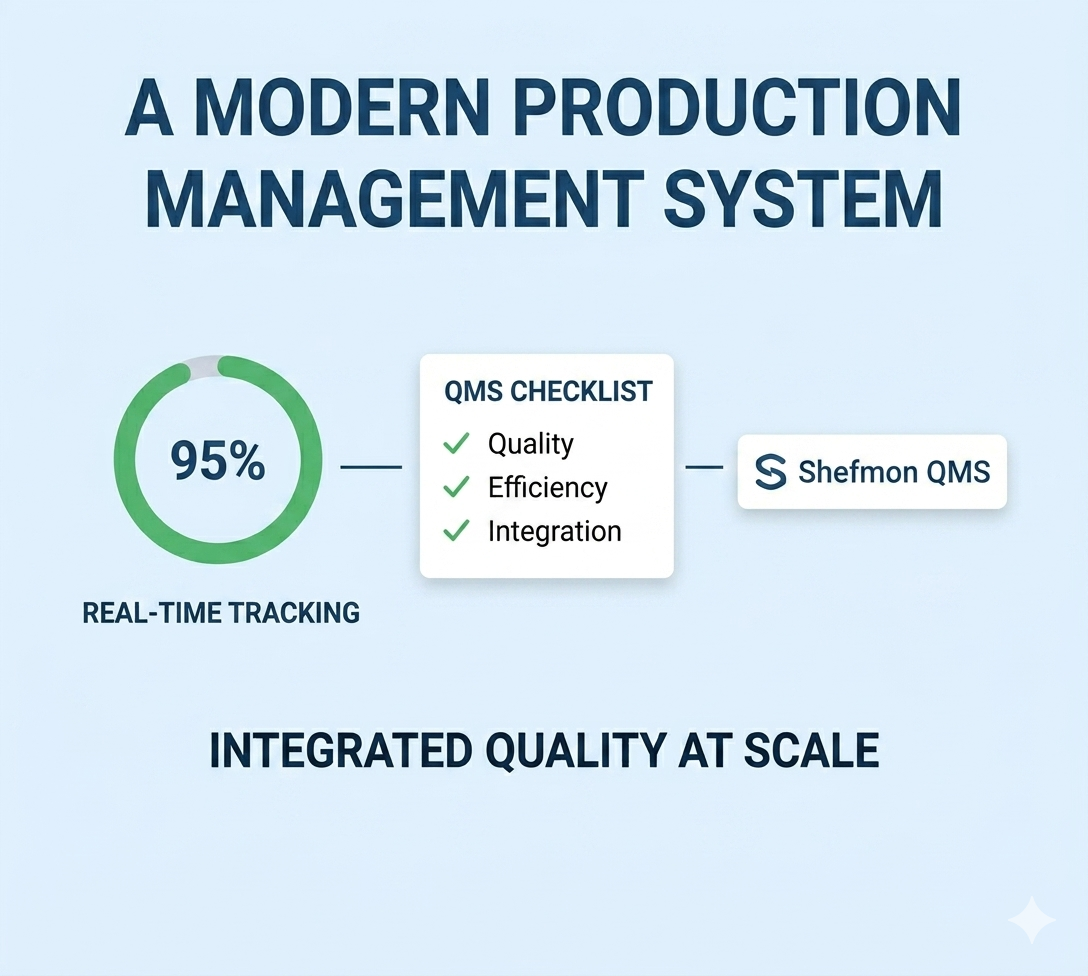
Shefmonが最新の生産管理システムを通じて大規模な品質構築を実現する方法

では 美容機器 industry, product quality is not created by marketing claims—it is created on the factory floor. Buyers today want more than attractive designs or competitive pricing. They want reliable delivery, stable performance, consistent assembly standards, and responsive after-sales support. Shefmon has built its manufacturing model around these expectations through a structured production management system that connects research, assembly, quality control, logistics, and long-term product support. The result is a factory operation designed to scale without losing consistency.

Shefmonが最新の生産管理システムを通じて大規模な品質構築を実現する方法 - shefmon

1. A Factory Organized for Efficiency and Accountability

Shefmon’s production system begins with clear departmental structure. Instead of overlapping responsibilities, each function operates with dedicated teams and measurable roles.

1.1 Defined department divisions

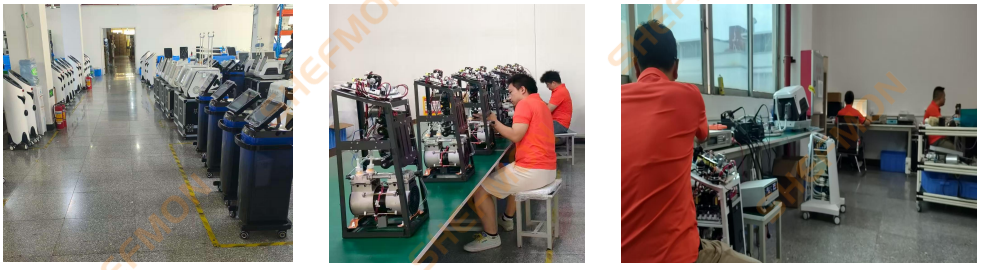
The factory includes separate divisions for spare parts warehousing, production, shipping, after-sales service, and research and development. This clear separation improves accountability and prevents workflow confusion.

For customers, it means faster communication and smoother coordination from order placement to final delivery.

1.2 Dedicated product lines

Different product categories are assigned to separate production lines. This helps maintain production rhythm, reduce scheduling conflicts, and improve on-time delivery performance.

For growing distributors and OEM buyers, dependable lead times are often just as important as product quality.

1.3 Fast-response R&D integration

Because R&D is part of the internal workflow, Shefmon can move quickly when markets shift. New designs, updated housings, feature improvements, and customized solutions can be developed without depending on external engineering partners.

2. Workshop Infrastructure That Supports Consistency

Reliable output depends on more than labor—it requires organized production environments and specialized stations.

2.1 Multi-stage workshop layout

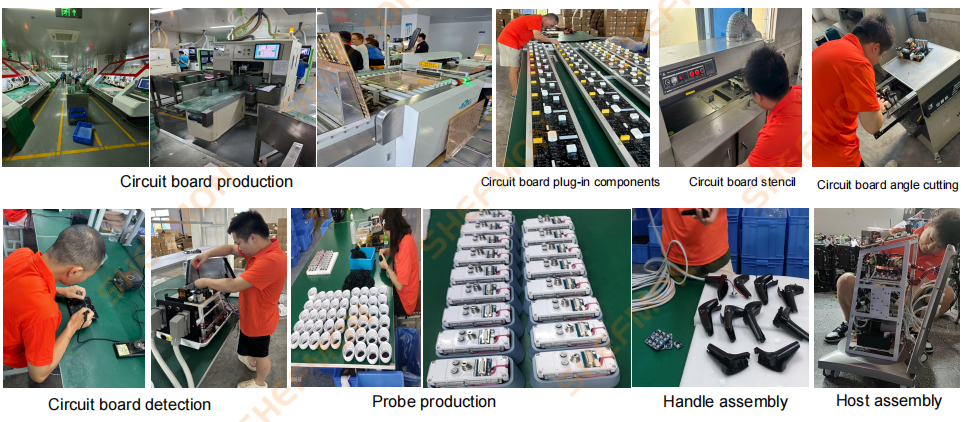
Shefmon’s workshop structure includes circuit board production, wire harness manufacturing, terminal production, final assembly, and packaging areas. Each process is handled in its own operational zone.

This reduces cross-process interference and improves quality control at every stage.

2.2 Specialized production equipment

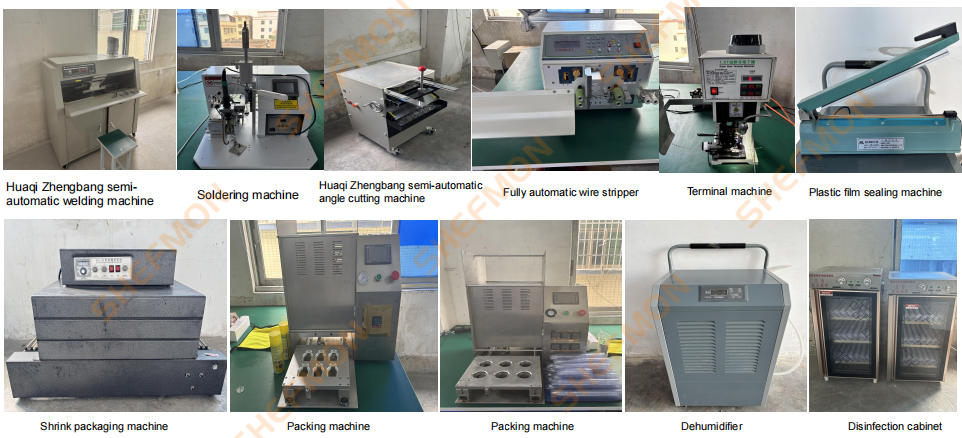
The factory uses semi-automatic welding machines, soldering stations, wire stripping equipment, terminal machines, sealing machines, shrink packaging systems, and environmental control tools such as dehumidifiers and disinfection cabinets.

These tools help standardize production results while improving efficiency.

2.3 Stable production environment

Environmental consistency matters in electronics assembly. Humidity control, clean storage, and controlled packaging areas help protect sensitive components and maintain finished product quality.

Shefmonが最新の生産管理システムを通じて大規模な品質構築を実現する方法 - shefmon

3. Skilled Workforce with Practical Industry Experience

Technology alone does not guarantee quality. Execution depends on the people managing every production step.

3.1 Experienced manufacturing team

Shefmon employs more than 50 workers with an average of five years of industry experience. That level of familiarity improves assembly speed, troubleshooting ability, and consistency.

3.2 Training through repeatable systems

Rather than relying on informal knowledge transfer, production tasks are structured through documented procedures. This allows new employees to learn faster while maintaining factory standards.

3.3 Cross-functional coordination

Experienced teams also improve communication between assembly, testing, shipping, and after-sales departments, reducing avoidable delays.

4. Standard Operating Procedures That Prevent Costly Errors

One of the strongest indicators of manufacturing maturity is the use of practical SOP systems.

4.1 Wiring and voltage protection controls

Instructions clearly identify risks such as reversed 12V and 36V power connections, incorrect port matching, and wiring order mistakes that could damage boards.

Preventing these errors protects product reliability before shipment.

4.2 Chassis and internal layout standards

Assembly guidance includes motherboard placement, fan installation zones, structural fastening requirements, and organized cable routing.

This creates cleaner internal architecture, better cooling performance, and easier maintenance.

4.3 Component matching controls

Technicians are instructed to verify bracket models, shell versions, and printed part references during assembly. This reduces mismatched component issues that often create rework.

Shefmonが最新の生産管理システムを通じて大規模な品質構築を実現する方法 - shefmon

5. Process Controls That Improve Product Durability

High-performing factories pay attention to small details that directly affect long-term product life.

5.1 Precision adhesive application

Glue is used for anti-loosening fixation and sealing. Shefmon emphasizes controlled glue quantity, bubble-free curing, and durable silicone materials resistant to extreme temperatures.

This is especially important in machines containing water, air, vibration, or repeated movement.

5.2 Cable tie and harness management

Loose internal tubing or wires can cause leaks, wear, and electrical failure. Proper bundling intervals, nylon ties, and routing discipline reduce these risks.

5.3 Structural optimization

The factory prioritizes water-and-electricity separation, reserved cable channels, and modular layouts. These choices improve safety and simplify future servicing.

5.4 Surface finishing standards

Drying temperatures, coating adhesion, and dual-layer paint processes are monitored to improve corrosion resistance and visual quality.

For buyers, finish quality strongly influences first impressions and brand perception.

6. Electronics Reliability Through Controlled Soldering

Circuit board performance is central to beauty equipment reliability.

6.1 Machine-assisted soldering

Using structured soldering methods helps reduce weak joints, false welding, and inconsistent manual connections.

6.2 Inspection-focused quality checks

Visual and functional checks help identify board-level issues before final assembly. Catching faults early reduces field failures later.

6.3 Stable component integration

Accurate installation of chips, resistors, capacitors, and connectors ensures better long-term performance under repeated daily use.

Shefmonが最新の生産管理システムを通じて大規模な品質構築を実現する方法 - shefmon

7. Why This Matters to Global Buyers

Manufacturing systems are not just internal processes—they directly affect customer outcomes.

7.1 Better delivery confidence

Dedicated lines and organized departments support predictable lead times.

7.2 Lower defect risk

Structured SOPs and process controls reduce preventable assembly failures.

7.3 Stronger OEM and ODM capability

With integrated R&D and controlled production, Shefmon can support private label customization, feature changes, and market-specific requirements more efficiently.

7.4 Easier after-sales support

Clear internal documentation helps replacement parts, troubleshooting, and service communication happen faster.

結論

シェフモン’s production strength comes from systems, not shortcuts. By combining organized departments, experienced staff, detailed SOP controls, process discipline, and integrated R&D, the company has built a production management model focused on scalable quality. For distributors, clinics, and OEM partners looking for dependable manufacturing, Shefmon offers more than products—it offers a factory structure designed to support long-term business growth.

人気商品