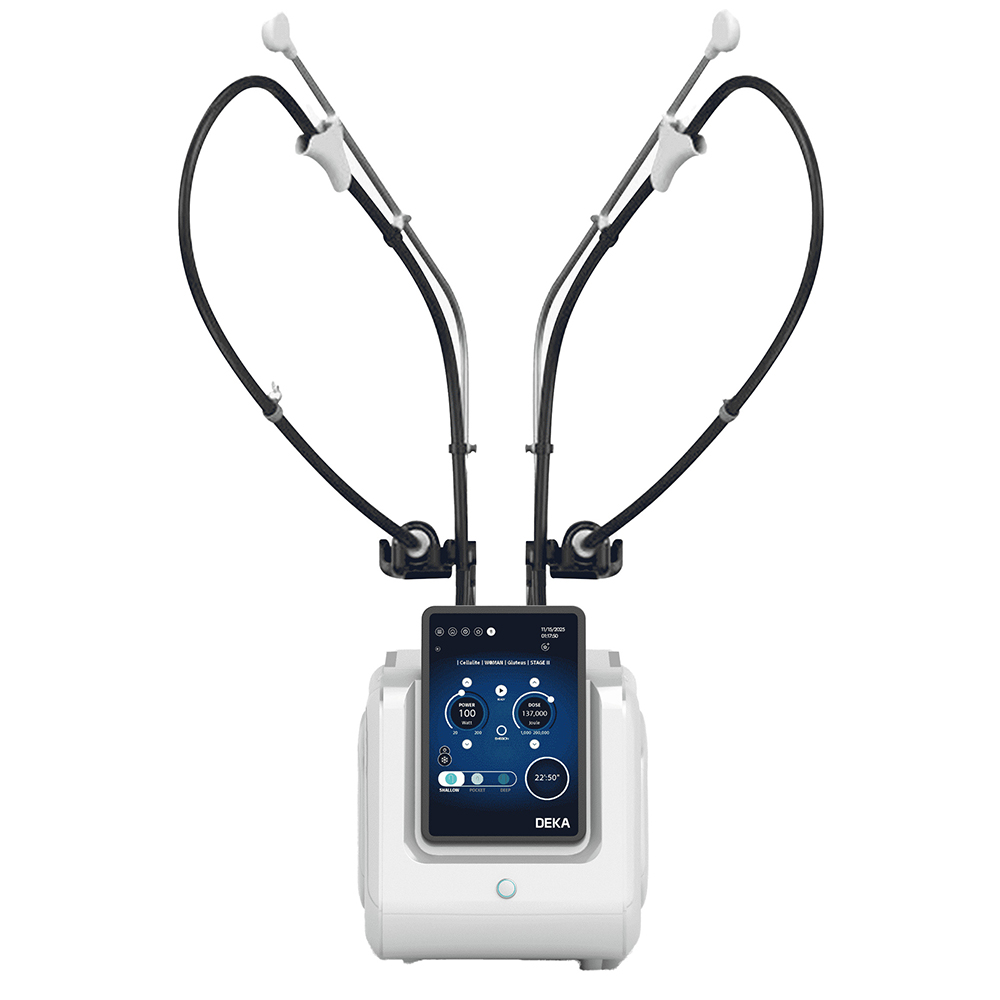











Regional beauty-equipment distributors need shared product facts and enough local control to serve different markets. A central team may own model identity and technical specifications, while regional teams manage assortments, languages, market profiles, catalogs, and buyer requirements. Without defined decision rights, one region can rename a model, another can change the included handle set, and a third can quote an unconfirmed market version.
Product data governance establishes who may create, approve, localize, publish, change, and retire each type of beauty-device information. It connects global SHEFMON model data to regional catalogs, quotations, components, consumables, and installed-device support. This guide explains how regional distributor teams can divide responsibilities without creating competing versions of product truth.
エグゼクティブサマリー
- Govern product data by domain: model, configuration, component, compatibility, market, content, commercial, and customer-installed data.
- Give central and regional teams explicit decision rights for every field group.
- Keep global model identity and confirmed technical relationships stable across regions.
- Let regional teams manage approved assortments, languages, local contacts, channel content, and market-specific fields within defined rules.
- Require documented approval for new configurations, compatibility claims, package contents, and market variants.
- Separate technical product governance from price, stock, discount, freight, and promotion decisions.
- Use one issue and change workflow so regional conflicts do not get resolved through independent file edits.
- Connect websites, catalogs, quotations, bundles, consumables, and support records to governed source data.
- Audit decision quality, regional adoption, unresolved conflicts, outdated materials, and quotation corrections.
- Confirm unclear model, configuration, component, or market details with SHEFMON before approving a regional exception.
1. Why Regional Teams Need Product Data Governance
A regional distributor network usually has several legitimate perspectives:
- central product teams want one stable model identity;
- regional sales teams need products that fit local buyers;
- local content teams need appropriate language and terminology;
- commercial teams need market-specific prices and availability;
- technical teams need accurate configuration and compatibility records;
- service teams need historical data for installed devices;
- local reviewers need market-appropriate claims and documentation.
Problems arise when these perspectives become separate sources. Governance gives each team a controlled area of authority and a route for decisions that cross those boundaries.
The goal is not to centralize every edit. It is to make clear which decisions are global, which are regional, which require joint approval, and which are prohibited without new evidence.
2. Define the Product Data Domains
Start by separating the information that regional teams manage.
| Domain | 例 | Primary governance concern |
|---|---|---|
| Model identity | Official model number, name, category, lifecycle | One stable identity across regions |
| Technical configuration | Wavelength, handle arrangement, cartridge set, included equipment | Exact saleable combinations |
| Components | Handles, applicators, heads, tips, cables, accessories | Stable IDs, quantities, and order units |
| Compatibility | Device-to-component and replacement relationships | Evidence, version scope, and exclusions |
| Market profile | Voltage, plug, language, documents, eligible claims | Destination-specific control |
| コンテンツ | Descriptions, comparison fields, images, captions, translations | Approved meaning and presentation |
| Commercial | Price, currency, stock, lead time, discounts, promotions | Dated regional ownership |
| チャネル | Website, catalog, quotation, CRM, marketplace | Consistent publication and withdrawal |
| Installed base | Customer device, configuration, consumables, replacements | Historical traceability and support |
Each field should belong to one domain even if several teams use it.
3. Use a Three-Level Governance Model
A practical regional structure has three levels.
Global or central level
Controls stable SHEFMON model identity, core specifications, approved configurations, component identities, compatibility evidence, shared terminology, and global source records.
Regional level
Controls which approved configurations are sold in the region, regional language editions, market profiles, distributor packages, commercial status, local catalog releases, and regional quotation rules.
Local or channel level
Publishes approved content, manages buyer inquiries, selects valid configurations, issues quotations, and records installed devices. It should not independently redefine technical facts.
When one team performs more than one level, keep the roles separate in the workflow. The person who proposes a local change should not automatically become its technical approver.
4. Assign Decision Rights by Data Type
Use a decision-rights matrix rather than relying on job titles alone.
| Decision | Central team | Regional team | Local/channel team |
|---|---|---|---|
| Create or retire parent model | Accountable and approving | Consulted | Informed |
| Approve technical configuration | Accountable with technical review | Proposes regional need | Informed or consulted |
| Confirm component compatibility | Approves evidence and scope | Provides field issue data | Uses approved relationships |
| Select regional assortment | Sets eligible pool | Accountable and approving | Consulted on buyer demand |
| Approve market profile | Provides product inputs | Accountable with local review | Supplies destination requirements |
| Translate approved content | Maintains terminology | Accountable | May draft or review |
| Set regional price and stock | Informed | Accountable | Uses current commercial data |
| Publish website or catalog | Provides approved source | Approves regional release | Executes publication |
| Issue buyer quotation | Provides configuration rules | Sets approval policy | Selects and submits approved offer |
| Preserve installed-device history | Defines data requirements | Oversees regional quality | Records customer configuration |
Adjust the matrix to the organization, but preserve one accountable owner for each decision.
5. Establish Core Governance Roles
Product data owner
Owns the definition, quality standard, lifecycle, and business use of one data domain.
Data steward
Maintains records, checks completeness, resolves routine issues, and coordinates reviews.
Technical approver
Confirms specifications, configuration, component identity, compatibility, and version scope.
Regional market owner
Approves assortment, regional packages, market profile, language scope, and sales-channel use.
Commercial owner
Owns regional prices, discounts, currency, availability, lead time, and promotion rules.
Content and translation owner
Preserves approved meaning across websites, catalogs, PDFs, images, and language editions.
Local compliance reviewer
Reviews market-specific documents, claims, professional-setting language, and local restrictions.
Channel operator
Publishes approved data and supplies proof that the active page, file, template, or feed is correct.
6. Govern Fields, Not Just Documents
A PDF catalog may contain fields owned by five different teams. Assign ownership at the field or field-group level.
例えば:
- model code: central product owner;
- handle configuration: technical owner;
- regional availability: regional assortment owner;
- price: commercial owner;
- language: translation owner;
- local claim: local reviewer;
- website URL: channel owner;
- quotation validity: sales operations.
The catalog owner coordinates the release but should not be expected to invent or approve every value. Field-level ownership allows the same approved data to flow into websites and quotations.
7. Create a Regional Data Overlay
Use the global record as the base and store approved regional differences in an overlay.
The regional overlay can contain:
- assortment status;
- permitted configurations;
- market electrical profile;
- plug and cable;
- interface and manual language;
- regional product name or approved subtitle;
- local description and terminology;
- approved claim set;
- regional standard and optional package relationships;
- price-list connection;
- stock or supply policy;
- regional contact and support route;
- catalog and quotation eligibility;
- effective and review dates.
Do not copy the entire global record into a regional spreadsheet. Store only the controlled differences and references. Copying every field creates independent versions that drift.
8. Define What Regional Teams May Localize
Regional teams can usually adapt:
- language and tone;
- buyer examples;
- local business types;
- service-menu positioning;
- regional contact details;
- channel-specific content length;
- approved local assortment;
- commercial terms;
- local package names that reference defined configurations.
They should not change without approval:
- official model number;
- device category when it affects buyer selection;
- technical specifications;
- included handle or cartridge set;
- component compatibility;
- consumable relationship;
- 電気的構成;
- market documents;
- replacement relationship;
- lifecycle status;
- unverified performance or compliance claims.
Create localization rules with examples so teams know the difference between adapting content and changing product truth.
9. Govern Regional Assortments
Each region should select from an eligible pool of approved device configurations. The assortment record should show:
- parent model;
- configuration code and revision;
- target buyer type;
- primary service category;
- market eligibility;
- regional catalog status;
- standard and optional package profile;
- price-list status;
- stocking or supply policy;
- language and document readiness;
- launch and retirement dates;
- owner and approver.
A model can be globally active but absent from one regional catalog. That is an assortment decision, not a change to the global lifecycle.
10. Keep A0423 and A0426 Governance Separate
The current SHEFMON pages for the A0423ダイオードレーザー そして A0426ダイオードレーザー list overlapping choices involving wavelength arrangement, handle power, and spot size. Regional teams may want different laser assortments, but the models should retain separate governance records.
Central governance should control:
- official model identity;
- approved option fields;
- configuration records;
- handle and spot-size relationships;
- shared comparison definitions;
- source evidence.
Regional governance can control:
- whether A0423, A0426, or both are offered;
- which approved configurations appear;
- local language and buyer positioning;
- market electrical and document profile;
- regional price and supply policy;
- catalog and quotation activation.
One region cannot declare an A0423 handle compatible with A0426 because their specification tables look similar. That requires model-specific technical approval.
11. Govern A0648 as a Regional Facial Foundation
その A0648 ハイドロマイクロダーマブレーションマシン is presented as a multifunction facial platform. Central records should define the model, approved functions, handpieces, accessories, consumables, and configuration choices.
Regional teams can decide:
- whether A0648 is a core facial-catalog product;
- which confirmed package is offered;
- how the service role is described locally;
- which approved language and market profile applies;
- whether a regional starter consumable kit is bundled;
- which contact and quotation route is used.
If a region needs a different handpiece or accessory set, it should submit a configuration request. It should not edit the included-items list locally and present the result as the standard A0648 package.
12. Govern A0204 Modules and Cartridges Centrally
その A0204 focused HIFU page describes a multifunction system with standard and optional elements. Module and cartridge relationships require strong technical governance.
Central or technical owners should control:
- handle and module identities;
- cartridge IDs, depths, or sizes;
- compatible handle and configuration;
- standard, optional, special-order, and replacement status;
- required companion items;
- approved quantities;
- revision limits.
Regional teams can choose approved packages for appropriate local business profiles and determine whether certain options are routinely offered. They cannot broaden cartridge compatibility or imply that every listed component is included.
13. Govern A0152 Equipment and Consumables Together
その A0152 RF-microneedling page lists handle arrangements and multiple needle-head types. Governance must connect the initial equipment configuration with regional consumable supply and installed-device records.
Central owners define:
- approved handle arrangements;
- needle-head identities;
- compatibility by device version;
- opening quantities;
- replacement and successor rules.
Regional owners define:
- eligible configurations;
- regional starter stock;
- reorder availability and price;
- local catalog and quotation visibility;
- professional-setting language;
- support route.
Local teams record which configuration the buyer installed. Later needle orders should use that record rather than a local nickname for the machine.
14. Govern B0155 Handle Packages by Relationship
その B0155 body-care system is described with handles for body and smaller-area applications. Governance should separate technical compatibility from regional package design.
The technical owner confirms which handles work with the platform. A regional product owner can then create an approved body-focused or broader business package using those components. In one package, a handle may be Standard; in another, it may be Optional.
The region owns the package decision, but the underlying handle identity and compatibility remain centrally governed. Package names must reference an exact component schedule.
15. Create a Product Data Council for Cross-Regional Decisions
A lightweight council can review decisions that affect more than one region or domain. Members may include:
- global product owner;
- technical lead;
- regional product owners;
- sales operations;
- content or localization lead;
- commercial representative;
- service representative;
- local compliance reviewer when relevant.
Use the council for:
- new product families;
- new configuration patterns;
- cross-model compatibility questions;
- shared terminology disputes;
- market-profile conflicts;
- successor and retirement decisions;
- regional exceptions that may become global options;
- repeated data-quality failures.
Routine local updates should not wait for a monthly council meeting. Define thresholds and an escalation route.
16. Use a Standard Regional Request Workflow
- Regional team records the buyer or market need.
- It identifies the model, configuration, component, field, and intended channel.
- It states whether the request is content, assortment, configuration, compatibility, market, or commercial.
- The data steward checks completeness and existing records.
- The accountable owner reviews the evidence.
- Technical, market, or commercial review is added as required.
- The decision is approved, rejected, or returned for more information.
- Effective scope, region, language, and date are recorded.
- Affected channels are updated.
- The requester verifies the regional result.
Email and chat can support discussion, but the final decision must be captured in the governed record.
17. Resolve Regional Conflicts Transparently
Conflicts can occur when:
- two regions use different names for the same component;
- one catalog lists a handle as Standard and another lists it as Optional;
- local pages show different specifications;
- a region has evidence that appears newer than the central record;
- an installed device does not match the active catalog;
- a regional buyer requests an unlisted configuration.
Use this process:
- pause the disputed claim or selection;
- capture both versions and their sources;
- identify the data domain and accountable owner;
- compare model, configuration, market, and effective-date scope;
- request SHEFMON confirmation when current approved evidence is insufficient;
- approve one scoped decision;
- correct every affected region and channel;
- record why the conflict occurred.
Different regional answers can both be valid when they refer to different confirmed configurations or market profiles. The records must make that scope explicit.
18. Govern Product Changes Across Regions
Every material change needs regional impact analysis.
レビュー:
- active assortments;
- market profiles;
- language versions;
- websites and category pages;
- catalogs and product sheets;
- price lists;
- quotation templates;
- bundles;
- open quotations;
- accepted orders;
- installed-device and service records;
- consumable and replacement lists;
- training materials.
The central change owner coordinates the product decision. Regional owners confirm whether and when their channels are affected. Do not close the change merely because the global website is updated.
19. Govern Regional Websites and Catalogs
Publication rules should require:
- active model and configuration references;
- approved market profile;
- current language source;
- correct images and captions;
- clear standard and optional components;
- reviewed compatibility statements;
- visible edition or review date;
- controlled CTA and quotation fields;
- link to current contact and support route;
- withdrawal of superseded files.
Regional editors may adapt layout and tone, but field owners remain accountable for the underlying facts.
20. Govern Regional Quotations
Quotation tools should allow local teams to select only:
- regionally eligible models;
- active configurations;
- compatible components;
- approved market profiles;
- current price and currency records;
- permitted discounts;
- active documents and attachments.
Exceptions should require an approval path. The quotation should preserve the selected configuration, component relationships, market profile, price-list version, validity, and approver.
A local salesperson should not create a new technical configuration by typing a handle into a free-text line.
21. Separate Technical and Commercial Governance
Technical governance owns what the product is and what works with it. Commercial governance owns how the region prices and supplies the approved offer.
Keep separate:
- configuration and price;
- compatibility and stock;
- component status and promotion;
- market eligibility and discount;
- technical revision and quotation validity;
- product lifecycle and temporary lead time.
A price approval cannot make an unconfirmed component compatible. A temporary stock issue should not change the global product identity.
22. Control Access and Permissions
Use permissions that match decision rights.
- Viewers can search approved records.
- Local sales users can select active regional offers.
- Regional editors can draft local content and assortment requests.
- Data stewards can maintain assigned fields.
- Technical approvers can approve specifications and compatibility.
- Commercial owners can approve prices and discounts.
- Publishers can release approved channel versions.
- Administrators manage roles but should not approve product facts automatically.
Avoid shared files where every user can overwrite every field. Log changes, approvals, exports, and status updates.
23. Train Regional Teams by Role
Training should teach decisions, not only system navigation.
Regional sales teams need to know:
- how to find the active configuration;
- how to distinguish Standard, Optional, and Special Order;
- how to request an exception;
- how to confirm market profile;
- how to record installed devices.
Editors need to know:
- which fields can be localized;
- how to use approved terminology;
- how to map images;
- how to preserve limitations and exclusions;
- how to retire outdated materials.
Stewards and approvers need deeper training on evidence, version scope, compatibility, effective dates, conflict resolution, and audit trails.
24. Audit Regional Governance
Sample records and channels by region. Check whether:
- accountable owners are assigned;
- global and regional fields are separated;
- local overlays contain only approved differences;
- active assortments reference valid configurations;
- regional compatibility claims match central evidence;
- websites, catalogs, and quotations use current data;
- translations preserve technical meaning;
- price and stock are separated from product truth;
- exceptions have approval and expiry;
- installed-device records support reorders;
- retired data is blocked from new sale;
- conflicts are closed with documented decisions.
Audit both central decisions and regional adoption. A correct master record has limited value if local catalogs still use an older copy.
25. Measure Governance Performance
有効な対策としては、以下のようなものがあります。
- percentage of active records with named owners;
- field completeness by region;
- time to approve regional requests;
- number of open data conflicts;
- percentage of regional catalogs on current versions;
- quotation reissues caused by data errors;
- invalid component selections;
- time to propagate critical corrections;
- overdue market-profile reviews;
- percentage of installed devices with configuration records;
- repeat errors by domain or region;
- exceptions converted into approved standard options.
Metrics should identify where decisions or adoption fail. Do not reward teams only for creating more records.
26. Implement Governance in Phases
Phase 1: Define scope and ownership
List active models, regions, channels, data domains, owners, and high-risk conflicts.
Phase 2: Stabilize core records
Confirm model identity, active configurations, components, compatibility, and market profiles for the most frequently quoted devices.
Phase 3: Build regional overlays
Move assortments, languages, local packages, contacts, and commercial references into governed regional fields.
Phase 4: Connect channels
Make websites, catalogs, quotation tools, bundles, and support records use the approved global and regional data.
Phase 5: Audit and improve
Measure conflicts, corrections, approval time, channel adoption, and installed-base completeness. Refine decision rights and escalation thresholds.
27. Regional Governance Checklist
- Product data domains and owners are defined.
- Central, regional, and local decision rights are documented.
- Global model and technical records are protected.
- Regional overlays contain approved market differences.
- Assortments reference active configurations.
- Component and compatibility claims have current evidence.
- Market, language, document, and claim profiles are reviewed.
- Technical and commercial governance remain separate.
- Websites, catalogs, quotations, and bundles use governed data.
- Regional exceptions have scope, approval, and expiry.
- Conflicts follow one escalation process.
- Installed-device records support consumable and replacement orders.
- Permissions match decision rights.
- Audits measure both source quality and regional adoption.
よくある質問
1. What is beauty-device product data governance?
It is the system of decision rights, ownership, rules, evidence, workflows, and controls used to keep model, configuration, component, market, content, commercial, and installed-device data accurate across teams.
2. Which product fields should remain centrally controlled?
Official model identity, core technical specifications, approved configurations, component identities, compatibility evidence, shared terminology, and global lifecycle normally require central or technical ownership.
3. What should regional teams control?
Regional teams should control approved assortments, market profiles, languages, local contacts, channel releases, regional packages, price, availability, and buyer-facing presentation within defined rules.
4. Can two regions list different standard components for the same model?
Yes, when they sell different approved configurations. Each region must reference its exact configuration and included-items schedule. A local edit without an approved configuration is not sufficient.
5. How should A0423 and A0426 be governed?
Keep their model identities and technical option records separate. Regions may select different approved assortments, but cross-model handle or option claims require explicit technical evidence.
6. Who should approve A0204 cartridge compatibility?
A technical owner should approve the cartridge-to-handle and cartridge-to-configuration relationship. Regional teams can decide whether an approved cartridge is routinely offered in their market.
7. How should A0152 needle-head reorders be governed?
Central records should define compatible needle heads and versions. Regional teams manage availability and price, while local teams record the buyer’s installed configuration and use it to validate reorders.
8. How should regional data conflicts be resolved?
Pause the disputed claim, identify the accountable data owner, compare sources and scope, request model-specific confirmation if needed, approve one documented decision, and update every affected region and channel.
9. Does product governance include pricing?
Yes, but pricing should remain a separate commercial domain. It links to approved product configurations without changing technical identity or compatibility.
10. When should regional teams contact SHEFMON?
Contact SHEFMON when current approved records cannot resolve a model option, package content, component relationship, market version, successor, or technical conflict. Provide the exact model, configuration, disputed field, region, and intended use through the SHEFMON contact page.
結論
Regional distributor teams need common product truth and controlled local flexibility. Effective governance defines data domains, assigns decision rights, protects global model and technical records, and gives regional teams clear authority over assortments, markets, languages, channels, and commercial data.
Begin with active high-option devices, document central and regional responsibilities, build regional overlays, connect buyer-facing channels, and audit adoption as carefully as source accuracy. Review the SHEFMON beauty-device range そして シェフモンに連絡してください whenever a regional requirement cannot be resolved through current approved product data.