








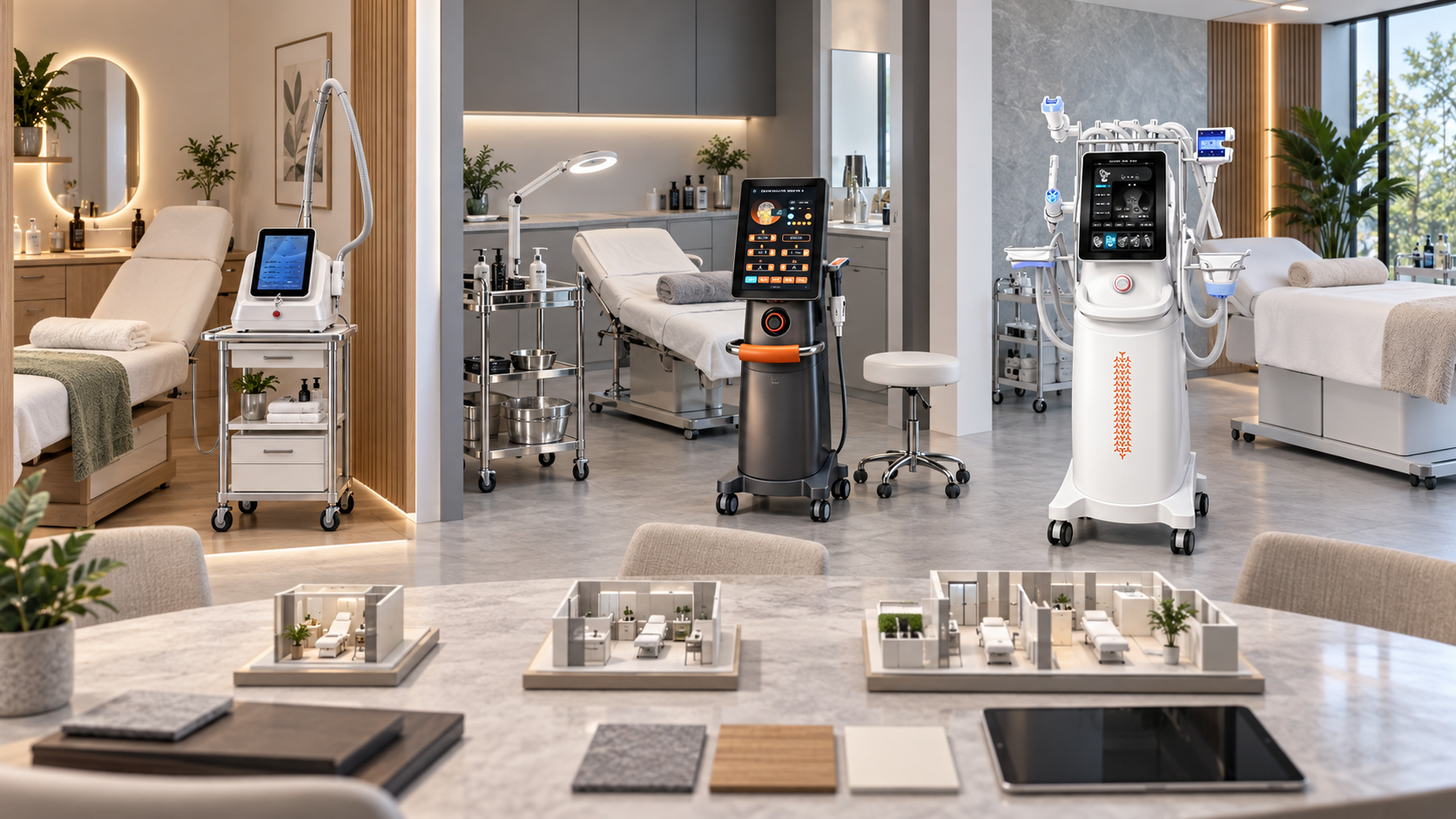
Two beauty businesses can serve similar clients and still need different equipment. A single-room facial studio may depend on a focused appointment menu and simple room turnover. A membership skin studio needs repeatable maintenance services. A specialist hair-removal practice builds its client journey around one technology. A multi-location chain prioritizes standardized configurations, training, and support across sites.
Distributors should therefore match beauty devices to the way a business operates, not only to labels such as salon, med spa, or clinic. The right recommendation considers how the buyer attracts clients, structures services, uses rooms, assigns operators, manages repeat visits, and plans growth.
This guide maps relevant SHEFMONの美容機器カテゴリー to appointment-led studios, membership facial businesses, specialist practices, body-program centers, clinical settings, multi-location groups, and resale businesses.
エグゼクティブサマリー
Match devices to six parts of the buyer’s business model:
- Core service promise: What is the main reason clients book?
- Service delivery: Is the business built around individual appointments, memberships, programs, or specialist procedures?
- Operator model: Does one generalist team deliver services, or are qualified specialists required?
- Room and capacity model: How many rooms and operators must share the equipment?
- Client pathway: Does the device support maintenance, an upgrade, a specialist consultation, or a procedure pathway?
- Growth model: Will the buyer add services, open locations, standardize a chain, or resell equipment?
A0648 can support appointment-led and membership facial businesses. A0272-F can add a separate facial tone and contour path. A0423 fits a specialist hair-removal model. B0155, A0241, and S9 suit different body-service models. A0204 belongs in a qualified consultation-led med-spa pathway, while A0152 belongs in an appropriately qualified clinical procedure model.
No model is a universal answer. A distributor should recommend a device only after the operating model, configuration, staff, rooms, local requirements, and support needs are clear.
1. What a Beauty Business Model Includes
A business model describes how the buyer creates and delivers its services. For device selection, it includes:
- target clients and their main concerns;
- core service and supporting services;
- individual appointments, memberships, courses, or specialist programs;
- consultation and client-selection process;
- operator roles and professional scope;
- room count and equipment sharing;
- appointment length and turnover;
- consumable, cleaning, and maintenance workflow;
- repeat-visit or upgrade path; and
- planned locations, partnerships, or resale channels.
These factors are more useful than budget alone. A high-budget buyer may still need one standardized device, while a smaller specialist may require a configuration-sensitive system.
2. Build a Business-Model Discovery Form
Before showing products, collect the same operational information from every prospect.
| Discovery area | Questions to ask | Why it affects device selection |
|---|---|---|
| Service promise | What is the main reason clients book? | Identifies the anchor category |
| Revenue structure | Individual service, membership, package, program, or specialist procedure? | Shows how frequently the device may be used and positioned |
| Client journey | Maintenance, upgrade, specialist consultation, or procedure? | Determines the device’s menu role |
| Operators | Who will use the system, and what is their scope? | Separates salon workflows from advanced or clinical categories |
| Rooms | How many rooms, beds, and operators share equipment? | Affects format, mobility, scheduling, and capacity |
| Current equipment | What already supports the menu? | Reveals true gaps and overlap |
| Repeat model | How does the business maintain client relationships? | Distinguishes core maintenance from selective services |
| Growth plan | Add a category, add a room, open a location, or resell? | Shapes standardization and upgrade paths |
The answers should route the buyer to a small number of categories rather than trigger a full-catalog presentation.
3. Separate Business Model from Business Label
A “salon” may be a one-room owner-operated studio, a membership skin business, a face-and-body center, or a multi-location chain. A “clinic” may provide maintenance facials, procedure-led skin services, or both. The label does not reveal the operating pattern.
Use the label to begin the conversation, then identify the service-delivery model. This prevents a distributor from recommending the same facial starter package to every salon or the same advanced device to every med spa.
4. Map Devices to Commercial Roles
| Commercial role | Suitable technology direction | Representative SHEFMON model |
|---|---|---|
| Facial service foundation | Hydro cleansing and hydration | A0648 |
| Facial menu upgrade | Electrical stimulation and RF | A0272-F |
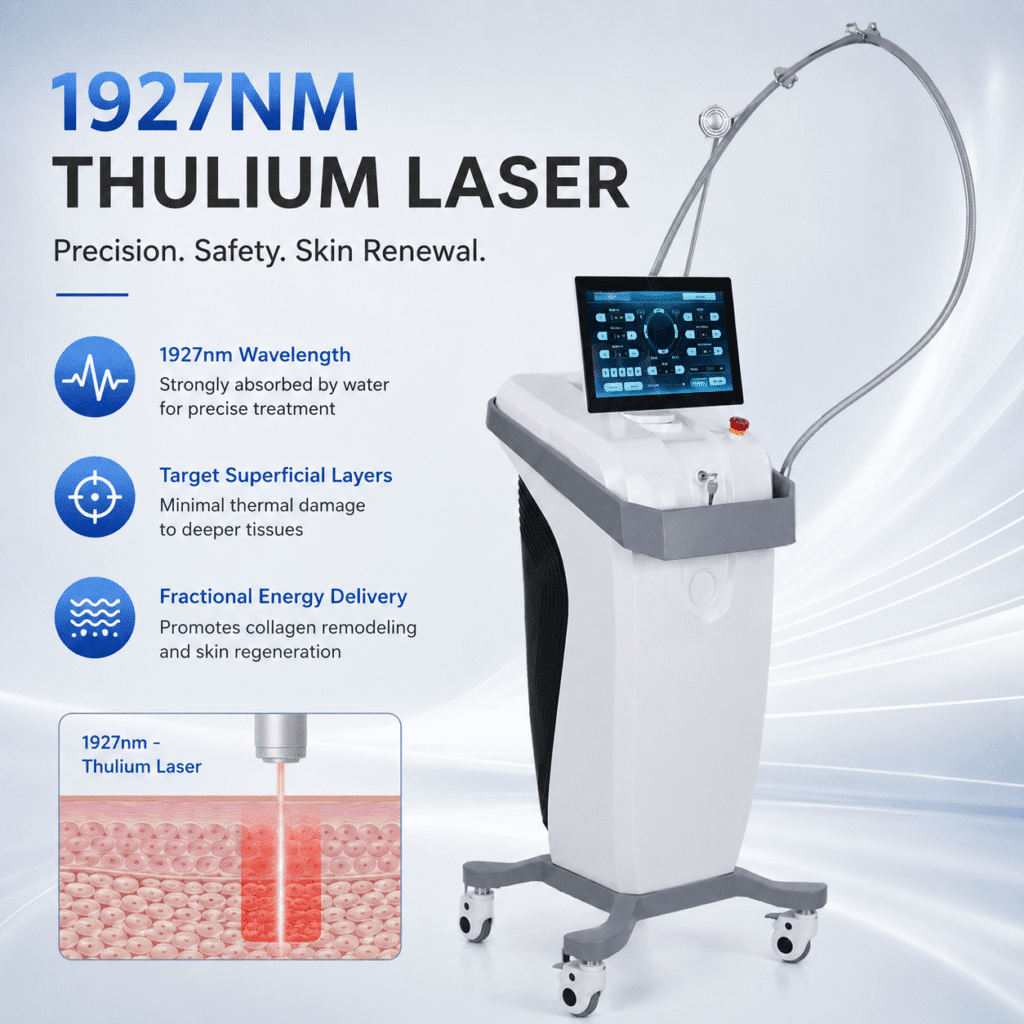
| Specialist hair-removal anchor | ダイオードレーザー | A0423 |
| Multifunction body-care foundation | Vacuum roller, RF, rotating massage, and cavitation | B0155 |
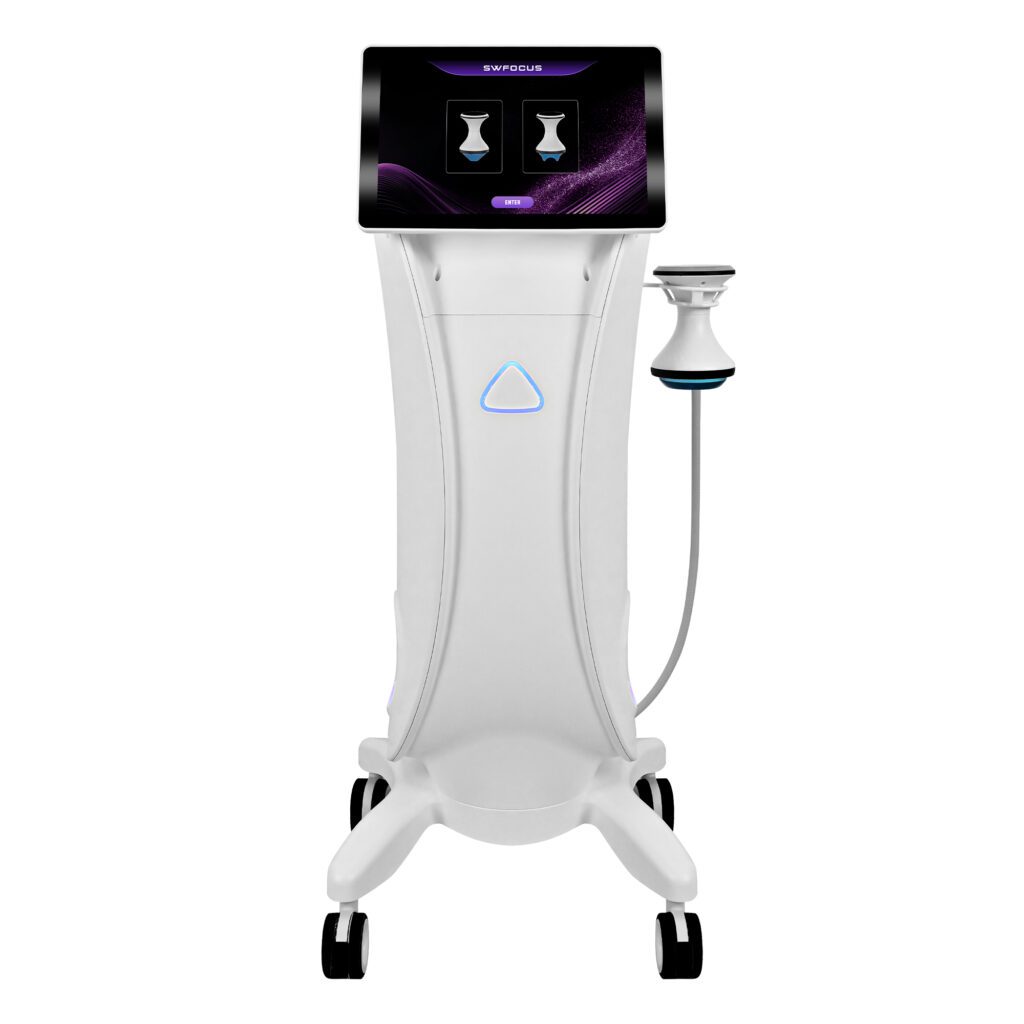
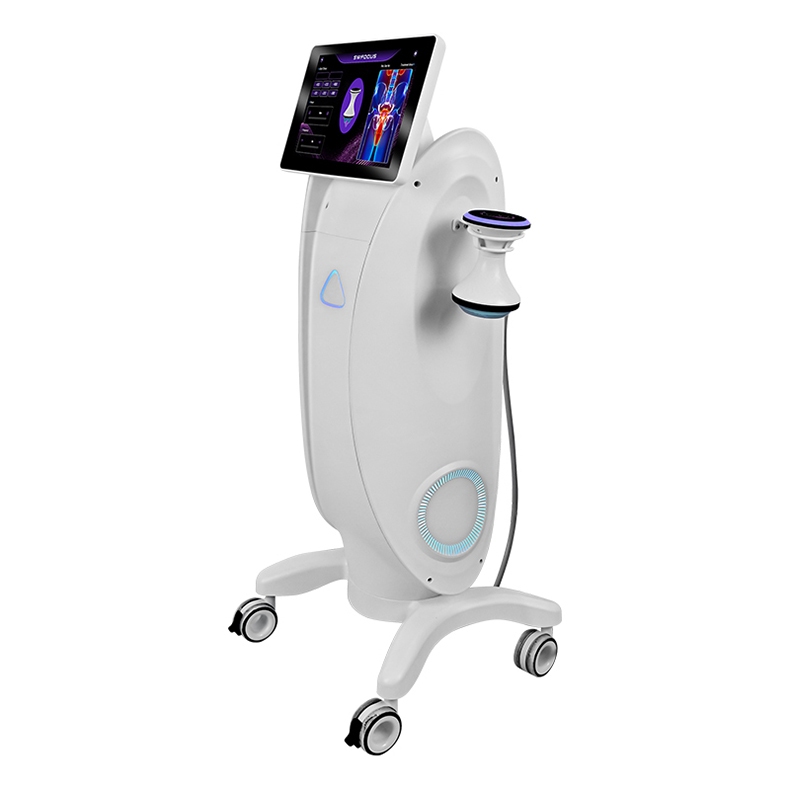
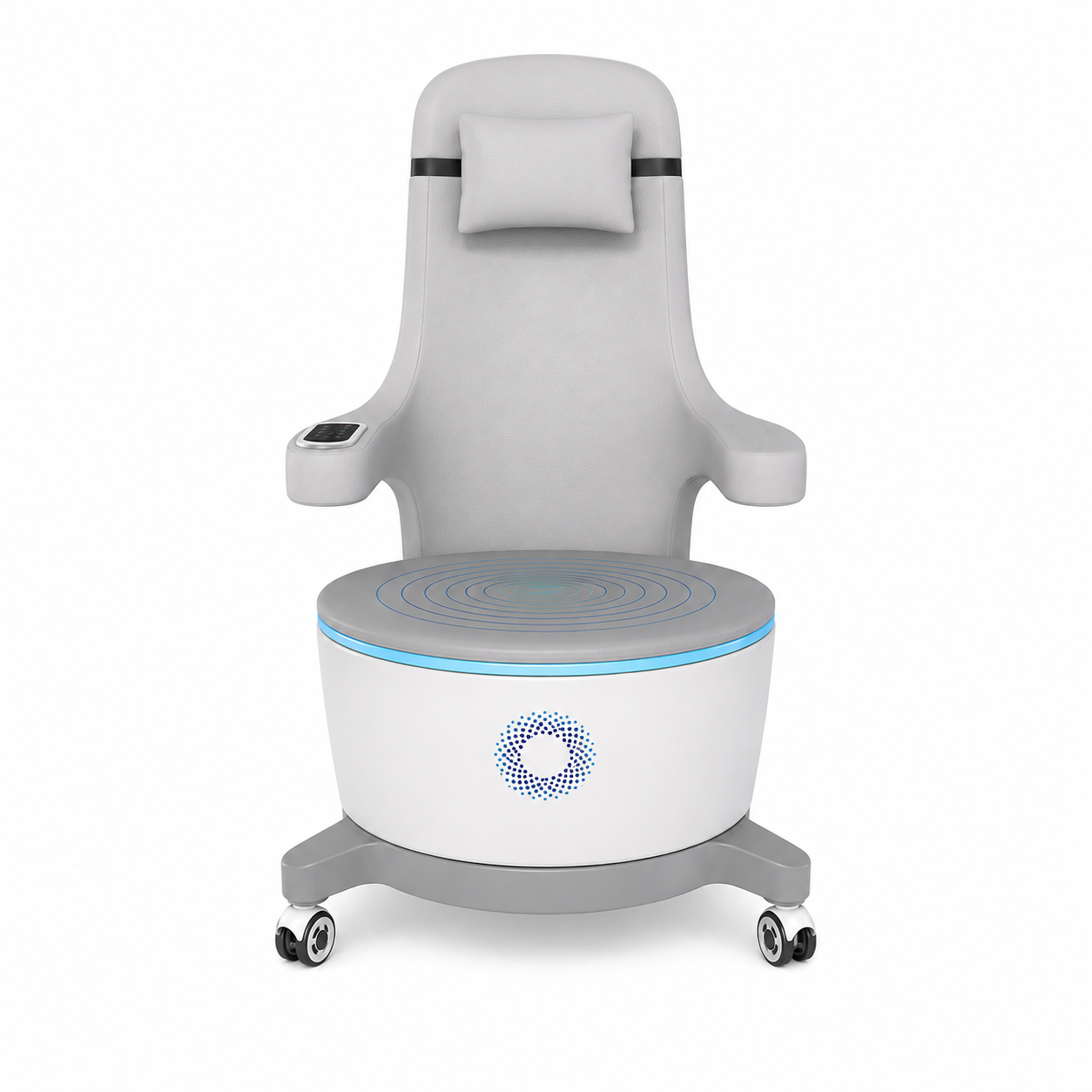
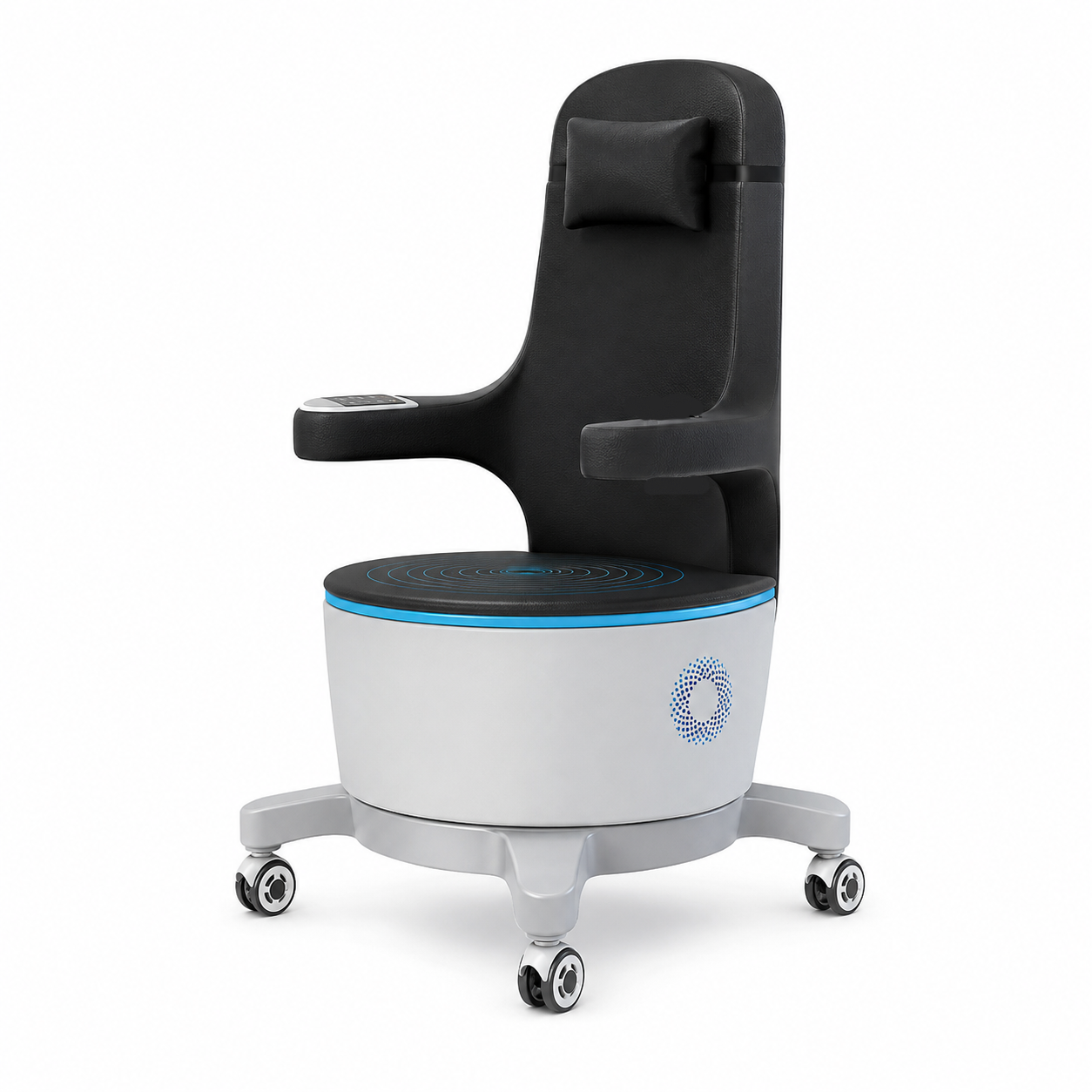
| Muscle-focused body program | Electromagnetic stimulation with RF | A0241 |
| 局所的な輪郭相談 | Vacuum-assisted cooling | シーズン9 |
| Advanced med-spa category | 集束型HIFU | A0204 |
| Clinical procedure category | RFマイクロニードリング | A0152 |
The commercial role is a starting point. Final fit still depends on configuration, intended use, staff, client screening, and applicable local rules.
5. Appointment-Led Facial Studio
An appointment-led facial studio typically needs one device that supports a clear service, fits a limited room, and can be operated consistently by a small team. The buyer should prioritize workflow and menu clarity over the total number of technologies owned.
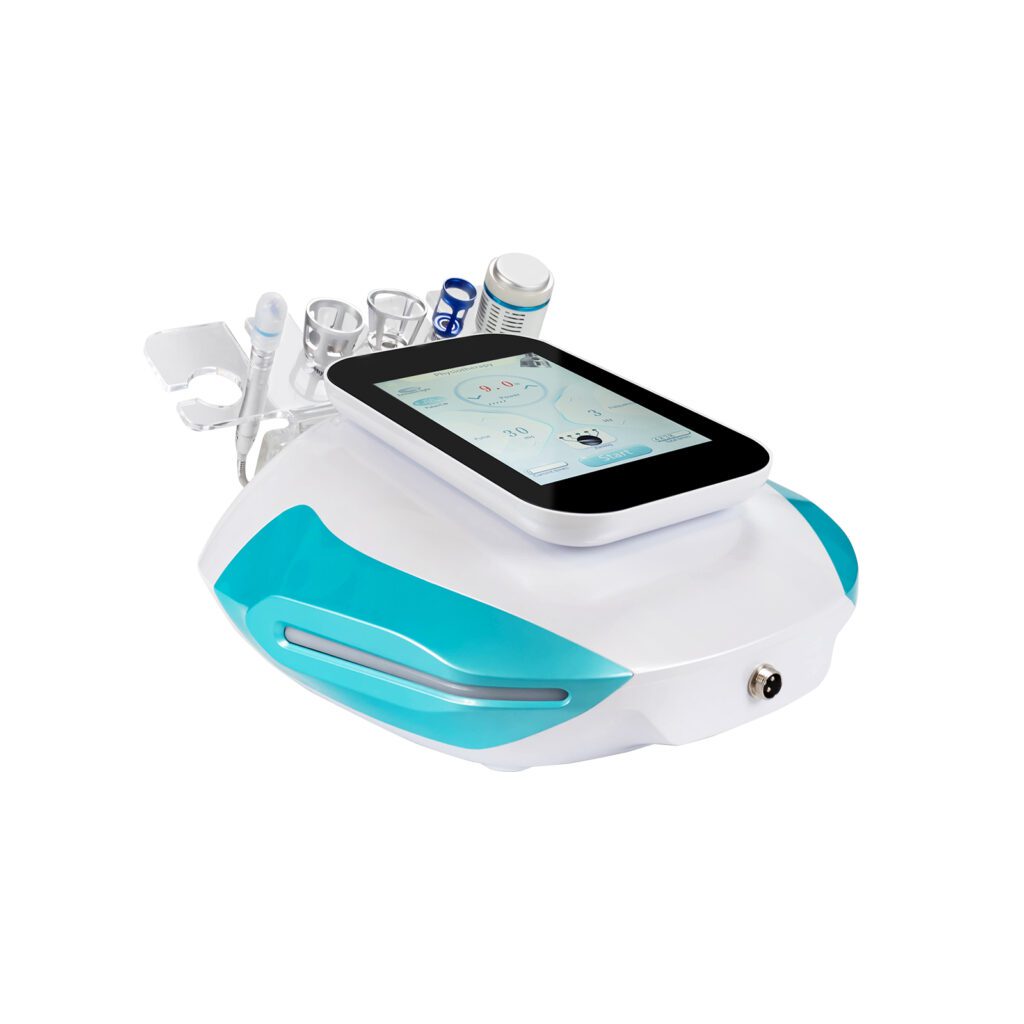
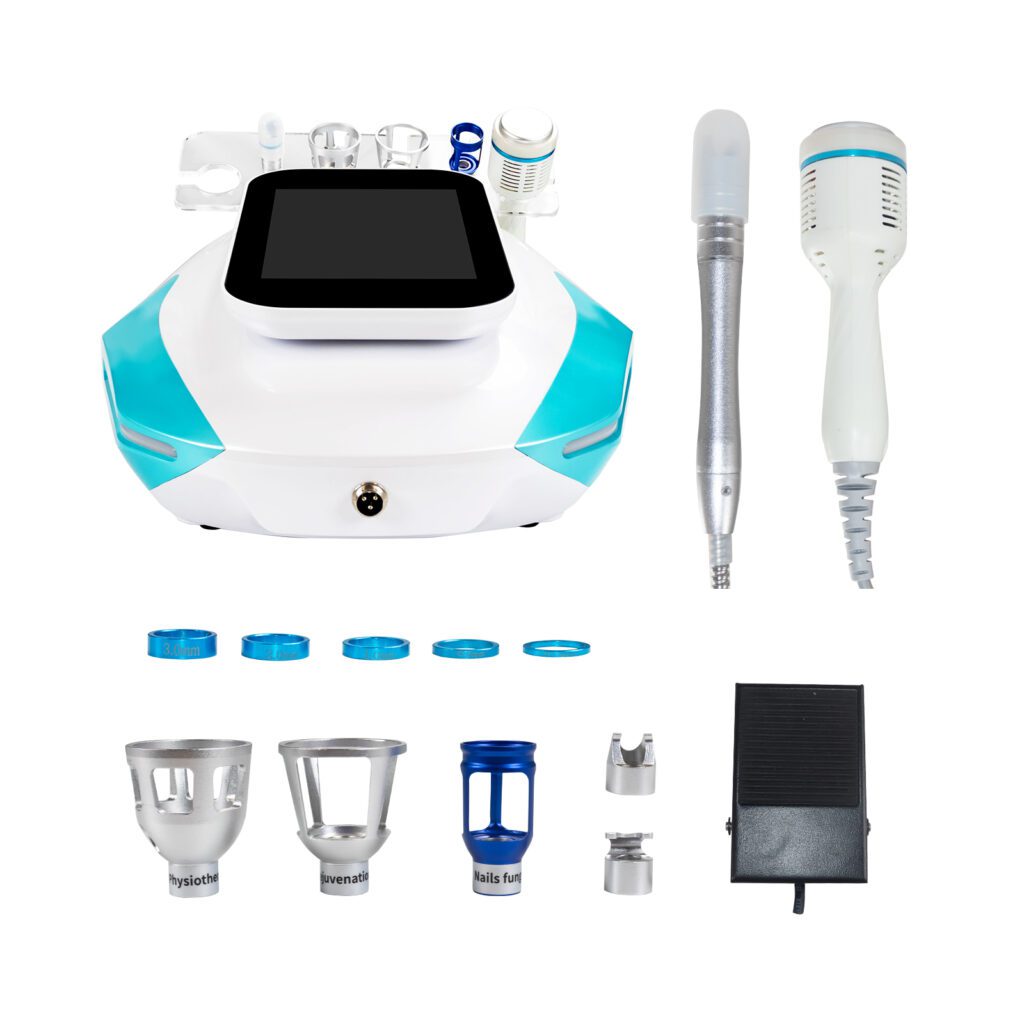
その A0648 9-in-1 hydro microdermabrasion system can anchor a cleansing and hydration-oriented facial menu. Present it through exfoliation, vacuum-assisted extraction, hydration steps, supplied functions, solution and tip planning, cleaning, room fit, and operator familiarization.
A single A0648 package may fit this model better than a broad two-device bundle. The studio can establish consultations, appointment timing, recordkeeping, cleaning, and repeat-care communication before adding another category.
6. Membership Skin-Maintenance Business
A membership model needs services the business can deliver consistently across repeat visits. The equipment should support a stable maintenance pathway, clear service levels, predictable consumables, and repeatable operator training.
A0648 can serve as the maintenance anchor. The A0272-F facial electrical stimulation and RF system can provide a separate facial tone and contour upgrade for suitable clients.
The distributor should help the buyer keep the two services distinct. Membership access to maintenance does not mean every client needs A0272-F or that the devices belong in one appointment. Menu design, suitability, and scheduling should remain technology-specific.
7. Premium Consultation-Led Facial Studio
A consultation-led studio differentiates through assessment and personalized service selection rather than a single standardized booking. Its equipment range can contain more than one facial category if staff can explain when each applies.
A0648 and A0272-F create two non-identical paths: cleansing and hydration-oriented care, and facial tone and contour consultation. The distributor should provide a comparison sheet, separate setup and cleaning workflows, client-suitability questions, and an operating plan for shared room use.
The word “premium” should describe the consultation, environment, and support experience. It should not become a guarantee of stronger outcomes.
8. Specialist Hair-Removal Business
A specialist hair-removal business builds its client journey around one main technology and area-based services. Its equipment decision is deeper than an ordinary menu add-on because configuration, room, operator, protective measures, and technical support are central to the business.
その A0423ダイオードレーザー can anchor this model. SHEFMON’s page lists multiple wavelength and spot-size choices. Confirm the selected wavelength, spot size, handle power, cooling arrangement, voltage, plug, accessories, documentation, and training scope.
The American Academy of Dermatology states in its laser hair removal FAQs that treatment commonly requires multiple sessions and that results and risks vary. The business needs experienced operation, individual suitability assessment, realistic communication, and applicable local authorization.
9. Multi-Service Salon Adding Hair Removal
Hair removal plays a different role in a multi-service salon. It is an expansion category rather than the entire business model. The distributor should determine whether the salon has sufficient qualified demand, an appropriate operator, a suitable room, protective arrangements, scheduling capacity, and local permission.
A0423 can be considered only after that review. Keep the hair-removal menu, consultation, records, and training separate from routine facial services. If the salon is not ready, strengthen its existing facial category rather than adding laser because clients have shown general interest.
10. Face-and-Body Beauty Studio
A face-and-body studio needs two clear service families that share the business without competing for the same message. A0648 can anchor facial care, while the B0155 デスクトップエンドス ベラプロ can support selected body-care services.
B0155 lists vacuum roller, RF, rotating massage, and 80K cavitation functions. The buyer should define a limited handle-to-service map, suitability questions, room allocation, cleaning, storage, and operator workflow.
The distributor should verify that the business has enough appointment and room capacity for both categories. If not, a staged purchase can establish the facial service first and introduce body care later.
11. Multifunction Body-Care Studio
A multifunction body-care business serves clients through several related body services delivered from one platform. It needs flexibility, but that flexibility must be controlled.
B0155 can anchor this model when staff are prepared to manage several handles and keep their purposes distinct. Demonstration and training should cover connections, setup, interface, relevant workflows, cleaning, storage, and records.
Avoid presenting every function as part of every booking. A smaller, well-defined menu supports more consistent operation than a long list of loosely described services.
12. Muscle-Focused Body Program
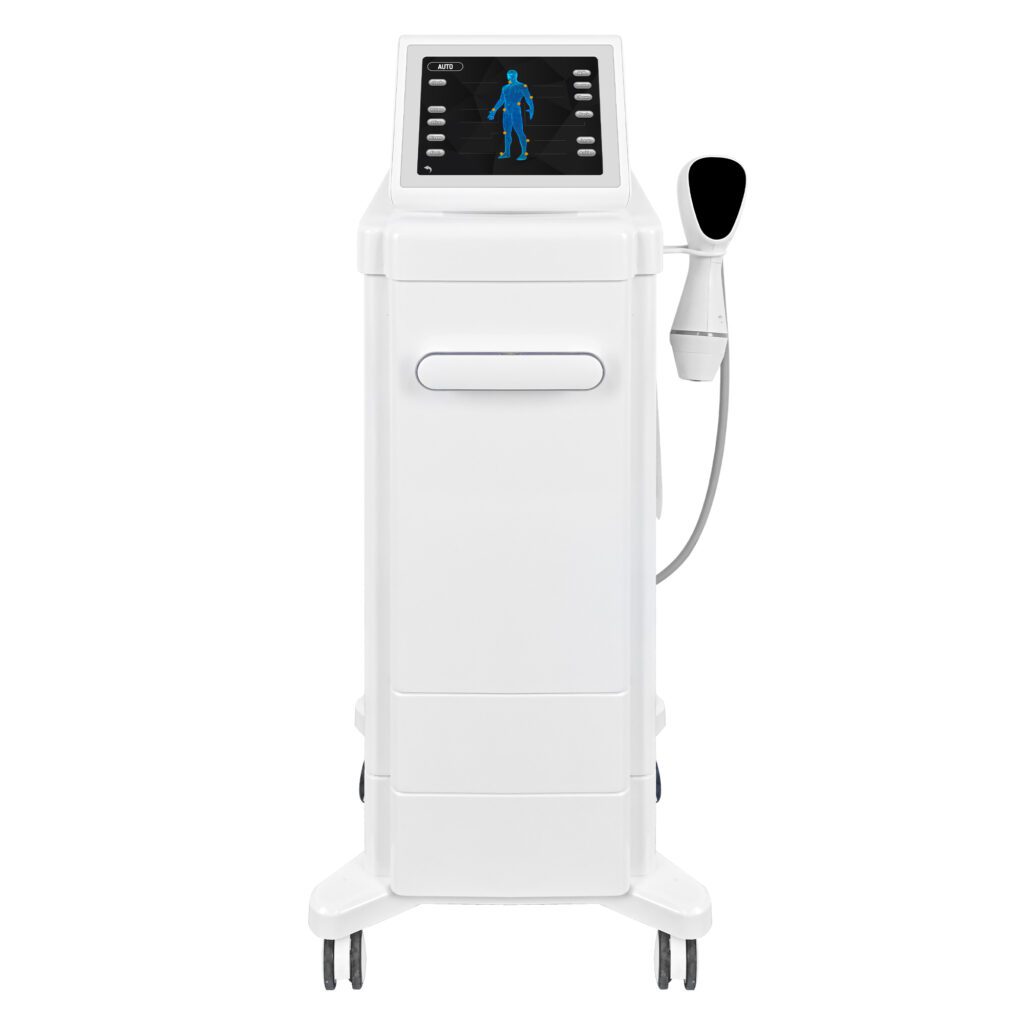
A body business centered on muscle-focused services needs a modality designed for that category rather than a general multifunction platform. The A0241 electromagnetic stimulation and RF system can fit this model.
Confirm the handle package, application setup, room and power requirements, staff preparation, screening, service documentation, supply status, and after-sales needs. Present the model as a distinct body program rather than placing it under a broad “slimming” label.
Avoid exercise-equivalent claims, fixed result percentages, and universal suitability. The operating model should be based on appropriate consultation and actual client demand.
13. Localized Cooling Body Center
A center built around localized contour consultations may evaluate the S9クライオリポリシスシステム. Its page presents a vacuum-assisted cooling system with multiple applicator options.
The business model requires a defined applicator package, client screening, application planning, monitoring, follow-up, room workflow, operator training, and technical support. Position the service around localized contouring rather than general weight loss.
その FDA overview of non-invasive body contouring technologies discusses limitations and possible complications. The distributor should ensure that the buyer has an appropriate operating pathway before recommending the system.
14. Multi-Modality Body Center
A mature body center may operate more than one modality, but each must have a separate business role.
| デバイス | ビジネスの役割 | Main operating requirement |
|---|---|---|
| B0155 | Flexible body-care menu | Handle-specific workflows and staff consistency |
| A0241 | Muscle-focused program | Application setup, screening, room, and staff preparation |
| シーズン9 | Localized cooling consultation | Applicator selection, monitoring, screening, and follow-up |
Add a second device when it answers a distinct qualified demand and the center can support the added room, training, documentation, and follow-up. Ownership of multiple systems does not establish combined or same-day use.
15. Non-Invasive Anti-Aging Med Spa
A med spa focused on non-invasive facial services can use a maintenance-to-advanced menu ladder. A0648 may support maintenance, A0272-F can create a facial tone and contour path, and the A0204 HIFUプラットフォーム can represent a selective advanced category.
A0204 should not be treated as the automatic third step for every client. Confirm the exact handpieces, cartridges, intended areas, consumable expectations, software, voltage, operator qualifications, client selection, records, and follow-up.
This model works only when the business can maintain separate consultation and operating pathways for routine and advanced services.
16. Clinical Skin-Procedure Practice
A clinical practice may combine maintenance care with procedure-specific services. The A0152 デスクトップ MNRF 奥行き 8 can fit an RF microneedling pathway for appropriately qualified settings.
The product page lists multiple needle-head choices and selectable handle configurations. The distributor should confirm component and sterile consumable supply, professional scope, infection control, client screening, parameter education, records, aftercare, and adverse-event escalation.
The U.S. FDA has issued a safety communication concerning certain uses of RF microneedling. This category should remain separate from general salon packages and be supplied through a qualified clinical process.
17. Single-Room Business Model
A single-room business must balance service variety with physical workflow. Equipment selection should consider footprint, cables and hoses, trolley needs, bed access, storage, cleaning, solution handling, privacy, and time required to change between services.
One anchor device and one carefully selected extension are usually easier to operate than several overlapping systems. A facial studio might choose A0648 first and add A0272-F after its appointment flow is stable. A face-and-body studio might stage A0648 and B0155 rather than install both before demand is tested.
The distributor should request room measurements and a workflow sketch before finalizing the package.
18. Multi-Room Med Spa or Center
A multi-room business may need more than one unit, but duplication should follow scheduling evidence. Review room assignments, operator overlap, peak demand, device movement, setup time, cleaning, consumables, and downtime risk.
The buyer may benefit from one shared advanced device and standardized maintenance systems in several rooms. Alternatively, a specialist body center may dedicate rooms by modality. The correct structure depends on actual appointments and operator availability rather than the number of rooms alone.
19. Multi-Location Chain
A chain values standardization. The distributor should help define:
- one approved configuration per role;
- identical voltage, plug, software, and documentation where possible;
- standard room and installation checklist;
- common operating, cleaning, and maintenance materials;
- training records by site and operator;
- centralized consumable and spare-part planning;
- serial and asset tracking;
- technical escalation; and
- rules for testing new categories at selected locations.
A0648 can become a standardized facial foundation if the chain’s menu supports it. A new advanced category should be piloted at a prepared location before wider rollout.
20. Mobile or Pop-Up Beauty Business
Mobile and pop-up models place extra emphasis on transport, setup, power, storage, cleaning, documentation, and local operating permission. A device that works well in a permanent room may not fit repeated transport.
The distributor should review dimensions, packaging, handle protection, consumables, liquid handling, stable setup, electrical access, privacy, and post-service cleaning. Advanced, laser, cooling, HIFU, and invasive procedure categories may require controls that are difficult to reproduce in temporary settings.
Do not recommend mobility from size alone. Evaluate the complete service environment and applicable rules.
21. Distributor or Local Reseller Business Model
A reseller buys for multiple end users. It needs a modular product range rather than one clinic-style package.
A practical structure includes:
- A0648 as a facial foundation;
- A0272-F as a facial growth category;
- A0423 as a configuration-led hair-removal line;
- B0155 for multifunction body care;
- A0241 and S9 as separate specialist body modalities;
- A0204 as a selective med-spa category; and
- A0152 as a qualified clinical line.
The reseller should decide which products are stocked, demonstrated, configured to order, or special ordered. It also needs category-specific sales training, configuration sheets, consumables, and technical support.
22. Match Supply Status to the Business Model
| ビジネスモデル | Likely supply approach | 理由 |
|---|---|---|
| Appointment-led facial studio | Standard stock or rapid-order A0648 configuration | Buyer values a clear, repeatable launch package |
| Membership skin studio | Core facial unit plus demo-led upgrade | Maintenance anchor may standardize; expansion needs explanation |
| Hair-removal specialist | Demonstration plus configure-to-order A0423 | Wavelength and spot-size choices affect the order |
| Body-care studio | Demonstration-led B0155 or specialist body system | Handles and workflows need comparison |
| メディカルスパ | Technical consultation and order-led advanced device | Configuration and professional readiness require review |
| Clinical practice | Special-order clinical configuration | Consumables, governance, and professional scope are central |
| Multi-location chain | Approved standard SKUs with planned replenishment | Consistency across sites matters |
| Local reseller | Mixed stock, demo, configure-to-order, and special-order policy | End buyers have different readiness and configurations |
Supply status should be based on verified demand and configuration, not only the business label.
23. Match Training to the Operating Model
An owner-operated studio needs training that supports the complete daily workflow. A chain needs repeatable modules, attendance records, onboarding for new staff, and a consistent escalation path. A clinical practice needs technology-specific education within its professional governance.
For every buyer, define:
- product setup and functions;
- exact supplied configuration;
- cleaning and routine care;
- consumables and replacements;
- technical troubleshooting boundaries;
- consultation and suitability boundaries;
- records and follow-up where relevant; and
- the limit of distributor familiarization.
Product orientation does not establish professional authorization or clinical competence.
24. Match Consumables and Support to Repeat Use
Different business models consume supplies differently. A membership facial studio may need predictable tip and solution replenishment. A clinical RF microneedling practice needs controlled sterile head supply. A cooling-based body center needs applicator and support planning.
Estimate consumables from the installed configuration and verified appointment assumptions. Keep supplied items, recurring consumables, wear items, spare parts, cleaning materials, and locally sourced products separate.
Do not promise that a device has no consumables unless every recurring item in the selected operating configuration supports that statement.
25. Avoid Revenue Guarantees When Discussing Business Fit
Matching a device to a business model does not guarantee profit. Utilization, pricing, staffing, rent, consumables, marketing, local demand, taxes, downtime, and client retention vary.
Distributors can help buyers build an input-based planning worksheet using their own figures. Keep estimates separate from product facts and avoid fixed payback periods, income claims, or assumed appointment volumes.
The recommendation should stand on service fit and operating readiness even without a revenue promise.
26. Create a Model-to-Business Decision Matrix
| モデル | Strong business-model fit | メニューの役割 | Main qualification question |
|---|---|---|---|
| A0648 | Appointment-led or membership facial business | Cleansing and hydration foundation | Can the team deliver and replenish the service consistently? |
| A0272-F | Consultation-led facial studio or med spa | Facial tone and contour expansion | Does demand support a separate facial category? |
| A0423 | Specialist hair-removal practice | 部位別脱毛サービス | Are operator, room, configuration, and local requirements ready? |
| B0155 | Multifunction body studio or face-and-body salon | Flexible body-care menu | Can staff manage distinct handle workflows? |
| A0241 | Muscle-focused body program | Electromagnetic stimulation with RF | Does the buyer have a defined specialist program and setup? |
| シーズン9 | Localized cooling body center | 局所的な輪郭相談 | Can the business support screening, applicators, monitoring, and follow-up? |
| A0204 | Qualified anti-aging med spa | Focused-HIFU category | Is the exact configuration and advanced pathway prepared? |
| A0152 | Qualified clinical practice | RF microneedling procedure category | Are clinical governance and sterile consumable systems in place? |
This matrix supports commercial matching. It is not a substitute for local authorization, intended-use review, or individual client assessment.
27. Build an Upgrade Path for Each Model
An upgrade should follow a change in the business model.
- An appointment-led facial studio can add A0272-F when it becomes consultation-led and has demand for another facial category.
- A facial studio can add B0155 when it expands into face-and-body services and has suitable rooms and staff.
- A multi-service salon can add A0423 when it develops a qualified specialist hair-removal operation.
- A body center can add a second modality when it serves a distinct client need and can support separate workflows.
- A med spa can add A0204 after its advanced consultation, operator, and follow-up systems are ready.
- A clinical practice can add A0152 only through the appropriate clinical pathway.
Equipment growth should reflect operational maturity rather than the desire to display more machines.
28. Common Business-Model Matching Mistakes
Matching by budget alone
Budget does not reveal the buyer’s service delivery, operator, rooms, configuration, or support capacity.
Treating every salon as the same buyer
An owner-operated studio, membership business, and chain require different equipment and support structures.
Recommending multifunction equipment without a menu
Functions create value only when the business assigns them to clear services and workflows.
Selling a specialist device as a general upgrade
Laser, focused HIFU, cooling-based contouring, and RF microneedling require category-specific readiness.
Assuming membership means universal suitability
A repeat-service model still requires individual assessment and technology-specific boundaries.
Creating combined-treatment claims from a multi-device portfolio
Owning several systems does not determine whether they should be used together or in one appointment.
29. Business-Model Matching Checklist
Before recommending a device, confirm:
- What is the buyer’s main service promise?
- How are services sold and delivered?
- Which client pathway will the device occupy?
- Who will operate it, and what is their scope?
- How many rooms and operators will share it?
- What existing equipment could overlap?
- Is the technology a foundation, upgrade, specialist anchor, or procedure category?
- Is the exact configuration documented?
- Are accessories, consumables, cleaning, maintenance, and support planned?
- Does the supply status fit the buyer’s timing and configuration?
- Do local market requirements support the proposed setting?
- What business-model change would justify the next device?
よくある質問
1. Why should distributors match devices to business models?
The business model reveals how the device will be sold as a service, who will operate it, how rooms are used, how clients return, and what support the buyer needs. Business labels alone do not provide this information.
2. Which device fits an appointment-led facial studio?
A0648 can provide a cleansing and hydration-oriented facial foundation. The distributor should confirm its exact package, supplies, room fit, cleaning workflow, and operator familiarization.
3. Which devices fit a membership skin studio?
A0648 can anchor repeat maintenance services, while A0272-F can form a separate facial tone and contour upgrade for suitable clients. The services should remain distinct.
4. Which model fits a specialist hair-removal business?
A0423 can anchor the business, subject to wavelength and spot-size configuration, operator readiness, room controls, protective measures, technical support, and local requirements.
5. Which body device fits a multifunction studio?
B0155 is relevant when the studio wants vacuum roller, RF, rotating massage, and cavitation functions in one platform and can manage clear handle-specific workflows.
6. How should a distributor choose between A0241 and S9?
A0241 fits a muscle-focused program, while S9 fits localized vacuum-assisted cooling. Compare target services, buyer readiness, components, setup, screening, room needs, monitoring, and follow-up.
7. Which devices fit an anti-aging med spa?
A0648 may support maintenance, A0272-F can provide a non-invasive facial expansion, and A0204 can form a selective focused-HIFU category for appropriately prepared buyers.
8. Is A0152 suitable for a salon membership model?
It should not be treated as a general salon membership add-on. RF microneedling belongs in an appropriately qualified clinical setting with infection control, screening, sterile consumables, records, and aftercare.
9. How should multi-location businesses select equipment?
Choose approved standard configurations, common room and training processes, centralized consumable and spare planning, asset tracking, and a controlled pilot process for new categories.
10. What information should a buyer send for a business-model recommendation?
Send the business type, service structure, target clients, current equipment, operator roles, room count, appointment model, repeat or membership pathway, destination market, and growth plan.
結論
Beauty devices fit businesses when their service role matches the way the buyer operates. A0648 can support appointment-led and membership facial models. A0272-F can create a separate consultation-led facial category. A0423 fits specialist hair removal. B0155, A0241, and S9 support different body-business models. A0204 and A0152 belong in advanced and clinical pathways with stronger qualification.
The distributor should connect every model to a service promise, client journey, operator, room workflow, supply status, and support plan. That produces a recommendation the buyer can operate rather than a generic product list.
ブラウズ SHEFMONの美容機器カテゴリー または シェフモンに連絡してください with your customer’s operating model, current services, rooms, staff, target clients, market, and growth plans to compare relevant devices.