








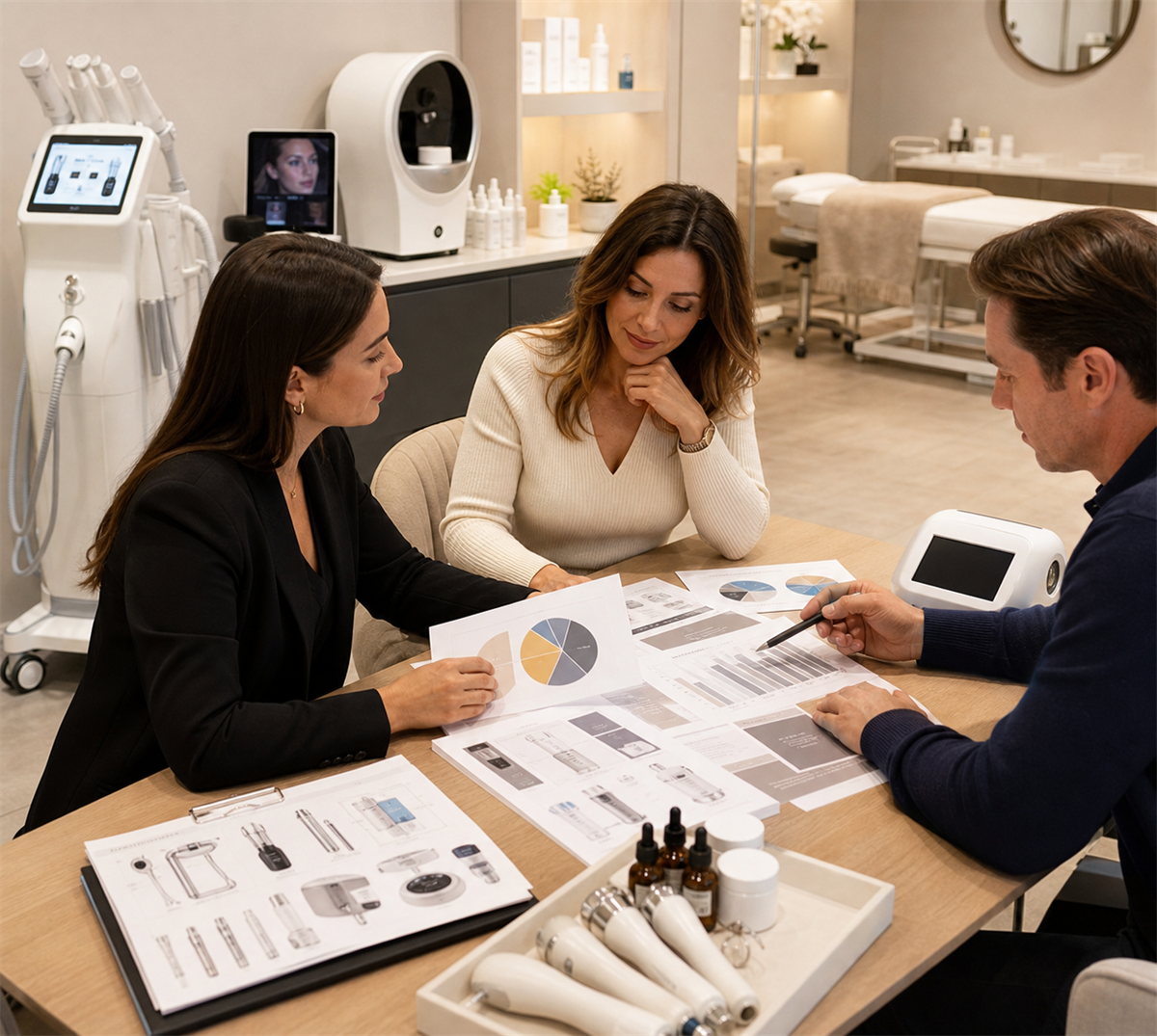
中小規模の美容サロンは美容機器を必要としていますが、大手チェーン店や高級スキンケアセンター、医療美容クリニックのように機器を購入することはできません。予算が限られていることが多く、顧客基盤もまだ構築段階であり、スタッフの研修能力も限られている場合があり、ブランド認知度よりもキャッシュフローを重視する傾向があるためです。.
これらのサロンにとって、最適な設備予算とは、最大の予算ではありません。真の顧客ニーズ、頻繁な利用、明確な施術プラン、無理のないトレーニング、迅速な投資回収、そして購入後の十分な現金準備を支える予算こそが、最適な予算なのです。.
本レポートでは、中小規模の美容サロンが機器購入予算をどのように計画すべきか、どの機器カテゴリーを優先すべきか、どれだけの資金を確保すべきか、そしてサロンが遊休機器の過剰購入を避けるにはどうすればよいかを分析します。.
エグゼクティブサマリー
美容サロン機器の需要は引き続き増加しているが、中小規模のサロンはより慎重になっている。公開されている市場レポートは、業界全体の拡大を示している。360iResearchは、世界の美容サロン機器市場を2025年に138億1000万米ドル、2026年に147億3000万米ドルと推定し、2032年には231億9000万米ドルに達すると予測している。Grand View Researchは、世界のエネルギーベースの美容機器市場を2025年に75億米ドルと推定し、2026年の81億米ドルから2033年には157億米ドルに成長すると予測している。Fortune Business Insightsは、世界の美容ツール市場を2025年に735億3000万米ドルと推定し、2026年の763億3000万米ドルから2034年には1172億9000万米ドルに成長すると予測している。.
これらの成長率の数字は、すべての小規模サロンがすぐに機器を追加購入すべきだという意味ではありません。中小規模のサロンにとって、機器の購入は、キャッシュフロー、地域の顧客の受け入れ状況、施術料金、スタッフの業務、そして投資収益率(ROI)と関連付けて検討する必要があります。.
主な結論:
- 小規模なサロンは、高価な高性能機器よりも、高周波で説明しやすく、リスクの低い機器から始めるのが一般的です。.
- 中規模サロンは、顧客の需要と価格設定が検証された後、RF、マイクロカレント、AI肌分析、LED、ボディ機器、または脱毛機器を追加導入することができます。.
- 小規模サロン向けの現実的な初期設備予算では、肌分析装置、ハイドロフェイシャルまたはスモールバブル、酸素または超音波注入装置、LED、そしてコンパクトな多機能フェイシャル機器に重点が置かれることが多い。.
- サロンは、予算のすべてを機械に費やすのではなく、消耗品、研修、マーケティング、スペアパーツ、キャッシュフローのために資金を確保しておくべきです。.
- 投資収益率(ROI)は、購入前に総投資額、治療あたりの変動費、治療価格、粗利益、損益分岐点となる治療回数、および回収期間を用いて計算する必要があります。.
- 段階的に購入する方が、開店時にすべての機器を購入するよりも安全です。.
- サプライヤーの保証、研修、スペアパーツ、アフターサービスは、予算決定の要素として考慮されるべきである。.
- エネルギーベース、光ベース、脱毛、ボディコンタリング、RF、超音波、および類似の機器については、法令遵守と広告表示に関するリスクを検討する必要がある。.
1. 設備予算計画が重要な理由
サロンにとって、設備はサービスの価値を高め、顧客の信頼を向上させ、トリートメントパッケージを作成するのに役立ちます。しかし、サロンが時期尚早に過剰な設備を購入すると、財政的な負担になる可能性もあります。.
予算計画の不備は、以下のような事態を引き起こす可能性があります。
- 資金繰りの圧迫。.
- 遊休機械。.
- 設備稼働率が低い。.
- 従業員の研修が不十分である。.
- 治療メニューが分かりにくい。.
- 維持費が高額。.
- 消耗品の不足。.
- 返済は遅い。.
- 割引主導の販売。.
- 後々のアップグレードが困難になる。.
中小規模のサロンにとって、設備購入は一度にまとめて行うのではなく、段階的な投資として行うべきです。.
2. 設備購入予算として認められるもの
多くのサロンオーナーは、機器の価格だけを予算に計上しています。しかし、それでは視野が狭すぎます。真の設備予算には、設備導入プロジェクトの立ち上げと運営に必要なすべての費用を含めるべきです。.
予算項目には以下が含まれます。
- 機械の購入価格。.
- 配送と貨物。.
- 該当する場合、輸入関税または税金が課されます。.
- 設置費用。.
- オペレーター研修。.
- 付属品およびハンドピース。.
- 初期消耗品。.
- 予備部品の備蓄。.
- 治療用ベッド、台車、照明器具、および補助器具。.
- 電気系統または部屋の調整。.
- マーケティング開始費用。.
- 社員向け販売研修。.
- 維持管理予備費。.
- 修理または保証に関する送料。.
- 該当する場合は、ソフトウェアのサブスクリプションが必要です。.
- 分割払いで購入した場合の金利。.
真の予算とは、「機械の価格」ではない。真の予算とは、「この設備投資プロジェクトが安全に収益を生み出すようになるまでに、どれだけの資本が必要になるか」である。“
3.小規模サロンの予算の特徴
小規模な美容室は通常、部屋数が少なく、スタッフ数も少なく、開業資金も少なく、常連客との関係も密接です。そのため、頻繁に使用でき、使い方が簡単に説明できる機器が必要となります。.
小規模サロンの予算の特徴:
- 現金準備金が限られている。.
- 回収期間に対する感度が高い。.
- 遊休設備を吸収する能力が低下する。.
- 小型デバイスの必要性。.
- 従業員研修を容易にする必要がある。.
- 多機能機器または高周波機器を好む。.
- サプライヤーによるアフターサービスへのニーズが高まっている。.
- 高価な機械が1台故障した場合のリスクは高まる。.
小規模サロンは、見た目は立派でも顧客数に見合わない機器を揃えるのは避けるべきです。.
4.中規模サロンの予算特性
中規模の美容サロンは通常、部屋数が多く、顧客基盤が強く、サービスの種類も豊富で、パッケージ販売能力も高い。設備投資予算も比較的大きいが、それでも規律ある運用が求められる。.
中規模サロンの予算の特徴:
- サービスアップグレードの余地がさらに広がりました。.
- アンチエイジングおよびスキンケア機器への需要が高まっている。.
- コース販売能力の向上。.
- より標準化されたプロトコルが必要である。.
- 従業員研修の必要性がさらに高まる。.
- 機器利用状況の追跡の重要性がさらに高まっている。.
- 製品ポートフォリオ計画の必要性が高まっている。.
中規模のサロンは、小規模サロンよりも高度な機器を購入できるが、それは顧客の需要、価格、投資対効果を検証した後でなければならない。.
5. 中小規模サロン向けの現実的な予算範囲
正確な予算は、国、都市、機器の品質、サプライヤー、為替レート、サロンの立地、機器が新品か中古か、国産か輸入品かなどによって異なります。以下の範囲はあくまでも実用的な計画の参考値であり、普遍的なルールではありません。.
小規模サロン向けのリーンスタートアップ:
- 機材予算:3,000米ドル~8,000米ドル。.
- 基本的なフェイシャルケア、地域密着型のサロン、資金が限られている新規サロンに適しています。.
- 主な目標:主要サービスを開放し、信頼を築き、リピーターを増やすこと。.
標準的な小型サロン:
- 設備予算:8,000米ドル~20,000米ドル。.
- 基本的なスキンケアに加え、1つか2つのアップグレードプロジェクトを希望するサロンに適しています。.
- 主な目標:高周波ケアと早期アンチエイジングまたは肌分析を組み合わせること。.
成長段階の中級サロン:
- 設備予算:2万米ドル~5万米ドル。.
- 顧客の流れが安定しており、パッケージ販売が盛んなサロンに適しています。.
- 主な目的:RF、マイクロカレント、AI肌分析、LED、リカバリー、または選択したボディ脱毛や脱毛プロジェクトを追加する。.
プレミアムミディアムスキンマネジメントセンター:
- 設備予算:5万米ドル~10万米ドル以上。.
- サロンが高級路線を掲げ、訓練されたスタッフがおり、顧客からの需要が高く、明確な投資収益率(ROI)がある場合にのみ適しています。.
- 主な目標:プロ仕様のアンチエイジング、高度なスキンケア、ボディケア、またはプレミアムトリートメントシステムを構築すること。.
最も安全な方法は、まずは売れ行きが好調になるのに必要な最低限の設備から始め、得られた収益を設備のアップグレードに再投資することです。.
6. 新規小規模サロンの予算配分
新規開業の小規模サロンは、すべての資金を機械に費やすべきではありません。設備は重要ですが、家賃、スタッフ、マーケティング、スキンケア用品の在庫、研修、そして現金準備も同様に重要です。.
現実的な初期資本配分は以下のようになるでしょう。
- 美容機器および関連ツールには35~50%が費やされる。.
- スキンケア製品や消耗品には10~20%。.
- 従業員研修と発売マーケティングに10~15%。.
- 現金準備金として15~25%。.
- 残りの予算は、装飾費、敷金、事業登録費、ソフトウェア費用、および日常業務費に充てられます。.
設備投資が開業資金の大部分を占めてしまうと、サロンは開業後に顧客を呼び込むための資金が不足する可能性がある。機械は、顧客がその存在を知り、スタッフが販売できなければ、収益を生み出すことはない。.
7. デバイスポートフォリオ内における機器予算の配分
小規模または中規模のサロンは、設備予算自体の中でポートフォリオ配分モデルを使用することができます。.
推奨配分額:
- 高周波コアフェイシャル機器の場合、35~45パーセント。.
- 診察料および肌分析ツール使用料として10~15%。.
- プレミアムアップグレードプロジェクト1件あたり、15~25パーセント。.
- 水分補給、回復、LED照明、またはサポート機器には10~15パーセントを充てる。.
- 付属品、消耗品、スペアパーツ、およびサポートツールには10~15パーセントを充当する。.
この仕組みにより、サロンは高価な機器1台に過剰な費用をかけ、日々のサービスニーズを軽視してしまうことを防ぐことができます。.
8. リーンスタートアップサロン向け初回生産設備
開業資金が限られているサロンの場合、最初の導入品は、使用頻度が高く、操作が簡単で、顧客からの受け入れやすい機器に重点を置くべきです。.
第一弾として提案するカテゴリー:
- 基本的な肌分析機器。.
- ハイドロフェイシャルまたは小型バブルデバイス。.
- 酸素点滴または超音波点滴装置。.
- LED光線療法装置。.
- コンパクトな多機能フェイシャルマシン。.
- 冷却または鎮静効果のある道具。.
- 基本的な治療支援ツールおよび消耗品。.
目標は、あらゆる美容分野を網羅することではありません。目標は、お客様が理解しやすく、毎月繰り返し利用していただけるサービスを少数に絞り込むことです。.
9. 標準的な小規模サロン向け初回生産機器
一般的な小規模サロンでは、基本的なスキンケアに加え、アンチエイジング機器やプレミアムアップグレード機器を1台追加することができます。.
推奨構成:
- デジタル肌分析器.
- ハイドロフェイシャルまたは小型バブルデバイス。.
- 酸素投与または超音波注入。.
- LED光線療法。.
- EMSマイクロカレントデバイス。.
- アンチエイジングへのニーズが明確な場合は、低刺激性のRF機器を使用する。.
- 冷却・鎮静装置。.
- 治療支援ツールおよび消耗品。.
このシステムは、クレンジング、保湿、肌分析、早期アンチエイジング、顔の輪郭維持、および月額パッケージに対応しています。.
10. 中規模スキンケアサロン向け設備予算
中規模のスキンケアサロンは、より包括的なサービスシステムに投資することができる。.
推奨構成:
- AI肌分析システム。.
- ハイドロフェイシャルまたはハイドロダーマブレーション機器。.
- 酸素または血清輸液装置。.
- プロ仕様のLED光線療法システム。.
- EMS(電気機械システム)微弱電流機器。.
- RF美容機器。.
- 冷却・回復装置。.
- デジタル顧客記録またはサロン管理ツール。.
- 需要が確認された場合、オプションで脱毛器やボディコンタリング機器を提供可能。.
中規模サロンは、機器の種類だけでなく、サービス内容に合わせて機器の組み合わせを構築すべきです。例えば、アンチエイジングプログラムでは、肌分析、ハイドロフェイシャル、RF、LED、注入、そしてフォローアップ追跡などを組み合わせて使用することができます。.
11. どのデバイスを優先すべきか
小規模および中規模のサロンは、通常、以下の条件を満たす機器を優先的に導入すべきです。
- Customers understand the benefit quickly.
- The device can be used frequently.
- The treatment can be sold as a package.
- Staff training is manageable.
- Consumable cost is clear.
- The device fits room size and workflow.
- Supplier after-sales service is reliable.
- Payback period is realistic.
Priority categories often include:
- 肌分析。.
- Hydro facial and small bubble.
- 酸素点滴。.
- 超音波洗浄と浸透。.
- LED光線療法。.
- EMSマイクロカレント。.
- 穏やかなRF。.
- Compact multifunction facial machines.
These devices can support basic care, skin management, and mid-level upgrades.
12. Which Devices Should Be Purchased Carefully
Some devices may be profitable, but they are not always suitable for small and medium salons at the beginning.
Buy carefully:
- 脱毛システム。.
- ボディコンタリングシステム。.
- Advanced RF platforms.
- Ultrasound-related beauty devices.
- IPL or laser devices where legally permitted.
- Private care equipment.
- Postpartum recovery equipment.
- Expensive single-function anti-aging machines.
These categories may require higher investment, more training, stronger compliance review, private rooms, longer sessions, and higher customer trust. They should be purchased after market demand and pricing are validated.
13. Budget By Device Category
Different categories affect the budget differently.
肌分析機器:
- Often useful even when direct service revenue is limited.
- Helps improve consultation and package conversion.
- Budget should include software, storage, training, and updates.
ハイドロフェイシャルと小さな泡:
- Usually core high-frequency devices.
- Budget should include tips, filters, solutions, and maintenance.
LED光線療法:
- Often works best as a support device in packages.
- Budget should include safety instructions and treatment protocols.
EMS microcurrent:
- Useful for early anti-aging and facial contour maintenance.
- Budget should include operator training and contraindication guidance.
RF美容機器:
- Strong for premium anti-aging projects.
- Budget should include training, handpieces, maintenance, and safety controls.
脱毛:
- Can create package revenue but may face price competition.
- Budget should include cooling performance, handpiece or lamp cost, private room needs, and compliance review.
ボディコンタリング:
- Can support high-ticket body packages.
- Budget should include measurement tools, privacy, longer room time, and staff consultation training.
14. ROI Formula For Equipment Budget Decisions
Every equipment budget should be connected to ROI.
Basic formulas:
Total investment = machine price + shipping + tax + installation + training + accessories + initial consumables + launch marketing + setup costs
1件の治療あたりの粗利益=治療価格-1件の治療あたりの変動費
損益分岐セッション数 = 総投資額 / 1回あたりの粗利益
Payback period in months = total investment / monthly net contribution
The U.S. Small Business Administration uses break-even logic based on fixed costs divided by the difference between sales price and variable cost. Beauty salons can apply the same idea to equipment projects.
15. Example ROI Calculation
例:
- Total equipment project investment: USD 8,000.
- Treatment price: USD 120.
- Consumables and products: USD 18.
- Staff commission and supplies: USD 22.
- Variable cost per treatment: USD 40.
- Gross profit per treatment: USD 80.
損益分岐点となるセッション:
- USD 8,000 / USD 80 = 100 sessions.
If the salon sells 25 sessions per month:
- Monthly gross profit = 25 x USD 80 = USD 2,000.
- If additional monthly marketing and maintenance reserve is USD 300, monthly net contribution = USD 1,700.
- Payback period = USD 8,000 / USD 1,700 = about 4.7 months.
If the salon sells only 8 sessions per month, payback becomes much slower. This is why budget decisions must be based on realistic treatment volume.
16. Build Conservative, Standard, And Growth Scenarios
Small and medium salons should never calculate budget only with optimistic numbers.
Conservative scenario:
- Lower treatment volume.
- Lower package conversion.
- More discounts.
- Longer payback.
Standard scenario:
- Realistic treatment volume.
- Market-aligned pricing.
- Moderate package conversion.
- Acceptable payback.
Growth scenario:
- Strong customer demand.
- Higher package conversion.
- Better utilization.
- Faster payback.
A purchase is safer when the conservative scenario is still acceptable. If the equipment only looks profitable under the best-case scenario, the salon should reduce budget or delay the purchase.
17. Cash Flow Reserve Is Part Of The Budget
Small and medium salons should keep cash reserve after equipment purchase. Without reserve, the salon may have no money for marketing, salaries, rent, consumables, or repairs.
Cash reserve should cover:
- Rent.
- Staff salary.
- Utilities.
- Product restocking.
- 消耗品。.
- Local marketing.
- Repair or warranty shipping.
- Slow sales periods.
- Unexpected equipment issues.
A practical rule is to keep at least 3 months of essential operating expenses where possible. If this is not possible, the salon should reduce equipment spending and buy in stages.
18. Staged Purchasing Plan
Staged purchasing is often the safest strategy for small and medium salons.
Stage 1: Opening or basic upgrade.
- 肌分析。.
- Hydro facial or small bubble.
- 酸素投与または超音波注入。.
- 導かれた。.
- Basic support tools.
Stage 2: After customer demand is proven.
- EMSマイクロカレント。.
- 穏やかなRF。.
- Better skin analysis.
- Recovery and cooling equipment.
Stage 3: After package sales are stable.
- Professional RF.
- 脱毛。.
- ボディラインを整える。.
- Advanced LED.
- Digital client management.
Stage 4: Premium expansion.
- High-end anti-aging system.
- Body management system.
- Advanced skin management platform.
- More specialized equipment.
This plan protects cash flow and allows the salon to buy based on real customer behavior.
19. Lease, Installment, Or Cash Purchase?
Small and medium salons may choose cash purchase, installment, lease, or rent-to-own depending on supplier options and cash flow.
Cash purchase:
- Lower long-term cost.
- No monthly financing pressure.
- Requires more upfront capital.
Installment purchase:
- Reduces upfront pressure.
- Helps preserve cash reserve.
- Adds monthly payment and possibly interest.
Lease or rental:
- Useful for testing demand.
- Lower initial commitment.
- May cost more over time.
- Availability depends on market and supplier.
Before choosing financing, salons should calculate whether monthly equipment profit can cover monthly payment under conservative sales assumptions.
20. Budget Control For Consumables
Consumables can quietly reduce profit if not planned.
一般的な消耗品には以下が含まれます。
- ハイドロフェイシャルに関するヒント。.
- フィルター。.
- ゲル。.
- 美容液。.
- マスク。.
- Cotton and disposable supplies.
- パッド。.
- カートリッジ。.
- 交換用ヘッド。.
- IPLランプまたはハンドピース。.
- 掃除用品。.
Before purchasing a device, salons should ask:
- 必要な消耗品は何ですか?
- 1回の治療にかかる費用はいくらですか?
- 消耗品は独自規格ですか?
- Is supply stable?
- 消耗品1つで何回の治療が可能ですか?
- Can the cost be included in treatment pricing?
A device with a low purchase price but high consumable cost may not be budget-friendly.
21. Training Budget Should Not Be Ignored
Training is part of the equipment budget. Without training, a device may not produce revenue.
Training budget should include:
- オペレーター研修。.
- Consultation training.
- セールススクリプト研修。.
- 安全性および禁忌事項に関する研修。.
- 治療プロトコルに関する研修。.
- New staff retraining.
- Online or in-person refreshers.
Small salons with limited staff need devices that are easy to train. Medium salons need standardized protocols so different staff provide consistent service.
22. Marketing Budget For Equipment Launch
Equipment needs a launch plan. If the salon buys a machine but does not promote it, usage may be low.
Marketing budget may include:
- Trial campaign.
- VIP launch event.
- ソーシャルメディアコンテンツ。.
- 必要に応じて、前後比較を行う。.
- Customer survey.
- 地域広告。.
- Membership upgrade promotion.
- Printed menu or consultation materials.
- Staff incentive.
The launch budget does not need to be large, but it must exist. A device without customer awareness cannot pay back quickly.
23. Supplier Selection Affects Budget Risk
The cheapest supplier is not always the lowest-cost supplier. Weak after-sales service can create hidden cost.
Budget-related supplier questions:
- トレーニングは含まれていますか?
- 保証期間はどれくらいですか?
- どの部分が対象となりますか?
- 交換部品は入手可能ですか?
- 修理プロセスとはどのようなものですか?
- Who pays shipping for repair?
- Are consumables stable?
- Is technical support local or remote?
- 治療プロトコルは提供されていますか?
- Are documents and manuals complete?
Small and medium salons should choose suppliers that reduce operating risk, not only suppliers with the lowest machine quote.
24. Compliance And Claim Budget Risk
Compliance problems can create financial risk. Some devices may be regulated depending on intended use, technology, market, and claims.
Salons should review:
- デバイスの本来の用途。.
- 現地の運営規則。.
- オペレーターの訓練要件。.
- Manuals and contraindications.
- Import documents if applicable.
- Advertising claims.
- Consent and aftercare materials where appropriate.
The FDA notes that aesthetic devices may be regulated depending on intended use and whether they affect the structure or function of the body. The FTC also states that advertising claims, especially health-related claims, should be truthful, not misleading, and supported.
Budget planning should include time and cost for documentation, training, and responsible marketing.
25. Depreciation And Accounting Considerations
Equipment is usually a business asset, and accounting treatment can affect financial planning. In the United States, IRS Publication 946 explains how businesses can recover the cost of business or income-producing property through depreciation and discusses Section 179 rules for certain property.
Salon owners should consult a local accountant or tax advisor because depreciation, tax deductions, and financing treatment vary by country and business structure.
Cash payback tells the salon whether the device can repay itself through treatments. Accounting treatment tells the business how the asset is recorded and deducted. Both matter, but they are not the same.
26. Budget Mistakes Small And Medium Salons Often Make
よくある間違いは次のとおりです:
- Spending too much on one expensive machine.
- 顧客の流れが安定する前に、デバイスを買いすぎること。.
- Ignoring consumables and accessories.
- Forgetting training cost.
- Not budgeting for marketing launch.
- Using supplier revenue examples without local testing.
- Buying hair removal or body devices without privacy and demand research.
- Choosing low price over after-sales support.
- Ignoring spare parts and repair time.
- Pricing treatments too low to recover the device cost.
- Failing to keep cash reserve.
The biggest mistake is treating equipment purchase as a one-time expense instead of a project investment.
27. Budget Decision Scorecard
Small and medium salons can score each equipment purchase from 1 to 5 in these areas:
- 地元顧客の需要。.
- Fit with current customer age group.
- 顧客が理解しやすいこと。.
- Treatment pricing space.
- Package and repeat purchase potential.
- Total investment amount.
- 消耗品コスト。.
- スタッフ研修の難しさ。.
- Room and workflow fit.
- Supplier warranty and service.
- スペアパーツの入手可能性。.
- 法令遵守と請求内容の明確化。.
- Conservative payback period.
- キャッシュフローへの影響。.
Devices with strong demand, frequent use, manageable training, reliable support, and acceptable payback should come first.
28. Recommended Budget Strategy For Small Salons
Small salons should:
- Start with high-frequency facial equipment.
- Avoid expensive niche devices early.
- Keep the menu simple.
- Use skin analysis to support consultation.
- Add one anti-aging upgrade only when demand is clear.
- Budget for consumables and marketing.
- Keep cash reserve.
- 機械の稼働状況を毎週追跡する。.
- Reinvest profits into later upgrades.
Small salons win by using a few devices well, not by owning many devices.
29. Recommended Budget Strategy For Medium Salons
Medium salons should:
- Build a more complete skin management system.
- Add RF, microcurrent, LED, and advanced skin analysis if customers accept anti-aging packages.
- Consider hair removal or body equipment only after competitor pricing and customer demand are validated.
- Standardize training and protocols.
- Track ROI by device.
- Negotiate warranty and spare parts support.
- Build a product and consumable supply plan.
- Use package pricing instead of single-session discounting.
Medium salons have more growth room, but they also need stronger management.
30. Distributor Opportunities From Budget-Conscious Salons
Small and medium salon budget behavior creates opportunities for beauty equipment distributors.
販売代理店は以下を提供できます。
- Starter equipment packages.
- Standard skin management packages.
- Anti-aging upgrade packages.
- Staged purchase plans.
- Financing or installment support.
- ROI計算ツール。.
- Consumable starter kits.
- Training packages.
- Local after-sales service.
- スペアパーツのサポート。.
- Demo and trial programs.
Distributors who help salons protect cash flow will often win more trust than distributors who push the highest-priced machine immediately.
31. Future 3 To 5 Year Budget Trends
Small and medium salon equipment budgets are likely to move in these directions:
- More staged purchasing.
- 購入前にさらに投資対効果(ROI)の計算を行う。.
- More demand for starter equipment packages.
- More attention to consumable cost.
- More preference for devices with strong after-sales service.
- More interest in skin analysis and digital consultation.
- More selective investment in RF and anti-aging devices.
- More cautious buying of body contouring and hair removal equipment in competitive markets.
- More use of financing, leasing, or demo-based validation.
- More demand for supplier training and project packaging.
The budget trend is not simply higher or lower spending. It is smarter spending.
結論
Small and medium beauty salons should plan equipment budgets around customer demand, cash flow, treatment packages, staff ability, and ROI. A practical budget should include not only machine price, but also training, consumables, accessories, marketing, spare parts, maintenance, and cash reserve.
Small salons should prioritize high-frequency and easy-to-sell devices such as skin analysis, hydro facial, small bubble, oxygen infusion, ultrasonic infusion, LED, compact multifunction facial machines, microcurrent, and gentle RF where demand is clear. Medium salons can gradually add professional RF, advanced skin analysis, body contouring, hair removal, and digital systems after demand and payback are validated.
The best equipment budget is not the biggest one. It is the one that lets the salon launch projects confidently, sell packages consistently, recover investment realistically, and keep enough cash to operate smoothly.
よくある質問
How much should a small beauty salon budget for equipment?
A lean starter small salon may plan an equipment budget of about USD 3,000 to USD 8,000, while a standard small salon may plan about USD 8,000 to USD 20,000. Actual budgets vary by country, supplier, device quality, and salon positioning.
What equipment should small salons buy first?
Small salons should usually start with skin analysis, hydro facial or small bubble, oxygen or ultrasonic infusion, LED light therapy, compact multifunction facial equipment, and basic support tools.
Should small salons buy expensive anti-aging machines first?
Usually not unless the salon has proven anti-aging demand, trained staff, clear package pricing, and enough cash reserve. Gentle RF or microcurrent may be safer first anti-aging upgrades.
How can salons calculate whether equipment is affordable?
Salons should calculate total investment, variable cost per treatment, gross profit per treatment, break-even sessions, monthly net contribution, payback period, and cash-flow impact under conservative assumptions.
What is the biggest equipment budget mistake for small and medium salons?
The biggest mistake is spending too much on machines before validating customer demand, pricing, staff training, consumables, after-sales support, and cash-flow safety.