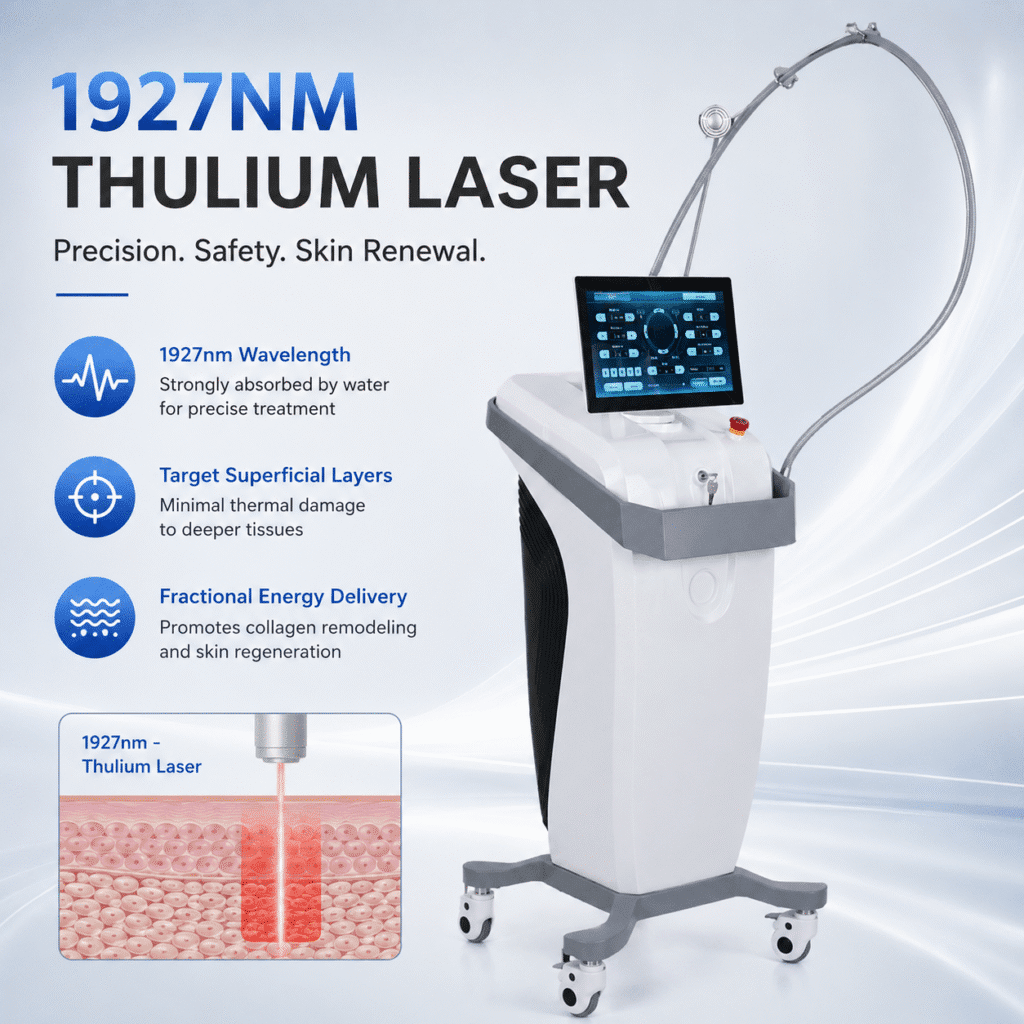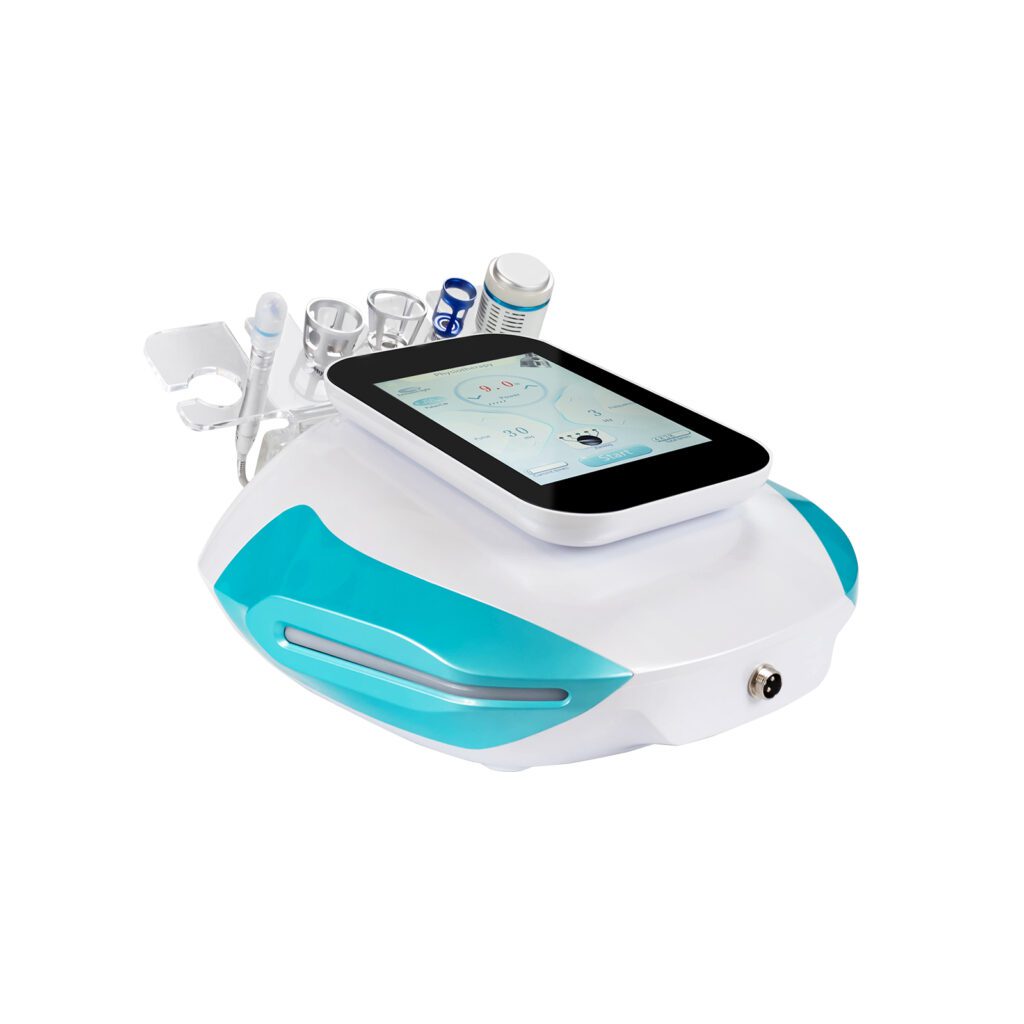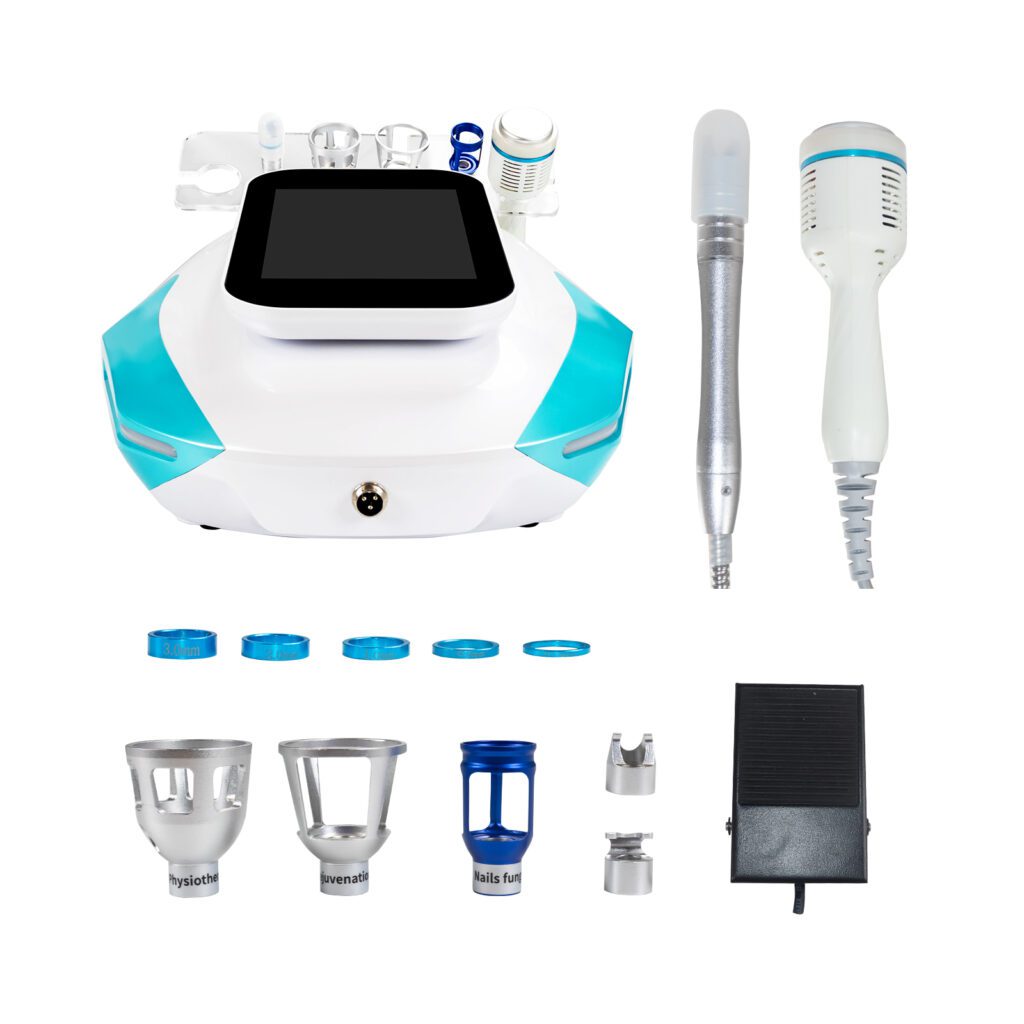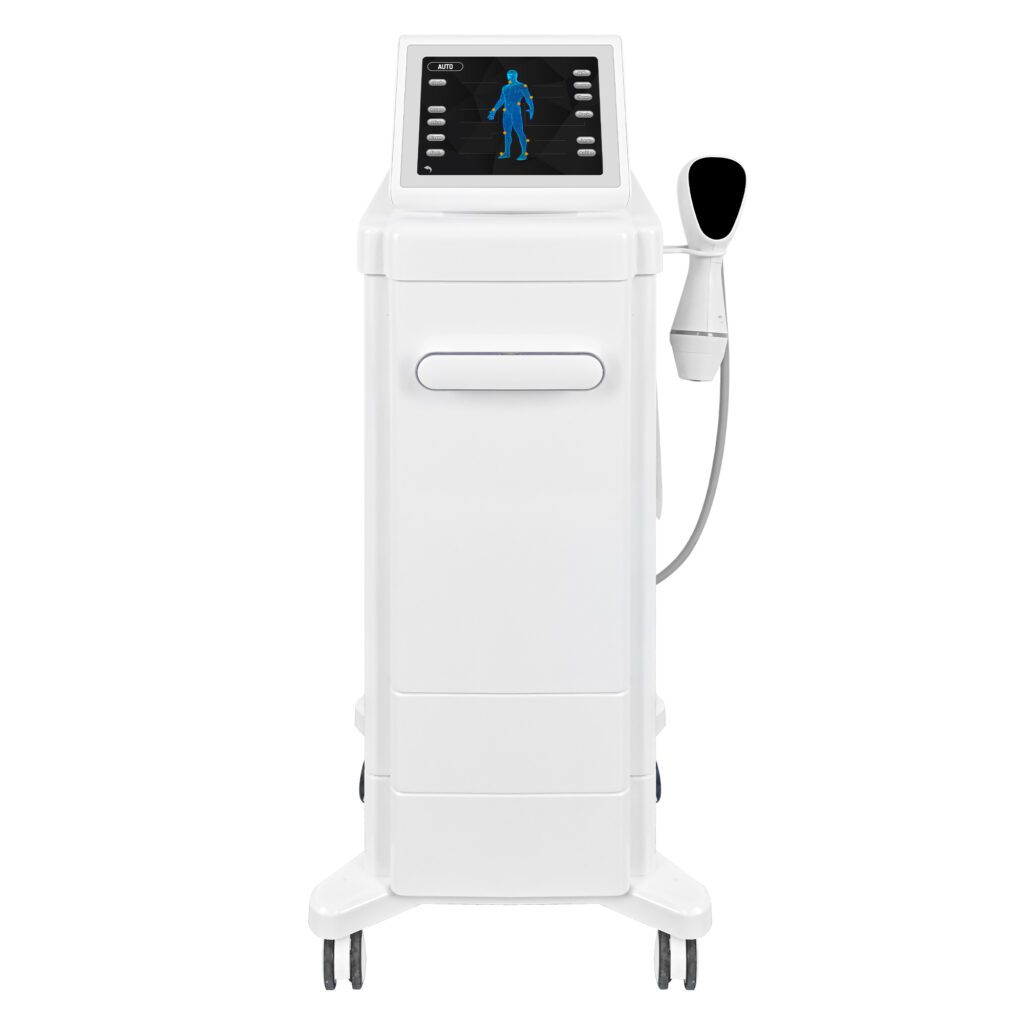

A beauty device inquiry can look promising for very different reasons. A salon may have a clear facial-service gap but no room or launch date. A clinic may be ready to buy, yet the requested category may not fit its operator structure. A distributor may have strong regional reach but no defined product-line gap. Treating all three as equally valuable makes demonstrations, quotations, and follow-up harder to prioritize.
An opportunity score should separate business fit aus buying readiness. Business fit asks whether the buyer, category, service plan, and commercial logic belong together. Readiness asks whether the buyer has the people, site, information, decision process, and timing needed to move. This guide provides an evidence-based scoring model for salon, clinic, multi-location, and distributor leads, with category-specific examples from the SHEFMON beauty device range.
Zusammenfassung
- Apply mandatory qualification gates before calculating a score.
- Keep Business Fit and Readiness as separate 50-point subscores.
- Rate each dimension from 0 to 5 using defined evidence anchors.
- Record Unknown when evidence is missing; do not turn assumptions into points.
- Prevent a high total from hiding a weak category fit or an unprepared operating environment.
- Use buyer-specific evidence for salons, clinics, multi-location groups, and distributors.
- Compare device categories only after the buyer’s service need is clear.
- Map scoring bands to concrete actions: discovery, category education, demonstration, configuration, quotation, nurture, redirect, or closure.
- Add a confidence grade and score date so teams can see how reliable and current the assessment is.
- Recalculate when the service plan, device category, configuration, site, team, decision process, or launch timing changes.
1. What Should a Beauty Device Opportunity Score Measure?
The score should help a sales team answer three practical questions:
- Is this buyer and proposed device category a sensible business match?
- Is the project sufficiently prepared for the next sales action?
- Which opportunity deserves attention now, and which one needs structured development?
The score is a decision aid. It is not a prediction of treatment outcomes, a substitute for professional assessment, or a promise that a sale will close. It should summarize verified facts while preserving the details behind them.
For a useful scorecard, define the assessment object precisely:
- buyer organization and location;
- buyer type and business model;
- target service category;
- candidate device family or model;
- intended configuration when known;
- destination market and electrical profile;
- planned operator and treatment setting;
- assessment owner and date;
- current sales stage.
A salon opportunity for a multifunction facial platform should not inherit the score of a later laser-hair-removal project from the same company. Score each material category or project separately.
2. Separate Business Fit from Readiness
One total number can conceal opposite situations. A buyer can have excellent strategic fit but still be months away from implementation. Another can request an immediate quotation while showing poor category alignment.
| Dimension | Core question | Typical evidence |
|---|---|---|
| Business Fit | Should this buyer pursue this category through this service and business model? | Service gap, client profile, category logic, portfolio role, commercial use case |
| Bereitschaft | Can this buyer make and implement a sound purchasing decision within a defined process? | Site, operator, workflow, decision team, configuration data, timing, engagement |
Display both subscores beside the total:
Opportunity score = Business Fit score + Readiness score
In the framework below, each subscore has a maximum of 50 points. A result should therefore appear as Fit 42/50, Readiness 31/50, Total 73/100, followed by its confidence grade and failed gates. This format is more useful than showing only 73.
3. Apply Hard Gates Before Scoring
Scoring should begin only after basic conditions are checked. A weighted average must never cancel a material conflict.
Suggested gates include:
- identifiable buyer organization and reachable contact;
- defined professional business setting or credible launch plan;
- stated service need or product-line gap;
- requested category is relevant to that need;
- destination market is known;
- intended operator and local eligibility can be reviewed;
- no known room, utility, or workflow conflict that makes the category unusable;
- buyer is willing to provide the minimum configuration information;
- a legitimate next action and responsible stakeholder exist.
Use one of four gate results:
| Gate status | Bedeutung | Action |
|---|---|---|
| Pass | Minimum condition is verified | Continue to scoring |
| Conditional | A resolvable issue is documented | Score provisionally and assign an owner and due date |
| Unknown | Evidence has not been collected | Keep the opportunity in discovery |
| Fail | A material conflict is confirmed | Redirect, nurture, or close the opportunity |
A gate failure does not always mean the relationship has no value. For example, a salon may fail the current advanced-device gate but remain suitable for a core facial category.
4. Use an Anchored 0–5 Rating Scale
Every salesperson should interpret a rating in the same way. Define the scale before applying weights.
| Rating | Bedeutung | Evidence standard |
|---|---|---|
| 0 | Confirmed conflict or absence | Evidence shows the requirement is not met |
| 1 | Very weak | General interest with little usable project information |
| 2 | Early | Partial information and material unresolved gaps |
| 3 | Defined | Sufficient evidence for a structured next step |
| 4 | Stark | Clear, current evidence with limited open items |
| 5 | Confirmed | Complete evidence and stakeholder agreement for the assessed stage |
| U | Unknown | Required evidence has not been obtained or verified |
Do not silently convert U to 3. Unknown data should either make the score provisional or receive a conservative value under a documented company rule. The same rule must apply across all salespeople and buyer types.
5. Build the 50-Point Business Fit Score
The following example gives greater weight to category alignment because an unsuitable product family should not be rescued by enthusiasm or timing.
| Business Fit dimension | Gewicht | Was ist zu bewerten? |
|---|---|---|
| Buyer and business-model fit | 8 | Professional setting, target clients, service format, location profile, and buyer type |
| Service need clarity | 10 | Specific menu gap, client concern, capacity problem, upgrade need, or catalog gap |
| Category alignment | 12 | Whether the proposed technology and device family logically address the stated need |
| Portfolio and menu role | 8 | How the category complements existing services or products without unnecessary overlap |
| Operating and commercial logic | 7 | Appointment structure, expected use, staffing logic, supplies, and workable commercial context |
| Strategic continuity | 5 | Potential for repeat supplies, portfolio development, multi-site use, or coherent market coverage |
| Business Fit subtotal | 50 |
Buyer and business-model fit
A facial salon, skin clinic, body studio, med spa, and regional distributor use equipment differently. Score whether the category fits the actual business model rather than a generic idea of the beauty market.
Service need clarity
Strong evidence names the service gap and explains why it matters. “We need a machine” is weak. “We need a repeatable deep-cleansing and hydration service that can sit at the center of our facial menu” is scoreable.
Category alignment
Confirm the category before comparing model details. Hydro and multifunction facial systems, diode-laser hair-removal platforms, HIFU, RF microneedling, and body-care systems solve different menu and operating problems. A buyer’s requested category can be changed when discovery reveals a better fit.
Portfolio and menu role
Review current devices and services. A new device should fill a gap, improve a defined pathway, add a distinct appointment tier, or replace a known limitation. Duplicate functions without a clear purpose should reduce the score.
Operating and commercial logic
Assess whether the intended use makes sense within the buyer’s staffing, booking, room, supply, and service model. This is not a revenue forecast. It is a check that the opportunity has a coherent operating basis.
Strategic continuity
This dimension should reward a clear development path rather than company size alone. A small salon with a focused growth plan may deserve a stronger rating than a large but unfocused inquiry.
6. Build the 50-Point Readiness Score
Readiness measures the buyer’s ability to make, configure, and implement the decision.
| Readiness dimension | Gewicht | Was ist zu bewerten? |
|---|---|---|
| Project definition | 7 | Written objective, category scope, location, quantity, and target launch |
| Operating readiness | 12 | Room, utilities, operator, cleaning, storage, workflow, records, and supplies |
| Configuration readiness | 9 | Required handles, tips, cartridges, applicators, consumables, and market profile |
| Decision readiness | 8 | Stakeholders, authority, evaluation criteria, approval steps, and next milestone |
| Commercial readiness | 7 | Legal buyer data, delivery destination, quantity, budget context, and purchasing route |
| Engagement and timing | 7 | Responsiveness, completed actions, realistic schedule, and agreed follow-up |
| Readiness subtotal | 50 |
Readiness is stage-dependent. A lead can be ready for a discovery call without being ready for a demonstration. It can be ready for a demonstration without being ready for a final quotation.
7. Calculate Weighted Contributions
For every dimension, use this formula:
Dimension contribution = (Rating ÷ 5) × Dimension weight
If Category Alignment has a weight of 12 and receives a rating of 4:
(4 ÷ 5) × 12 = 9.6 points
Keep one decimal place in the working scorecard. Round only the displayed subtotal or total. More decimal places do not create better evidence.
The calculation should include:
- dimension rating;
- weighted contribution;
- evidence note;
- source or record date;
- open question;
- evidence owner;
- next review date.
8. Prevent Compensation Between the Two Scores
Do not allow exceptional readiness to hide weak fit. An organized buyer can still be pursuing the wrong category. Do not let excellent fit hide the absence of an operator, room, or decision process either.
Use minimum subscore thresholds with the total. The following bands are an example for internal calibration:
| Band | Business Fit | Bereitschaft | Total | Recommended action |
|---|---|---|---|---|
| A: Prioritize | 40–50 | 40–50 | 80–100 | Finalize configuration, commercial review, or quotation |
| B: Develop | 35–50 | 25–39 | 60–89 | Resolve named readiness gaps and schedule the next milestone |
| C: Reframe | 20–34 | Any | Variable | Revisit need, category, menu role, or buyer model before advancing |
| D: Early nurture | 35–50 | 0–24 | Variable | Education, site planning, operator planning, or future follow-up |
| E: Hold or close | 0–19 | 0–24 | 0–43 | Redirect to a more suitable category or record a controlled closure |
An organization should test these bands against real opportunities before adopting them. The thresholds organize decisions; they do not prove sales probability.
9. Read the Fit–Readiness Matrix
The two-axis view makes the next action visible.
| Low readiness | High readiness | |
|---|---|---|
| High business fit | Valuable future opportunity; build the missing operating, configuration, or decision evidence | Priority opportunity; confirm final details and advance |
| Low business fit | Early or misdirected inquiry; educate, redirect, or close | Urgent-looking but risky request; pause the quote and recheck the category and use case |
The lower-right situation deserves special attention. Speed, budget, or repeated follow-up can make a lead appear attractive, but a poor fit can create the wrong recommendation, repeated quotation revisions, and later dissatisfaction.
10. Add a Confidence Grade
Two opportunities can have the same score while relying on different evidence quality. Add a separate confidence grade.
| Confidence | Evidence condition |
|---|---|
| A | Most material fields are verified directly with the responsible stakeholders and are current |
| B | Core facts are verified; a limited number of noncritical items remain open |
| C | Several ratings rely on one contact, indirect information, or incomplete records |
| D | The score is mainly provisional and should not support a quotation decision |
Confidence should not add points. It explains how much trust the team should place in the current score.
11. Score Salon Opportunities
For a salon, evidence should show how the proposed device enters the service menu and daily operation.
Score Business Fit using:
- existing facial, hair-removal, body, or advanced services;
- client concerns and appointment demand;
- gap between current and planned service tiers;
- overlap with installed devices;
- membership, maintenance, or premium-menu role;
- preference for one focused category or a multifunction platform.
Score Readiness using:
- treatment-room space and utilities;
- named operators and training plan;
- cleaning, storage, and opening/closing workflow;
- booking time and service preparation;
- supply and consumable management;
- owner approval, budget context, and launch date.
A salon with strong demand and menu fit may still receive a low Readiness score if the room, operator, or launch sequence is undefined. The correct action is to build readiness, not to force an early quotation.
12. Score Clinic and Med Spa Opportunities
Clinic and med spa opportunities need deeper evidence for advanced categories.
Business Fit should consider:
- consultation-led service pathways;
- intended client concerns and category role;
- separation of maintenance and advanced services;
- relationship to existing equipment;
- professional setting and appropriate operator model;
- expected use of consumables or cartridges.
Readiness should consider:
- client selection and consultation workflow;
- operator authorization and training sequence;
- room and utility preparation;
- consent, records, aftercare, and follow-up processes;
- configuration and consumable traceability;
- technical, clinical, management, and purchasing stakeholders;
- applicable local review before use.
A clinic’s strong technical interest does not automatically produce a high score. The assessed configuration, operating controls, and decision path must also be clear.
13. Score Distributor Opportunities
For distributors, the service menu becomes a product portfolio and market-development plan.
Business Fit evidence includes:
- target countries or regions;
- primary buyer types;
- current catalog and missing categories;
- category demand collected from actual customers;
- stock versus supply-to-order strategy;
- planned entry, growth, and advanced product tiers;
- ability to explain the category as a business solution.
Readiness evidence includes:
- responsible sales and product staff;
- showroom or demonstration plan;
- configuration and quotation controls;
- product-data and catalog capability;
- operator and sales training structure;
- consumable and replacement-component planning;
- destination-specific language, electrical, and document requirements;
- launch timing and first-order decision process.
A distributor asking for the entire SHEFMON Beauty-Geräte-Sortiment should not receive a high score merely because the potential catalog is large. A focused plan for facial, hair-removal, or body-care buyers provides stronger evidence.
14. Score Multi-Location Opportunities at Two Levels
Use a group score and a site-readiness score.
Der group score covers brand fit, service standards, configuration policy, centralized purchasing, decision authority, rollout logic, training, and support. The site score covers the room, utilities, operators, local records, supplies, and opening date.
Do not average all locations into one comfortable number. A group can have high strategic fit while only two of ten sites are ready. Show the number of ready, conditional, and unassessed sites beside the opportunity score.
15. Score A0648 Facial-System Opportunities
Der SHEFMON A0648 9-in-1 hydro and diamond microdermabrasion system is relevant when a buyer wants a multifunction facial-care category centered on cleansing, exfoliation, extraction, and hydration functions described on the product page.
High Business Fit evidence may include:
- a defined gap in the core facial menu;
- demand for cleansing and hydration appointments;
- a need to consolidate several facial tools within one platform;
- clear entry, maintenance, or premium service positioning;
- limited overlap with the current device set.
High Readiness evidence may include:
- treatment-room and water/solution workflow planning;
- staff assigned to each intended function;
- cleaning and storage procedures;
- service sequence and appointment time;
- opening supplies and reorder responsibilities;
- confirmed configuration before quotation.
This category can suit facial salons and skin-care studios, but the score should reflect the buyer’s actual service design rather than the number of functions alone.
16. Score A0423 and A0426 Diode-Laser Opportunities
Der SHEFMON A0423 diode-laser system Und A0426 diode-laser system product pages list wavelength, handle-power, spot-size, cooling, voltage, and format information. These details become relevant after the buyer has qualified the hair-removal category.
Business Fit should reflect:
- a defined professional hair-removal service or catalog gap;
- suitable target client and business setting;
- a reason to add or replace this category;
- clear relationship to the current service menu or distributor range;
- realistic appointment and utilization logic.
Readiness should reflect:
- intended operator and applicable local requirements;
- dedicated room, electrical, ventilation, privacy, and workflow review;
- client consultation and record process;
- confirmed wavelength, handle, power, spot-size, and device-format requirements;
- training, cleaning, maintenance, and launch planning;
- decision-maker approval for the final configuration.
Do not give extra points because a buyer asks for several wavelength or handle options. Give points when the buyer can explain why the selected configuration fits its services and market.
17. Score A0204 HIFU Opportunities
Der SHEFMON A0204 multifunction HIFU system belongs in an advanced pathway rather than a generic facial-equipment request.
Business Fit evidence should identify the intended advanced service category, its place beside maintenance facials, the target setting, and the reason for the proposed functions. Readiness evidence should identify the operator, room, consultation process, record and follow-up workflow, handle and cartridge requirements, supply plan, and relevant local review.
If the buyer has only said “anti-aging machine,” both scores should remain limited. Discovery must define the service pathway before model comparison.
18. Score A0152 RF-Microneedling Opportunities
Der SHEFMON A0152 desktop RF-microneedling system page lists multiple needle-head formats, computerized depth settings, handle options, and face/body target areas.
Business Fit evidence should show why RF microneedling belongs in the clinic’s advanced skin pathway and how it differs from existing rejuvenation services. Readiness should cover operator suitability, hygienic workflow, head and handle configuration, consumable control, consultation, records, aftercare, reorder responsibility, and local requirements.
A high Readiness score requires more than a budget and a room. The consumable and operating pathway must be defined for the intended configuration.
19. Score B0155 Body-Care Opportunities
Der SHEFMON B0155 desktop body-care system product page presents multiple body and smaller-area handle combinations using functions such as vacuum, rollers, RF, light, and cavitation.
Business Fit evidence may include a clear body-care service gap, defined target areas, package tiers, and limited duplication with installed platforms. Readiness evidence may include adequate room space, handle storage, operator allocation, cleaning workflow, appointment planning, chosen handle set, and an opening package.
For a facial business expanding into body services, score the new department’s operating readiness separately. Existing facial competence does not prove that body-service workflows are ready.
20. Use Stage-Specific Score Thresholds
Different sales actions need different evidence. Define thresholds by stage instead of treating “qualified” as one final state.
| Sales action | Minimum evidence focus |
|---|---|
| Entdeckung | Buyer identity, broad need, category hypothesis, and responsible contact |
| Category education | Clear problem but incomplete category understanding |
| Demonstration | Credible use case, suitable attendees, defined evaluation questions, and follow-up commitment |
| Configuration review | Chosen category plus operating, market, handle, applicator, consumable, and format requirements |
| Zitat | Identified buyer, confirmed configuration, quantity, destination, decision owner, and realistic purchasing path |
| Nurture | Strong potential fit with missing timing, site, operator, or internal approval |
A demonstration should not be used only to increase engagement points. It should resolve named evaluation questions and produce new evidence.
21. Work Through an Illustrative Score
Consider a salon that wants to add a multifunction facial service. Discovery confirms a clear cleansing and hydration gap, an assigned room, two operators, and owner approval. The exact opening supplies and launch date are still unresolved.
An illustrative result might be:
| Subscore | Ergebnis | Interpretation |
|---|---|---|
| Business Fit | 44/50 | Strong buyer, service, category, and menu alignment |
| Bereitschaft | 34/50 | Operating base is credible; configuration and timing need work |
| Total | 78/100 | Develop rather than issue a final quote immediately |
| Confidence | B | Core evidence verified; limited open items remain |
The next action is specific: confirm the intended A0648 function set, opening supplies, workflow, and launch milestone. The score does not claim a closing probability.
Now consider a distributor that requests immediate prices for facial, laser, HIFU, RF-microneedling, and body devices but has not defined its market, buyer types, catalog gaps, team, or support plan. Responsiveness may be high, but Business Fit and substantive Readiness remain low. The correct action is a structured portfolio-discovery call, not five independent quotations.
22. Define Score Decay and Requalification Rules
Scores become stale. Add an expiry or review rule based on the sales cycle.
Recalculate when:
- the buyer changes device category or business objective;
- the proposed model or configuration changes;
- a room, site, or operator becomes available or unavailable;
- new stakeholders enter the decision;
- the budget or purchasing route changes;
- the launch date moves materially;
- the destination market changes;
- a demonstration resolves or creates open questions;
- engagement stops for the defined period;
- product information or availability changes.
Keep the previous score in the history. The change between scores often explains more than the latest total.
23. Control Scoring Bias
Common scoring errors include:
- awarding points for enthusiasm without evidence;
- giving large companies automatic strategic-fit points;
- treating budget as proof of category fit;
- treating urgent timing as readiness;
- scoring all dimensions from one contact’s opinion;
- raising scores to justify a planned demonstration or quote;
- leaving Unknown fields out of the denominator;
- allowing a strong total to conceal a failed gate;
- keeping an old score after the project changes;
- comparing opportunities scored under different rules.
Use periodic calibration. Have two people independently score a small set of opportunities, compare the reasons for different ratings, and refine the evidence anchors. Calibration should improve consistency rather than force every opportunity into the same result.
24. Record the Score in the CRM
The CRM record should contain:
- opportunity and buyer identity;
- buyer type and market;
- target service or portfolio gap;
- category and candidate model;
- configuration scope;
- gate results;
- each dimension rating and weighted contribution;
- Business Fit and Readiness subtotals;
- total score and confidence grade;
- evidence notes and dates;
- open questions and owners;
- next action, due date, and exit criteria;
- score history and reason for change.
Avoid a free-text total with no supporting fields. A reviewer should be able to understand why the opportunity received its score and what would move it to the next band.
25. Measure Whether the Scorecard Works
Evaluate the scoring process using operational measures such as:
- percentage of scored opportunities with complete evidence;
- time from discovery to category decision;
- number of demonstrations with defined evaluation criteria;
- quotation revision rate caused by missing configuration data;
- movement between Fit–Readiness quadrants;
- aging by scoring band;
- percentage of opportunities requalified after material changes;
- frequency of overrides and their reasons;
- closed-lost or nurture reasons by buyer type and category.
Do not optimize only for a higher average score. A good scorecard also identifies weak, early, and misdirected opportunities accurately.
26. Opportunity Scoring Checklist
Before approving the score, confirm that:
- the buyer, market, and project are uniquely identified;
- all mandatory gates have a recorded status;
- Business Fit and Readiness are scored separately;
- every rating has a defined evidence note;
- Unknown items are visible;
- the service need or portfolio gap is specific;
- the device category fits that need;
- current devices or product lines have been considered;
- room, operator, workflow, and supply readiness are assessed;
- the configuration is identified at the appropriate stage;
- stakeholders and decision criteria are recorded;
- quantity, destination, and timing are usable for the stage;
- the score includes a confidence grade and date;
- the scoring band maps to one next action;
- requalification triggers are set.
Häufig gestellte Fragen
1. What is the difference between qualification and opportunity scoring?
Qualification checks whether the project meets the conditions to advance and identifies the appropriate stage. Scoring compares the strength of Business Fit and Readiness after those basic conditions are recorded.
2. Should Business Fit and Readiness have equal weight?
A 50/50 model is a clear starting point. A company may adjust the weights after testing them against real sales work, but it should keep both subscores visible and prevent one from fully compensating for the other.
3. Can a buyer with a low Readiness score still be valuable?
Yes. High fit with low readiness can represent a strong future opportunity. Assign a specific development plan, such as site preparation, operator planning, category education, or stakeholder alignment.
4. Should an urgent quotation request receive a higher score?
Urgency belongs within timing and engagement evidence. It should not raise category fit, operating readiness, or configuration readiness unless those conditions are independently verified.
5. How should Unknown fields affect the score?
Mark them as U and apply one documented rule. The score can remain provisional, or the organization can use a conservative value until evidence arrives. Do not treat missing data as an average or favorable rating.
6. Should salons, clinics, and distributors use the same scorecard?
They can share the same two dimensions and calculation method, while using buyer-specific evidence prompts. A salon proves menu and room readiness; a clinic adds advanced operating controls; a distributor proves market, catalog, demonstration, and support readiness.
7. Can product features add directly to the opportunity score?
Features matter only when they answer a verified requirement. The number of functions, handles, wavelengths, or cartridges should not create points by itself.
8. When is an opportunity ready for a beauty device quotation?
Quotation readiness normally requires an identified buyer, suitable category, confirmed configuration, quantity, destination, decision owner, and credible purchasing path. The company should define the exact gate and minimum subscores in its process.
9. How often should scores be updated?
Update them after material changes and at the review interval used for the relevant sales cycle. Category, configuration, site, operator, stakeholder, market, or timing changes should trigger requalification immediately.
10. Should the total score be shown to the buyer?
The score is usually an internal sales tool. Buyers benefit more from a clear requirements summary, open-item list, recommended category, and agreed next step than from an internal numerical rating.
Abschluss
A useful beauty device opportunity score keeps two questions separate: whether the proposed category fits the buyer’s business and whether the project is ready to move. Hard gates, weighted dimensions, evidence anchors, confidence grades, and stage-specific actions make the result reviewable and consistent.
Use the framework to prioritize real projects, develop high-fit early buyers, redirect mismatched requests, and delay quotations until the relevant configuration is known. To compare suitable facial, hair-removal, advanced skin, and body-care categories, review the SHEFMON beauty device collection. When the scorecard identifies a clear buyer profile, category, market, configuration scope, and next step, Kontaktieren Sie SHEFMON to discuss the appropriate device options.