









Clinics rarely serve only one type of client. A first-time visitor may need a clear starting point, while a returning client may need continuity, reassessment, maintenance, or a different service route. The right beauty-device portfolio should support both experiences without turning every new enquiry into the same introductory facial or every repeat visit into an automatic upgrade.
This guide explains how clinics can organize professional beauty devices around client status and treatment purpose. It compares relevant SHEFMON facial, hair-reduction, body, and advanced-device categories; shows how to build practical service menus; and identifies the information a clinic should review before purchasing a package.
Executive Summary
- Use client status as context, not as a substitute for a technology-specific assessment.
- Give first-time clients a clear consultation route, an understandable service choice, and a documented starting record.
- Use returning visits to review changes, response, continuity, and current suitability rather than simply repeating the previous booking.
- Treat clients returning after a procedure or a long absence as distinct groups with their own reassessment needs.
- Build separate maintenance, targeted non-invasive, hair-reduction or body, and advanced clinical lanes.
- Consider the SHEFMON A0648 as a versatile facial-care anchor and the A0272-F as a separate facial technology for suitable clients.
- Choose the A0423 or A0426 according to the clinic’s hair-reduction room, workload, and required configuration.
- Add a body platform such as the B0155 only when body consultations, room turnover, staff capability, and follow-up are defined.
- Keep A0204 focused HIFU and A0152 RF microneedling in controlled advanced pathways. Familiarity with the clinic does not establish suitability.
- Measure whether the portfolio supports clear entry, reliable continuity, timely reassessment, and appropriate escalation before adding another device.
1. Client Status Should Shape the Journey, Not Decide the Treatment
“First-time” and “returning” describe a relationship with the clinic. They do not describe a skin condition, establish eligibility, or determine which technology should be used. A first-time client may already understand advanced aesthetic services and need a specialist consultation. A loyal client may be best served by continuing a simple maintenance service.
Use two separate questions:
1. Where is the client in the relationship? New to the clinic, actively returning, returning after a procedure, or returning after an extended absence? 2. Which service lane fits the current goal and assessment? Maintenance, targeted non-invasive care, hair reduction or body care, or an advanced clinical pathway?
This separation prevents loyalty, sales pressure, or previous treatment history from replacing a current assessment.
2. Define Four Client Statuses in the Booking System
Clinics can make the client journey easier to manage by using four operational statuses.
| Client status | What the clinic needs to establish | Appropriate next step |
|---|---|---|
| First-time client | Goal, relevant history, expectations, service knowledge, and correct department | General intake followed by the required category-specific consultation |
| Active returning client | Changes since the last visit, previous response, current goal, and whether the existing plan remains appropriate | Continue, adjust, reassess, refer, or close the pathway |
| Returning after a procedure | Current status, expected or unexpected response, aftercare progress, and responsible professional | Procedure-specific review before unrelated maintenance or another device service |
| Lapsed returning client | Time since last visit, intervening services or changes, current goal, and whether old records remain sufficient | Re-entry assessment with the depth required by the service category |
A client may move between these statuses. The system should record the status for the current booking rather than preserve “returning” as a permanent permission to repeat a service.
3. Build Service Lanes Before Choosing Models
A useful clinic menu separates device services by purpose and control requirements.
| Service lane | Typical client purpose | Representative SHEFMON direction | Menu role |
|---|---|---|---|
| Facial maintenance | Cleansing, exfoliation, extraction, and hydration-oriented care | A0648 9-in-1 hydro microdermabrasion | Understandable entry service and repeat-care anchor |
| Targeted facial technology | Facial stimulation and RF-based service goals | A0272-F facial EMS/RF | Separate consultation-led facial option |
| Hair reduction | Area-based hair-reduction enquiries and planned return visits | A0423 or A0426 diode laser | Dedicated laser pathway with controlled room and records |
| Non-invasive body care | Body-area goals using selected roller, vacuum, RF-related, light, or cavitation functions | B0155 Desktop Endos Velapro | Body consultation and program-review lane |
| Advanced focused ultrasound | Qualified lifting or tightening-oriented enquiries | A0204 focused HIFU | Controlled advanced pathway |
| Advanced skin procedure | Professional RF microneedling assessment and procedure | A0152 RF microneedling | Clinical pathway with stronger governance requirements |
These are menu lanes, not instructions to combine the devices in one appointment. Each category needs its own assessment, operating process, records, aftercare, and escalation route.
4. Make the First Visit Easy to Understand
The first-time experience should reduce uncertainty without oversimplifying suitability. A clinic can present three choices:
- a consultation for facial maintenance;
- a technology-specific consultation for a named facial, hair, body, or advanced category;
- a discovery consultation when the client is unsure which department fits the goal.
The service card should state whether the appointment is consultation-only, what category it covers, who conducts it, and whether same-day service is possible under the clinic’s rules. Avoid a long list of machine names at the enquiry stage. Clients generally understand goals and service families more easily than technical specifications.
The first record should capture the client’s own description of the goal, relevant information required by the clinic, the proposed service lane, the decision, and the next step. It should also establish the baseline needed for later comparison. Photos, measurements, or other records should only be collected under appropriate consent, privacy, and service processes.
5. Use A0648 as a Clear Facial-Care Entry and Continuity Anchor
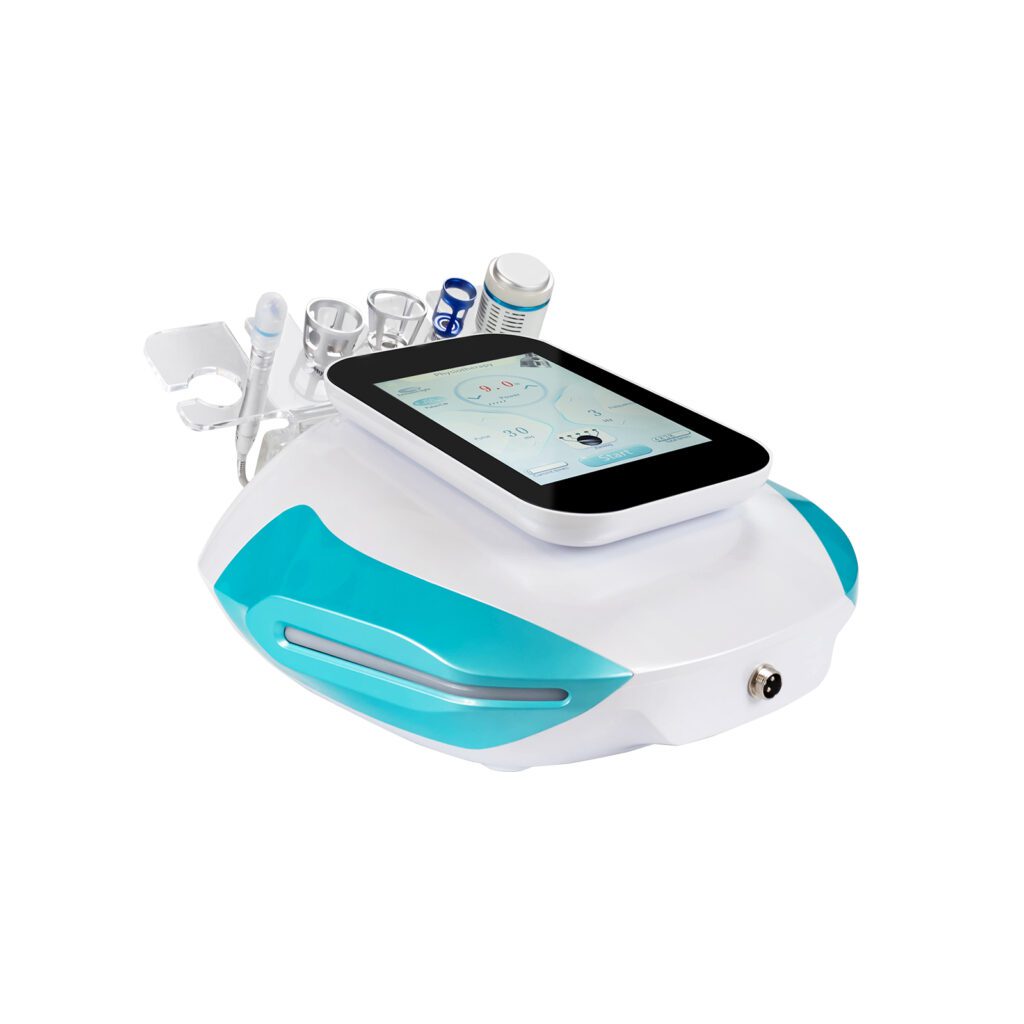
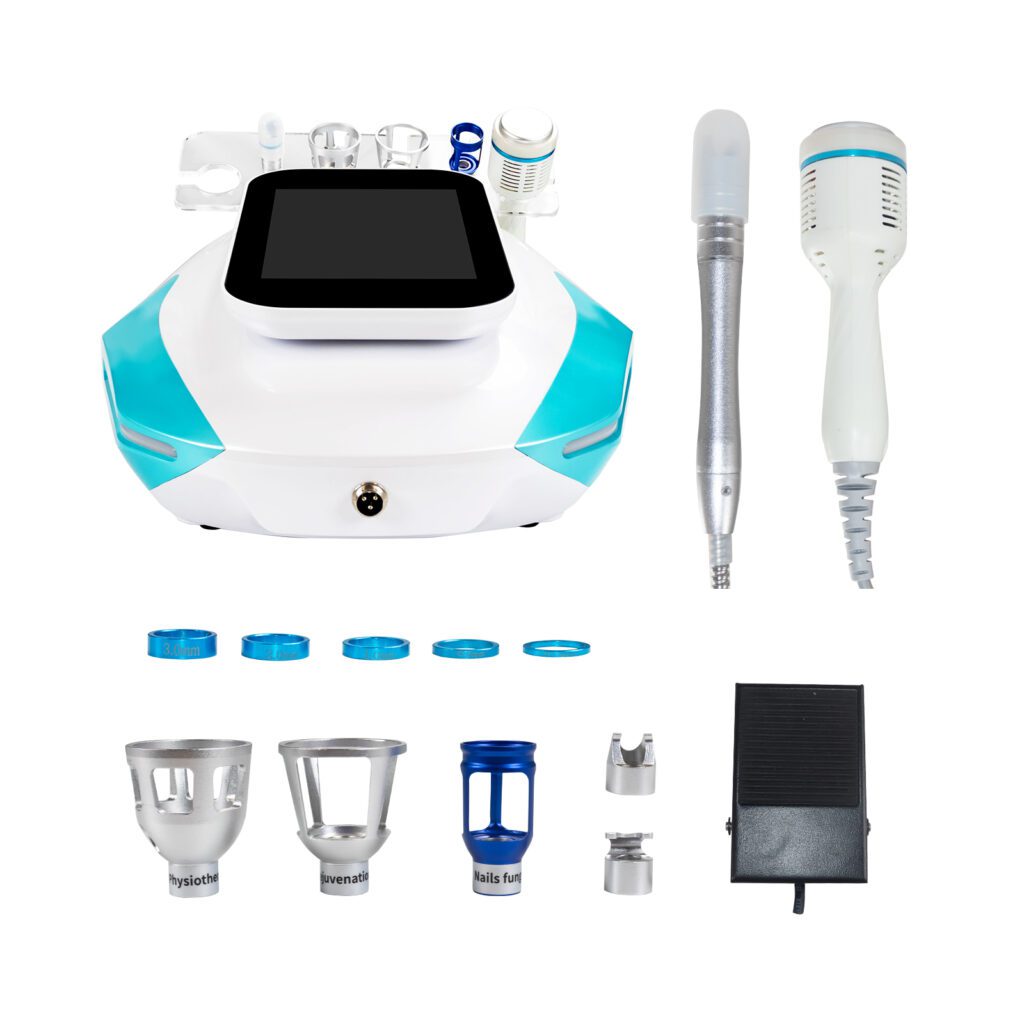
The vertical A0648 combines nine functions around hydro and vacuum-based facial care. Its product page positions it for cleansing, exfoliation, extraction, hydration-oriented care, and supporting functions. That breadth can help a clinic create a recognizable core facial category without presenting nine unrelated treatments.
For first-time clients, the clinic can offer a facial-care consultation followed, where appropriate, by a defined A0648 service. The consultation should decide which approved functions belong in the service, which solutions and tips are required, and whether the client should be deferred or referred.
For returning clients, the value is continuity. Staff can review the last service record, confirm what has changed, and select the appropriate service card rather than starting from memory. The A0648 can support more than one facial format, but the clinic should keep the published menu concise—for example:
| Menu service | First-time route | Returning route |
|---|---|---|
| Essential hydro facial | Intake and facial-care assessment | Change check and service-card confirmation |
| Targeted hydro facial | Consultation identifies the relevant approved function set | Review response and whether the same focus remains suitable |
| Maintenance facial | Introduced only when a maintenance route matches the client’s goal | Scheduled under the documented maintenance plan, with periodic reassessment |
Do not describe the A0648 as suitable for every first visit. It is a practical entry point for an applicable facial-care goal, not a universal screening treatment before all other services.
6. Position A0272-F as a Separate Facial Technology
The A0272-F combines high-intensity facial electrical stimulation with RF according to its current product page. It should have a distinct consultation and service description rather than being buried as an “upgrade” inside a hydro facial.
A first-time client can enter this lane directly when their enquiry matches the category and the clinic’s assessment supports it. A returning A0648 client should receive an A0272-F-specific assessment before changing lanes. Previous tolerance of a hydro facial does not answer the questions relevant to a different technology.
For suitable returning A0272-F clients, the record should identify the previous configuration, service area, settings process, operator, immediate response, and agreed review point. The return visit remains a decision point: continue the planned pathway, change it within the authorized process, pause it, or refer the client.
This menu separation gives clients a meaningful choice between maintenance-oriented facial care and a targeted device category. It also helps reception book the correct room duration and operator.
7. Manage First and Return Visits Differently in Hair Reduction
Hair-reduction services naturally involve initial consultation and later visits, but a repeat booking still requires current checks. SHEFMON’s A0423 and A0426 product pages list 600 W and 1200 W handpiece options, 15 × 15, 15 × 20, and 15 × 30 mm spot options, multiple wavelength positioning, and semiconductor, water, and TEC cooling. Clinics should confirm the exact supplied configuration before designing service cards.
The A0423 is listed with a package size of 63 × 47 × 61 cm and package weight of 34.5 kg. The A0426 is listed with a package size of 67 × 54 × 141 cm and package weight of 59.2 kg. These figures are shipping data, not installed-room dimensions. Obtain the operating footprint, ventilation, electrical, movement, and service-access requirements before allocating a treatment room.
| Hair-reduction stage | First-time client | Returning client |
|---|---|---|
| Enquiry | Identify area and book a laser-specific consultation | Identify the existing pathway and whether a review is due |
| Assessment | Complete the clinic’s required suitability, history, skin and hair, test, consent, and expectation process | Check changes, previous response, interval, area, current suitability, and whether the plan should continue |
| Booking | Reserve the authorized operator, controlled room, exact system, time, and protective equipment | Preserve the same controls and update the record rather than copying the last visit blindly |
| Follow-up | Explain the planned return and contact route | Record response and determine the next step under the clinic’s protocol |
The American Academy of Dermatology’s laser hair removal FAQ emphasizes consultation with a qualified practitioner and discusses variable outcomes, repeat sessions, preparation, and possible side effects. Clinics should use device instructions, professional judgment, and applicable local rules rather than promise a fixed result or treatment count.
8. Add B0155 When the Clinic Has a Real Body-Service Pathway
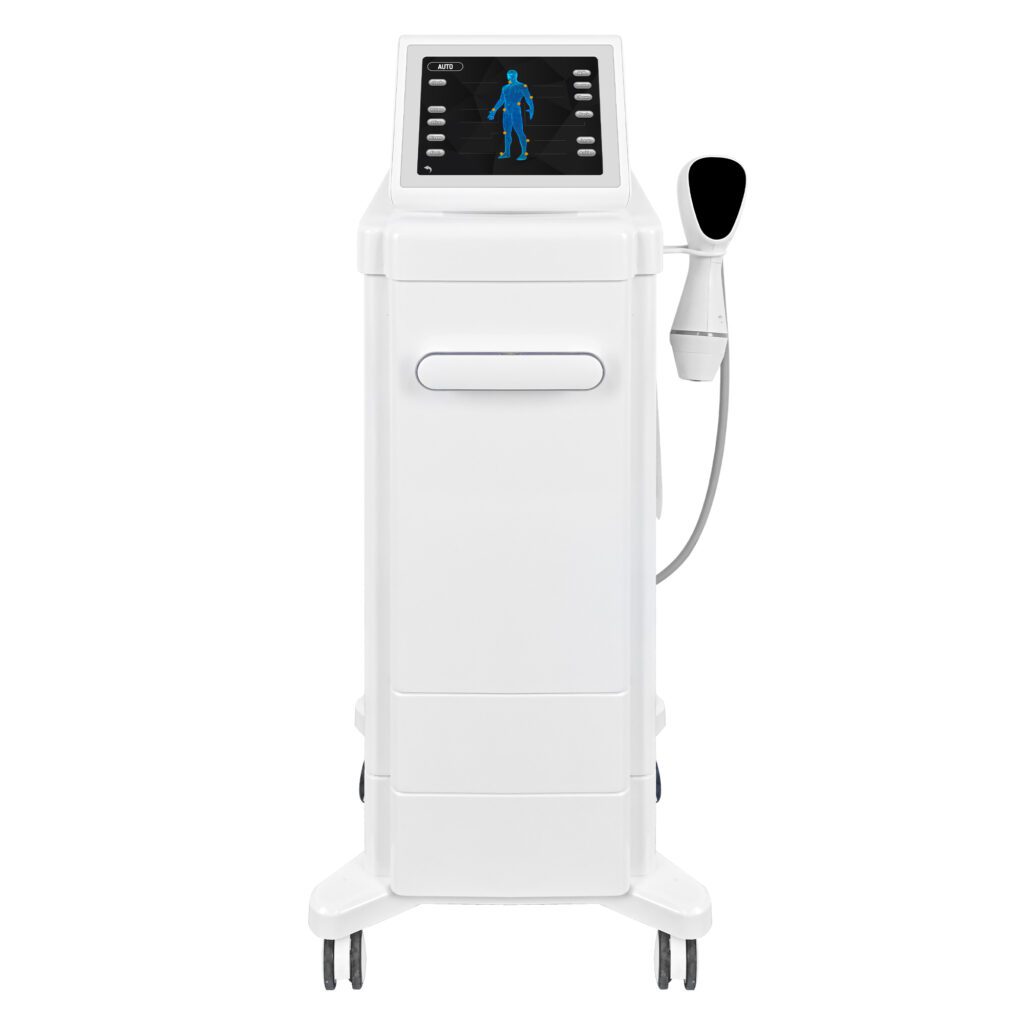
The B0155 includes larger and smaller vacuum rollers, rotating handles, RF-related functions, light, and 80K cavitation on the current product page. This range can support a body-care department, but it should not become a single vague “body slimming” listing.
For a first-time body client, define the area, goal, selected function, appropriate operator, service boundaries, documentation, and review method. For a returning client, review changes, prior response, the exact handle or function used, and whether the original route remains appropriate.
A compact B0155 menu could separate:
- body roller and vacuum-oriented care;
- selected RF-related body care;
- a distinct cavitation service where appropriate under the clinic’s process;
- review appointments for an active body program.
The US FDA’s overview of non-invasive body contouring technologies explains that these technologies have different intended effects, limitations, and risks. A clinic should describe the selected technology accurately and avoid presenting non-invasive body services as weight-loss treatment or guaranteed permanent change.
9. Keep A0204 HIFU in an Advanced Assessment Pathway
The A0204 product page describes a focused-HIFU platform with multiple standard and optional handles, cartridges, and treatment depths. That configuration flexibility increases the importance of confirming exactly what the clinic will receive, which components it will use, and which trained professionals can operate the selected pathway.
A new client may be routed directly to a qualified HIFU consultation when the enquiry fits. A returning facial client does not need to complete an A0648 service first, and a long-standing relationship does not justify bypassing the HIFU assessment. Likewise, a returning HIFU client needs a review based on the procedure pathway, not an automatic repeat appointment.
Keep HIFU separate in the menu with its own:
- consultation and decision authority;
- exact device, handle, and cartridge inventory;
- room and operator permissions;
- consent and documentation process;
- aftercare, contact, follow-up, and escalation route;
- rebooking restriction until the required review has been completed.
This protects the distinction between a familiar clinic relationship and a current clinical decision.
10. Treat A0152 RF Microneedling as a Controlled Clinical Procedure
The A0152 product page lists RF microneedling with multiple needle configurations and adjustable depths from 0.5 to 7 mm. A clinic considering this device needs appropriate professional oversight, infection-control procedures, single-use stock control, sharps handling, consent, records, aftercare, and a complication-response pathway.
These requirements apply to both first-time and returning clients. A returning maintenance client still enters the A0152-specific assessment route. A returning RF microneedling client should first be reviewed under the procedure plan before any decision about another session.
The FDA’s 2025 RF microneedling safety communication reports serious complications associated with certain uses and advises patients to seek a licensed provider with training and experience. Clinics should review current regulatory guidance, the device instructions, local scope requirements, and their ability to manage follow-up before offering this category.
11. Use Different Records for First-Time and Returning Decisions
One shared client profile can support the clinic, but the visit forms should reflect different tasks.
First-time record
- client-stated goal and area;
- relevant information required for the selected category;
- previous services or procedures disclosed by the client;
- expectations and service explanation;
- proposed device lane and why it was selected;
- assessment outcome: approved, deferred, referred, declined, or information pending;
- baseline record and consent status where applicable;
- next booking, follow-up, or referral action.
Returning-client update
- date and result of the last relevant service or review;
- current goal and changes since the last appointment;
- response, concerns, or contact since the previous visit;
- whether the existing assessment remains sufficient;
- confirmed device, configuration, area, and service card;
- decision to continue, modify, pause, refer, close, or conduct a fuller reassessment;
- updated aftercare and next review.
The returning form should not be a one-click duplicate of the previous record. It should be short enough to use consistently and specific enough to show why the next action remains appropriate.
12. Create a Separate Route for Procedure Follow-Up
A client returning after HIFU, RF microneedling, laser hair reduction, or another controlled service may be visiting for review rather than for a new treatment. Mark this distinction in the booking system.
| Return type | Booking purpose | Required decision |
|---|---|---|
| Routine service return | Continue a current maintenance or program pathway | Confirm changes and current suitability |
| Planned procedure follow-up | Review response under the original procedure plan | Expected progress, further review, escalation, or closure |
| Concern-led follow-up | Assess a reported unexpected response or question | Follow the clinic’s urgent contact and escalation process |
| Request for another category | Explore an additional facial, hair, or body service | Complete the new category’s assessment; do not infer compatibility |
Do not use a routine facial booking to absorb a procedure-related concern. Give clients a named contact route and ensure reception knows which team owns the response.
13. Treat a Lapsed Client as a Re-Entry, Not a Simple Repeat
The clinic should define when an old assessment is no longer enough. The threshold may differ by device category and should follow professional judgment, device guidance, clinic policy, and local requirements.
At re-entry, ask what has changed, what services were received elsewhere, whether the goal is the same, and whether the earlier technology still fits. Refresh any expired documentation or consent required by the pathway. A lapsed client’s familiarity with the brand can improve communication, but it should not shorten the assessment beyond what the current service safely allows.
14. Publish a Menu That Shows Entry and Continuity
Clients should be able to see how to start and what a return visit means. A clinic can organize the menu like this:
| Published section | First-time booking | Returning booking | Typical device direction |
|---|---|---|---|
| Core facial care | Facial-care consultation or approved first service | Maintenance or targeted facial review | A0648 |
| Targeted facial technology | A0272-F consultation | Active-plan visit or reassessment | A0272-F |
| Hair reduction | Laser consultation | Planned session or review | A0423 or A0426 |
| Body care | Body consultation | Active program visit or area review | B0155 |
| Advanced lifting pathway | Qualified consultation only | Follow-up, review, or separately approved procedure | A0204 |
| Advanced skin procedure | Clinical consultation only | Procedure follow-up or separately approved procedure | A0152 |
Keep service names consistent across the website, telephone script, booking system, consent materials, treatment room, and follow-up messages. A client should not select a generic “advanced facial” online and arrive without the required consultation.
15. Build Device Packages Around the Clinic’s Client Mix
The most useful package is the smallest portfolio that covers clear entry and return pathways with the clinic’s current rooms and team.
Package A: Facial entry and maintenance
Device: A0648
Choose this when the clinic needs one recognizable facial-care category and wants to develop consistent first-visit and maintenance records before expanding. The commercial question is whether demand and scheduling justify a second treatment room or a different technology later.
Package B: Facial continuity with a targeted second lane
Devices: A0648 + A0272-F
This package separates hydro-based facial care from facial electrical stimulation and RF. It suits a clinic that can explain the difference, maintain two assessment routes, and avoid presenting A0272-F as the automatic next level for every A0648 client.
Package C: Facial care plus body services
Devices: A0648 + B0155
This combination fits a clinic with evidence of body-service demand, enough space for body positioning and room turnover, and staff able to run body consultations and program reviews. It creates two departments rather than a same-day device protocol.
Package D: Facial care plus hair reduction
Devices: A0648 + A0423 or A0426
This combination gives the clinic an approachable facial lane and a separate laser pathway. Select between the two diode-laser formats after confirming operating dimensions, exact handpiece configuration, room controls, service access, workload, and operator requirements.
Package E: Maintenance plus one advanced pathway
Devices: A0648 + either A0204 or A0152
Choose one advanced category only when the clinic has the required professional capability, governance, room, stock, documentation, aftercare, and escalation process. HIFU and RF microneedling are different categories; they are not interchangeable choices based only on price or menu prestige.
16. Set Booking Gates by Service, Not by Loyalty Level
Use booking permissions that reflect the actual service risk and workflow.
| Booking type | Suggested gate |
|---|---|
| A0648 core facial | Facial assessment completed and current change check passed |
| A0272-F targeted facial | Technology-specific assessment completed; correct operator and room available |
| A0423/A0426 hair reduction | Laser pathway approval, controlled room, authorized operator, exact system, and required protective items confirmed |
| B0155 body care | Body assessment, selected function, area, handle, and service card confirmed |
| A0204 HIFU | Qualified advanced assessment and exact configuration approved |
| A0152 RF microneedling | Clinical decision, consent, procedure stock, infection-control readiness, aftercare, and escalation capability confirmed |
Reception should see whether a booking is permitted without being asked to make a clinical or technology-specific judgment. Where the status is unclear, the appointment returns to the responsible service owner.
17. Offer Memberships Without Automatic Device Escalation
A maintenance membership can make repeat care easier to understand, but it should grant access to a defined service pathway rather than a promise of progressively stronger technology. Useful membership features include scheduled reviews, priority maintenance booking, clear expiry or pause terms, and transparent rules for moving to a different consultation lane.
Keep advanced procedures outside automatic membership redemption unless each booking still passes the required decision process. Do not offer a “loyalty upgrade” that converts unused maintenance visits into HIFU, laser, or RF microneedling without the separate assessment and consent required for that category.
18. Measure Whether the Portfolio Serves Both Groups
Review operational indicators rather than relying only on device utilization.
- percentage of first-time enquiries routed to the correct department;
- time from enquiry to the appropriate consultation;
- percentage of consultations ending with a recorded decision;
- return bookings with a completed change check or reassessment;
- follow-up tasks completed by the responsible team;
- lapsed clients correctly routed through re-entry;
- services paused or referred when new information required it;
- room, operator, consumable, and device availability by category;
- client questions caused by unclear service names;
- maintenance or repair downtime affecting active pathways.
These measures show whether the device mix creates a reliable client journey. High bookings alone do not reveal whether first-time decisions and returning reviews are being handled consistently.
19. Common Planning Mistakes
Giving every first-time client the same facial
A simple facial is useful only when it fits the goal and assessment. It should not become a compulsory gateway to unrelated hair, body, or advanced services.
Treating return visits as pre-approved
Previous treatment does not guarantee that nothing has changed. Use a current check and the reassessment depth required by the category.
Rewarding loyalty with stronger technology
Client loyalty is a commercial relationship, not a treatment indication. Offer a separate consultation when a different device category may be relevant.
Hiding several technologies under one service name
“Advanced rejuvenation” is too broad if it could mean hydro facial care, facial EMS/RF, HIFU, or RF microneedling. Name the service family and booking route clearly.
Mixing follow-up and sales appointments
An appointment to review a procedure response should remain under the original professional pathway. Resolve concerns before introducing unrelated services.
Buying for future demand without a return pathway
A device launch also creates future reviews, records, stock needs, maintenance, and client questions. Include those recurring obligations in the purchase decision.
20. Purchase Checklist for a First-Time and Returning Client Strategy
Before selecting devices, ask:
1. Which client goals create the most first-time enquiries? 2. Which current services generate appropriate repeat demand? 3. Can each service be explained without relying on the machine name alone? 4. What assessment does a new client need for each category? 5. What must be checked at every return, and what triggers a fuller reassessment? 6. Who owns procedure follow-up and concern-led contact? 7. When does a lapsed client re-enter the consultation process? 8. Which room, operator, stock, cleaning, and protective requirements apply? 9. What exact model, configuration, handles, cartridges, heads, tips, or spot options are included? 10. Can the clinic support documentation, aftercare, maintenance, and escalation for the expected volume? 11. Does the menu distinguish maintenance from targeted and advanced pathways? 12. Which service gap will the next device solve for both entry and continuity?
Frequently Asked Questions
1. What is the best first beauty device for a clinic serving new and returning clients?
For a clinic centered on facial care, the A0648 is a practical starting point because it can support a clearly defined hydro-based facial category and repeat maintenance pathway. The final choice should still reflect client demand, operator competence, room process, solutions and tips, cleaning, records, and aftercare. A clinic built around hair reduction or body services may need a different anchor.
2. Should every first-time client start with a hydro facial?
No. A hydro facial can be an approachable option for a suitable facial-care goal, but a client asking about hair reduction, body care, HIFU, or RF microneedling should enter the correct category-specific consultation. Do not make one introductory treatment a prerequisite for unrelated services.
3. Can returning clients book the same device without another consultation?
They may be able to follow a current approved plan, but the clinic should check changes and apply its service-specific reassessment rules. A new concern, long absence, unexpected response, different area, expired documentation, or move to another technology may require a fuller consultation.
4. Is A0272-F an upgrade from A0648?
It is better treated as a separate facial technology. A0648 centers on hydro and vacuum-based facial-care functions, while A0272-F combines facial electrical stimulation and RF. A client should move between them only through the appropriate assessment, not through an automatic premium upgrade.
5. Should a clinic choose A0423 or A0426 for returning hair-reduction clients?
Choose based on the clinic’s expected workload, room plan, service access, mobility needs, and confirmed configuration. Both current pages list similar handpiece-power and spot-size options, but their formats and shipping data differ. Ask SHEFMON to confirm the delivered handpiece, wavelength configuration, operating footprint, power requirements, accessories, training information, and after-sales arrangements.
6. How should clinics handle a client returning after an advanced procedure?
Book the client into the procedure-specific follow-up or review route. Record the response and let the responsible professional decide whether the pathway continues, needs more review, requires escalation, or can close. Do not convert a concern into a routine facial or sales consultation.
7. Can first-time clients be considered for HIFU or RF microneedling?
Client status alone does not decide suitability. A first-time client may enter the relevant qualified consultation directly, provided the clinic has the professional scope, governance, exact device pathway, consent, aftercare, and escalation capability. Consultation does not guarantee that a procedure will proceed.
8. How many devices does a clinic need to serve both client groups?
One well-defined device can establish a clear entry and repeat pathway. Add a second category when demand, rooms, authorized staff, records, stock, follow-up, and maintenance support it. A compact two-device package is often easier to operate consistently than a larger menu with overlapping names and weak booking controls.
9. Can A0648, A0272-F, and an advanced device be used on the same day?
Do not infer same-day compatibility from a portfolio recommendation. Device timing and sequencing require service-specific assessment, device instructions, professional judgment, client response, and local requirements. The packages in this guide describe menu coverage, not combined-treatment protocols.
10. What should a clinic send when asking SHEFMON for a device recommendation?
Share the clinic type, country or market, current services, percentage of new versus repeat business if known, leading client goals, available rooms, operator roles, preferred service lanes, expected workload, and shortlisted models. Ask for the exact configuration, included components, operating requirements, training information, consumables, cleaning and maintenance needs, warranty, service process, documentation, and shipping details.
Conclusion
A clinic portfolio should help a client enter through the right consultation, receive a clearly defined service, return through a current review process, and move to another category only when a separate assessment supports that decision. A0648 can anchor facial maintenance; A0272-F can add a distinct targeted facial lane; A0423 or A0426 can support a controlled hair-reduction department; B0155 can add body care; and A0204 or A0152 can serve qualified advanced pathways.
The right package depends on the clinic’s client mix, rooms, staff authority, workflow, follow-up capacity, and local requirements. Explore SHEFMON beauty-device categories and contact SHEFMON with your first-time and returning client workflow to compare a suitable model and exact configuration.