









The replacement cost of beauty equipment accessories can be low, moderate, or very high depending on the part type, machine category, warranty status, supplier policy, and whether professional installation is required. A simple filter, tube, seal, tip, or bottle may be inexpensive. A handpiece, laser module, IPL lamp, HIFU cartridge, RF probe, camera module, compressor, circuit board, or cooling component can be much more expensive.
For beauty salons, the real question is not only whether the part price is high. The better question is: how often does the part need replacement, whether damage is covered by warranty, whether original parts are required, who pays labor and shipping, how long the machine will be stopped, and whether spare parts are available quickly.
For distributors, replacement part cost affects after-sales workload, customer satisfaction, profit margin, and repurchase. A machine that looks cheap at purchase may become expensive if important accessories are fragile, proprietary, hard to buy, or excluded from warranty.
Short Answer: Some Parts Are Cheap, But Core Accessories Can Be Expensive
Beauty equipment parts can be divided into four cost levels.
Low-Cost Parts
These are usually small consumables or simple external accessories:
- Disposable tips.
- Protective covers.
- Filters.
- Tubes.
- Seals.
- Bottles.
- Silicone rings.
- Basic pads.
- Power cords.
- Small connectors.
- Simple cleaning accessories.
These parts are usually not expensive individually, but they can become a regular operating cost if the machine is used frequently.
Medium-Cost Parts
These parts may cost more because they affect function or require specific compatibility:
- RF probes.
- Ultrasound probes.
- EMS electrodes.
- Vacuum heads.
- Hydro facial handles.
- LED accessories.
- Foot switches.
- Screens.
- Pumps.
- Small sensors.
- Applicator covers.
- Specialized cables.
They may not be as expensive as the main unit, but damage can stop a project until replacement arrives.
High-Cost Parts
These are usually key treatment components:
- IPL handpieces.
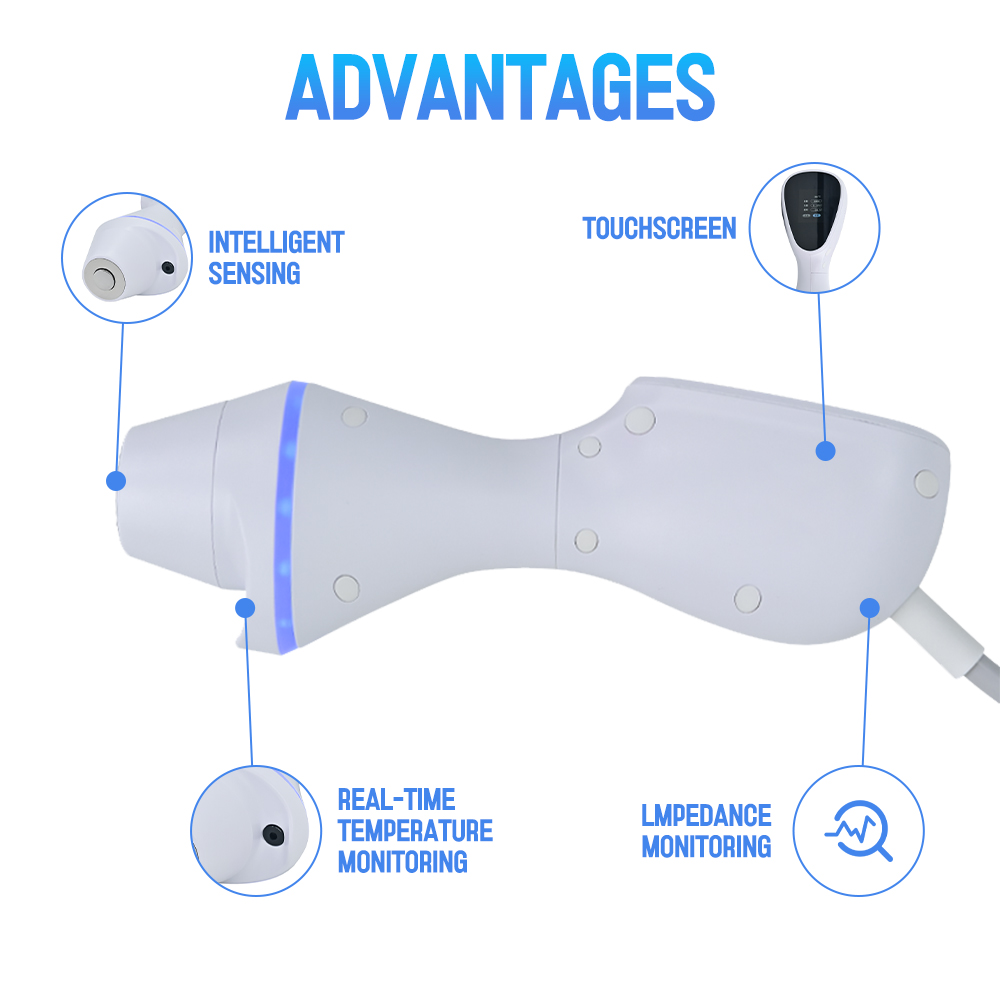
- Laser handpieces.
- HIFU cartridges.
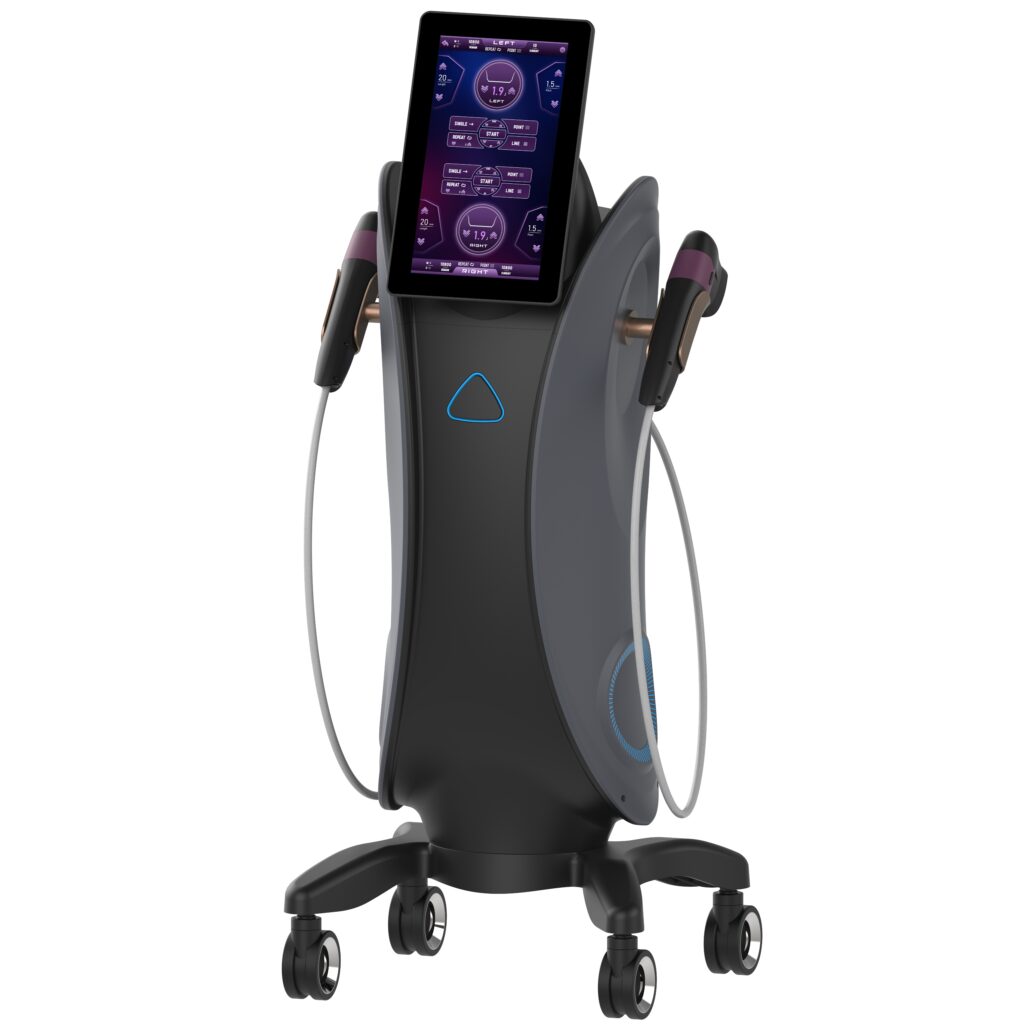
- RF body contouring handles.
- Cryolipolysis applicators.
- Cooling systems.
- Compressors.
- Main circuit boards.
- Power supply modules.
- Laser modules.
- Camera modules for skin analyzers.
- Specialized software or cloud modules.
These parts can be costly because they contain energy delivery components, sensors, cooling systems, optical parts, software control, or proprietary design.
Hidden-Cost Parts And Services
Sometimes the part itself is not the only cost. The salon may also pay for:
- Technician labor.
- Remote diagnosis after warranty.
- On-site service fee.
- Shipping both ways.
- Customs duties for imported parts.
- Calibration or testing after replacement.
- Software activation.
- Lost revenue during downtime.
- Staff retraining.
- Customer compensation if appointments are cancelled.
This is why replacement cost should be calculated as total service cost, not only accessory price.
Why Replacement Parts For Beauty Equipment Can Be Expensive
Beauty equipment parts are not all standard retail items. Many parts are model-specific and must match the machine’s voltage, software, connector, firmware, energy output, and safety design.
Replacement cost may be high because of:
- **Proprietary design:** Some handpieces, probes, cartridges, and software modules work only with one brand or model.
- **Energy control:** RF, IPL, laser, HIFU, ultrasound, and cryotherapy components need stable output and compatible control systems.
- **Optical or cooling requirements:** Laser and IPL parts may require special glass, lamps, filters, cooling channels, or safety sensors.
- **Calibration needs:** Some parts need testing or calibration after replacement.
- **Import cost:** Overseas spare parts may include freight, tax, customs clearance, and long lead time.
- **Low production volume:** Specialty accessories are not produced in the same volume as general consumer parts.
- **Warranty boundary:** If damage is caused by misuse, dropping, water ingress, or unauthorized repair, the buyer may pay the full cost.
- **Labor and service:** Some parts need trained technicians, not basic staff replacement.
For buyers, this means a low machine price should always be compared with the long-term spare parts price list.
Replacement Cost By Equipment Category
Different machines have very different accessory cost structures.
Small Bubble And Hydro Facial Machines
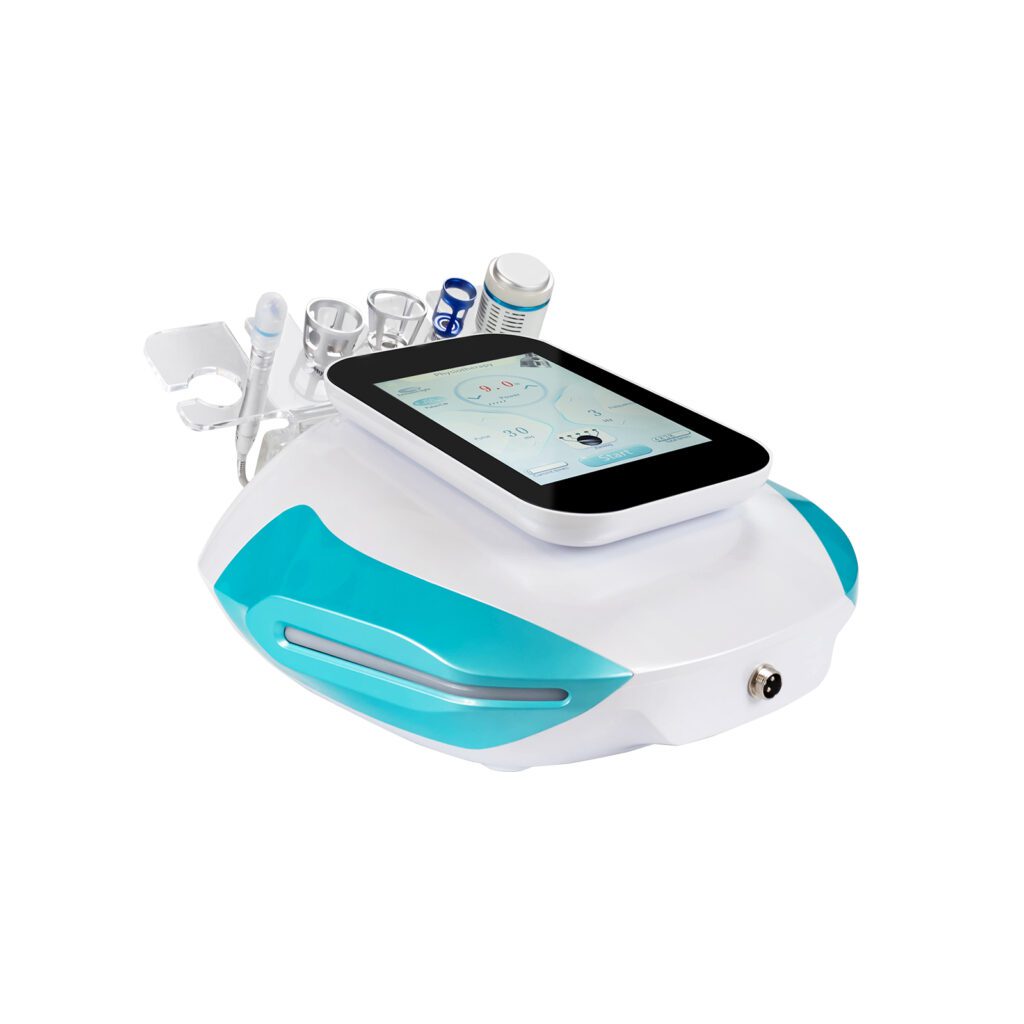
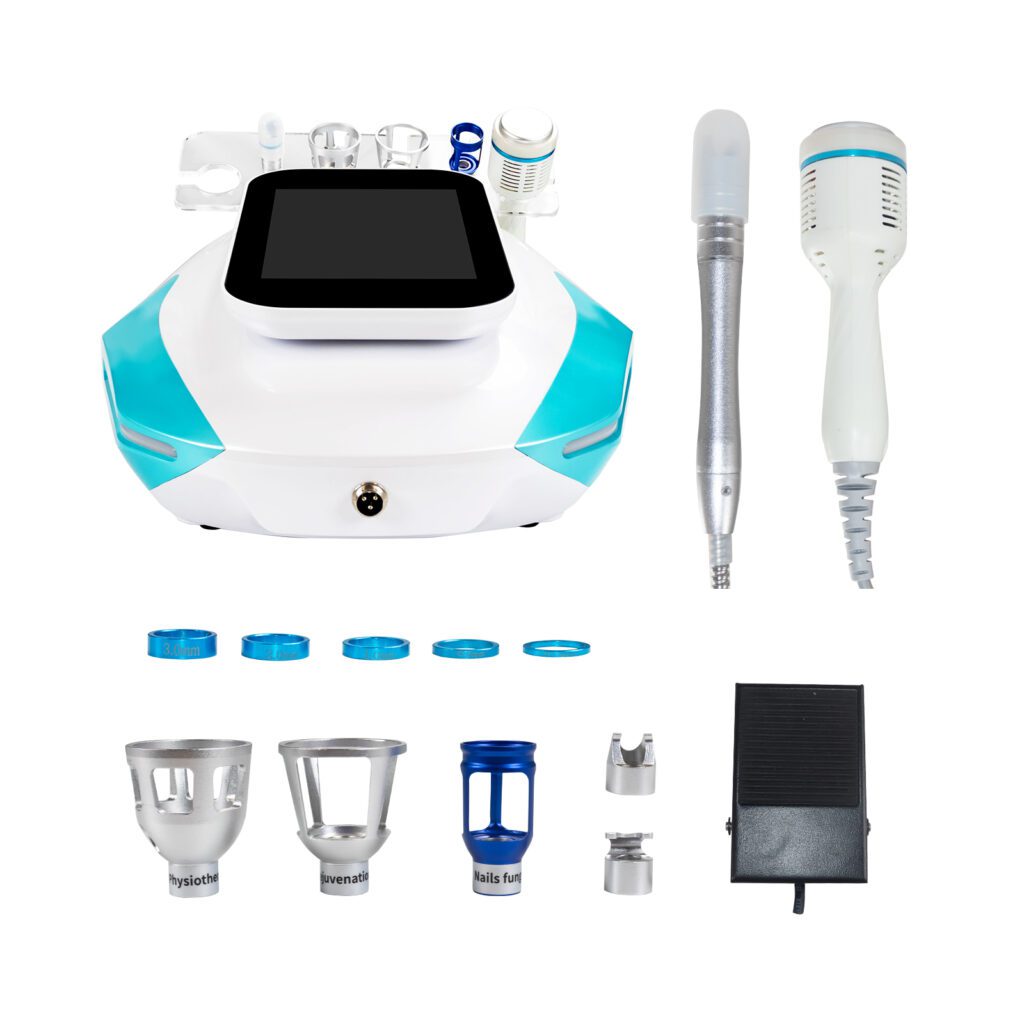
Common replacement parts include tips, tubes, bottles, filters, seals, pumps, handles, solution containers, and waste bottles.
Typical cost logic:
- Tips, filters, tubes, and seals are usually lower-cost consumables.
- Pumps and handles can be medium-cost parts.
- Damage often comes from blockage, poor cleaning, wrong solution, leaking bottles, or rough tube handling.
For these machines, the salon should focus on cleaning, filter replacement, and having backup tubes and seals. The machine may be affordable, but weak suction or leakage can affect daily appointments quickly.
RF Beauty Equipment
Common replacement parts include RF probes, facial handles, body handles, cables, connectors, power boards, sensors, and cooling parts if included.
Typical cost logic:
- Small facial probes may be moderate in cost.
- Large body contouring RF handles can be expensive.
- Handpiece damage from dropping, loose cable, cracked surface, or unstable heat may not be free if caused by staff handling.
RF replacement cost depends heavily on handle quality and whether the supplier stocks compatible probes.
Ultrasound And EMS Machines
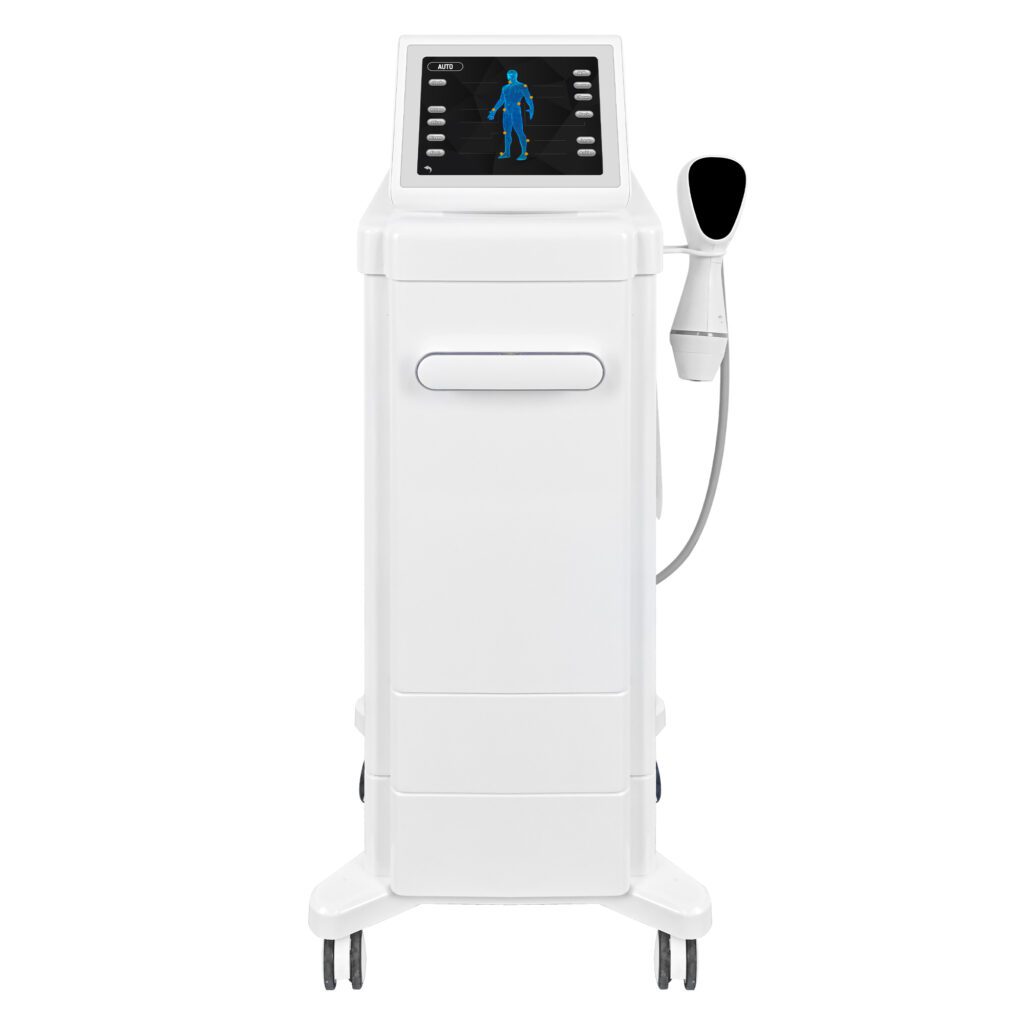
Common replacement parts include ultrasound probes, EMS electrodes, microcurrent probes, clips, pads, wires, and conductive accessories.
Typical cost logic:
- Disposable pads are regular consumables.
- Reusable probes and electrodes may be medium-cost parts.
- Poor contact, cable damage, corrosion, and worn coatings are common issues.
The salon should train staff to clean and store probes properly. A damaged probe may still look usable but produce unstable customer sensation.
LED Light Therapy Devices
Common replacement parts include LED panels, masks, power adapters, stands, eye shields, protective covers, and control boards.
Typical cost logic:
- Protective covers and eye shields are lower-cost.
- LED panels, masks, and control boards can be moderate to high cost.
- Flickering, uneven brightness, broken hinges, cracked shells, and overheating need attention.
LED devices may not have many daily consumables, but replacement cost can be meaningful if the light panel or mask is damaged.
IPL And Laser Equipment
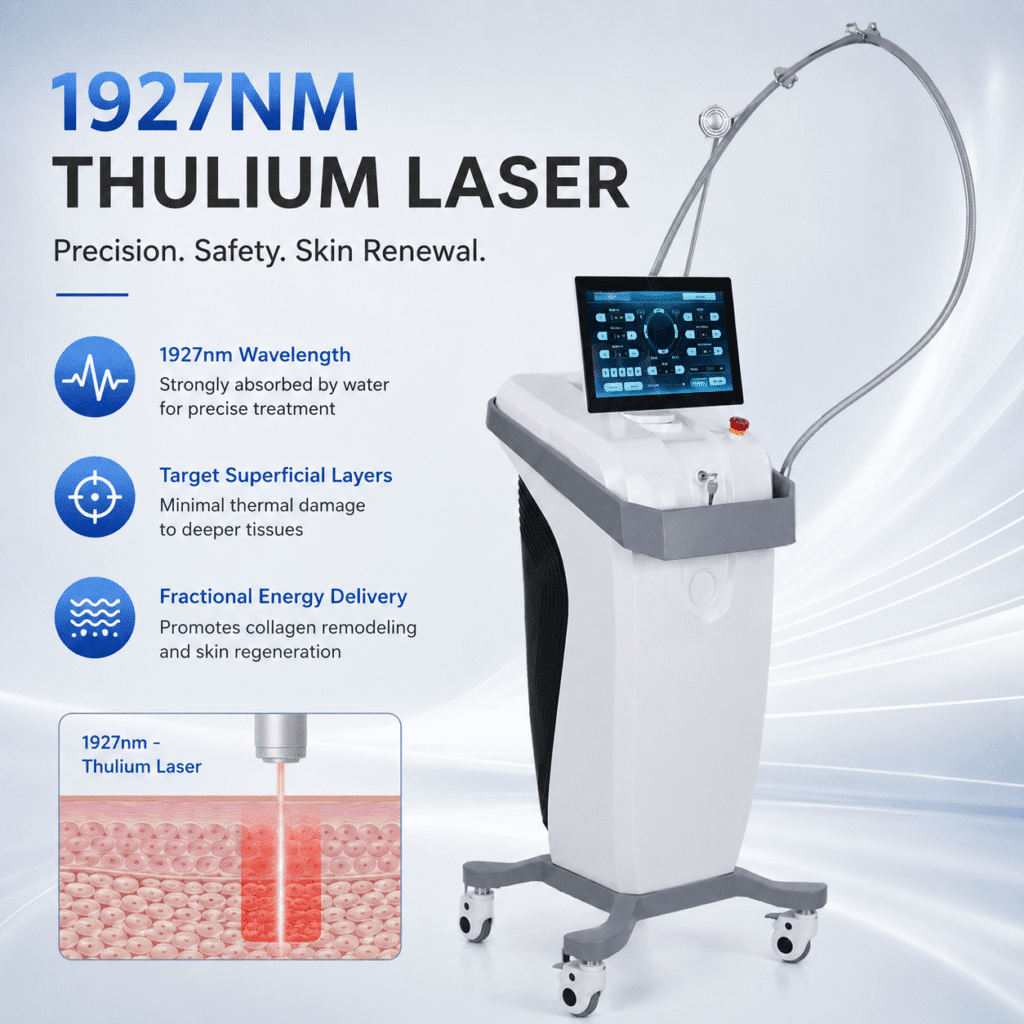
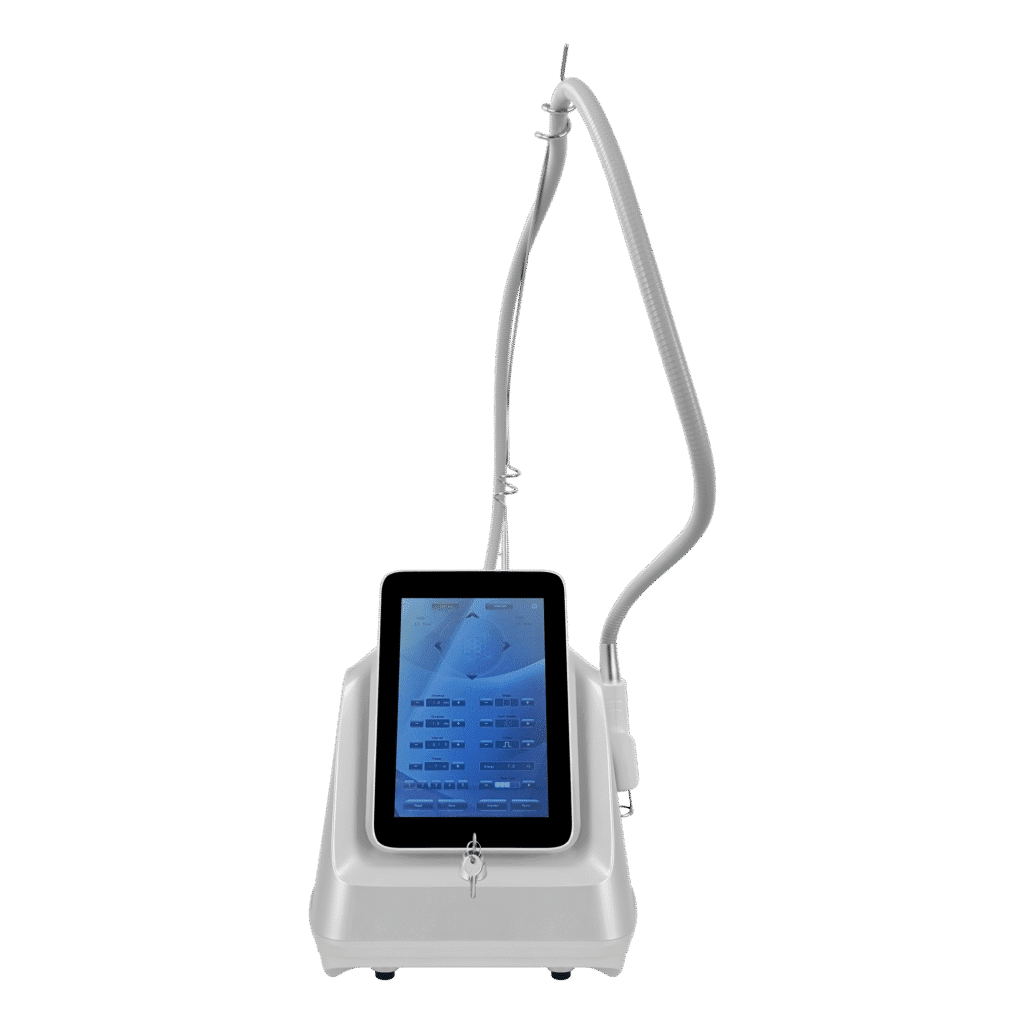
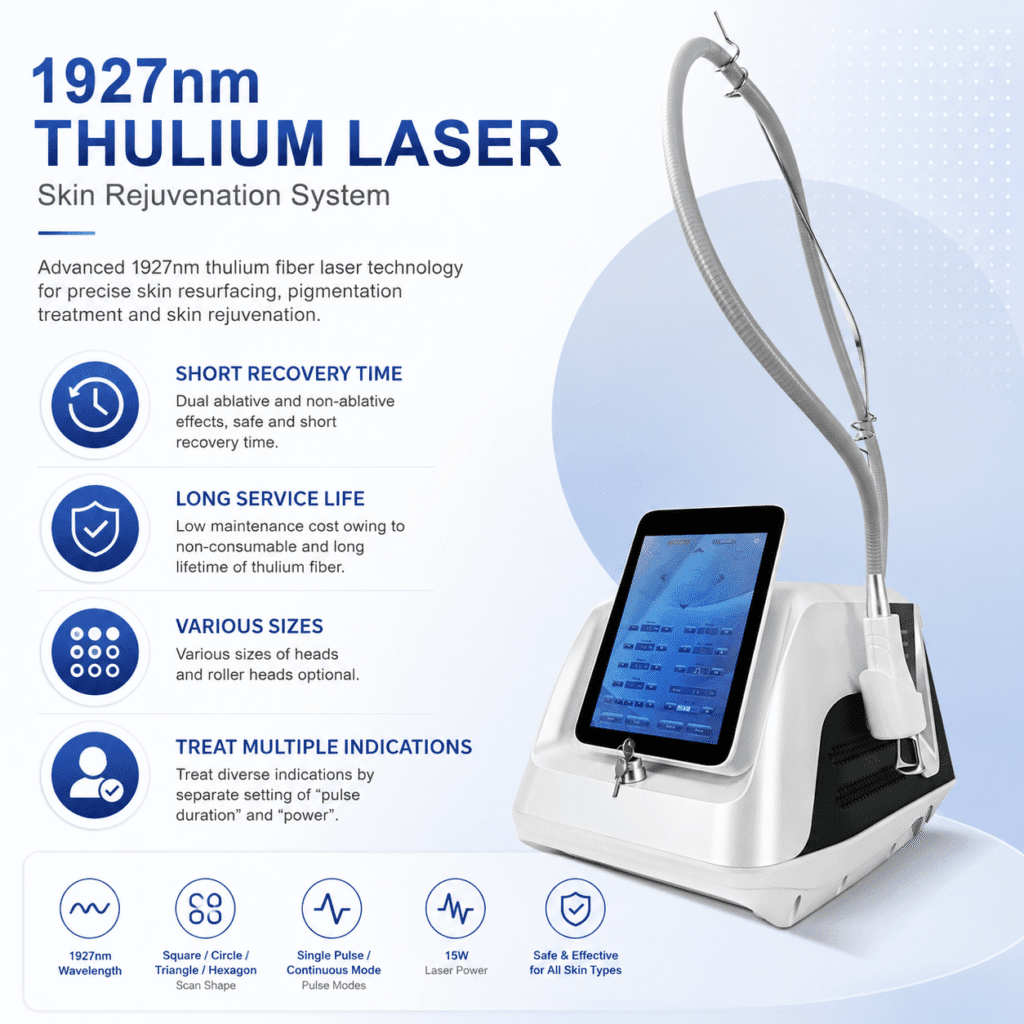
Common replacement parts include lamps, flash cartridges, optical windows, cooling tips, handpieces, filters, water pumps, power supplies, and laser modules.
Typical cost logic:
- Lamps and cartridges may be regular but high-value consumables.
- Optical windows and cooling parts can be costly.
- Laser modules and handpieces can be very expensive.
- Replacement may require professional installation and testing.
For IPL and laser devices, buyers should ask about shot count, lamp life, handle warranty, cooling maintenance, and the cost of original replacement parts before purchase.
HIFU Machines
Common replacement parts include HIFU cartridges, handles, cables, transducers, screens, and boards.
Typical cost logic:
- HIFU cartridges are often a major consumable cost.
- Cartridges are usually managed by line count or shot count.
- Damaged handles or recognition problems can stop the project.
A HIFU machine may seem profitable, but cartridge cost per treatment must be calculated carefully. Buyers should ask the price and rated count for every cartridge depth.
Cryolipolysis And Body Contouring Machines
Common replacement parts include applicators, membranes, filters, seals, tubes, vacuum pumps, cooling systems, sensors, and control boards.
Typical cost logic:
- Membranes, pads, filters, and seals are regular consumables.
- Applicators, compressors, cooling modules, and sensors can be high-cost.
- Vacuum leakage, cooling instability, and dropped applicators can create expensive repairs.
For body contouring machines, the salon should focus on applicator protection, seal maintenance, and cooling system care.
Skin Analyzers And AI Detection Devices
Common replacement parts include camera modules, lights, chin rests, forehead supports, calibration cards, screens, computer modules, and software subscriptions.
Typical cost logic:
- Physical supports and disposable covers are low-cost.
- Camera, lighting, screen, and software issues can be expensive.
- Cloud service or software renewal may be an ongoing cost.
For customer-facing devices, repair cost is not only technical. If the report cannot be generated, consultation and sales conversion may be affected.
Warranty Status Changes The Real Replacement Cost
A damaged accessory may be free, partially free, or fully paid depending on warranty.
Common scenarios:
- **Covered quality defect:** The supplier may repair or replace the part at no charge within warranty.
- **Arrival defect:** If reported during the acceptance period, the supplier may ship a replacement.
- **Normal consumable use:** The buyer usually pays for replacement.
- **Wear and tear:** The buyer may pay unless the warranty covers the specific part.
- **Staff damage:** Dropping, cracking, water ingress, wrong voltage, or unauthorized repair is usually not free.
- **Shipping damage:** Responsibility depends on shipping terms, insurance, and damage reporting rules.
- **After-warranty failure:** The buyer usually pays parts, labor, and shipping.
This is why buyers should not ask only how long is the warranty. They should ask which parts are covered, for how long, and under what conditions.
Part Price Is Only One Part Of The Cost
A replacement part that costs 100 dollars may create a much higher business cost if the machine is stopped for two weeks. A part that costs 500 dollars may be acceptable if it restores a high-ticket project quickly.
Total replacement cost can be calculated as:
Total replacement cost = part price + labor + shipping + tax + downtime loss + consumables wasted + customer compensation + staff time.
For example, if a body contouring applicator breaks and the replacement part costs 400 dollars, but the salon loses 10 booked treatments during the waiting period, the real cost is higher than 400 dollars. If a filter costs very little but the salon does not stock it and the machine cannot be used for several days, the management cost becomes unnecessary.
Salons should evaluate both part price and downtime risk.
How Replacement Cost Affects Salon ROI
When salons calculate equipment return on investment, they often include machine purchase price and treatment revenue. Many forget replacement parts.
A better ROI model includes:
- Machine price.
- Freight and installation.
- Training cost.
- Consumables per treatment.
- Expected handpiece or probe replacement.
- Filters, tubes, seals, and tips.
- Lamp, cartridge, or shot-count cost.
- Maintenance reserve.
- Repair reserve after warranty.
- Downtime risk.
Monthly equipment profit should be calculated after consumables and maintenance reserve. This gives a more realistic view of whether the machine is profitable.
For high-use machines, a monthly replacement reserve is smart. The salon can set aside a small percentage of project revenue for future parts. This prevents panic when an expensive handle or board needs replacement.
What Buyers Should Ask Before Purchase
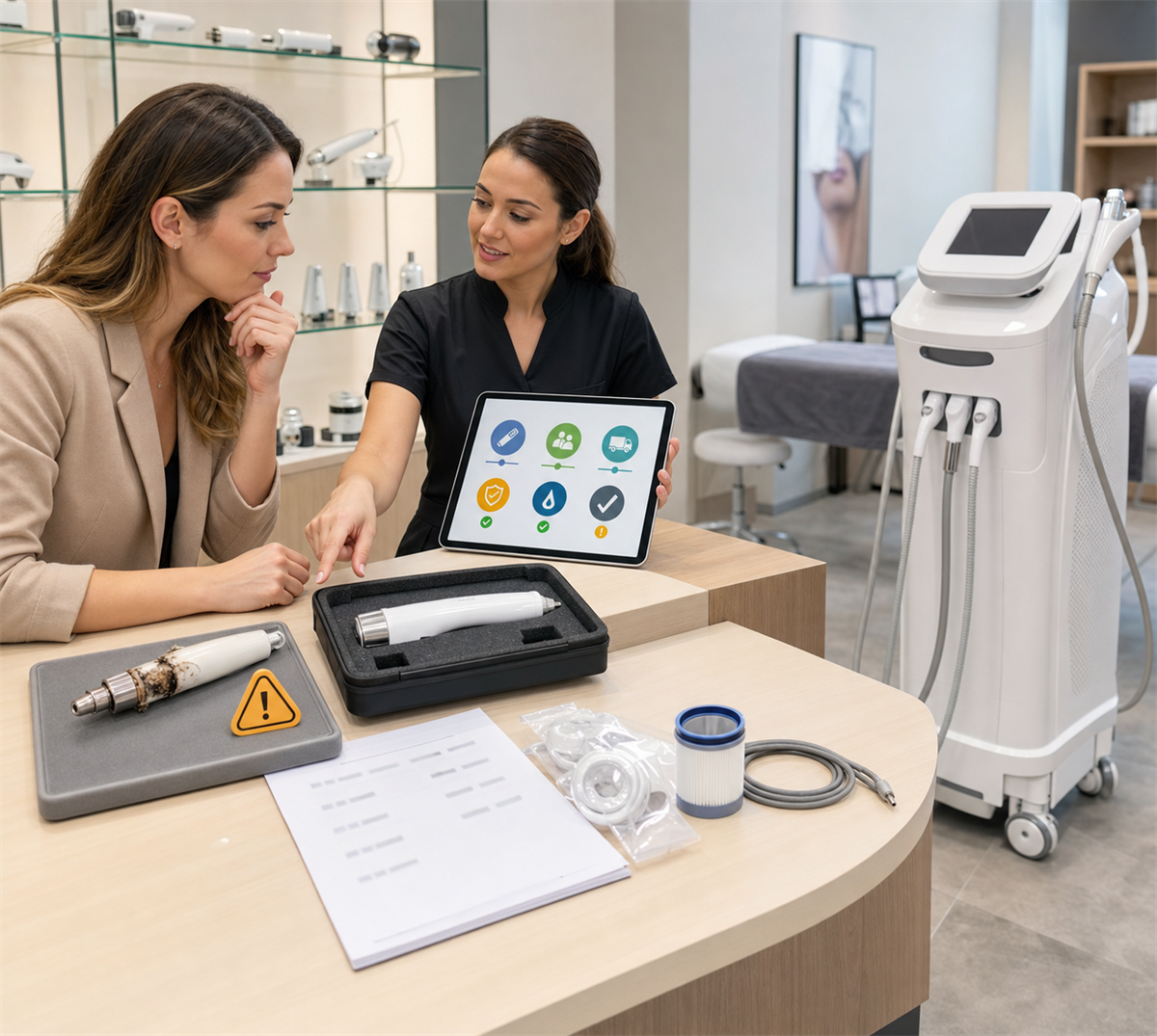
Before buying, salons and distributors should ask for a spare parts and consumables list.
Important questions include:
- What parts are consumables?
- What parts are wear parts?
- What parts are covered by warranty?
- What parts are excluded from warranty?
- How long is the main unit warranty?
- How long is the handpiece warranty?
- How much does each handle or probe cost?
- How much do filters, tubes, seals, tips, lamps, cartridges, and membranes cost?
- What is the rated life or usage count for each consumable?
- What is the average replacement cycle?
- Are parts always in stock?
- What is the delivery time for spare parts?
- Is there a minimum order quantity?
- Are parts original or compatible?
- Can salon staff replace the part or is a technician required?
- Who pays labor and shipping?
- What happens after the model is discontinued?
If the supplier cannot provide a spare parts price list, the buyer should be cautious.
How To Judge Whether Replacement Cost Is Reasonable
A replacement part is not too expensive simply because the number looks high. It should be judged against the machine value, treatment profit, service life, and downtime risk.
Use these questions:
- How much revenue does the machine generate per month?
- How often does the part need replacement?
- Is the part a consumable, wear part, or accidental damage item?
- Can the cost be included in treatment pricing?
- Is the part available quickly?
- Does the supplier stock it locally?
- Does replacement require a technician?
- Does the part affect safety or output stability?
- Does using cheaper non-original parts create risk?
- How does the cost compare with other brands?
For example, a HIFU cartridge may look expensive, but if its cost per treatment is clear and the project price is high enough, the cost may be acceptable. A cheap machine with hard-to-find handpieces may be more expensive in the long run.
Should Salons Use Non-Original Replacement Parts?
Using non-original or third-party parts may reduce cost, but it can create compatibility, safety, performance, and warranty risks. Some machines rely on exact connectors, sensors, software recognition, voltage, optical parts, cooling performance, or energy output.
Before using non-original parts, buyers should consider:
- Does the supplier allow it?
- Will warranty be affected?
- Does the part match the exact model?
- Has it been tested with the machine?
- Can it change output or safety performance?
- Who is responsible if the machine fails after installation?
- Is the cost saving worth the risk?
For simple accessories such as covers, basic pads, or external non-critical items, compatible options may be acceptable if safe and allowed. For energy delivery parts, optical parts, circuit boards, sensors, cartridges, and cooling components, original or supplier-approved parts are usually safer.
How To Reduce Replacement Costs
Salons can reduce replacement cost through management, not only negotiation.
Useful methods include:
- Train staff before allowing operation.
- Assign one equipment responsible person.
- Store handpieces in fixed positions.
- Avoid pulling cables from the wire.
- Use protective holders and handle racks.
- Replace filters and tubes on schedule.
- Clean probes and tips according to the manual.
- Avoid unsuitable disinfectants.
- Keep liquids away from electrical parts.
- Use correct voltage and stable power.
- Keep maintenance and cleaning logs.
- Stop using the machine when error codes or abnormal heat appear.
- Stock fast-moving low-cost parts.
- Confirm warranty before opening or repairing the machine.
Most expensive accessory damage is not sudden. It often starts with poor storage, skipped cleaning, blocked filters, loose cables, rough handling, or lack of training.
How Much Inventory Should A Salon Keep?
Small salons do not need to stock every expensive part, but they should keep enough fast-moving parts to avoid downtime.
Practical inventory advice:
- Keep 2 to 4 weeks of disposable consumables.
- Keep spare filters, tubes, seals, and tips for high-use machines.
- Keep one backup cable or simple external accessory if it is low-cost and often used.
- For profitable core projects, consider keeping a backup handpiece if downtime would be costly.
- Ask the supplier which parts fail most often.
- Confirm lead time before peak seasons and promotions.
The right inventory level depends on treatment volume, supplier delivery speed, part cost, and the machine’s importance to revenue.
How Distributors Can Turn Spare Parts Into A Service Advantage
For distributors, spare parts are not only after-sales burden. They can become a competitive advantage.
Distributors can improve customer trust by providing:
- Transparent spare parts price list.
- Consumable wholesale policy.
- Local stock for fast-moving parts.
- Clear warranty boundary.
- Part replacement videos.
- Technical support group.
- Repair ticket system.
- Preventive maintenance packages.
- Annual inspection service.
- Backup handpiece rental or loan policy.
- Reorder reminders for consumables.
Many salons are willing to pay more for machines if they know spare parts can be delivered quickly and service is clear.
How Manufacturers Can Reduce Buyer Concerns
Manufacturers can make equipment easier to sell by providing clear replacement cost information before purchase.
Useful documents include:
- Spare parts price list.
- Consumable price list.
- Handpiece warranty policy.
- Consumable life table.
- User-replaceable part list.
- Technician-only repair list.
- Maintenance guide.
- Cleaning compatibility guide.
- Error code guide.
- Stock and lead time policy.
- Discontinued model support policy.
When buyers can estimate long-term cost, they are more likely to trust the supplier.
Red Flags When Evaluating Replacement Costs
Be careful if:
- Supplier refuses to provide a spare parts price list.
- Handpiece warranty is not written.
- Consumable cost is unclear.
- The machine uses proprietary parts but supplier has no stock.
- Parts can only be purchased in large minimum quantities.
- Delivery time for key parts is very long.
- Supplier says all parts are cheap but cannot provide prices.
- Warranty excludes almost every important accessory.
- Non-original parts are encouraged without safety explanation.
- Replacement requires opening the machine but no technician support is available.
- The supplier cannot explain which parts are user-replaceable.
These red flags may indicate high future after-sales cost.
Common Scenarios
Scenario 1: Filter Or Tube Damage
The part is usually low-cost, but if the salon does not stock it, the machine may stop. The solution is to keep backup filters and tubes.
Scenario 2: RF Handpiece Dropped By Staff
This may be expensive and may not be covered by warranty if caused by accidental damage. Staff training and proper storage can prevent it.
Scenario 3: HIFU Cartridge Used Up
This is usually a normal consumable cost. It should be calculated into every treatment price.
Scenario 4: IPL Lamp Reaches Shot Count
Lamp replacement is often a planned cost, not a repair surprise. Buyers should ask lamp price and shot count before purchase.
Scenario 5: Circuit Board Fails During Warranty
If the fault is a covered quality issue under normal use, the supplier may replace or repair it. The buyer should confirm labor and shipping rules.
Scenario 6: Skin Analyzer Camera Fails
Camera modules can be costly and may affect consultation revenue. Buyers should confirm warranty, calibration, software compatibility, and replacement lead time.
FAQ
Are beauty equipment replacement parts expensive?
Some are inexpensive, such as filters, tubes, seals, tips, and covers. Core parts such as handpieces, probes, cartridges, lamps, circuit boards, cooling systems, laser modules, compressors, and camera modules can be expensive.
Are damaged accessories covered by warranty?
Only if the damage is within the warranty scope and caused by a covered defect. Dropping, water damage, misuse, unauthorized repair, normal consumable use, and wear parts may be excluded.
Should salons ask for spare part prices before buying?
Yes. Buyers should ask for a spare parts and consumables price list before purchase, especially for handpieces, probes, lamps, HIFU cartridges, filters, tubes, seals, and software subscriptions.
Is it safe to use cheaper non-original parts?
It depends on the part. Simple non-critical accessories may be acceptable if safe and compatible, but energy, optical, electrical, sensor, cartridge, and cooling parts should usually be original or supplier-approved.
How can salons reduce replacement cost?
They can reduce cost through staff training, proper storage, daily checks, cleaning, filter replacement, maintenance records, correct voltage, approved accessories, and keeping backup low-cost consumables.
Conclusion
Beauty equipment accessory replacement cost depends on the part type, damage reason, warranty scope, supplier policy, labor, shipping, and downtime. Low-cost items such as tips, filters, tubes, and seals are regular operating costs. High-value parts such as handpieces, probes, IPL lamps, HIFU cartridges, cooling systems, circuit boards, laser modules, and camera modules can be expensive.
For salons, the best approach is to ask for a spare parts price list before buying, calculate replacement cost into project pricing, keep basic parts in stock, and train staff to prevent avoidable damage. For distributors and manufacturers, transparent spare part pricing and fast supply can become a strong after-sales advantage.