Share optimized solutions, professional valve knowledge and industry news
Please enter the relevant terms or keywords you need to consult, and relevant articles will appear in the search results. If you can’t find the answer you need, please feel free to contact us and we will be happy to help. Or you can directly send an email to beauty@shefmon.com
What Factors Affect Cryolipolysis Treatment Outcomes?
- shefmon
Cryolipolysis has become one of the most widely used non-invasive fat reduction technologies in aesthetic clinics due to its ability to selectively target fat cells through controlled cooling. However, treatment results are not uniform across all patients or devices. Multiple biological, technical, and procedural factors influence the final outcome, including fat reduction efficiency, skin response, and overall body contouring effect. Understanding these variables is essential for clinics and practitioners to optimize protocols and set realistic expectations.
1. Device Parameters and Technical Settings
1.1 Cooling Temperature Accuracy
One of the most critical factors in cryolipolysis is the precision of cooling temperature. Fat cells are more sensitive to cold than surrounding tissues, and controlled cooling typically targets a range between -5°C and -10°C depending on device design.
If the temperature is too high, fat cell crystallization may be insufficient, leading to weak results. If it is too low, there is a higher risk of skin irritation, nerve sensitivity, or tissue damage. Therefore, stable thermal control directly affects both safety and efficacy.
1.2 Vacuum Pressure and Suction Strength
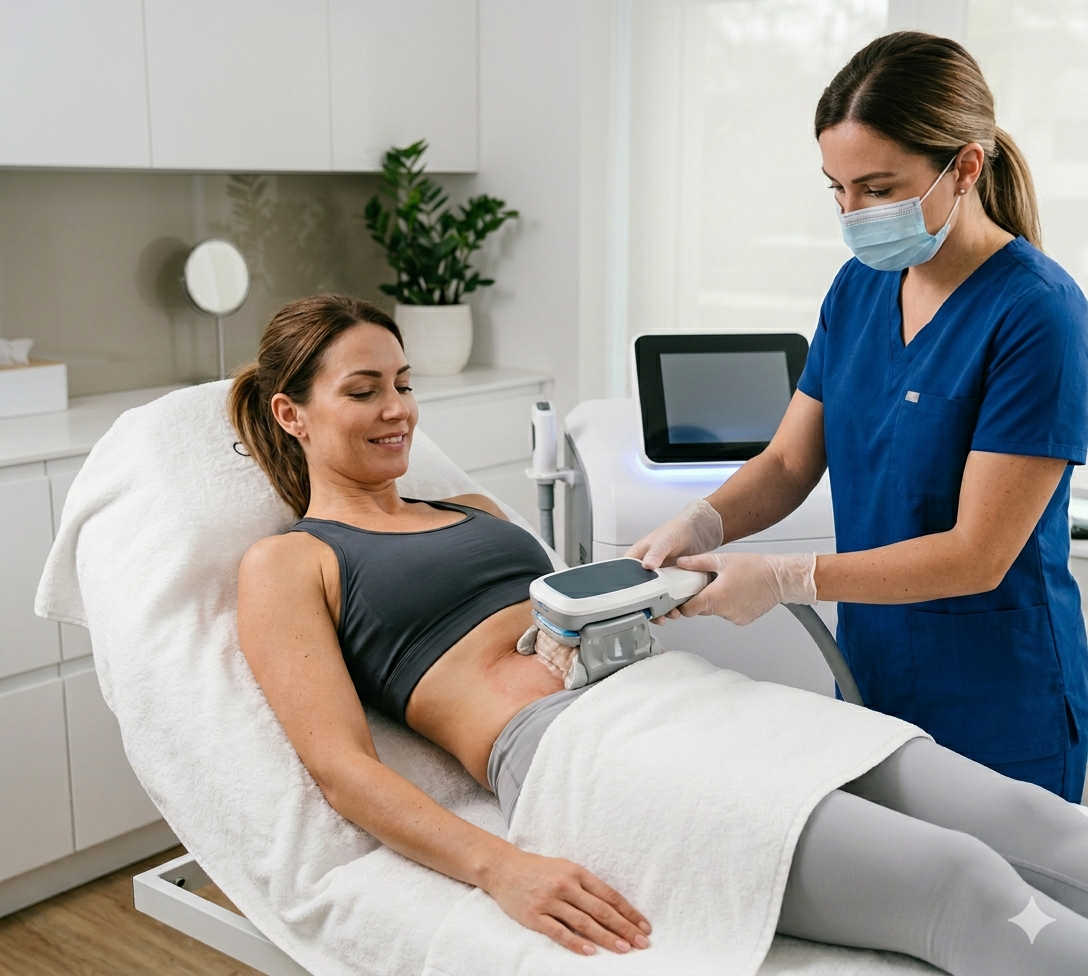
Vacuum suction is responsible for drawing tissue into the applicator cup, ensuring that subcutaneous fat is properly exposed to cooling plates. The strength and consistency of suction influence how much fat can be treated in a single cycle.
Stronger suction generally improves fat layer engagement, but excessive pressure may cause bruising or discomfort. Insufficient suction, on the other hand, reduces contact efficiency and leads to uneven cooling distribution.
1.3 Applicator Design and Contact Surface
Different applicator shapes and sizes are designed for specific body areas such as the abdomen, flanks, thighs, or arms. A well-fitted applicator ensures uniform cooling and better tissue capture.
If the applicator does not match the anatomical contour, gaps may form, resulting in uneven fat reduction or reduced effectiveness in certain zones.
2. Patient Biological Factors
2.1 Fat Thickness and Distribution
Subcutaneous fat thickness is one of the strongest predictors of cryolipolysis results. Patients with moderate, pinchable fat layers generally respond better than those with very thin or extremely thick fat deposits.
If the fat layer is too thin, there may not be enough adipose tissue to achieve visible reduction. If it is too thick, cooling may not penetrate evenly across the entire fat mass.
2.2 Metabolic Rate and Fat Cell Response
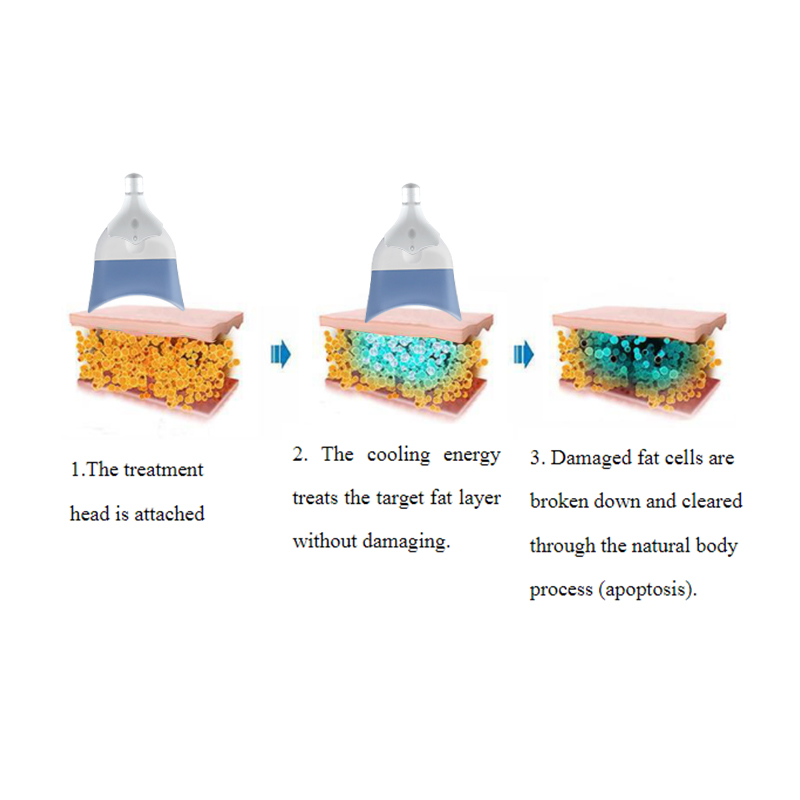
After cryolipolysis, damaged fat cells undergo a natural inflammatory process and are gradually eliminated through the lymphatic system. Patients with a higher metabolic rate may show faster visible results, while slower metabolism can delay the final outcome.
Individual differences in lipid metabolism also affect how efficiently the body clears apoptotic fat cells.
2.3 Age, Hormonal Balance, and Skin Condition
Age and hormonal factors influence fat storage patterns and skin elasticity. Younger patients or those with good skin tone tend to experience smoother contouring after fat reduction.
In contrast, older patients or those with reduced skin elasticity may experience less noticeable contour refinement even if fat volume is reduced.
3. Treatment Protocol and Operator Technique
3.1 Treatment Time and Energy Exposure
The duration of cooling exposure plays a significant role in treatment effectiveness. Standard protocols typically range from 35 to 60 minutes per area, depending on device specifications.
Shorter sessions may not fully trigger adipocyte crystallization, while overly long exposure does not necessarily improve results and may increase discomfort.
3.2 Placement Strategy and Layer Targeting
Correct applicator placement ensures that the thickest fat layer is targeted. Skilled practitioners assess body composition before selecting treatment zones to avoid overlapping or missing key areas.
Poor placement can result in asymmetrical fat reduction or incomplete contouring.
3.3 Number of Sessions and Treatment Planning
Cryolipolysis is not a one-time procedure for most patients. Optimal outcomes often require multiple sessions spaced several weeks apart.
A structured treatment plan allows the body to gradually eliminate damaged fat cells and improves overall contour refinement.
4. Post-Treatment Care and Lifestyle Factors
4.1 Hydration and Lymphatic Function
After treatment, the lymphatic system plays a central role in removing disrupted fat cells. Adequate hydration supports lymph flow and helps accelerate metabolic clearance.
Patients who maintain good fluid intake often experience more consistent and visible results.
4.2 Physical Activity and Metabolic Support
Regular exercise can enhance circulation and support the natural elimination of fat cell debris. Light to moderate physical activity is often recommended after treatment to stimulate lymphatic drainage.
Sedentary lifestyles may slow down visible progress.
4.3 Diet and Long-Term Fat Stability
Although cryolipolysis reduces fat cell numbers in treated areas, remaining fat cells can still expand if caloric intake is excessive. A balanced diet helps maintain long-term results and prevents fat redistribution.
Patients who follow stable nutritional habits tend to achieve more durable body contouring effects.

5. Practitioner Skill and Clinical Experience
5.1 Assessment and Patient Selection
Proper patient evaluation is essential for predicting outcomes. Not all individuals are ideal candidates for cryolipolysis, especially those with minimal fat or poor skin elasticity.
Experienced practitioners can identify suitable candidates and design personalized treatment strategies.
5.2 Technical Execution and Safety Control
Operator expertise directly affects suction placement, cooling uniformity, and overall device handling. Even small errors in positioning or parameter adjustment can significantly influence results.
Well-trained professionals ensure consistent performance and reduce complication risks.
Conclusion
Cryolipolysis outcomes are determined by a combination of device performance, patient physiology, treatment protocol, and post-care behavior. While advanced technology ensures controlled fat reduction, optimal results depend heavily on correct parameter settings, proper applicator usage, and individual biological response. Clinics that integrate precise technical control with personalized treatment planning can achieve more predictable and satisfying body contouring results for their patients.