









Shockwave therapy has become an increasingly important technology in physiotherapy, sports recovery, orthopedics, and rehabilitation. However, not all shockwave systems deliver mechanical energy in the same way. Two major approaches are piezoelectric focused shockwave и radial shockwave. Although both use mechanical energy to stimulate tissue, their energy-generation principles, propagation patterns, treatment depth, and energy distribution are significantly different. For clinics, physiotherapy centers, and professional equipment distributors, understanding these differences can help determine which technology is better suited to a specific treatment portfolio.
1. What Is Piezoelectric Focused Shockwave?
Piezoelectric focused shockwave technology uses the inverse piezoelectric effect to generate mechanical energy. A large number of piezoelectric ceramic crystals are arranged in a spherical array. When electrical pulses are applied, the crystals generate synchronized mechanical pulses. Because of the spherical geometry of the applicator, the acoustic waves converge toward a defined focal region.
Instead of spreading energy broadly from the treatment surface, the system is designed to concentrate mechanical energy at a selected depth. This makes focused shockwave technology particularly interesting for treatment protocols that require targeted energy delivery to deeper tissue structures.
Key Characteristics
- Defined focal zone
- Adjustable treatment depth
- Concentrated energy delivery
- High focusing precision
- Stable energy generation
- Relatively low operating noise
- Reduced surface energy concentration
The exact focal-zone size and precision depend on the specific device design, crystal arrangement, applicator, and operating parameters.
2. What Is Radial Shockwave?
Radial shockwave, also commonly called радиальная волновая терапия давления, generates mechanical pressure waves at the applicator and distributes them outward into the tissue. Many radial systems use a pneumatic mechanism. Compressed air accelerates a projectile inside the handpiece, which strikes an applicator and creates a pressure wave.
Unlike focused shockwave, the energy does not converge toward a specific focal point deep inside the tissue. Instead, the mechanical energy propagates outward from the applicator, with the energy distribution changing as the wave travels through tissue.
Key Characteristics
- Divergent wave propagation
- Broad mechanical stimulation
- No defined deep focal point
- Stronger mechanical effect closer to the applicator
- Generally suited to superficial and relatively broad treatment areas
- Simple and practical handpiece design in many systems
Radial shockwave can therefore be useful when the treatment objective is broad mechanical stimulation rather than highly targeted energy delivery.

3. Piezoelectric Focused vs Radial Shockwave
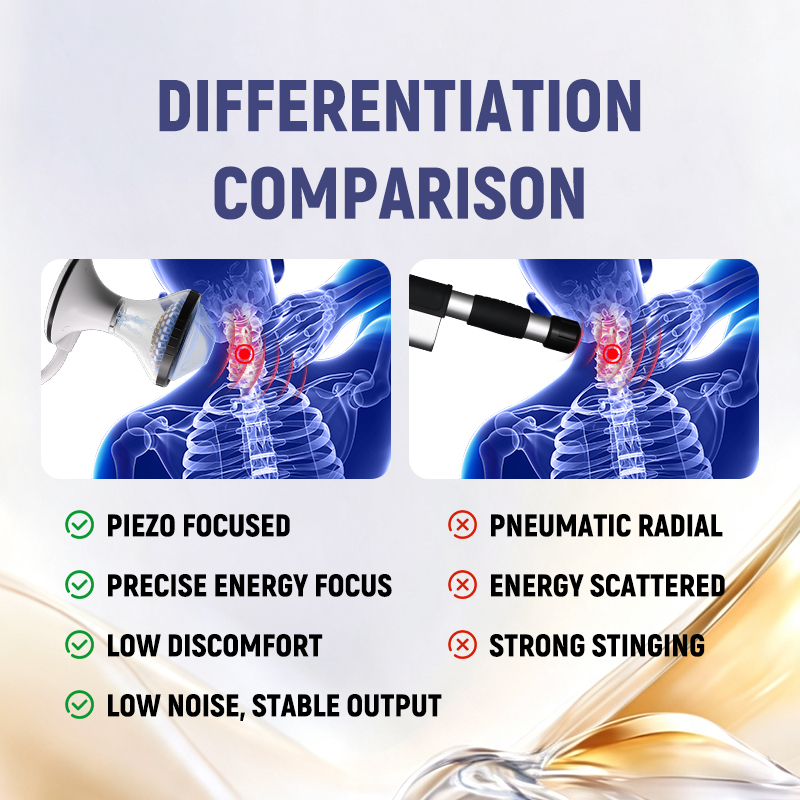
The biggest difference between the two technologies is how the energy travels after it is generated. Piezoelectric focused shockwave concentrates acoustic energy toward a defined focal region, while radial shockwave generates a pressure wave that propagates outward from the applicator. This difference determines how energy is distributed throughout the treatment area.
3.1 Energy Propagation
Piezoelectric focused shockwave uses generated acoustic waves that converge toward a defined focal region. Радиальная ударная волна, by comparison, produces a pressure wave that propagates outward from the applicator in a divergent pattern.
This difference in propagation is one of the fundamental distinctions between focused and radial systems.
3.2 Energy Distribution
With focused shockwave, energy can be concentrated around a selected focal region. The practitioner can select different applicators or depth settings according to the intended treatment area. With radial shockwave, energy is distributed more broadly from the treatment surface. Mechanical stimulation is strongest closer to the applicator and generally decreases with increasing depth.
Therefore, the two technologies should not be evaluated simply by comparing their maximum pressure values.
3.3 Treatment Depth
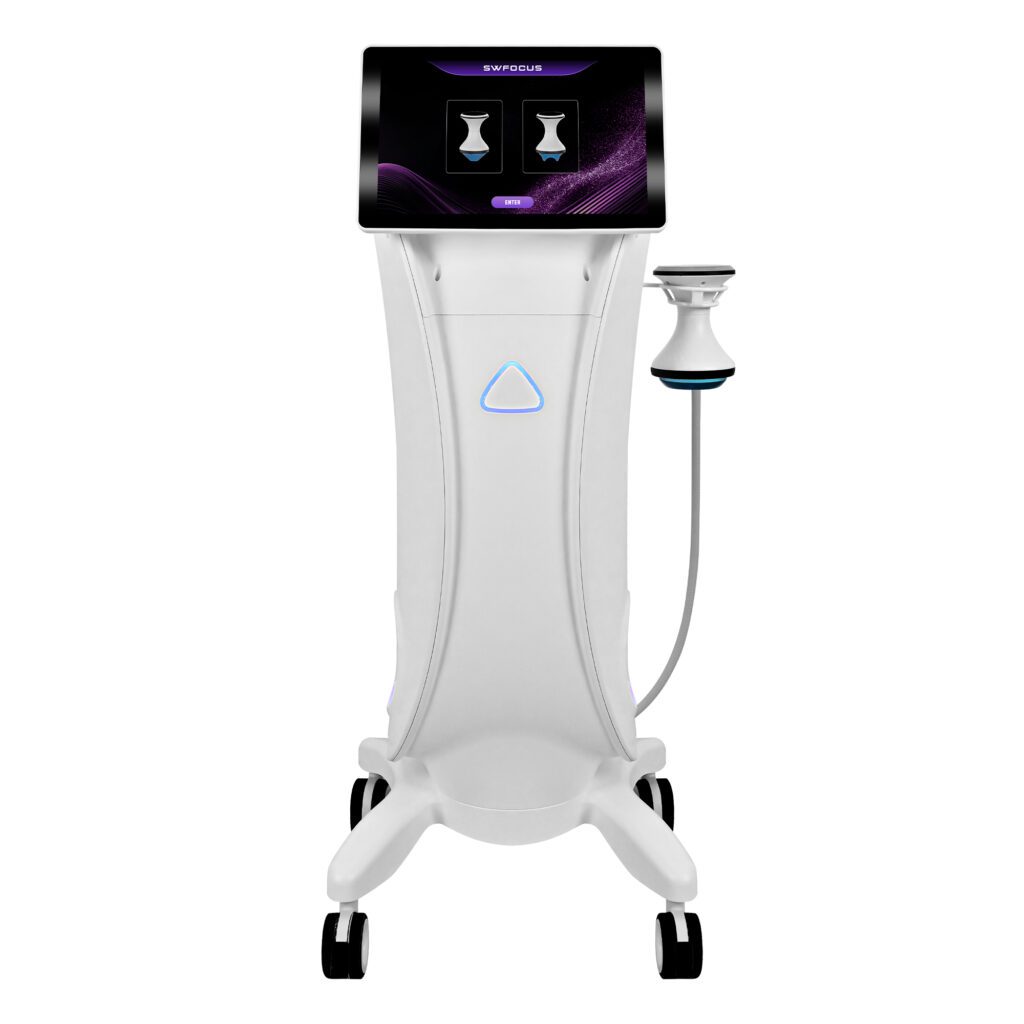
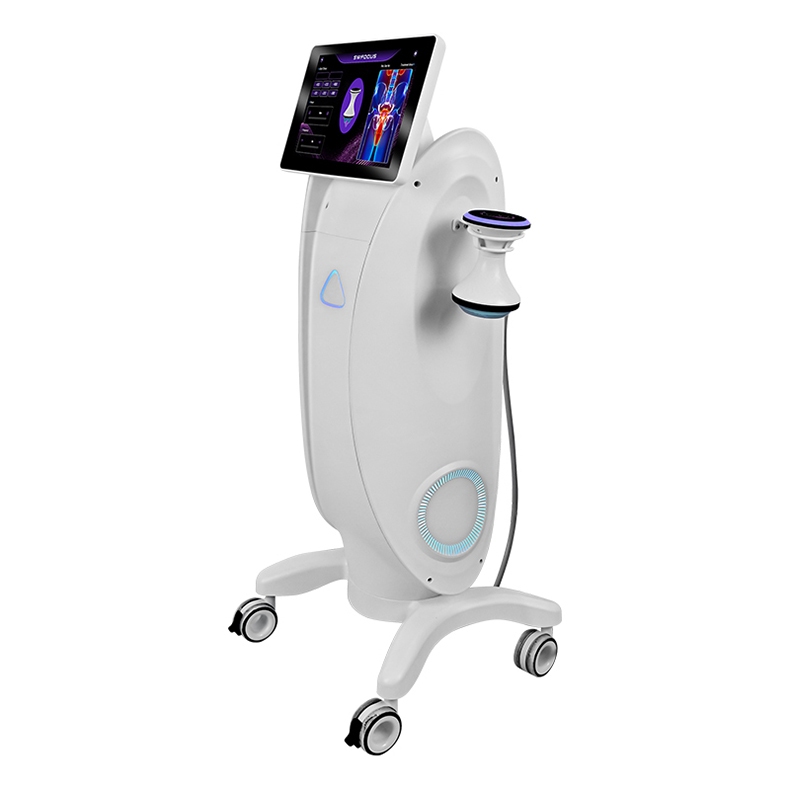
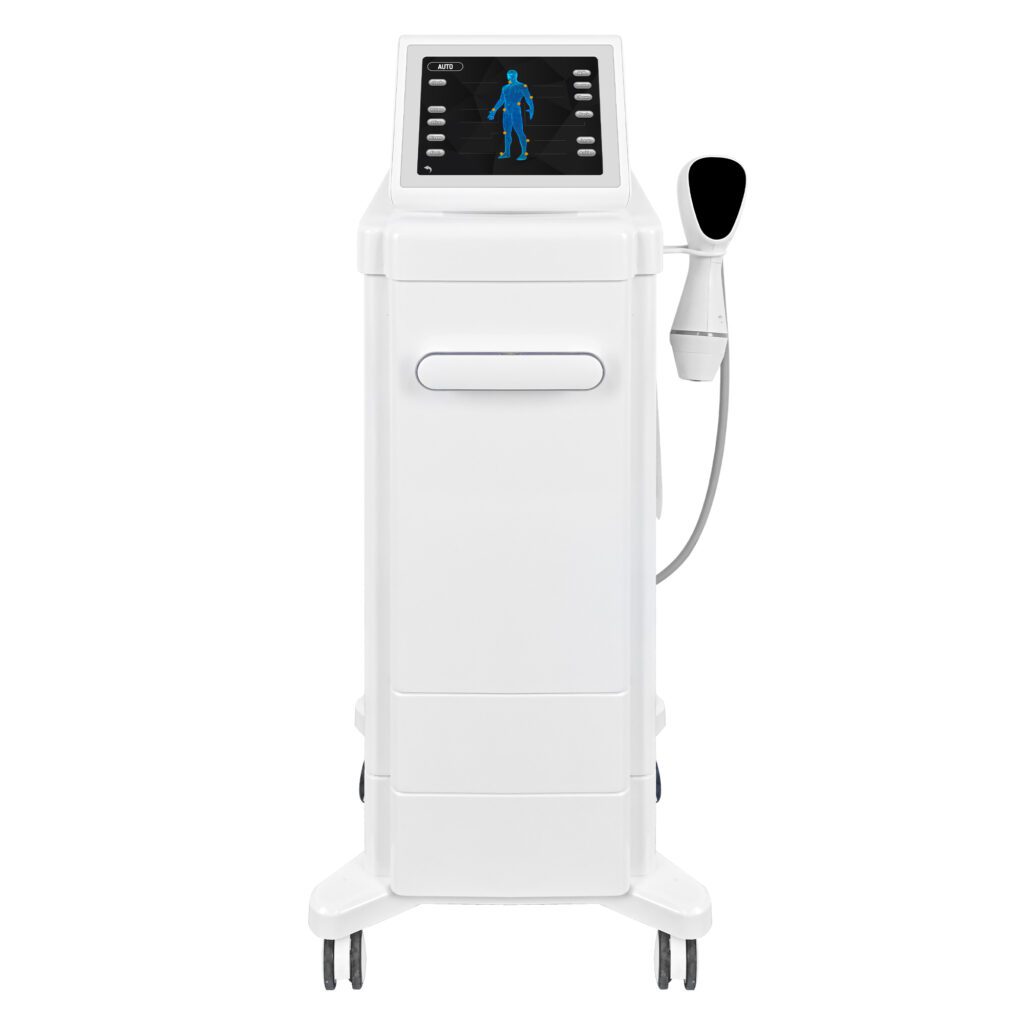
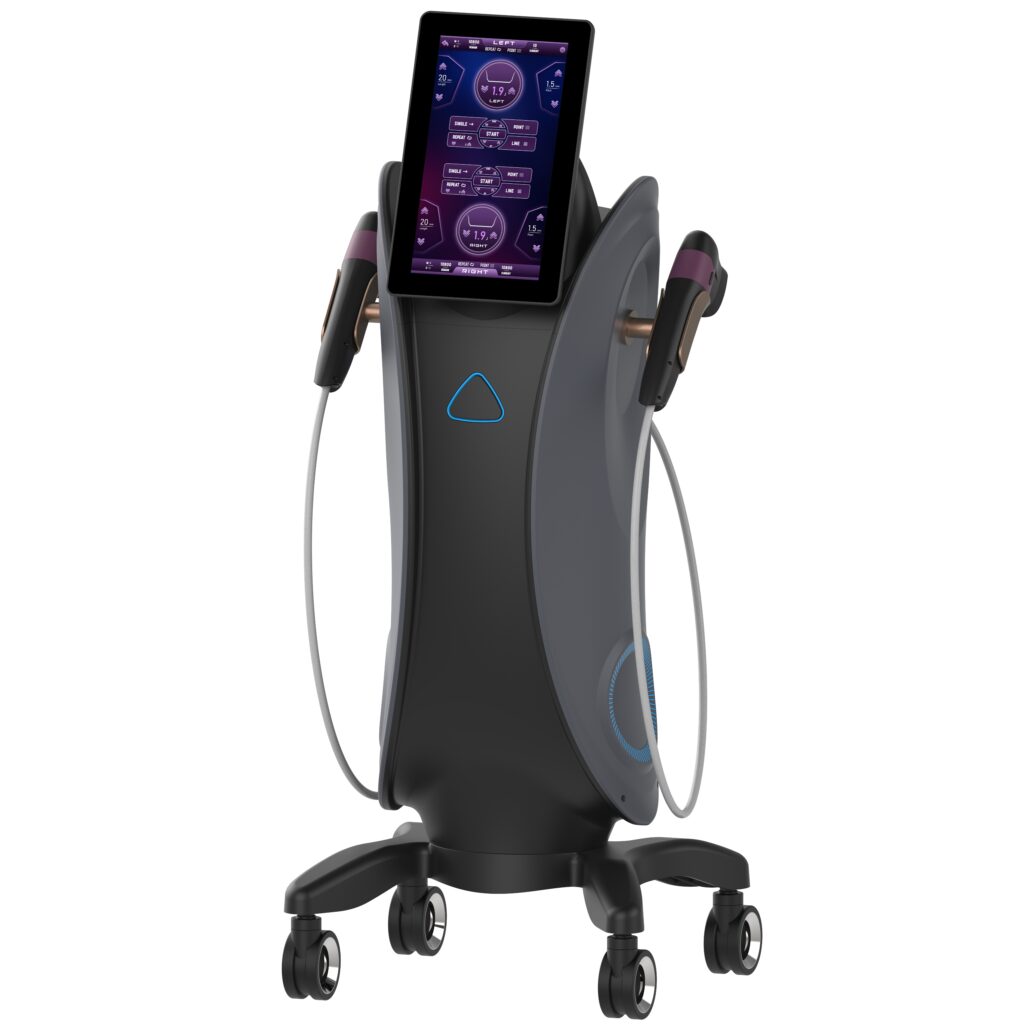
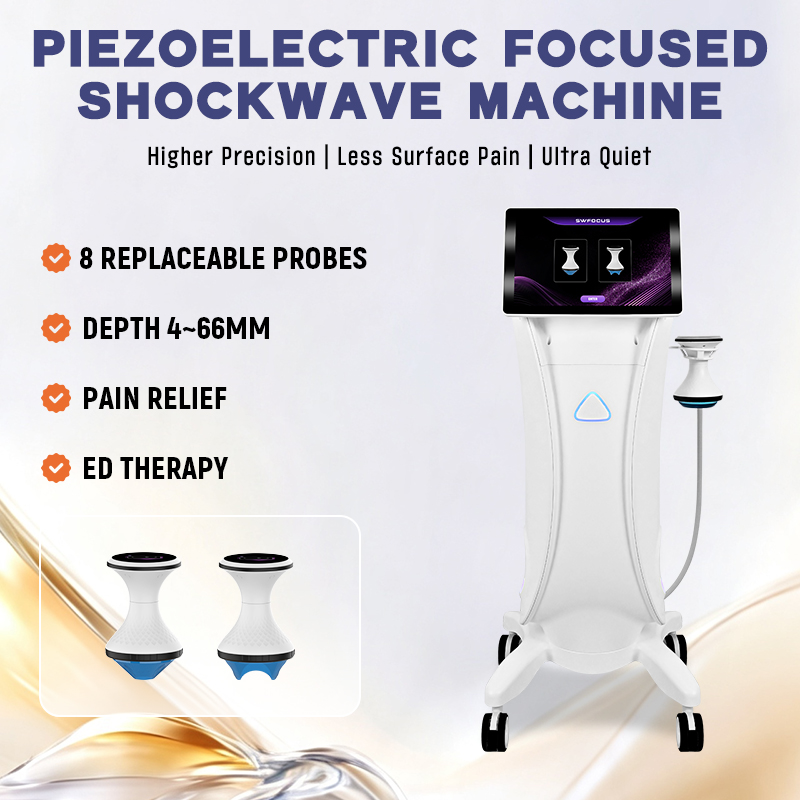
Focused shockwave systems are designed to deliver energy to specific focal depths. For example, a professional piezoelectric focused system may offer multiple applicators for different effective focal-depth ranges. The SHEFMON SW33, for example, provides an adjustable treatment depth range of 4–66 mm with eight interchangeable silicone probes.
Radial shockwave systems generally provide broader, more superficial mechanical stimulation. Their practical treatment depth depends on the pressure level, applicator, tissue characteristics, and device design. For buyers, this means that “penetration depth” should be evaluated together with the actual energy-delivery pattern, rather than as an isolated specification.
4. Precision and Treatment Comfort
Another important difference is the concentration of energy. Piezoelectric focused shockwave uses a multi-crystal array to generate and converge acoustic energy. The focused design can help limit unnecessary energy dispersion around the treatment target.
Because the energy is concentrated at a focal region rather than distributed across a broad superficial area, focused systems can provide a more controlled treatment experience when appropriate parameters and coupling are used. Radial systems, by comparison, deliver mechanical pressure from the applicator surface. Treatment sensation can vary according to pressure, frequency, applicator, body area, and individual sensitivity.
Neither technology should automatically be described as “painless.” Treatment comfort depends on both the equipment and the treatment protocol.
5. Different Applications, Different Strengths
Piezoelectric Focused Shockwave
Focused shockwave can be considered for protocols involving more targeted treatment of:
- Tendinopathy
- Calcific tendon conditions
- Подошвенный фасциит
- Deep muscular trigger points
- Миофасциальная боль
- Sports-related soft tissue conditions
- Selected orthopedic and rehabilitation applications
- Selected urology protocols
Its main advantage is the ability to target energy at selected depths.
Радиальная ударная волна
Radial shockwave is commonly used for broader mechanical stimulation, including:
- Мышечное напряжение
- Myofascial treatment
- Superficial soft tissue discomfort
- Восстановление после спортивных травм
- General physiotherapy applications
- Broad-area soft tissue treatment
Its relatively simple operating principle can also make radial systems practical for clinics that prioritize versatility and routine treatment efficiency.
6. Key Differences at a Glance
| Особенность | Piezoelectric Focused Shockwave | Радиальная ударная волна |
|---|---|---|
| Wave Type | Focused acoustic shockwave | Radial pressure wave |
| Energy Propagation | Converges toward focal region | Spreads outward |
| Focal Point | Defined focal region | No defined deep focal point |
| Energy Distribution | Концентрированный | Broadly distributed |
| Контроль глубины | Targeted focal depths | Primarily determined by pressure and applicator |
| Generation Method | Piezoelectric crystal array | Commonly pneumatic mechanism |
| Точность | High focusing capability | Broad mechanical stimulation |
| Typical Treatment Approach | Targeted/deeper structures | Superficial and broader areas |
| Operating Noise | Generally low | Varies by system |
| Main Advantage | Precise energy delivery | Broad and practical stimulation |
7. Which Shockwave Technology Should a Clinic Choose?
The choice between piezoelectric focused shockwave and radial shockwave should depend on the clinic’s treatment requirements rather than the idea that one technology is universally better. For clinics that primarily require broad superficial mechanical stimulation, radial shockwave can be a practical solution.
For clinics that want more controlled energy delivery at selected depths, piezoelectric focused shockwave offers a different technological approach. For professional buyers, several specifications should therefore be considered together: energy-generation technology, focal characteristics, treatment depth, applicator configuration, operating pressure, frequency range, handpiece lifespan, noise level, and intended applications.
Заключение
Piezoelectric focused shockwave and radial shockwave are based on two different approaches to mechanical energy delivery. Piezoelectric focused shockwave uses a multi-crystal piezoelectric array to generate and concentrate acoustic energy toward a defined focal region, making it suitable for targeted treatment at selected depths. Радиальная ударная волна generates divergent pressure waves that spread outward from the applicator, making it suitable for broader and generally more superficial mechanical stimulation. For physiotherapy clinics, sports recovery centers, rehabilitation facilities, and professional distributors, understanding this fundamental difference is more useful than comparing equipment only by pressure or frequency. The right technology ultimately depends on the clinic’s treatment protocols, target applications, practitioner preferences, and equipment requirements.