









Поделитесь оптимизированными решениями, профессиональными знаниями в области клапанов и новостями отрасли
Введите соответствующие термины или ключевые слова, которые вам нужны, и соответствующие статьи появятся в результатах поиска. Если вы не нашли нужный ответ, свяжитесь с нами, и мы будем рады помочь. Или отправьте письмо напрямую на адрес beauty@shefmon.com.
Технология HIFU в медицинском эстетическом оборудовании: преимущества и риски.
- Шефмон
Высокоинтенсивный сфокусированный ультразвук (HIFU) Технология HIFU стала одной из самых обсуждаемых в области медицинской эстетики. Она широко используется в профессиональных эстетических аппаратах для неинвазивных процедур подтяжки и укрепления кожи, предлагая альтернативу хирургической подтяжке лица. Однако, как и любая передовая медицинская эстетическая технология, HIFU имеет как значительные преимущества, так и потенциальные риски. Понимание принципа ее работы и того, чего она может реально достичь, имеет важное значение для клиник, врачей и пациентов, прежде чем выбирать этот вариант лечения.
1. Что представляет собой технология HIFU в медицинских эстетических аппаратах?
1.1 Определение и принцип работы
HIFU, или высокоинтенсивный сфокусированный ультразвук, — это неинвазивная технология, которая направляет концентрированную ультразвуковую энергию в определенные слои кожи, как правило, в слой SMAS (поверхностная мышечно-апоневротическая система), который также используется при хирургической подтяжке лица. Энергия создает точки термической коагуляции под кожей, не повреждая ее поверхность, стимулируя естественную регенерацию коллагена и подтяжку тканей.
1.2 Как медицинские эстетические аппараты используют HIFU
В медицинских эстетических аппаратах HIFU интегрированы системы точного контроля глубины проникновения и регулируемые параметры энергии. Это позволяет специалистам воздействовать на разные слои кожи в зависимости от целей лечения, таких как подтяжка лица, контурирование линии челюсти или уменьшение морщин. В отличие от аппаратов для домашнего использования, профессиональные аппараты HIFU обеспечивают более высокую выходную мощность и более равномерное проникновение, что делает их подходящими для достижения результатов клинического уровня.
2. Преимущества технологии HIFU
2.1 Неинвазивная подтяжка и укрепление кожи
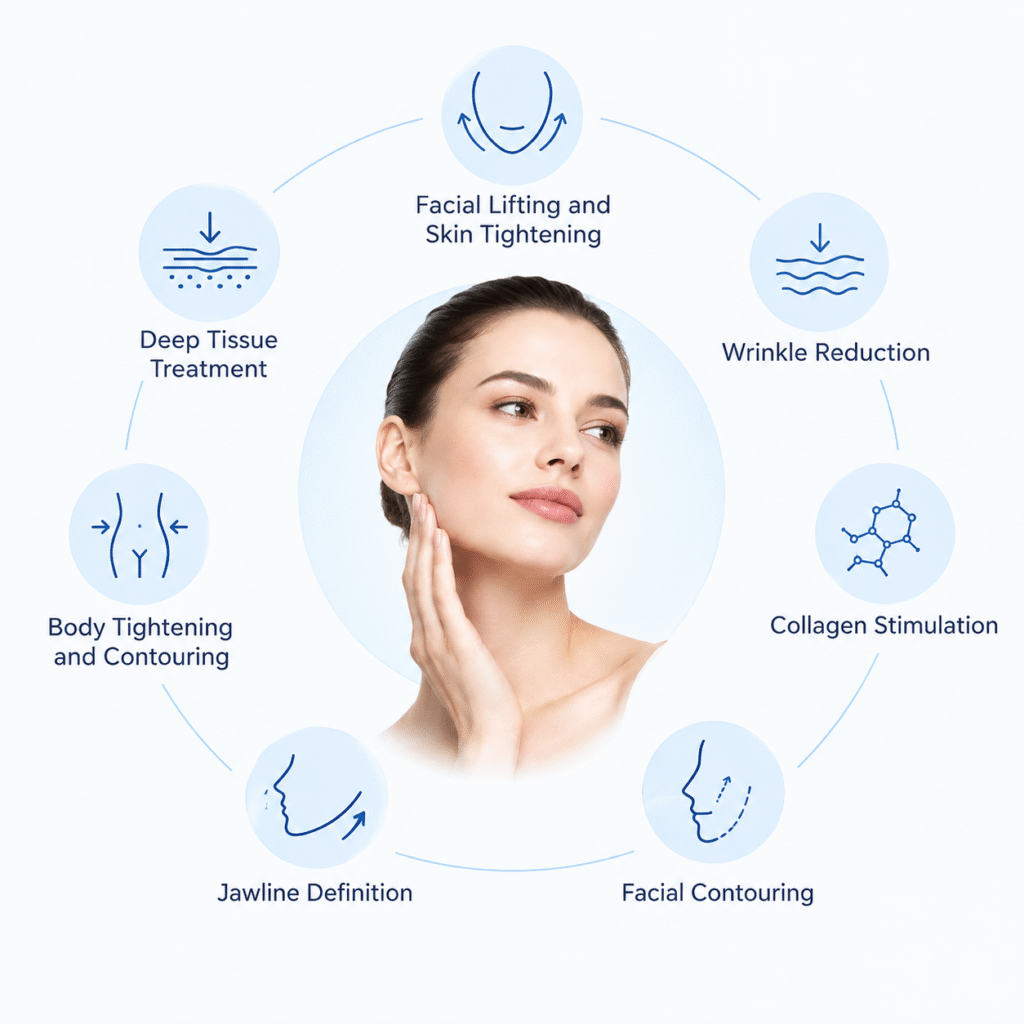
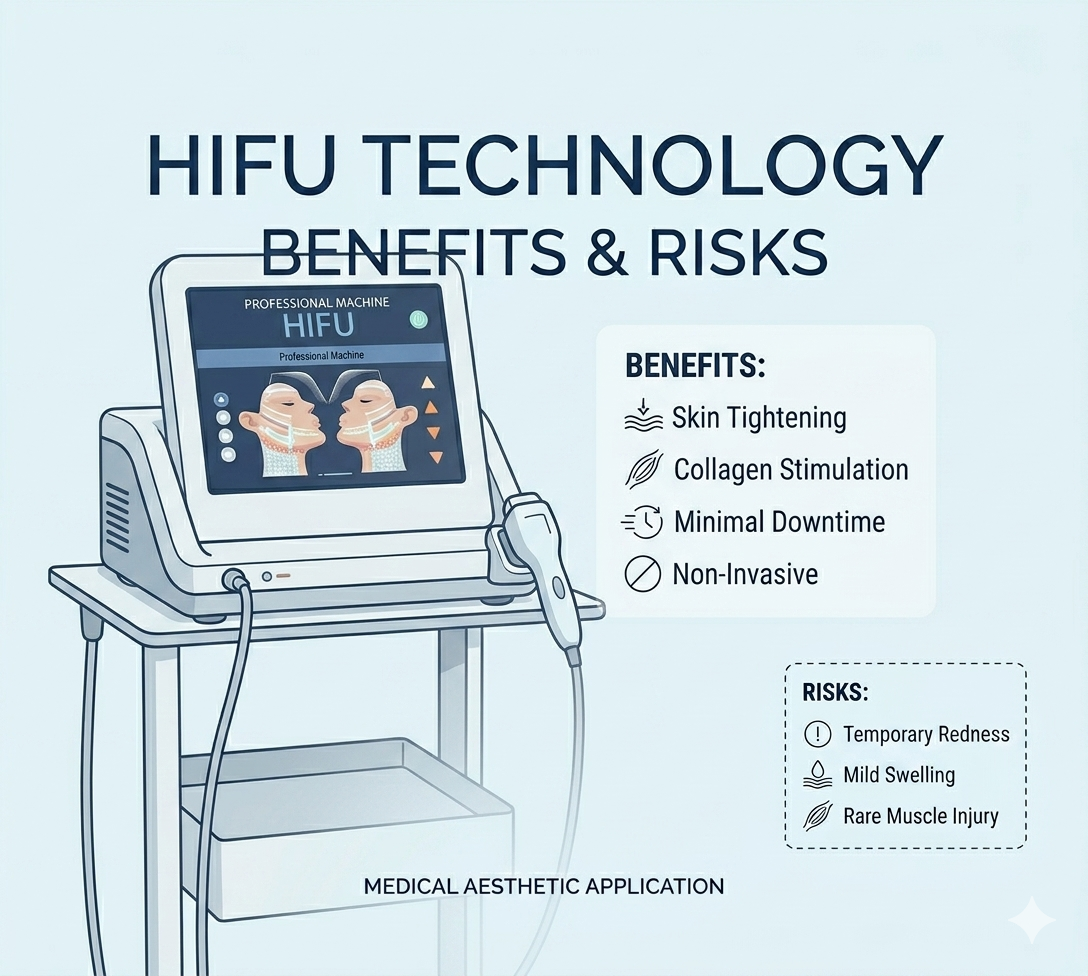
Одним из главных преимуществ технологии HIFU является ее способность подтягивать и укреплять кожу без хирургического вмешательства. Стимулируя выработку коллагена глубоко в коже, она постепенно улучшает эластичность и упругость. Пациенты часто выбирают HIFU в качестве варианта “безоперационной подтяжки лица”, поскольку это позволяет избежать разрезов, анестезии и длительного периода восстановления.
2.2 Длительная стимуляция коллагена
HIFU не только обеспечивает мгновенный эффект подтяжки, но и запускает долгосрочные биологические реакции. После процедуры организм естественным образом вырабатывает новый коллаген в течение нескольких недель или месяцев. Это означает, что результаты продолжают улучшаться со временем и могут сохраняться до 12–18 месяцев в зависимости от состояния кожи и образа жизни.
2.3 Целенаправленное прецизионное лечение
Современные медицинские эстетические аппараты, оснащенные технологией HIFU, позволяют точно контролировать глубину проникновения и подачу энергии. Это дает возможность обрабатывать определенные зоны, такие как лоб, область под глазами, щеки, линию челюсти и шею. Точность снижает повреждение окружающих тканей и повышает общую эффективность лечения.
2.4 Минимальное время простоя
В отличие от хирургических процедур, лечение методом HIFU практически не требует восстановительного периода. Пациенты могут вернуться к обычной повседневной деятельности сразу после сеанса. Это делает процедуру очень привлекательной для занятых людей, которые хотят добиться видимых улучшений, не нарушая свой график.
2.5 Расширение клинического применения
HIFU не ограничивается подтяжкой лица. Он также используется для коррекции контуров тела, подтяжки кожи живота и даже локального уменьшения жировых отложений в некоторых передовых системах. Такая универсальность делает его ценной технологией для эстетических клиник, стремящихся расширить спектр своих услуг.
3. Риски и ограничения технологии HIFU
3.1 Временные побочные эффекты
Несмотря на то, что HIFU — неинвазивная процедура, у некоторых пациентов во время или после неё могут наблюдаться временные побочные эффекты, такие как покраснение, отёк, покалывание или лёгкий дискомфорт. Эти эффекты обычно кратковременны, но могут варьироваться в зависимости от чувствительности кожи и используемого уровня энергии.
3.2 Зависимость от оператора и требования к квалификации
Эффективность и безопасность процедур HIFU во многом зависят от опыта оператора. Неправильный выбор глубины или некорректная калибровка энергии могут привести к неравномерным результатам или ненужному дискомфорту. Именно поэтому процедуры HIFU рекомендуется проводить только обученным специалистам с использованием сертифицированных медицинских эстетических аппаратов.
3.3 Не подходит для всех типов кожи
HIFU подходит не всем. Людям с выраженной дряблостью кожи, некоторыми заболеваниями или очень тонким слоем подкожной жировой ткани на лице оптимальные результаты могут быть не достигнуты. В некоторых случаях более подходящими могут быть альтернативные методы лечения, такие как лазерная шлифовка или хирургическая подтяжка.
3.4 Постепенные и переменные результаты
Хотя многие пациенты отмечают видимые улучшения, результаты могут значительно различаться в зависимости от возраста, состояния кожи и реакции коллагена. В отличие от хирургической подтяжки лица, HIFU не дает мгновенных и впечатляющих изменений, что может привести к нереалистичным ожиданиям, если не будет должным образом объяснено.
3.5. Вопросы стоимости
Профессиональные процедуры HIFU с использованием медицинских эстетических аппаратов могут быть относительно дорогими, особенно в клиниках высокого класса. Для достижения оптимальных результатов может потребоваться несколько сеансов, что увеличивает общую стоимость лечения для пациентов.
4. Клиническое применение HIFU в современных эстетических аппаратах.
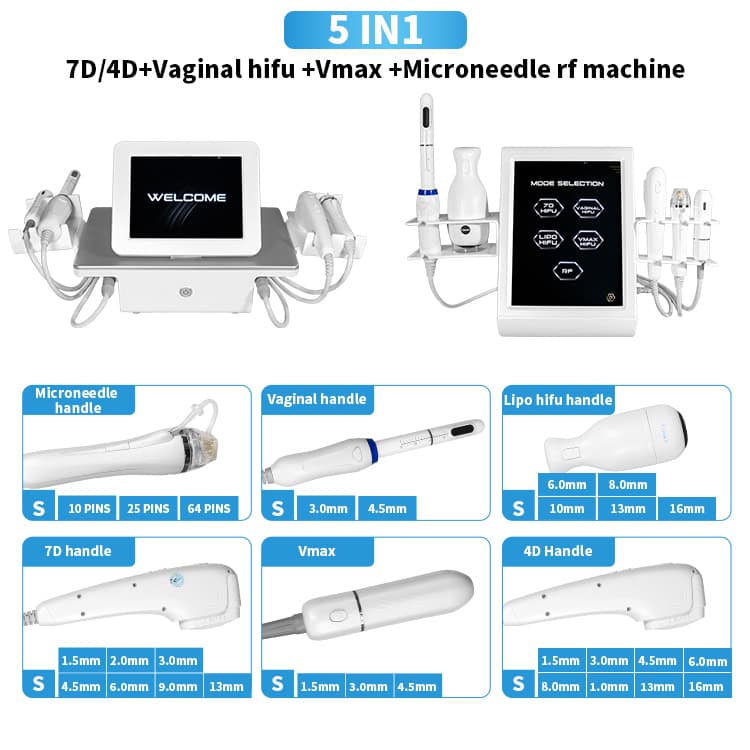
В современных эстетических клиниках, HIFU часто сочетается с другими технологиями, такими как радиочастотная терапия (РЧ). или микроигольчатой терапии для улучшения общих результатов. Например, радиочастотная терапия может использоваться для улучшения поверхностного подтягивания, в то время как высокоинтенсивный сфокусированный ультразвук (HIFU) воздействует на более глубокие структурные слои. Такой комбинированный подход позволяет специалистам более эффективно решать как поверхностные, так и глубокие проблемы старения.
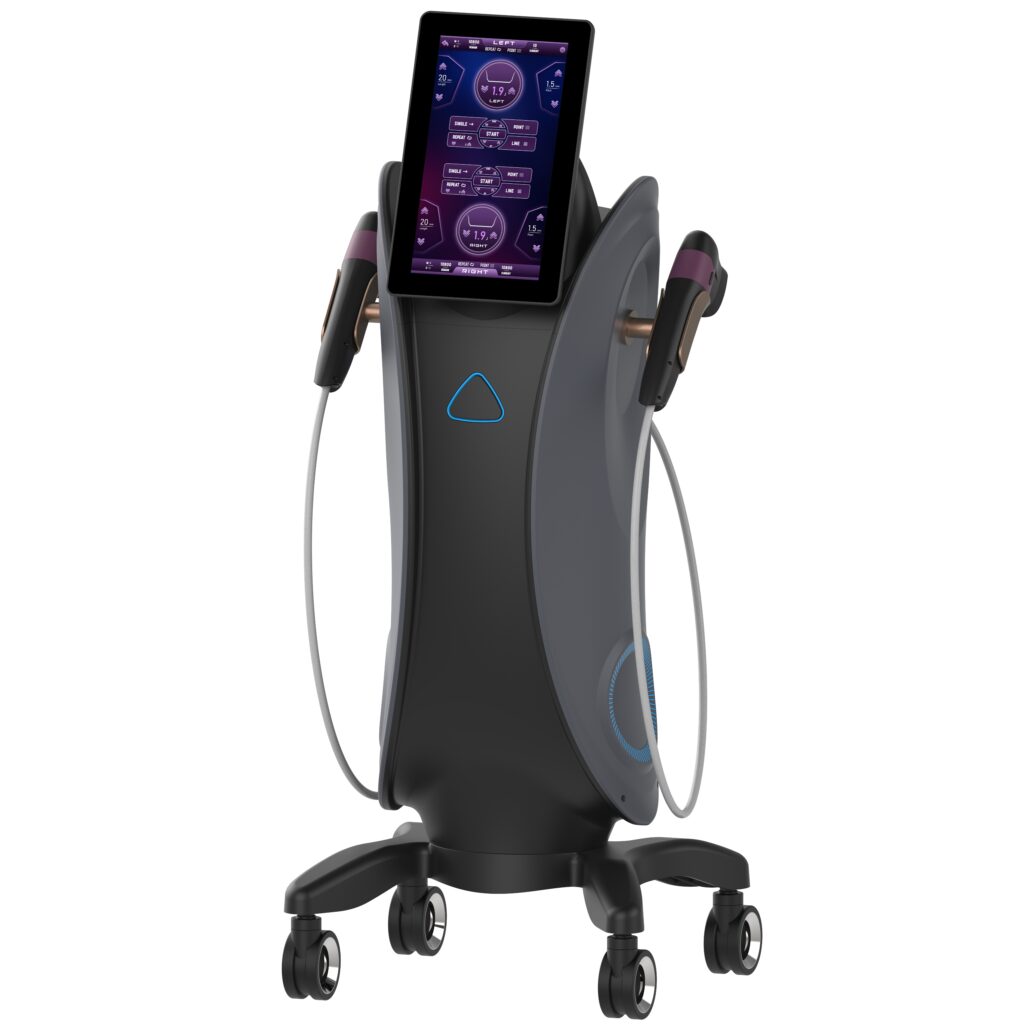
Современные медицинские эстетические аппараты также оснащены многоканальными картриджами HIFU и системами визуализации в реальном времени, что повышает точность и безопасность. Эти инновации продолжают расширять роль HIFU в неинвазивной эстетической медицине и делают лечение более индивидуализированным для различных потребностей пациентов.

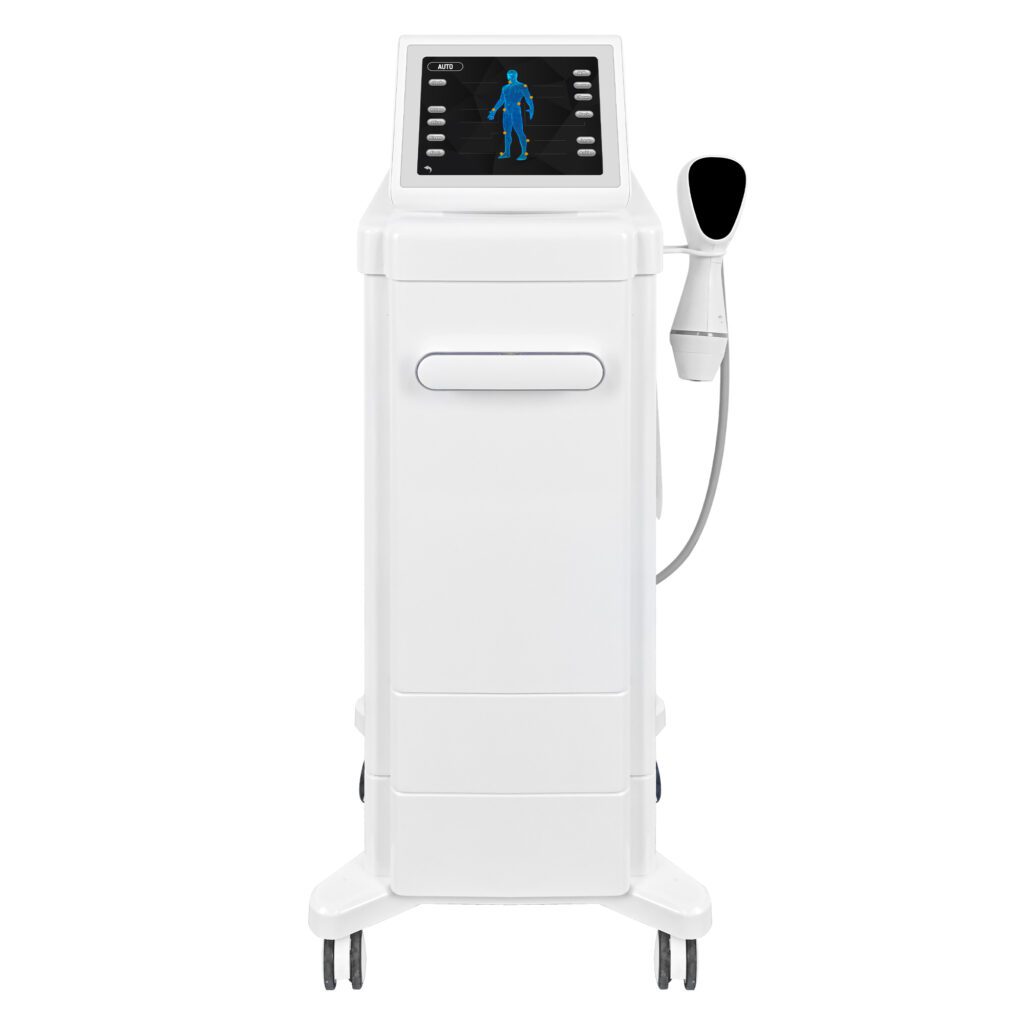
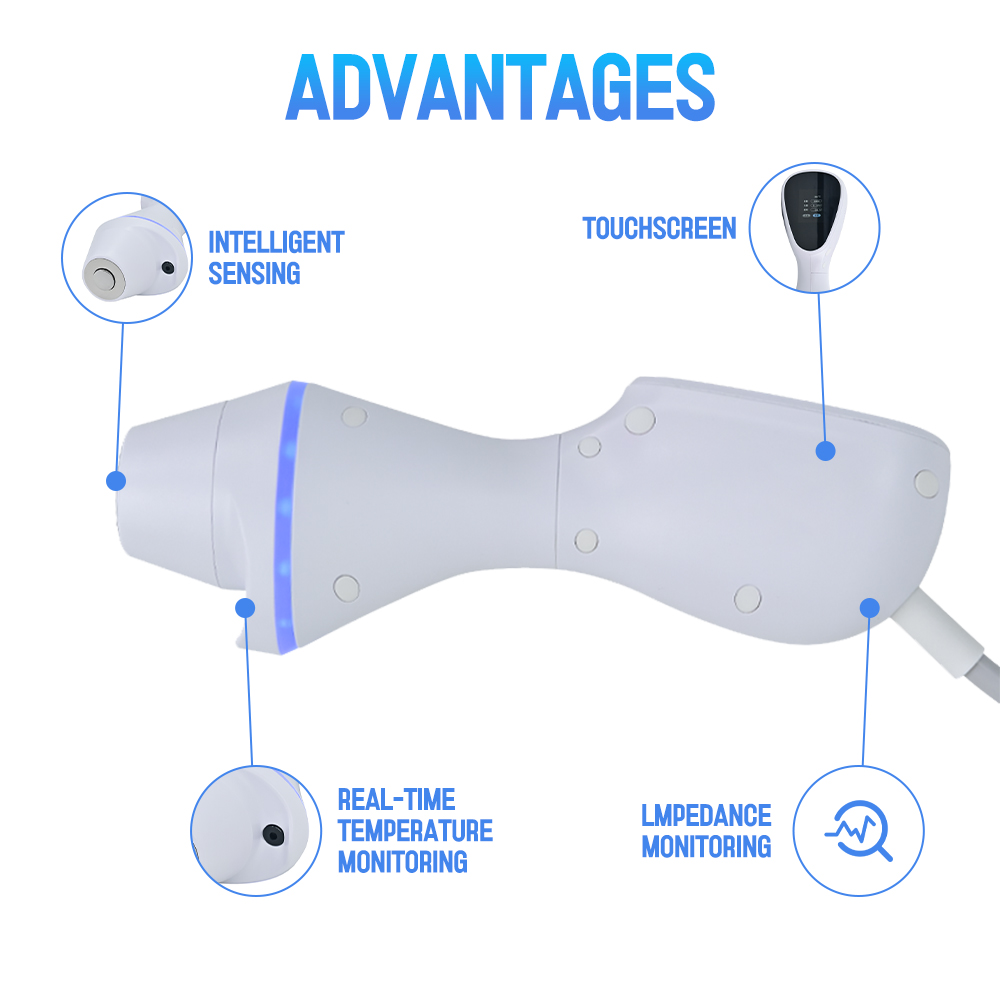
портативный аппарат HIFU для удаления морщин на лице
Заключение
Технология HIFU Благодаря своей способности обеспечивать неинвазивный лифтинг, долговременную стимуляцию выработки коллагена и минимальный период восстановления, HIFU стала краеугольным камнем современных медицинских эстетических аппаратов. Она предлагает привлекательную альтернативу хирургическим процедурам для тех, кто стремится к постепенному, но заметному омоложению лица и тела. Однако ее эффективность во многом зависит от правильного отбора пациентов, квалификации оператора и реалистичных ожиданий. Несмотря на свои ограничения и риски, HIFU остается одной из наиболее перспективных технологий на рынке нехирургической эстетической медицины, заполняя пробел между традиционным уходом за кожей и инвазивной косметической хирургией.