
A beauty device can keep the same model name, housing, software screen, and sales description while important purchased components change behind the scenes. A supplier may move production to another site, replace a sub-tier material source, modify a circuit board, update embedded firmware, change tooling, alter a sealing process, or discontinue an item. If the factory does not identify and assess these changes before use, units sold under the same model may no longer have the same performance, reliability, service compatibility, or quality evidence.
Supplier change control is the system that keeps those differences visible and authorized. It defines which changes require prior notification, what information the supplier must provide, how the factory assesses impact, what evidence is needed, when the change becomes effective, and how the first affected units are monitored.
This guide explains how beauty device factories can govern supplier changes without blocking every improvement or treating every supplier statement as sufficient evidence. It focuses on product consistency across standard models, product families, regional variants, service parts, and OEM/ODM configurations.
エグゼクティブサマリー
A reliable supplier change-control system should:
- Define a supplier change broadly. Include design, material, process, site, tooling, software, sub-tier, test, packaging, and discontinuation changes.
- Require notification before implementation. The factory needs enough time to assess, test, approve, reject, or plan the transition.
- Freeze the current approved baseline. Compare the proposed change with the exact part, supplier, site, revision, process, and evidence already approved.
- Scale review to component and change risk. A logo carton and a cooling-control board do not need the same evidence.
- Assess the full product system. Review mechanical, electrical, thermal, optical, fluid, vacuum, software, assembly, reliability, market, service, and packaging effects as relevant.
- Define an evidence plan before testing. Specify samples, configurations, conditions, methods, criteria, and decision owners.
- Control approval and effectivity separately. Approval permits a change; effectivity states exactly when and where it may enter purchasing and production.
- Manage old and new material visibly. Prevent accidental mixing, uncontrolled rework, and loss of unit-level or lot-level traceability.
- Verify implementation. Check the first received lots, pilot build, initial production units, final test, and early field performance.
- Detect unauthorized changes. Supplier agreements, audits, incoming controls, data trends, and physical comparisons should reveal changes that were never notified.
Product consistency does not mean that parts can never change. It means that every meaningful change is understood, supported, controlled, and traceable.
1. What Is Supplier Change Control?
Supplier change control is a cross-functional process for reviewing and authorizing changes to purchased materials, components, assemblies, software-loaded modules, manufacturing processes, production sites, sub-tier sources, tests, packaging, or supply status.
The process should answer:
- What is changing?
- Why is it changing?
- Which approved baseline is affected?
- Which products, models, configurations, orders, and service parts use it?
- What could change in product performance or quality?
- What evidence is required?
- Who may approve the change?
- When does it become effective?
- How will old and new material be identified?
- How will implementation and early performance be monitored?
Supplier change control is not only a purchasing activity. Engineering, quality, supplier quality, manufacturing, software, service, documentation, regulatory or market specialists, and product owners may all have responsibilities.
2. Separate Supplier Changes from Related Events
Several events can look similar but need different control routes.
| Event | Primary initiator | Typical control route |
|---|---|---|
| Supplier-proposed change | Approved supplier or manufacturer | Supplier change notification and factory approval |
| Factory-requested change | Engineering, quality, sourcing, production, or product team | Engineering change plus supplier implementation controls |
| Alternate-source qualification | Factory seeks an additional manufacturer or site | Source qualification and product-impact verification |
| Temporary substitution | Shortage or exceptional event | Time- and quantity-bounded deviation or concession |
| Corrective-action change | Failure investigation requires a change | Corrective action linked to engineering and supplier change control |
| Discontinuation or end-of-life | Supplier will stop or reduce supply | Last-time-buy, alternate, redesign, service, and inventory plan |
| Unauthorized change | Supplier changed without required approval | Containment, investigation, affected-population review, and escalation |
Using one generic “supplier update” workflow can obscure the decision, scope, urgency, and authority required.
3. Define Which Suppliers and Parts Are in Scope
The process can cover:
- component manufacturers;
- contract manufacturers and assembly suppliers;
- distributors and authorized resellers;
- tooling and molding suppliers;
- board and software-loaded module suppliers;
- treatment-handle and applicator suppliers;
- consumable and packaging suppliers;
- calibration or special-process providers; and
- sub-tier suppliers whose changes can affect the delivered item.
The control depth should reflect component criticality, supplier responsibility, detectability, product-family breadth, and supply risk. A supplier that owns the design of a sealed module may need stronger change obligations than a distributor selling a fully specified standard fastener.
4. Put Change Obligations into Supplier Agreements
Purchase orders alone may not define change-notification expectations. Quality agreements, technical agreements, supplier manuals, drawings, or purchasing specifications can state:
- changes requiring prior notification;
- minimum notification period;
- information and samples required;
- prohibition on implementation before written approval;
- sub-tier change responsibilities;
- traceability and lot-separation requirements;
- first affected lot identification;
- certificate and test-data expectations;
- record retention;
- discontinuation notice;
- response to emergency changes; and
- consequences of unauthorized change.
The supplier should understand that “fit, form, and function unchanged” is a conclusion to be reviewed, not a reason to omit notification.
5. Define Supplier Change Triggers
Notification triggers can include changes to:
- design, dimensions, tolerances, or specifications;
- raw materials, formulations, coatings, adhesives, lubricants, or finishes;
- manufacturer part number or revision;
- component source or sub-tier supplier;
- manufacturing process, sequence, parameters, or special process;
- production equipment, tooling, molds, fixtures, or test equipment;
- manufacturing, assembly, testing, or warehousing site;
- software, firmware, programmable logic, or calibration data;
- inspection, test method, sampling, or acceptance limits;
- packaging, protection, storage, or transportation method;
- shelf life or environmental requirements;
- capacity, ownership, quality system, or business continuity where relevant;
- repair or rework method;
- labeling, markings, certificates, or traceability format; and
- product discontinuation or obsolescence.
Triggers should be specific enough that suppliers do not have to guess whether a change matters.
6. Create a Standard Supplier Change Notification
A useful notification should contain:
- supplier and manufacturing-site identity;
- affected manufacturer and internal part numbers;
- current and proposed revisions;
- complete description of the change;
- reason and expected benefit;
- proposed implementation date;
- first affected lot, date code, or serial number;
- last old-version lot or shipment;
- comparison of old and new specifications;
- supplier risk assessment;
- qualification, test, reliability, and process data;
- updated drawings, specifications, certificates, and control plans;
- effect on fit, function, performance, reliability, service, and compliance;
- sample availability;
- old-stock and transition proposal; and
- supplier contact and internal approvals.
Incomplete notices should receive a pending-information status rather than entering production by default.
7. Assign One Change Record and One Owner
Every supplier change should receive a unique factory change number, owner, status, and due date. The record should connect the supplier notice to internal engineering changes, BOM updates, inspection plans, deviations, pilot builds, approvals, and implementation evidence.
Typical statuses include:
- received;
- screening;
- information requested;
- impact assessment;
- evidence plan approved;
- samples under evaluation;
- approved pending implementation;
- approved and effective;
- conditionally approved;
- rejected;
- withdrawn; and
- closed after monitoring.
Email threads can support communication but should not become the only approval record.
8. Freeze the Current Approved Baseline
Before evaluating the proposal, identify the current baseline:
- internal part number and revision;
- manufacturer part number;
- approved supplier and manufacturing site;
- material and process specification;
- drawings and key characteristics;
- software or firmware version;
- approved sub-tier content where controlled;
- incoming inspection and production-test methods;
- qualification and reliability evidence;
- models, variants, and service kits where used;
- active inventory and open orders; and
- previous deviations or known issues.
Without this baseline, the team cannot determine what the supplier is actually changing or whether earlier unreported differences already exist.
9. Classify Component Criticality and Change Risk Separately
Component criticality describes the consequence if the part is wrong or fails. Change risk describes the uncertainty and potential effect introduced by this proposal.
A high-criticality part can receive a low change-risk decision when the change is tightly bounded and well supported. A standard part can receive a higher change-risk decision if the supplier changes material, site, tooling, and test method simultaneously.
Assess factors such as:
- safety and essential-function impact;
- output, accuracy, repeatability, or calibration;
- electrical, mechanical, thermal, optical, fluid, vacuum, or software interfaces;
- process sensitivity and defect detectability;
- reliability and expected life;
- model and installed-base breadth;
- applicable market or contractual evidence;
- supplier experience and data quality;
- reversibility;
- old/new interchangeability; and
- ability to contain affected units.
10. Perform a Where-Used Analysis
The factory should identify every location affected by the part:
- parent assemblies;
- product models and revisions;
- regional variants;
- OEM/ODM customer configurations;
- open purchase and production orders;
- work in process and finished inventory;
- demonstration and sample units;
- service kits and spare inventory;
- validation and reliability samples;
- manuals, labels, packaging, and training content; and
- installed devices where service compatibility matters.
A change requested for one model can affect an entire product family when a common board, pump, power supply, connector, display, or handle is shared.
11. Review Every Relevant Impact Domain
| Domain | Questions for the review |
|---|---|
| 機械 | Do dimensions, tolerances, strength, alignment, mounting, vibration, and wear remain acceptable? |
| 電気 | Do voltage, current, isolation, grounding, EMC-related behavior, protection, and connectors remain compatible? |
| Thermal and cooling | Do heat generation, dissipation, flow, temperature sensing, and operating limits change? |
| Optical or energy delivery | Do source, transmission, spot, output, calibration, or protective functions change? |
| Fluid and vacuum | Do material compatibility, pressure, flow, sealing, cleanliness, and leakage behavior change? |
| Software and communication | Do firmware, protocol, module ID, parameters, language, update, or diagnostics change? |
| 製造業 | Do assembly, tooling, process settings, training, cycle time, inspection, and rework change? |
| Reliability and service | Do lifetime, failure modes, replacement, spares, or installed-base compatibility change? |
| Market and documentation | Do evidence, labels, manuals, declarations, customer specifications, or destination requirements change? |
| Packaging and logistics | Do protection, storage, shelf life, carton fit, mass, or transport conditions change? |
The review can document “not affected” with a rationale. Blank sections do not show that the domain was considered.
12. Require Supplier Evidence, but Verify Its Applicability
Supplier evidence may include:
- old-to-new comparison;
- 図面および仕様書;
- material data;
- process flow and control plan;
- first-article results;
- capability data;
- functional and performance tests;
- reliability, aging, or life tests;
- environmental or transportation evidence;
- software release notes;
- failure analysis;
- sub-tier qualification; and
- certificates or declarations where applicable.
The factory should verify sample identity, configuration, method, conditions, acceptance criteria, equipment, result, and applicability to its own product. A supplier report generated for another customer or operating condition may not answer the relevant question.
13. Define the Evidence Plan before Testing
The internal plan should specify:
- requirements and risks being evaluated;
- old and new parts to compare;
- sample quantities and lots;
- representative and worst-relevant device configurations;
- production-representative assembly process;
- tests, methods, equipment, and conditions;
- 受入基準;
- reliability duration or cycles;
- software and parameter versions;
- responsibilities and reviewers;
- treatment of failures and retests; and
- decision rule.
Testing whatever samples happen to be available can leave the most affected configuration unexamined.
14. Use an Evidence Ladder Proportional to Risk
A practical evidence ladder can include:
- Document review: supplier notice, drawings, specifications, and risk information.
- Identity and dimensional review: materials, markings, key dimensions, and interfaces.
- Bench comparison: direct old-versus-new component tests.
- Assembly trial: fit, process, workmanship, and production compatibility.
- Functional system test: performance in representative devices.
- Regression testing: confirms unaffected functions still work as intended.
- Reliability or stress testing: evaluates lifetime, drift, intermittent failure, or environmental sensitivity.
- Pilot build: tests the change under routine production controls.
- First-effective-lot monitoring: verifies actual implementation and early performance.
Not every change needs every level, but the record should explain why the selected evidence is sufficient.
15. Compare Old and New Parts Directly
Side-by-side comparison can reveal differences hidden by separate pass reports. Compare:
- dimensions and tolerances;
- materials and finishes;
- electrical or functional curves;
- output stability;
- thermal behavior;
- pressure, vacuum, or flow;
- software response;
- noise, vibration, or motion;
- assembly force and workmanship;
- failure behavior;
- aging drift; and
- packaging and identification.
Use controlled samples from known lots. A golden sample can support comparison, but it should not replace specifications and measurement data.
16. Evaluate Reliability, Not Only Initial Function
A changed component may pass a short functional check and still reduce lifetime. Reliability review should consider:
- expected duty cycle;
- starts, pulses, cycles, connections, or operating hours;
- heat and cooling transitions;
- cable bending and handle movement;
- vacuum, pressure, or fluid exposure;
- cleaning and chemical contact;
- transport and storage;
- tolerance stack-up;
- intermittent behavior; and
- wear, drift, leakage, or degradation.
The review should preserve failures and interruptions, not report only the final passing sample.
17. Review Market, Customer, and Documentation Effects
Qualified specialists should determine whether the change affects applicable market evidence, supplier declarations, labels, manuals, product claims, import documents, customer specifications, or contractual approvals.
An OEM customer may require prior approval for material, appearance, supplier, performance, packaging, or software changes. A regional configuration may depend on a particular cord, plug, label, or approved component. Technical equivalence does not automatically establish commercial or market acceptability.
18. Use Clear Approval Outcomes
The decision should apply to a named part, supplier, site, revision, and scope.
| 結果 | 意味 |
|---|---|
| 承認された | Evidence supports routine use within the defined applicability |
| Approved with conditions | Use is allowed with added inspection, traceability, quantity, market, or monitoring controls |
| Pilot-only approval | Material may be used only in a controlled build and cannot enter general production |
| Service-only approval | Use is restricted to defined repairs or installed-base configurations |
| More evidence required | Decision remains open; supplier implementation is not authorized |
| 拒否されました | Proposed change is not acceptable for the stated use |
| 撤回 | Supplier or factory cancelled the proposal before implementation |
Avoid approvals such as “looks okay” or “use if needed.” They do not define applicability or conditions.
19. Control Approval and Effectivity Separately
Approval states that the proposed change is acceptable. Effectivity identifies when it may be used. Effectivity can be controlled by:
- supplier lot or date code;
- purchase order;
- goods-receipt date;
- work order;
- product serial number;
- model or configuration;
- customer or destination;
- software version;
- old-stock depletion; or
- calendar date with inventory controls.
The selected method should be executable by supplier, purchasing, warehouse, production, quality, and service teams.
20. Plan the Old-to-New Material Transition
The transition plan should decide whether old material will be:
- used without restriction;
- used only in named models or markets;
- consumed before the new version;
- segregated for service;
- reworked;
- returned;
- accepted under a limited deviation; or
- scrapped under authorization.
If old and new versions can coexist, define identification, storage, picking, assembly, inspection, and as-built traceability. Do not rely on operators to distinguish visually similar parts from memory.
21. Update Controlled Data as One Change Set
Before effectivity, update affected:
- part master and approved manufacturer list;
- supplier and manufacturing-site records;
- engineering and manufacturing BOMs;
- drawings and purchasing specifications;
- software compatibility matrix;
- incoming inspection plan;
- work instructions and process parameters;
- 試験方法および合格基準;
- labels, manuals, packaging, and service documents;
- spare-part and replacement rules;
- training materials; and
- product and configuration release records.
Partial updates create inconsistent instructions across departments.
22. Verify the First Changed Receipts
The first affected supplier shipments should receive controlled verification. Confirm:
- supplier lot and change identity;
- correct part and revision;
- approved manufacturing site;
- required markings and documentation;
- key characteristics;
- packaging and protection;
- old/new lot separation;
- certificate or test data; and
- any temporary enhanced inspection.
The receiving system should prevent a changed lot from entering unrestricted stock before required review is complete.
23. Run a Pilot Build When System Interaction Matters
A pilot build can reveal issues not visible in component testing, such as:
- assembly fit or force;
- routing and cable strain;
- connector engagement;
- software recognition;
- cooling or fluid interaction;
- process time and operator confusion;
- fixture compatibility;
- test-limit shifts;
- packaging fit; and
- mixed-version risk.
Use production-representative materials, people, equipment, instructions, and inspection methods. Engineering-assisted prototypes alone may not demonstrate routine factory readiness.
24. Verify First Effective Production Units
For the first effective lot or serial range, confirm:
- correct material was issued;
- supplier lot and revision are recorded;
- assembly and process results remain acceptable;
- software and calibration are compatible;
- inspection and test results meet criteria;
- failures and rework are reviewed;
- packaging and documentation are correct; and
- release records identify the changed content.
Enhanced controls should have a defined duration and exit criterion. Temporary inspection should not continue indefinitely because no one closed the action.
25. Preserve Traceability through the Transition
Traceability should support both backward and forward questions:
- Which finished units contain the old and new versions?
- Which supplier lots entered each product serial or production lot?
- Which tests and results belong to those units?
- Which customer orders received them?
- Which service parts remain compatible?
- Can affected units be contained if a problem appears?
The required granularity depends on component criticality, change risk, supplier-lot size, detectability, and investigation needs.
26. Detect Unauthorized Supplier Changes
Factories cannot rely solely on voluntary notification. Detection controls may include:
- incoming identity and characteristic checks;
- comparison with approved samples;
- markings, lot, and date-code review;
- material or dimensional verification;
- periodic supplier audits;
- process and sub-tier review;
- certificate and data trend checks;
- test-result drift monitoring;
- failure analysis;
- first-off inspection after delivery gaps; and
- product teardowns or periodic component verification.
An unauthorized change should trigger containment, supplier escalation, technical assessment, affected-population analysis, and a decision on continued approval.
27. Control Supplier Corrective-Action Changes
A corrective action can introduce new risk even when it resolves a known defect. The factory should verify:
- root cause and evidence;
- exact corrective change;
- affected supplier lots and dates;
- effectiveness verification;
- unintended consequences;
- implementation controls;
- first corrected lot; and
- recurrence monitoring.
Closing the supplier corrective action does not automatically approve a design, process, material, or site change. Link the records but preserve the separate decisions.
28. Control Sub-Tier Supplier Changes
The direct supplier may depend on sub-tier materials, boards, laser sources, motors, pumps, displays, tubing, connectors, firmware, or special processes. Agreements should define which sub-tier changes require notification.
The factory does not always need to approve every sub-tier company directly. It does need confidence that the direct supplier controls critical sub-tier content, preserves traceability, assesses changes, and communicates changes that can affect the delivered component.
29. Manage Emergency Changes without Normalizing Them
Supply disruption may require an accelerated review. The emergency route should still define:
- reason and urgency;
- affected orders and inventory;
- proposed temporary material or process;
- risk assessment;
- minimum evidence;
- quantity and time limit;
- enhanced inspection or test;
- serial or lot traceability;
- customer communication where required;
- expiry or stop condition; and
- permanent follow-up plan.
Emergency approval should not become an informal permanent source because production continued successfully for a few units.
30. Monitor the Change after Implementation
Post-change monitoring can compare old and new performance using:
- incoming defects;
- assembly issues and line stops;
- first-pass yield;
- functional and performance-test distributions;
- aging failures;
- rework and repair;
- early service calls;
- warranty returns;
- complaint patterns;
- delivery and lot consistency; and
- supplier corrective-action responsiveness.
Define the monitoring population, duration, thresholds, owner, and closure criteria before effectivity. If trends deteriorate, the factory should be able to hold material, stop shipments, reverse the change, or expand investigation.
31. Example: A0426 Power, Cooling, and Handle Changes
その SHEFMON A0426 diode laser hair-removal machine publishes choices involving wavelength, handle power, spot size, cooling, voltage, and language. A supplier change affecting the power supply, treatment handle, cooling pump, temperature sensor, flow path, control board, or software could require system-level review rather than a catalog comparison.
A proposed change plan could examine output stability, thermal behavior, flow, handle recognition, parameter compatibility, duty cycle, final test, regional electrical content, and service replacement. The exact scope depends on the actual design and change. This is a governance example, not a claim about SHEFMON’s confidential suppliers or internal procedures.
32. Example: A0648 Fluid-Path Supplier Changes
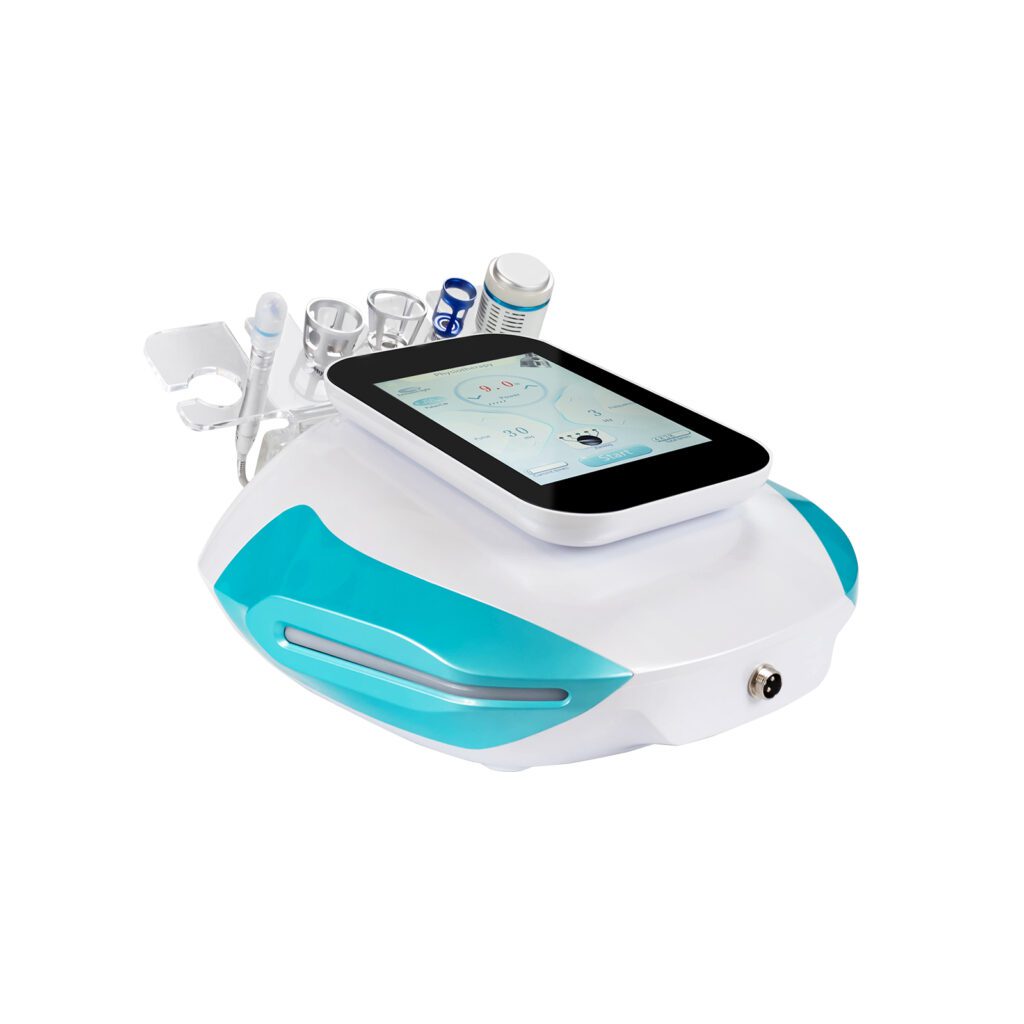
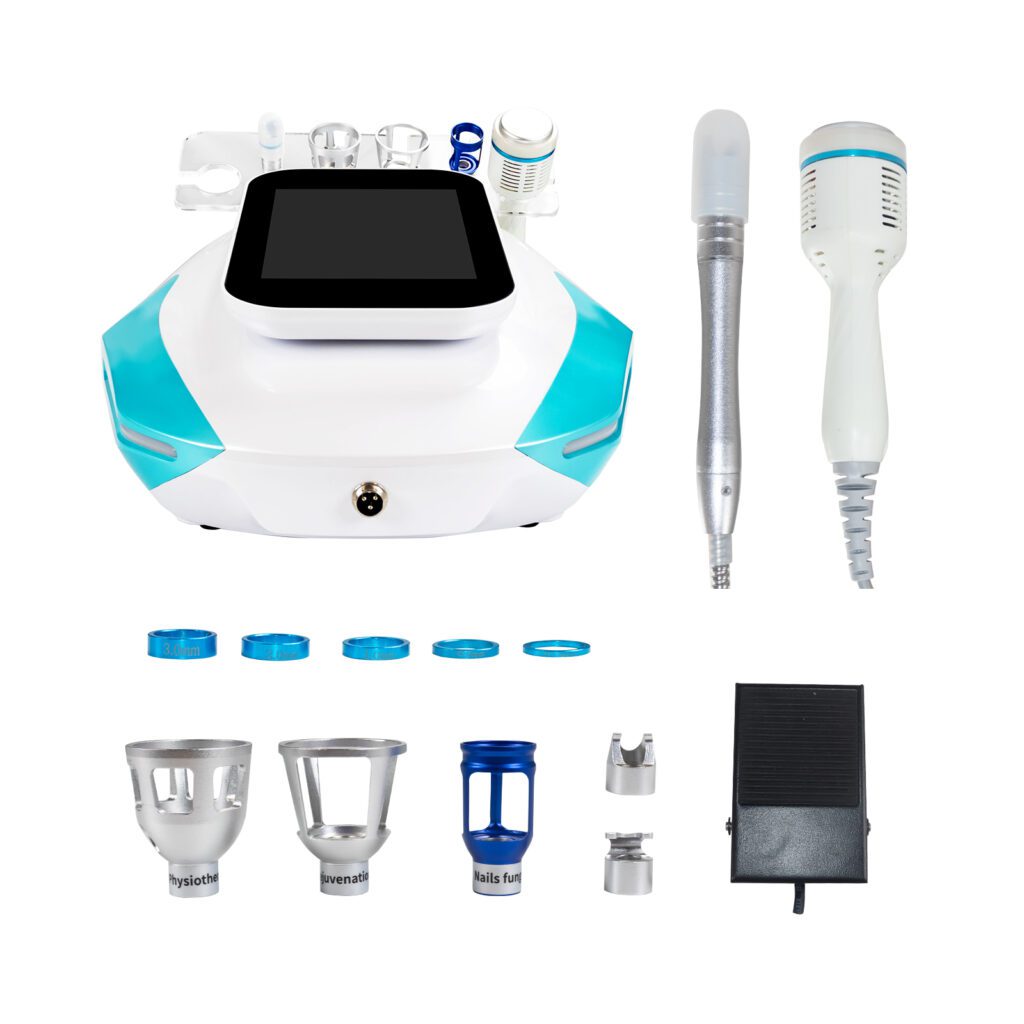
その SHEFMON A0648 9-in-1 ハイドロマイクロダーマブレーションマシン combines facial functions with vacuum and fluid-related operation. Supplier changes to pumps, bottles, caps, tubing, seals, valves, filters, handles, or fluid-contact materials could affect flow, vacuum, leakage, cleanliness, fit, maintenance, and package completeness.
A proposed review could compare materials, dimensions, sealing, pressure or vacuum behavior, cleaning compatibility, assembly, endurance, and system function. A visually identical tube or seal should not be assumed equivalent without controlled requirements and evidence.
33. Example: B0155 Motor and Multi-Handle Changes
その SHEFMON B0155 desktop body platform is presented with multiple handles and functions involving vacuum, rollers, RF-related operation, light, and cavitation. A supplier change involving motors, bearings, gears, vacuum components, handle cables, connectors, control electronics, or output assemblies could affect several functions.
The review could include motion, vibration, noise, thermal load, vacuum, output, software recognition, cable endurance, assembly, and service compatibility. Shared components may require where-used analysis across every handle package that depends on them. This example does not describe SHEFMON’s internal supplier base.
34. Control Supplier Changes in OEM/ODM Projects
その SHEFMON OEM/ODM service overview describes customization areas such as exterior design, internal layout, airflow, wiring, handpiece connections, fluid or air pathways, language, and branding. A supplier change in a custom project can affect both the factory baseline and customer-approved content.
定義する:
- which supplier changes require customer notification or approval;
- whether the customer owns specifications, tooling, or artwork;
- whether a change can be used in standard models;
- how repeat orders preserve configuration identity;
- which old and new versions remain service-compatible;
- who owns testing and approval cost;
- how limited-volume parts will be supported; and
- what happens when a custom supplier discontinues a part.
Customer approval should not replace the factory’s technical and quality assessment.
35. What B2B Buyers Can Ask Suppliers
Distributors and OEM buyers can ask:
- Which supplier changes require prior review?
- How are critical components and suppliers identified?
- Does the factory approve manufacturing-site and sub-tier changes?
- How are old and new materials separated and traced?
- What prevents unapproved substitutions during shortages?
- How are first changed lots and production units verified?
- How are software-loaded boards and handles controlled?
- When are buyers notified about changes to custom configurations?
- How are service parts and installed units considered?
- What happens when a supplier makes an unauthorized change?
The answer should describe a controlled workflow, not only state that suppliers are stable.
36. Measure Supplier Change-Control Performance
有用な指標には以下が含まれます。
- changes received before versus after supplier implementation;
- average screening and approval time;
- incomplete notification rate;
- unauthorized change incidents;
- changes implemented without master-data readiness;
- first-lot rejection or hold rate;
- pilot-build issues;
- post-change defect and field-failure trends;
- conditional approvals past expiry;
- supplier notification lead time;
- open change actions past due; and
- time required to identify affected products and customers.
Review metrics by supplier, component class, manufacturing site, product family, and change type. Fast approval is not a success if evidence quality or implementation control declines.
37. Common Supplier Change-Control Failures
Treating supplier notification as approval
Receiving a notice does not authorize purchasing or production use.
Accepting “no fit, form, or function impact” without evidence
The supplier’s conclusion may overlook product-specific interfaces, reliability, software, or market requirements.
Reviewing only the changed component
System behavior, assembly, packaging, service, and shared-model effects may be missed.
Approving without effectivity
Old and new material can mix because no lot, order, date, or serial cut-in was defined.
Updating the BOM but not inspection or service data
Departments then operate from conflicting baselines.
Ending review at sample approval
Samples may not represent routine supplier production, shipping, receiving, and factory assembly.
Ignoring sub-tier changes
The delivered supplier part can change even when the direct supplier’s process looks unchanged.
Leaving enhanced controls open forever
Temporary inspection and conditions need owners, exit criteria, and closure.
38. Supplier Change-Control Checklist
- Supplier agreements define changes requiring prior notification.
- Notifications identify supplier, site, part, revision, reason, timing, and affected lots.
- Each change receives a unique internal number, owner, status, and due date.
- The exact approved baseline is frozen before comparison.
- Component criticality and proposal-specific change risk are assessed separately.
- A complete where-used analysis covers models, variants, orders, service, and installed units.
- Mechanical, electrical, thermal, optical, fluid, software, manufacturing, and lifecycle domains are reviewed as relevant.
- Supplier evidence is checked for identity, method, conditions, and applicability.
- The factory approves an evidence plan before testing.
- Representative and worst-relevant configurations are included.
- Reliability and unintended consequences are considered.
- Market, customer, document, and OEM obligations are reviewed.
- The approval outcome has explicit applicability and conditions.
- Effectivity is defined separately from approval.
- Old and new inventory receive controlled dispositions.
- BOMs, approved sources, inspection, work, software, package, and service data are updated together.
- First changed receipts and initial production units receive planned verification.
- Traceability can identify products containing old and new versions.
- Post-change monitoring has thresholds, owner, duration, and closure criteria.
- Unauthorized and emergency changes have separate containment and escalation routes.
よくある質問
1. Does every supplier change require product retesting?
No. The factory should assess component criticality, change type, interfaces, existing evidence, detectability, and product impact. Some changes need document review only, while others require bench, system, reliability, pilot, or market-related evidence.
2. How much advance notice should a supplier provide?
The period should allow technical review, samples, testing, customer or market actions, inventory transition, and production planning. It varies by component and contract, so the agreement should define expectations and escalation for shorter notice.
3. Can purchasing approve a supplier change?
Purchasing can coordinate commercial and supply aspects, but technical equivalence and product impact should be approved by competent engineering, quality, software, manufacturing, service, and other relevant owners.
4. Is a supplier site move a meaningful change if equipment is the same?
Yes, it can be. Personnel, environment, process control, sub-tier supply, equipment setup, inspection, logistics, and quality-system execution may differ. The required evidence should be based on risk.
5. What is the difference between approval and effectivity?
Approval means the change is acceptable within a defined scope. Effectivity states the first supplier lot, purchase order, work order, serial number, date, model, or customer configuration where it may be used.
6. Can old and new versions be used at the same time?
They can coexist only when interchangeability, identification, storage, picking, testing, traceability, and service implications are controlled. Otherwise, use a clean cut-in or segregated transition.
7. What should happen after an unauthorized supplier change is discovered?
Contain affected material and products, identify affected lots and units, investigate the difference and reason, assess product and field impact, decide disposition, and review whether the supplier remains approved.
8. Does supplier corrective action automatically approve the resulting change?
No. Corrective action can explain and address a defect, but any material, design, process, site, software, or test change still needs the applicable change-control approval.
9. Should buyers be informed about every supplier change?
Not necessarily. Notification depends on contracts, customer-approved specifications, OEM ownership, applicable requirements, product impact, and commercial commitments. The factory should define which changes require buyer communication or consent.
10. How long should a supplier change remain under monitoring?
Use a defined number of receipts, units, cycles, operating hours, or time period appropriate to the risk and production volume. Close monitoring only after acceptance criteria and stability thresholds are met.
結論
Supplier change control protects beauty device consistency while allowing materials, processes, suppliers, and technologies to evolve. The strongest system requires early notification, freezes the current baseline, assesses complete product impact, defines proportional evidence, and separates approval from effectivity.
Control continues after the paperwork is signed. The factory must update product data, manage old and new inventory, verify first receipts and production units, preserve traceability, and monitor early performance. Unauthorized, emergency, corrective-action, and OEM changes also need explicit routes so urgency or commercial pressure does not erase technical accountability.
SHEFMON supports professional beauty device buyers across facial, hair-removal, body, and multifunction categories. Buyers can explore SHEFMON professional beauty machines, それをレビューする quality-control overview, learn about OEM/ODMカスタマイズ、 または シェフモンに連絡してください to discuss standard and customized product requirements.