









最適化されたソリューション、専門的なバルブの知識、業界ニュースを共有する
ご希望の用語やキーワードを入力すると、検索結果に関連記事が表示されます。お探しの回答が見つからない場合は、お気軽にお問い合わせください。喜んでお手伝いいたします。または、beauty@shefmon.comまで直接メールでお問い合わせください。
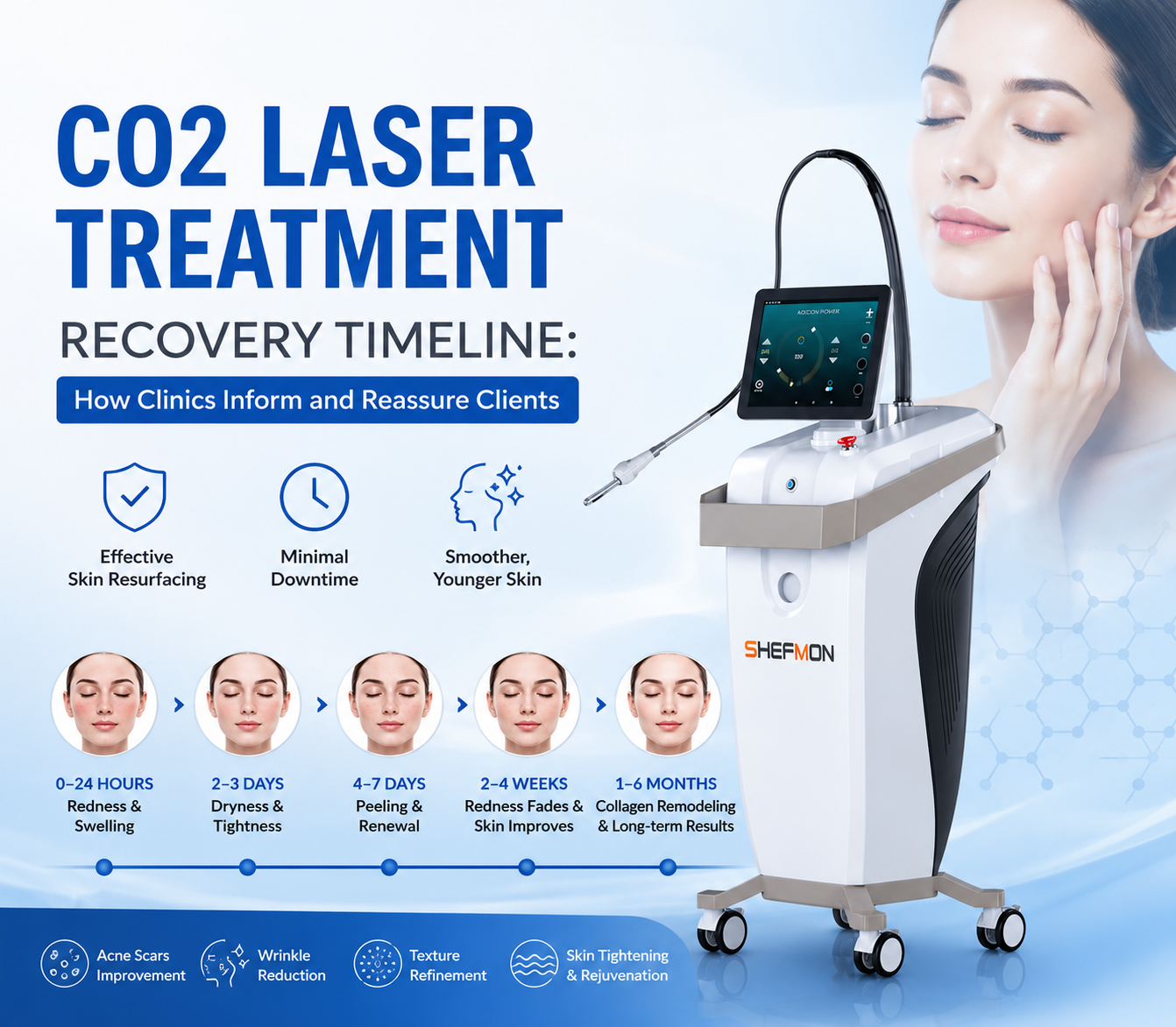
CO2レーザー治療後の回復スケジュール:クリニックが患者に情報を提供し安心させる方法
- シェフモン
Fractional CO2 laser treatment has become one of the most effective non-surgical solutions for skin resurfacing, acne scar reduction, wrinkle improvement, and overall skin rejuvenation. Despite its proven results, many patients are concerned about the recovery process before committing to treatment. Questions such as “How long will I look red?” or “When can I return to work?” are common during consultations.
For aesthetic clinics, providing a clear recovery timeline is essential not only for patient education but also for building trust and reducing anxiety. By setting realistic expectations and explaining each stage of healing, clinics can improve patient satisfaction and confidence throughout the treatment journey.

1. Why Recovery Education Matters Before CO2 Laser Treatment
1.1 Managing Patient Expectations
One of the main reasons patients feel dissatisfied after treatment is not because of poor results, but because their expectations were unrealistic. Fractional CO2 laser works by creating controlled microscopic thermal injuries in the skin, stimulating collagen remodeling and cellular renewal.
As a result, temporary redness, swelling, and peeling are normal parts of the healing process. Clinics that explain these effects beforehand help patients understand that recovery signs are evidence that the treatment is working.
1.2 Building Trust and Reducing Anxiety
Many first-time laser patients are nervous about downtime. Providing a detailed recovery timeline helps eliminate uncertainty. When patients know what to expect day by day, they are more likely to remain calm and follow post-treatment instructions properly.
2. The First 24 Hours: Immediate Post-Treatment Response
2.1 Redness and Warmth
Immediately after treatment, patients typically experience redness similar to a moderate sunburn. The treated area may also feel warm or slightly tight.
These reactions occur because the laser energy creates controlled thermal stimulation within the skin, triggering the body’s natural healing response.
2.2 Mild Swelling
Some patients may experience mild swelling, especially around sensitive areas such as the eyes and cheeks. This is generally temporary and usually subsides within one to two days.
Clinics should reassure patients that these symptoms are expected and do not indicate complications.
3. Days 2–3: Early Healing Stage
3.1 Increased Skin Dryness
During the second and third days, the skin often becomes dry and rough. Patients may notice a bronzed appearance as damaged skin cells begin moving toward the surface.
3.2 Sensation of Tightness
Many patients report a feeling of tightness or mild itching. This is a normal part of the healing process and should not be confused with irritation or infection.
Clinics should recommend gentle moisturizers and emphasize the importance of avoiding scratching or picking at the skin.

4. Days 4–7: Peeling and Skin Renewal
4.1 Visible Peeling Begins
Around the fourth day, the outer layer of damaged skin begins to shed. This peeling stage is one of the most noticeable parts of recovery.
Patients should be informed that peeling can vary depending on treatment intensity, skin type, and individual healing ability.
4.2 New Skin Emerges
As old skin cells are replaced, fresh skin begins to appear underneath. Patients often notice smoother texture and improved skin brightness during this phase.
Clinics should emphasize that proper sun protection is especially important because the new skin is more sensitive to UV exposure.
5. Weeks 2–4: Collagen Remodeling Phase
5.1 Reduction in Redness
Most visible redness gradually fades during the following weeks. Patients generally feel comfortable returning to normal social and professional activities.
5.2 Continued Skin Improvement
Although surface healing occurs relatively quickly, the deeper benefits of fractional CO2 laser continue developing beneath the skin.
The treatment stimulates fibroblast activity and collagen production, leading to progressive improvements in:
- ニキビ跡
- 細かいシワ
- しわ
- 肌の質感
- 毛穴の拡大
Clinics should explain that visible improvements often continue for several months after treatment.

6. Months 1–6: Long-Term Results Development
6.1 Ongoing Collagen Formation
Collagen remodeling is a gradual biological process. During the first several months after treatment, the skin continues to become firmer, smoother, and more youthful-looking.
This is one reason why fractional CO2 laser remains one of the most popular skin resurfacing technologies available today.
6.2 Scar Improvement Over Time
Patients undergoing treatment for acne scars or surgical scars may notice that scar depth continues to improve over several months as collagen fibers reorganize and strengthen.
Setting this expectation helps patients understand that the final outcome is not visible immediately after recovery.
7. How Clinics Can Reassure Clients Throughout Recovery
7.1 Provide Clear Aftercare Instructions
Written aftercare guidelines help patients feel supported and reduce unnecessary concerns. Clinics should provide information about cleansing, moisturizing, sun protection, and activities to avoid during healing.
7.2 Schedule Follow-Up Communication
A simple follow-up call or message within the first few days after treatment can significantly improve patient confidence. It also allows practitioners to address questions before they become concerns.
7.3 Use Before-and-After Education
Showing patients realistic recovery photos from previous cases helps them visualize each healing stage and better understand what to expect.
7.4 Explain That Temporary Side Effects Are Normal
Redness, dryness, peeling, and mild swelling are expected treatment responses. Reinforcing this message helps prevent unnecessary anxiety and encourages compliance with aftercare instructions.
結論
Fractional CO2 laser treatment offers remarkable benefits for skin resurfacing, acne scar reduction, wrinkle improvement, and overall rejuvenation. However, successful outcomes depend not only on the technology itself but also on how effectively clinics educate patients about the recovery process. By providing a clear timeline—from immediate redness and swelling to long-term collagen remodeling—clinics can set realistic expectations, reduce anxiety, and build stronger patient trust. When clients understand what to expect at every stage of healing, they are more likely to remain confident, follow aftercare instructions, and ultimately achieve higher satisfaction with their results.