Beauty device distributors need enough flexibility to fit different salons, clinics, body studios, markets, and project sizes. Problems begin when every buyer request is treated as a standard choice. A configuration approved for one quotation may be reused without its original conditions, a regional variation may enter the global catalog, or a one-time commercial concession may be presented as an ordinary package.
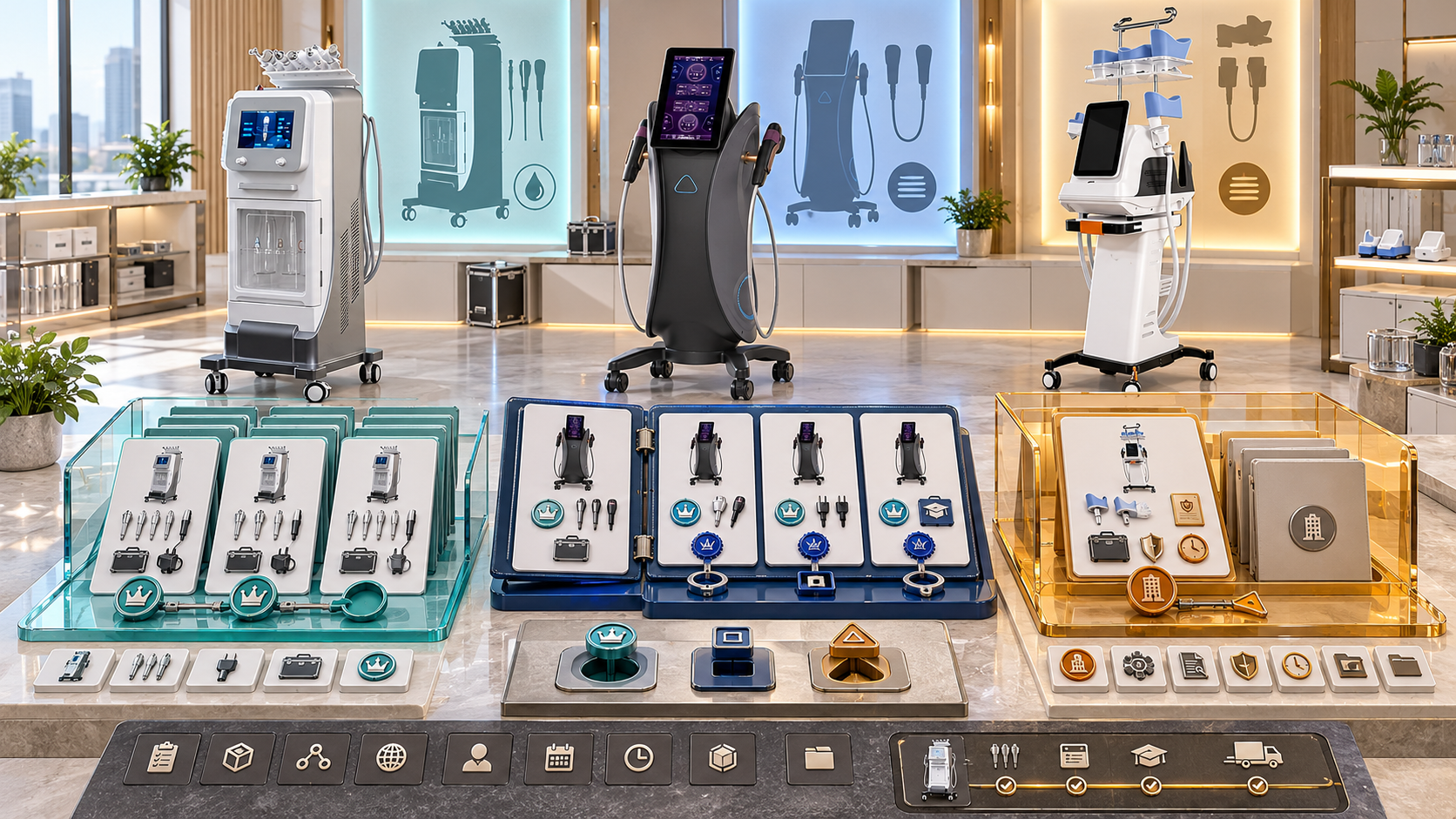
A three-level offer structure prevents that drift. Standard Offers provide the default route, Approved Variants provide controlled alternatives for defined situations, and One-Time Exceptions handle buyer-specific departures. This guide explains how to classify, name, approve, quote, reuse, review, and retire all three levels for SHEFMON facial, hair-removal, HIFU, RF-microneedling, body-care, and multi-device projects.
Executive Summary
- Treat a Standard Offer as the approved default for a defined buyer, category, market, and operating context.
- Treat an Approved Variant as a reusable alternative with its own scope, configuration, conditions, owner, and revision.
- Treat a One-Time Exception as a project-specific departure that cannot be reused automatically.
- Classify the complete offer rather than one isolated component label.
- Keep compatibility, availability, price, market status, and buyer fit separate from the three-level classification.
- Give every standard and variant a stable identity; give every exception a unique request and decision record.
- Use model-specific controls for A0648, A0423, A0426, A0204, A0152, and B0155.
- Show the buyer the exact model, configuration, inclusions, options, exclusions, conditions, and validity instead of relying on an internal class label.
- Reapprove a variant when its model, component rules, destination scope, evidence, or commercial basis changes materially.
- Promote repeated exceptions only after a formal review proves they can become a controlled reusable offer.
1. Define the Three Offer Levels
| Offer level | Core meaning | Reuse rule |
|---|---|---|
| Standard Offer | Default approved offer for a documented buyer and use context | Reusable within its active scope |
| Approved Variant | Controlled alternative to a standard, created for a recurring valid need | Reusable only within its defined conditions |
| One-Time Exception | Authorized departure for one named buyer, project, site, quote, or period | Not reusable without a new decision |
The difference is not whether the offer looks unusual. The difference is how broadly it has been evaluated and where the approval is valid.
2. Why a Three-Level Structure Works
A single list of “available packages” hides important distinctions. A three-level structure gives sales teams:
- a fast default path for routine buyers;
- controlled flexibility for recurring market or business needs;
- an explicit route for requests outside approved choices;
- clearer decision rights;
- more reliable quotation templates;
- less accidental reuse of project-only approvals;
- evidence for deciding which alternatives deserve standardization;
- better visibility into complexity across the portfolio.
The goal is not to eliminate custom work. It is to make the scope of every approval visible.
3. Start with a Controlled Baseline
An offer can be called standard only when its baseline is defined. Record:
- buyer type and intended business role;
- device category and exact model;
- configuration code and revision;
- included components and quantities;
- approved selectable options;
- exclusions;
- recurring component assumptions;
- destination, electrical, language, and document scope;
- room and operator conditions relevant to the category;
- supply basis;
- quotation description;
- approval owners;
- effective date and review date.
If these fields are missing, the team does not have a standard. It has a familiar habit.
4. Define a Standard Offer Precisely
A Standard Offer is the preferred default for a repeatable buyer need. It should have:
- a stable offer ID;
- one clear business purpose;
- a named product or approved product choice;
- a controlled configuration;
- predictable inclusion rules;
- a published quotation template;
- defined market and operating boundaries;
- current commercial and supply connections;
- an owner and review cycle;
- a short route through quotation approval.
“Most salespeople use it” does not make an offer standard. The offer becomes standard through documented approval and control.
5. Define an Approved Variant Precisely
An Approved Variant is a reusable alternative that differs from the standard in known ways. It serves a recurring need without changing the default.
Examples may include:
- a second approved model for a distinct buyer format;
- a defined handle or cartridge schedule for a recurring service scope;
- a two-room quantity variant;
- a market-specific electrical and language overlay;
- a controlled opening-component pack based on a documented demand band;
- a package version for multi-location rollout;
- a recurring delivery split with defined conditions.
Each variant needs its own identity, difference statement, allowed scope, evidence, approval, quotation text, effective date, and review trigger.
6. Define a One-Time Exception Precisely
A One-Time Exception is a request outside the active standard and approved variants. It may be approved, conditionally approved, rejected, or replaced with an approved alternative.
Examples include:
- an unlisted model substitution;
- an unverified handle or component combination;
- a buyer-specific inclusion not found in the option library;
- a site-specific departure from a group package;
- unusual labeling or documentation;
- a delivery commitment outside the normal route;
- a discount or payment term beyond delegated authority;
- reuse of a retired configuration for a defined installed-base need.
Approval applies only to the scope written in the decision record.
7. Do Not Confuse Offer Level with Component Status
Standard, Optional, Special Order, Consumable, and Replacement describe component roles. Standard Offer, Approved Variant, and One-Time Exception describe the governance of the complete offer.
| Component situation | Possible offer level |
|---|---|
| Standard included handle in the default configuration | Standard Offer |
| Approved optional handle selected under published rules | Standard Offer or Approved Variant |
| Approved special-order item for a recurring market need | Approved Variant |
| Unlisted handle requested for one buyer | One-Time Exception |
| Opening consumable quantity within a standard range | Standard Offer |
| Buyer-specific quantity outside the approved range | Approved Variant or One-Time Exception, depending on reuse and review |
Do not classify an entire offer as an exception merely because it contains a controlled option. Do not classify it as standard merely because one component is normally included.
8. Keep Other Statuses Separate
Offer level does not prove:
- compatibility;
- current availability;
- delivery timing;
- local eligibility;
- operator suitability;
- room readiness;
- price validity;
- component inclusion;
- buyer fit.
A Standard Offer can be temporarily unavailable. An Approved Variant can be compatible but unsuitable for a particular buyer. A One-Time Exception can be rejected because evidence is insufficient. Store these statuses in their own fields.
9. Use a Classification Decision Tree
Ask the questions in order:
- Does the request match an active Standard Offer exactly?
- If not, does it match an active Approved Variant and every condition of use?
- If not, is the difference an ordinary selectable option already permitted by the standard?
- If not, is the request complete enough for exception review?
- Does the request change model identity, configuration, compatibility, market scope, supply commitment, or commercial authority?
- Can the departure be evaluated and contained for one project?
- Should an approved alternative be proposed instead?
Do not choose the class based on what is easiest to quote.
10. Build a Minimum Offer-Control Record
| Field | Standard Offer | Approved Variant | One-Time Exception |
|---|---|---|---|
| Identity | Stable standard ID | Stable variant ID linked to standard | Unique exception ID |
| Business purpose | Required | Required | Buyer-specific reason |
| Product scope | Fixed or controlled choices | Explicit differences | Requested departure |
| Reuse | Within active scope | Within stated conditions | Prohibited automatically |
| Approval | Portfolio-level | Variant-level | Project decision |
| Validity | Effective and review dates | Effective, review, and condition dates | Quote, project, site, and expiry |
| Quotation template | Approved default | Approved variant wording | Generated from decision conditions |
| Buyer acceptance | Quote-specific | Quote-specific | Must include exception conditions |
| Change control | Standard revision | Variant revision | New or amended exception decision |
This shared structure makes differences visible without forcing every class into the same workflow.
11. Give Standards and Variants Clear Identities
Use linked IDs such as:
STD-FAC-001— Facial Foundation Standard;VAR-FAC-001-02— Two-Room Facial Foundation Variant;STD-HAIR-003— Hair Removal Department Standard;VAR-HAIR-003-M2— Approved alternate model variant;EXC-2026-0174— one named buyer request.
The code should show relationship without becoming the only description. A buyer-facing quotation still needs a readable name and exact configuration.
12. Write a Difference Statement for Every Variant
A variant should state how it differs from the standard.
Variant VAR-FAC-001-02 uses two units allocated to two named facial rooms and applies the approved two-room opening-supply schedule. All other configuration and market conditions remain those of STD-FAC-001.
The statement should identify:
- changed fields;
- unchanged baseline;
- allowed buyer or site context;
- required evidence;
- quotation wording;
- expiration or review trigger.
“Premium version” is not a sufficient difference statement.
13. Write a Precise Deviation for Every Exception
The exception record should say:
Buyer requests [specific value] instead of [baseline or approved variant value] for [named project, site, quote, and model].
Then record:
- business reason;
- affected configuration and component fields;
- compatibility and evidence status;
- market and site effect;
- commercial and supply effect;
- reviewers;
- conditions;
- expiry;
- buyer-facing wording;
- final decision.
Without the baseline, reviewers cannot see what is exceptional.
14. Define Reuse Boundaries
| Reuse dimension | Questions to answer |
|---|---|
| Buyer type | Which salon, clinic, body studio, or distributor profile is eligible? |
| Market | Which countries, regions, languages, and electrical profiles apply? |
| Site | One site, a site type, or all approved sites? |
| Model revision | Which exact device record is covered? |
| Configuration | Which handles, cartridges, heads, and accessories are permitted? |
| Volume | Which quantity or demand range is valid? |
| Time | When must the offer be reviewed or revalidated? |
| Commercial authority | Which price and term rules remain separate? |
An Approved Variant without reuse boundaries becomes an uncontrolled second standard.
15. Assign Different Approval Paths
Standard Offer approval
Requires portfolio, product, technical, market, supply, quotation, and commercial structures to be ready for repeated use.
Approved Variant approval
Focuses on the difference from the standard, the recurring need, applicable conditions, quotation implementation, and review date.
One-Time Exception approval
Focuses on the buyer-specific departure, evidence, risk, conditions, expiration, and whether the offer can proceed at all.
Small teams may combine roles, but the decision boundaries should remain visible.
16. Set Sales Permissions by Offer Level
- Sales may select an active Standard Offer when the buyer fits its scope.
- Sales may select an Approved Variant only after confirming every eligibility condition.
- Sales may request a One-Time Exception but should not approve technical, market, supply, or out-of-authority commercial departures.
- Sales operations should block retired standards, expired variants, and unresolved exceptions from document generation.
- Order teams should accept only the exact class, ID, revision, and conditions shown in the buyer-approved quotation.
Permissions should prevent accidental escalation from a project request to a reusable choice.
17. Present the Three Levels in Quotations
The buyer does not need the internal governance terminology unless it improves clarity. The quotation should show:
- exact model and configuration;
- package or offer name;
- standard inclusions;
- selected options;
- recurring components;
- exclusions;
- market and destination profile;
- current commercial terms;
- relevant conditions;
- validity;
- approved departure where it affects buyer expectations.
Internally, store the Standard ID, Variant ID, or Exception ID with the quote revision. Never quote only “approved variant” without showing what the buyer will receive.
18. Build Fast, Variant, and Exception Paths
| Path | Trigger | Typical workflow |
|---|---|---|
| Fast path | Exact match to active standard | Buyer-fit check, current supply and price, document release |
| Variant path | Exact match to active variant conditions | Eligibility check, variant configuration, current supply and price, release |
| Exception path | Departure from all approved choices | Request, evidence, impact review, decision, conditional quote or alternative |
The variant path should be faster than developing a new exception, but it should still verify eligibility.
19. Use A0648 to Separate Quantity Variants from Exceptions
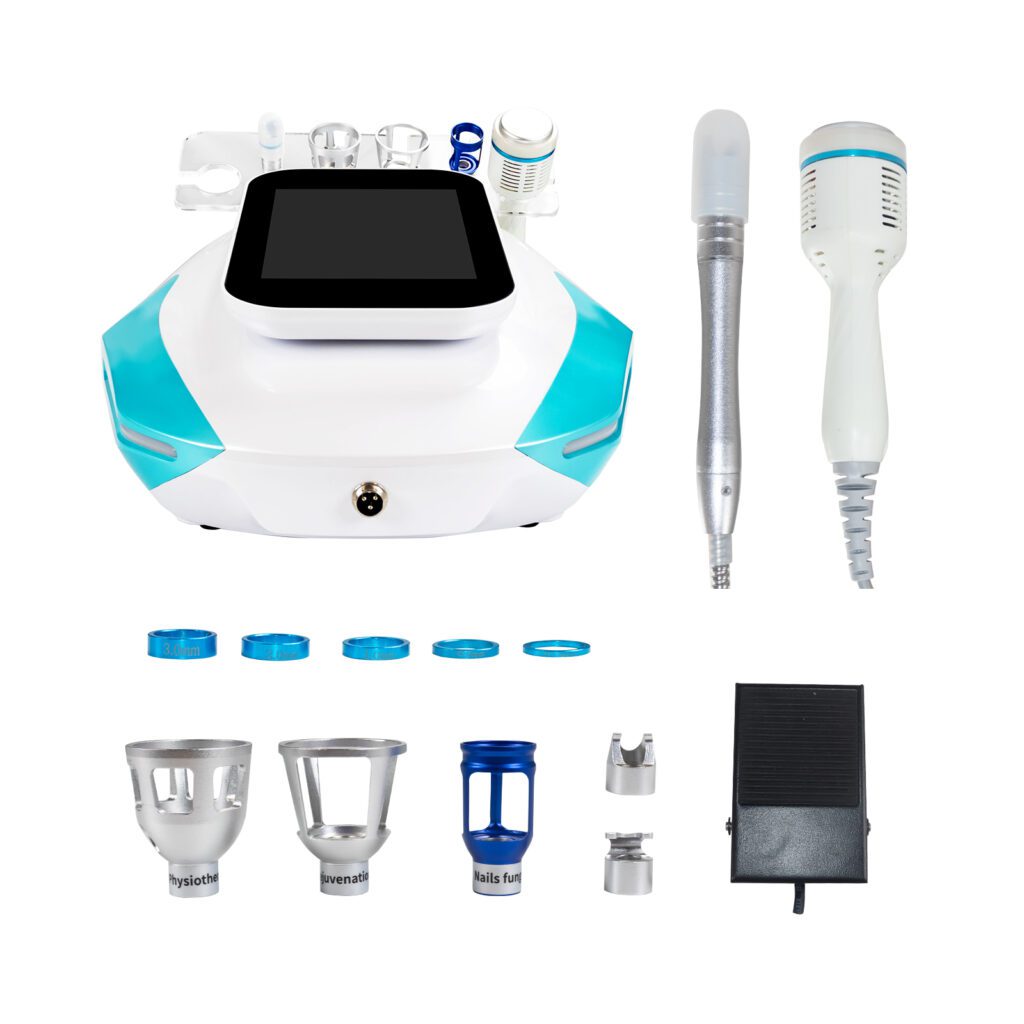
The SHEFMON A0648 9-in-1 hydro microdermabrasion system can anchor a facial-care offer. An illustrative structure may be:
- Standard Offer: one approved A0648 configuration for one facial room, with a defined included-tool and opening-supply schedule.
- Approved Variant: a two-room version with two units and a reviewed opening-supply calculation.
- One-Time Exception: a buyer requests an unlisted tool combination, a nonstandard site split, or another departure not covered by the active records.
The precise content must come from the current configuration schedule. The function count alone does not define a standard package.
20. Keep A0423 and A0426 as Separate Model Records
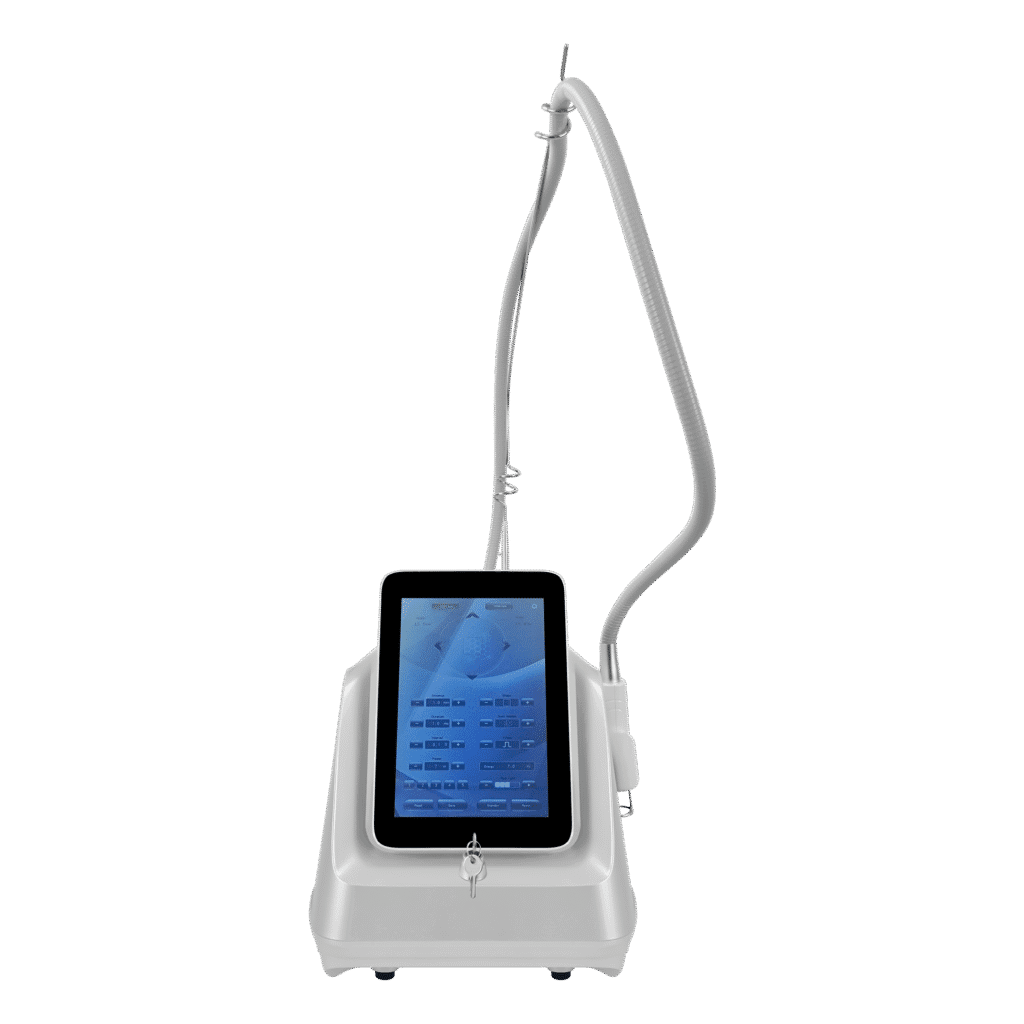
The SHEFMON A0423 diode-laser system and SHEFMON A0426 diode-laser system may appear in the same hair-removal portfolio, but they should not be treated as automatic variants of one configuration.
A controlled structure can use:
- one Standard Offer built around A0423 for a defined buyer profile;
- a separate Standard Offer built around A0426 for another defined profile;
- Approved Variants within each model for reviewed configuration or quantity differences;
- a One-Time Exception process when a buyer requests substitution after demonstration or quotation.
Switching models requires a full review of format, handle and spot-size selection, room plan, destination profile, price, freight, supply, and buyer acceptance.
21. Separate A0204 Standard Matrices from Custom Requests
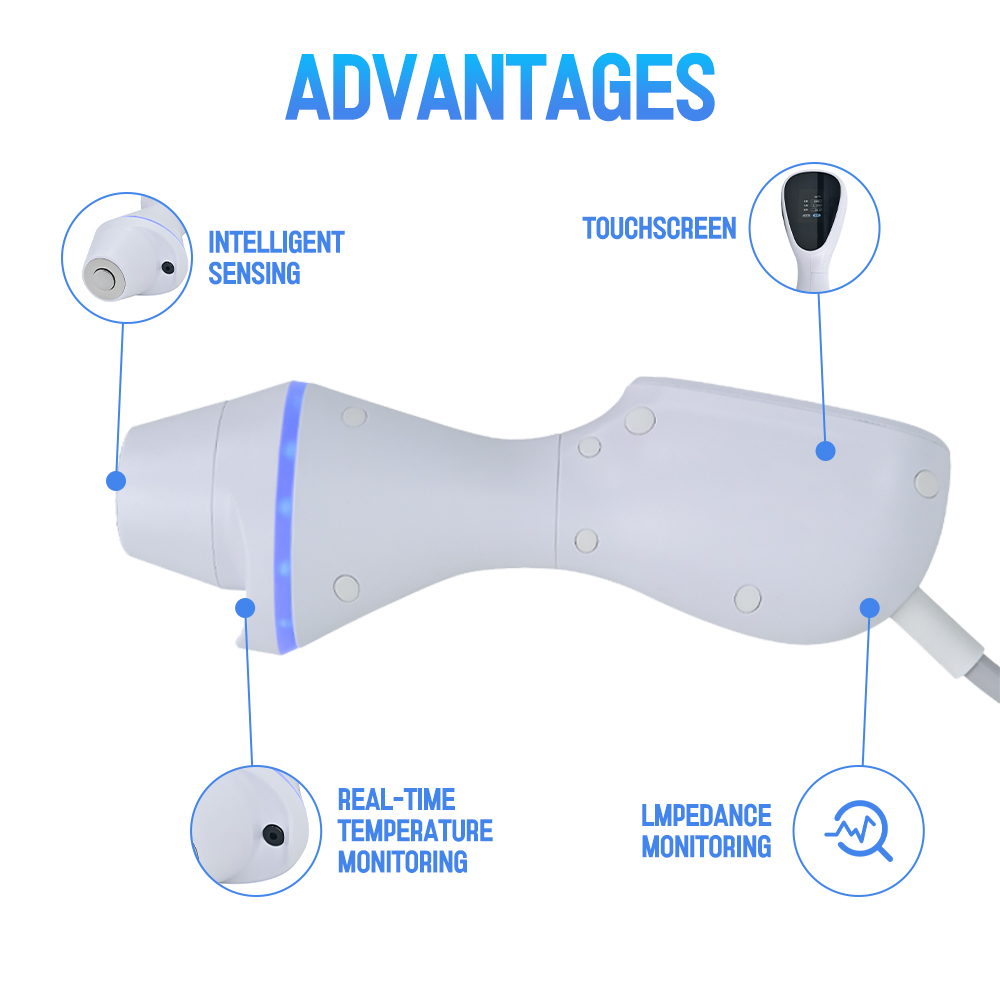
The SHEFMON A0204 9D/7D focused HIFU system page distinguishes handle and cartridge choices, including standard and optional items.
An offer structure might contain:
- a Standard Offer with one approved handle and cartridge matrix;
- an Approved Variant with a second reviewed matrix for a recurring service scope;
- a One-Time Exception for an unlisted mix, unsupported assumption, or buyer-specific departure.
The variant record must identify every handle, cartridge type, depth, quantity, inclusion status, and operating condition. Do not approve a vague “expanded HIFU package.”
22. Separate A0152 Configuration Variants from Volume Choices
The SHEFMON A0152 desktop RF-microneedling system presents alternative working-handle arrangements and 12-pin, 24-pin, 40-pin, and nano formats.
Separate:
- configuration level: handle arrangement and applicable head formats;
- opening-stock level: quantities selected for the buyer’s planned service mix;
- reorder level: recurring quantities based on later use.
A reviewed handle arrangement may form an Approved Variant. Ordinary opening quantities inside an approved range may remain within the Standard Offer. An unlisted handle-head combination or unsupported inclusion becomes an exception request.
23. Separate B0155 Handle-Set Variants from Assumptions
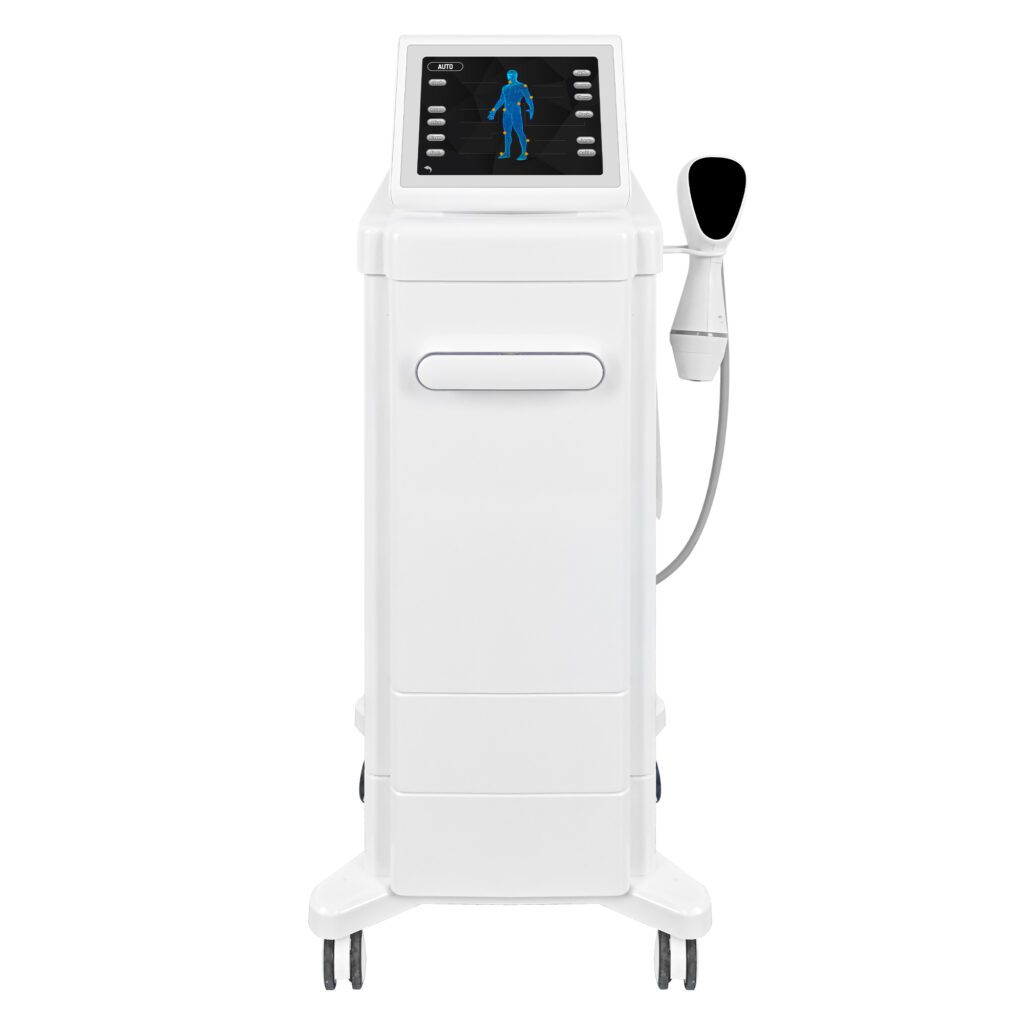
The SHEFMON B0155 desktop body-care system page presents multiple handle functions and target-area formats. The offer class should depend on the controlled handle set.
- A Standard Offer can define the distributor’s default B0155 set for a stated body-studio role.
- An Approved Variant can define another recurring, reviewed handle set for a different service scope.
- A One-Time Exception can manage a buyer-specific combination outside both records.
Do not assume that every handle shown on a page is included in every offer. Do not create a variant until the content, compatibility, supply, quotation wording, and reuse conditions are controlled.
24. Classify Multi-Device Packages at Two Levels
A multi-device package needs both package-level and line-level control.
| Package decision | Line-level question | Offer-level outcome |
|---|---|---|
| Add hair removal to a facial package | Which exact laser model and configuration? | New approved package variant or separate standard |
| Add A0204 to an advanced package | Which handle and cartridge matrix? | Variant only after full review |
| Add A0152 opening heads | Are formats and quantities within approved rules? | Routine selection, variant, or exception |
| Change B0155 handle set | Is the new set controlled and repeatable? | Variant or exception |
| Split devices across locations | Are site conditions and quantities defined? | Multi-location variant or project exception |
Do not call an entire package standard when one device line still relies on an unresolved exception.
25. Apply the Structure to Multi-Location Buyers
A group may have one Standard Offer and several approved site variants. Record:
- group baseline;
- eligible site types;
- site-specific device quantities;
- room and electrical profiles;
- approved model or configuration differences;
- opening component bands;
- delivery phases;
- local operator and document conditions;
- commercial treatment;
- sites excluded from the variant.
A departure for one site remains a One-Time Exception unless it is deliberately reviewed for broader reuse.
26. Keep Commercial Variants Separate from Technical Variants
A recurring discount or freight structure does not automatically create a technical offer variant. Conversely, a technical variant should not inherit commercial terms without review.
Maintain separate but linked records for:
- technical content;
- supply status;
- price list;
- discount authority;
- currency;
- freight basis;
- payment terms;
- validity;
- buyer-specific concession.
An offer can use a standard technical package and a one-time commercial exception. The quotation should link both decisions.
27. Set Validity and Review Triggers
Standard Offer triggers
Review when the model, base configuration, included items, market scope, quotation description, or core supply route changes.
Approved Variant triggers
Review when the difference from the standard changes, supporting evidence expires, conditions no longer match, or repeated use reveals a new risk.
One-Time Exception triggers
Expire at the named quote, project, site, quantity, date, or buyer decision. Reopen when any approved condition changes.
Dates alone are not enough. Add event-based triggers.
28. Prevent Exception Creep
Exception creep occurs when project-only choices spread into routine selling. Prevent it by:
- marking project-only approvals clearly;
- blocking exception IDs from general package menus;
- keeping exception quotation text separate from templates;
- setting expiry and scope fields;
- requiring a new request for another buyer;
- auditing repeated use;
- preserving rejected and withdrawn requests;
- preventing copied quotations from carrying old exception lines;
- reviewing sales decks for unapproved choices.
Convenience is not evidence that an exception is safe to reuse.
29. Promote an Exception to an Approved Variant Carefully
Repeated demand may justify a variant review. Promotion should require:
- a defined recurring buyer need;
- confirmed product and compatibility data;
- a stable configuration;
- defined inclusion and option rules;
- clear market and operating scope;
- repeatable supply and quotation handling;
- a buyer-facing description;
- pricing and approval connections;
- an owner and review date;
- removal of buyer-specific details;
- testing in the quotation workflow;
- a new variant ID and revision.
Do not rename the exception as a variant while keeping the same incomplete evidence.
30. Promote a Variant to a Standard Only When the Default Changes
High usage alone does not make a variant the default. Review:
- which buyer need occurs most often;
- which option provides the clearest service role;
- which configuration is most stable;
- whether the former standard still serves an important segment;
- training and catalog implications;
- current supply and commercial structures;
- open quotations using both versions;
- installed-base and later component implications.
If the default changes, issue a new Standard Offer revision or identity, update the fast path, and manage the former standard deliberately.
31. Retire Standards and Variants Without Losing History
When an offer is retired:
- block new quotations;
- record the final active revision and retirement reason;
- preserve historical quote and order links;
- identify whether a replacement exists;
- do not imply identical content unless verified;
- review open quotations;
- preserve installed configurations for later support;
- keep buyer-specific exceptions linked to their original baseline.
Retirement should stop future selection without erasing what buyers previously accepted.
32. Build Team Views and Alerts
Useful views include:
- active standards by product family;
- approved variants by standard and market;
- variants approaching review dates;
- open exception requests;
- approved exceptions not yet linked to a quote;
- expired exceptions still appearing in drafts;
- repeated exception categories;
- variants used outside their conditions;
- quotes containing both technical and commercial exceptions;
- retired offers used in new documents;
- candidate exceptions for variant review.
Alerts should state the blocked action and responsible owner.
33. Measure Portfolio Complexity
Track:
- standards per product family;
- active variants per standard;
- exception rate by model and category;
- percentage of quotes using the fast path;
- variant eligibility errors;
- exception approvals reused without authorization;
- time to decide an exception;
- repeated exceptions by reason;
- variants promoted, revised, or retired;
- quote corrections caused by wrong classification;
- order discrepancies linked to expired or unclear approvals.
The aim is a portfolio that is flexible enough for real buyers and controlled enough for reliable quotations.
34. Standard, Variant, and Exception Checklist
Before releasing an offer, confirm that:
- the buyer and business purpose are defined;
- the exact device model and configuration are identified;
- the request matches an active standard or variant, or has an exception record;
- component status is not being confused with offer level;
- compatibility, availability, market, operator, and price statuses are separate;
- the applicable standard, variant, or exception ID is recorded;
- every variant condition is satisfied;
- every exception names the baseline and precise departure;
- technical and commercial departures follow their own approval routes;
- A0423 and A0426 remain distinct model records;
- A0204 handle and cartridge matrices are explicit;
- A0152 configuration and quantity choices are separated;
- the B0155 handle set is stated;
- buyer-facing inclusions, options, exclusions, and conditions are clear;
- validity and review triggers are current;
- project-only approvals are blocked from automatic reuse;
- the quotation and order reference the same approved scope.
Frequently Asked Questions
1. What is the main difference between a Standard Offer and an Approved Variant?
A Standard Offer is the default for a defined recurring need. An Approved Variant is a reusable alternative with documented differences and narrower conditions of use.
2. Is every optional component an Approved Variant?
No. An ordinary option selected under the Standard Offer’s rules can remain part of the standard path. A variant is needed when the complete offer follows a separately approved recurring structure.
3. Does approving an exception make it reusable?
No. Approval applies only to the stated buyer, project, site, quotation, quantity, time, and conditions. Reuse requires a new decision or formal promotion to an Approved Variant.
4. Can A0423 and A0426 be variants of the same configuration?
They should remain separate model records. A distributor may place their offers under one hair-removal portfolio, but each model needs its own configuration, package identity, and review.
5. When should a repeated exception become an Approved Variant?
Consider promotion when demand recurs and the product, compatibility, configuration, market, supply, quotation, and commercial rules can be made stable and reusable.
6. Can an Approved Variant have a different price?
Yes, but technical content and commercial data should remain separately controlled. The variant points to the applicable current price record rather than storing a permanent price in its identity.
7. How should a one-time exception appear in a quotation?
Show the exact approved deliverable and any conditions that affect the buyer. Internally link the quotation revision to the exception ID, decision, validity, and approval evidence.
8. What happens when a variant is used outside its conditions?
It no longer qualifies for the variant path. Return the offer for correction or create a One-Time Exception request for the actual buyer and project context.
9. Should retired standards and variants be deleted?
No. Block them from new use while preserving historical quotations, orders, installed configurations, and the decisions that depended on them.
10. How many Approved Variants should one Standard Offer have?
Use only enough to cover stable recurring needs. A growing list of rarely used variants usually indicates weak buyer qualification, duplicate offers, or exceptions that were standardized too quickly.
Conclusion
Standard Offers, Approved Variants, and One-Time Exceptions give distributor sales teams three controlled ways to meet buyer needs. The Standard Offer provides the default, the Approved Variant provides repeatable flexibility under stated conditions, and the One-Time Exception contains a project-specific departure. Each level needs a clear identity, scope, evidence, approval route, quotation treatment, validity, and change history.
Review the SHEFMON beauty device range when defining standard facial, hair-removal, HIFU, RF-microneedling, body-care, and multi-device offers. To confirm current model and configuration information before approving a variant or exception, contact SHEFMON with the buyer profile, destination, baseline offer, requested difference, and proposed quotation scope.