









Pour les distributeurs de matériel de beauté, choisir un nouvel appareil ne se résume pas à trouver un produit qui a l'air populaire aujourd'hui.
La question la plus importante est de savoir si l'appareil peut continuer à créer de la demande une fois la première vague de curiosité passée.
Un appareil de beauté peut susciter l'intérêt sur les réseaux sociaux, apparaître fréquemment dans les publicités de la concurrence ou paraître attrayant dans un catalogue de fournisseur. Mais cela ne garantit pas pour autant une demande locale durable. Cette demande dépend de la capacité des salons, cliniques, centres de bien-être et autres prestataires de services à proposer régulièrement ce traitement à une clientèle réelle, à utiliser l'équipement en toute sécurité, à assurer son entretien et à développer des offres de services rentables autour de ce produit.
Pour un distributeur, il s'agit d'une décision commerciale. Si le produit bénéficie d'une demande soutenue, il peut générer des commandes régulières, des ventes de pièces détachées, des revenus liés à la formation, des recommandations clients et renforcer son réseau local. En revanche, si le produit ne connaît qu'un succès passager, il risque d'engendrer des tensions sur les stocks et des problèmes de service après-vente.
Cet article explique comment les distributeurs peuvent évaluer si un appareil de beauté a une demande à long terme sur leur marché local avant de prendre une décision d'importation plus importante.
La demande à long terme est différente de la popularité à court terme.
La popularité à court terme est facile à constater.
Un produit peut apparaître dans de nombreuses vidéos TikTok, des publicités pour salons de coiffure, des stands d'exposition ou des publications de concurrents. Les clients peuvent poser des questions à son sujet après l'avoir vu en ligne. Certains propriétaires de salons peuvent dire : “ Cette machine a l'air nouvelle. J'aimerais l'essayer. ”
Ce type d'attention peut aider un distributeur à entamer des conversations, mais il ne suffit pas à prouver une demande à long terme.
La demande à long terme est plus forte et plus concrète. Cela signifie que l'appareil peut continuer à proposer des services payants une fois que les clients ont compris le traitement, après l'arrivée de concurrents sur le marché et après la fin de la première campagne promotionnelle.
Pour les distributeurs, un appareil de beauté bénéficiant d'une demande à long terme présente généralement plusieurs caractéristiques :
- Ce traitement répond à un besoin réel et récurrent des clients.
- Les prestataires de services locaux peuvent facilement expliquer le traitement.
- Cet appareil s'adapte aux modèles commerciaux existants des salons de coiffure, cliniques et centres de bien-être.
- Les opérateurs peuvent être formés sans difficulté excessive.
- Le traitement peut être vendu sous forme de forfait, de cure ou de service d'entretien.
- La machine présente un risque après-vente acceptable.
- Les consommables, les pièces à main et les pièces de rechange peuvent être fournis au fil du temps.
- La réglementation locale et les attentes des clients permettent de promouvoir le service de manière responsable.
C’est pourquoi les distributeurs doivent éviter de juger la demande uniquement d’après l’apparence du produit ou le bruit médiatique en ligne. Une bonne machine n’est pas seulement une machine à l’allure sophistiquée. C’est une machine capable de fonctionner efficacement au sein du réseau de distribution local.
Commencez par le canal des vrais acheteurs
La première étape consiste à définir qui achètera réellement l'appareil sur votre marché.
De nombreux distributeurs commettent l'erreur de dire : “ Ce produit est pour tout le monde. ” En réalité, chaque catégorie d'appareils de beauté a un canal d'achat plus adapté.
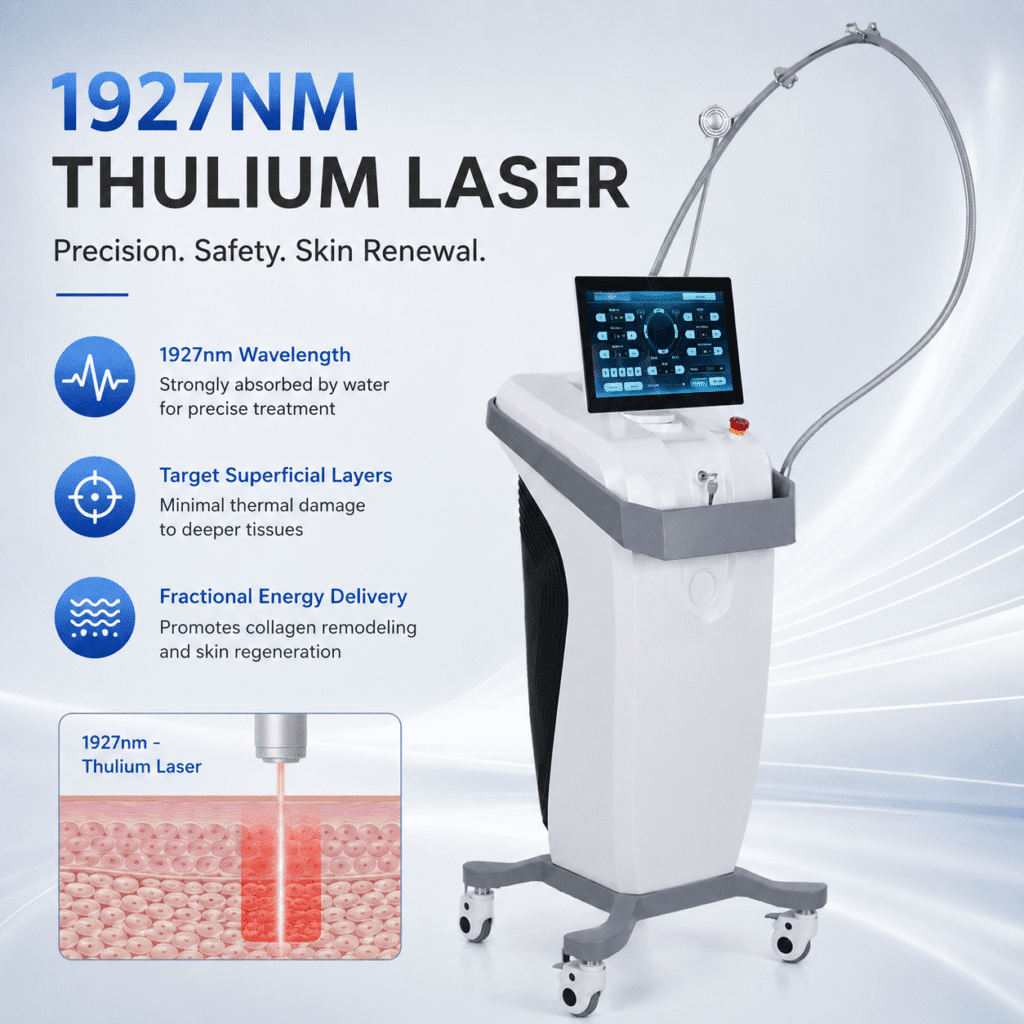
Par exemple, les appareils d'épilation laser diode peuvent convenir aux instituts de beauté, aux spas médicaux, aux centres d'épilation laser et aux chaînes de magasins. Les appareils HydraFacial peuvent convenir aux instituts de beauté, aux cabines de soins du visage et aux centres de soins de la peau. La cryolipolyse, le remodelage corporel par radiofréquence et la stimulation électromagnétique peuvent convenir aux instituts de soins du corps, aux centres d'amincissement et aux centres de bien-être. Les appareils HIFU, de microneedling par radiofréquence et les lasers professionnels peuvent nécessiter une formation plus poussée et convenir aux cliniques spécialisées ou aux centres de soins de la peau professionnels. Les appareils à ondes de choc et de physiothérapie peuvent convenir aux centres de réadaptation, aux salles de récupération sportive, aux salles de sport, aux centres de bien-être et à certains instituts de soins du corps, selon leur emplacement et la réglementation locale.
Un distributeur ne devrait pas évaluer la demande de manière générale. La question pertinente est plutôt :
Quel groupe d'acheteurs locaux a la meilleure raison de payer pour cet appareil ?
Si l'appareil ne dispose pas d'un circuit de distribution clairement défini, il peut être difficile à vendre même si la technologie semble impressionnante.
Pour chaque produit, les distributeurs peuvent lister les canaux d'achat possibles :
- Salons de beauté.
- Spas médicaux.
- Cliniques de dermatologie ou de soins de la peau.
- Centres d'épilation laser.
- Centres d'amaigrissement ou de remodelage corporel.
- Centres de récupération post-partum.
- Centres de réadaptation ou de physiothérapie.
- Salles de sport et studios de récupération sportive.
- Spas d'hôtels ou centres de bien-être.
- Académies de formation en esthétique.
Ensuite, évaluez lesquels de ces canaux existent déjà sur votre marché local, lesquels sont en croissance et lesquels disposent d'un budget suffisant pour acheter du matériel.
Si le circuit de distribution local est actif, le produit bénéficie d'une base plus solide pour une demande à long terme.
Vérifier si les consommateurs finaux comprennent déjà le service
Un appareil de beauté ne nécessite pas seulement une demande des salons de beauté, mais aussi de la part des consommateurs finaux.
Même si le propriétaire d'un salon apprécie l'appareil, il doit encore convaincre ses clients de proposer le soin. Si les consommateurs locaux ne comprennent pas du tout le service, le salon devra investir davantage dans la formation, le marketing et le temps avant que l'appareil ne génère des revenus.
Cela ne signifie pas que les distributeurs doivent se limiter à la vente de produits matures. Les nouvelles technologies peuvent également se développer. Toutefois, le distributeur doit être attentif aux besoins de formation du marché.
Par exemple, l'épilation est généralement facile à expliquer car de nombreux consommateurs en comprennent déjà le besoin. Les soins du visage (nettoyage et hydratation) sont également faciles à présenter car les clients sont habitués aux soins du visage réguliers. Le remodelage corporel peut être attrayant, mais il exige une formulation précise car les résultats varient et le traitement ne doit pas être présenté comme une garantie de perte de poids. Les soins de la peau professionnels à base d'énergie peuvent offrir une plus grande valeur ajoutée, mais ils nécessitent généralement une formation plus poussée, une sélection rigoureuse des clients et une communication plus responsable des résultats.
Les distributeurs peuvent vérifier la compréhension des consommateurs grâce à une simple étude locale :
- Recherchez des mots clés locaux sur Google, TikTok, Instagram, Facebook, YouTube ou les plateformes locales.
- Consultez les cartes des services des salons et cliniques de la même ville.
- Demandez aux propriétaires de salons quels soins leurs clients demandent déjà.
- Vérifiez si vos concurrents locaux vendent des forfaits ou ne proposent que des promotions ponctuelles.
- Lisez les commentaires des clients pour comprendre leurs préoccupations, leurs attentes et leur sensibilité au prix.
- Comparez si le service est populaire uniquement dans les grandes villes ou également sur les marchés locaux plus petits.
Si les consommateurs comprennent déjà les avantages du service, le distributeur est confronté à un obstacle pédagogique moindre.
Si les consommateurs ne comprennent pas encore le service, le distributeur doit préparer des supports marketing plus solides, un contenu de formation et une éducation client réaliste.
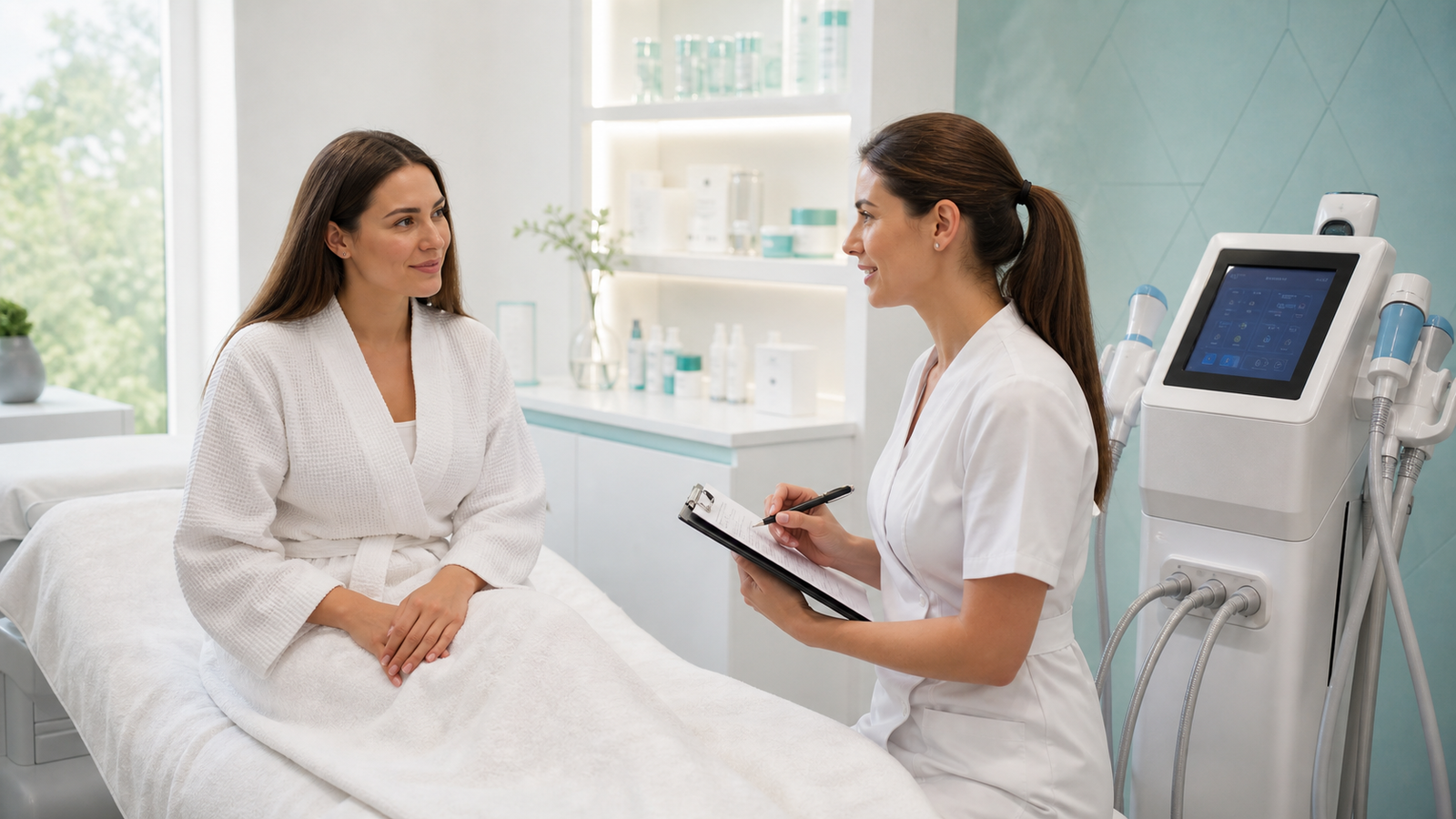
Évaluer le potentiel de fidélisation de la clientèle
La demande à long terme est étroitement liée à la fidélisation de la clientèle.
Un appareil qui ne suscite qu'un intérêt ponctuel peut se vendre rapidement au départ, mais devenir plus difficile à écouler par la suite. Un appareil qui permet des traitements répétés, des programmes d'entretien ou des forfaits de services combinés présente une valeur à long terme plus importante pour les entreprises locales.
Les distributeurs devraient demander :
- Les salons peuvent-ils proposer ce soin sous forme de cure ?
- Les clients peuvent-ils revenir pour la maintenance ?
- Ce service peut-il être combiné avec d'autres traitements ?
- L'appareil peut-il prendre en charge les promotions saisonnières ?
- Ce service peut-il générer des revenus liés aux abonnements ou aux forfaits ?
- Le traitement peut-il être adapté à différents groupes de clients ?
Les appareils HydraFacial sont souvent très performants dans ce domaine, car le nettoyage, l'hydratation et l'entretien du visage peuvent être répétés. L'épilation au laser diode peut également être proposée dans le cadre de cures, car les clients ont généralement besoin de plusieurs séances. Les appareils de remodelage corporel peuvent favoriser la vente de forfaits si les salons expliquent clairement le service. Les appareils à ondes de choc ou de récupération peuvent encourager les visites régulières dans le cadre de la récupération sportive, de la physiothérapie ou des soins du corps.
Le distributeur doit examiner comment la machine aide l'acheteur à gagner de l'argent sur le long terme.
Si un salon ne peut que dire : “ Essayez cette machine une fois ”, sa valeur commerciale risque d'être faible.
Si le salon peut dire : “ Ceci est un forfait de soins corporels en 6 séances ”, “ Ceci est un plan d'entretien mensuel du visage ” ou “ Ceci est un service de récupération qui peut être ajouté après la formation ”, la demande à long terme est plus forte.
Tester si les opérateurs locaux peuvent vendre le service de manière rentable
La demande ne se résume pas à l'intérêt. Elle concerne aussi le profit.
Un produit peut susciter l'intérêt des consommateurs, mais si les salons locaux ne peuvent pas fixer le prix du service correctement, le système risque de se mettre en place lentement.
Les distributeurs doivent calculer un modèle commercial pratique pour chaque appareil :
- Coût estimatif de l'équipement.
- Frais de transport, taxes et coûts d'importation.
- Coût de la garantie et du service local.
- Temps d'entraînement.
- Coût des consommables ou du remplacement des pièces à main.
- Prix moyen des traitements locaux.
- Nombre de séances prévues par mois.
- Période de retour sur investissement pour le salon ou la clinique.
- Marge du distributeur et valeur des pièces détachées.
L'essentiel est de ne pas promettre des rendements irréalistes. L'objectif est d'aider les acheteurs à comprendre si l'appareil correspond à leurs besoins en matière de services.
Un distributeur peut proposer différents exemples de tarification adaptés à divers types d'acheteurs. Pour un petit salon, l'accent peut être mis sur un coût d'entrée réduit et des formules simples. Pour une clinique plus importante, l'accent peut être mis sur des soins haut de gamme et un positionnement professionnel. Pour une salle de sport ou un centre de remise en forme, l'accent peut être mis sur la fidélisation des membres et les services complémentaires.
Si l'appareil ne peut fonctionner que selon un modèle commercial à prix très élevé que la plupart des acheteurs locaux ne peuvent pas supporter, la demande à long terme risque d'être limitée.
Si l'appareil peut être vendu à différents niveaux de prix et avec différentes formules de service, il bénéficie d'une plus grande flexibilité sur le marché.
Étudiez vos concurrents, mais ne les copiez pas aveuglément.
L'activité des concurrents est un signal utile.
Si de nombreux salons et cliniques proposent déjà un traitement, cela peut indiquer que le service est bien compris des clients. Mais cela peut aussi signifier que le marché local est saturé.
Si aucun concurrent ne propose ce service, cela peut indiquer une nouvelle opportunité. Mais cela peut aussi signifier que la demande locale est trop faible, que la réglementation est complexe ou que le coût de la formation des clients est trop élevé.
Les distributeurs ne doivent donc pas se contenter de demander si leurs concurrents possèdent la machine. Ils doivent également s'intéresser à la manière dont ils commercialisent le service.
Voici quelques questions utiles :
- Les concurrents font-ils la promotion de l'appareil de manière constante ou seulement lors de campagnes ponctuelles ?
- Vendent-ils des forfaits, des abonnements ou des séances ponctuelles ?
- Les avis des clients sont-ils positifs, mitigés ou décevants ?
- Les prix sont-ils stables ou fortement réduits ?
- Les salons mentionnent-ils l'assistance technique, le confort, la climatisation, la sécurité ou la formation ?
- Existe-t-il de nombreuses machines de mauvaise qualité qui exercent une pression à la baisse sur les prix ?
- Existe-t-il un besoin pour un produit vendu directement par l'usine et bénéficiant d'un meilleur support ?
La meilleure opportunité ne réside pas souvent dans un marché sans concurrence, mais plutôt dans celui où les clients connaissent déjà le service, mais où les salons ont encore besoin d'équipements plus fiables, d'une meilleure formation, d'un meilleur approvisionnement en pièces détachées ou d'un meilleur rapport qualité-prix.
C’est là qu’un distributeur peut intervenir avec une offre à valeur ajoutée plus attractive.
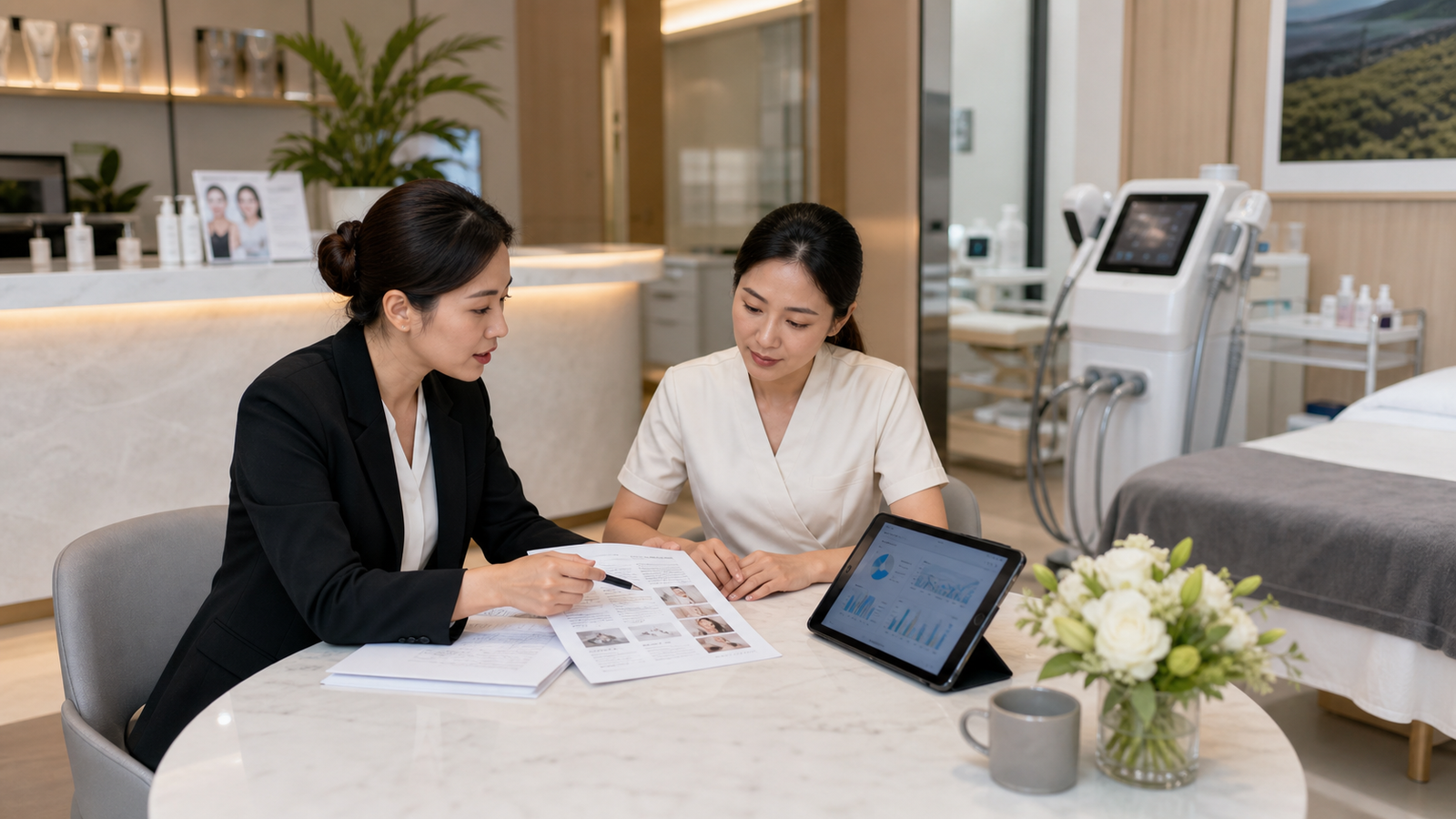
Adapter l'appareil aux tendances des services locaux
Les différents marchés évoluent de différentes manières.
Dans un pays, l'épilation laser pourrait constituer le segment de marché le plus porteur. Dans une autre région, les appareils de soins du visage pourraient se développer plus rapidement, car les soins du visage font déjà partie intégrante de la culture des salons de beauté. Sur un autre marché encore, les soins post-partum, la récupération sportive ou le bien-être corporel pourraient connaître une croissance plus rapide que les services de beauté traditionnels.
Les distributeurs devraient adapter leur sélection de produits aux tendances locales en matière de services, et pas seulement aux catalogues des fournisseurs.
Les tendances générales de la demande à long terme comprennent :
Demande en matière d'épilation et de soins personnels.
Cela soutient les catégories laser diode et IPL lorsque les consommateurs locaux paient déjà pour des services d'épilation.
Besoins en soins du visage et en gestion de la peau.
Cela prend en charge les soins du visage Hydra, les soins du visage à l'oxygène, les LED, la radiofréquence et les appareils de soins de la peau d'entrée de gamme.
Demande en matière de remodelage corporel et de bien-être.
Cela prend en charge la cryolipolyse, la cavitation RF, le remodelage corporel par le vide, le remodelage corporel EMS, le massage par rouleaux et les plateformes de soins corporels connexes.
Demande de soins anti-âge et raffermissants pour la peau.
Cela prend en charge les systèmes de traitement cutané professionnels HIFU, RF, RF fractionnée, RF de micro-aiguillage, là où la formation et la conformité locales le permettent.
Demande de récupération et de physiothérapie.
Cela prend en charge les appareils à ondes de choc, Tecar, PMST, de magnétothérapie et de récupération sportive lorsque les chaînes de rééducation, de gym ou de bien-être sont actives.
Le distributeur n'a pas besoin d'importer toutes les catégories en même temps. La meilleure stratégie consiste à identifier les segments de demande pour lesquels les acheteurs sont déjà prêts à se manifester sur le marché local.
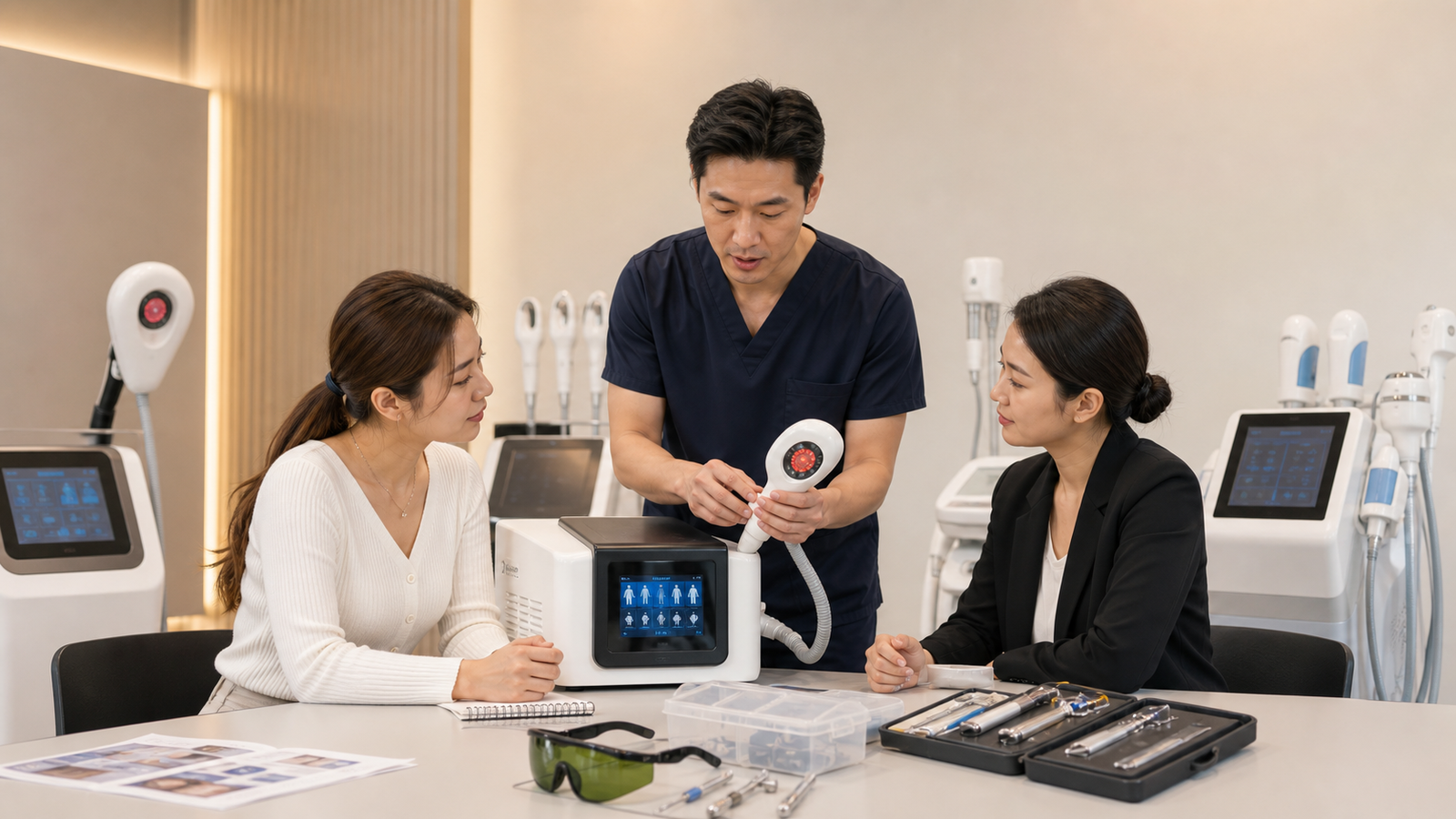
Vérifier le niveau de formation et de risque
Un appareil très demandé peut néanmoins tomber en panne si les opérateurs ne savent pas l'utiliser correctement.
La formation est l'une des principales différences entre un produit à vente unique et un produit qui s'inscrit dans une catégorie de distributeurs à long terme.
Avant d'importer un appareil, les distributeurs devraient poser les questions suivantes :
- L'opération est-elle difficile ?
- Quelles sont les erreurs courantes des nouveaux opérateurs ?
- Le fournisseur propose-t-il des vidéos de démonstration, des manuels et des guides de paramétrage ?
- Le distributeur est-il capable de former le personnel du salon en toute confiance ?
- Existe-t-il des contre-indications ou des exigences de sélection des clients ?
- L'appareil requiert-il des connaissances professionnelles dépassant le niveau de compétences actuel de l'acheteur ?
- La réglementation locale est-elle stricte pour ce type d'appareil ?
Les dispositifs à faible barrière à l'entrée sont peut-être plus faciles à vendre pour les distributeurs débutants, mais ils peuvent aussi être confrontés à une concurrence accrue sur les prix. Les technologies à plus forte valeur ajoutée peuvent offrir de meilleures marges, mais elles nécessitent une formation et un soutien plus poussés.
Il n'y a pas de réponse unique. Le bon choix dépend du canal de distribution.
Si vos clients sont de petits salons, commencez par des catégories de produits qu'ils peuvent comprendre, utiliser et vendre rapidement. Si vos clients sont des cliniques, des centres de soins de la peau ou des centres de réadaptation, vous pouvez envisager des systèmes plus avancés, mais vous devrez prévoir des supports de formation et un support technique de meilleure qualité.
La demande à long terme repose sur la confiance. Si les acheteurs hésitent à utiliser la machine après l'achat, les commandes répétées seront difficiles à obtenir.
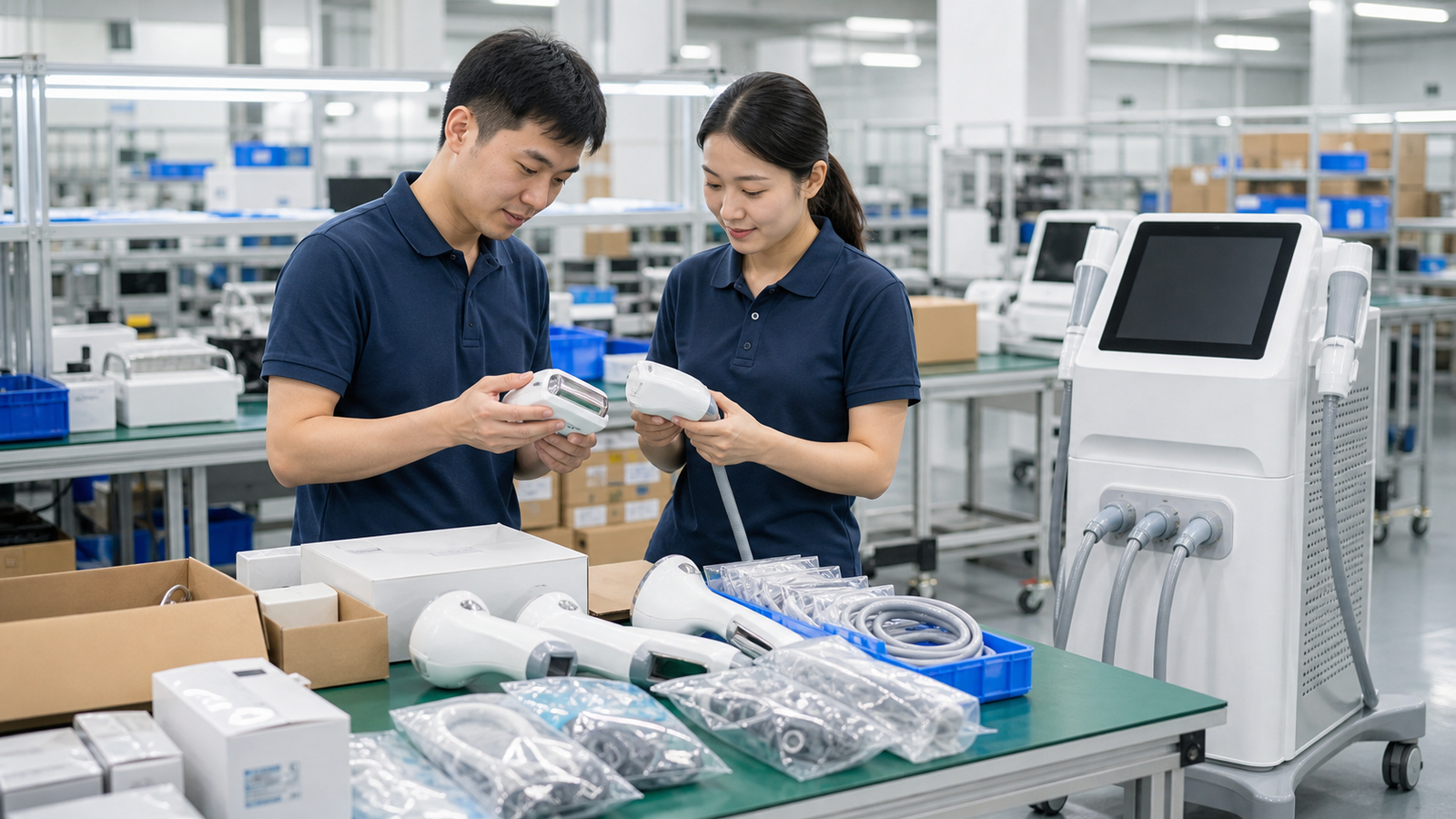
Confirmer le support après-vente et la fourniture de pièces détachées
La demande à long terme d'un distributeur ne s'arrête pas à la vente de la machine.
Dans le secteur des équipements esthétiques, le service après-vente fait partie intégrante de la valeur du produit. Une catégorie d'appareils ne peut devenir un marché stable que si le distributeur est en mesure d'assurer le support technique sur le terrain.
Avant de constituer une gamme de produits, les distributeurs doivent confirmer :
- Politique de garantie.
- Disponibilité des pièces détachées.
- Fourniture de pièces à main.
- Fourniture de consommables.
- Processus de réparation.
- Délai de réponse technique.
- Politique de mise à jour des logiciels, le cas échéant.
- Assistance à l'emballage et à l'expédition.
- Options OEM ou ODM si une marque locale est nécessaire.
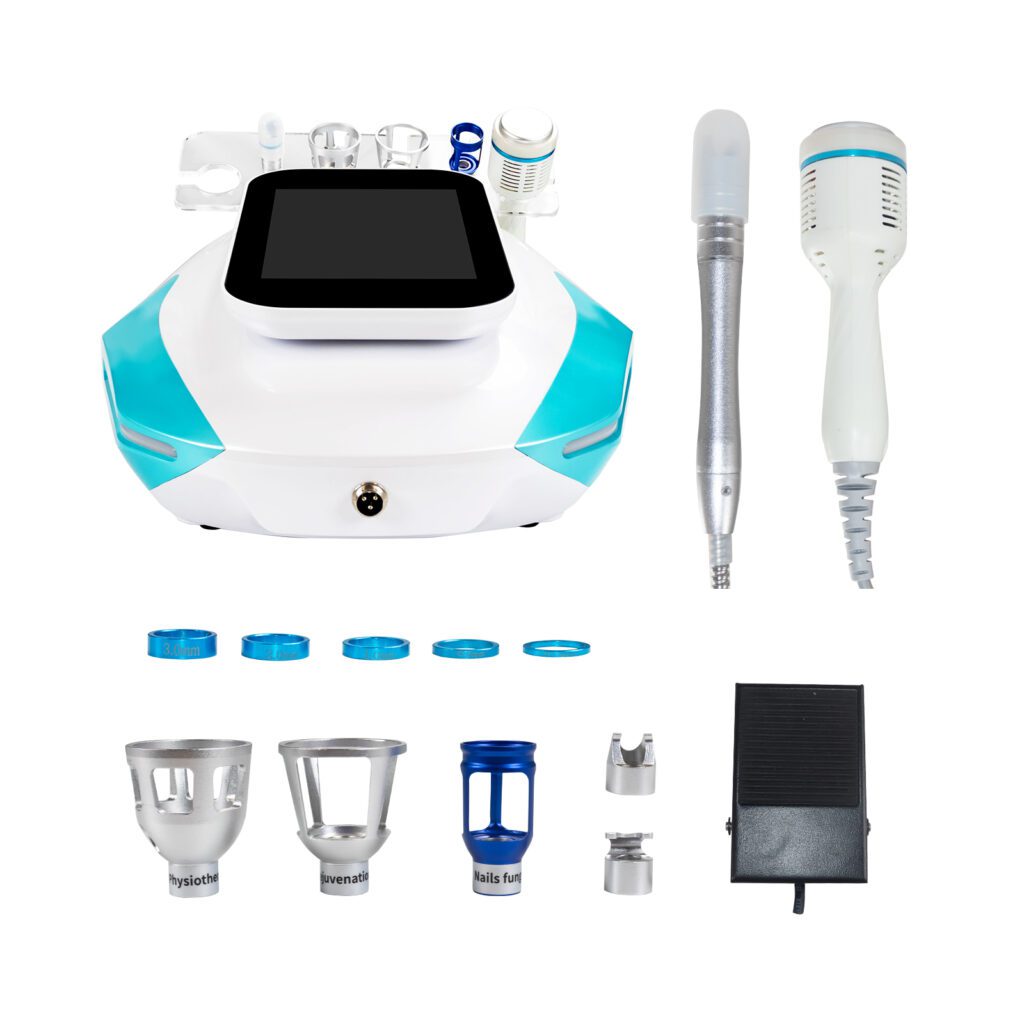
Ceci est particulièrement important pour les appareils comportant des pièces à main, des embouts, des filtres, des applicateurs, des pièces à vide, des systèmes de refroidissement, des écrans et des systèmes de contrôle électroniques.
Si les pièces détachées sont difficiles à obtenir, le distributeur risque de perdre la confiance de ses clients même si l'appareil se vend bien au départ.
La demande à long terme n'est pas seulement un problème de marché, c'est aussi un problème de chaîne d'approvisionnement.
Pour les distributeurs, travailler avec une usine capable de fournir des catégories de produits, des pièces détachées, des formations et un support après-vente pratique est souvent plus avantageux que de choisir une machine uniquement parce qu'elle est la moins chère.
Liste de contrôle pratique pour la validation de la demande à destination des distributeurs
Avant de passer une commande plus importante, les distributeurs peuvent utiliser une simple liste de contrôle de validation.
1. Interrogez de vrais acheteurs.
Contactez au moins 10 à 20 propriétaires de salons de beauté, gérants de cliniques, responsables de centres de bien-être ou organismes de formation de votre région. Demandez-leur quels services ils souhaitent ajouter, quelles machines ils utilisent déjà, quels problèmes ils rencontrent avec leurs fournisseurs actuels et quel niveau de prix ils sont prêts à accepter.
2. Consultez les menus des restaurants locaux.
Consultez les sites web et les pages des réseaux sociaux des salons et cliniques de votre région. Si plusieurs établissements proposent déjà des services similaires, il y a probablement une demande. S'ils proposent des forfaits plutôt que de simples réductions ponctuelles, le signal de cette demande est encore plus fort.
3. Vérifier les recherches des consommateurs et leurs centres d'intérêt sur les réseaux sociaux.
Utilisez Google Trends, les moteurs de recherche locaux et les réseaux sociaux pour comparer les mots-clés. Recherchez les noms des traitements, et pas seulement les noms des appareils. Les consommateurs recherchent généralement des services comme l'épilation laser, le nettoyage du visage, le raffermissement de la peau, le remodelage corporel ou les soins de récupération.
4. Tester le message de vente.
Avant d'importer un grand nombre d'unités, présentez le positionnement du produit à un petit groupe d'acheteurs. S'ils s'enquièrent immédiatement du prix, de la formation, de la garantie et de la livraison, leur intérêt est pragmatique. En revanche, s'ils se contentent de dire que la machine est esthétiquement réussie sans poser de questions commerciales, la demande risque d'être faible.
5. Calculez le retour sur investissement de l'acheteur de manière réaliste.
Ne vous fiez pas à des chiffres issus de cas parfaits. Utilisez un volume de traitement prudent, des prix locaux réalistes et les coûts réels du service après-vente.
6. Vérifier la conformité et les limites de réclamation.
Les règles relatives aux dispositifs à énergie positive, aux allégations médicales, aux importations de matériel esthétique et à la formulation publicitaire varient d'un marché à l'autre. Un produit demandé doit néanmoins bénéficier d'un positionnement local adapté.
7. Vérifiez le support du fournisseur.
Si le fournisseur ne peut pas fournir de pièces détachées, de formations, de manuels, d'images de produits, de vidéos ou d'assistance technique, le distributeur prendra seul trop de risques.
Cette liste de contrôle aide les distributeurs à distinguer la véritable demande à long terme de l'engouement passager pour un produit.
Signes avant-coureurs d'une faible demande à long terme
Certains produits semblent attrayants au premier abord, mais pourraient ne pas devenir des catégories stables.
Les distributeurs doivent être prudents lorsqu'ils constatent ces signes avant-coureurs :
- Les acheteurs ne demandent que le prix le plus bas et ne manifestent aucun intérêt pour les formations ou les services associés.
- Les concurrents ne vendent ce traitement qu'avec des remises importantes.
- Les consommateurs locaux ne comprennent pas les avantages de ce service.
- La machine nécessite une utilisation avancée, mais le canal d'achat est principalement constitué de salons d'entrée de gamme.
- Les pièces de rechange ou les consommables ne sont pas clairement identifiés.
- Ce produit repose sur des promesses de résultats exagérés.
- Ce traitement ne peut être répété ni conditionné facilement.
- La réglementation locale rend la promotion du service difficile.
- Le fournisseur ne dispose d'aucune documentation produit stable ni de procédure après-vente.
Une catégorie de produits peu performante peut encore générer quelques ventes. Mais elle ne permettra pas forcément de pérenniser une activité de distribution à long terme.
Comment évaluer les catégories de produits SHEFMON
SHEFMON propose plusieurs catégories d'équipements de beauté, permettant ainsi aux distributeurs d'évaluer la demande par canal au lieu de se concentrer sur une seule machine.
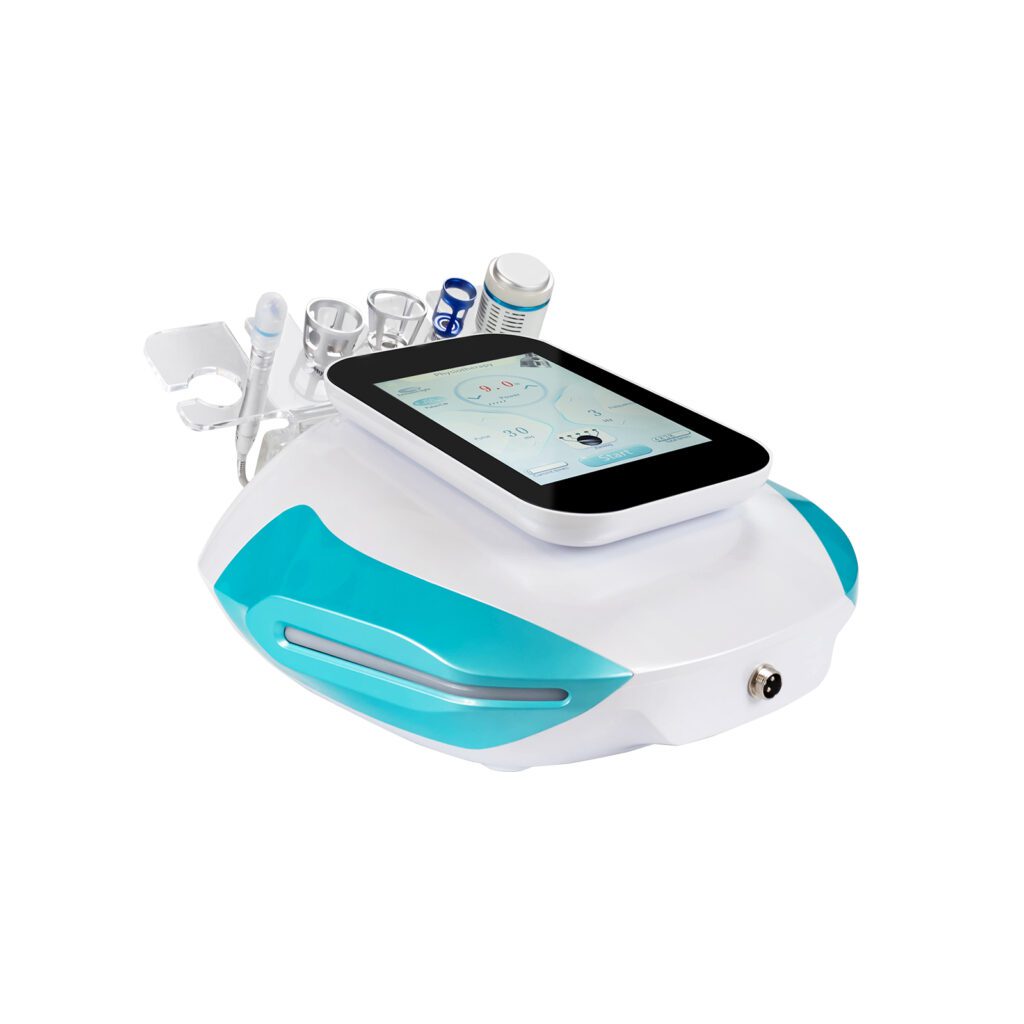
Pour les marchés où la demande est forte dans les salons de beauté et les centres médico-esthétiques, les distributeurs peuvent commencer par examiner les appareils d'épilation laser diode, de lumière pulsée intense (IPL), de soins HydraFacial, de remodelage corporel et de soins de la peau. Ces catégories sont généralement plus faciles à appréhender pour les salons de beauté car elles correspondent à des cartes de soins visibles.
Pour les marchés disposant de cliniques plus avancées ou de centres de soins de la peau professionnels, les distributeurs peuvent évaluer les systèmes HIFU, RF, microneedling RF, laser et autres systèmes professionnels en accordant une plus grande attention à la formation, à la conformité et à la sélection des clients.
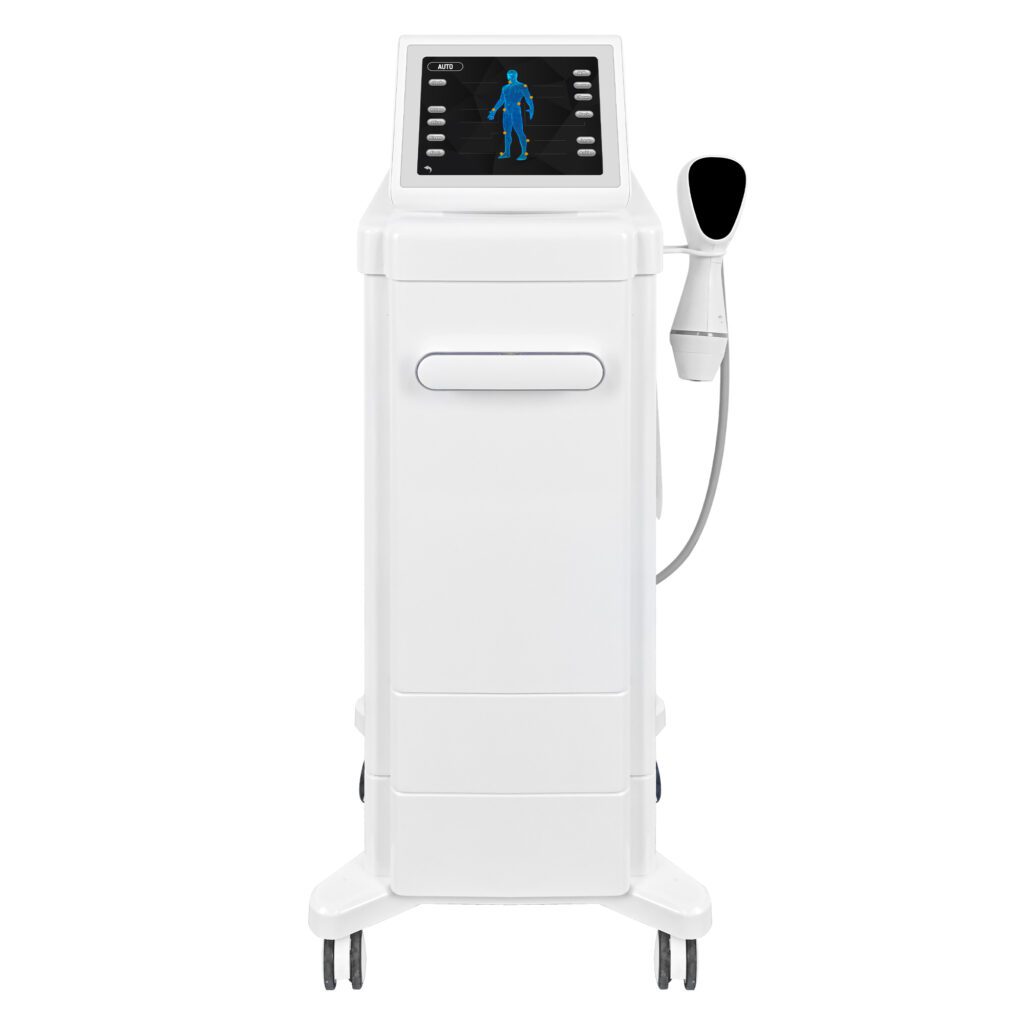
Pour les marchés proposant des services de réadaptation, de remise en forme, de récupération sportive ou de bien-être, les équipements Shockwave et de physiothérapie peuvent créer des opportunités supplémentaires au-delà des salons de beauté traditionnels.
La stratégie de distribution la plus efficace ne consiste pas à vendre tous les appareils avec le même discours. Il s'agit d'adapter chaque catégorie de produits au canal d'achat local capable de les utiliser de manière rentable et responsable.
Les pages de catégories SHEFMON utiles pour la recherche de distributeurs incluent :
- Machines de beauté SHEFMON
- équipement laser IPL
- équipement de soin du visage Hydra
- équipement de cryolipolyse
- équipement HIFU
- Équipements à ondes de choc et de physiothérapie
Conclusion
Pour déterminer si un appareil de beauté a une demande à long terme sur le marché local, les distributeurs ne doivent pas se contenter d'examiner les tendances du marché.
Ils devraient examiner les canaux d'achat, la compréhension des consommateurs, le potentiel de fidélisation, les prix locaux, le comportement des concurrents, la difficulté de formation, les risques de non-conformité et le service après-vente.
Un appareil de beauté bénéficie d'une demande plus forte à long terme lorsqu'il aide les prestataires de services locaux à développer de véritables services payants, et non pas une simple promotion temporaire.
Pour les distributeurs, le meilleur produit n'est pas toujours le plus récent ni le moins cher. C'est le produit dont l'utilisation est claire, le fonctionnement responsable, le support fiable et la vente régulière sur le marché local.
FAQ
1. Comment puis-je rapidement tester si un appareil de beauté répond à une demande locale ?
Commencez par des entretiens avec les acheteurs et une étude de votre carte des prestations. Échangez avec les propriétaires de salons, les responsables de cliniques et les professionnels du bien-être. Vérifiez ensuite si des services similaires sont déjà proposés localement et si les clients comprennent le nom du traitement. Si les acheteurs posent des questions pratiques sur la formation, la garantie, le prix et les forfaits, la demande sera plus forte.
2. La popularité sur les réseaux sociaux suffit-elle à prouver une demande à long terme ?
Non. La popularité sur les réseaux sociaux peut certes faire connaître le service, mais elle ne garantit pas sa rentabilité à long terme pour les salons. Les distributeurs doivent vérifier si le traitement peut devenir une prestation récurrente et si les commerces locaux peuvent en pratiquer un prix raisonnable.
3. Les distributeurs doivent-ils privilégier les catégories matures ou les nouvelles technologies ?
Les deux approches sont viables. Les catégories bien établies, comme l'épilation et les soins du visage, se vendent généralement plus facilement car les clients les connaissent déjà. Les technologies plus récentes ou plus avancées peuvent offrir des marges plus élevées, mais nécessitent une formation plus poussée et une meilleure connaissance des réglementations locales.
4. Quel est le signe le plus révélateur qu'un appareil peut créer une demande à long terme ?
Le signe le plus probant est le potentiel de fidélisation. Si les salons peuvent proposer des cures de soins, des abonnements, des forfaits d'entretien ou des offres combinées, l'appareil a de meilleures chances de devenir une catégorie de produits stable.
5. Quelle importance revêt le support après-vente pour évaluer la demande ?
C'est primordial. Même face à une forte demande du marché, un service après-vente défaillant peut nuire à la réputation du distributeur. Avant de promouvoir largement le produit, le distributeur doit impérativement s'assurer de la disponibilité des pièces détachées, des accessoires, des consommables, des modalités de garantie et de l'assistance technique.
6. Combien d'acheteurs dois-je interroger avant d'importer une nouvelle catégorie ?
Pour une première évaluation, discutez avec au moins 10 à 20 acheteurs locaux. Il est important qu'ils représentent différents types d'établissements, tels que des salons de beauté, des spas médicaux, des cliniques esthétiques, des centres de soins corporels ou des centres de bien-être. Leurs questions permettront de déterminer si leur intérêt est sérieux ou simplement passager.
7. Quelles catégories de produits ont généralement un potentiel de fidélisation plus élevé ?
L'épilation, les soins du visage, le remodelage corporel, le raffermissement cutané et les services de récupération présentent souvent un fort potentiel de fidélisation lorsqu'ils sont proposés localement. Le choix final dépend de la notoriété de la clientèle, du niveau de compétence des praticiens, des prix et de la réglementation locale.
8. Une machine à bas coût peut-elle avoir une faible demande ?
Oui. Un prix bas ne garantit pas la demande. Si le service est difficile à expliquer, complexe à utiliser, ne bénéficie pas de l'intérêt des consommateurs locaux ou si le service après-vente est insuffisant, la machine risque de se vendre lentement.
9. Que doivent éviter les distributeurs lorsqu'ils font la promotion d'un nouvel appareil de beauté ?
Évitez les affirmations exagérées, les résultats garantis, les promesses de retour sur investissement irréalistes et un positionnement flou du traitement. Une stratégie plus sûre consiste à expliquer la valeur du service, le soutien à la formation, les attentes réalistes du client et le modèle économique à long terme.
10. Comment SHEFMON peut-il aider les distributeurs dans la sélection des produits ?
SHEFMON propose plusieurs catégories d'équipements esthétiques, notamment le laser IPL, l'HydraFacial, le remodelage corporel, le HIFU, les ondes de choc et les équipements de physiothérapie. Les distributeurs peuvent comparer les catégories en fonction de leurs circuits de distribution locaux et choisir les produits adaptés à la demande, à leurs capacités de formation et à leurs exigences en matière de service après-vente.