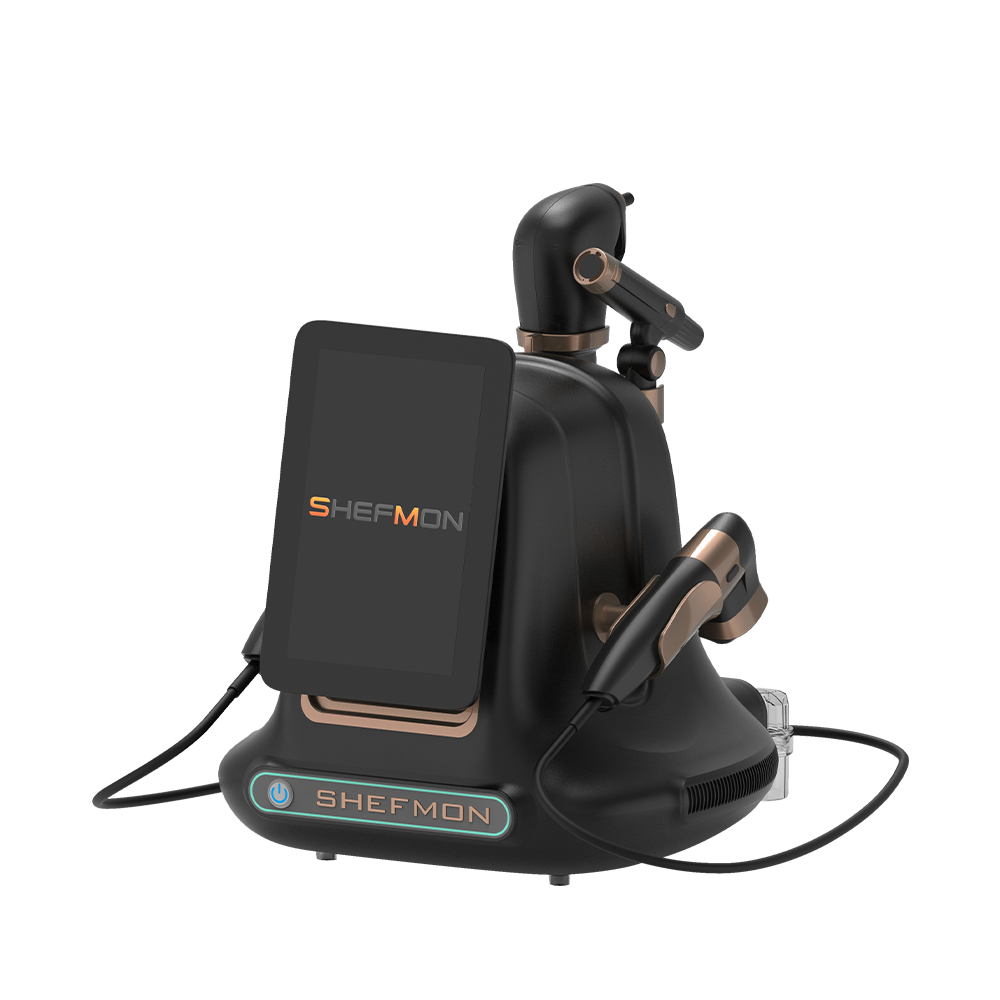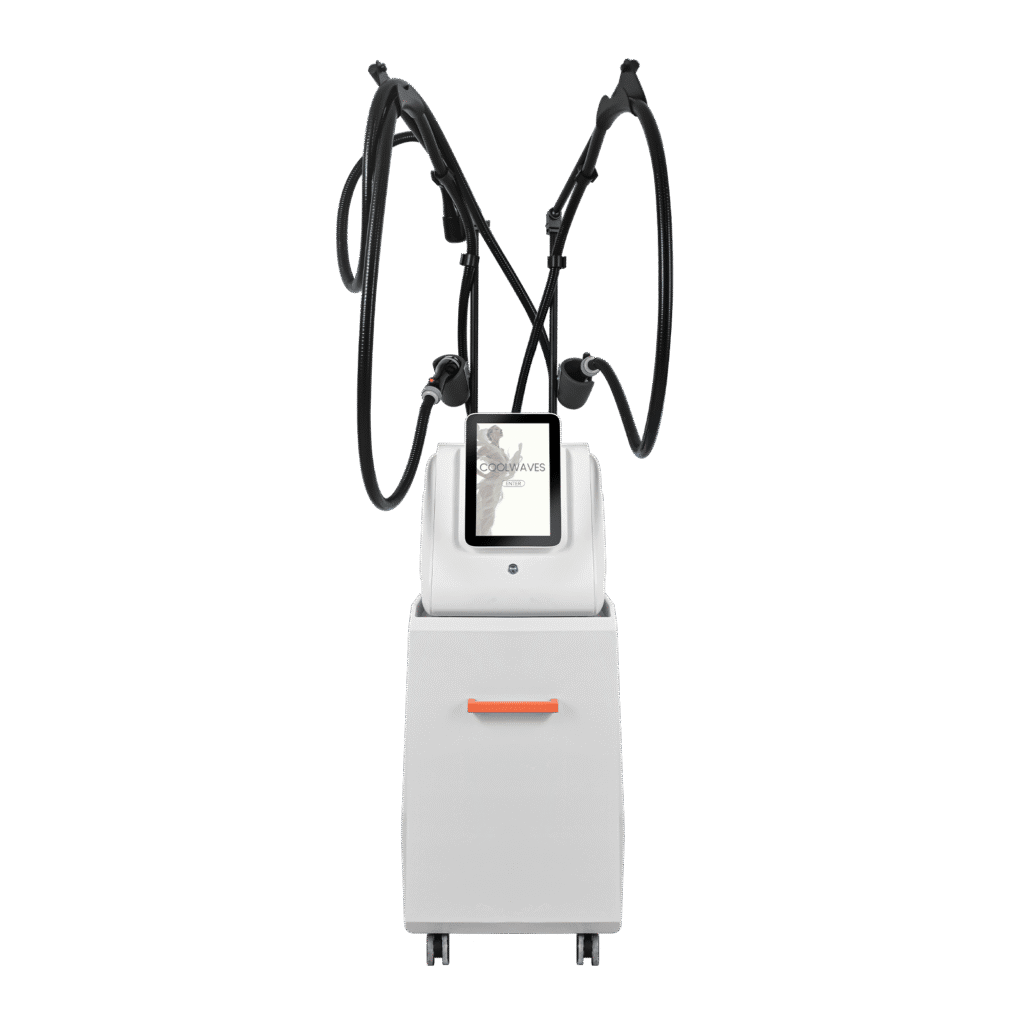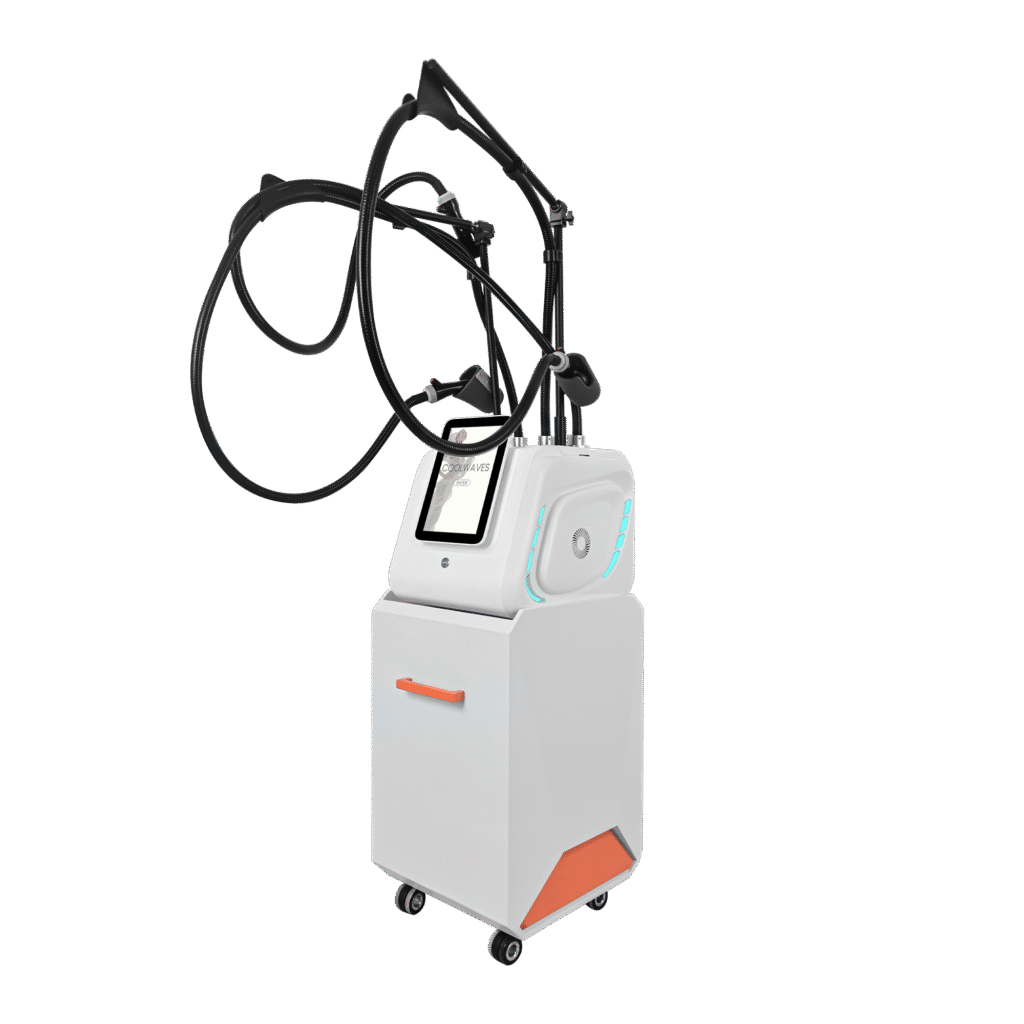
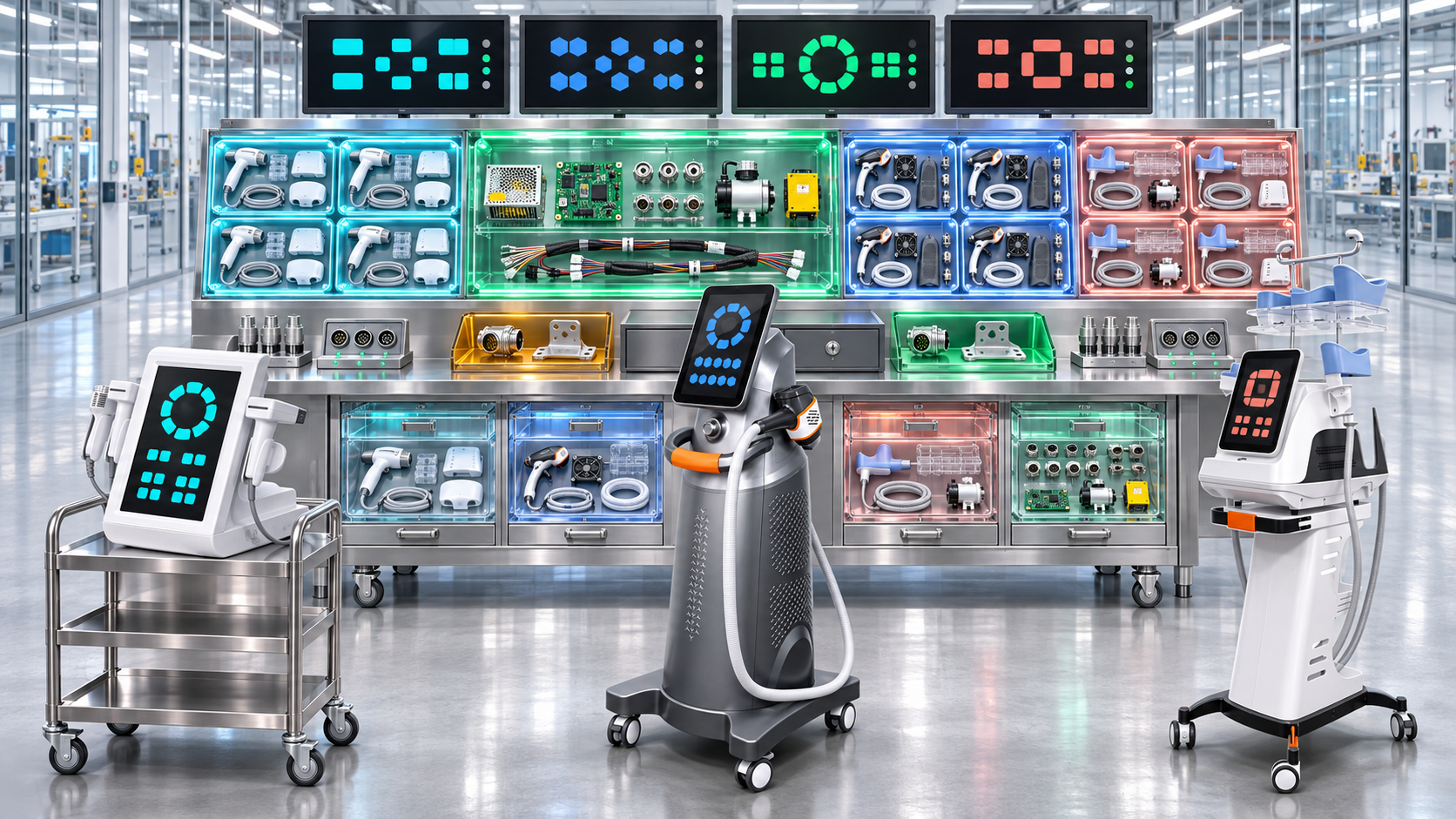
A beauty device factory can build several models from shared technologies, enclosures, power systems, displays, cooling assemblies, control boards, handles, and software. That commonality can reduce development effort and simplify sourcing, but only when the bill of materials is governed as a product system. Without clear ownership and configuration rules, the same shared part can create incorrect builds, obsolete stock, unsupported substitutions, service confusion, and shipment errors across an entire product family.
Bill of materials governance is therefore more than maintaining a component list. It defines who may create or change product structures, how common and model-specific content is separated, how engineering data becomes a production-ready BOM, how variants are selected, and how every change is assessed across active models, inventory, orders, quality evidence, and installed devices.
This guide explains how beauty device manufacturers can govern BOMs for multi-model product families. It focuses on controlled product structures, decision rights, configuration logic, effectivity, change impact, and traceability for standard, regional, and OEM/ODM configurations.
Résumé exécutif
Effective BOM governance for a multi-model beauty device family should:
- Define the product hierarchy. Separate platform, family, model, variant, option, kit, and customer-specific configuration.
- Use one controlled source of product structure. Spreadsheets may support analysis, but the approved BOM and revisions need an authoritative system and owner.
- Separate BOM purposes. Engineering, manufacturing, sales configuration, packaging, service, and software records answer different questions and require controlled alignment.
- Distinguish family content from model content. Shared assemblies should be reusable without allowing a change to one model to spread silently to every model.
- Use 150% and 100% structures correctly. A family or super BOM can contain all valid options, while each production order needs an exact buildable configuration.
- Control selection rules. Valid combinations, exclusions, dependencies, quantities, markets, and software compatibility should be machine-checkable where practical.
- Govern alternates and substitutions. Approved alternates are not informal replacements; they need identity, applicability, evidence, effectivity, and purchasing rules.
- Apply change effectivity precisely. Date, lot, serial, work order, supplier lot, and destination can define when a BOM change becomes active.
- Perform where-used impact analysis. Every shared-component change should be assessed across models, tests, suppliers, inventory, documentation, service parts, and installed units.
- Reconcile as-designed, as-planned, as-built, and as-maintained records. The released BOM should remain connected to what production assembled and what service later replaced.
The goal is not to force every product into one giant BOM. It is to create controlled reuse without losing model identity.
1. What Is Beauty Device BOM Governance?
BOM governance is the system of roles, rules, workflows, data standards, and approvals used to create, release, change, use, and retire product structures. It answers questions such as:
- Who owns the product family structure?
- Which record is the authoritative BOM?
- What makes a component shared, optional, alternate, or model-specific?
- Which combinations of console, software, handle, accessory, and region are valid?
- When does a new part or revision become effective?
- Which models and orders are affected by a change?
- How is a custom configuration converted into an exact production BOM?
- How are production, quality, packaging, and service records kept aligned?
A BOM can be technically accurate on the day it is created and still be poorly governed. Governance keeps it accurate as products, suppliers, configurations, and customer orders change.
2. Define the Product Hierarchy Before the BOM Hierarchy
Multi-model families need a common language.
| Niveau | Signification | Example governance question |
|---|---|---|
| Plate-forme | Shared technical foundation or architecture | Which capabilities and interfaces are common? |
| Famille de produits | Related models managed as one group | Which models inherit shared assemblies? |
| Modèle | A distinct saleable product identity | What is the approved standard configuration? |
| Variante | A controlled regional or technical version | Which electrical, language, or handle differences apply? |
| Option | A selectable feature within defined rules | Is the option compatible with this model and software? |
| Kit | A packaged set of parts or accessories | Is the kit assembled, purchased, or packed at order time? |
| Customer configuration | An exact standard or customized order | What 100% BOM must production build and ship? |
If these levels are not defined, teams may create a new model number for a packaging change or treat a materially different technical system as a simple option. The BOM then reflects commercial habits instead of controlled product logic.
3. Establish One Authoritative Product Structure
Factories often hold pieces of the BOM in engineering drawings, purchasing spreadsheets, ERP item masters, production instructions, sales quotations, and service files. Conflicts become inevitable when none is designated as authoritative.
The governance model should define:
- the system of record for released part and BOM data;
- who may create items and product structures;
- who approves technical content;
- who converts engineering content into manufacturing structure;
- how ERP, PLM, MES, quality, sales, and service systems receive updates;
- how emergency corrections are controlled; and
- how obsolete or superseded structures are blocked from new use.
The authoritative system does not have to contain every document. It should contain stable identities and controlled links so users can retrieve the current approved definition.
4. Separate the Main BOM Views
One structure rarely serves every function well. The views should be connected but not confused.
| BOM or record | Objectif principal | Typical content |
|---|---|---|
| Engineering BOM (EBOM) | Defines the designed product | Functional assemblies, parts, specifications, design revisions |
| Manufacturing BOM (MBOM) | Defines how the factory plans the build | Workstation grouping, process consumables, subassemblies, phantom items, make/buy structure |
| Configuration or sales BOM | Defines selectable commercial combinations | Models, options, dependencies, exclusions, regional packages |
| Packaging BOM | Defines the complete pack-out | Cartons, foam, restraints, labels, manuals, accessories, shipment kits |
| Service BOM | Defines maintainable and replaceable content | Service assemblies, spare parts, compatibility, replacement instructions |
| Software release manifest | Defines digital content | Firmware, application, parameters, language, enabled modules, compatibility |
Calling every view “the BOM” causes errors. An engineering component may be replaced only as a service assembly. A production consumable may not belong in the saleable configuration. A carton label can be critical to shipment even though it does not affect device function.
5. Create a Controlled Family BOM Strategy
A family BOM strategy should state how shared and variable content is represented. Common approaches include:
Separate 100% BOMs for every model
Each model has a complete exact structure. This is easy to understand but duplicates common content. A shared change may require updates in many places, increasing the risk of omission.
Shared modules with model-specific parent BOMs
Common assemblies have their own part numbers and revisions. Each model BOM references the applicable shared modules and adds its unique content. This supports reuse while preserving model identity.
A 150% family or super BOM
The family structure contains all approved modules and options. Rules select the valid components and quantities for each model or order. This supports configurable products but requires disciplined rule governance.
Many factories use a hybrid: shared modules and a controlled family structure for configuration, followed by an exact 100% BOM for production.
6. Understand 150% and 100% BOMs
A 150% BOM represents more than one buildable product. It can contain every approved display, housing, language, handle, power cord, accessory kit, and package option for a family. The name does not describe a literal percentage; it indicates an inclusive structure.
A 100% BOM is one complete, unambiguous, buildable configuration. It should state exact components and quantities without requiring the operator to interpret sales notes.
For example, a family BOM may include desktop and vertical housings, several handle powers, multiple wavelength packages, language choices, and regional cords. The order rules should resolve these into one production BOM. Production should not receive the entire family BOM with instructions to “use the correct parts.”
7. Define Shared, Model-Specific, Optional, and Prohibited Content
Every component relationship should have a clear classification:
- Family-common: approved across all named models within defined effectivity.
- Shared by subset: used by specific models or revisions only.
- Model-specific: belongs to one model baseline.
- Variant-specific: selected by region, voltage, language, channel, or other controlled attribute.
- Facultatif: may be selected when compatibility rules are satisfied.
- Required-with: automatically included when another item is selected.
- Mutually exclusive: cannot appear with another option.
- Prohibited: physically possible but not authorized for that configuration.
- Service-only: allowed for maintenance but not new production.
- Obsolete or superseded: retained for history but blocked from new builds.
This classification should appear in controlled data rather than relying on experienced employees to remember it.
8. Use Stable Part Numbers and Meaningful Revisions
Each controlled item should have a unique part number. The item master can include description, unit of measure, lifecycle state, revision policy, make/buy status, supplier controls, criticality, storage conditions, and traceability needs.
The governance procedure should distinguish:
- a new part number from a new revision;
- interchangeable from non-interchangeable changes;
- drawing revision from BOM revision;
- supplier item identity from internal part identity;
- component version from assembly version; and
- commercial model name from production item number.
Avoid intelligent part numbers that attempt to encode every characteristic. They become unstable as the family grows. Use controlled attributes and descriptions to carry detailed meaning.
9. Govern Shared Assemblies Carefully
Shared assemblies can include power modules, control boards, cooling loops, pumps, displays, frames, castors, wiring harnesses, bottles, and handle interfaces. Their BOMs should identify:
- owning engineering group;
- approved models and revisions;
- electrical, mechanical, thermal, fluid, and software interfaces;
- controlled specifications and test requirements;
- approved suppliers and alternates;
- current and pending changes;
- service strategy; and
- installed-base compatibility.
A shared part should not be labelled common merely because it has the same supplier description. Two visually identical pumps or connectors may have different performance, materials, firmware, tolerances, or validation histories.
10. Use Interface and Compatibility Rules
BOM governance should connect to architecture rules. A handle should not be selectable only because its connector fits. Validity may depend on:
- voltage and power capacity;
- protocole de communication ;
- cooling flow and thermal load;
- software recognition;
- parameter range;
- mechanical support;
- tubing or fluid compatibility;
- calibration method;
- package capacity; and
- approved application and documentation.
The configuration system can express rules such as:
- selecting Handle B requires control-board revision 4 or later;
- a high-power handle requires cooling module C;
- language package ES requires manual ES and label set ES;
- vertical housing excludes desktop packaging;
- regional plug UK requires the corresponding cord, label, and pack list;
- a custom logo requires approved artwork revision and matching carton label.
Rules should generate errors before production, not during final inspection.
11. Connect Hardware and Software BOM Governance
Beauty device functions increasingly depend on software, parameters, language, and module-recognition logic. A physical BOM alone cannot define the product.
For each model or configuration, govern:
- hardware compatibility range;
- firmware and application versions;
- parameter and calibration package;
- enabled and disabled functions;
- supported handles and module IDs;
- language and units;
- loading method and verification;
- update and rollback rules; and
- as-built software traceability.
The BOM can reference a controlled software release manifest instead of listing every digital file. A hardware change should trigger software impact review, and a software change should trigger review of every compatible hardware configuration.
12. Control Handles, Applicators, and Consumables as Relationships
For multi-function beauty devices, the console is only part of the system. The BOM should define the relationship among:
- console and handle;
- handle and replaceable head;
- applicator and cartridge;
- fluid system and tubing or bottle;
- device and disposable tip;
- software and recognized module; and
- model and approved accessory kit.
Each relationship can include quantity, compatibility, revision, lifecycle status, and regional restrictions. Consumables also need commercial reorder identities and service documentation. A cartridge listed in a sales brochure but absent from the controlled product structure creates purchasing, training, and support problems.
13. Govern Regional and Customer-Specific Variants
Regional BOM differences can include cords, plugs, voltage settings, labels, manuals, language, packaging marks, and market-specific modules. Customer-specific configurations can add branding, enclosure colors, interface content, packaging, accessories, or engineering changes.
Use a controlled regional or customer overlay rather than copying an entire BOM into an unmanaged spreadsheet. The overlay should identify:
- base model and revision;
- changed, added, and removed items;
- raison et propriétaire ;
- applicable customer, region, order, and quantity;
- required review and evidence;
- effectivity and expiry;
- customer artwork or specification approval; and
- impact on service, spares, and future repeat orders.
Le SHEFMON OEM/ODM service overview describes customization areas including exterior, mechanical layout, interfaces, handpiece connections, fluid or air paths, branding, and small-batch production. BOM governance should convert each approved customization into controlled items and relationships before production begins.
14. Distinguish Approved Alternates from Temporary Substitutions
An alternate is a pre-approved item that may replace another under defined conditions. A temporary substitution is an exception requiring review and limited authorization.
| Contrôle | Approved alternate | Temporary substitution |
|---|---|---|
| Preuve | Reviewed before routine use | Reviewed for a specific shortage or event |
| Applicability | Defined models, revisions, suppliers, or conditions | Defined orders, lots, serials, quantity, or dates |
| BOM status | Represented in controlled sourcing or BOM data | Managed through deviation or concession |
| Purchasing | Can be selected within rules | Cannot become routine without formal approval |
| Suivi | Periodic supplier and performance review | Expiry, closure, and decision on permanent approval |
Even an approved alternate may require supplier-specific inspection, calibration, software, or process settings. “Equivalent” should be supported by defined characteristics and evidence.
15. Govern Approved Suppliers and Manufacturer Part Numbers
The internal part number should connect to an approved manufacturer list or supplier list where relevant. Governance should define:
- approved manufacturer and supplier identities;
- manufacturer part number and revision;
- purchasing specification;
- supplier-specific qualifications or tests;
- single-source and second-source status;
- incoming inspection plan;
- supplier change-notification expectations;
- lot and date-code traceability; and
- restrictions by model or market.
Procurement should not select a lower-cost component solely because the basic dimensions match. Supplier changes can affect performance, reliability, cooling, electromagnetic behavior, appearance, assembly, or service life.
16. Translate the EBOM into a Controlled MBOM
The EBOM describes design intent, while the MBOM organizes the product for assembly. Translation can add:
- manufacturing subassemblies;
- workstation kits;
- process materials;
- temporary protection;
- labels applied during production;
- software-loading operations;
- inspection and test points;
- phantom assemblies; and
- packaging operations.
The MBOM should not change technical content without engineering approval. Likewise, engineering should not release a design BOM that production must reinterpret into a build sequence without controlled planning.
A release workflow can compare EBOM and MBOM changes, identify unresolved differences, and prevent production effectivity before both views are ready.
17. Control Phantom Assemblies, Kits, and Quantities
Phantom assemblies group components without creating a stocked physical subassembly. They can simplify planning but may hide traceability if used carelessly. Kits can be purchased, preassembled, or packed at order time. Their governance should define:
- whether the item exists physically;
- whether it receives a lot or serial identity;
- where its quantity is consumed;
- whether child parts require traceability;
- whether substitutions apply at kit or child level;
- how shortages are handled; and
- how service orders identify replacement content.
Quantities and units of measure also need control. Tubing by meter, fluids by volume, fasteners by piece, and adhesive by process consumption should not be mixed without conversion and planning rules.
18. Apply Effectivity Precisely
Revision approval and revision effectivity are different. A BOM change may be approved today but become active after existing stock is consumed, after a software release, or from a named serial number.
Effectivity methods can include:
- calendar date;
- production lot;
- serial-number range;
- work order;
- purchase-order receipt;
- supplier lot;
- customer or destination;
- software version; and
- old-stock depletion or controlled cut-in.
The chosen method should be executable by purchasing, warehouse, production, quality, and service. An effectivity note that cannot be translated into system controls will create mixed builds.
19. Use Formal Engineering Change Control
A BOM change should follow a controlled request, assessment, approval, implementation, and verification workflow. The change record should state:
- problem or opportunity;
- affected parts, assemblies, models, and configurations;
- proposed old-to-new structure;
- technical rationale;
- verification and validation impact;
- impact des fournisseurs et de l'outillage ;
- inventory and work-in-process disposition;
- software, document, packaging, and service impact;
- effectivity plan;
- required training; and
- closure evidence.
Urgent changes can use an accelerated route, but urgency should not erase traceability or impact review.
20. Perform Where-Used Impact Analysis
Before approving a shared-component change, retrieve every location where the item is used. The analysis should include:
- parent assemblies and models;
- current and planned revisions;
- regional and customer variants;
- open work orders and purchase orders;
- inventory and work in process;
- inspection and test methods;
- software compatibility;
- labels, manuals, and pack lists;
- service parts and repair instructions;
- installed devices; and
- verification, validation, and reliability evidence.
The output should distinguish direct impact, possible impact, no impact with rationale, and action required. A change intended for one model should not silently alter the others that share the part.
21. Plan Inventory and Cut-In Decisions
BOM governance must connect technical decisions to material disposition. For each change, decide whether old stock will be:
- used as planned;
- used only in specific models or markets;
- reworked;
- returned to the supplier;
- reserved for service;
- accepted under a limited deviation; or
- scrapped under authorization.
The plan should cover purchased parts, finished subassemblies, work in process, completed devices, demo units, service stock, and distributor inventory where relevant. Mixing old and new content without serial or lot traceability makes later problem investigation difficult.
22. Link BOMs to Quality and Release Records
Inspection results should reference the exact part, assembly, model, revision, and configuration they support. Incoming inspection can link supplier lots to internal part numbers. Production records can link assembled components to work orders and serial numbers. Final release records can reconcile the approved BOM with the as-built and as-shipped unit.
Le SHEFMON quality-control page describes raw-material testing, circuit-board aging and power testing, functional aging, inspections, and ERP-supported management. In BOM governance, these activities become more useful when results are linked to controlled part and configuration identities.
23. Maintain As-Built and As-Maintained Configurations
The released BOM describes what should be built. The as-built record describes what was actually assembled, including approved alternates, supplier lots, software, handles, and deviations where required.
After shipment, the as-maintained record can capture replaced boards, power supplies, handles, pumps, software, and other controlled service changes. This supports:
- troubleshooting;
- spare-part selection;
- warranty analysis;
- safety or quality investigation;
- upgrade planning;
- compatibility checks; and
- installed-base impact assessment.
Service teams should not infer device content only from the current production BOM because older serial numbers may use earlier components.
24. Example: A0423 and A0426 Hair-Removal Family Governance
Le SHEFMON A0423 diode laser machine et A0426 diode laser machine illustrate how related products can publish similar functional choices while remaining distinct models. Their current pages list wavelength, handle-power, spot-size, cooling, voltage, and language characteristics, while their package dimensions and gross weights differ.
A proposed family BOM structure could govern:
- shared approved laser and control technologies where technically supported;
- model-specific enclosure, frame, and packaging assemblies;
- handle-power and spot-size option rules;
- wavelength and software compatibility;
- cooling assemblies and their model applicability;
- regional cord, label, language, and manual overlays; and
- separate A0423 and A0426 100% production BOMs.
The two model names should not be treated as interchangeable because some published specifications are similar. The exact shared content would require internal engineering evidence. This is a governance example, not a claim about SHEFMON’s confidential BOM structure.
25. Example: A0648 Multifunction Facial Configuration
Le SHEFMON A0648 9-in-1 diamond hydro microdermabrasion machine is a useful example of a multifunction facial system. A controlled BOM could separate:
- common console and enclosure;
- pump, vacuum, bottle, tubing, and fluid-path assemblies;
- function-specific handles and cables;
- tips, filters, bottles, and accessory kits;
- interface language and software;
- regional electrical and document sets; and
- packaging positions for each included component.
An OEM-branded version could use the approved A0648 baseline plus controlled deltas for casing, startup screen, labels, manual, carton artwork, and accessory package. If internal fluid paths, pumps, handles, or control boards change, the governance route should expand beyond an artwork-only BOM update.
This is a proposed structure for illustration, not a description of SHEFMON’s internal product data.
26. Govern OEM/ODM BOMs without Creating Permanent Disorder
Custom projects often begin as quotations, drawings, photos, and chat messages. Before production, the factory should convert them into:
- a controlled customer requirement or configuration specification;
- an approved base model and revision;
- a delta BOM showing additions, removals, and changes;
- new part numbers for unique content;
- configuration and compatibility rules;
- supplier, process, test, document, and package updates;
- exact order effectivity; and
- a repeat-order rule or expiry decision.
The factory should decide whether a successful custom element becomes a standard option, remains customer-restricted, or is retired. Otherwise, one-time custom parts accumulate in the item master and become accidentally selectable.
27. Assign BOM Governance Roles
| Rôle | Responsabilité principale |
|---|---|
| Product-family owner | Defines family scope, model relationships, and portfolio decisions |
| Engineering owner | Approves technical structures, interfaces, parts, revisions, and change impact |
| Configuration manager | Maintains option rules, baselines, effectivity, and configuration status |
| Manufacturing engineering | Converts EBOM to MBOM and controls production structure |
| Supply chain and supplier quality | Controls sources, alternates, lead time, and supplier changes |
| Qualité | Reviews inspection, traceability, nonconformance, and release implications |
| Software owner | Controls builds, parameters, compatibility, loading, and rollback |
| Packaging and documentation owners | Align pack-out, labels, manuals, and artwork |
| propriétaire du service | Controls service BOM, spares, substitutions, and installed-base compatibility |
| Data steward or system administrator | Maintains item-master standards, permissions, workflows, and data quality |
Decision rights should be explicit. Purchasing should not approve technical interchangeability, and sales should not create production options without configuration approval.
28. Use Lifecycle States and Permissions
Parts and BOMs can move through controlled states such as:
- draft;
- under review;
- prototype or pilot use;
- released for production;
- released with limited effectivity;
- suspended;
- service-only;
- obsolete; and
- cancelled.
System permissions should prevent draft or obsolete items from entering new production orders. Prototype parts should not become routine merely because they have stock on hand.
29. Audit BOM Accuracy at the Physical Product
Data review alone cannot prove that the factory uses the current BOM. Periodic audits can compare:
- released EBOM;
- active MBOM and work instructions;
- ERP material issue;
- physical line-side materials;
- as-built unit;
- software version;
- final pack-out;
- service parts; and
- sales configuration.
Sample across models, shifts, regional variants, and custom orders. Record not only incorrect parts but also quantity errors, unofficial substitutions, obsolete labels, uncontrolled local lists, and missing traceability.
30. Measure BOM Governance Performance
Les indicateurs utiles comprennent :
- BOM errors found before and after production release;
- configuration failures at order entry;
- engineering changes implemented on time;
- open changes past effectivity;
- obsolete material issued to production;
- unauthorized substitutions;
- EBOM-to-MBOM mismatch rate;
- pack-out errors linked to product structure;
- service calls caused by wrong compatibility data;
- custom parts with no owner or expiry;
- shared-component change escapes; and
- time required to reconstruct an as-built configuration.
Measure by product family and cause. A low error count may reflect weak detection rather than strong governance, so audit coverage and record retrieval should accompany outcome metrics.
31. Common BOM Governance Failures
One spreadsheet per department
Local files drift because ownership, revision, and synchronization are unclear.
Copying a complete BOM for every variant
Duplication makes shared changes difficult to implement consistently and hides true differences.
One giant super BOM without rules
An inclusive structure is not usable if no controlled logic creates an exact production configuration.
Using supplier descriptions as part identity
Descriptions change and may not distinguish technically different items.
Letting shortages drive substitutions
Material availability does not establish technical equivalence.
Changing a shared assembly without where-used analysis
The change may affect models, software, tests, packaging, or service content outside the initiating project.
Ignoring packaging and service structures
The device may be built correctly but shipped incompletely or repaired with incompatible parts.
Editing effective BOMs without preserving history
This makes it impossible to reconstruct older units and assess installed-base impact.
32. Beauty Device BOM Governance Checklist
- Product platform, family, model, variant, option, kit, and configuration are defined.
- One authoritative source controls released BOM identities and revisions.
- EBOM, MBOM, configuration, packaging, service, and software views have owners.
- Shared and model-specific assemblies are clearly separated.
- Every item has a unique part number and lifecycle state.
- 150% structures have controlled selection rules.
- Every production order resolves to an exact 100% BOM.
- Handle, applicator, consumable, and software compatibility is controlled.
- Regional and customer variants use approved overlays or delta BOMs.
- Approved alternates are separated from temporary substitutions.
- Supplier and manufacturer part relationships are controlled.
- EBOM-to-MBOM transformation is reviewed and traceable.
- Effectivity can be executed by purchasing, warehouse, production, quality, and service.
- Shared-component changes include complete where-used analysis.
- Old stock, work in process, finished units, and service inventory receive dispositions.
- Inspection and release records reference exact BOM and configuration identities.
- As-built software, materials, alternates, and deviations are traceable as required.
- Service BOMs reflect serial-number and revision compatibility.
- Obsolete and prototype items are blocked from unauthorized use.
- Physical-product audits verify that system data matches factory practice.
FAQ
1. What is the difference between a BOM and a product configuration?
A BOM defines product structure and quantities. A configuration selects one valid combination of model, modules, options, software, regional content, and packaging. The selected configuration should resolve to an exact buildable BOM.
2. Should every beauty device model have a separate BOM?
Every model needs an identifiable approved baseline, but it does not need to duplicate every shared assembly. Shared modules can be referenced from model-specific BOMs, provided revisions, applicability, and change control remain clear.
3. What is a 150% BOM?
It is an inclusive family or configurable structure containing all approved choices. Rules must convert it into a 100% BOM for one exact unit or order. Production should not interpret the 150% structure manually.
4. Can purchasing choose an equivalent component during a shortage?
Not without the defined approval route. Engineering, quality, supplier quality, and other affected owners should evaluate equivalence, applicability, evidence, effectivity, and traceability before use.
5. When should a BOM change create a new part number?
The decision depends on interchangeability, form, fit, function, performance, compliance, service, inventory, and traceability. The factory should define objective rules and apply them consistently.
6. How should software appear in a beauty device BOM?
The BOM can reference a controlled software release manifest that identifies firmware, application, parameters, language, enabled functions, and hardware compatibility. The as-built unit should record the loaded version.
7. How are regional variants best controlled?
Use a base model plus controlled regional content and selection rules for voltage, cord, plug, language, labels, manuals, packaging, and other applicable differences. Avoid unmanaged copies of the full BOM.
8. How should OEM customizations be represented?
Use an approved base model, a controlled delta BOM, unique identities for custom parts, exact order effectivity, and review of technical, quality, supplier, documentation, packaging, and service impacts.
9. Why is the service BOM different from the manufacturing BOM?
Production may assemble individual components that service replaces only as a complete module. The service BOM therefore reflects safe, practical, supported replacement units and compatibility with installed serial numbers.
10. What is the most important BOM governance audit?
Compare the released system data with a physical as-built and packed product. This reveals whether current parts, software, quantities, labels, accessories, and traceability are actually being used on the factory floor.
Conclusion
Beauty device BOM governance turns product commonality into controlled reuse. It allows a factory to share technologies and assemblies across several models without losing the exact identity of each product, variant, customer order, or installed unit.
The most reliable system defines product hierarchy, separates BOM views, assigns decision rights, controls configuration rules, and converts every order into an exact 100% build structure. It also governs suppliers, alternates, software, handles, packaging, service parts, effectivity, and change impact as connected product data.
SHEFMON offers professional beauty device categories and OEM/ODM configuration options for distributors, salons, clinics, and international buyers. Explore SHEFMON professional beauty machines, examinez son aperçu du contrôle de la qualité, apprenez-en davantage sur Personnalisation OEM/ODM, ou contacter SHEFMON to discuss a standard or customized product-family configuration.