En la industria de la cadena de suministro y distribución, términos como precio de compra del distribuidor, precio de fábrica, precio al por mayor, y precio al por menor A menudo se utilizan indistintamente. Sin embargo, representan diferentes etapas de la fijación de precios de un producto.
Comprender la diferencia entre el precio que paga un distribuidor para adquirir los productos y el precio mayorista es importante para fabricantes, distribuidores, agentes y minoristas, especialmente en industrias como la de equipos de belleza, estética médica y dispositivos profesionales.
Comprender el precio de adquisición del distribuidor
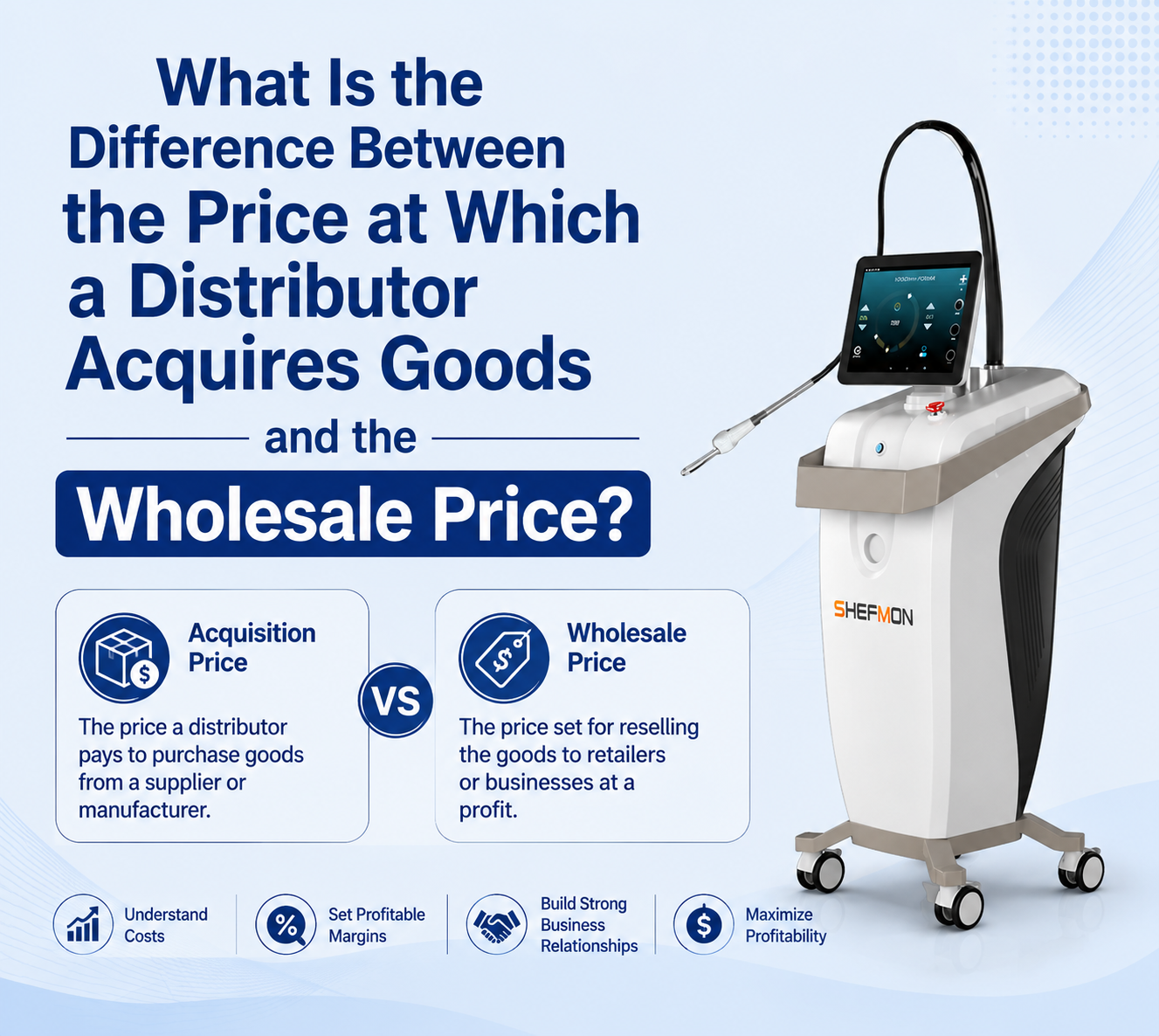
El precio de adquisición del distribuidor (también llamado precio de compra del distribuidor o precio de coste del distribuidor) es la cantidad que paga un distribuidor al comprar productos a un fabricante o proveedor.
Esta suele ser la el precio comercial más bajo en la cadena de suministro porque el distribuidor suele comprar en grandes cantidades y ayuda al fabricante a expandirse a nuevos mercados.
Por ejemplo:
Un fabricante de equipos de belleza vende una máquina HIFU profesional a un distribuidor regional.
- Costo de producción de fábrica: $2,000
- Precio de adquisición del distribuidor: $3,500
El distribuidor paga $3,500 por unidad para obtener el equipo.
Este precio puede incluir:
- Costo de fabricación
- Inspección de calidad
- Embalaje
- Documentación básica
- Margen de beneficio de la fábrica
- Costes de preparación para la exportación
Sin embargo, suele hacerlo. no Incluir los gastos de marketing del propio distribuidor, los costes de ventas locales, los costes de almacenamiento o los gastos de atención al cliente.
Comprender el precio mayorista
El precio al por mayor es el precio al que se venden los productos a las empresas que compran mercancías para su reventa.
El precio al por mayor suele ser más alto que el precio de adquisición del distribuidor porque puede incluir costes adicionales y márgenes de beneficio.
Por ejemplo:
Un distribuidor compra equipos de belleza a un fabricante:
Fabricante → Distribuidor
Precio de adquisición del distribuidor:
- Máquina HIFU: $3,500
Posteriormente, el distribuidor vende la misma máquina a una clínica de belleza local:
Distribuidor → Clínica de belleza
Precio al por mayor:
- Máquina HIFU: $5,000
La diferencia de $1,500 cubre:
- Beneficio del distribuidor
- Marketing local
- Comunicación con el cliente
- apoyo a la formación
- Transporte
- Asistencia técnica
- Servicio de garantía
Principales diferencias entre el precio de adquisición del distribuidor y el precio mayorista.
| Comparación | Precio de adquisición del distribuidor | Precio al por mayor |
|---|---|---|
| Definición | Precio pagado por un distribuidor para obtener productos de un fabricante. | Precio cobrado al vender productos a empresas |
| Vendedor | Fabricante o proveedor | Distribuidor o mayorista |
| Comprador | Distribuidor | Comercio minorista, salón de belleza, clínica u otro negocio. |
| Nivel de precios | Más bajo | Más alto |
| Objetivo | Costo de entrada a la cadena de suministro | Precio de reventa |
| ¿Incluye las ganancias del distribuidor? | Normalmente no | Normalmente sí |
| Cantidad | Generalmente compras de gran volumen | Puede variar |
Ejemplo en la industria de equipos de belleza
Imagina que un fabricante produce equipos estéticos profesionales como:
- Criolipólisis máquinas
- Emslim equipos para moldear el cuerpo
- HIFU máquinas para tensar la piel
- Láser IPL sistemas de depilación
- Hidra dispositivos para tratamientos faciales
La estructura de precios podría ser la siguiente:
Nivel 1: Precio del fabricante
La fábrica vende a un distribuidor autorizado:
Precio: $4.000
Nivel 2: Precio mayorista del distribuidor
El distribuidor vende a una clínica de belleza:
Precio: $6,000
Nivel 3: Precio de venta al público/usuario final
La clínica adquiere el equipo necesario para su funcionamiento:
Precio: $8.000
La diferencia entre cada nivel permite que los distintos participantes en la cadena de suministro obtengan beneficios y presten servicios.
¿Por qué es más bajo el precio de adquisición del distribuidor?
Los fabricantes suelen ofrecer precios más bajos a los distribuidores porque estos proporcionan un valioso apoyo al mercado, que incluye:
1. Compras al por mayor
Los distribuidores suelen comprar varias unidades, lo que reduce los costes de venta del fabricante.
Por ejemplo:
- Pedido de una sola máquina: precio más alto
- Pedido de 20 a 50 unidades: mejores precios para el distribuidor.
2. Desarrollo de mercado
Los distribuidores ayudan a los fabricantes a entrar en nuevos países y regiones.
Pueden manejar:
- Publicidad local
- Adquisición de clientes
- Participación en la exposición
- Redes de ventas
3. Soporte posventa
Muchos distribuidores ofrecen servicios locales como:
- Instalación
- Capacitación
- Mantenimiento
- Apoyo técnico
Esto reduce la carga de servicio directo para el fabricante.
¿Puede un distribuidor fijar su propio precio mayorista?
En la mayoría de los casos, sí.
Un distribuidor suele tener la libertad de determinar los precios de reventa en función de:
- Demanda del mercado
- Competencia
- Poder adquisitivo del cliente
- Costos del servicio
- Inversión en marketing
- Reglamentos locales
Sin embargo, algunos fabricantes pueden proporcionar pautas de precios recomendadas para mantener el posicionamiento de la marca.
Precio del distribuidor frente al precio del agente
Mucha gente confunde a los distribuidores con los agentes.
Aunque son similares, son diferentes:
Agente
Un agente normalmente:
- Promociona productos
- Encuentra clientes
- Recibe comisiones
- Es posible que no tengamos inventario.
Ejemplo:
Un agente de equipos de belleza presenta las máquinas SHEFMON a las clínicas locales y recibe una comisión por las ventas.
Distribuidor
Un distribuidor suele:
- Compra productos directamente
- Posee inventario
- Gestiona las ventas locales
- Brinda soporte al cliente
- Obtiene beneficios de las diferencias de precios.
Ejemplo:
Un distribuidor compra 20 máquinas de belleza a SHEFMON y las revende a clínicas de su país.
Cómo los fabricantes determinan los precios de los distribuidores
Los fabricantes suelen tener en cuenta lo siguiente:
Cantidad del pedido
Los pedidos grandes generalmente obtienen mejores precios.
Potencial de mercado
Los distribuidores exclusivos en mercados importantes pueden beneficiarse de políticas de precios especiales.
Nivel de cooperación
Los socios a largo plazo pueden recibir:
- Mejores descuentos
- Apoyo de marketing
- Producción prioritaria
- protección regional
Condiciones de pago
Los métodos de pago también pueden influir en el precio.
Por ejemplo:
- Pago completo antes de la producción.
- Depósito + pago del saldo
- Acuerdos de cooperación a largo plazo
Cómo calcular el margen de beneficio del distribuidor
La fórmula básica es:
Margen de beneficio = (Precio de venta – Precio de compra) ÷ Precio de venta × 100%
Ejemplo:
Precio de adquisición del distribuidor:
$4,000
Precio de venta al por mayor:
$6,000
Ganancia:
$6.000 – $4.000 = $2.000
Margen de beneficio:
$2,000 ÷ $6,000 × 100% = 33.3%
Sin embargo, el beneficio real debe tener en cuenta lo siguiente:
- gastos de envío
- impuestos
- Gastos de almacén
- Gastos de marketing
- salarios de los empleados
- Costos de servicio al cliente
Cómo elegir un fabricante de equipos de belleza confiable
Para los distribuidores que se inician en la industria de equipos de belleza, elegir al fabricante adecuado es fundamental.
Un fabricante fiable debería proporcionar:
- Precios competitivos para distribuidores
- Calidad estable del producto
- Formación profesional
- Apoyo técnico
- Materiales de marketing
- Servicio de garantía
- Opciones OEM/ODM
Trabajar con un fabricante experimentado permite a los distribuidores construir relaciones comerciales a largo plazo en lugar de competir únicamente por precio.
Conclusión
La principal diferencia entre el precio de adquisición de un distribuidor y el precio mayorista radica en su posición en la cadena de suministro.
El precio de adquisición del distribuidor es el costo que paga un distribuidor al comprar directamente a un fabricante. precio al por mayor es el precio de reventa que cobra el distribuidor a los clientes comerciales.
La diferencia entre estos dos precios crea el margen de beneficio del distribuidor y cubre los costes de marketing, ventas, atención al cliente y desarrollo de mercado.
Para las empresas de equipos de belleza, comprender esta estructura de precios ayuda a los fabricantes a crear mejores alianzas y a los distribuidores a desarrollar estrategias de ventas rentables.
Preguntas frecuentes (FAQ)
1. ¿El precio del distribuidor es inferior al precio mayorista?
Sí. El precio de adquisición del distribuidor suele ser más bajo porque es el precio de compra inicial al fabricante. Los precios al por mayor generalmente incluyen el margen de beneficio del distribuidor y los costos de servicio.
2. ¿Puede un distribuidor comprar directamente a la fábrica?
Sí. Muchos distribuidores compran directamente a los fabricantes, especialmente cuando hacen pedidos de grandes cantidades.
3. ¿El precio al por mayor es lo mismo que el precio de distribuidor?
No. El precio de distribuidor se refiere al costo pagado por el distribuidor, mientras que el precio mayorista se refiere al precio cobrado al vender productos a compradores comerciales.
4. ¿Qué precio es mejor para los compradores?
Los fabricantes suelen ofrecer los mejores precios a los distribuidores autorizados porque estos compran en mayores cantidades.
5. ¿Qué margen de beneficio pueden obtener los distribuidores de equipos de belleza?
Los márgenes de beneficio varían según el producto, el mercado, la competencia y el nivel de servicio. Los distribuidores de equipos profesionales suelen obtener beneficios tanto por la venta de productos como por los servicios posventa.
6. ¿Cuál es la diferencia entre un agente y un distribuidor de equipos de belleza?
Un agente suele ganar comisiones promocionando productos, mientras que un distribuidor compra productos, gestiona el inventario y obtiene beneficios mediante la reventa.