Adding a pelvic floor chair to a postpartum program requires more than placing a device on the service menu. A responsible program needs a clear consultation process, appropriate screening, informed consent, privacy standards, session records, progress reviews and a referral pathway for clients who need clinical assessment.
ال SHEFMON E0435 pelvic floor chair can be positioned as an adjunctive muscle-stimulation service within a professionally governed postpartum wellness program. It should not replace routine postnatal care, pelvic floor muscle training, pelvic health physiotherapy or evaluation by a qualified healthcare professional.
This guide shows postpartum recovery centers, women wellness clinics and appropriately licensed providers how to build a practical E0435 consultation and follow-up workflow without turning a device appointment into an unsupported medical promise.
ملخص تنفيذي
- E0435 uses focused electromagnetic energy pulses to stimulate contractions in the pelvic floor region while the client sits on the chair.
- Postpartum clients should complete an intake and safety screen before booking a session. The operator must also follow the current E0435 manual, local regulations and the clinic’s medical governance policy.
- A fixed waiting period should not be used for every postpartum client. Delivery type, healing, symptoms, medical advice and the program’s scope all affect readiness.
- Active pelvic floor muscle training remains important. E0435 is best positioned as a complementary service after appropriate assessment, not as a substitute for learning coordinated contraction and relaxation.
- Persistent leakage, difficulty emptying the bladder or bowel, pelvic pressure or bulging, significant pain, wound concerns and other unresolved symptoms require referral rather than a sales-oriented chair consultation.
- Follow-up should compare the client’s own goals, comfort, participation and symptom pattern. It should not rely only on before-and-after marketing language.
1. Product Introduction: What Is the E0435 Pelvic Floor Chair?
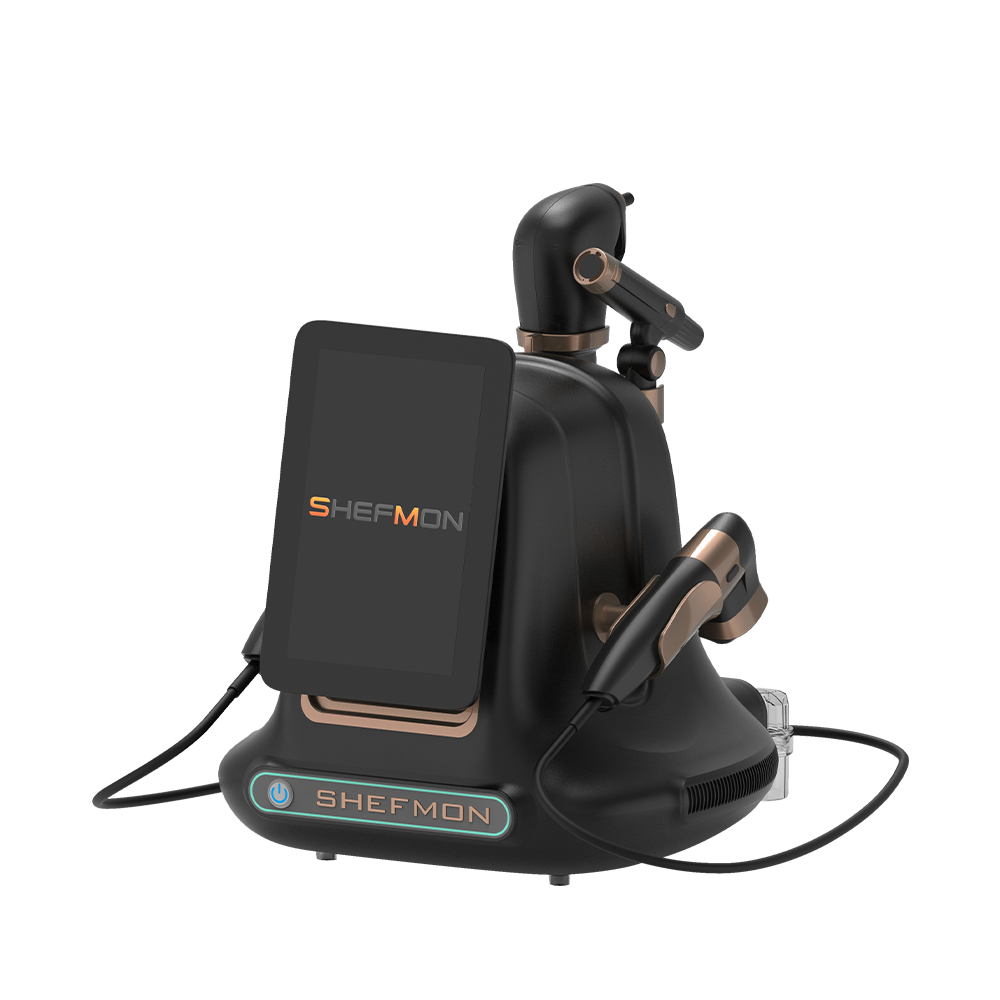
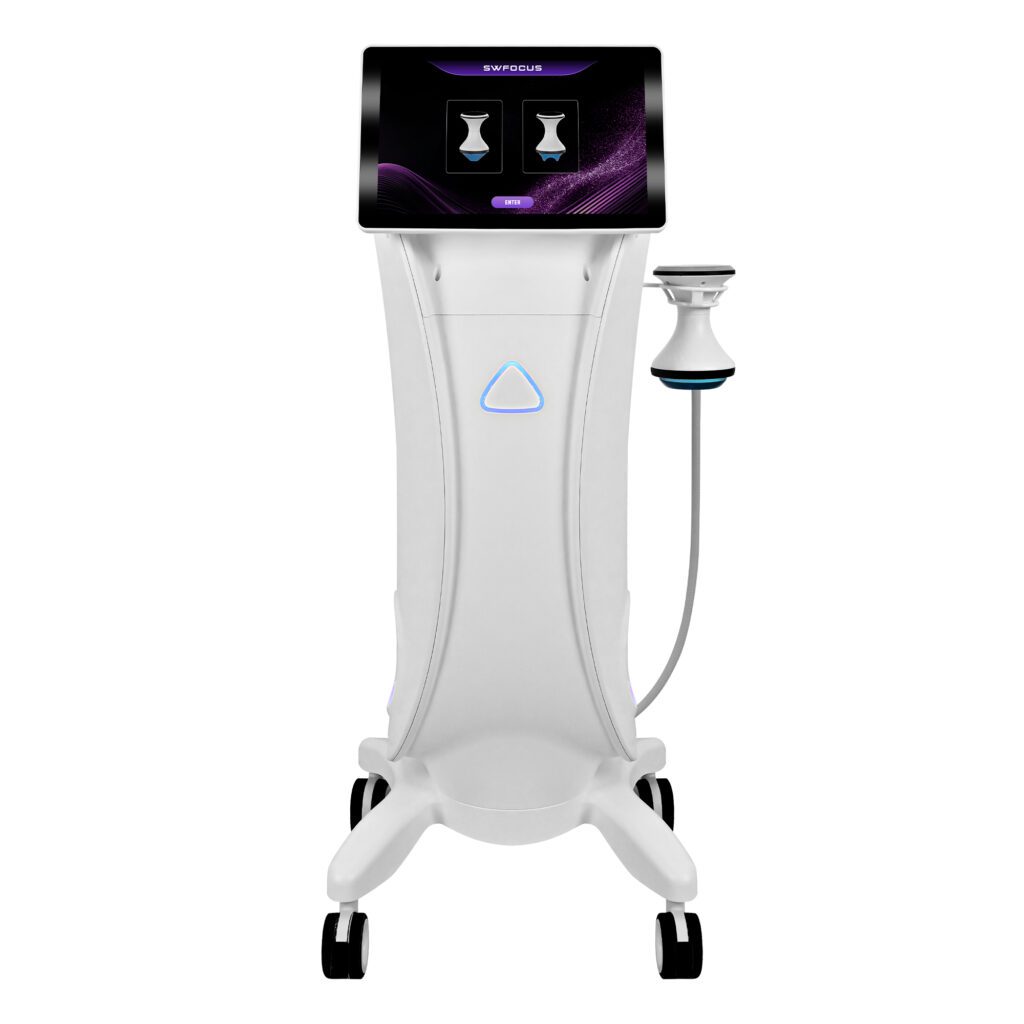
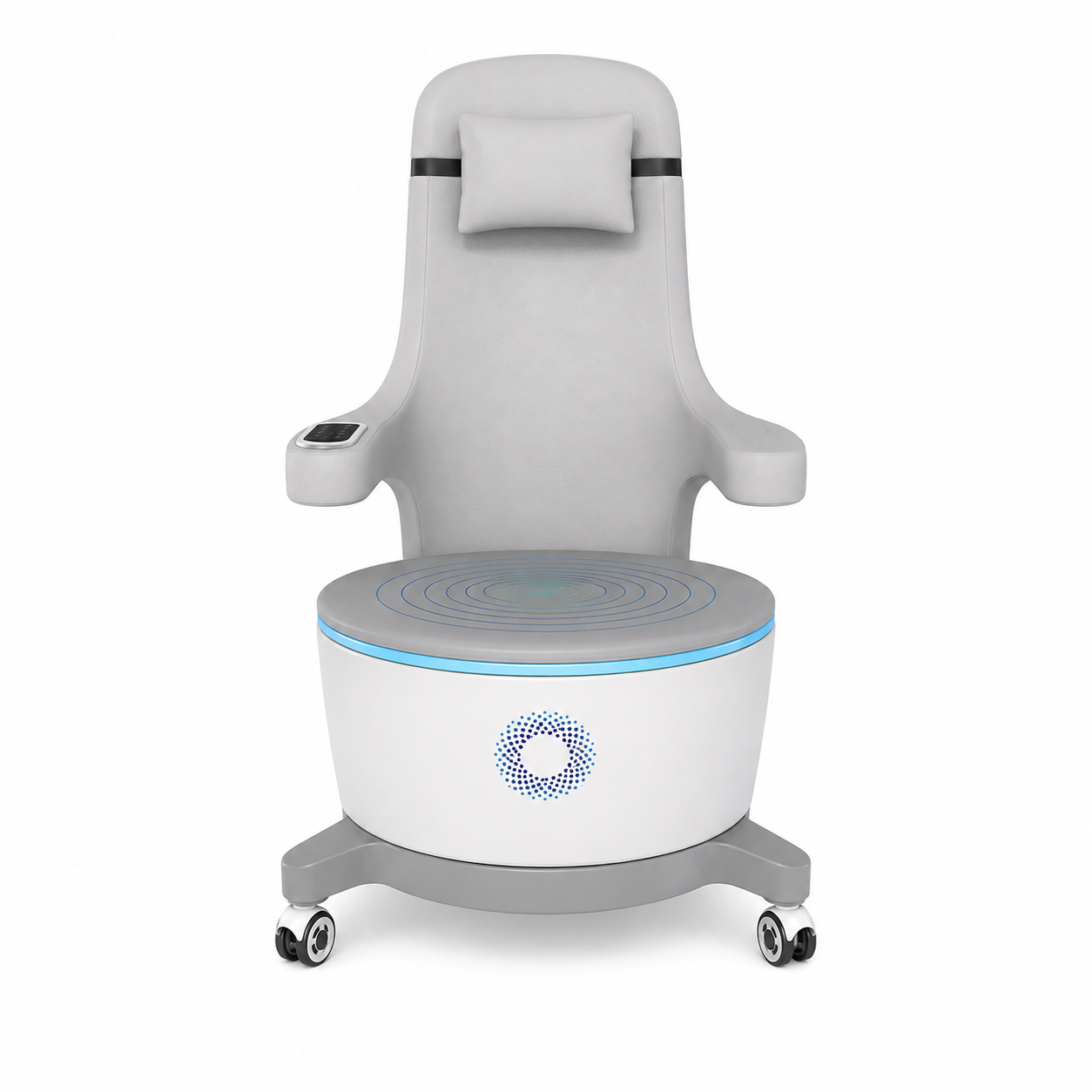
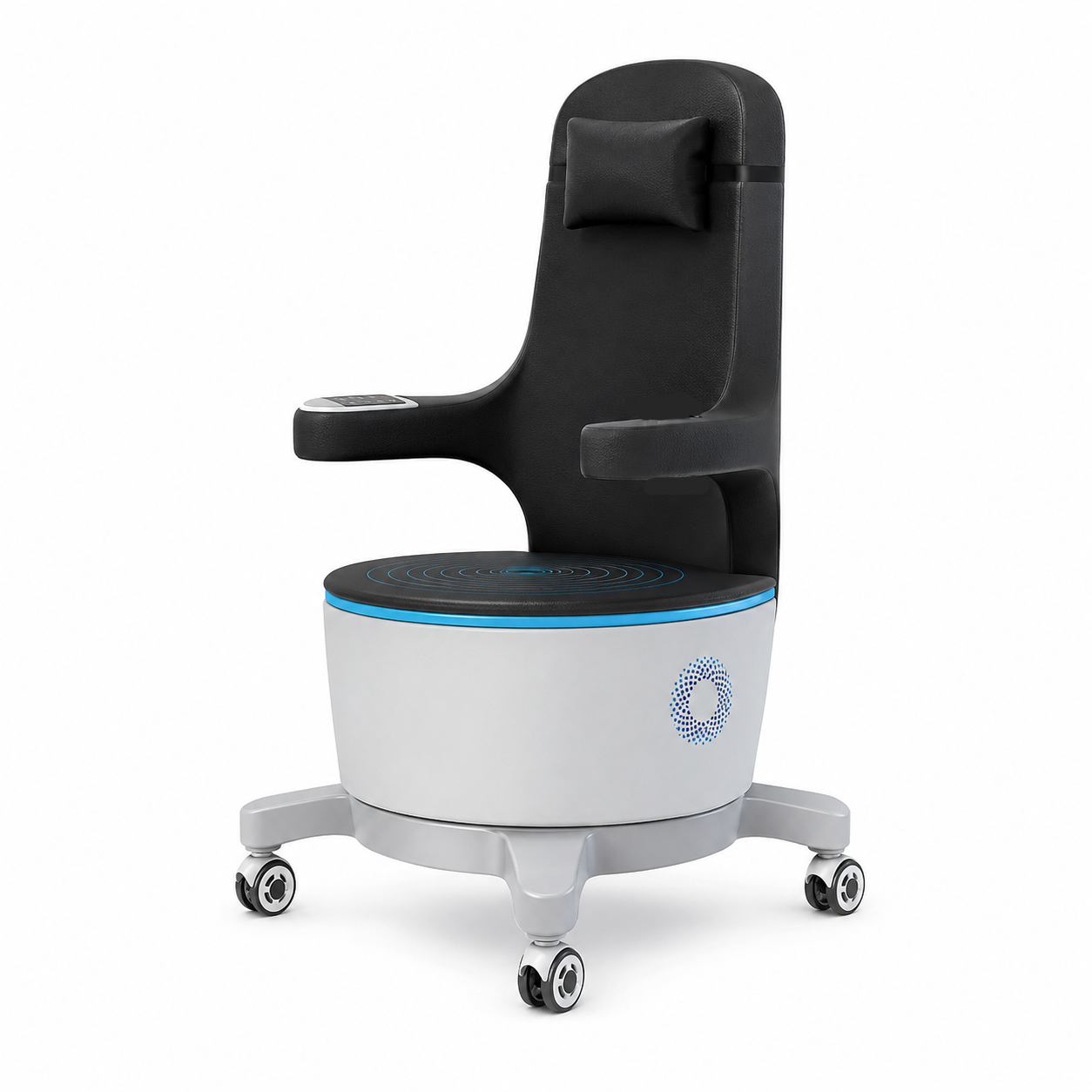
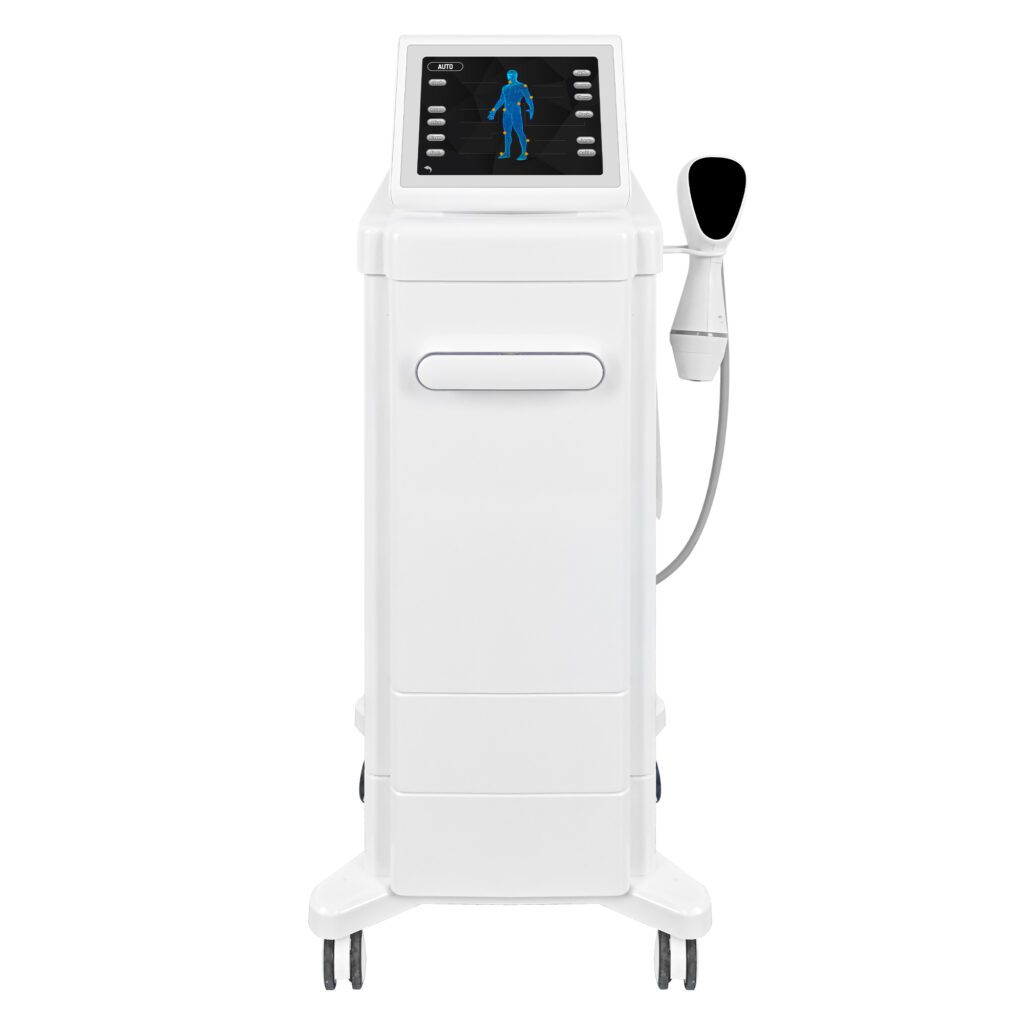
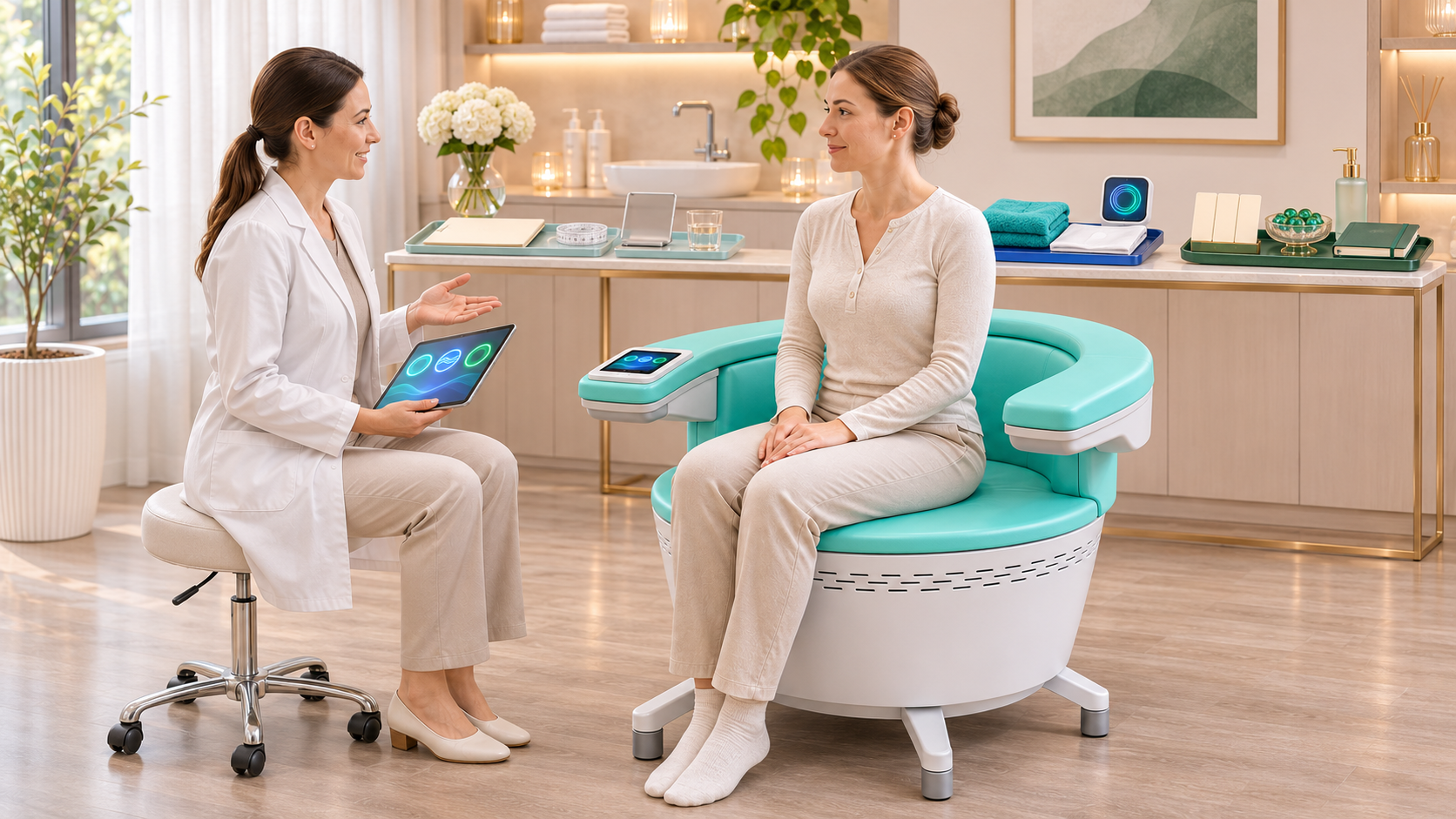
E0435 is a chair-format electromagnetic muscle stimulation device designed for pelvic floor service programs. According to the current SHEFMON product page, the device uses focused electromagnetic pulse technology to direct energy toward the pelvic floor area and induce involuntary muscle contractions.
The chair format makes E0435 different from handheld facial devices, body-shaping applicators or invasive intimate-care procedures. The client remains seated, while the operator controls the session according to the manufacturer manual and the center’s approved protocol. This format may help a postpartum center create a private, structured service that does not require a salon employee to perform an internal examination.
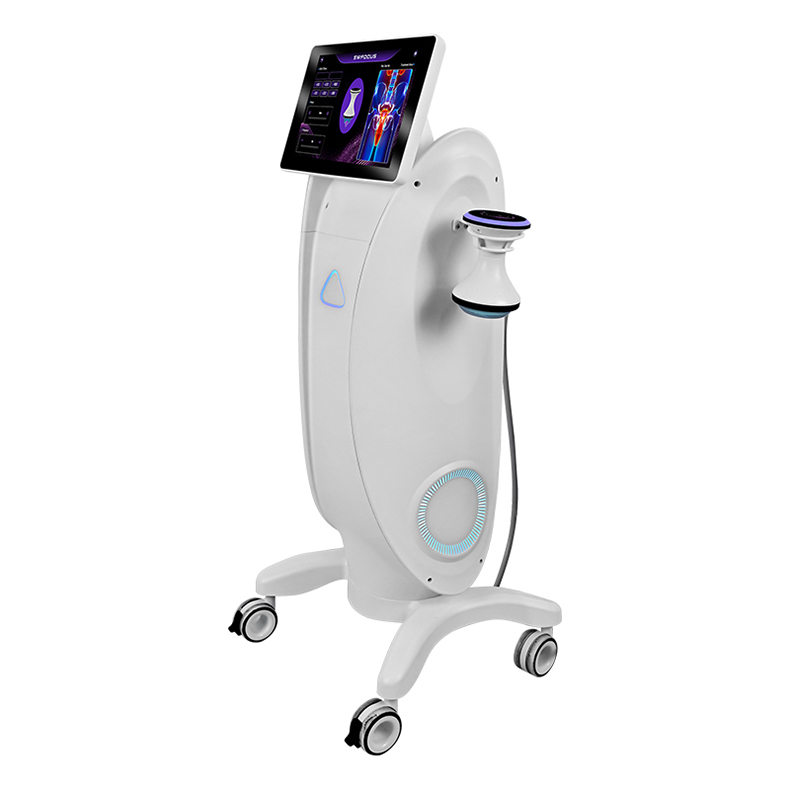
E0435 is listed in SHEFMON’s broader EMSlim equipment category. Buyers comparing pelvic floor models can also review the E0436 electromagnetic pelvic floor chair و ال E0437 EMS chair for pelvic floor and back muscle training.
For a postpartum program, the value of E0435 does not come from a single exaggerated number or a universal treatment claim. Its practical value comes from placing a focused pelvic floor muscle-stimulation service inside a consistent consultation, screening, documentation and follow-up system.
2. Functional Principle: How E0435 Works
The E0435 system generates a changing electromagnetic field. When the client is positioned correctly over the treatment area, the field is intended to stimulate motor nerves and produce repeated contractions in the pelvic floor muscles. The client does not have to initiate every contraction voluntarily.
This mechanism explains why a chair session may be included in a pelvic floor support program, but it also explains why screening matters. A strong or poorly tolerated contraction is not automatically a better session. Intensity, duration, positioning and progression should follow the current product manual and the provider’s approved protocol, with continuous attention to the client’s comfort.
Electromagnetic stimulation and voluntary pelvic floor training have different roles:
| Program component | الغرض الرئيسي | Important limitation |
|---|---|---|
| Voluntary pelvic floor muscle training | Helps the client learn contraction, relaxation, timing and coordination | Technique may need assessment and coaching by a qualified pelvic health professional |
| E0435 chair session | Provides device-generated pelvic floor muscle stimulation in a seated format | Does not assess pelvic floor coordination, diagnose symptoms or replace clinical care |
| Postpartum medical review | Reviews healing, pain, continence, wounds and broader recovery | Is not replaced by a beauty or wellness consultation |
| Pelvic health physiotherapy | Provides individualized assessment and rehabilitation within professional scope | Availability and referral requirements vary by market |
The operator should therefore avoid telling clients that a chair session is simply a replacement for pelvic floor exercises. A stronger program connects device use with appropriate education, active participation and referral when the client’s symptoms require more than a wellness service.
3. Define the Scope Before Taking Bookings
Before promoting E0435, the business should decide exactly what its postpartum program is and is not allowed to do. This decision should reflect local device classification, advertising rules, professional licensing requirements and insurance conditions.
Appropriate wellness positioning
Depending on local rules and professional oversight, E0435 may be positioned as:
- an adjunctive pelvic floor muscle-stimulation service;
- a chair-based addition to a postpartum wellness plan;
- a service for clients who have completed the center’s screening and obtained clearance when needed;
- one part of a broader program that also encourages professionally guided pelvic floor education and gradual return to activity.
Services that require qualified clinical professionals
A non-clinical salon or wellness center should not perform internal pelvic examinations, diagnose incontinence or prolapse, interpret surgical healing, or tell a client that unexplained pelvic pain is normal. These concerns belong with qualified healthcare professionals.
The center should name a clinical lead or referral contact before launching the program. If the business does not employ an appropriate clinician, it can develop a referral network with pelvic health physiotherapists, obstetric or gynecologic services, urogynecology providers, primary care services and other locally appropriate professionals.
4. The E0435 Consultation Workflow
A repeatable consultation protects the client and helps different team members deliver the same standard of care. The following workflow can be adapted to the center’s legal scope and the E0435 instructions for use.
Step 1: Explain the service before the appointment
The booking page or telephone script should state that E0435 is a pelvic floor muscle-stimulation chair and that a safety consultation is required. Explain that acceptance into the program is not automatic and that unresolved postpartum symptoms may need medical or pelvic health assessment first.
Clients should know what information will be requested, how their privacy will be protected and whether the center requires written clearance from their maternity, primary care or pelvic health provider.
Step 2: Establish the postpartum timeline and recovery context
Record the date of birth, delivery type and relevant recovery history. Ask about vaginal birth, assisted delivery, perineal tear or episiotomy, caesarean birth, wound healing, infection, ongoing bleeding, catheter use, readmission and any current restrictions from the client’s healthcare team.
Do not use one calendar rule for every client. A routine postnatal check is an important review point, but passing a certain number of weeks does not prove that every tissue has healed or that every symptom is suitable for a chair-based service.
Step 3: Ask about current pelvic floor symptoms
Use neutral, non-judgmental questions. The consultation should distinguish between a client’s wellness goal and symptoms that may require clinical assessment.
Ask whether the client currently experiences:
- urine leakage with coughing, sneezing, lifting or exercise;
- urgency, frequent urination or difficulty emptying the bladder;
- bowel leakage, difficulty controlling wind or difficulty emptying the bowel;
- pelvic heaviness, pressure or a sensation of bulging;
- pelvic, perineal, abdominal, back or sexual pain;
- numbness, altered sensation or new weakness;
- discomfort during attempted pelvic floor contractions;
- symptoms that are getting worse rather than improving.
The operator records the answer but does not diagnose the cause.
Step 4: Complete the device safety screen
The center must use the contraindications and warnings in the current E0435 manual. The intake form should also prompt staff to ask about factors commonly relevant to electromagnetic or muscle-stimulation services, including:
- current or possible pregnancy;
- implanted electronic devices, such as a cardiac pacemaker or defibrillator;
- implanted metal, surgical hardware or other devices in or near the treatment area;
- significant cardiac or neurological conditions;
- seizure history;
- recent surgery or an incompletely healed wound;
- active infection, fever or unexplained bleeding;
- reduced sensation in the treatment area;
- any medical instruction to avoid muscle stimulation or strong contractions.
This list is not a substitute for the official manual. If an answer is uncertain, the session should be postponed until the equipment supplier or an appropriately qualified healthcare professional confirms the next step.
Step 5: Use a clear referral and postponement pathway
Some clients should be referred before an E0435 session is considered. Examples include significant or worsening pelvic pain, fever or suspected infection, heavy or unexpected bleeding, wound separation or discharge, difficulty passing urine, new bowel incontinence, a pelvic bulge, marked lower-limb swelling, unexplained neurological symptoms or any acute concern outside the center’s scope.
This is a referral decision, not a diagnosis. Staff should know whom to contact, what information may be shared with consent and when urgent care instructions are appropriate under the center’s local policy.
Step 6: Agree on goals and informed consent
If the client is suitable to proceed, ask what she wants from the program. Goals might include feeling more confident with a professionally supervised postpartum routine, adding a passive stimulation component to an active pelvic floor plan, or monitoring comfort as activity gradually increases.
Consent should cover:
- the device principle and expected sensation;
- the limits of a chair-based service;
- alternative options, including no treatment and referral;
- possible discomfort and the right to stop at any time;
- privacy, record keeping and use of personal data;
- the fact that individual response varies and no specific outcome is promised.
Step 7: Confirm readiness on the day
Screening is not a one-time form. Before each session, ask whether there has been a new pregnancy possibility, new device implant, infection, surgery, medication change, bleeding, pain, wound issue or medical advice since the previous visit. Postpone the session when new information changes suitability.
5. Session-Day Operating Workflow
The session-day process should be brief, private and consistent. It should also leave enough time for the client to ask questions without feeling rushed.
| منصة | Operator action | Record to keep |
|---|---|---|
| Pre-session check | Confirm identity, consent, symptom changes and contraindication updates | Date, operator and screening confirmation |
| تحضير | Follow the manual for clothing, removal of prohibited items, chair setup and positioning | Positioning notes and setup checks |
| Starting parameters | Begin with the approved protocol and a tolerable setting | Program, starting setting and time |
| Active monitoring | Ask about sensation, pain, dizziness, numbness, pressure or unexpected symptoms | Comfort response and any adjustment |
| Stop decision | Stop when the client requests it or when the approved stop criteria are met | Reason for stopping and action taken |
| Post-session check | Help the client stand safely and ask about immediate comfort | Immediate response and advice given |
Positioning and dignity
Use a private room and explain positioning before asking the client to sit. Confirm clothing and preparation requirements from the current E0435 manual. Provide a clean chair surface or approved barrier, follow the manufacturer’s cleaning method and offer practical support for clients who have discomfort when sitting or standing.
Do not take consultation photographs or use testimonials without separate, explicit consent. Pelvic floor concerns are sensitive health information; privacy should be treated as part of the service, not as an optional courtesy.
Intensity and communication
The client should feel able to speak during the session and stop immediately. Staff should not encourage a client to tolerate pain, sharp pulling, pelvic pressure or alarming symptoms simply to reach a higher setting. Record the actual settings used rather than relying on memory at the next appointment.
What to do after the session
Ask about immediate comfort and give the client a simple contact route for concerns. Do not provide a universal exercise or medical prescription outside the team’s scope. If the client already has a program from a pelvic health physiotherapist, encourage her to follow that professional plan and to report any meaningful change.
6. Follow-Up Workflow: Review More Than Attendance
Follow-up should answer three questions: Is the client still suitable? Is the program tolerable? Is it helping the goal that was agreed at consultation?
Short follow-up after an introductory session
Agree on a suitable check-in method before the client leaves. The center can ask about delayed discomfort, changes in symptoms and any need to contact a healthcare professional. New or concerning symptoms should trigger the referral policy, not an automatic next booking.
Review before every session
At every visit, confirm changes in health status, symptoms, pregnancy possibility, implants, surgery and medical advice. Note the client’s current comfort and whether the previous session was well tolerated.
Mid-program review
A mid-program review prevents a package from continuing only because it has already been sold. Revisit the original goal, attendance, comfort and any symptom change. If there is no meaningful progress, if symptoms worsen or if the client’s needs exceed the center’s scope, pause and refer rather than simply increasing intensity.
End-of-program review
At the final review, document the client’s own assessment of progress, any remaining concerns and the recommended next step. Possible outcomes include completing the program, moving to an occasional review schedule, continuing active pelvic floor work with an appropriate professional or seeking clinical assessment.
The center should never present an E0435 package as a reason to delay healthcare. A client with persistent continence, prolapse, pain or bowel symptoms deserves an appropriate assessment even if she reports some subjective improvement.
7. A Practical Documentation Template
Good records make the program safer and more consistent. They also help distributors and multi-location operators train staff around the same workflow.
| Record section | Suggested fields |
|---|---|
| Client and postpartum context | Contact details, birth date, delivery type, recovery history and healthcare contacts |
| Current symptoms | Leakage pattern, urgency, emptying difficulty, bowel symptoms, pressure, pain and altered sensation |
| Safety screening | Pregnancy status, implants, medical conditions, surgery, wounds, infection, bleeding and manual-specific exclusions |
| Clearance and referrals | Provider clearance if required, referral date, reason and outcome shared by the client |
| Consent | Service explanation, alternatives, privacy agreement, limitations and signature/date |
| Session record | Program, settings, duration, position, comfort, adjustments, stop reason and operator |
| متابعة | Client goal, change since last visit, new symptoms, next step and review date |
Use symptom questionnaires only when the clinic has permission, training and a clear process for interpreting them. A salon should not use a clinical questionnaire to imply that it has diagnosed or treated a medical condition.
8. Building the Postpartum Service Menu
The service menu should describe the workflow clients will receive, not promise a predetermined physical result.
Pelvic Floor Wellness Consultation
A private intake covering postpartum history, current goals, device screening, referral needs and explanation of the E0435 principle. This is the correct first booking for a new client.
E0435 Introductory Session
A first chair session for a client who has completed screening and any required professional clearance. Include a same-day check, conservative protocol selection under the approved procedure and an agreed follow-up contact.
Postpartum Pelvic Floor Support Program
A structured series with re-screening at every visit and a defined mid-program review. The number and spacing of appointments should follow the current manual, local professional guidance and individual assessment rather than a marketing template.
Progress and Referral Review
A non-device appointment for reviewing comfort, goals, changes and whether the client should complete, pause or seek further assessment. Including this option shows that the center values appropriate decisions, not only device utilization.
| مستوى القائمة | الاستخدام الأمثل | Required control point |
|---|---|---|
| الاستشارة | New postpartum clients and clients with unclear suitability | Scope check, screening and referral decision |
| Introductory session | Suitable clients who understand the service | Day-of readiness check and consent |
| Structured program | Clients who tolerate the first session and remain suitable | Re-screening plus mid-program review |
| مراجعة المتابعة | Program completion, changed symptoms or uncertain progress | Documented next step and referral when indicated |
9. Training the Team Around One Standard
Every staff member who discusses E0435 should use the same language. Reception staff should not diagnose symptoms or promise acceptance. Consultants should know the screening form and referral threshold. Operators should understand the current manual, positioning, approved parameter progression, cleaning, emergency stop procedure and record requirements.
Useful team drills include:
- responding when a client reports a new pelvic bulge or difficulty emptying the bladder;
- explaining why a session is postponed without embarrassing the client;
- handling a new implanted device or uncertain surgical history;
- stopping a session when pain or unexpected pressure occurs;
- documenting a referral while respecting privacy;
- explaining the difference between E0435 stimulation and active pelvic floor rehabilitation.
Distributors supplying postpartum centers should provide model-specific operating documents and training materials, not only promotional graphics. Buyers discussing branding or a wider pelvic floor equipment line can ask about دعم شركة شيفمون للتصنيع الأصلي للمعدات/التصميم والتصنيع الأصلي, but the final service protocol must still match the device manual and destination-market requirements.
10. E0435, E0436 or E0437: Keep the Workflow Model-Specific
The same consultation principles can inform different pelvic floor chair programs, but the equipment should not be treated as interchangeable.
| نموذج | Current product positioning | Workflow implication |
|---|---|---|
| E0435 pelvic floor chair | Postpartum and pelvic floor muscle-stimulation positioning | Build the consultation around postpartum recovery context, readiness and sensitive symptom referral |
| E0436 pelvic floor EMS chair | Dedicated pelvic floor chair positioning | Confirm its own operating modes, manual and approved claims before adapting forms |
| E0437 pelvic floor and back muscle EMS chair | Pelvic floor plus back muscle training positioning | Add back-related goals and exclusions only under a model-specific protocol and appropriate scope |
A center should not copy settings, contraindications or session timing from one model to another. Request the current manual, training resources, power requirements, maintenance instructions and destination-market documentation for the exact device being purchased.
التعليمات
1. What is the E0435 pelvic floor chair?
E0435 is a chair-format device that uses focused electromagnetic pulse technology to stimulate contractions in the pelvic floor region. It is designed for pelvic floor service programs, including appropriately governed postpartum wellness programs.
2. Can a salon use E0435 immediately after childbirth?
There should be no automatic booking based only on the number of days or weeks after birth. Delivery type, wound healing, bleeding, pain, symptoms, medical advice, device instructions and local professional rules all affect readiness. Some clients will need healthcare clearance before a session is considered.
3. Does E0435 replace pelvic floor exercises?
No. The chair creates involuntary contractions, while active training helps a client learn coordinated contraction, relaxation and timing. Clients who need individualized rehabilitation should work with a qualified pelvic health professional.
4. Can E0435 diagnose the cause of urine leakage?
No. Leakage can have different contributing factors, and the chair does not provide a diagnosis. A wellness center should record the concern and refer the client for assessment when required.
5. What should be covered in an E0435 consultation?
The consultation should cover postpartum history, current symptoms, device contraindications and warnings, healing and medical restrictions, service goals, informed consent, privacy, realistic expectations and referral needs.
6. When should a postpartum client be referred instead of booked?
Referral is appropriate when symptoms or recovery concerns fall outside the center’s scope. Examples include significant or worsening pain, fever or infection concerns, heavy or unexpected bleeding, wound problems, difficulty passing urine, bowel incontinence, pelvic bulging or unexplained neurological symptoms. Acute concerns should follow the center’s local urgent-care policy.
7. How should E0435 progress be measured?
Start with the client’s agreed goal and record comfort, tolerance, symptom pattern, participation and changes over time. Validated clinical questionnaires should be used only by teams with the appropriate scope and interpretation process. Device intensity alone is not a progress measure.
8. Should every client receive the same number of sessions?
No universal package suits every postpartum client. The service plan should follow the current device manual, professional governance, individual suitability and regular reviews. A program should be paused when symptoms change or when referral becomes necessary.
9. What privacy standards are important for a pelvic floor chair service?
Use a private room, explain positioning, protect sensitive health information and obtain separate consent for any photography or testimonial. Staff should use respectful language and give the client control over stopping the session.
10. What should a buyer confirm before ordering E0435?
Confirm the current product manual, included accessories, operating modes, training, cleaning and maintenance requirements, warranty terms, electrical requirements, destination-market documentation and after-sales support. Also confirm that the planned service is permitted within the buyer’s local scope and regulations.
خاتمة
The strongest E0435 postpartum program is not the one with the biggest promise. It is the one with a clear entry point, respectful consultation, model-specific safety screening, informed consent, consistent session records, meaningful follow-up and a reliable referral pathway.
Used within that framework, E0435 can add a focused electromagnetic pelvic floor muscle-stimulation option to a postpartum wellness service while keeping active training and professional postnatal care in their proper roles.
Centers and distributors can review the E0435 pelvic floor chair, compare related SHEFMON EMSlim equipment and contact SHEFMON to confirm the latest manual, configuration, training support and model suitability for their market.