Picosecond laser equipment has strong market demand in two related but different service markets:
- tattoo removal and tattoo fading
- pigmentation, freckles, sun spots, melasma support and uneven skin tone service menus
For distributors, this category is attractive because one professional laser platform can support several high-value service conversations.
However, it is not a casual beginner device.
Tattoo removal and pigmentation services require trained operators, client screening, wavelength selection, aftercare education and realistic result communication.
The best sales message is not:
“One laser removes every tattoo and pigment problem completely.”
The better message is:
“Picosecond laser equipment can help trained clinics and laser studios build professional tattoo fading, cosmetic tattoo correction and pigment-focused service menus for suitable clients.”
Recommended SHEFMON category:
Relevant SHEFMON product:
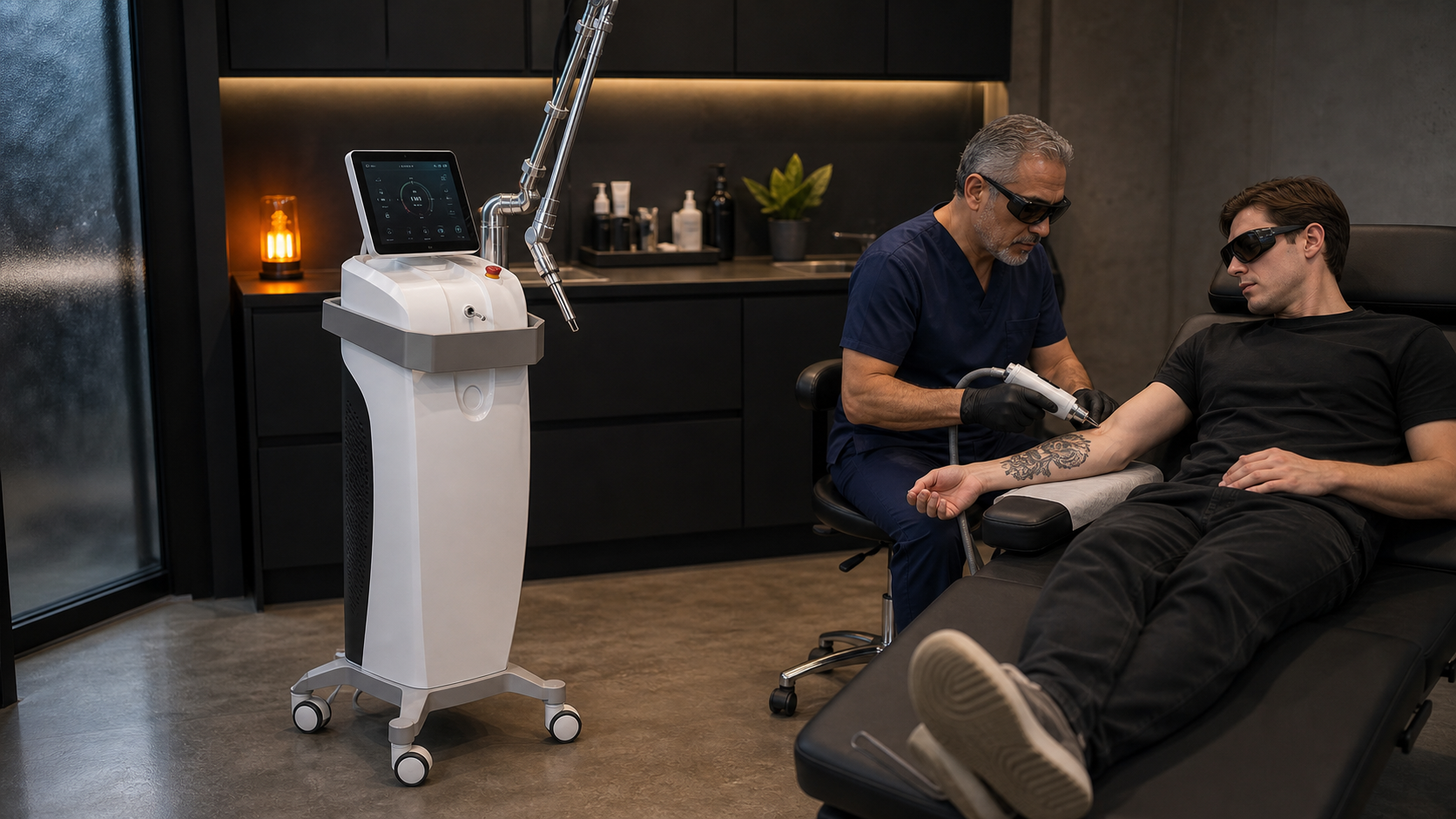
1. Market Demand Is Strong Because Tattoos Are Common
Tattoo removal demand exists because tattoo ownership has become common in many markets.
Pew Research Center reported in 2023 that 32% of U.S. adults have at least one tattoo, including 22% who have more than one.
This matters for distributors because a larger tattooed population creates a larger future base for:
- tattoo fading
- full tattoo removal attempts
- cover-up preparation
- cosmetic tattoo correction
- eyebrow tattoo color correction
- old tattoo lightening
- professional image changes
- life-stage or relationship-related tattoo removal
Even when most tattooed people do not regret their tattoos, a small percentage of a large tattooed population can still create a meaningful service market.
That is why tattoo removal is a stable niche for:
- tattoo removal studios
- laser clinics
- med spas
- dermatology-style aesthetic rooms
- beauty salons upgrading into laser services
- distributors building advanced laser product lines
2. Tattoo Removal Is a Clear, Easy-to-Understand Service
One reason tattoo removal demand is attractive is that the client need is very clear.
The client can see the tattoo.
The clinic can photograph it.
The service can be planned as a course.
The clinic can explain that the result depends on factors such as:
- tattoo color
- tattoo depth
- ink density
- tattoo age
- professional or amateur tattoo
- skin type
- previous removal attempts
- laser wavelength and settings
- aftercare
This makes tattoo removal easier to package than many vague beauty services.
The client understands the problem.
The clinic sells a professional fading or removal plan.
The distributor sells a machine plus training, wavelength education, consultation forms and aftercare workflow.
3. FDA and AAD Information Supports a Realistic Education Angle
The U.S. FDA explains that the type of laser used for tattoo removal depends on tattoo color, because different ink colors absorb different wavelengths of light.
The FDA also notes that dark blue and black are generally easier to remove, while colors such as green, red and yellow can be harder. Flesh-colored tattoos, white ink and permanent makeup can be tricky because some pigments may darken when treated.
The American Academy of Dermatology states that lasers have largely replaced older tattoo-removal methods and that laser technology can remove tattoo ink more safely and effectively than older approaches.
For distributors, this creates a professional selling angle:
Do not promise complete tattoo removal for every client. Explain wavelength selection, tattoo color, multiple sessions and realistic fading expectations.
This makes the distributor sound more credible than sellers who promise “one-time tattoo removal.”
4. Why Picosecond Laser Fits Tattoo Removal Demand
Picosecond laser technology delivers ultra-short pulses.
SHEFMON’s A0507 product page explains that picosecond lasers can create a photoacoustic effect that breaks pigment into smaller fragments, which are then cleared by the body’s natural processes.
This technology story is easy for distributors to explain:
- short pulse energy
- pigment targeting
- tattoo ink fragmentation
- gradual fading over multiple sessions
- lower thermal damage positioning compared with older laser concepts
- suitability for tattoo and pigment-related service menus
The business value is that tattoo removal is usually not one appointment.
It is commonly sold as a treatment course.
That gives clinics:
- repeat bookings
- photo follow-up opportunities
- package pricing
- long-term client relationship
- cross-selling into skin care or recovery support
5. Pigmentation Demand Is Broader Than Tattoo Removal
The pigmentation market can be larger than the tattoo removal market because many people have skin tone concerns even if they do not have tattoos.
Common concerns include:
- freckles
- sun spots
- lentigo
- post-inflammatory hyperpigmentation
- melasma-related concerns
- uneven tone
- cosmetic tattoo pigment
- nevus of Ota or other pigment-related service positioning where local rules allow
SHEFMON’s A0507 page lists applications such as tattoos, nevus of Ota, blue nevus, speckled nevus, lentigo, cafe au lait, hyperpigmentation, freckles and melasma.
For distributors, this means the machine is not only for a tattoo removal shop.
It can also fit:
- pigmentation clinics
- skin tone clinics
- med spas
- dermatology-style aesthetic clinics
- skin management centers upgrading into laser services
- beauty salons in markets where laser operation is allowed and trained
6. Pigmentation Services Need More Careful Positioning
Pigmentation demand is strong, but it is more complex than tattoo removal.
Tattoo pigment is a visible external ink target.
Skin pigmentation concerns can have different causes, depths and triggers.
For example, melasma can be influenced by sun exposure, hormones, inflammation and recurrence patterns.
That means distributors should not market pico laser as a simple whitening machine.
Avoid wording such as:
- one-session whitening
- complete melasma cure
- permanent pigment removal
- safe for every skin type
- no risk of hyperpigmentation
- no need for sun protection
Safer wording:
- pigment-focused laser service menu
- supports pigmentation and uneven tone management for suitable clients
- requires skin type assessment and consultation
- aftercare and sun protection are important
- results vary by pigment type and client condition
- local laser regulations and operator training are required
This careful positioning helps serious clinics trust the distributor.
7. Demand Comes From Several Buyer Types
Picosecond laser demand is not limited to one channel.
| Buyer type | Demand reason | Distributor sales angle |
|---|---|---|
| Tattoo removal studio | Clear demand for tattoo fading and removal courses | Focused business model with repeat sessions |
| Med spa | Wants high-value laser service category | Add tattoo and pigment services to existing menu |
| Pigmentation clinic | Clients ask about freckles, spots and uneven tone | Build pigment-focused consultation and package plans |
| Dermatology-style aesthetic room | Professional skin consultation already exists | Position as advanced laser category |
| Beauty salon upgrade | Wants to move beyond facial care | Requires training and local compliance check |
| Distributor showroom | Needs a professional laser product line | Demonstration device for advanced buyers |
This is why pico laser can be a useful product for distributors who already serve med spas, skin clinics or laser buyers.
It may not be the easiest first product for a beginner distributor, but it is a strong category for professional channels.
8. Tattoo Removal Has Strong Course-Based Revenue Potential
Tattoo removal is usually sold as a course.
The exact number of sessions varies by tattoo and client factors.
Distributors should avoid promising a fixed number of sessions for every tattoo.
Instead, they can teach buyers to sell a structured plan:
- Consultation and photo record
- Tattoo color and size assessment
- Patch test or conservative parameter planning where appropriate
- First laser session
- Healing and aftercare period
- Progress review
- Additional sessions if suitable
- Optional skin care or recovery support
This course-based structure gives the clinic a better business model than one-time pricing.
It also makes the service more professional.
9. Pigmentation Services Can Create Add-On Menus
Pigmentation services are often combined with support devices and skin care programs.
For example:
- pico laser for pigment-focused service
- Hydra facial for cleansing and maintenance
- Coolplasma for skin quality and calming-style service menus
- CO2 fractional laser for texture and resurfacing services where appropriate
- MNRF for pores and texture when pigment is mixed with rough skin or acne scar appearance
This creates a full skin correction menu.
Possible package logic:
| Service menu | Main device | Support service |
|---|---|---|
| Tattoo Fading Course | A0507 Pico Laser | Photo record and aftercare guidance |
| Eyebrow Tattoo Correction | A0507 Pico Laser | Conservative consultation and pigment-risk explanation |
| Pigment Spot Program | A0507 Pico Laser | Hydra or calming skin support |
| Skin Tone Management | A0507 + A0145 | Pigment service plus skin quality menu |
| Advanced Skin Renewal | A0507 + CO2 or MNRF | Pigment plus texture package for suitable clients |
For distributors, this is a strong upsell path.
They can first sell A0507 as the core pigment laser, then later recommend support devices depending on the clinic’s service direction.
10. A0507 Positioning for SHEFMON Distributors
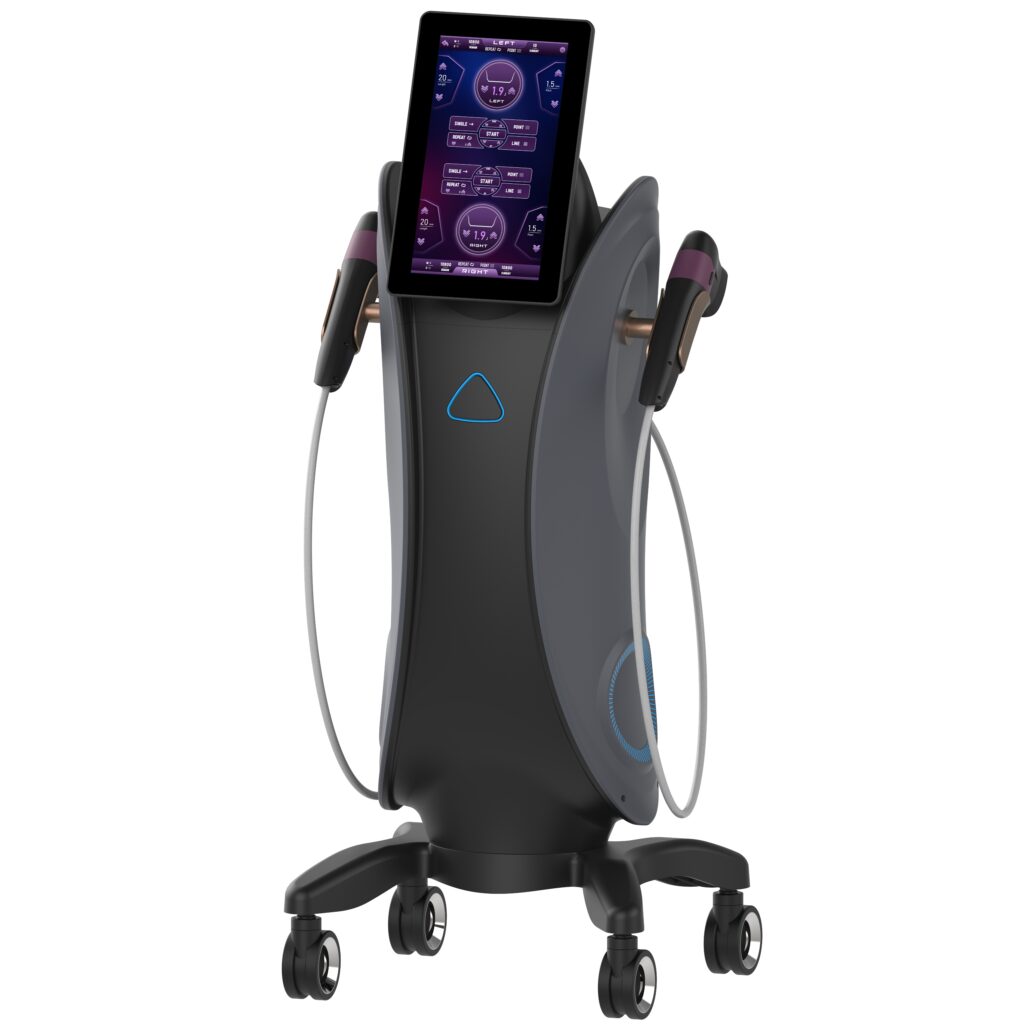
SHEFMON A0507 can be introduced as a picosecond or Q-switched super picosecond YAG laser for tattoo and pigment service menus.
The published SHEFMON page highlights 1064nm and 532nm positioning and lists service targets such as tattoos, wrinkles, scarring, nevus of Ota, blue nevus, speckled nevus, lentigo, cafe au lait, hyperpigmentation, freckles and melasma.
Distributor positioning:
“A0507 is suitable for buyers who want to build tattoo removal, eyebrow tattoo correction and pigmentation service menus with a professional laser category. It should be sold with laser safety training, skin type assessment, client consent and aftercare education.”
Best-fit buyers:
- tattoo removal studios
- pigmentation clinics
- med spas
- laser beauty rooms
- dermatology-style aesthetic centers
- distributors serving professional laser markets
11. The Main Sales Advantages for Distributors
Picosecond laser equipment has several strong selling points.
| Sales advantage | Why it matters |
|---|---|
| Clear demand | Tattoos and pigment concerns are visible client problems |
| Course-based model | Tattoo fading and pigment care often require repeat visits |
| Multiple service menus | One laser can support tattoo, cosmetic tattoo and pigment services |
| Premium pricing potential | Laser services usually price higher than basic facial care |
| Clinic differentiation | Helps salons upgrade into professional laser service categories |
| Support-device upsell | Can combine with Hydra, plasma, CO2 or MNRF menus |
This makes pico laser attractive for distributors who want to move beyond basic facial machines.
12. The Main Risks and Sales Barriers
Demand is strong, but distributors should be honest about barriers.
Common buyer concerns include:
- laser safety requirements
- eye protection
- local licensing rules
- operator training
- risk of burns, pigmentation changes or scarring
- client expectation management
- difficult tattoo colors
- melasma recurrence or worsening risk if mishandled
- aftercare responsibility
- machine maintenance and spare parts
These concerns do not eliminate market demand.
They define the correct buyer.
Picosecond laser equipment is better for trained clinics and serious laser businesses than casual beginner salons with no safety workflow.
13. How to Avoid Overclaiming in This Market
Picosecond laser marketing should stay realistic.
Avoid claims such as:
- complete tattoo removal in one session
- removes every tattoo color
- permanent pigment cure
- safe for all skin types
- no risk of scarring
- no hyperpigmentation risk
- no training needed
- painless for every client
Use safer claims:
- supports tattoo fading and removal programs
- supports pigment-focused laser service menus
- results vary by tattoo color, pigment type, skin type and treatment plan
- multiple sessions may be needed
- trained operation and eye protection are required
- consultation, consent and aftercare are important
- local laser regulations should be checked
This is especially important for online advertising and distributor brochures.
14. Market Demand by Region and Buyer Level
Demand for tattoo removal and pigmentation services varies by local culture.
Distributors should evaluate:
- tattoo prevalence in the local population
- popularity of permanent makeup and eyebrow tattoos
- climate and sun exposure patterns
- pigment concern demand in local skin types
- local beauty salon regulations
- availability of laser-trained operators
- existing tattoo removal competitors
- price level of med spa and laser services
- social acceptance of tattoos
- demand for tattoo fading before cover-up work
In some countries, tattoo removal demand may be driven by job changes or social expectations.
In other markets, pigment and sun spot services may be more important than tattoo removal.
The distributor should not assume the same sales angle works everywhere.
15. Best Starter Packages for Different Businesses
| Business type | Recommended package | Why |
|---|---|---|
| Tattoo removal studio | A0507 Pico Laser | Focused demand and simple service identity |
| Pigmentation clinic | A0507 + A0145 Coolplasma | Pigment laser plus skin quality support |
| Skin management center | A0507 + A0648 Hydra | Laser service plus maintenance facial |
| Acne scar and pigment clinic | A0507 + A0529 CO2 Laser | Pigment plus resurfacing category |
| Premium med spa | A0507 + A0145 + A0648 + MNRF | Pigment, support, maintenance and texture programs |
| Distributor showroom | A0507 demo unit + training materials | Helps demonstrate laser category to professional buyers |
This package logic helps distributors sell by business model instead of only by machine price.
16. What Buyers Should Ask Before Importing
Before importing a picosecond laser machine, buyers should confirm:
- wavelength configuration
- pulse technology and application scope
- spot size and parameter range
- cooling and comfort workflow
- eye protection requirements
- user manual and training materials
- local laser regulations
- operator qualification requirements
- contraindication and consent forms
- aftercare guidance
- spare parts and handpiece support
- warranty and repair policy
- voltage, plug and screen language
- OEM or private-label options
This checklist helps buyers compare suppliers professionally.
It also reduces after-sales risk for distributors.
17. How Distributors Should Introduce the Market Opportunity
A practical distributor script:
“Picosecond laser equipment has demand in both tattoo removal and pigmentation markets. Tattoo removal is a clear course-based service because clients want fading, removal or cosmetic tattoo correction. Pigmentation services create a broader skin clinic opportunity, including freckles, sun spots and uneven tone concerns. The market is strong, but the buyer must have trained operators, laser safety workflow, consultation forms and realistic client education.”
For tattoo removal buyers:
“This device can help you build tattoo fading, old tattoo lightening and eyebrow tattoo correction packages. Results depend on ink color, depth, tattoo age, skin type and treatment plan, so the service should be sold as a course, not a one-session guarantee.”
For pigmentation buyers:
“This device can support pigment-focused laser service menus, but pigmentation treatment requires careful assessment, sun protection education and aftercare. It should not be sold as instant whitening or a permanent cure for melasma.”
Final Answer
Picosecond laser equipment has strong demand in tattoo removal and pigmentation markets, especially for distributors serving professional laser clinics, med spas, tattoo removal studios, pigmentation clinics and advanced skin management centers.
The tattoo removal market is attractive because tattoos are common, the client concern is visible and services are usually course-based.
The pigmentation market is broader because many clients ask about freckles, sun spots, melasma support, hyperpigmentation and uneven skin tone. However, this market requires more careful consultation and aftercare because pigment concerns can be complex.
For distributors, the best positioning is:
Picosecond laser is a professional laser category for tattoo fading, cosmetic tattoo correction and pigment-focused service menus. It has strong demand, but it should be sold with training, safety workflow, local compliance, client screening and realistic expectations.
FAQ
1. Is demand for picosecond laser tattoo removal equipment strong?
Yes. Tattoo removal demand is strong in many markets because tattoo ownership is common and clients may later want fading, removal, cover-up preparation or cosmetic tattoo correction.
2. Can one pico laser serve both tattoo removal and pigmentation markets?
Yes, a pico laser can be positioned for both tattoo and pigment service menus, depending on wavelength configuration, pigment type, skin type, operator training and local rules.
3. Is tattoo removal a one-time service?
No. Tattoo removal is usually course-based. Results vary by tattoo color, depth, ink density, tattoo age, skin type and treatment plan.
4. Which tattoo colors are easiest to remove?
The FDA states that dark blue and black are generally easier to remove, while colors such as green, red and yellow can be harder. White ink and permanent makeup can be tricky because some pigments may darken with laser treatment.
5. Is pigmentation treatment easier than tattoo removal?
Not always. Pigmentation concerns may involve skin type, sun exposure, inflammation, melasma risk and recurrence. They require careful assessment and aftercare.
6. What buyer is best suited for a picosecond laser?
Best-fit buyers include tattoo removal studios, laser clinics, med spas, pigmentation clinics, dermatology-style aesthetic rooms and trained skin management centers.
7. Should a beginner salon buy a pico laser first?
Only if the salon has local permission, trained operators and a clear laser service plan. Otherwise, it may be better to start with lower-barrier skin management devices and add pico laser later.
8. What claims should distributors avoid?
Avoid complete tattoo removal in one session, removes every color, permanent pigment cure, no risk, no scarring, safe for everyone and no training needed.
9. What support should distributors provide with pico laser equipment?
Distributors should provide training materials, safety guidance, consultation forms, aftercare templates, spare parts information, warranty policy and realistic sales scripts.
10. Which SHEFMON product fits this market?
SHEFMON A0507 1064nm 532nm Q-switched Super Picosecond Picosure YAG Laser Tattoo Removal is the main product example for tattoo and pigmentation service positioning.
Sources Used
- SHEFMON Tattoo and Pigmentation Removal Machines: https://shefmon.com/beauty-machines/tattoo-and-pigmentation-removal/
- SHEFMON A0507 1064nm 532nm Q-switched Super Picosecond Picosure YAG Laser Tattoo Removal: https://shefmon.com/product/a0507-1064nm-532nm-q-switched-super-picosecond-picosure-yag-laser-tattoo-removal/
- FDA Tattoo Removal: Options and Results: https://www.fda.gov/consumers/consumer-updates/tattoo-removal-options-and-results
- American Academy of Dermatology: Tattoo removal: Lasers outshine other methods: https://www.aad.org/public/cosmetic/hair-removal/laser-tattoo-removal
- Pew Research Center: How many Americans have tattoos, why, and do they regret it?: https://www.pewresearch.org/short-reads/2023/08/15/32-of-americans-have-a-tattoo-including-22-who-have-more-than-one/
- NCBI Bookshelf: Laser Tattoo Removal: https://www.ncbi.nlm.nih.gov/books/NBK442007/