









Radiofrequency (RF) technology has long been used in aesthetic treatments designed to improve skin firmness and reduce the appearance of laxity. However, not all RF systems deliver energy in the same way. Traditional RF technologies often rely on a single frequency and a specific treatment depth, while XERF (eXperience Exponential RF) uses a dual-frequency monopolar RF approach designed to deliver thermal energy at multiple depths. Understanding these differences can help aesthetic professionals better evaluate how XERF fits into the evolving RF skin tightening landscape.
1. What Is Traditional RF?
Traditional radiofrequency skin tightening works by delivering controlled electromagnetic energy into tissue. As RF energy is absorbed, it produces heat within the targeted area. This thermal effect is used to support collagen remodeling and can contribute to improvements in skin firmness and elasticity over time.
Many conventional monopolar RF systems operate primarily with a single RF frequency and are designed to focus energy within a particular tissue depth. This approach can be effective, but the treatment strategy is generally centered around the specific characteristics of that frequency, applicator, and energy delivery system.
Traditional RF should not be viewed as a single technology with identical specifications across all devices. Different RF platforms may use different frequencies, applicators, energy levels, and cooling systems. Therefore, the key difference between traditional RF and XERF is not simply whether one uses RF and the other does not, but how the RF energy is delivered and controlled.
2. What Is XERF?
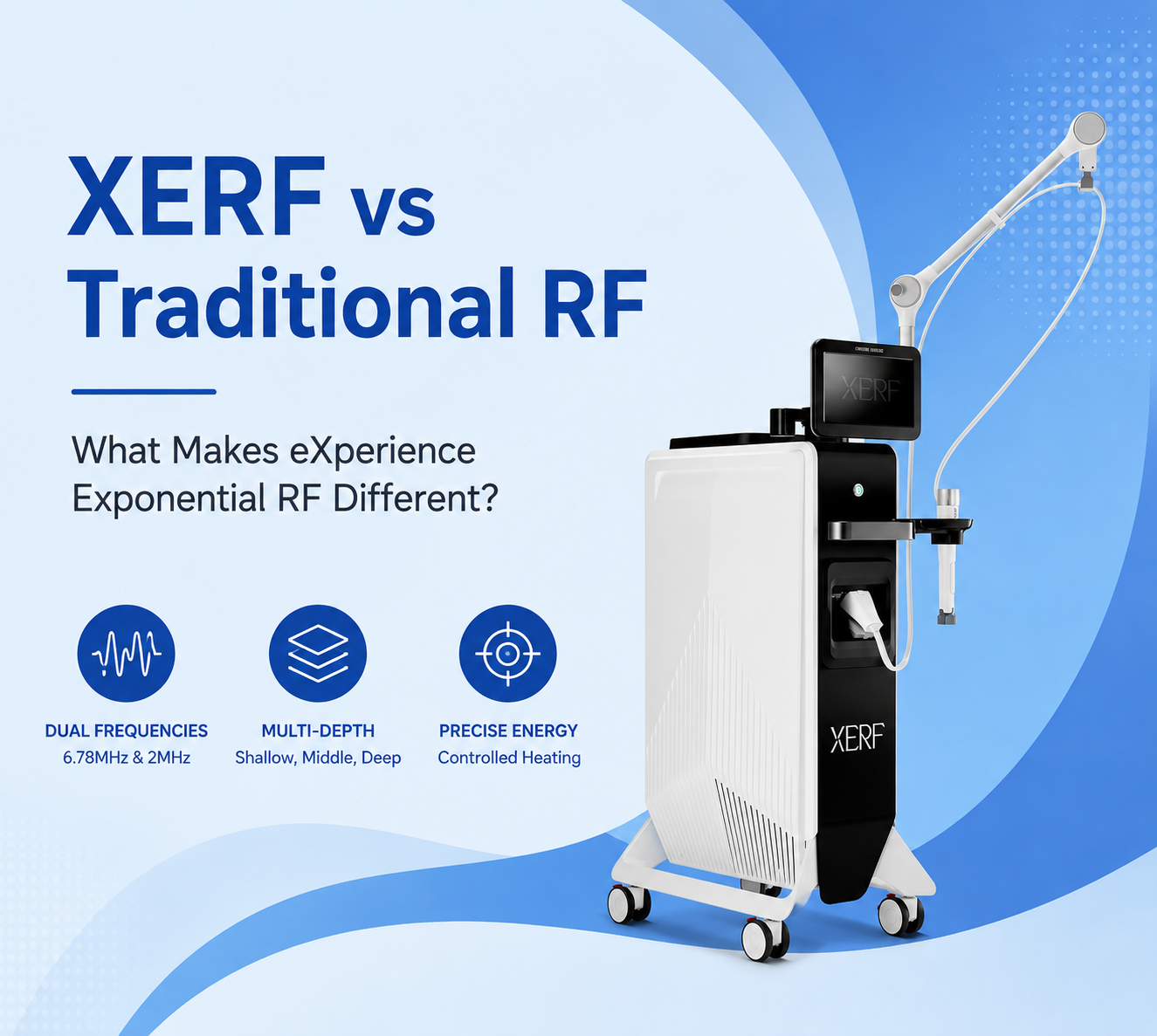
XERF stands for eXperience Exponential RF. It is a next-generation monopolar RF technology that combines two frequencies: 6.78 MHz and 2 MHz.
Instead of concentrating treatment around one frequency and one primary depth, XERF is designed to deliver energy across three treatment levels: Shallow, Middle, and Deep. According to the available technical information, the 6.78 MHz frequency is used for the superficial and middle levels, while 2 MHz is associated with the deeper treatment level.
This multi-depth design is one of the main characteristics that distinguishes XERF from conventional monopolar RF systems.
3. XERF vs Traditional RF: The Main Technology Difference
3.1 Single-Frequency vs Dual-Frequency RF
One of the clearest differences is the number of RF frequencies used.
A conventional monopolar RF system may use a single frequency to generate controlled thermal energy. XERF combines 6.78 MHz and 2 MHz, allowing the system to approach different tissue depths using different RF frequencies.
The purpose is not simply to use a higher or lower frequency. Different frequencies can have different energy-delivery characteristics, and combining them gives practitioners more flexibility when selecting a treatment approach.
3.2 One Primary Depth vs Multiple Treatment Depths
Another important difference is depth control.
Traditional RF treatments may be designed around a particular target depth. XERF provides three selectable treatment levels:
- Shallow – associated with superficial skin layers and concerns such as fine lines and surface texture.
- Middle – focused on the dermal region and collagen density.
- Deep – designed to reach deeper supporting tissue, including the SMAS region described in the provided XERF materials.
This means XERF can be adjusted according to the treatment area and the type of skin laxity being addressed, rather than applying the same depth strategy across every area.
4. Why Does Multi-Depth RF Matter?
Skin is made up of multiple layers, and different areas of the face and body have different tissue structures. A treatment approach that allows practitioners to consider superficial, middle, and deeper tissue levels can therefore provide greater flexibility.
For example, superficial treatment may be relevant when addressing fine lines and skin texture, while middle-depth treatment is associated with collagen density and firmness. Deeper treatment can be considered when the objective involves supporting deeper tissue structures.
XERF combines these three levels within its treatment concept. The available clinical information describes simultaneous targeting of superficial, middle, and deep layers, rather than limiting treatment to one consistent depth.
5. XERF Uses More Than Dual Frequencies
The difference between XERF and traditional RF is not limited to its two frequencies. The system also incorporates several technologies intended to control energy delivery, temperature, and treatment coverage.
5.1 Real-Time Temperature Monitoring
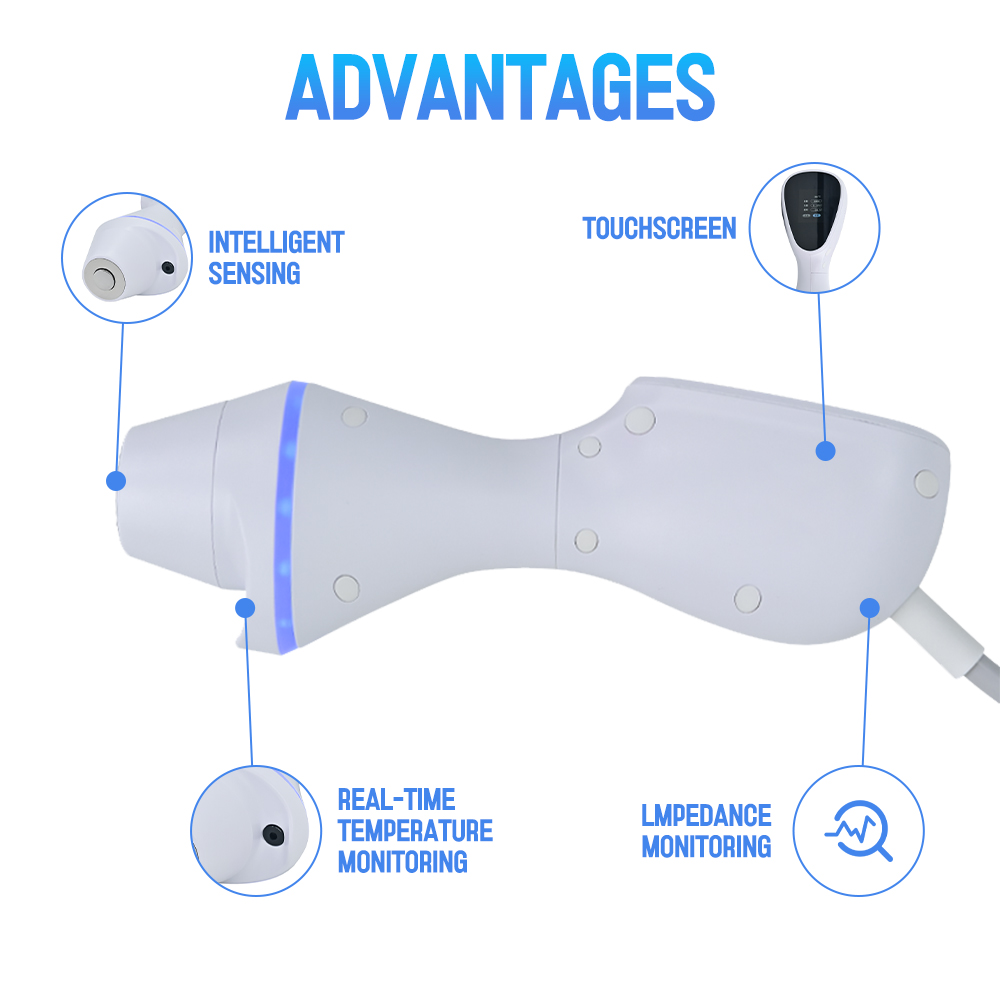
XERF includes a surface temperature monitoring system that provides real-time feedback through the device interface and handpiece. This is designed to help practitioners monitor surface temperature during energy delivery and reduce excessive heat accumulation.
Temperature monitoring is particularly relevant to RF treatments because controlled heating is central to the treatment mechanism.
5.2 ICD Cooling Technology
XERF also features an Integrated Cryogen Delivery (ICD) Cooling System. The system uses multiple cooling levels to help regulate the skin surface during treatment.
The combination of RF heating and surface cooling is intended to support a more comfortable treatment experience while helping protect the epidermis from excessive heat.
5.3 WaveFit Pulse Technology
WaveFit Pulse Technology is another component described in the XERF materials. It works alongside the cooling system to stabilize energy delivery and help manage treatment comfort.
These technologies demonstrate why evaluating an RF platform based only on its frequency can be misleading. Energy control, cooling, monitoring, and applicator design are also important factors.
6. How Does the XERF Effector Differ?
Applicator design is another area where XERF takes a more specialized approach.
The system uses a Spider-Pattern Effector designed to distribute RF energy more evenly across the treatment area. The available product information describes four effectors: Effector 05, 10, 40, and 60, with different sizes intended for narrow, curved, standard, and larger treatment areas.
This allows the practitioner to select an appropriate effector based on the anatomical area being treated. A smaller effector can be useful for narrower areas, while larger effectors can provide coverage for broader treatment zones.
7. XERF and Treatment Customization
Customization is another important distinction.
XERF provides three treatment depths and 10 adjustable energy levels, allowing practitioners to adapt treatment parameters according to skin condition, treatment area, and treatment objectives.
This can be particularly relevant when treating different areas of the face and body. The forehead, periorbital area, cheeks, jawline, neck, abdomen, arms, and thighs do not necessarily require identical treatment settings.
Rather than using one fixed approach, practitioners can consider depth, energy, effector size, and temperature when developing a treatment protocol.
8. Does XERF Replace Traditional RF?
Not necessarily. Traditional RF remains a broad category that includes many different technologies and treatment approaches. The value of XERF lies in its particular combination of dual-frequency RF, multi-depth treatment, adjustable energy, temperature monitoring, cooling, and specialized effectors.
For clinics and aesthetic professionals, the better question is not whether XERF makes every conventional RF device obsolete. Instead, it is whether a multi-depth, dual-frequency system offers advantages for the treatment protocols and patient needs being served.
Conclusion
The main difference between XERF and traditional RF is the way RF energy is delivered and controlled. XERF combines 6.78 MHz and 2 MHz frequencies with Shallow, Middle, and Deep treatment levels, allowing a multi-depth approach within the same treatment system. It also adds real-time temperature monitoring, ICD cooling, WaveFit Pulse Technology, adjustable energy levels, and area-specific effectors.
For professionals evaluating RF skin tightening technologies, these specifications provide a more useful basis for comparison than simply looking at the RF frequency. Understanding frequency, treatment depth, energy control, cooling, applicator design, and customization together can help determine which RF technology is best suited to a particular practice and treatment strategy.