Physiotherapy and recovery clinics do not choose a shockwave system by appearance alone. They need to understand how the wave is generated, where the energy is concentrated, which treatment depths are available, how the handpiece is controlled, and whether the equipment fits their clinical governance and service model.
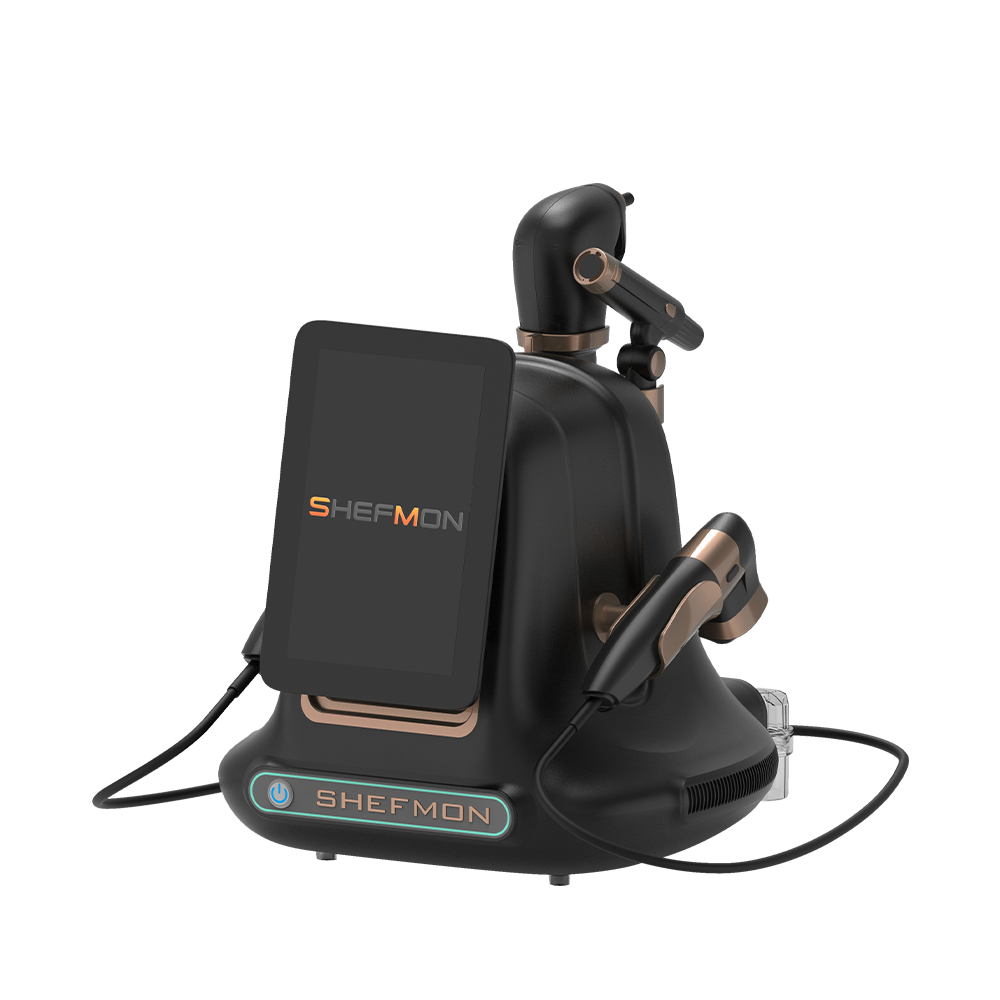
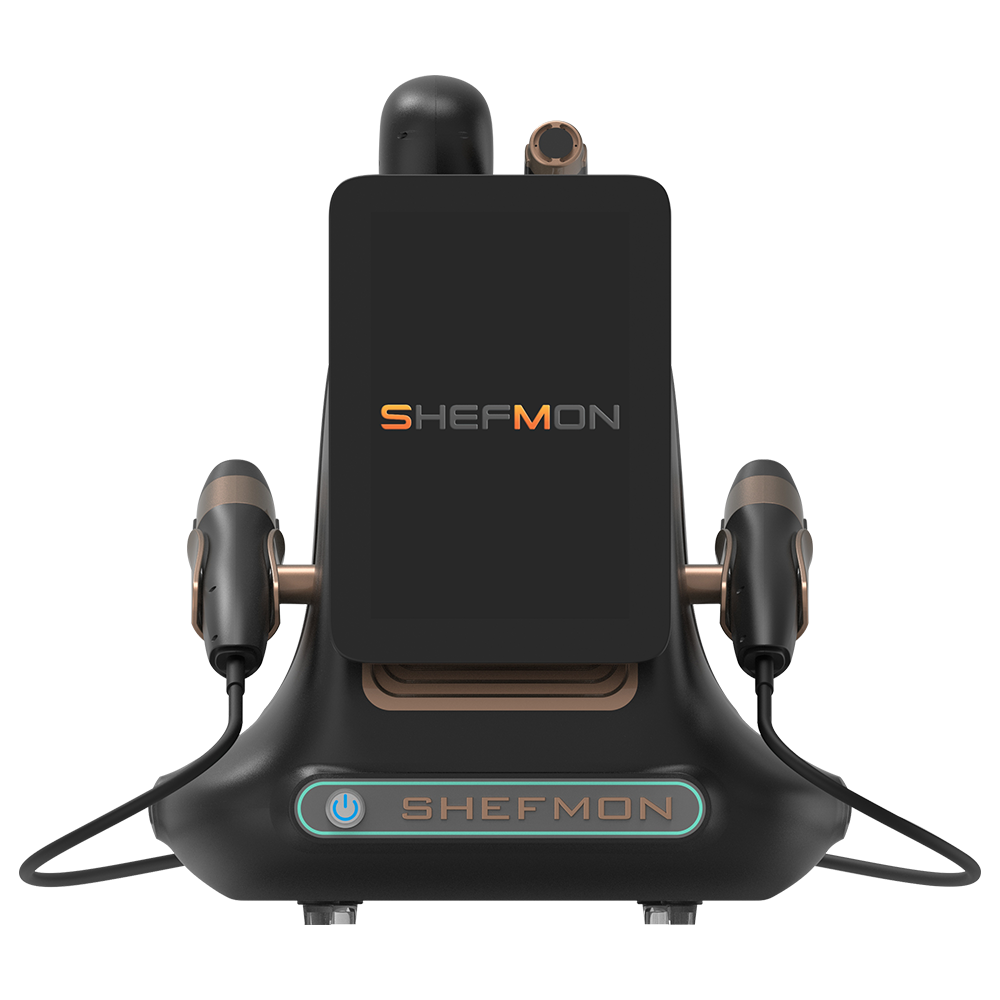
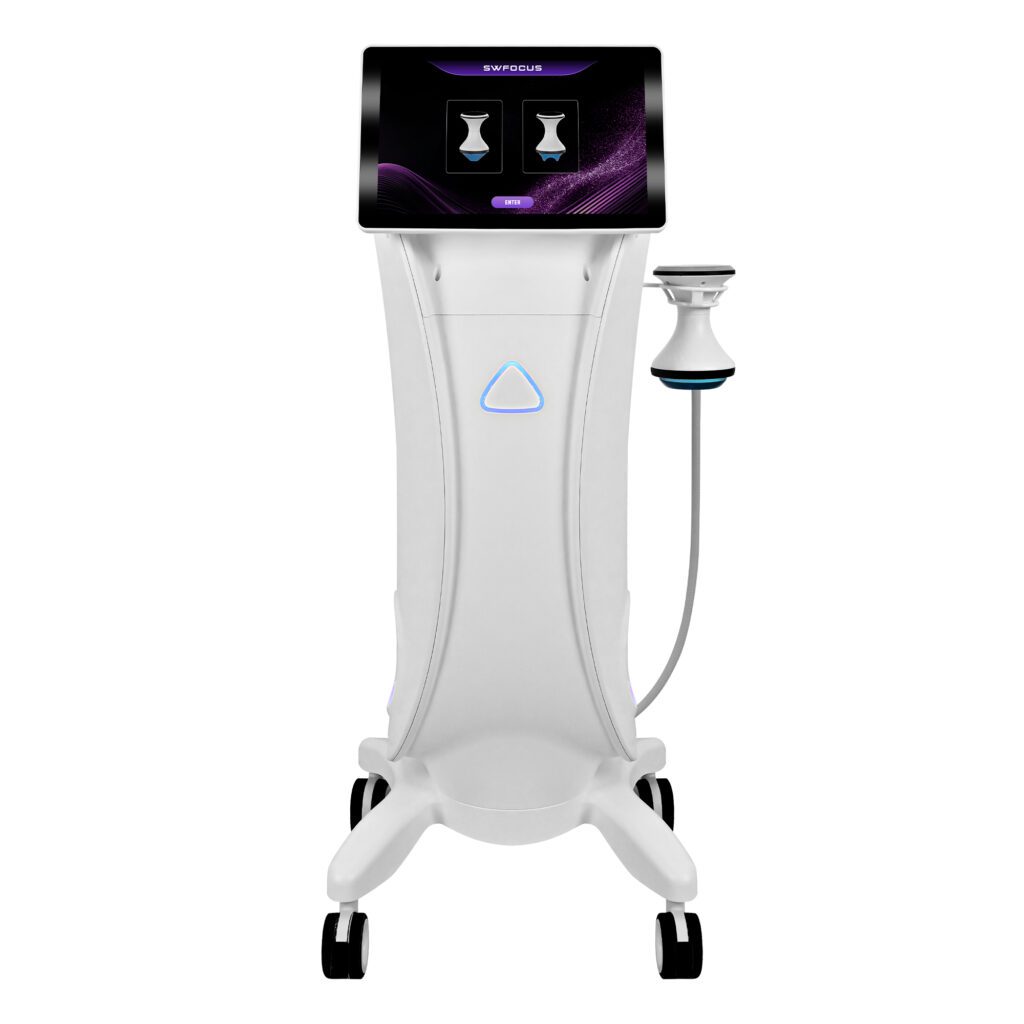
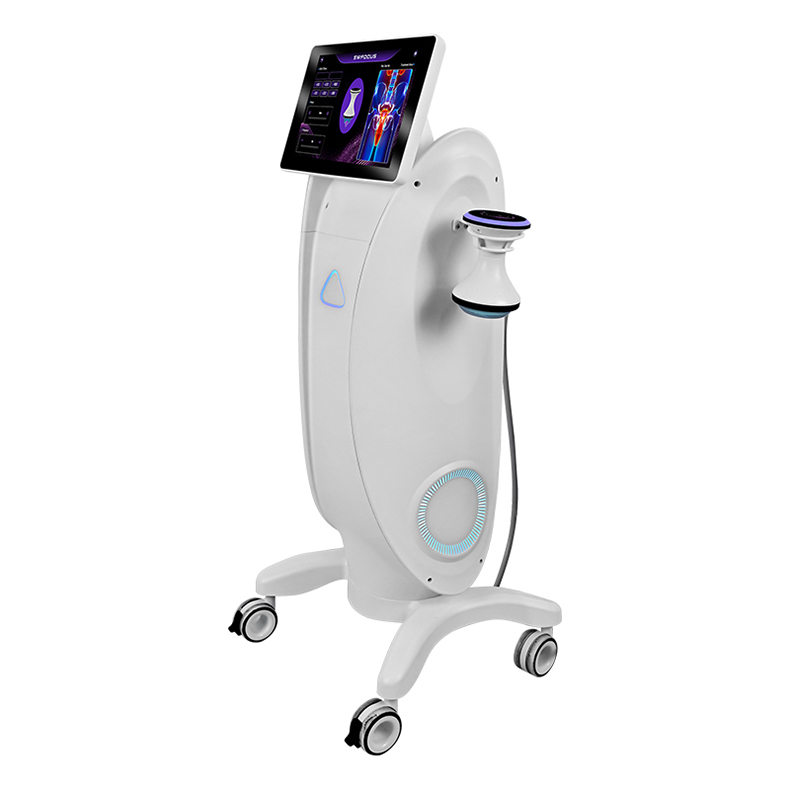
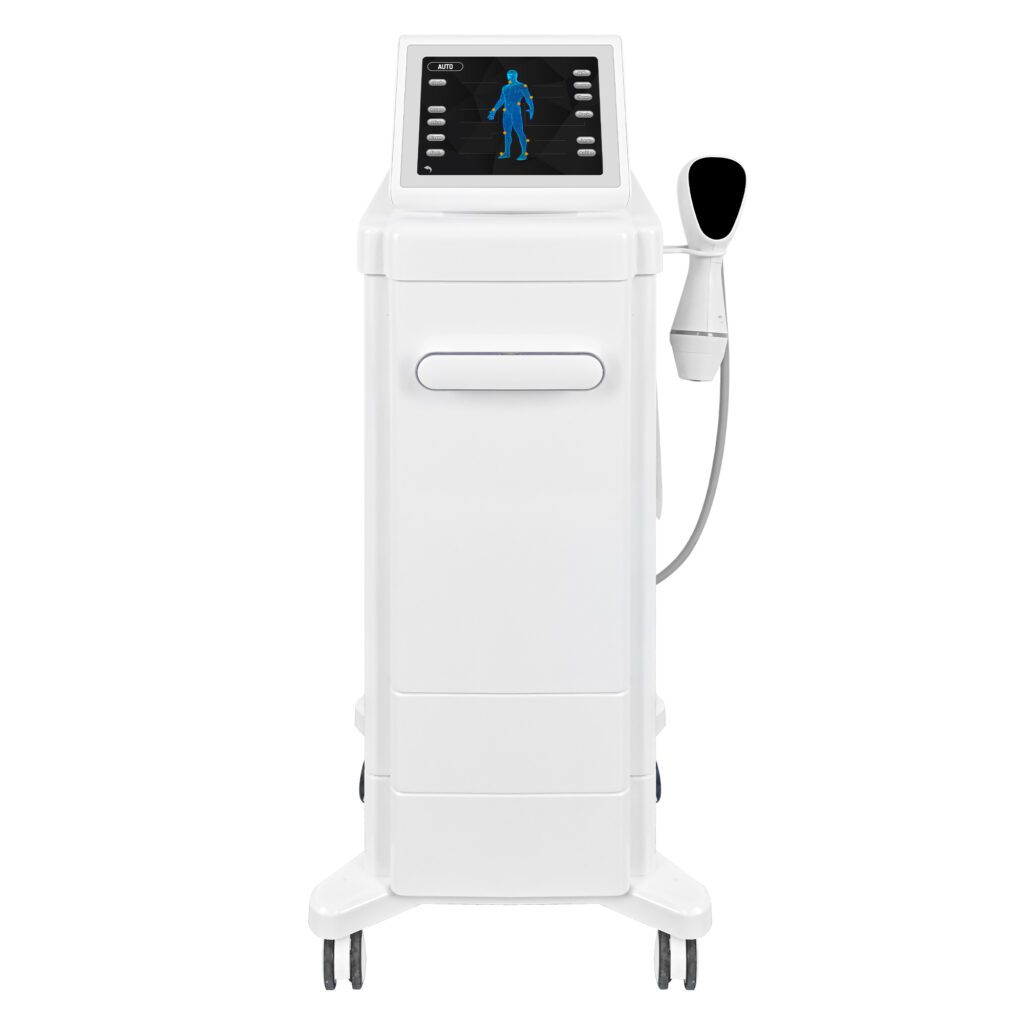
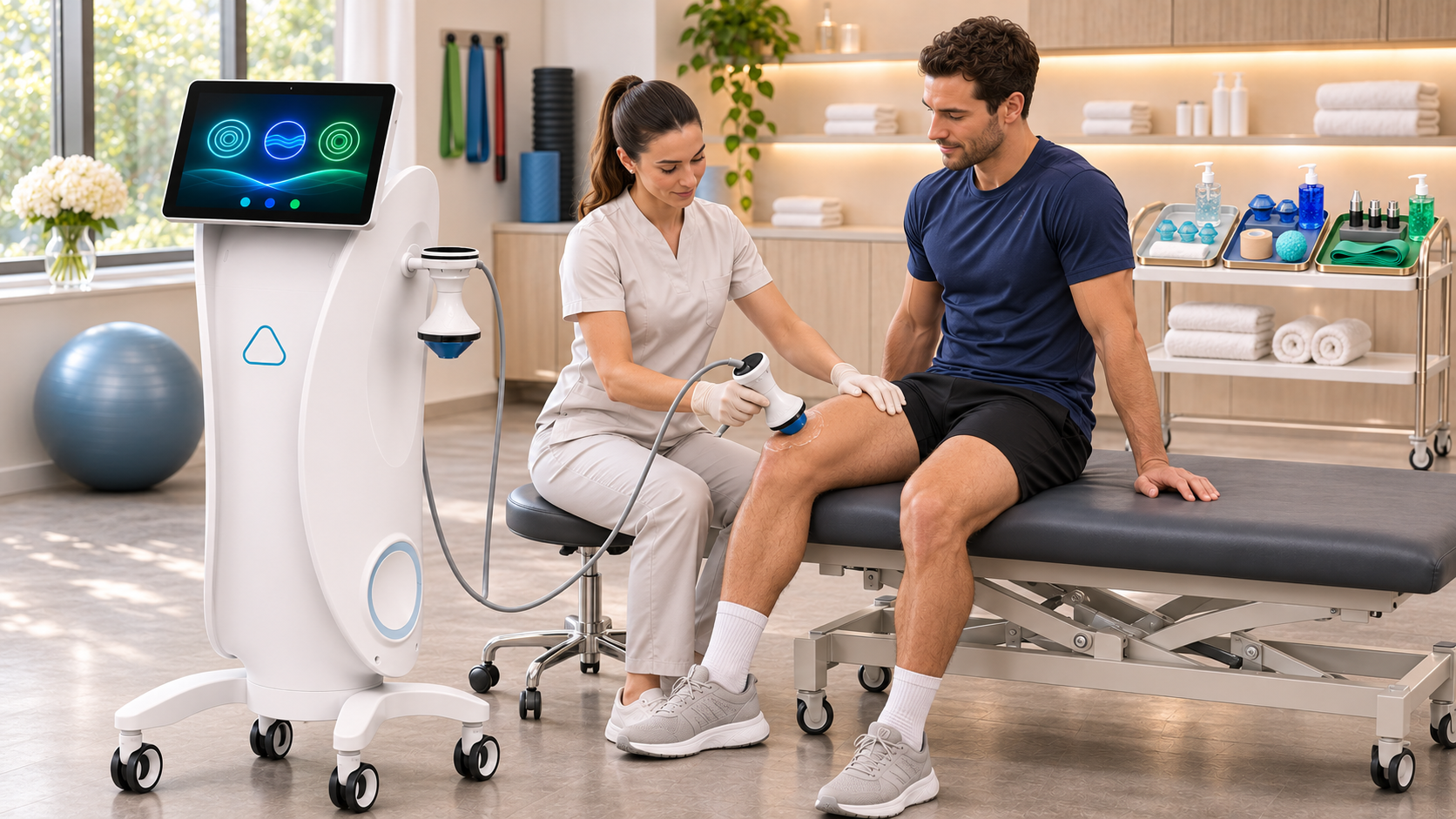
The SHEFMON SW33 focused shockwave therapy machine uses piezoelectric technology to concentrate acoustic energy at a selected focal depth. Its product page lists eight silicone probes covering 4-66 mm, output up to 10 Bar, frequency up to 10 Hz, a 13.3-inch main touchscreen, and a 2.4-inch handpiece display. These features position SW33 for professional physiotherapy, sports recovery, and rehabilitation environments that need a focused rather than radial pressure-wave platform.
This guide explains the SW33 working principle, configuration, suitable buyers, workflow, purchasing checks, and differences from other models in the SHEFMON shockwave and physiotherapy range. It is a product-selection guide, not a treatment protocol. Diagnosis, parameter selection, consent, and use must remain within local rules and the operator’s professional scope.
Управляющее резюме
- SW33 is a piezoelectric focused shockwave therapy machine. Its spherical applicator structure concentrates acoustic energy at a defined point below the skin instead of distributing the highest mechanical pressure at the applicator surface.
- Eight silicone probes provide listed focal depths from 4 mm to 66 mm, allowing trained users to choose a depth that matches the assessed target area and approved protocol.
- The machine combines a 13.3-inch main touchscreen with a 2.4-inch display on the handpiece, supporting parameter visibility close to the treatment area.
- SW33 is best suited to qualified physiotherapy, sports medicine, rehabilitation, and recovery providers that specifically need focused acoustic energy. It is not simply a more powerful version of every radial shockwave machine.
- Buyers should request the full technical sheet, including energy flux density, focal-zone dimensions, output increments, calibration method, probe map, handpiece maintenance conditions, training documents, and the regulatory configuration supplied to their market.
- Evidence and permitted use vary by condition and country. Clinics should establish screening, informed consent, documentation, outcome review, and referral procedures before adding the service.
1. SW33 Product Introduction
SW33 is designed as a professional focused shockwave platform for clinics that want controlled depth selection and a clearly defined focal treatment area. The central buying question is not whether shockwave is popular; it is whether focused piezoelectric output is appropriate for the clinic’s patients, operator qualifications, and existing rehabilitation pathways.
The machine is relevant to:
- physiotherapy and physical rehabilitation clinics;
- sports medicine and athlete recovery centers;
- orthopedic or musculoskeletal services operating within local authorization;
- multidisciplinary recovery centers that already use assessment and outcome tracking;
- distributors building a professional physiotherapy equipment portfolio.
SW33 can complement exercise therapy, manual therapy, mobility work, or other clinician-selected care. However, a device should not determine the diagnosis. A qualified professional should first establish the treatment objective, rule out conditions requiring referral, and decide whether shockwave belongs in the care plan.
2. Functional Principle: Piezoelectric Focused Shockwave
The SW33 product page describes an inverse piezoelectric process. When a pulsed high-voltage electric field is applied to piezoelectric ceramic elements, the elements deform rapidly and generate an acoustic pressure wave. The ceramics are arranged around a spherical applicator so that the waves converge at a defined focal point.
This geometry creates an important difference between focused and radial systems. In a focused system, the energy can be concentrated below the surface at a selected depth. In a ballistic radial system, compressed air accelerates a projectile into an applicator tip, and the mechanical pressure wave spreads outward from the contact point. Both categories may appear in recovery clinics, but they are not interchangeable technologies.
The biological response to extracorporeal shockwave therapy is still studied and varies by tissue, condition, dose, and protocol. Mechanical stimulation may influence local signaling, circulation, pain modulation, and remodeling processes, but a product page should not be treated as proof of a clinical outcome. The machine supplies energy; patient selection and evidence-based clinical decisions determine whether its use is appropriate.
3. Focused Shockwave vs Radial Pressure Wave
The table below explains the practical purchasing distinction.
| Decision point | Focused shockwave, such as SW33 | Ballistic radial pressure wave |
|---|---|---|
| Wave generation | Piezoelectric, electromagnetic, or electrohydraulic technology may be used | A projectile strikes an applicator, commonly driven by compressed air |
| Energy pattern | Waves converge at a defined focal region | Pressure is strongest near the applicator and spreads outward |
| Стратегия глубины | Select a focal-depth probe or standoff matched to the assessed target | Select an applicator and operating setting for a broader, more superficial area |
| Typical buying reason | The clinic needs targeted, depth-specific acoustic delivery | The clinic wants broad mechanical stimulation and a familiar surface workflow |
| Important specification | Energy flux density, focal depth, focal-zone dimensions, pulse rate | Air pressure, frequency, applicator diameter, compressor and projectile design |
| Training emphasis | Localization, depth selection, energy dosing, anatomical risk zones | Contact technique, applicator selection, pressure, frequency, and tissue response |
Focused is not automatically better for every service. A clinic treating broad muscle areas may value radial coverage, while a clinic with a defined focused-shockwave pathway may prioritize focal depth and energy characterization. Buyers should compare the technology to their intended cases rather than comparing only maximum numbers.
4. Main SW33 Configuration and Specifications
The following specifications are taken from the current SHEFMON SW33 product page. They describe the offered configuration; final buyers should confirm the quotation, manual, electrical version, and included accessories before ordering.
| Элемент | SW33 listed configuration | Why it matters to a buyer |
|---|---|---|
| Shockwave technology | Пьезоэлектрическая сфокусированная ударная волна | Concentrates acoustic energy at a defined focal point |
| Depth range | 4-66 mm | Supports depth selection for different assessed target areas |
| Probe set | 8 silicone probes | Provides multiple focal-depth options in one system |
| Listed output | Up to 10 Bar | Useful only when interpreted with energy and focal-zone data |
| Частота | Up to 10 Hz | Affects pulse delivery speed and workflow |
| Main display | 13,3-дюймовый емкостный сенсорный экран | Provides a larger interface for setup and parameter review |
| Handpiece display | 2,4-дюймовый сенсорный экран | Keeps key controls or feedback close to the operator’s hand |
| Listed handpiece life | 1,5 миллиона выстрелов | A purchasing reference that requires clarification of test and service conditions |
| Additional handpiece | Dedicated ED handpiece listed | Relevant only to qualified providers where this application is permitted |
Pressure in Bar does not fully describe focused shockwave dose. A serious buyer should also ask for energy flux density in mJ/mm2, energy levels, focal-zone dimensions, measurement method, pulse-count range, and calibration or verification procedures. These values make comparisons between focused systems more meaningful.
The listed 1.5 million-shot figure should also be discussed as a service-life reference, not an unconditional promise. Ask what maintenance is required, which parts are wear items, what happens when the counter reaches its limit, and whether local servicing or handpiece replacement is available.
5. How the Eight Depth Probes Support Clinical Workflow
SW33’s strongest product distinction is its eight-probe configuration covering a listed 4-66 mm range. The purpose of the set is to position the focal region at different depths without asking one attachment to serve every anatomical target.
A responsible workflow starts with assessment and localization. The operator identifies the intended tissue, estimates or measures its depth using the clinic’s approved method, selects the corresponding probe, confirms the approved parameter range, and monitors the patient’s response. The probe is therefore a depth-selection component, not a label for a diagnosis.
Before purchase, request a probe chart showing:
- the exact focal depth of every probe;
- focal-zone length and width;
- compatible energy range for each attachment;
- whether coupling distance changes under load;
- Инструкции по очистке и дезинфекции;
- inspection criteria and replacement intervals;
- whether all eight probes are included in the quoted package.
This information is especially important for distributors. A clear probe map makes training, demonstrations, and after-sales support more consistent across customers.
6. Dual Touchscreen Design and Operator Experience
SW33 combines a large main display with a smaller display on the handpiece. The 13.3-inch screen can support setup, mode selection, and parameter review, while the 2.4-inch handpiece screen can reduce repeated movement back to the console during a session.
Interface convenience does not replace clinical judgment. During a demonstration, buyers should test whether the screen clearly displays pulse count, selected probe or depth, frequency, energy level, session status, and warnings. They should also check whether settings can be changed accidentally from the handpiece and whether the system requires confirmation before output begins.
Other practical questions include glove usability, screen visibility from different angles, emergency stop location, cable reach, handpiece balance, cooling or rest requirements, noise level, startup checks, and the process for software updates.
7. Physiotherapy and Recovery Applications
SW33 is positioned for musculoskeletal, soft-tissue, rehabilitation, and sports-recovery settings. Clinics may investigate focused shockwave within pathways for selected tendon, fascia, muscle, or calcification-related concerns, but the evidence and authorization are condition-specific.
For example, the UK National Institute for Health and Care Excellence states that evidence for extracorporeal shockwave therapy in ахиллотендинопатия is inconsistent and limited, with additional governance, consent, and outcome review recommended. Its guidance for calcific shoulder tendinopathy finds the efficacy evidence inadequate and calls for use in a research context. These examples show why a clinic should not turn a broad application list into a universal claim.
A sensible service position is therefore:
- clinician-led assessment before device use;
- a documented reason for selecting focused shockwave;
- transparent discussion of expected benefits, uncertainty, and alternatives;
- parameters chosen from the approved manual and professional guidance;
- integration with rehabilitation rather than presentation as a replacement for it;
- follow-up using relevant pain, function, mobility, or return-to-activity measures.
Sports recovery language also needs care. Post-exercise tightness, a diagnosed tendinopathy, an acute injury, and unexplained pain are different situations. Marketing can describe a professional recovery platform, but clinical staff must decide who should be treated, referred, or excluded.
8. Which Buyers Are a Good Fit for SW33?
Физиотерапевтические клиники
SW33 fits clinics that already assess musculoskeletal presentations, document treatment plans, and need a focused acoustic platform with several depth options. It is more appropriate where staff can explain why focused output is being selected and can monitor outcomes.
Sports Medicine and Recovery Centers
Centers serving athletes or active adults may value targeted delivery and rapid pulse workflow. The device should sit within a structured service that includes assessment, load management, exercise, recovery planning, and referral when required.
Rehabilitation Departments
Rehabilitation providers may add SW33 when they have an approved indication pathway, qualified operators, and an equipment governance process. Purchasing should involve clinical, technical, infection-control, and procurement staff rather than rely on a sales demonstration alone.
Дистрибьюторы оборудования
SW33 gives distributors a focused-shockwave option between general radial systems and other deep focused platforms. Distributors should be prepared to support technology education, probe selection, installation, operator training, maintenance, spare parts, and market-specific documentation.
Buyers Who May Need Another Model
A small wellness business without qualified staff or a screening process may not be ready for this category. A clinic that mainly wants broad radial stimulation may prefer a ballistic system. A buyer seeking combined thermal RF and radial shockwave may be better served by a combination platform.
9. A Practical SW33 Operating Workflow
A clinic can adapt the following high-level workflow to its approved manual and local procedures.
- Assessment and eligibility: Confirm the clinical presentation, treatment objective, relevant history, current medication, previous procedures, and reasons for referral or exclusion.
- Consent and expectation setting: Explain the proposed role of shockwave, alternatives, possible discomfort or local reactions, evidence uncertainty, and the planned outcome measures.
- Localization and depth selection: Identify the target anatomy and select the correct depth probe using the approved method. Do not infer depth from symptoms alone.
- Equipment inspection: Check the handpiece, probe, cable, coupling medium, displays, emergency stop, pulse counter, and service status.
- Parameter confirmation: Start within the approved protocol and adapt only according to professional guidance, the manual, and patient response.
- Monitored application: Maintain correct contact and coupling while observing comfort, skin response, and any reason to stop.
- Documentation: Record the device, handpiece, probe, depth, settings, pulse count, treatment area, tolerance, and immediate response.
- Follow-up: Reassess agreed outcomes and decide whether to continue, modify, stop, or refer.
No single pulse count, frequency, or session schedule is suitable for every condition. Protocols should be diagnosis-specific and controlled by appropriately qualified professionals.
10. Screening, Governance, and Responsible Claims
The manufacturer manual and local clinical rules should define the final contraindication and precaution list. Screening commonly considers pregnancy, suspected fracture, infection or open tissue at the site, malignancy in or near the area, bleeding risk or anticoagulant use, impaired sensation, recent procedures, implanted devices where relevant, and treatment near vulnerable organs or neurovascular structures. Unexplained or worsening symptoms require clinical assessment rather than immediate device treatment.
Clinics should maintain:
- a signed consent process;
- operator competency records;
- an approved parameter and application policy;
- cleaning, inspection, and maintenance logs;
- adverse-event and referral procedures;
- documented outcome review;
- market claims that match the approved intended use.
Avoid claims that the device cures all pain, repairs every injury, or produces the same result for every patient. A better description is that SW33 provides depth-selectable focused acoustic energy for qualified physiotherapy and recovery services, with results depending on indication, protocol, and individual response.
11. SW33 vs SW12, SW30, and SW35
SHEFMON offers several shockwave platforms with different technology and positioning. The model comparison below helps buyers choose according to service design.
| Модель | Technology and configuration | Покупатель, наиболее подходящий для данной цели | Main purchasing distinction |
|---|---|---|---|
| SW12 ESWT machine | Compressed-air ballistic pressure wave; product page lists 1-21 Hz | Buyers seeking an entry radial workflow | Broad mechanical application with pneumatic generation |
| SW30 shockwave and 448kHz monopolar RF machine | Радиальная ударная волна плюс монополярная радиочастота 448 кГц | Clinics wanting two energy categories in one platform | Combines radial mechanical stimulation with RF heating functions |
| SW33 focused shockwave therapy machine | Piezoelectric focused shockwave; eight probes; listed 4-66 mm | Clinics prioritizing depth selection and focused delivery | Broadest listed SW33 probe set with dual touchscreens |
| SW35 FSWT equipment | Focused shockwave; five listed probes reaching up to 75 mm | Buyers prioritizing a deeper listed maximum focal range | Fewer listed probe options but a deeper maximum specification |
Choose SW33 when the service specifically requires piezoelectric focused energy and flexible focal-depth selection. Choose SW12 for a straightforward ballistic radial category, SW30 for a radial-plus-RF platform, and SW35 when the buyer’s approved applications require its deeper listed probe range. A live demonstration and complete technical documentation should confirm the final choice.
12. Maintenance and Total Cost of Ownership
Purchase price is only one part of a professional device decision. Ask the supplier to identify all wear parts, coupling supplies, probe replacement conditions, handpiece service intervals, shipping requirements for repairs, warranty exclusions, and expected response times.
The clinic should also budget for:
- initial and refresher operator training;
- handpiece and probe inspection;
- approved cleaning products and coupling medium;
- preventive maintenance and output verification;
- electrical safety checks required locally;
- spare parts or backup handpiece planning;
- software or firmware support;
- downtime during service.
Distributors should clarify whether the shot counter can be read during routine inspection, whether service records can be exported, and what technical support is available after the listed handpiece-life threshold.
13. SW33 Purchasing Checklist
Before approving an order, request written confirmation of the following:
- piezoelectric focused-shockwave generation method;
- energy flux density range and adjustment increments;
- focal-zone dimensions and measurement method;
- focal depth for every included probe;
- frequency, pulse-count range, and output controls;
- exact accessories included in the quotation;
- handpiece-life test conditions and service policy;
- cleaning, disinfection, and preventive-maintenance instructions;
- operator manual and training materials in the required language;
- electrical specification and plug configuration;
- warranty, spare-parts, and repair turnaround terms;
- labeling and regulatory documents applicable to the destination market.
For branded distribution projects, discuss interface language, logo placement, packaging, manuals, and commercial quantities through Услуги OEM/ODM SHEFMON. Custom branding does not change the buyer’s responsibility to verify local registration and permitted claims.
Часто задаваемые вопросы
1. Is SW33 a focused or radial shockwave machine?
SW33 is a piezoelectric focused shockwave machine. Its applicator is designed to converge acoustic energy at a defined focal region. This differs from a compressed-air ballistic radial device, where mechanical pressure spreads outward from the applicator surface.
2. What is the listed treatment-depth range?
The current SW33 product page lists eight silicone probes covering 4-66 mm. Buyers should request the individual probe map and focal-zone dimensions because maximum depth alone does not describe the complete energy field.
3. What does the 10 Bar specification mean?
The product page lists output up to 10 Bar, but pressure alone is not enough to compare focused systems. Ask for energy flux density, focal size, measurement method, and adjustment levels to understand the delivered acoustic output.
4. Is SW33 suitable for a general beauty salon?
It is primarily positioned for professional physiotherapy and recovery environments. A salon should only consider it if local rules permit the intended service and appropriately qualified staff can perform assessment, screening, consent, treatment, and follow-up.
5. Can SW33 be used for sports recovery?
It can be incorporated into qualified sports-recovery and rehabilitation pathways. Staff must distinguish routine recovery needs from injuries or unexplained symptoms that need diagnosis or referral, and they should avoid promising a fixed return-to-sport timeline.
6. How is SW33 different from SW35?
Both are focused shockwave platforms. SW33 lists eight probes and a 4-66 mm range, while SW35 lists five probes reaching up to 75 mm. The final comparison should also include energy data, focal-zone dimensions, interface, accessories, service terms, and the buyer’s approved applications.
7. How is SW33 different from SW30?
SW33 uses piezoelectric focused shockwave technology. SW30 combines radial shockwave with 448kHz monopolar RF, making it a different two-technology platform. The right choice depends on whether the clinic needs focused depth selection or a radial-plus-RF service menu.
8. Does the dual touchscreen set the clinical protocol automatically?
The screens improve access to controls and parameter visibility, but they do not diagnose a condition or replace professional parameter selection. Operators remain responsible for eligibility, localization, settings, monitoring, and records.
9. How many sessions should a clinic sell as a package?
There is no universal package size. The condition, evidence, protocol, response, and local professional guidance should determine the plan. Clinics should reassess outcomes instead of selling a fixed course before an appropriate evaluation.
10. What should distributors confirm before importing SW33?
Confirm the exact configuration, technical data, accessories, training, language, electrical version, warranty, handpiece service policy, spare-parts route, and destination-market documentation. Also ensure that promotional claims match the locally permitted intended use.
Заключение
The SW33 focused shockwave therapy machine is a strong candidate for professional buyers who need piezoelectric focused energy, eight depth probes, a listed 4-66 mm range, and dual touchscreen control. Its value is not simply a high output number; it is the ability to select a focal depth and integrate the device into a documented physiotherapy or recovery workflow.
The best purchasing decision combines technology fit, operator qualifications, clinical governance, complete technical specifications, and dependable after-sales support. Compare SW33 with radial and focused alternatives, review the evidence for each intended application, and verify the supplied configuration before ordering.
Изучите SW33 product page or contact SHEFMON through its OEM/ODM and equipment consultation service to request specifications, probe details, training information, and a quotation for your market.