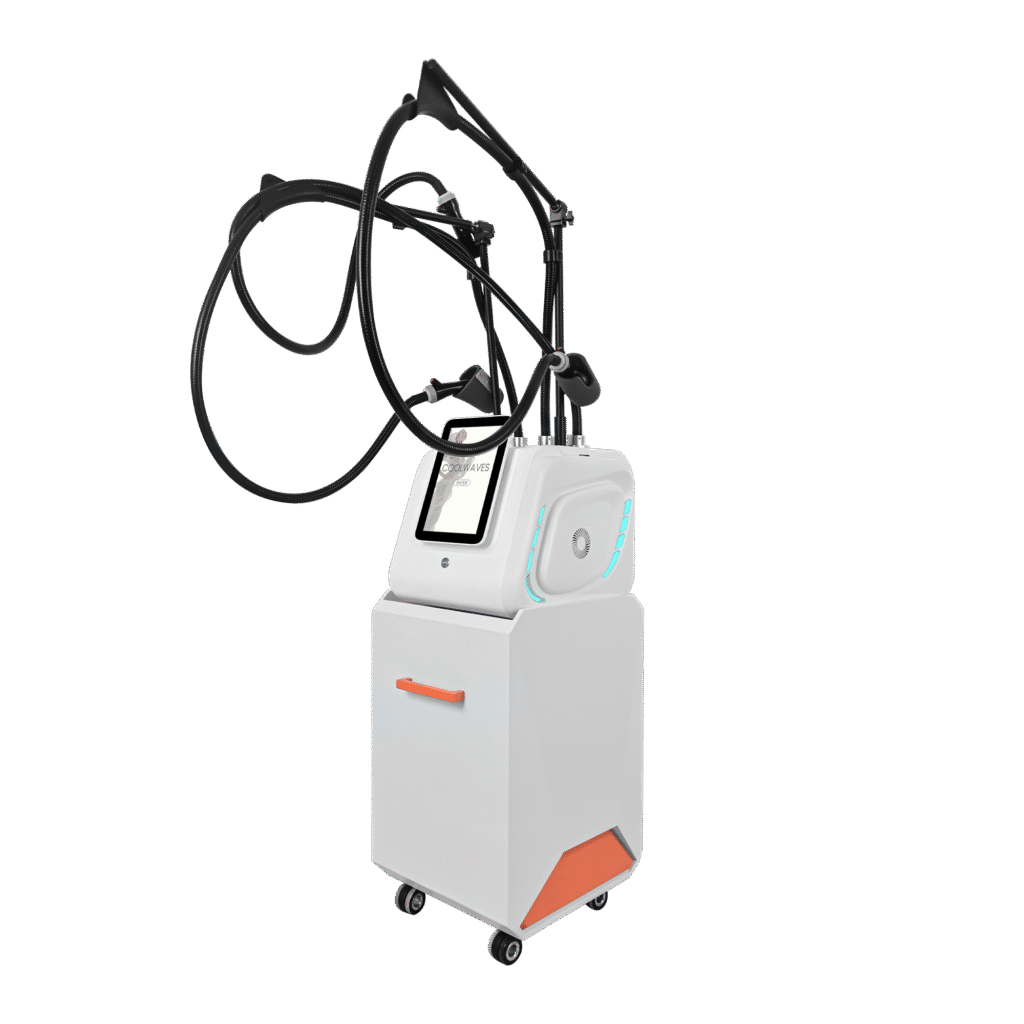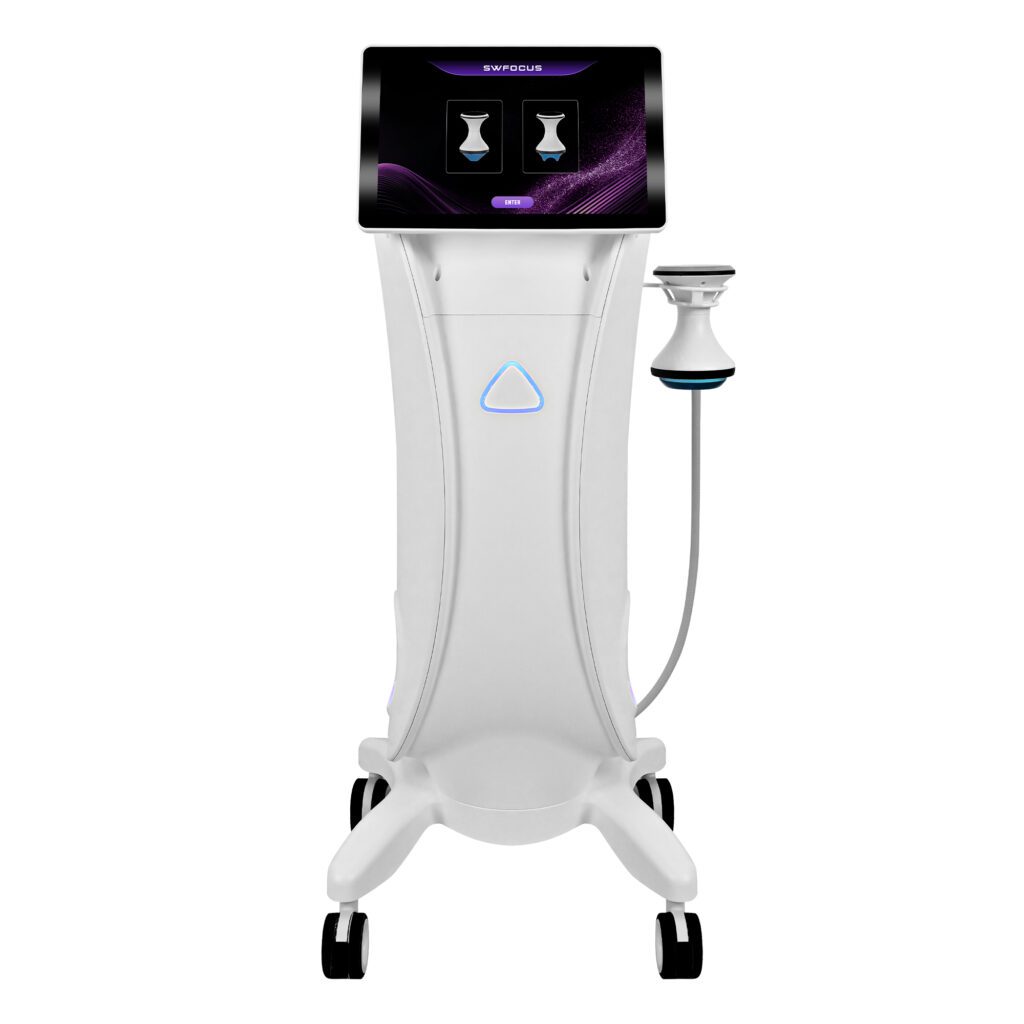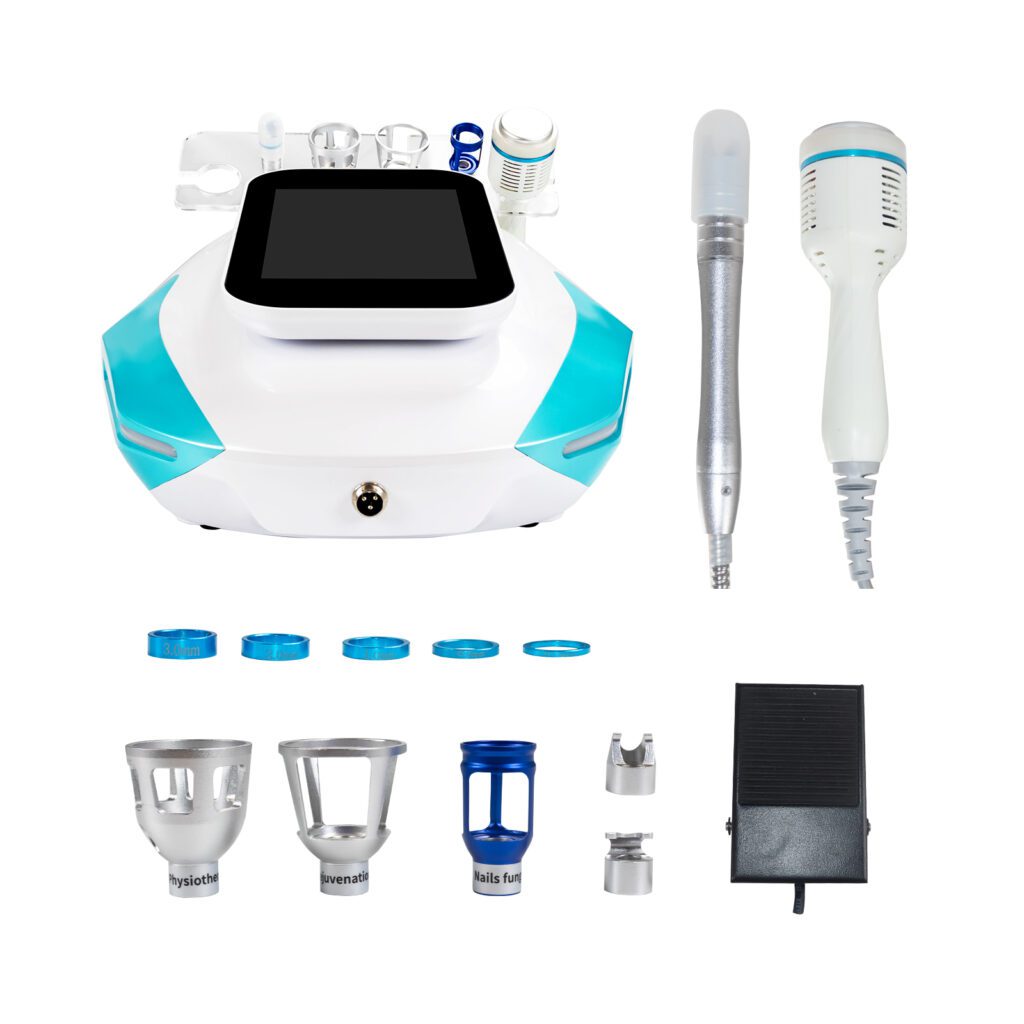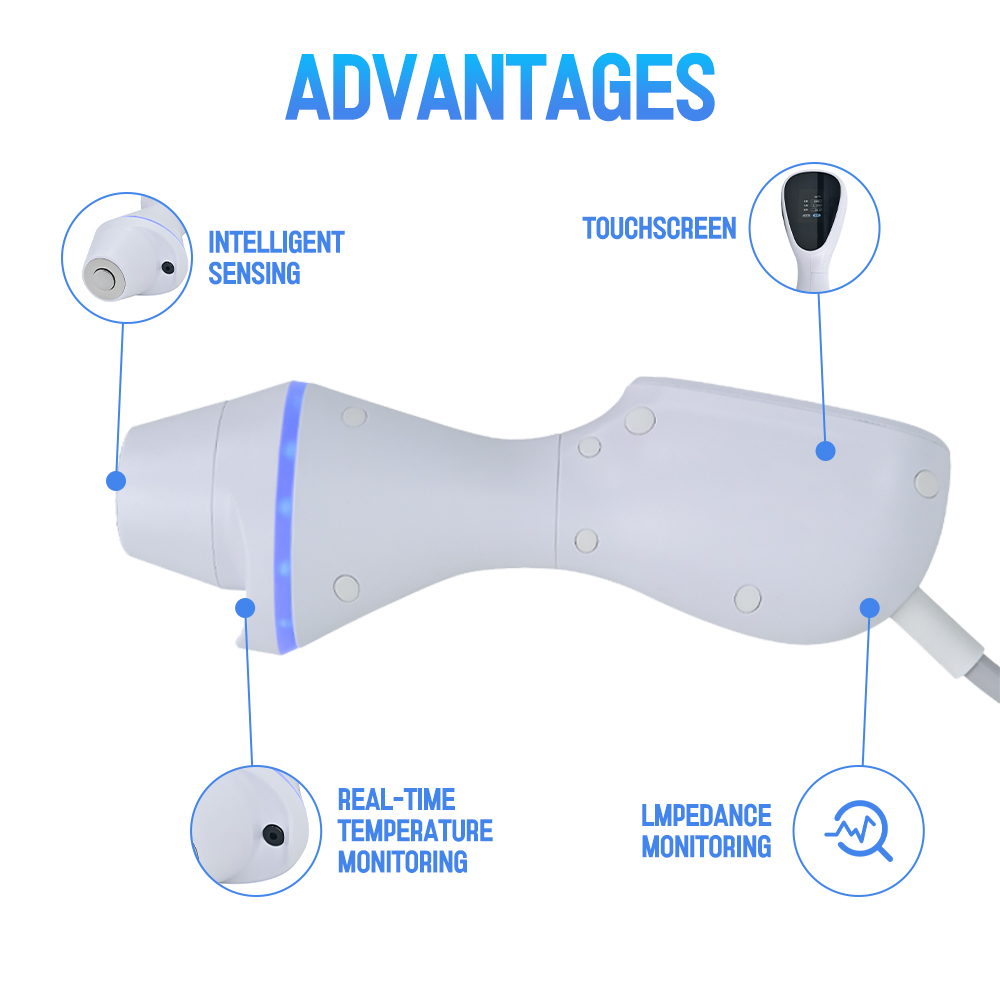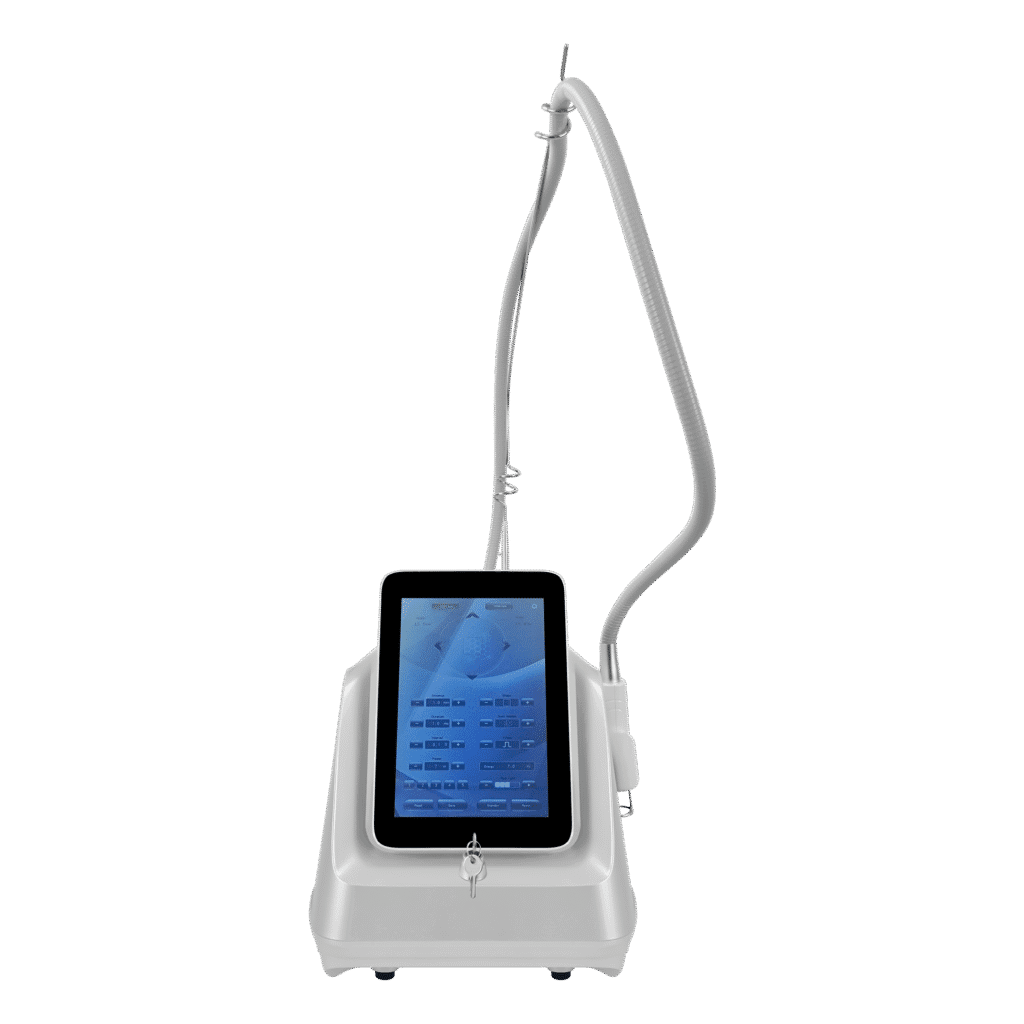
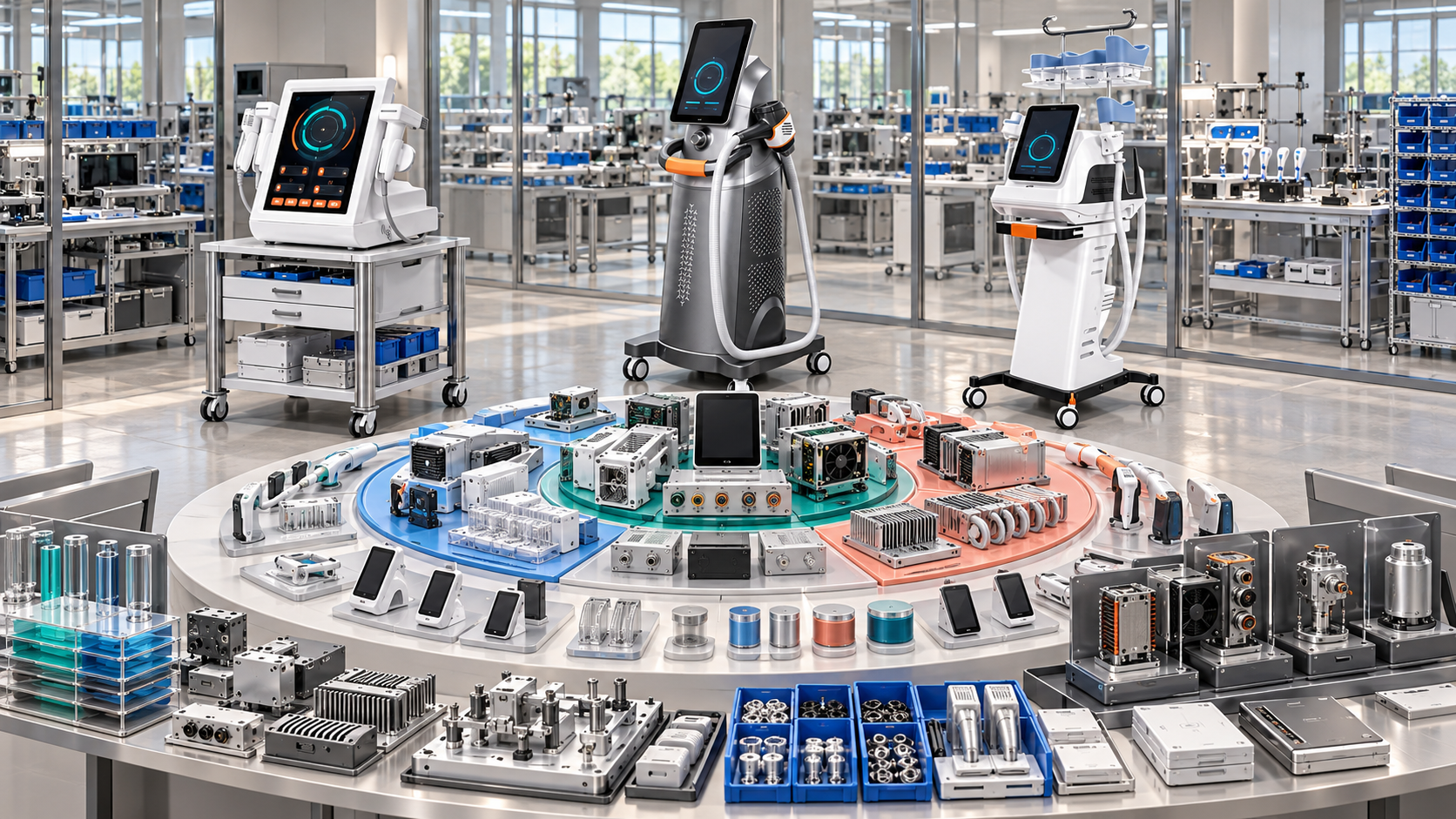
A beauty device factory can create every model as an independent engineering project, but that approach becomes difficult as the range expands. Separate housings, control boards, software, connectors, cooling systems, test methods, and service parts increase development work and make the portfolio harder to maintain. A platform strategy offers another path: reuse controlled technologies and interfaces across several products while preserving the differences that give each model a clear market role.
Shared technology does not mean that all devices should look or operate the same. It means the factory deliberately identifies which building blocks can remain common, which modules can vary, and which product requirements must stay model-specific. The value comes from disciplined reuse rather than copying parts from one machine into another without an architectural plan.
This guide explains how beauty device factories can design, govern, verify, manufacture, and evolve shared platforms. SHEFMON product pages are used as category examples, but the platform structures described here are planning frameworks rather than claims about SHEFMON’s confidential internal architecture.
Управляющее резюме
A practical beauty device platform strategy should:
- Begin with several product roles, not one reusable component. The factory should understand which buyers, applications, and future models the platform is intended to support.
- Define a stable core and controlled variable modules. Power, control, software, interfaces, cooling, fluid systems, handles, housings, and accessories should each have an explicit reuse boundary.
- Use interface contracts. Mechanical, electrical, software, fluid, thermal, communication, and service interfaces need documented requirements and compatibility rules.
- Preserve meaningful product differentiation. Models built from one platform should still have distinct buyer roles, configurations, workflows, and support expectations.
- Verify reuse instead of assuming it. Existing evidence may be applicable to unchanged modules, while new combinations and model-specific functions require impact assessment and testing.
- Control shared-component changes across every dependent product. One platform change can affect current production, future models, inventory, service parts, and installed devices.
- Plan production and service around platform relationships. Shared fixtures, diagnostics, spare parts, and training can create value only when product identity remains clear.
- Evolve the platform through a roadmap. Capacity, component life, software architecture, compatibility, and future category needs should be reviewed before the core becomes a constraint.
The objective is a product family that gains speed and consistency from shared technologies without spreading hidden dependencies or making all models interchangeable.
1. What Is a Beauty Device Platform?
A beauty device platform is a controlled collection of technical building blocks, interfaces, design rules, test methods, production resources, and service assets that can support more than one product.
A platform may include:
- mechanical frame or enclosure principles;
- power distribution and control electronics;
- display and computing hardware;
- embedded software framework;
- user-interface components;
- communication protocols;
- cooling and airflow architecture;
- vacuum or fluid-management modules;
- handle and applicator interfaces;
- approved components and suppliers;
- production fixtures and test programs;
- diagnostics and service procedures; and
- shared documentation structures.
The platform is not necessarily visible to the buyer. Its purpose is to give product teams a reliable foundation from which distinct models can be developed.
2. Platform, Product Family, Model, and Variant Are Different
These terms describe different layers.
| Слой | Значение | Main governance question |
|---|---|---|
| Platform | Shared technical and operational foundation | What can several products reuse safely and consistently? |
| Product family | Group of related products with a coherent market or technology relationship | How do products fit together for buyers and channels? |
| Модель | A saleable product with a defined role and approved baseline | Which buyer and application does this product serve? |
| Variant | A controlled version of a model for a market or technical need | What differs from the parent model, and where is it approved? |
| Конфигурация | Exact combination delivered in an order | Which approved hardware, software, handles, and accessories are included? |
One platform can support multiple families, or a complex family may use more than one platform. The factory should not force organizational labels to match technical architecture when they do not.
3. Why Factories Build Shared Platforms
Platform strategy can create value in several areas:
- reuse of proven engineering work;
- fewer unique components;
- shared supplier qualification;
- faster concept and prototype work;
- consistent user-interface patterns;
- common production tools and tests;
- simpler technician training;
- greater spare-parts leverage;
- easier creation of entry, growth, and advanced models;
- clearer upgrade paths; and
- coordinated technology development across categories.
These benefits are potential, not automatic. A platform that carries unsuitable components, outdated software, or weak interfaces into many models can spread problems faster than independent designs.
4. Start with a Product and Market Architecture
Before designing a shared technical core, map the products it is expected to support.
For each intended model, define:
- target buyer;
- professional setting;
- service application;
- device format;
- expected utilization;
- essential and optional functions;
- handles, applicators, tips, cartridges, or consumables;
- interface and language needs;
- power, cooling, vacuum, or fluid requirements;
- production and test needs;
- price and portfolio role; and
- support expectations.
The platform should be based on a credible set of product needs. Designing a highly flexible system without defined models can add cost and complexity that buyers never use.
5. Create a Platform Opportunity Brief
The brief should explain:
- product families and roadmap horizons supported;
- market problems the platform helps solve;
- existing systems that may be reused;
- intended common modules;
- expected variable modules;
- performance and capacity envelope;
- interface strategy;
- supplier and production implications;
- quality and verification approach;
- service and installed-base implications;
- migration from current products; and
- assumptions that require feasibility work.
The brief lets product, engineering, quality, production, and service teams decide whether a platform investment is justified before detailed architecture begins.
6. Define the Stable Core
The stable core contains elements intended to remain consistent across supported products. Possible examples include:
- control-board family;
- power architecture;
- display hardware;
- operating-system or embedded-software foundation;
- data and communication framework;
- connector standards;
- cooling-control logic;
- structural mounting grid;
- common sensors;
- error-reporting method;
- diagnostic interface;
- serial-number and version logic; and
- shared production-test framework.
The core should contain elements with high reuse value and relatively stable requirements. Placing fast-changing or highly category-specific functions inside the core can make future products harder to develop.
7. Define Controlled Variable Modules
Variable modules allow several models to use the platform without becoming identical.
| Module type | Possible controlled differences |
|---|---|
| Housing and mechanical | Desktop or vertical format, panel layout, handle storage, service access |
| Energy or treatment module | Laser handpiece, RF module, ultrasound module, vacuum or fluid assembly |
| Cooling and airflow | Pump, radiator, fan, duct, temperature-control capacity |
| Пользовательский интерфейс | Product-specific screens, modes, workflows, languages, parameter limits |
| Handles and applicators | Connector, recognition, spot size, cartridge, tip, treatment head |
| Accessories and consumables | Bottles, tubing, filters, gels, needles, cartridges, starter packages |
| Documentation and packaging | Model manual, labels, inserts, carton, regional material |
Every variable module needs a defined interface to the platform and an approved compatibility relationship.
8. Use Interface Contracts
An interface contract states what two modules must provide to work together. It can cover:
- mechanical dimensions and mounting;
- connector type and pin definition;
- voltage, current, power, and protection;
- communication protocol;
- software commands and data;
- thermal load and cooling capacity;
- airflow, vacuum, pressure, or fluid behavior;
- sensor and recognition logic;
- calibration information;
- error states;
- maintenance access; and
- version compatibility.
Interfaces should be controlled like product requirements. Informal knowledge that “this handle usually works with that console” is not a platform standard.
9. Set the Platform Performance Envelope
A platform needs boundaries. These may include:
- maximum electrical load;
- supported power modules;
- thermal and cooling capacity;
- display and computing resources;
- number and type of handle connections;
- communication bandwidth;
- vacuum or fluid capacity;
- housing dimensions;
- allowable software features;
- sensor inputs;
- operating environment; and
- production-test capability.
Future model concepts should be checked against this envelope. If a concept exceeds it, the team can revise the model, extend the platform through a controlled change, or begin a new platform.
10. Avoid Designing for Unlimited Flexibility
The promise of reuse can lead to oversized power supplies, unused connectors, complicated software, excess cooling, and expensive housings. Flexibility should be tied to roadmap evidence.
The factory should distinguish:
- capabilities required by approved models;
- capabilities likely to be used by credible roadmap concepts;
- low-cost provisions that preserve a valuable future option; and
- speculative features that add present cost without sufficient evidence.
A platform should make intended products easier to create. It does not need to support every possible technology or device category.
11. Decide Which Technologies Should Remain Separate
Some modules should not be shared merely because products target a similar buyer. Separation may be appropriate when:
- performance ranges are fundamentally different;
- technical risks require different controls;
- power or cooling needs exceed the common architecture;
- software and interface behavior cannot remain coherent;
- suppliers and test methods have little overlap;
- professional settings differ significantly;
- service teams need different skills; or
- shared design would increase cost for most products.
The platform strategy should document both reuse decisions and deliberate separation decisions.
12. Use a Platform Reuse Matrix
A reuse matrix shows how proposed models relate to modules.
| Концепция продукта | Shared control core | Shared UI framework | Category module | Model-specific elements |
|---|---|---|---|---|
| Compact facial system | Yes, if requirements fit | Facial workflow components | Vacuum or fluid module | Housing, handle set, bottle layout |
| Advanced facial platform | Same or expanded core | Extended facial workflow | Additional treatment modules | Larger enclosure, more accessories |
| Hair-removal model | Power and control elements where compatible | Hair-removal screens | Handpiece and cooling system | Wavelength, spot size, performance package |
| Body-care system | Control and display where compatible | Body-service workflow | Vacuum, RF, cavitation, or massage modules | Handle mix, storage, positioning |
| Advanced clinic system | Only verified common elements | Category-specific interface | HIFU or RF microneedling modules | Cartridges, tips, records, support materials |
The entries are architecture examples. Actual reuse must be proven through requirements and engineering review.
13. Allocate Requirements between Platform and Model
Requirements should be assigned to the level that owns them.
Platform requirements may cover:
- shared power and communication rules;
- software services;
- version and diagnostic behavior;
- common mechanical interfaces;
- standard connectors;
- base cooling-control logic;
- common production tests; and
- shared service information.
Model requirements may cover:
- intended user and application;
- function and performance;
- specific handles and consumables;
- housing and storage;
- workflow and parameter ranges;
- category-specific risk controls;
- labels and instructions; and
- market positioning.
Clear allocation prevents product teams from changing the platform casually and prevents platform teams from defining buyer-specific behavior without product evidence.
14. Build a Component-Commonality Strategy
Component sharing can reduce procurement and service complexity, but only if specifications match every use.
Evaluate common parts through:
- electrical and mechanical requirements;
- performance margin;
- expected utilization;
- reliability evidence;
- supplier capacity and quality;
- lifecycle and obsolescence risk;
- cost across the expected volume;
- inspection and traceability;
- service replacement; and
- effect of failure across products.
A common component creates concentration risk. The factory should understand which product lines would be affected by a supplier or quality problem.
15. Design a Shared Software Architecture
Software reuse may include device services, communication, diagnostics, language handling, user accounts, event records, updates, and common interface components.
The architecture should separate:
- stable platform services;
- hardware drivers;
- model configuration;
- product-specific operating modes;
- language resources;
- parameter limits;
- handle or cartridge recognition;
- diagnostics;
- production settings; and
- service tools.
Every build should identify its compatible platform and product configuration. A shared codebase without controlled versions can create cross-model failures and difficult field support.
16. Create a Consistent but Product-Specific User Experience
Shared interface patterns can reduce training while allowing each model to serve its workflow. Common elements may include:
- navigation structure;
- units and terminology;
- status and connection indicators;
- warning hierarchy;
- error codes;
- language selection;
- maintenance access; and
- service diagnostics.
Product-specific screens should reflect the actual function, handles, parameter limits, and operator sequence. Reusing a screen from another model without revisiting the workflow can make the product confusing or permit irrelevant choices.
17. Govern Handles, Applicators, and Consumable Interfaces
Shared handle architecture can provide value when compatibility is explicit. Control:
- physical connector;
- electrical and communication interface;
- recognition method;
- power and cooling needs;
- software driver;
- operating limits;
- calibration or identification data;
- compatible models and versions;
- test method;
- cleaning, storage, or disposal information; and
- service replacement.
A cartridge, tip, or handpiece can be shared only when the complete interface and intended use fit. Physical connection alone is insufficient.
18. Use A0426 to Explore a Hair-Removal Platform
The A0426 diode laser hair-removal system page lists 755, 810, 940, and 1064 nm options, multiple spot sizes, cooling, and interface languages.
A factory planning a hair-removal platform could evaluate whether models can share:
- console and control architecture;
- software framework;
- language system;
- diagnostic method;
- handpiece interface rules;
- cooling-control architecture;
- production-test framework; and
- service tools.
Individual models or configurations may still need distinct wavelength arrangements, handpieces, spot sizes, cooling capacity, performance boundaries, housings, and documentation. The published A0426 details illustrate the variables involved; they do not establish SHEFMON’s internal platform design.
19. Use A0648 to Explore a Facial Fluid-and-Vacuum Platform
The Система гидромикродермабразии A0648 9-в-1 is presented around cleansing, exfoliation, extraction, hydration, and other facial functions.
A facial platform study could consider shared:
- vacuum-control principles;
- bottles, pumps, valves, tubing, and sensing architecture;
- display and interface framework;
- handle recognition;
- enclosure mounting rules;
- cleaning and maintenance structure;
- leakage and functional tests; and
- consumable identification.
An entry model might use fewer functions and a compact housing, while a professional model could add approved modules and storage. The platform must ensure that unused functions do not add unnecessary cost to the smaller device.
20. Use B0155 to Explore a Multifunction Body Platform
The B0155 Настольный эндоскоп Velapro lists vacuum roller, radio frequency, rotating massage, and 80K cavitation functions.
For a body-care platform, shared building blocks might include:
- console control and display;
- software mode framework;
- common handle communication;
- power distribution;
- accessory-storage principles;
- diagnostic functions;
- service documentation; and
- production test flow.
Model-specific modules could define which body functions, handle packages, mechanical layouts, and performance envelopes apply. Clear product roles are necessary so multiple platform models do not become confusing substitutes.
21. Use A0204 and A0152 to Explore Advanced Modular Systems
The Система фокусированной HIFU A0204 9D/7D и Система микроигольчатой терапии A0152 RF illustrate advanced categories with cartridge, tip, handle, consumable, workflow, and professional-support considerations.
Even when two advanced products can reuse displays, software services, housings, or manufacturing resources, category-specific technology and user requirements may need firm separation. A platform review should assess:
- common electronic and software services;
- different energy or treatment modules;
- handle and consumable identification;
- parameter and workflow boundaries;
- records and aftercare materials;
- training and competency expectations;
- regional requirements; and
- service skills and spares.
The platform should not erase meaningful differences between HIFU and RF microneedling products.
22. Build Platform-Level Verification Assets
Reusable verification assets may include:
- interface tests;
- power and communication checks;
- software unit and integration tests;
- connector and recognition tests;
- thermal or cooling test methods;
- common mechanical inspections;
- diagnostic verification;
- production test programs; and
- traceability templates.
Evidence can be reused only when the platform module, conditions, and requirements remain applicable. The team should document why previous evidence covers a new product rather than simply citing an earlier model.
23. Separate Platform Verification from Product Verification
| Verification level | Главный вопрос | Example evidence |
|---|---|---|
| Module | Does the building block meet its own requirements? | Board, pump, software service, or connector tests |
| Интерфейс | Do two modules interact within defined limits? | Electrical, communication, thermal, fluid, or mechanical tests |
| Platform integration | Does the shared core operate as a controlled system? | Integrated load, diagnostics, software, and fault tests |
| Product integration | Does the selected combination meet the model requirements? | Function, workflow, housing, handle, and performance tests |
| Production process | Can the factory build and test the released product consistently? | Pilot build, fixture, inspection, and final-test evidence |
Passing platform tests does not automatically release a product. The final model and configuration still require appropriate product and production evidence.
24. Plan Regression Testing
A platform change can affect products that did not request it. Regression planning should identify:
- changed module;
- dependent interfaces;
- affected models and variants;
- unchanged functions that could be influenced;
- software and hardware combinations;
- installed products;
- required repeated tests;
- production test updates; and
- release sequence.
The factory should maintain a dependency map so it can find affected products before approving the change.
25. Use Platform-Aware Bills of Materials
The bill-of-material structure should separate:
- shared platform assembly;
- common purchased components;
- category module;
- model-specific parts;
- regional variant parts;
- standard and optional handles;
- расходные материалы;
- packaging and documentation; and
- service parts.
This structure supports purchasing and cost analysis while preserving the identity of the delivered model. A common assembly should have its own revision and change history.
26. Prepare Production for Platform Reuse
Production may gain shared:
- assembly stations;
- tools and fixtures;
- software-loading methods;
- cable and connector checks;
- common in-process inspections;
- diagnostic programs;
- final-test equipment;
- operator training; and
- rework procedures.
Product-specific instructions should still state which modules, handles, software, labels, and tests apply. Platform reuse should reduce repeated work without asking operators to infer the final configuration.
27. Align Supplier Strategy with the Platform
Shared technologies can increase purchasing leverage and supplier familiarity. They also concentrate dependence.
The factory should review:
- critical shared components;
- supplier capacity;
- approved sources;
- quality history;
- Время выполнения;
- component lifecycle;
- substitution strategy;
- incoming inspection;
- safety stock where appropriate;
- effect of a shortage across products; and
- transition plan for redesign or obsolescence.
A platform roadmap should include supplier and component longevity, not only future product features.
28. Connect Quality Data across Platform Products
Quality issues should be analyzed by module and interface as well as by finished model. Relevant views include:
- component and supplier;
- platform revision;
- software build;
- handle or applicator;
- interface;
- assembly station;
- test failure;
- product model;
- regional variant; and
- installed-base service history.
ШЕФМОН quality-control page describes raw-material testing, parts assembly, circuit-board aging and power testing, functional aging, and prototype inspections. In a platform strategy, shared control methods can help detect common issues, while product-specific tests confirm each released combination.
29. Design Shared Service and Diagnostic Tools
Platform reuse can simplify after-sales support through:
- common error-code structure;
- shared diagnostic interface;
- version-reporting method;
- common service tools;
- modular replacement procedures;
- shared technician training;
- common spare parts; and
- consistent escalation records.
Service teams still need model and configuration visibility. A shared error code may point to a common module, but repair instructions and compatible parts can differ by model revision.
30. Protect Installed-Base Compatibility
The platform record should connect installed products to:
- platform and module revision;
- hardware and software version;
- handles and consumables;
- compatible replacement parts;
- approved updates;
- service history;
- regional variant; and
- статус жизненного цикла.
When a platform evolves, the factory should state whether new modules are backward compatible, forward compatible, upgradeable, or restricted to new products.
31. Govern Platform Changes
A proposed platform change should include:
- reason and affected requirement;
- shared modules and interfaces involved;
- all dependent products and variants;
- current inventory and work in progress;
- supplier and tooling impact;
- verification and regression plan;
- production-document updates;
- software, manuals, and service changes;
- installed-base compatibility;
- implementation sequence; and
- approval authority.
Changing a shared board, connector, software service, or diagnostic method is a portfolio decision even when the initial request comes from one product team.
32. Use Versioning that Shows Compatibility
Platform versioning should help teams answer:
- Which products use this platform revision?
- Which module revisions are compatible?
- Which software builds can run on the hardware?
- Which handles and accessories are approved?
- Which production tests apply?
- Which service parts replace earlier versions?
- Can old and new versions coexist?
- When did the change become effective?
Version labels should be present in the systems used by engineering, production, quality, product data, and service.
33. Balance Product Differentiation with Commonality
Commonality is valuable only when the resulting models remain meaningful. Differentiate products through:
- target buyer;
- intended service role;
- device format;
- function and handle package;
- performance envelope;
- workflow and interface;
- expected utilization;
- training and support level;
- consumable system; and
- price and portfolio position.
Cosmetic changes alone do not create a strong product family. Conversely, excessive unique engineering can remove the benefits of the shared platform.
34. Build a Platform Roadmap
The platform roadmap should show:
- current supported models;
- approved models in development;
- planned modules and interfaces;
- capacity or performance upgrades;
- software architecture evolution;
- component and supplier transitions;
- production and test investments;
- installed-base compatibility decisions;
- documentation and service updates;
- technical debt; and
- review or replacement horizon.
Product roadmaps and platform roadmaps should inform each other. A model cannot depend on a platform capability that has no approved development path.
35. Use Stage Gates for Platform Investment
| Ворота | Decision question | Expected output |
|---|---|---|
| Opportunity | Do several credible products need a common foundation? | Product and market architecture |
| Architecture | Are core, variable modules, interfaces, and boundaries clear? | Approved platform concept |
| Feasibility | Can engineering, supply, production, quality, and service support it? | Feasibility record and risk plan |
| Core verification | Does the platform meet shared requirements? | Module, interface, and integration evidence |
| Product adoption | Does a model fit the platform without uncontrolled compromise? | Requirement allocation and product plan |
| Production readiness | Are shared and model-specific processes controlled? | Released factory baseline |
| Evolution review | Does the platform still support the roadmap and installed base? | Upgrade, extension, restriction, or replacement decision |
Investment should increase as evidence improves. A broad platform promise should not receive full funding before credible product demand and technical feasibility are established.
36. Measure Platform Health
Useful measures may include:
- number of products using approved shared modules;
- percentage of component commonality where meaningful;
- engineering reuse with documented evidence;
- time required to integrate a new model;
- interface defects;
- platform-related production failures;
- regression issues after changes;
- supplier concentration;
- common spare-part utilization;
- software version fragmentation;
- training and diagnostic reuse;
- model differentiation clarity; and
- number of exceptions outside the architecture.
Metrics should reveal whether reuse reduces total complexity. A high commonality percentage is not a success if it constrains products or increases shared risk.
37. Establish Platform Governance
Platform governance should assign:
- platform owner;
- product owners for dependent models;
- architecture authority;
- interface owners;
- component and supplier owners;
- software release authority;
- verification and quality responsibility;
- manufacturing-transfer ownership;
- service and compatibility ownership; and
- portfolio authority for major investment or replacement.
Product teams should be able to request platform changes, but they should not alter shared interfaces without cross-product review.
38. Common Platform Strategy Errors
- Calling a reused housing a complete platform.
- Designing unlimited flexibility without credible product needs.
- Sharing components that do not meet every model’s requirements.
- Reusing software without controlled hardware compatibility.
- Treating a physical connector as proof of handle compatibility.
- Allowing product teams to modify shared interfaces independently.
- Applying old verification evidence without checking changed conditions.
- Ignoring supplier concentration created by common components.
- Making several models that buyers cannot distinguish.
- Carrying platform cost into entry products that do not need the capability.
- Changing the shared core without regression review.
- Building new products on an aging platform without a transition plan.
39. Beauty Device Platform Strategy Checklist
- The platform supports several defined product roles and credible roadmap needs.
- Platform, family, model, variant, and configuration are distinguished.
- Stable core, variable modules, and deliberately separate technologies are documented.
- Mechanical, electrical, software, thermal, fluid, communication, and service interfaces are controlled.
- The performance envelope and expansion limits are defined.
- Requirements are allocated to platform and product owners.
- Shared components are assessed for suitability, supplier risk, and lifecycle.
- Software builds identify compatible hardware, modules, and models.
- Handles, applicators, tips, and cartridges have explicit compatibility records.
- Verification covers modules, interfaces, platform integration, products, and production.
- Change control identifies every dependent model, variant, document, and installed product.
- Product differentiation remains clear despite technical commonality.
- The platform roadmap includes component life, software, production, service, and migration.
- Metrics evaluate both reuse benefits and shared risks.
Часто задаваемые вопросы
1. What is the main difference between a beauty device platform and a model?
A platform is a reusable technical and operational foundation. A model is a complete saleable product built for a defined buyer and application, using platform elements plus model-specific modules, requirements, documentation, and support.
2. How many products are needed to justify a platform?
There is no universal number. The factory should compare credible product demand, engineering reuse, component and supplier leverage, production benefits, support reuse, investment, and shared risk. Two strategically important models may justify a platform, while many weak concepts may not.
3. Which beauty device components are easiest to share?
Displays, control electronics, software services, connectors, frames, cooling controls, diagnostics, fixtures, and some service parts may be shareable when their requirements align. Suitability must be verified for every application.
4. Should all products on one platform use the same housing?
No. A platform can support different mechanical formats. Compact, vertical, high-throughput, or advanced models may need separate housings while sharing defined internal modules and interfaces.
5. How can factories prevent shared technology from making models too similar?
Assign each model a distinct buyer, service role, function package, performance envelope, workflow, utilization level, training need, and price position. Shared internal technology should support differentiation rather than replace it.
6. Can verification results be reused across platform products?
Yes, when the applicable module, requirement, interface, conditions, and version remain unchanged. The factory should document the rationale and test new combinations or model-specific functions separately.
7. What is the biggest risk of common components?
A supplier, quality, obsolescence, or design issue can affect several products at once. The platform plan should include dependency mapping, supplier controls, alternative strategy, inventory visibility, and cross-product change review.
8. How should software be managed across several platform models?
Separate stable platform services from model-specific functions, maintain version and hardware compatibility records, verify each build, control production loading, and plan regression testing whenever shared code changes.
9. When should a factory replace rather than extend a platform?
Replacement may be appropriate when capacity, architecture, components, software, supply, testability, or service limitations repeatedly constrain the product roadmap and further extensions would add greater risk or cost than a planned transition.
10. How can buyers discuss platform-based products with SHEFMON?
Describe the target buyer, application, desired device family, common functions, model differences, handle and consumable needs, languages, regional requirements, and expected future extensions. Then свяжитесь с Шефмоном to discuss relevant standard products and possible development paths.
Заключение
A beauty device platform strategy helps a factory turn proven technologies into several distinct products without repeating every engineering, production, and service decision. The strategy succeeds when reuse is planned around real product needs, interfaces are controlled, model differences remain meaningful, and shared changes are assessed across the entire dependency network.
The factory should treat the platform as a lifecycle asset. It needs owners, requirements, versions, verification, supplier planning, production methods, service tools, compatibility records, and an evolution roadmap. This discipline allows shared technology to increase speed and consistency while keeping common risks visible.
Изучите SHEFMON beauty device portfolio, review SHEFMON OEM/ODM and development capabilities, или свяжитесь с Шефмоном to discuss a product family, shared technology concept, or controlled customization project.