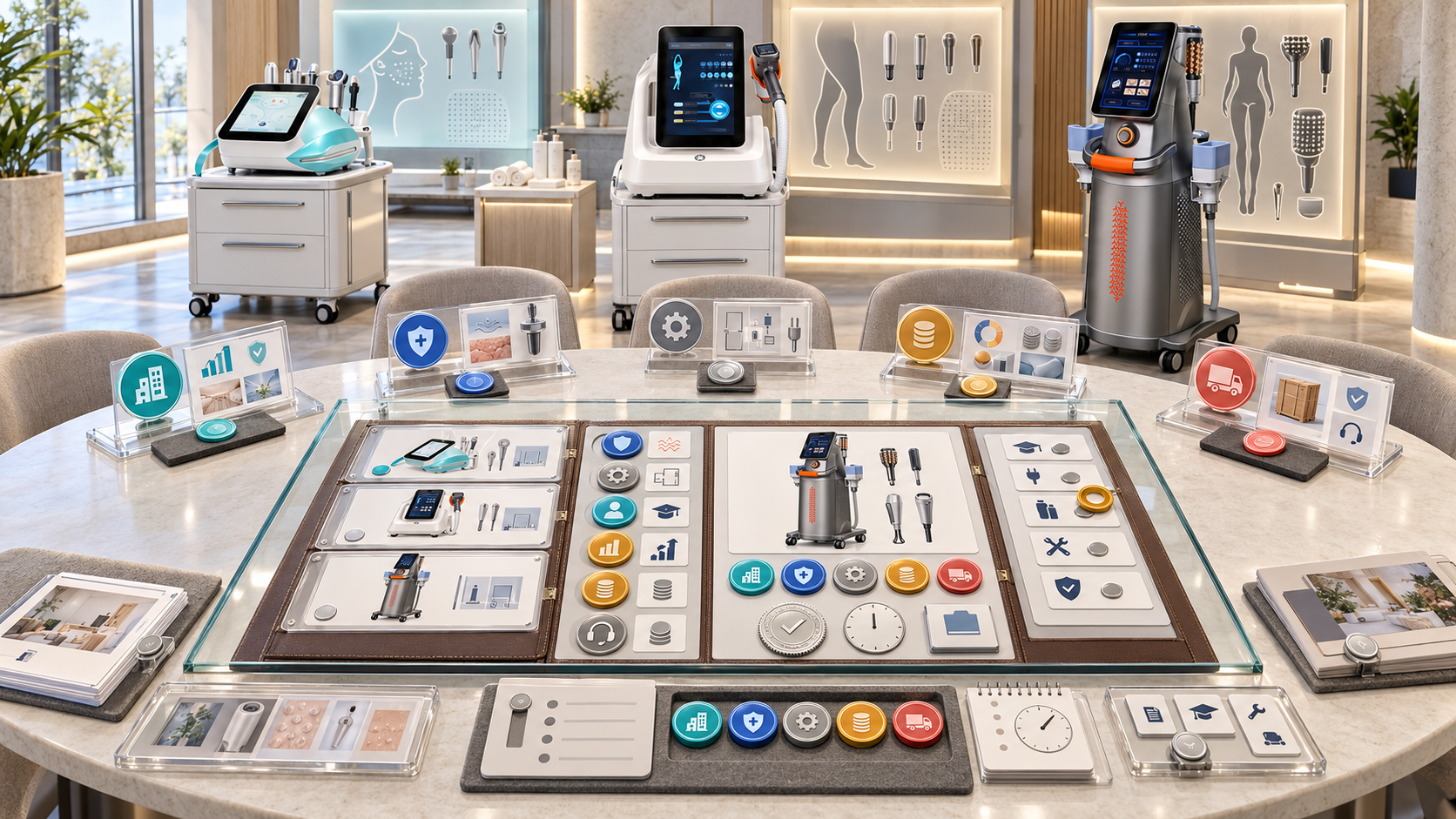
Professional beauty device purchases rarely depend on one person. A salon owner may define the budget while a service lead checks menu fit and an operations manager reviews the room. A clinic may add professional, technical, records, and purchasing reviews. A distributor may involve product, sales, technical support, logistics, and finance teams across several markets.
When these decisions remain in meetings, chats, and separate spreadsheets, the final choice can lose its reasoning. Teams may approve different configurations, repeat old discussions, or discover late that an operator, room, consumable, or market requirement was never confirmed. A beauty device decision record creates one controlled account of what was decided, why it was decided, which evidence supported it, who approved it, and which changes require a new review.
Управляющее резюме
- Create a decision record for every material category, model, configuration, exception, and approval decision.
- Record the decision itself, its rationale, evidence, conditions, owners, and review triggers; meeting minutes alone are insufficient.
- Give every record a unique ID, scope, status, owner, version, and decision date.
- Separate the business need, evaluated options, selection criteria, configuration baseline, and commercial approval.
- Assign decision rights by role so participation does not become ambiguous approval.
- Preserve rejected options and material objections to prevent repeated or incomplete discussions.
- Link requirements, opportunity scores, demonstrations, quotations, site checks, and approvals instead of copying them into uncontrolled documents.
- Add category-specific evidence for facial, diode-laser, HIFU, RF-microneedling, and body-care equipment.
- Reopen or supersede the record when a model, handle, cartridge, applicator, market, operator, site, quantity, or commercial assumption changes materially.
- Keep a searchable decision register so multi-location and distributor teams can reuse valid reasoning without treating an old decision as permanently current.
1. What Is a Beauty Device Decision Record?
A beauty device decision record is a controlled document that explains a purchasing decision in a form another authorized team member can review later. It connects the business problem to the chosen device category, model, configuration, operating setting, and approval path.
The record should answer:
- What decision was required?
- What was inside and outside its scope?
- Which options were evaluated?
- Which criteria and evidence were used?
- What was selected, rejected, deferred, or made conditional?
- Who contributed, reviewed, recommended, and approved?
- Which assumptions or unresolved items remain?
- What must happen next?
- Which future change would reopen the decision?
The record is not a treatment protocol, a technical manual, or a copy of the quotation. It explains the purchasing choice and points to the controlled source for each supporting detail.
2. Why Meeting Minutes Are Not Enough
Meeting minutes usually describe a conversation in time order. A decision record organizes information around the decision.
| Meeting minutes | Decision record |
|---|---|
| Lists attendees and discussion points | Names decision roles and authority |
| May contain several unrelated subjects | Covers one defined decision or tightly related decision set |
| Captures what people said | Captures the approved conclusion and supporting evidence |
| Often leaves alternatives implicit | Records options considered and reasons for rejection |
| May not define a future review | States conditions, expiry, and reopening triggers |
| Can remain a personal file | Belongs in a controlled, searchable register |
Minutes can be linked as evidence. They should not be the only place where the final configuration or approval is documented.
3. Decide When a Record Is Required
Create a decision record when the choice has a material effect on service scope, operating readiness, supply, cost, support, or market use.
Typical triggers include:
- adding a new beauty device category;
- choosing between device categories for one service goal;
- selecting a model or physical format;
- approving a handle, cartridge, tip, needle head, or applicator package;
- standardizing equipment across several locations;
- accepting an exception to a standard package;
- choosing stock versus supply-to-order for a distributor portfolio;
- replacing, upgrading, or retiring an installed device;
- approving a quotation with nonstandard options;
- changing the intended operator, room, market, quantity, or launch plan.
Routine reorders under an unchanged, approved configuration may not need a new record. They should reference the existing record and pass the normal purchasing controls.
4. Set the Right Decision Scope
Records fail when the scope is too broad or too narrow. “Buy beauty equipment” is too broad. A separate record for every ordinary email is too narrow.
Useful decision levels include:
| Decision level | Пример | Record output |
|---|---|---|
| Потребность бизнеса | Add a repeatable core facial service | Approved need statement and service objective |
| Категория | Multifunction hydro facial versus advanced rejuvenation platform | Selected category and rejected alternatives |
| Модель | Choose between candidate models within the category | Selected model and comparison rationale |
| Конфигурация | Confirm handles, tips, cartridges, consumables, voltage, and format | Approved configuration baseline |
| Коммерческий | Confirm quantity, destination, terms, and purchasing route | Authorized purchase basis |
| Deployment | Decide pilot site, rollout sequence, operators, and launch conditions | Implementation decision and site conditions |
One record can contain closely linked levels if the evidence and approvers are the same. Split the record when different teams, dates, sites, or approval rules apply.
5. Give Every Record a Controlled Identity
A decision record needs a stable identity before it circulates.
Включать:
- decision record ID;
- concise decision title;
- buyer organization and location;
- business unit, department, or distributor region;
- device category;
- model and configuration when known;
- record owner;
- current version;
- статус;
- creation, decision, and review dates;
- links to related records;
- superseded and superseding record IDs.
Use a status model such as:
| Статус | Значение |
|---|---|
| Черновик | Scope and evidence are being assembled |
| Under review | Named stakeholders are evaluating the record |
| Conditional | Direction is accepted, but listed conditions remain open |
| Одобренный | Required approvers accepted the defined scope and baseline |
| Rejected | The proposal was reviewed and declined with reasons |
| Deferred | The decision is valid to revisit after a named trigger or date |
| Заменено | A later record replaced this decision |
| Закрыто | Required actions are complete and no active review remains |
Do not overwrite an approved record as though the earlier decision never existed. Create a controlled revision or a superseding record according to the change rule.
6. Assign Stakeholder Roles and Decision Rights
Attendance does not equal authority. Record the role each stakeholder performs.
| Decision role | Responsibility |
|---|---|
| Requester | Describes the business or service need |
| Record owner | Maintains scope, evidence, status, and follow-up |
| User representative | Evaluates workflow, service-menu, and operator fit |
| Технический рецензент | Reviews configuration, utilities, compatibility, and support implications |
| Professional or clinical reviewer | Reviews suitability for the intended professional setting and local operating requirements |
| Operations reviewer | Reviews room, staffing, cleaning, storage, booking, and rollout |
| Commercial reviewer | Reviews quantity, destination, quotation basis, and purchasing conditions |
| Recommender | States the preferred option and rationale |
| Approver | Has authority to accept the defined decision |
| Informed party | Receives the outcome and implements related actions |
One person can hold more than one role in a small business, but the record should still show which decision responsibility that person performed. In larger teams, separate recommendation from final approval when practical.
7. Build the Core Record Structure
A useful decision record can follow this structure:
- Header: ID, title, owner, scope, version, dates, and status.
- Decision statement: the exact question requiring approval.
- Business context: the service, portfolio, replacement, or expansion need.
- Constraints: site, operator, market, timing, budget context, supply, and policy limits.
- Options considered: including defer, do nothing, or select another category when relevant.
- Evaluation criteria: factors, weights if used, and evidence standard.
- Evidence: controlled links to requirements, product information, demonstrations, site checks, and quotations.
- Рекомендация: preferred option and rationale.
- Decision: approved, rejected, conditional, or deferred result.
- Configuration baseline: exact model, options, quantity, destination, and version.
- Conditions and exceptions: remaining work, owners, dates, and stop conditions.
- Stakeholder positions: approvals, objections, abstentions, and unavailable reviewers.
- Implementation actions: purchasing, site, training, data, supply, and launch steps.
- Review triggers: changes that reopen or supersede the record.
- History: revisions and links to previous decisions.
Keep structured fields for information that must be searched, filtered, compared, or approved. Use narrative text for rationale and tradeoffs.
8. Write a Precise Decision Statement
The statement should name the choice, buyer setting, and intended outcome.
Weak statement:
Choose a good facial machine.
Better statement:
Decide whether the Riverside salon should add a multifunction hydro facial platform as its core cleansing and hydration category for the planned June menu, and approve the required configuration for one treatment room.
The better statement establishes what is being decided without pretending the result is already known.
9. Separate Facts, Assumptions, and Constraints
Teams often disagree because they treat different types of information as equivalent.
| Information type | Определение | Record treatment |
|---|---|---|
| Verified fact | Supported by a current controlled source | Link the source and date |
| Buyer requirement | Stated and accepted need | Identify requester and approval status |
| Assumption | Believed for planning but not confirmed | Name owner, validation method, and due date |
| Constraint | Limits the available choice | State whether it is fixed or negotiable |
| Preference | Desired but not mandatory | Prevent it from silently becoming a requirement |
| Open question | Missing information that affects the decision | Assign an owner and resolution date |
For example, “the room has enough electrical capacity” should not be recorded as a fact until the appropriate site information is verified. “Desktop format preferred” should not eliminate a vertical model unless the preference is approved as a constraint.
10. Record the Options That Were Actually Considered
Every material decision should show realistic alternatives. Depending on the question, options may include:
- retain the current service menu;
- defer the category until a room or operator is ready;
- choose a focused device;
- choose a multifunction platform;
- add a core facial category before an advanced category;
- select a desktop or vertical format;
- standardize one configuration or allow site-specific packages;
- stock a model or supply it to order;
- pilot one location before a wider rollout.
Record why each rejected option failed the agreed criteria. “Not selected” provides too little information for a future reviewer.
11. Define Evaluation Criteria Before the Final Choice
Criteria should come from the business need and operating context.
Common criteria include:
- alignment with the intended service category;
- client and buyer profile;
- menu or distributor-portfolio role;
- overlap with installed equipment or existing catalog items;
- Требования к оператору и обучению;
- room, utilities, storage, and cleaning workflow;
- configuration clarity;
- consumable and replacement-component implications;
- appointment or demonstration workflow;
- document and language needs;
- multi-site standardization;
- implementation timing;
- commercial fit within the approved purchasing context.
If a weighted score is used, link the scorecard and keep the reasoning visible. A number can summarize evidence; it should not replace the decision narrative.
12. Build an Evidence Register
The record should point to controlled evidence rather than paste uncontrolled copies.
| Evidence type | Пример | Владелец | Freshness rule |
|---|---|---|---|
| Buyer requirement | Approved service and configuration matrix | Sales or project lead | Recheck after scope change |
| Product source | Current SHEFMON category or model page | Product lead | Check before final recommendation |
| Site evidence | Room, electrical, storage, and workflow review | Операции | Recheck after site change |
| Демонстрация | Questions, attendees, observations, and outcome | Product specialist | Specific to assessed model/configuration |
| Operating review | Operator, cleaning, records, supplies, and training plan | Service or professional lead | Recheck after staffing change |
| Commercial source | Controlled quotation and revision | Коммерческая команда | Exact approved version only |
| Approval evidence | Named role, decision, date, and conditions | Record owner | Immutable after approval |
Record the source version and access location. A link named “latest quote” is unreliable if the underlying file can change without a revision number.
13. Freeze the Approved Configuration Baseline
The decision must identify the object being purchased. At minimum, capture:
- exact model;
- physical format;
- selected handles or handpieces;
- tips, cartridges, needle heads, or applicators;
- included and optional items;
- расходные материалы для открытия;
- количество;
- voltage or electrical profile;
- destination market and delivery location;
- language or document profile when relevant;
- quotation ID and revision;
- approved substitutions, if any.
Use explicit values. “Standard accessories” is acceptable only when a controlled standard list is linked and versioned.
14. Make Conditions and Exceptions Actionable
A conditional approval needs more than a comment.
For every condition, record:
- the unresolved requirement;
- the person responsible;
- the evidence needed for closure;
- the due date;
- whether purchasing may proceed before closure;
- the consequence if the condition is not met.
For every exception, record:
- the standard rule;
- the approved deviation;
- the reason;
- the scope and expiry;
- the approving role;
- any added control or follow-up.
An exception approved for one pilot site should not silently become the standard package for all locations.
15. Preserve Objections and Minority Positions
Multi-stakeholder agreement does not require deleting disagreement. Record material objections, the evidence behind them, and how the final approver resolved them.
Примеры включают:
- an operator supports the category but operations cannot confirm room readiness;
- sales expects demand but the distributor product team sees catalog overlap;
- finance accepts the purchase range but the technical reviewer cannot verify the selected configuration;
- one site is ready while another cannot implement the standard package.
Use concise, neutral language. The purpose is to preserve decision quality, not to assign blame.
16. Connect Qualification, Scoring, and Decision Records
These records answer different questions:
| Записывать | Question answered |
|---|---|
| Buyer requirements | What does the buyer need and what limits the choice? |
| Opportunity qualification | Is there a valid project, and what sales action is appropriate? |
| Opportunity score | How strong are Business Fit and Readiness compared with other opportunities? |
| Decision record | What did the authorized team decide, why, and under which conditions? |
| Quotation approval | Is the exact buyer-facing commercial offer authorized for release? |
| Order or installed-base record | What was accepted, supplied, installed, and supported? |
Link the records by stable IDs. Avoid copying a score, requirement, or configuration into several files without its source date and version.
17. Use a Decision Sequence for Complex Purchases
A multi-stakeholder project may need a chain of linked decisions:
- Approve the service or portfolio need.
- Approve the device category.
- Approve the model shortlist.
- Approve the preferred model.
- Approve the configuration baseline.
- Approve site and operating readiness.
- Approve the commercial basis.
- Approve rollout or order release.
Do not force every step into one meeting. A staged sequence allows the correct stakeholders to decide at the right time while preserving the relationship between records.
18. Design Decision Records for Salon Purchasing Teams
A salon team may include the owner, manager, lead therapist, operations coordinator, and finance contact. Its record should make the service-menu logic clear.
Захватывать:
- current services and installed devices;
- target client concerns;
- planned appointment tier and duration;
- expected role in memberships or maintenance services;
- operator availability and training sequence;
- treatment-room, cleaning, and storage readiness;
- function overlap with current equipment;
- opening supplies and reorder owner;
- launch conditions and owner approval.
For a small salon where one person holds several roles, list those roles separately in the approval block. This makes future delegation and multi-location expansion easier.
19. Design Decision Records for Clinics and Med Spas
A clinic or med spa may involve management, professional reviewers, operators, operations, records, technical staff, finance, and purchasing.
Добавлять:
- intended professional setting and operator;
- consultation and client-selection pathway;
- records, consent, aftercare, and follow-up implications;
- category-specific operating boundaries;
- consumable and component traceability;
- training and authorization sequence;
- room and utility evidence;
- applicable local review;
- escalation and support route;
- approval by the required professional and business roles.
The record should distinguish commercial approval from professional and operating suitability. One approval should not imply the others.
20. Design Decision Records for Distributor Teams
A distributor decision often covers both the product line and the system required to sell and support it.
Включать:
- target market and buyer types;
- catalog gap and competing internal categories;
- stock or supply-to-order decision;
- model and configuration range;
- regional electrical, language, and documentation profile;
- demonstration portfolio;
- product-data owner;
- sales, operator, and technical training needs;
- consumable and replacement-component plan;
- quotation-control process;
- launch sequence and first-order scope;
- regional and central approvers.
Используйте SHEFMON beauty device collection to identify relevant categories, then document why the chosen facial, hair-removal, advanced skin, or body-care range fits the distributor’s defined market. A request for a large catalog is not itself a portfolio decision.
21. Control Decisions Across Multiple Locations
Separate the group standard from site readiness.
The group record can approve:
- device category and standard model;
- Допустимые конфигурации;
- service naming and menu position;
- training and support model;
- standard supplies and records;
- central purchasing rules;
- rollout sequence.
Each site record can confirm:
- room and utility readiness;
- assigned operators;
- local storage and cleaning workflow;
- local approval or document needs;
- opening inventory;
- launch date;
- any authorized exception.
The group decision remains conditional for a site until that site’s readiness record is approved.
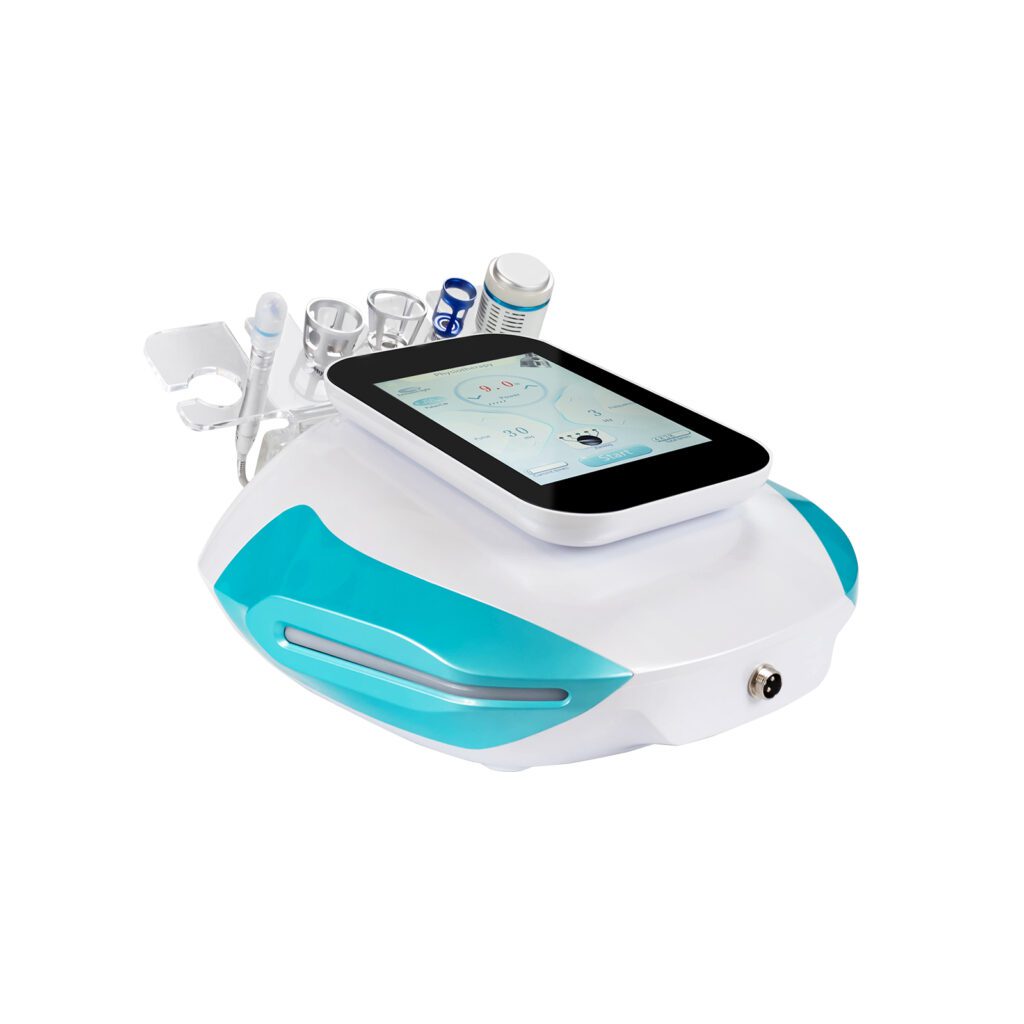
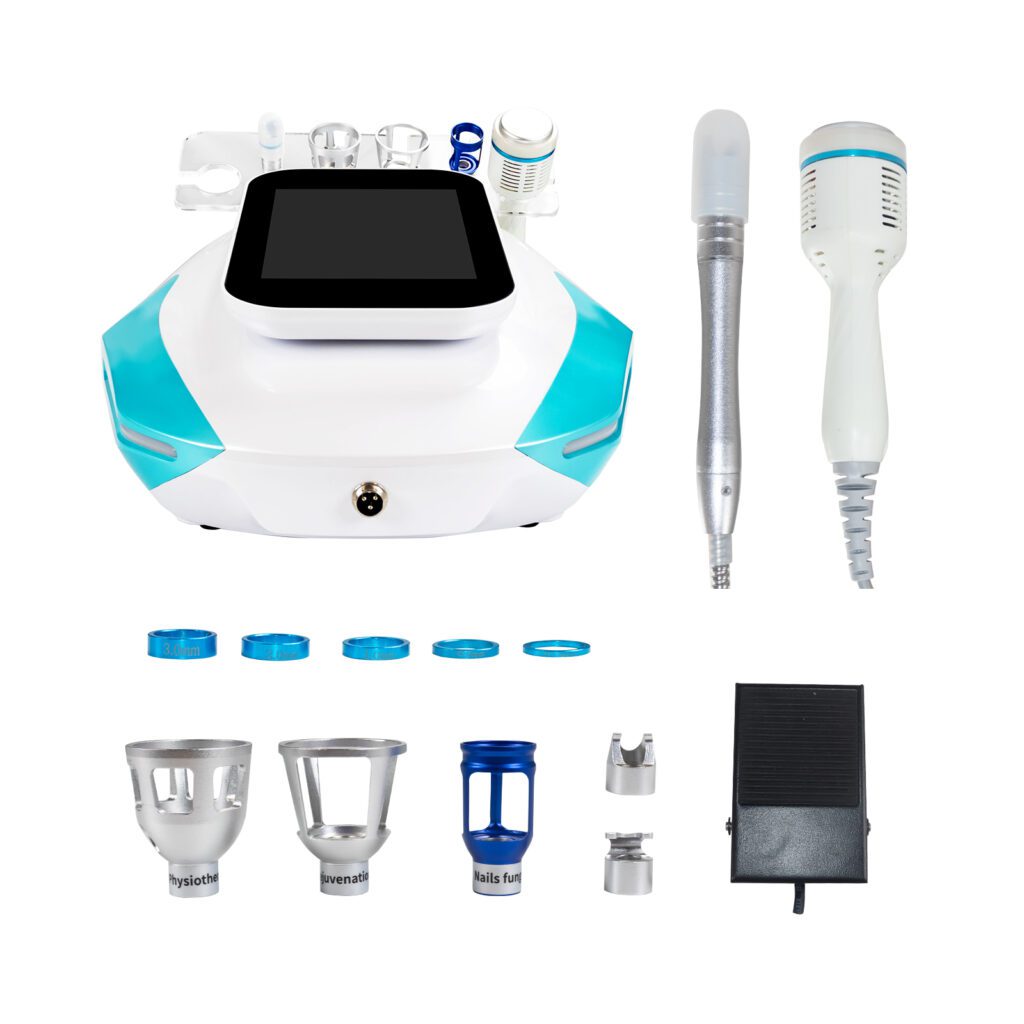
22. Document A0648 Facial-System Decisions
The SHEFMON A0648 9-in-1 hydro and diamond microdermabrasion system is relevant when the approved need centers on multifunction facial care, including cleansing, exfoliation, extraction, and hydration functions described on the product page.
The decision record should explain:
- why a multifunction facial platform fits the service menu;
- which functions the business intends to use;
- how the proposed services differ from existing facials;
- who will operate and clean the system;
- how solutions, tips, tools, and opening supplies will be managed;
- which room and storage conditions were confirmed;
- which exact configuration and quotation revision were approved.
Do not justify the decision only by counting functions. Connect each required function to the approved menu.
23. Document A0423 and A0426 Diode-Laser Decisions
The ШЕФМОН А0423 и ШЕФМОН А0426 pages list diode-laser configuration details such as wavelengths, handle power, spot sizes, cooling, voltage, and physical format.
The record should preserve:
- the approved professional hair-removal service or distributor category;
- why the category fits the buyer and market;
- intended operator and applicable local review;
- room, electrical, privacy, consultation, and record requirements;
- exact model-format decision;
- selected wavelength, handle-power, spot-size, and other configuration options;
- evaluation evidence from any demonstration;
- cleaning, training, and support actions;
- the change rule for any handle or format substitution.
A record that says only “approve diode laser” is incomplete because the purchasing object remains ambiguous.
24. Document A0204 HIFU Decisions
The SHEFMON A0204 multifunction HIFU system should be evaluated as an advanced device pathway.
The record should connect the intended advanced service to the professional setting, operator, consultation process, room, records, aftercare, handles, cartridges, supply plan, training sequence, and local review. If the team approves the category before the final cartridge package, use a conditional status and identify who must close the configuration decision.
25. Document A0152 RF-Microneedling Decisions
For teams considering the SHEFMON A0152 desktop RF-microneedling system, the official page identifies several needle-head formats, computerized depth settings, configurable handles, and intended face/body areas.
The purchasing decision should identify:
- the intended advanced skin pathway;
- appropriate operator and professional setting;
- selected handle and needle-head configuration;
- hygienic and consumable-control workflow;
- consultation, records, aftercare, and follow-up requirements;
- opening and reorder quantities;
- training and authorization conditions;
- approved quotation and configuration versions.
If the needle-head or handle package changes, reopen the affected technical, operating, supply, and commercial sections.
26. Document B0155 Body-Care Decisions
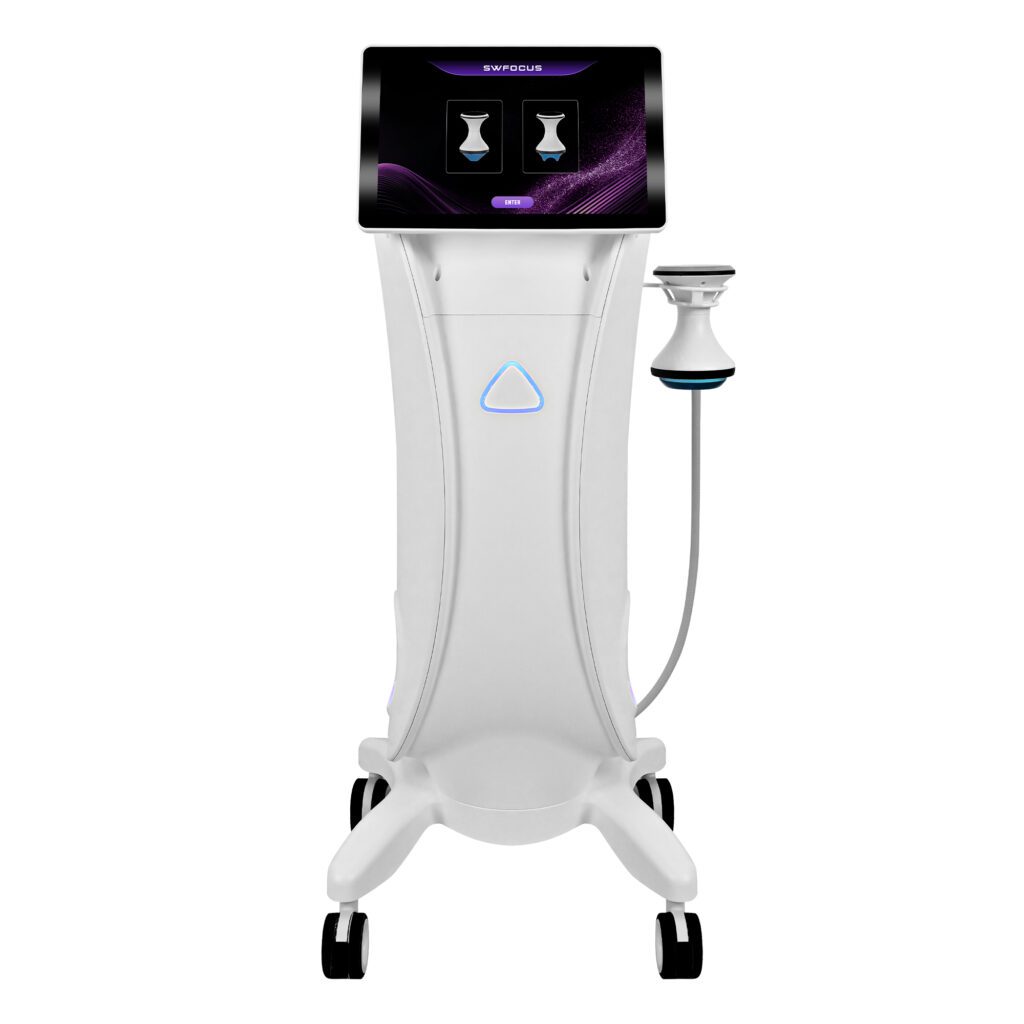
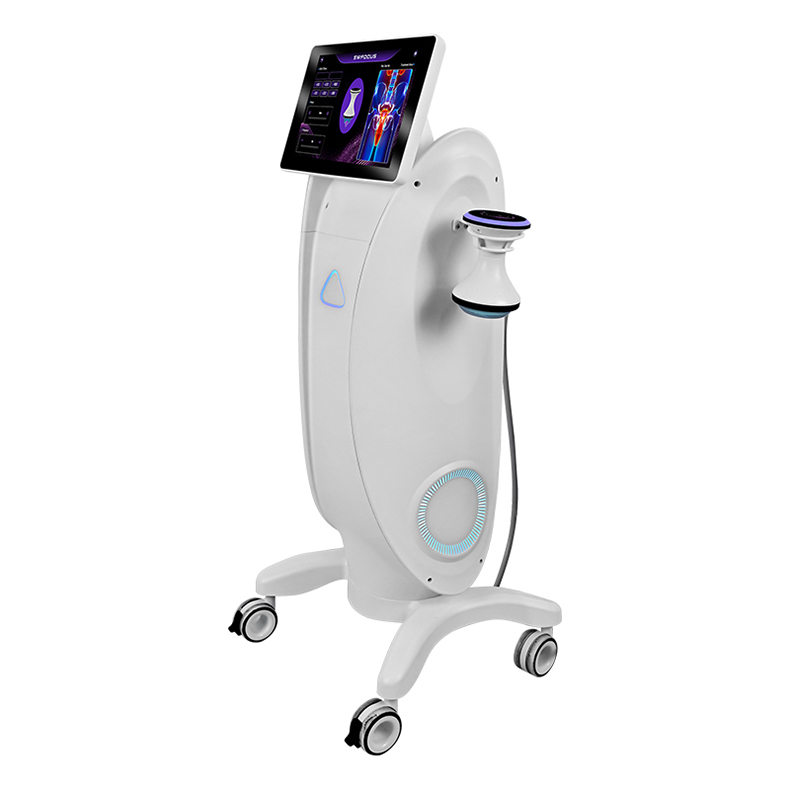
The Настольная система для ухода за телом SHEFMON B0155 page presents body and smaller-area handles with combinations involving vacuum, rollers, RF, light, and cavitation.
The record should state:
- the body-care service or distributor portfolio gap;
- target areas and appointment tiers;
- overlap with current devices or catalog items;
- selected handle combination;
- room, device movement, and handle-storage plan;
- operator, cleaning, and booking workflow;
- opening supplies and support responsibilities;
- whether facial and body applications share or require separate operating controls.
For a facial salon expanding into body services, preserve the reasoning for creating the new category instead of assuming that existing facial operations automatically support it.
27. Define What Reopens an Approved Decision
Write reopening triggers before approval. Common triggers include:
- change of device category or model;
- different physical format;
- added, removed, or substituted handle, cartridge, tip, needle head, or applicator;
- revised included or optional items;
- change of quantity or destination market;
- different voltage or language profile;
- new site, room, or operator;
- changed service scope or target buyer;
- expired site or commercial evidence;
- quotation revision affecting the approved baseline;
- new local requirement;
- unresolved condition passing its due date;
- material product or availability change.
Classify changes by impact. A minor administrative correction may need an addendum, while a changed model or configuration should trigger a new technical and commercial review.
28. Use Superseding Records Instead of Silent Edits
When a material change occurs:
- preserve the approved record;
- mark it as under review or superseded according to policy;
- create a revision or new record with the changed scope;
- identify which evidence and approvals remain valid;
- repeat the affected reviews;
- link the old and new decisions;
- notify teams implementing the earlier baseline.
The new record should explain what changed and why. This allows purchasing, training, site preparation, product data, and support teams to move to the same baseline.
29. Build a Searchable Decision Register
The register should allow authorized users to filter by:
- decision ID and status;
- buyer or business unit;
- salon, clinic, med spa, distributor, or multi-location profile;
- category and model;
- market and location;
- Владелец и утверждающий документ;
- decision and review date;
- conditions and overdue actions;
- quotation revision;
- superseded relationship;
- reason for rejection or deferral.
Apply role-based access to commercial, personal, professional, and technical information. Keep the decision summary visible to the people responsible for implementation while restricting details that they do not need.
30. Measure Decision-Record Quality
Useful process measures include:
- percentage of material purchases with an approved decision record;
- percentage of records with a complete configuration baseline;
- conditions closed by their due date;
- purchase changes caused by missing requirements;
- quotation revisions caused by configuration ambiguity;
- repeated discussions already resolved in an earlier record;
- exceptions by category and location;
- time from initial recommendation to authorized decision;
- number of decisions reopened after a material change;
- implementation issues traced to an outdated baseline.
The goal is not to maximize the number of records. It is to make material decisions understandable, controlled, and usable.
31. Implement the System in Five Steps
Step 1: Identify material decisions
Review recent purchases and list which category, model, configuration, exception, and rollout choices required more than one stakeholder.
Step 2: Create one standard template
Start with the core record structure, statuses, stakeholder roles, and evidence fields. Add category modules only where the decision changes.
Step 3: Define authority and change rules
Publish who recommends, reviews, approves, reopens, and supersedes each decision type.
Step 4: Pilot two different categories
Test one relatively straightforward facial-category decision and one advanced or distributor decision. The contrast will expose missing evidence and approval fields.
Step 5: Connect downstream work
Require quotations, orders, site preparation, training, product data, and launch tasks to reference the approved decision ID and configuration baseline.
32. Beauty Device Decision Record Checklist
Before closing the decision, confirm that:
- the decision has a unique ID, owner, scope, version, and status;
- the business need is specific;
- stakeholders and decision rights are named;
- facts, requirements, assumptions, constraints, and preferences are separated;
- realistic options were evaluated;
- evaluation criteria were agreed before the final choice;
- evidence sources and versions are linked;
- rejected options have clear reasons;
- the recommendation and final decision are distinct;
- material objections are preserved;
- the exact model and configuration baseline are recorded;
- quantity, market, destination, and quotation revision are identified;
- conditions and exceptions have owners and dates;
- implementation actions are assigned;
- reopening and superseding triggers are defined;
- the record is stored in the controlled decision register.
Часто задаваемые вопросы
1. What is the main purpose of a beauty device decision record?
It preserves what an authorized purchasing team decided, why it made that choice, which evidence it used, which configuration it approved, and what would require another review.
2. Is a decision record the same as a quotation approval?
No. The decision record explains the business, category, model, configuration, and operating choice. Quotation approval confirms that the exact commercial document is authorized for release. The two records should reference each other.
3. Does every routine beauty device reorder need a new record?
Usually not when the approved model, configuration, market, quantity rule, and purchasing conditions remain within the existing decision. The reorder should reference that decision and pass normal controls.
4. Who should own the record?
Choose a person responsible for coordinating the full decision, maintaining evidence and status, and closing conditions. Ownership does not give that person authority to approve every section.
5. What happens when stakeholders disagree?
Record the material positions and evidence, then apply the defined decision authority or escalation path. Preserve the objection and the final resolution instead of rewriting the record as unanimous.
6. Should a purchasing score be copied into the decision record?
Record the approved score, date, and source link. Keep the detailed scorecard in its controlled location so later score changes do not silently alter the historical decision evidence.
7. How detailed should the configuration baseline be?
It should be detailed enough for purchasing, supply, site preparation, training, and support teams to identify the same product. Include the model, format, selected components, quantity, electrical profile, market, included items, and quotation revision.
8. When should an approved record be reopened?
Reopen it when a material assumption, model, configuration, site, operator, market, quantity, quotation basis, or operating requirement changes. Define these triggers in the original record.
9. Can one decision cover several salon or clinic locations?
One group record can approve the standard category and configuration, but each site should confirm its own room, operator, utilities, workflow, supplies, and local conditions before deployment.
10. How long should decision records be retained?
Set retention according to the organization’s purchasing, operational, support, and applicable local record requirements. Preserve superseded records for the defined period so teams can reconstruct why a configuration was selected.
Заключение
Beauty device decision records give multi-stakeholder teams a shared, controlled account of the purchasing choice. A strong record links the need, options, evidence, decision rights, approved configuration, conditions, actions, and future change rules without turning meeting notes or a quotation into the only source of truth.
Use decision records to align salon owners, clinic reviewers, operators, distributor product teams, technical staff, operations, finance, and purchasing around the same device baseline. Explore relevant facial, hair-removal, advanced skin, and body-care categories in the SHEFMON beauty device collection. Once the team has documented its buyer setting, service goal, model or category scope, configuration questions, market, and decision roles, свяжитесь с Шефмоном to review suitable device options.