









Управляющее резюме
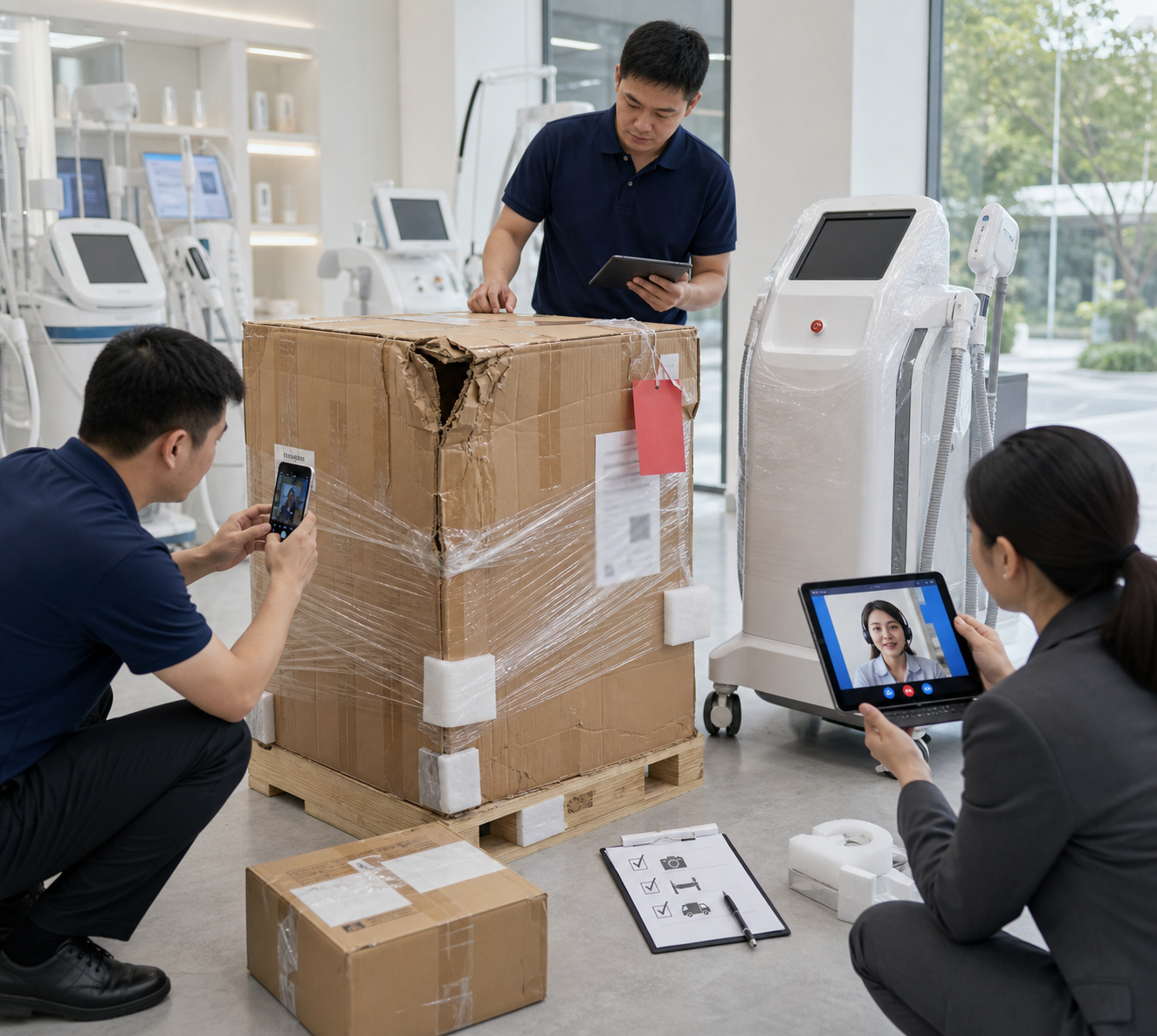
If beauty equipment is damaged during transport, the distributor should stop unpacking further, take clear photos and videos, keep the original packaging, record the tracking number and serial number, inspect the product carefully, notify the manufacturer and carrier immediately, and file a claim according to the carrier’s deadline and document requirements.
The solution depends on the situation. If the damage is visible at delivery, the receiver should note damage on the delivery record before signing or refuse delivery when damage is severe. If the damage is concealed and discovered after opening the package, the distributor should keep all packaging materials, document the damage, and report it as soon as possible. Carrier deadlines vary, so delays can make claims harder.
The responsibility for transport damage may depend on the sales contract, shipping terms, Incoterms rule, insurance coverage, carrier policy, packaging quality, and whether the receiver preserved evidence. Warranty usually covers product defects, but transport damage may need to be handled through freight claim, insurance claim, repair, replacement, or manufacturer negotiation.
For beauty equipment distributors, transport damage should not be handled case by case with panic. A professional distributor should build a standard receiving inspection process, evidence checklist, damage claim workflow, packaging standard, insurance policy, contract clause, and customer communication script.
The core principle is simple: inspect fast, document everything, keep packaging, notify quickly, and make responsibility clear before the next shipment.
1. Краткий ответ
When beauty equipment is damaged during transport, do these steps immediately:
- Inspect the outer carton before signing.
- If visible damage exists, write damage notes on the delivery record.
- Take photos and videos of the carton, label, inner packaging, and damaged machine.
- Keep all packaging materials.
- Record tracking number, order number, model, serial number, and delivery date.
- Notify the manufacturer, distributor, carrier, and customer service team immediately.
- Do not repair, discard, or return the machine before the claim process is clear.
- File a freight or carrier claim within the required deadline.
- Check whether shipping insurance applies.
- Decide whether repair, parts replacement, machine replacement, discount, or refund is the right solution.
The faster the evidence is collected, the easier the problem is to solve.
2. Why Beauty Equipment Is Vulnerable During Transport
Beauty equipment can be more fragile than ordinary goods because it often includes sensitive parts.
Common fragile parts include:
- Touch screens
- Glass bottles
- Water tanks
- Насосы
- Трубки
- Наконечники
- Laser or IPL handles
- LED panels
- Системы охлаждения
- Camera modules
- Power supplies
- Main boards
- Cables and connectors
- Wheels and stands
- Plastic shells
Shipping damage can happen during factory loading, warehouse handling, international freight, customs inspection, last-mile delivery, or salon installation. Heavy machines, large cartons, poor foam, weak pallets, rough handling, stacking pressure, moisture, and long transit time all increase risk.
3. Visible Damage And Concealed Damage Are Different
Visible damage is obvious at delivery. The carton may be crushed, wet, torn, punctured, opened, tilted, or missing parts.
Concealed damage means the outside package may look acceptable, but damage is found after opening. For example, the screen is cracked, handpiece is broken, pump does not work, glass bottle is cracked, or internal board is loose.
Visible damage should be noted immediately on the delivery receipt. Concealed damage should be documented as soon as discovered. Many carriers have stricter time requirements for concealed damage, so distributors should not leave packages unopened for days.
4. Inspect Before Signing
The receiver should inspect the package before signing delivery documents.
Проверять:
- Is the carton crushed?
- Is the carton wet?
- Are there puncture marks?
- Is the carton opened or resealed?
- Are straps broken?
- Is the pallet damaged?
- Is the package upside down?
- Does the quantity match the delivery record?
- Is the tracking label readable?
- Are there fragile or orientation marks?
If anything looks abnormal, take photos before moving the package further.
5. What To Write On The Delivery Record
If the package has visible damage, do not sign as clean delivery without notes.
Use clear notes such as:
- Carton crushed on left side.
- Outer carton wet.
- Package punctured.
- Pallet broken.
- Box opened and resealed.
- Machine packaging visibly damaged.
- Possible internal damage.
- Subject to inspection.
Writing “received in good condition” can make a later claim harder. If the damage is severe, the receiver may need to refuse delivery according to carrier and contract rules.
6. Take Photos And Videos Immediately
Photo evidence is essential.
UPS states that photo documentation may include photos showing the damaged item and how it was packaged inside the box, a close-up photo of the shipping label with tracking number, and a photo of the outside of the package showing damage. This is a useful standard even when the carrier is not UPS.
Take photos of:
- Outer carton from all sides
- Shipping label and tracking number
- Damage marks
- Pallet condition
- Inner foam
- Machine position inside the box
- Аксессуары
- Broken parts
- Серийный номер
- Model label
- Товарная накладная
- Wet or crushed areas
Take videos showing the full unboxing process if possible. Video evidence can help show that damage was discovered during normal unpacking.
7. Keep The Original Packaging
Do not throw away the carton, foam, pallet, inner packaging, straps, labels, or accessories until the claim is resolved.
The carrier, insurer, manufacturer, or claims team may ask to inspect:
- Outer carton
- Inner packaging
- Foam protection
- Pallet
- Shipping label
- способ упаковки
- Damaged item
- Accessory arrangement
If packaging is discarded, the claim may be weakened. Keep everything in a safe place and mark it as claim evidence.
8. Record Product And Shipment Information
Create a damage record for every case.
Записывать:
- Customer name
- Delivery address
- Carrier
- Tracking number
- Order number
- Invoice number
- Модель продукта
- Серийный номер
- Количество
- Delivery date
- Damage discovery date
- Photos and videos
- Delivery receipt notes
- Contact person
- Claim number
- Manufacturer response
- Carrier response
- Resolution
Good records help distributors manage claims, warranty, and customer communication.
9. Notify The Manufacturer Quickly
The distributor should notify the manufacturer as soon as damage is found.
Send:
- Order number
- Номер модели
- Серийный номер
- Tracking number
- Delivery date
- Damage photos
- Unboxing video
- Delivery receipt notes
- Description of damage
- Whether the machine powers on
- Which parts are broken
- Whether packaging was damaged
- Requested solution
The manufacturer can help decide whether to send replacement parts, repair guidance, replacement machine, or claim documents.
10. Notify The Carrier Quickly
Carrier claim rules and deadlines vary. The distributor or shipper should file the claim according to the carrier’s process.
Carriers may request:
- Tracking number
- Shipment date
- Delivery date
- Description of goods
- Proof of value
- Счет
- Photos of packaging and damage
- Repair estimate
- стоимость замены
- Weight and dimensions
- Claim amount
- Contact details
FedEx notes that supporting documents can be added to claims, and some FedEx materials state that damaged or missing contents claims may have different deadlines for U.S. and international packages. DHL materials also emphasize that claims must be filed within the carrier’s specified time window. Because deadlines vary by service, country, and shipment type, check the specific carrier policy immediately.
11. Who Should File The Claim?
The correct claimant may depend on who arranged the shipment and who has the carrier account.
Possible claimants include:
- Производитель
- Exporter
- Распределитель
- Импортер
- Покупатель
- Freight forwarder
- Carrier account holder
- Consignee
If the manufacturer arranged freight, the manufacturer may need to file the claim. If the distributor used its own carrier account, the distributor may need to file. If a freight forwarder arranged the shipment, the forwarder may coordinate the claim.
This should be clarified in the purchase contract before shipment.
12. Check The Shipping Terms And Risk Transfer
Responsibility for transport damage often depends on shipping terms.
The International Trade Administration explains that Incoterms rules specify seller and buyer obligations for delivery and indicate when risk of loss or damage passes from seller to buyer.
For example, risk responsibility can be different under EXW, FOB, CIF, DAP, or DDP. A buyer may believe the seller is responsible because the seller arranged freight, but the chosen term may say risk transferred earlier.
В договоре должно быть указано:
- Shipping term
- Risk transfer point
- Insurance responsibility
- Export clearance responsibility
- Import clearance responsibility
- Freight cost responsibility
- Damage claim responsibility
- Replacement responsibility
Do not rely on vague phrases such as “shipping included.”
13. Insurance Changes The Solution
Shipping insurance can make damage handling much easier.
Confirm before shipment:
- Is cargo insurance purchased?
- Who buys it?
- What value is insured?
- Does it cover full invoice value?
- Does it cover freight?
- Does it cover concealed damage?
- Does it cover accessories?
- What evidence is required?
- What is the deductible?
- What is the claim deadline?
For high-value beauty equipment, insurance is often worth considering. Without insurance, compensation may be limited by carrier terms or contract conditions.
14. Warranty And Shipping Damage Are Not The Same
Warranty usually covers product defects during normal use. Shipping damage is usually caused during transportation.
This distinction matters because:
- A cracked screen from impact may be a freight claim.
- A pump that fails after normal use may be warranty.
- A broken handpiece caused by crushed packaging may be transport damage.
- A defective board with no impact evidence may be quality issue.
FTC warranty guidance supports the practical point that warranty terms should be clear and understandable. The distributor’s warranty policy should explain whether transport damage is covered, how it is reported, and who handles claims.
15. Decide Repair, Replacement, Discount, Or Refund
Not every damaged machine needs the same solution.
Possible resolutions include:
- Replace broken accessory
- Send replacement handpiece
- Replace screen or board
- Repair locally
- Return to factory
- Replace whole machine
- Offer discount or credit
- File insurance claim
- Refund where appropriate
The solution should depend on damage severity, repair cost, downtime, customer urgency, warranty terms, carrier decision, and product value.
16. Do Not Repair Before Evidence Is Accepted
If a distributor repairs the machine too quickly, it may weaken the claim.
Before repair, confirm:
- Has evidence been submitted?
- Did the carrier or insurer require inspection?
- Did the manufacturer authorize repair?
- Are damaged parts preserved?
- Is a repair quote needed?
- Who pays the repair cost?
If urgent repair is needed for a salon customer, document the situation and get written approval where possible.
17. How To Handle Damage Found By A Salon Customer
If the distributor sells to a salon and the salon discovers shipping damage, the distributor should guide the salon immediately.
Tell the salon:
- Stop unpacking if severe damage is found.
- Keep all packaging.
- Take photos of carton, label, foam, and damaged parts.
- Record delivery date and time.
- Do not discard broken parts.
- Send photos and video to the distributor.
- Do not use the machine until safety is confirmed.
- Wait for service instructions.
The distributor should not blame the salon first. The priority is evidence and safety.
18. Customer Communication Script
A professional response can be:
“Thank you for reporting this quickly. Please keep the original carton, foam, labels, and all accessories. Take photos of the outside carton, shipping label, inner packaging, serial number, and damaged area. Please do not use or repair the machine until we check the evidence. We will contact the carrier and manufacturer immediately and confirm whether repair, replacement parts, or replacement machine is the correct solution.”
This response is calm and practical.
19. Cross-Border Damage Requires More Coordination
International shipments can involve more parties:
- Производитель
- Exporter
- Freight forwarder
- Air or ocean carrier
- Customs broker
- Импортер
- Local delivery carrier
- Insurance company
- Final salon customer
CBP states that customs compliance is a shared responsibility between CBP and the importing or exporting community. For distributors, this means import documents, customs clearance, and shipment records should be organized before a damage claim occurs.
Cross-border damage can be harder to solve if documents are missing, declared value is incorrect, or the shipper and buyer disagree on risk transfer.
20. Check Whether Customs Inspection Caused Damage
Sometimes packages are opened during customs or security inspection.
If damage appears related to inspection, record:
- Whether the package was resealed
- Whether inspection tape is present
- Whether items were rearranged
- Whether documents are missing
- Whether inner protection was removed
- Whether the carrier noted inspection
The distributor should ask the freight forwarder or broker how to handle the case. Evidence still matters.
21. Damage During Ocean Freight Or LTL Freight
Large floor-standing beauty machines may travel by ocean freight, pallet freight, or truck freight.
For freight shipments, check:
- коносамент
- Delivery receipt
- Pallet condition
- Forklift damage
- Tilt marks
- Shock indicators where used
- Moisture damage
- Container damage
- Warehouse transfer records
- Insurance policy
For large machines, signing a clean delivery receipt without inspection can make claims harder.
22. Delivery To Salon Versus Delivery To Distributor Warehouse
Damage handling differs depending on destination.
If delivered to distributor warehouse:
- Distributor can inspect immediately.
- Distributor can store damaged goods as evidence.
- Distributor can coordinate with manufacturer and carrier directly.
- Distributor can decide whether to repair before resale.
If delivered directly to salon:
- Salon staff must know inspection rules.
- Distributor must provide receiving instructions before delivery.
- Photos and videos must be collected quickly.
- Customer communication must be fast.
For expensive machines, consider delivering to the distributor first for inspection before sending to salons.
23. Build A Receiving Inspection SOP
Every distributor should have a standard operating procedure for receiving beauty equipment.
The SOP should include:
- Inspect carton before signing.
- Photograph carton and label.
- Check quantity.
- Check pallet and straps.
- Unbox carefully.
- Photograph inner packaging.
- Check model and serial number.
- Check accessories.
- Test power-on.
- Test basic functions.
- Record damage or missing items.
- Notify responsible parties within the required time.
This reduces confusion when staff members change.
24. Use A Damage Report Form
A damage report form should include:
- Report date
- Customer name
- Carrier
- Tracking number
- Модель продукта
- Серийный номер
- Delivery date
- Visible damage or concealed damage
- Damage description
- Photos attached
- Video attached
- Packaging preserved
- Delivery receipt notes
- Claimed value
- Requested solution
- Claim number
- Resolution status
This form helps the distributor manage multiple cases professionally.
25. Manufacturer Packaging Responsibility
Manufacturers should package beauty equipment properly for the shipping method.
Качественная упаковка может включать в себя:
- Прочная внешняя картонная коробка
- Inner foam or molded tray
- Accessory separation
- Screen protection
- Handpiece protection
- Защита от влаги
- Защита углов
- Pallet for heavy machines
- Straps where needed
- Fragile labels
- Orientation labels
- Export packing standard
- Drop or vibration consideration
If damage repeatedly happens with the same model, the manufacturer should improve packaging instead of treating every case as accidental.
26. Distributor Packaging Responsibility
Distributors also have responsibilities when reshipping machines to salons.
They should:
- Use original packaging when possible.
- Add extra protection if the original box is weak.
- Protect handpieces separately.
- Seal cartons properly.
- Use pallets for heavy machines.
- Choose reliable carriers.
- Buy insurance for high-value shipments.
- Provide receiving instructions to salons.
- Avoid shipping damaged or reused packaging as new.
If the distributor repacks poorly, the manufacturer may not accept responsibility for later damage.
27. What To Put In The Purchase Contract
Transport damage should be addressed in the purchase contract or distributor agreement.
Включать:
- Shipping term
- Risk transfer point
- Insurance responsibility
- Packaging standard
- Inspection period
- Evidence requirements
- Carrier claim responsibility
- Manufacturer support responsibility
- Политика "мертвого при прибытии"
- Replacement parts policy
- Replacement machine policy
- Freight cost responsibility
- Claim deadline
- Dispute handling process
Clear terms prevent arguments after damage occurs.
28. What To Put In The Salon Sales Terms
Distributors should also have salon-facing terms.
Включать:
- Receiving inspection requirement
- Photo and video evidence requirement
- Time limit for reporting damage
- Packaging preservation requirement
- Whether transport insurance is included
- Repair or replacement process
- Warranty start date
- Exclusions for customer-caused damage
- Installation and testing process
- Contact method for claims
Salon customers should know what to do before the machine arrives.
29. How To Prevent Damage In Future Shipments
Prevention is better than claims.
Distributors can reduce damage by:
- Choosing tested packaging
- Using pallets for heavy equipment
- Buying insurance
- Avoiding weak last-mile carriers
- Adding shock or tilt indicators for expensive machines
- Separating fragile accessories
- Using stronger inner foam
- Shipping samples before bulk orders
- Inspecting packaging at factory
- Requesting packing photos before shipment
- Training warehouse staff
- Providing salon receiving instructions
Damage prevention should be part of supplier evaluation.
30. Use Pre-Shipment Packaging Photos
Before shipment, ask the manufacturer for:
- Machine photo
- Serial number photo
- Accessory photo
- Inner foam photo
- Color box photo
- Outer carton photo
- Label photo
- Pallet photo
- Final packing photo
These photos help prove how goods were packed before delivery and help compare with damage at arrival.
31. Use Shock And Tilt Indicators For High-Value Equipment
Shock and tilt indicators can help show whether a package experienced impact or improper handling.
Они полезны для:
- Лазерные машины
- IPL-устройства
- AI skin analyzers
- Large floor-standing machines
- Devices with glass or screens
- High-value body contouring systems
- Export shipments
Indicators do not replace insurance or claims evidence, but they add useful handling data.
32. Special Risk: Liquids And Consumables
В состав некоторых поставок косметического оборудования входят гели, сыворотки, жидкости, флаконы или чистящие растворы.
К рискам относятся:
- Утечка
- Срок годности
- Воздействие температуры
- Таможенные ограничения
- Разбитые бутылки
- Загрязнение
- Повреждение оборудования в результате пролития жидкости.
Жидкости следует упаковывать отдельно и надлежащим образом запечатывать. При трансграничных перевозках необходимо уточнить, возможна ли доставка жидкостей выбранным способом.
33. Особый риск: Батареи
В комплект некоторых портативных косметических устройств или аксессуаров входят батарейки.
На перевозку аккумуляторов могут распространяться ограничения со стороны перевозчиков, требования к маркировке или правила транспортировки. Дистрибьюторам следует подтвердить тип аккумулятора, способ доставки, документацию и маркировку упаковки перед отправкой.
Если устройство с батарейным питанием повреждено во время транспортировки, не заряжайте и не используйте его до тех пор, пока не будет подтверждена его безопасность.
34. Особый риск: лазеры, IPL-аппараты и оптические компоненты.
Лазерные, IPL- и оптические устройства могут содержать чувствительные компоненты.
Повреждения могут затронуть:
- Выравнивание наконечника
- Лампа
- Фильтры
- Система охлаждения
- Оптическая линза
- Выход энергии
- Блокировка безопасности
- Защитные очки
Даже если аппарат включается, перед использованием может потребоваться техническая проверка. Не допускайте использования высокоэнергетических устройств в салонах красоты после повреждения в результате удара без подтверждения производителя.
35. Особый риск: анализаторы кожи на основе ИИ.
Анализаторы кожи с искусственным интеллектом могут содержать камеры, модули освещения, экраны, программное обеспечение и системы обработки данных.
После повреждения при транспортировке проверьте:
- Чёткость камеры
- Постоянство освещения
- Функция экрана
- Устойчивость опоры
- Вход в систему программного обеспечения
- Формирование отчета
- Калибровка
- USB-подключение или сетевое подключение
- Доступ к учетной записи
Даже если устройство остается включенным, влияние аппаратных средств может сказаться на точности анализа.
36. Как справедливо распределить затраты
Распределение затрат должно осуществляться в соответствии с условиями контракта, сроками доставки, подтверждающими документами и обоснованием.
Возможные ответственные за затраты:
- Производитель, если упаковка была недостаточной или товар оказался дефектным до отгрузки.
- Если повреждение было вызвано неправильной транспортировкой, и претензия принята, то перевозчик несет ответственность.
- Страховщик, если покрывается страхованием груза.
- Дистрибьютор, если он организовал доставку без страховки или пропустил срок подачи претензии.
- Клиент салона красоты, если повреждение произошло после получения товара в результате неправильного использования или небрежного обращения.
Цель состоит не в том, чтобы быстро найти виновного. Цель — выявить причину и ответственно подойти к решению проблемы с клиентом.
37. Что произойдет, если страховщик отклонит претензию?
Если страховая компания отклонила претензию, ознакомьтесь с причиной отказа.
К распространённым причинам относятся:
- Заявление подано слишком поздно.
- Недостаточно доказательств
- Упаковка выброшена
- Чистый чек о доставке
- Ненадлежащая упаковка
- Нет подтверждения стоимости.
- Повреждения, не связанные с транспортировкой.
- Исключенный товар или услуга
- Отсутствует проверка
При появлении новых доказательств некоторые перевозчики допускают оспаривание претензий или предоставление дополнительных подтверждающих документов. Например, компания FedEx отмечает, что для оспаривания претензий могут быть предоставлены подтверждающие документы и соответствующая информация. Поддерживайте организованную коммуникацию.
38. Что если производитель обвинит перевозчика?
Производитель может заявить, что ущерб причинен перевозчиком. Это может быть правдой, но производителю все равно может потребоваться подтвердить свою претензию, предоставив следующие доказательства:
- Счет
- Фотографии упаковки
- Ценность продукта
- отгрузочные документы
- Оценка гарантии
- Repair estimate
- Предложение по запасным частям
- Техническая диагностика
Если доставку организовал производитель, он, как правило, должен помочь скоординировать рассмотрение претензии. Если доставку организовал дистрибьютор, производитель все равно должен поддержать техническую оценку и поставку запчастей.
39. Что если салон обвинит дистрибьютора?
Салон закупает товары у дистрибьютора, поэтому обычно ожидает, что дистрибьютор решит проблему.
Дистрибьютор должен:
- Реагируйте быстро.
- Соберите доказательства
- Объясните процесс
- Предоставьте хронологию событий.
- Убедитесь, что машина безопасна в использовании.
- Разработайте план ремонта или замены.
- Держите салон в курсе событий.
- Не стоит обвинять салон без доказательств.
Доверие клиентов можно сохранить, если дистрибьютор профессионально решит проблему.
40. Заключительный контрольный список повреждений при транспортировке
Если косметическое оборудование повреждено во время транспортировки, убедитесь в следующем:
- Повреждения документируются фотографиями и видеозаписями.
- Упаковка сохранена.
- В накладной, где это применимо, имеются сведения о повреждениях.
- Записываются номер отслеживания и серийный номер.
- Производитель уведомлен.
- Перевозчик или экспедитор уведомлены.
- Срок подачи заявки проверен.
- Подтверждение стоимости готово.
- Страховой полис проверен.
- Проводятся проверки условий доставки и передачи рисков.
- План ремонта или замены подтвержден.
- Клиент проинформирован.
- Проводится анализ первопричины.
- Улучшен выбор упаковки или перевозчика для будущих поставок.
Этот контрольный список превращает стрессовую проблему в контролируемый процесс.
Заключение
Повреждения оборудования для косметической промышленности при транспортировке следует устранять быстро, спокойно и с предоставлением убедительных доказательств. Дистрибьютор должен осмотреть оборудование до подписания документов, зафиксировать видимые повреждения, сохранить упаковку, сфотографировать все, немедленно уведомить производителя и перевозчика, проверить наличие страховки, ознакомиться с условиями доставки и подать претензию в установленные сроки.
Окончательным решением может быть ремонт, замена деталей, замена оборудования, скидка, возврат средств, обращение к перевозчику или страховой случай. Правильный путь зависит от причины повреждения, условий договора, ответственности за доставку, имеющихся доказательств и срочности для клиента.
Для дистрибьюторов наилучшая стратегия — это профилактика: улучшенная упаковка, страхование груза, четкие договоры, стандартные процедуры приемочного контроля, фотографии перед отгрузкой, наличие запасных частей и инструкции для клиента по приемке.
В сфере дистрибуции косметического оборудования повреждения во время транспортировки иногда неизбежны. Неправильного обращения с поврежденным оборудованием можно избежать.
Часто задаваемые вопросы
Что следует предпринять в первую очередь, если косметическое оборудование повреждено во время транспортировки?
Осмотрите посылку, сделайте фотографии и видеозаписи, сохраните всю упаковку, запишите номер отслеживания и серийный номер, при наличии видимых повреждений впишите отметку о доставке, уведомите производителя и перевозчика, а также проверьте сроки подачи претензии.
Следует ли выбросить упаковку после обнаружения повреждений?
Нет. Сохраните коробку, пенопласт, поддон, этикетки, аксессуары и поврежденные детали до тех пор, пока перевозчик, страховщик, производитель или группа по урегулированию претензий не подтвердят, что доказательства больше не требуются.
Кто несёт ответственность за повреждения, причинённые при транспортировке?
Ответственность зависит от условий доставки, пункта передачи риска, договора, политики перевозчика, страхования, качества упаковки и подтверждающих документов. Она может касаться производителя, перевозчика, страховщика, дистрибьютора или покупателя.
Распространяется ли гарантия на повреждения, полученные при транспортировке?
Обычно гарантия распространяется на дефекты продукции, в то время как повреждения при транспортировке урегулируются через перевозчика, страховую компанию, ремонт, замену или соглашение между продавцом и покупателем. В гарантийном полисе это должно быть четко указано.
Могу ли я отказаться от доставки, если оборудование сильно повреждено?
Если видимые повреждения серьезны, отказ от получения груза может быть оправдан в зависимости от правил перевозчика и договора. Принимая груз, перед подписанием накладной необходимо подробно описать повреждения.
Какие доказательства необходимы для предъявления претензии по поводу повреждений при транспортировке?
В качестве доказательств обычно используются фотографии поврежденного товара, внешней упаковки, внутренней упаковки, транспортной накладной, серийного номера, квитанции о доставке, счета-фактуры, подтверждения стоимости, сметы на ремонт и описания повреждений.
Как дистрибьюторы могут предотвратить повреждения при транспортировке?
Используйте более прочную упаковку, поддоны для тяжелого оборудования, фотографии упаковки перед отправкой, страхование груза, надежных перевозчиков, индикаторы удара или наклона для дорогостоящего оборудования, местный осмотр перед доставкой в салон и четкие инструкции по приемке для клиентов.