An entry-level physiotherapy clinic does not need an oversized shockwave menu. It needs a small number of clearly defined services that fit the clinic’s assessment process, staff competence and follow-up system.
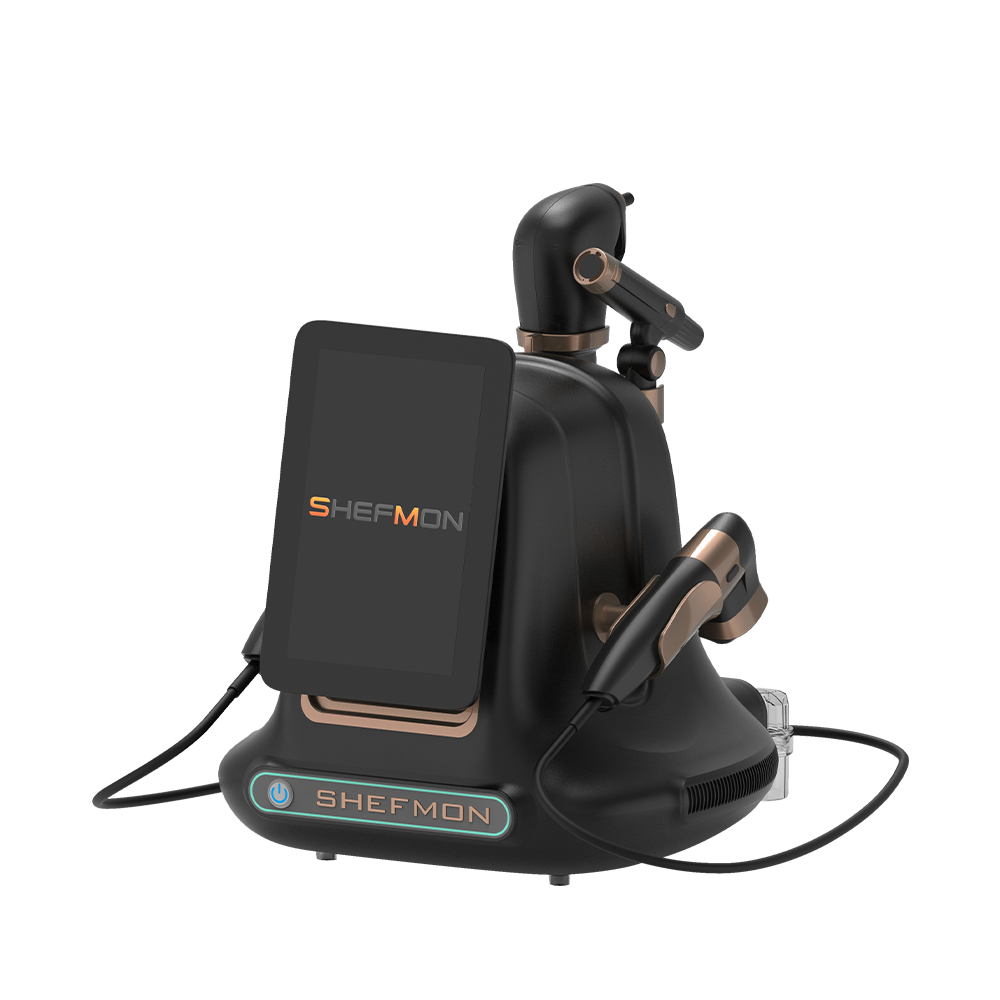
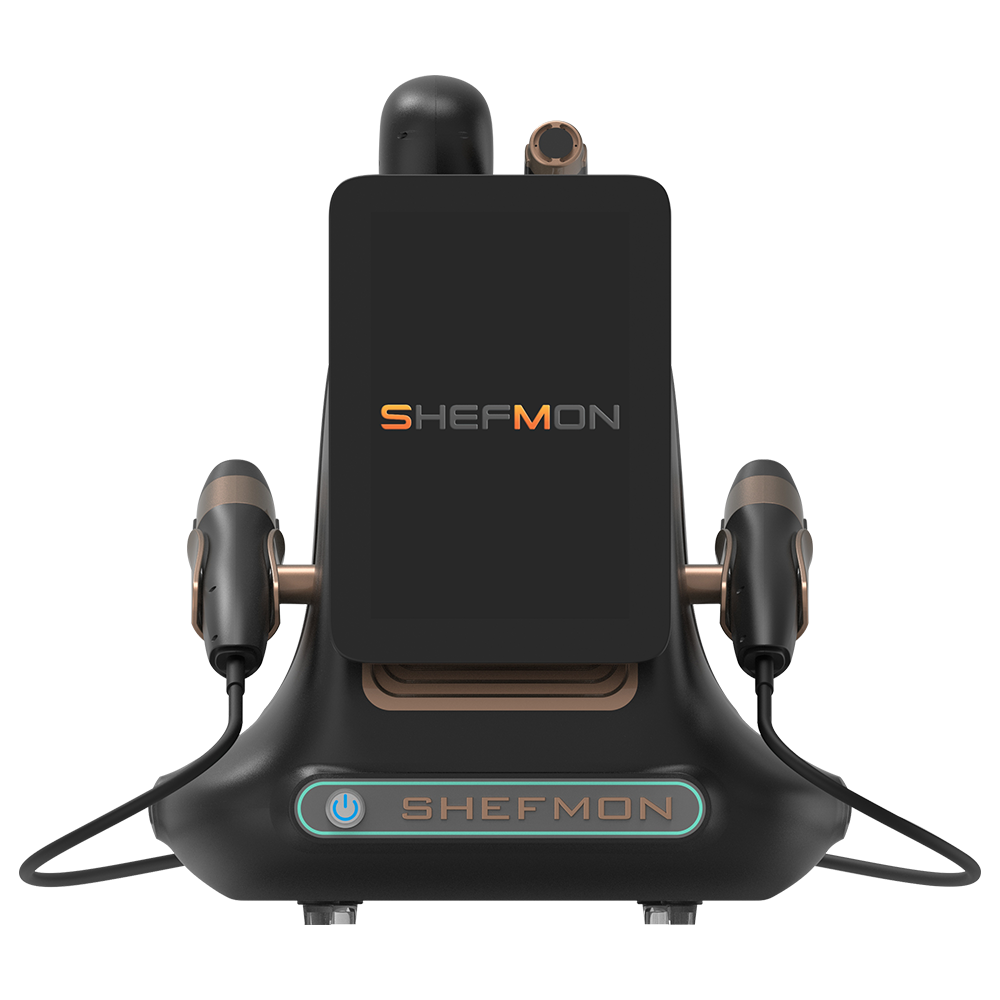
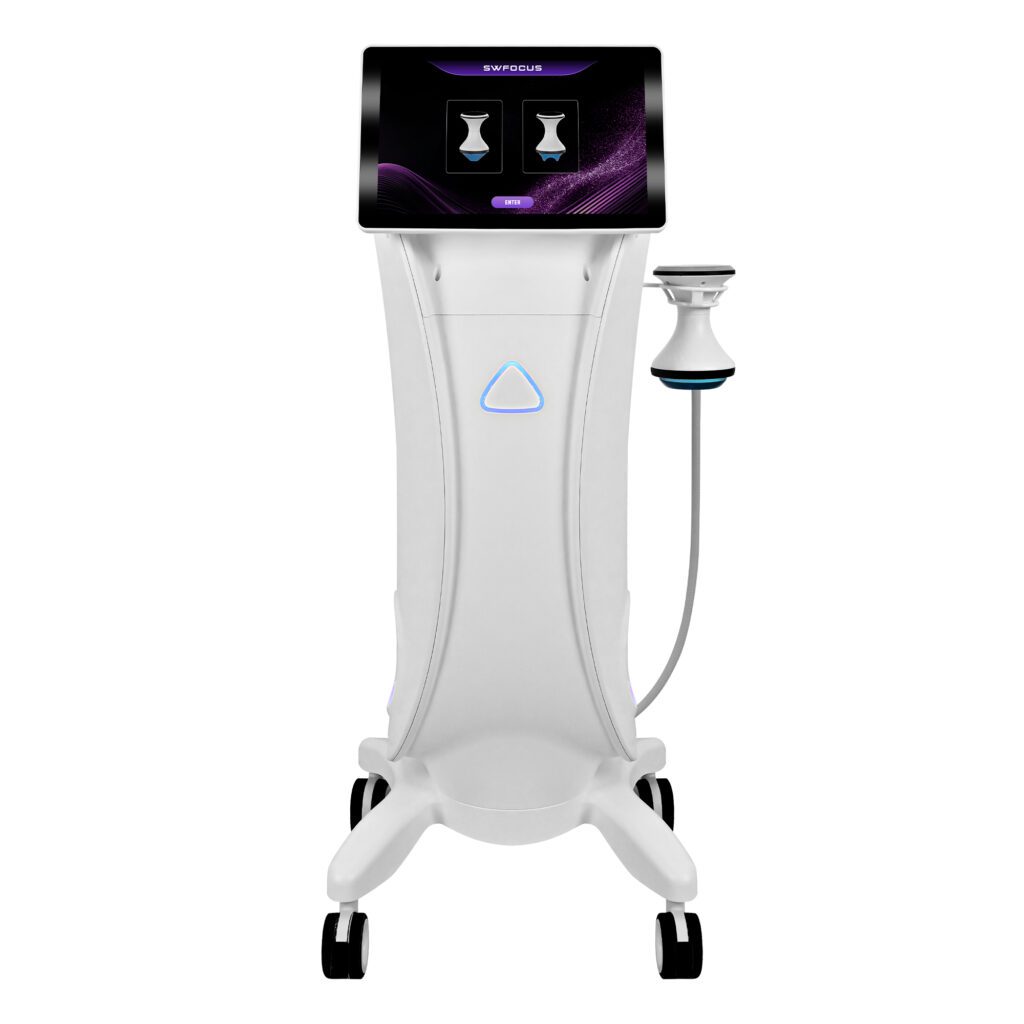
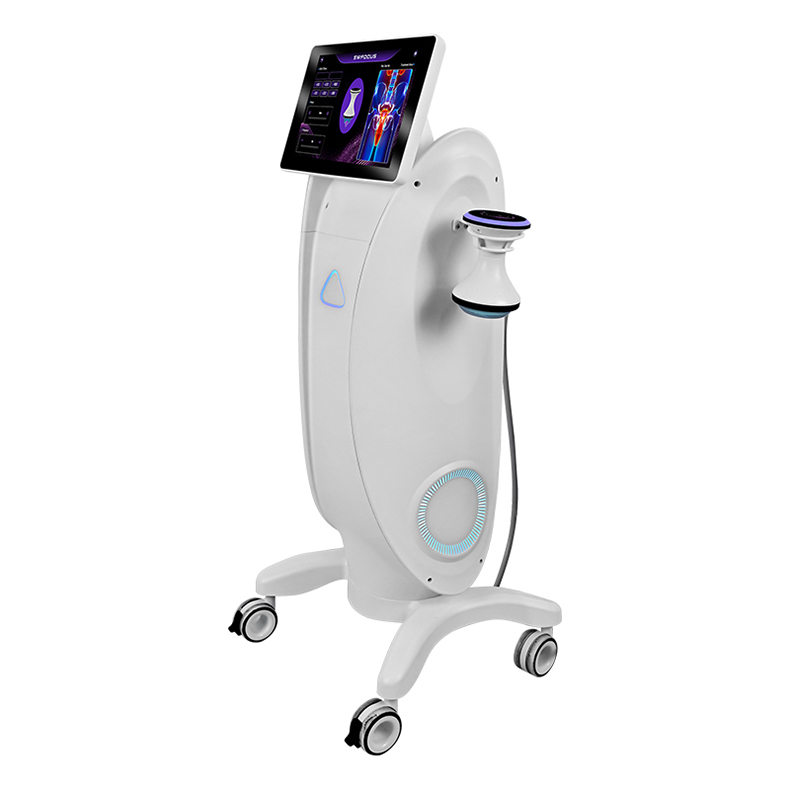
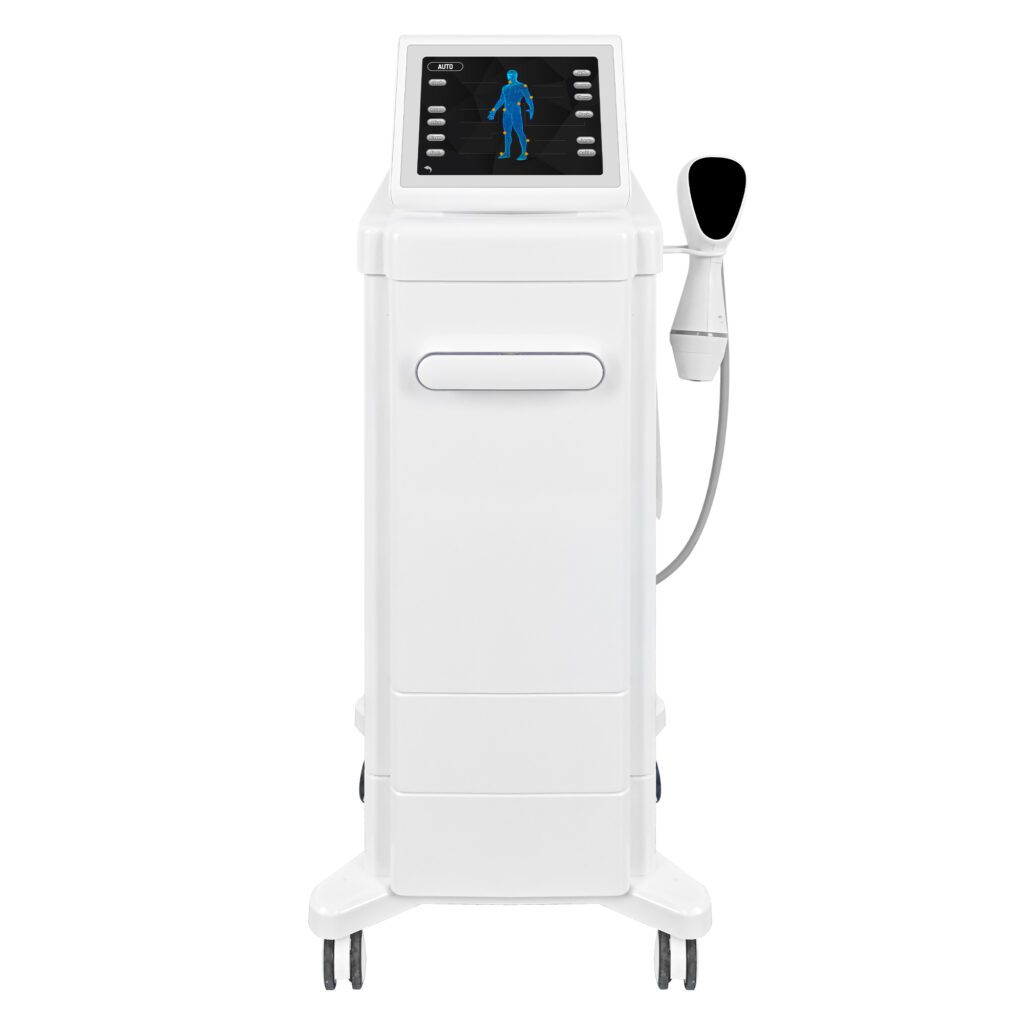
IL SHEFMON SW12 ESWT shockwave machine can support this type of focused service line. Its current product page lists manual and automatic operating modes, a professional parameter interface and a frequency range of 1–21 Hz. More importantly, the page describes a compressed-air ballistic working principle, making SW12 a practical radial pressure-wave platform rather than a multi-depth focused shockwave system.
This guide explains how a new physiotherapy clinic can turn SW12 into a controlled service menu. It covers product positioning, functional principle, client assessment, menu structure, session workflow, progress reviews, staff training and the point at which a clinic should consider a more advanced device.
Sintesi
- SW12 uses compressed air to accelerate a projectile inside the applicator. Impact energy is transferred through the treatment head into the contacted tissue as a radial pressure wave.
- The current SHEFMON page lists manual and automatic modes and a 1–21 Hz frequency range. Exact pressure, pulse count, applicator heads and clinical parameters should be verified in the current manual before use.
- An entry-level clinic should launch with four core offers: assessment and suitability screening, a targeted SW12 session, a shockwave-plus-exercise review and a course review.
- Services should be based on a qualified clinician’s assessment and local scope of practice. The device should not be marketed as a stand-alone answer for every painful condition.
- Treatment location, settings, pulses, client response, exercise plan and outcome measure should be documented at every visit.
- SW12 should be distinguished from the RF-plus-shockwave SW30 and the genuinely focused SW33 and SW35 systems.
1. Product Introduction: What Is the SW12 ESWT Machine?
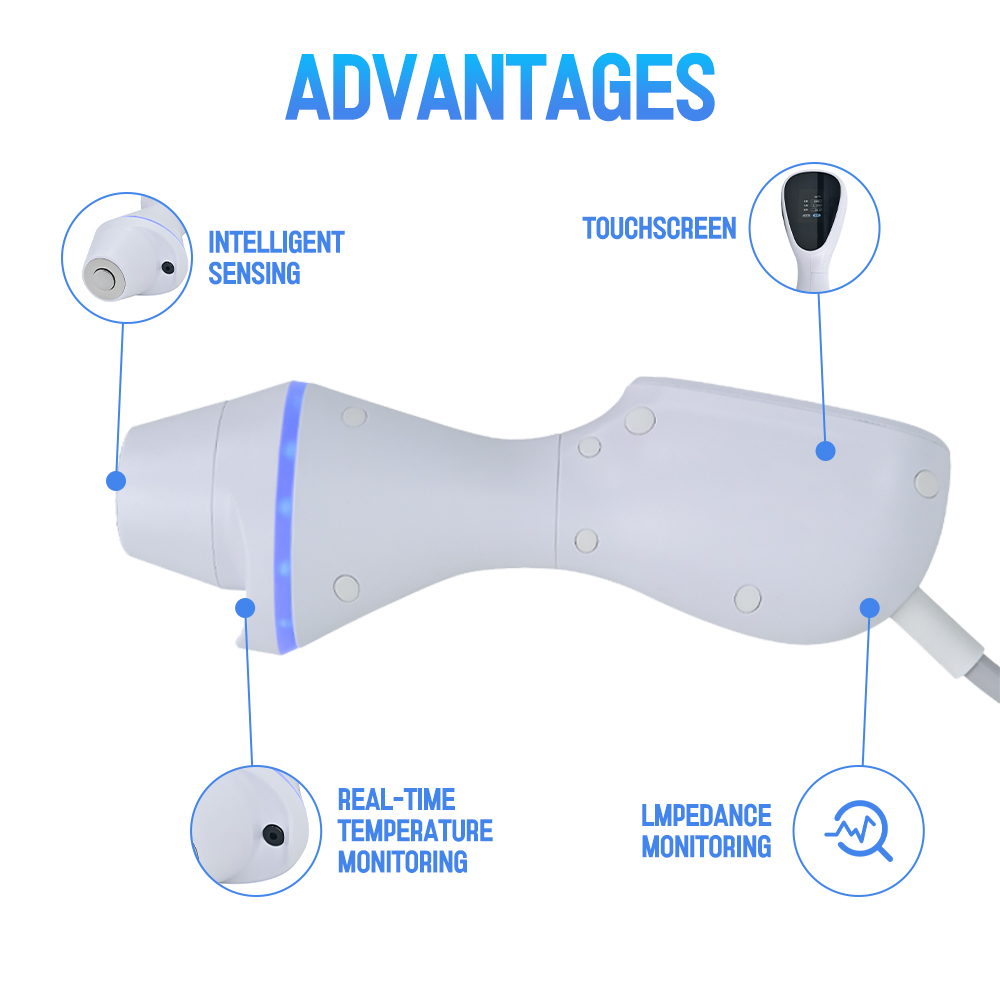
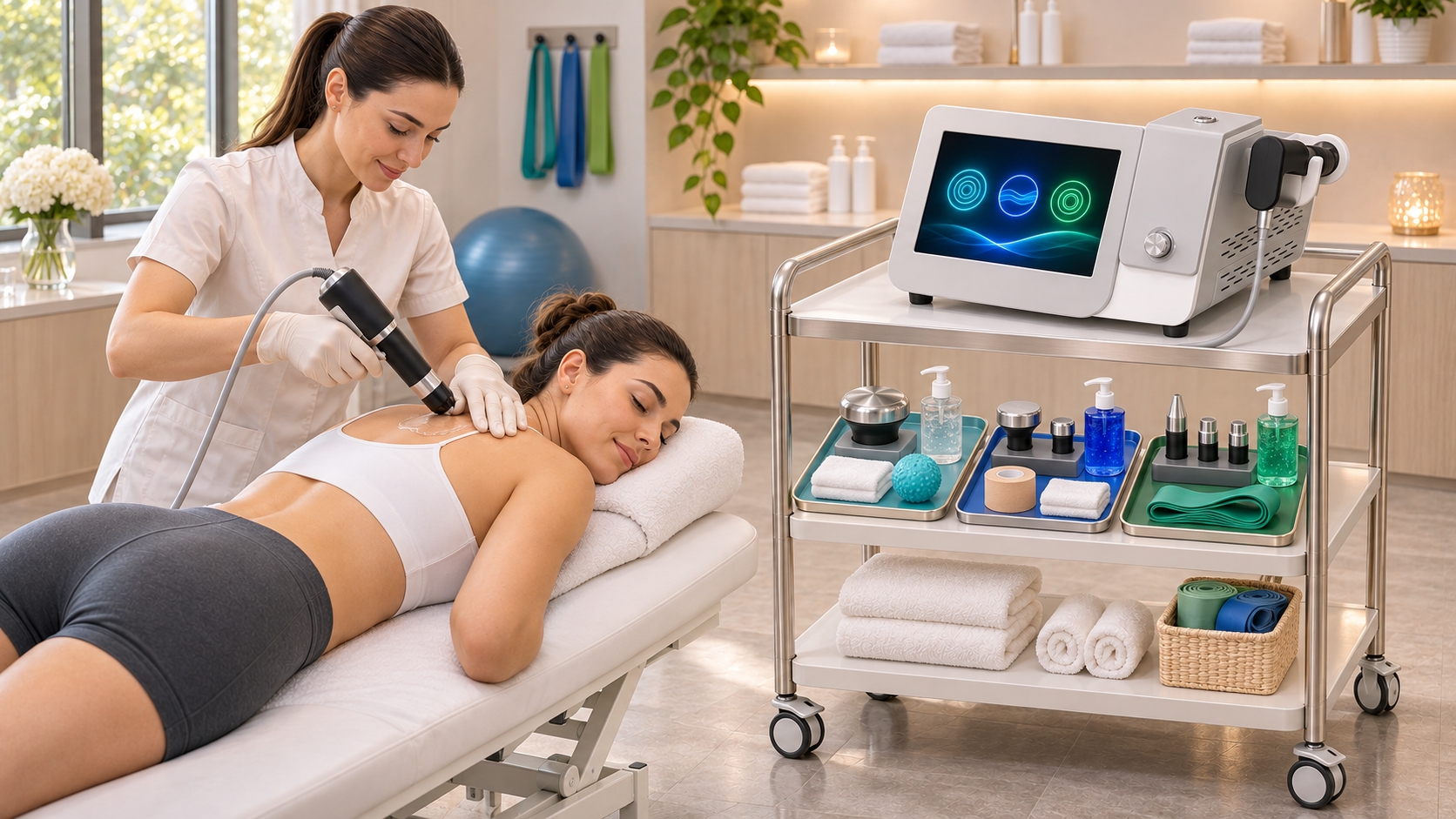
SW12 is a contact applicator shockwave system for physiotherapy and recovery-oriented services. The operator places the selected treatment head against the skin with an appropriate coupling medium and moves or positions the applicator according to the approved protocol.
The current product page highlights two operating modes:
- manual mode for direct operator control;
- automatic mode for a more guided operating workflow.
It also lists a frequency range of 1–21 Hz. These features can suit a smaller clinic that wants one straightforward shockwave platform without immediately purchasing a combination system or a focused shockwave machine with multiple depth probes.
SW12 belongs in the SHEFMON Shockwave and Physiotherapy equipment category. In a clinic, it should be presented as professional equipment used by trained staff after assessment, not as a walk-in massage add-on selected only by body area.
2. Functional Principle: How SW12 Generates Pressure Waves
The SW12 product page describes a ballistic pressure-wave mechanism. An electronically controlled compressor produces compressed air, which accelerates a projectile inside the handpiece. When the projectile strikes the applicator head, kinetic energy is transferred through the head and coupling interface into the tissue.
The pressure is highest near the applicator surface and disperses outward as it travels. This is characteristic of a radial pressure-wave system. It differs from focused shockwave technology, in which energy converges at a selected focal depth.
| Tecnologia | How energy is delivered | Practical clinic implication |
|---|---|---|
| SW12 ballistic radial pressure wave | Compressed air accelerates a projectile; impact energy spreads outward from the applicator head | Suitable for a simple contact-applicator workflow over clinician-selected superficial and regional targets |
| Onda d'urto focalizzata | Acoustic energy converges at a defined depth | Better suited when the service model requires controlled focal depths and focused technology |
| Terapia manuale | Clinician applies hands-on pressure and movement | Offers examination feedback and movement-based treatment but is not the same physical modality |
| Therapeutic exercise | Client performs a planned loading or mobility program | Builds active capacity and should not be displaced by a passive device session |
This distinction matters when writing the menu. Calling every acoustic device “focused shockwave” can create the wrong expectation about depth, precision and protocol. An SW12 service should use language such as “radial pressure-wave session,” “clinician-led shockwave session” or “targeted SW12 session,” depending on local terminology and device registration.
The biological and clinical response to shockwave procedures can vary by diagnosis, tissue, energy level, treatment technique and rehabilitation plan. Clinics should avoid claiming that pressure waves mechanically “repair” every injury. A more accurate explanation is that the device provides controlled mechanical stimulation as one component of a clinician-directed plan.
3. Why SW12 Can Fit an Entry-Level Clinic
“Entry-level” should describe the size and simplicity of the service line, not a lower standard of clinical care. A small clinic can still use rigorous screening, consent, documentation and outcome reviews.
SW12 may fit a first shockwave purchase when the clinic wants:
- a dedicated shockwave service rather than a multi-technology platform;
- manual and automatic operating options;
- a broad 1–21 Hz frequency range listed by the manufacturer;
- contact-applicator treatment that can fit an existing physiotherapy room;
- a limited menu that supports, rather than replaces, assessment and exercise;
- a clear starting model before adding focused-depth or RF capabilities.
Before purchasing, the clinic should request the current SW12 manual and confirm included applicator heads, pressure range, pulse counter, compressor maintenance, consumable parts, noise level, duty cycle, cleaning requirements, voltage, warranty and training support. These operational details affect appointment length and lifetime cost more than a long list of promotional applications.
4. Build the Menu Around a Clinical Pathway
A useful menu guides the patient through a pathway. It should not simply list shoulders, elbows, knees and feet as if body location alone determines suitability.
The most manageable pathway for a new clinic is:
- assess and screen;
- agree on a working plan and outcome measure;
- deliver a targeted SW12 session when appropriate;
- connect the session to exercise or activity modification;
- review progress before continuing a course.
This pathway creates natural service boundaries. It also makes it easier for reception staff to explain why a first-time patient cannot book a device package without an assessment.
5. Recommended Core SW12 Service Menu
The following four services give an entry-level clinic enough variety without creating overlapping packages.
Service 1: Physiotherapy Assessment and SW12 Suitability Review
This is the correct first booking for a new patient or a patient with a new complaint. It is not automatically a shockwave session.
Includi:
- health history and current symptom review;
- red-flag screening and confirmation of the clinic’s scope;
- relevant movement, load tolerance and functional assessment;
- review of previous diagnosis, imaging or treatment when available;
- device-specific contraindication and precaution screening;
- baseline patient-reported and functional outcome measures;
- explanation of SW12 radial pressure-wave technology;
- discussion of alternatives, expected sensations, uncertainty and consent;
- decision to proceed, postpone, refer or use another physiotherapy approach.
The patient pays for professional assessment and planning, not for automatic access to the device.
Service 2: Targeted SW12 Shockwave Session
This is a focused device appointment for a patient who has already been assessed and remains suitable. The clinician confirms the treatment region, approved protocol and current symptom status before starting.
Includi:
- a brief change-of-status check;
- skin and treatment-area inspection within professional scope;
- positioning and coupling medium;
- manual or automatic mode selected under the clinic protocol;
- clinician-controlled progression based on the device manual and patient response;
- post-session reassessment and advice;
- complete parameter and response record.
The menu should not promise that a short device appointment will resolve the underlying condition. The session sits inside the physiotherapy plan.
Service 3: SW12 Shockwave and Exercise Progression Visit
This combined appointment links passive mechanical stimulation with active rehabilitation. It may be useful when the clinician needs enough time to deliver a planned SW12 session and review the patient’s loading, mobility or return-to-activity exercises.
Includi:
- symptom and function check;
- targeted SW12 session when still indicated;
- review of exercise technique and tolerance;
- progression, regression or simplification of the home plan;
- workload and activity discussion;
- agreed targets for the next review.
For a new clinic, this can be the strongest service on the menu because it prevents shockwave from becoming isolated from the rest of physiotherapy.
Service 4: SW12 Course Review and Next-Step Consultation
This is a reassessment appointment after an agreed review interval. It can be booked even when the clinician decides not to deliver shockwave that day.
Includi:
- repeat of the baseline outcome measure;
- review of pain, function, load tolerance and activity goals;
- comparison with the original plan;
- check for adverse or unexpected responses;
- decision to continue, modify, pause, discharge or refer;
- updated exercise and self-management plan.
Do not make the review dependent on using all prepaid sessions. Clinical progress should control the plan, not package inventory.
| Voce di menu | Recommended booking purpose | SW12 included? | Main control point |
|---|---|---|---|
| Physiotherapy Assessment and SW12 Suitability Review | New patient, new complaint or uncertain suitability | Only if assessment time, consent and local policy allow | Diagnosis pathway, red flags and device screening |
| Targeted SW12 Shockwave Session | Assessed patient with an active clinician plan | SÌ | Change-of-status check and parameter record |
| SW12 Shockwave and Exercise Progression Visit | Device session plus active rehabilitation review | Yes, when still indicated | Exercise quality and functional progression |
| SW12 Course Review and Next-Step Consultation | Planned reassessment or lack of expected progress | Opzionale | Outcome comparison and continue/stop/refer decision |
6. Optional Region-Based Descriptions
Patients often search by body region, so a clinic may add region language under the four core services. The wording should still make assessment mandatory.
Lower-Limb Tendon and Heel Support
This description can help patients looking for clinician-led care involving the heel, Achilles region, patellar tendon or other lower-limb soft tissues. State that suitability depends on assessment and diagnosis; do not present all heel or knee pain as the same condition.
Shoulder and Elbow Shockwave Support
This can cover patients referred or assessed for selected shoulder or elbow presentations within the clinic’s professional scope. Avoid broad wording that implies SW12 is appropriate for acute trauma, every calcification or unexplained arm pain.
Sports Load and Recovery Review
This is best framed as a physiotherapy reassessment with optional SW12 use. The clinician reviews training load, function and recovery before deciding whether the device belongs in the appointment.
Persistent Soft-Tissue Symptom Program
Use this only when a qualified clinician has assessed the patient and developed a plan. “Persistent” is more responsible than promising to cure “chronic pain,” because the menu should not imply that every long-standing symptom has the same source.
Region descriptions improve search visibility, but they should remain descriptions under the core pathway rather than separate packages with copied protocols.
7. Consultation, Contraindication Screening and Referral
The current SW12 instructions for use should be the clinic’s primary device reference. A qualified clinician must also apply local professional standards and consider whether the diagnosis is one for which shockwave is permitted and supported in that market.
The intake should ask about:
- onset, mechanism, location and behavior of symptoms;
- recent trauma, suspected fracture or sudden loss of function;
- current or previous cancer in the treatment region;
- infection, fever, open wound or significant skin problem;
- bleeding disorder, anticoagulant use or unusual bruising;
- pregnancy when the proposed treatment region or local rules make it relevant;
- impaired sensation, neurological symptoms or vascular concerns;
- recent injection, surgery or other procedure in the area;
- medication and medical conditions relevant to healing or tissue tolerance;
- previous response to shockwave or other physical modalities.
This is not a complete contraindication list. The clinic should copy the exact contraindications, warnings and prohibited treatment areas from the current SW12 manual into its controlled operating procedure.
Referral or further assessment may be needed for unexplained severe pain, rapidly increasing swelling, suspected fracture or rupture, new neurological deficit, systemic illness, suspected infection, vascular symptoms or a presentation outside the clinician’s competence. The correct response is not to lower the setting and continue.
8. Session-Day Workflow
A standard session sequence helps new staff avoid missing important checks.
| Palcoscenico | Clinician action | Documentazione |
|---|---|---|
| Confermare | Verify patient, target area, consent and changes since assessment | Date, region and status update |
| Inspect | Check the skin and treatment area within scope | Skin status and any reason to postpone |
| Prepare | Select approved applicator head, coupling medium and position | Applicator and position |
| Start | Use conservative, manual-approved parameters appropriate to the plan | Mode, pressure or energy setting, frequency and pulse count |
| Monitor | Ask about pain, referred sensation, numbness and tolerance | Patient response and parameter changes |
| Finish | Reassess comfort and relevant function | Immediate response |
| Piano | Confirm exercise, activity guidance and review point | Home plan and next appointment |
Parameter progression
The product page lists a 1–21 Hz frequency range, but that does not mean every patient should start or finish at the same frequency. Frequency is only one parameter. Pressure or energy setting, pulse count, applicator head, treatment region, movement speed and session spacing also shape the dose.
The clinic should develop protocols from the current manual and qualified training. Settings copied from another machine, social media video or unrelated diagnosis should not be used as a substitute.
Comfort and stop criteria
Shockwave procedures may be uncomfortable. The clinician should explain expected sensations in advance and maintain communication throughout the session. Stop or reassess when there is sharp or unexpected pain, neurological sensation, marked distress, skin concern or any response outside the approved protocol.
Pain tolerance is not a competition and a higher setting is not proof of a more effective appointment.
9. Documentation and Outcome Tracking
An entry-level clinic can use a one-page template rather than a complex software build. Consistency matters more than decoration.
| Record group | Suggested fields |
|---|---|
| Assessment | Working diagnosis, symptom history, red flags, precautions, baseline function and outcome measure |
| Consent | Procedure explanation, alternatives, expected sensation, uncertainty, risks and patient questions |
| Configurazione del dispositivo | SW12 mode, applicator head, frequency, pressure or energy setting, pulse count and treatment region |
| Response | Tolerance, pain response, skin response, immediate functional change and adverse events |
| Riabilitazione | Exercise selection, dosage, load modification and self-management advice |
| Revisione | Patient-reported change, repeated outcome measure, clinical decision and next step |
Choose outcome measures that match the presentation and the clinician’s scope. Examples may include a validated region-specific questionnaire, patient-specific functional scale, pain rating combined with function, range of movement, strength or a relevant load-tolerance task.
Do not use an immediate pain change as the only definition of success. A clinic should track whether the patient can return to meaningful activity and whether improvement persists at the planned review.
10. Package Design Without Overselling
Packages can help patients plan appointments, but the clinic should avoid selling a rigid series before assessment.
Assessment-first pathway
The safest commercial structure is to sell the initial assessment separately. After assessment, the clinician can recommend individual sessions or a provisional course with a mandatory review point.
Review-gated course
Instead of advertising a fixed number as universally necessary, describe the course as:
A clinician-directed sequence of SW12 sessions with exercise guidance and a scheduled progress review. Frequency and total visits depend on assessment, response and the current device protocol.
Combined rehabilitation plan
A higher-value plan can include assessment, selected SW12 visits, exercise progression and final review. This structure makes the professional service visible and prevents the machine from becoming the entire product.
Pricing logic
Price should account for clinician time, assessment complexity, room use, handpiece wear, projectile or maintenance components, coupling consumables, cleaning, documentation and follow-up. A shorter device-only visit may cost less than a combined exercise review, but the menu should make the difference clear.
Avoid discounting a large block of sessions so heavily that the clinic feels pressured to continue after the patient should be reassessed or referred.
11. Staff Training for a Small Clinic
At minimum, SW12 operators should be able to:
- explain the difference between radial pressure waves and focused shockwaves;
- complete the clinic’s contraindication and precaution screen;
- select and inspect the applicator head;
- set up the compressor and handpiece correctly;
- use manual and automatic modes according to training;
- document every relevant parameter;
- monitor tolerance and apply stop criteria;
- clean the applicator and maintain the machine;
- integrate shockwave with exercise and activity planning;
- recognize when reassessment or referral is more appropriate than another session.
Reception staff also need a short script. They can explain that new patients start with an assessment, but they should not decide that a symptom is suitable for SW12 or promise a specific number of appointments.
12. When SW12 Is Enough and When to Consider Another Model
SW12 is a sensible starting point when a clinic wants a dedicated ballistic radial pressure-wave workflow. A different system may make more sense when the service model requires additional modalities or controlled focal-depth options.
| Modello | Current SHEFMON positioning | Best purchasing question |
|---|---|---|
| SW12 ESWT machine | Compressed-air ballistic shockwave, manual/automatic modes, 1–21 Hz | Do we need a straightforward radial pressure-wave service? |
| SW30 shockwave and 448 kHz monopolar RF machine | Radial shockwave combined with monopolar RF | Do we have trained staff and demand for a combined RF and shockwave workflow? |
| SW33 focused shockwave machine | Piezoelectric focused shockwave with adjustable 4–66 mm depth probes | Does our clinical plan require focused delivery at selected depths? |
| SW35 FSWT equipment | Focused shockwave platform with five listed probe ranges reaching up to 75 mm | Do we need a wider multi-depth focused platform for an advanced service line? |
Do not upgrade only because a model has a longer specification list. Patient population, professional scope, training, utilization, maintenance and the clinic’s referral network should guide the decision.
Distributors building a tiered physiotherapy equipment line can present SW12 as the accessible radial pressure-wave option and the focused systems as a separate technical level. For branding and supply discussions, buyers can review Supporto OEM/ODM per SHEFMON, while keeping clinical protocols under qualified local governance.
Domande frequenti
1. What type of shockwave technology does SW12 use?
The current SHEFMON page describes a compressed-air ballistic system. A projectile transfers impact energy to the applicator head, producing a radial pressure wave at the contact area. This is different from a focused shockwave system that converges energy at a selected depth.
2. What operating modes does SW12 provide?
The current product page lists manual and automatic modes. Clinics should confirm what each mode controls and how presets are configured in the latest SW12 manual and supplier training.
3. What is the SW12 frequency range?
SHEFMON currently lists 1–21 Hz. Frequency is only one part of the protocol; the clinician must also consider the applicator, pressure or energy setting, pulse count, target area and patient response.
4. What should be the first SW12 service on the menu?
Start with a physiotherapy assessment and SW12 suitability review. This allows the clinician to identify red flags, determine whether shockwave belongs in the plan, record a baseline and explain alternatives before selling a device course.
5. Can patients book SW12 by body area without an assessment?
A clinic should avoid that model for new complaints. Shoulder, elbow, knee or heel pain can have different causes, and body location alone does not establish that shockwave is suitable.
6. Should SW12 be offered as a stand-alone service?
It can be delivered as a targeted appointment after assessment, but the wider plan should address activity, exercise, load management and review. A combined shockwave-and-exercise visit often communicates the value of physiotherapy more clearly.
7. How many SW12 sessions should a clinic sell?
There is no universal number for every patient or presentation. The plan should follow diagnosis-specific guidance, the current device manual, local professional standards and individual response, with a defined review point.
8. Is SW12 the same as SW33 or SW35?
No. SW12 uses a ballistic radial pressure-wave principle. SW33 and SW35 are positioned as focused shockwave systems with depth-selection probes. Their settings, training and service positioning should not be copied between models.
9. What records are needed for an SW12 session?
Record the assessed target, device mode, applicator, frequency, pressure or energy setting, pulse count, patient tolerance, any adjustment, post-session response, exercise plan and next review. Also document consent and any adverse event.
10. What should a clinic verify before buying SW12?
Request the current manual, complete specification sheet, included heads, pressure range, compressor and handpiece maintenance schedule, consumables, duty cycle, cleaning procedure, training, warranty, electrical requirements and destination-market documentation.
Conclusione
The best SW12 menu for an entry-level physiotherapy clinic is intentionally simple. It begins with assessment, offers a targeted radial pressure-wave session, links the device to active rehabilitation and includes a formal review before treatment continues.
This structure makes SW12 easier to operate, easier to explain and easier to audit. It also protects the clinic from building its identity around device claims that extend beyond the evidence, the manual or the clinician’s scope.
Clinics and distributors can review the SW12 ESWT shockwave machine, compare the wider SHEFMON Shockwave and Physiotherapy range and contact SHEFMON for the latest configuration, operating manual, training support and ordering information.